


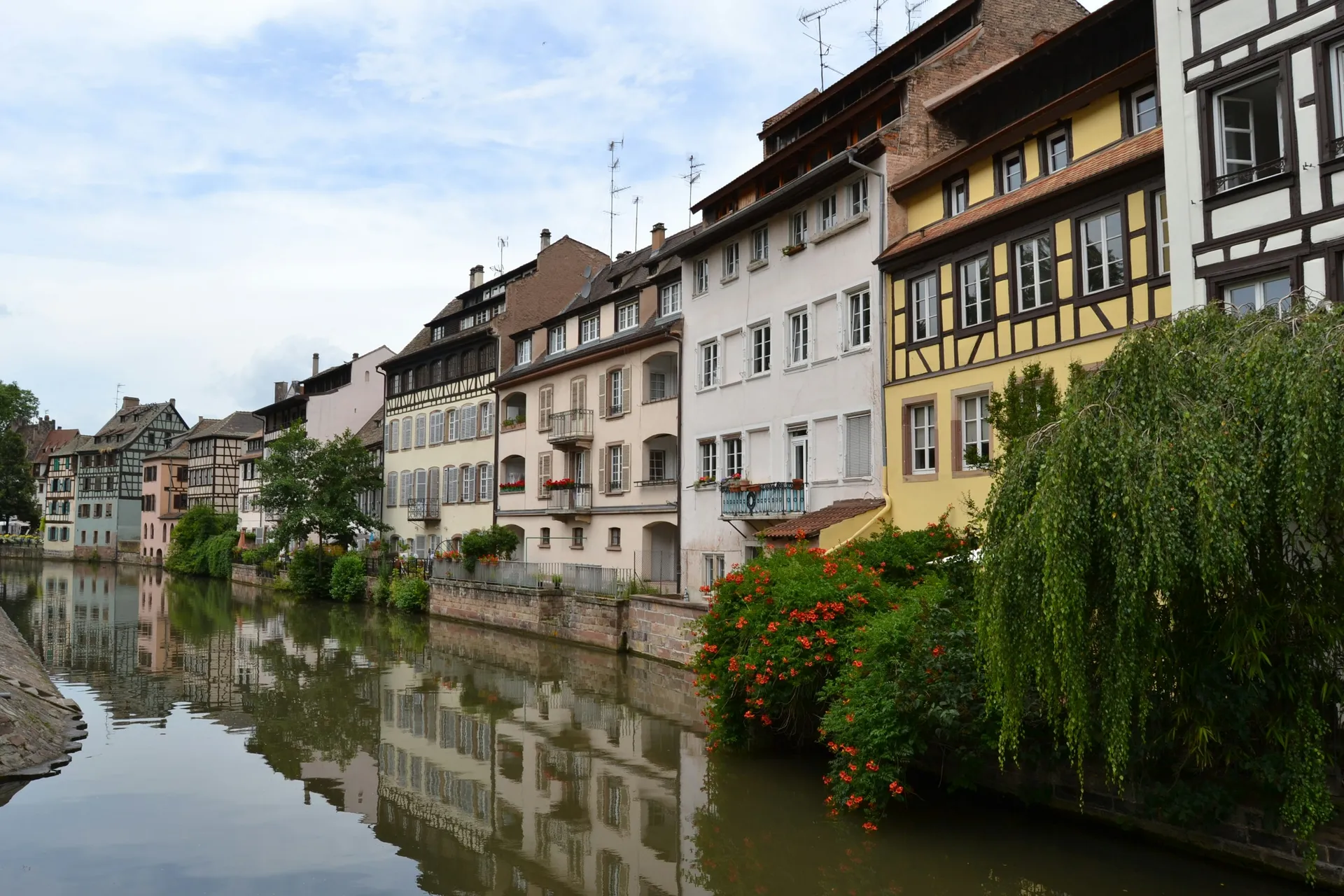
Strasbourg
Strasbourg travel guide: the cathedral and the Grande Île, Petite France, winstubs and Alsatian food, the Christmas market and the wine villages.
Quick Facts
- Best time to visit
- May to September, and December for the Christmas market
- Budget per day
- $70 - $170 per day
🌎 Introduction
Strasbourg is the city where France and Germany blend until you stop asking which one you are in: half-timbered houses on canals, wine served in Alsatian taverns, and a Gothic cathedral that was the tallest building in the world for over two centuries. Its old town occupies an island in the Ill river — the Grande Île, a UNESCO World Heritage site — small enough to walk end to end and layered enough to keep you busy for days.
The city doubles as a base for the Alsace wine route, and in December it becomes the Capital of Christmas, when the oldest market in France takes over its squares. If you want to plan ahead, you can compare tours and activities in Strasbourg before you travel.
🎟️ Tours and Activities
The essentials work best with a guide: the old town’s history, the cathedral’s details and the wine country around the city. You can browse tours in Strasbourg — walking tours of the Grande Île, boat loops on the Ill, bike rides to the European quarter, and half- and full-day trips along the wine route to Colmar and villages like Eguisheim and Riquewihr. In December, book early: the market season is the busiest of the year.
Tip: The cathedral platform climb and the astronomical clock have timed tickets; combined visits sell out in December. Book both online the week you book your hotel.
📷 What to See
Cathedral of Notre-Dame
The pink sandstone giant stands on the old town’s main square, its single openwork spire visible from across the plain. Inside, the stained glass and the astronomical clock — a Renaissance mechanism that puts on a short show at solar noon — justify the ticket; the platform climb (329 steps) pays off with views to the Black Forest on clear days.
Petite France
The former tannery quarter at the island’s western tip is the postcard: three canals, leaning half-timbered houses, flower-covered bridges and water wheels. It is at its best early in the morning and after dinner, when the day crowds thin out.
Ponts Couverts and Barrage Vauban
The 17th-century covered bridges and the flood-wall fortress behind them frame the river’s four arms. Climb to the Barrage Vauban’s rooftop terrace for the classic panorama of Petite France with the cathedral behind.
Place Kléber and Place Gutenberg
The city’s two great squares hold the Christmas tree in winter and street life year-round. Place Kléber, with the Aubette, is Strasbourg’s living room; Gutenberg’s markets and events give the old town its pulse.
The European quarter
Strasbourg shares the EU institutions with Brussels and Luxembourg: the European Parliament, with its glass façade, can be visited, and the buildings line a modern district completely different from the island — worth the tram ride for the contrast and the Parc de l’Orangerie beside it.
Musée Alsacien and Musée de l’Œuvre Notre-Dame
Two museums anchor the culture: the Alsatian folk museum (interiors, costumes, traditions) and the cathedral’s own museum of medieval and Renaissance art, including the original wise and foolish Virgin sculptures. Both are walkable from the cathedral square.
Ill river boat loop
The bateau-mouche round trip glides around the Grande Île and up to the European quarter with headphone commentary — an easy hour that restates the city’s geography better than any map.
🏘️ Neighborhoods and Where to Stay
- Grande Île (old town): steps from everything and full of atmosphere; the priciest rooms, especially in December. Book months ahead for the market season.
- Petite France: the most romantic corner of the island; small hotels, canals under the windows.
- Neustadt: the German-imperial quarter of grand avenues and circles, a 10-15 minute walk from the centre — more space for the money and architecture worth the stroll itself.
- Around the station: practical for early trains and often the best deals; a short tram or walk to the island.
- Kehl (Germany): across the Rhine, connected by tram; German prices for an Alsatian trip.
🍛 Typical Gastronomy
Alsatian cooking is France with a German accent: generous, pork-forward and made for cold evenings.
| Dish | Description | Where to try it | Tip |
|---|---|---|---|
| Tarte flambée (flammekueche) | Paper-thin dough with fromage blanc, onions and bacon. | Winstubs and market stalls | Order the classic first; variations come later. |
| Choucroute garnie | Sauerkraut with sausages, pork and potatoes. | Traditional winstubs | A one-meal-a-day dish; share if you can. |
| Baeckeoffe | Three meats and potatoes slow-baked in wine. | Family winstubs | The Sunday classic; often needs pre-ordering. |
| Bredele | Small Christmas biscuits of every shape and spice. | Christmas stalls and bakers | Sold by weight; mix your bag. |
| Munster cheese | The region’s pungent washed-rind cheese. | Cheese shops and markets | Try it with cumin and a glass of riesling. |
| Kougelhopf | The brioche of the region, baked in a crown mould. | Boulangeries | Excellent at breakfast with coffee. |
The winstub — wood-panelled, shared tables, carafes of local riesling — is the institution to experience at least once; book for dinner in December.
🚌 Getting Around
From the airport. Strasbourg-Entzheim connects to the main station by train in about 9 minutes, running several times an hour.
Trams and buses. Six tram lines cross the city; a single ticket covers tram, bus and the Kehl tram into Germany. The old town is pedestrian — you will walk there whatever you buy.
On foot and by bike. The island takes 20 minutes to cross; Petite France to the European quarter is a 30-minute riverside walk. The city is flat and bike-friendly, with rental stations across town.
Trains. High-speed connections to Paris (about 1 h 45), Colmar (30 minutes), Basel and Stuttgart. For December trips, reserve early — market weekends fill trains and hotels.
🛡️ Safety and Common Scams
Strasbourg is a safe mid-size city; the old town’s risks are crowds and pickpockets in the Christmas season rather than anything more serious.
- Market crowds: keep bags closed on Place Kléber and the cathedral square on December weekends, the densest in the region.
- Restaurant touts: menus displayed with photos of dishes are usually aimed at one-time visitors; the winstubs locals queue for need no tout.
- Street petitions and games: the European quarter and the station attract clipboard and cup-game scams; polite refusal and distance work.
- River banks at night: the Ill paths are calm but dimly lit; stick to lit streets after dark.
The emergency number is 112. In December, add weather sense: freezing rain makes the cobblestones slippery within minutes.
✈️ Best Time to Visit
| Season | What to expect | Notes |
|---|---|---|
| Spring (April-June) | Mild, terrace season starts | Wine route villages at their freshest |
| Summer (July-August) | Warm, festival season | The busiest months after December; book terraces |
| Autumn (September-October) | Golden vineyards, new wine | Excellent for combining city and wine route |
| Winter (November-December) | Cold, often below freezing | The Christmas market season — the city’s peak; see our Strasbourg Christmas market guide |
For the December rush, book the popular tours and the cathedral tickets well in advance.
Pair Strasbourg with Colmar and the wine villages — our Alsace Christmas markets route lays out the full plan — or head west to Reims and Paris. The full country picture is in the France travel guide.