


Iceland
A land of contrasts where volcanoes and glaciers create spectacular landscapes, offering northern lights and majestic waterfalls in a wild and unique natural environment.
Quick Facts
- Capital
- Reykjavik
- Language
- Icelandic
- English
- Currency
- Icelandic Króna (ISK)
- Best time to visit
- June to August for the weather, or October to March for the auroras.
- Budget per day
- $120 - $350 per day
- Climate
- Subpolar oceanic climate with cool summers and winters moderated by the Gulf Stream, characterized by frequent winds and rapid changes.
- Connectivity
- good
- Very easy to acquire at the airport and shops, with wide availability of eSIM cards.
- Electricity
- Type C / F (230V)
- Local transport
- limited
- Card usage
- widespread
- Tipping
- no
🌎 Introduction
In the middle of the North Atlantic, life in Iceland is organized following the pulse of a nature that always feels present. It is a territory where the landscape transforms constantly, offering everything from extensive volcanic plains and lava fields carpeted in moss to tongues of ice descending from the mountains. The passage of time here is measured mainly by light: the persistent clarity of the midnight sun in the warm months gives way, later on, to a winter of dark skies and long nights that invite observing the firmament in search of the northern lights.
That same duality also defines its people and their customs. Daily life takes place between the modernity of Reykjavik and the calm of small fishing villages, where literary traditions and ancient sagas remain very present in the collective identity. Sharing a chat in the public thermal pools, which function as the true social center of each community, or enjoying a simple gastronomy based on local products, allows for an understanding of a lifestyle that values calm. It is, in essence, a society that has learned to coexist with the force of its environment, maintaining a natural balance between its roots and the present.
🛡️ General safety
Iceland is consistently considered one of the safest countries in the world. For the traveler, this translates into a travel experience characterized by tranquility and an almost total absence of concerns related to violence. The general atmosphere is relaxed, both in the capital and in rural areas, where trust among inhabitants is a fundamental pillar of society.
General safety level
- The safety level in Iceland is exceptionally high. It is common for the country to occupy the top positions in global peace and citizen safety indices.
- Compared to other international destinations, the risk of suffering criminal incidents is very low.
- The context for the traveler is one of great freedom; it is a country where you can walk almost anywhere at any time of day or night with a sense of total protection.
Crime and common risks
- Violent crimes are practically non-existent in the tourist context. The most common risk, though still infrequent, is petty theft or carelessness in crowded areas in the capital.
- It is recommended not to leave valuables in sight inside rental cars, especially in the parking lots of the most famous natural attractions, where the flow of tourists is constant.
- Scams are not common, but as in any destination, it is always advisable to be wary of excessively cheap offers for unofficial services or unrecognized rental platforms.
Safety in cities and tourist areas
- Reykjavik and other locations like Akureyri are extremely safe environments. Urban centers are well-lit and have a discreet but efficient police presence.
- In public transport and commercial areas, safety is absolute. There are no “dangerous neighborhoods” or areas that tourists should avoid for reasons of physical integrity.
- The most relevant practical recommendation is to maintain habitual common sense: watch personal belongings in very crowded cafes or night bars in the center of the capital.
Transport safety
- Public transport, mainly composed of urban and intercity buses, is safe and reliable.
- In Iceland, you drive on the right. The condition of the main roads, such as the Ring Road (Route 1), is good, but conditions can change rapidly.
- The use of rental vehicles is the most common way to get around. The greatest risk here is not traffic, but nature: very strong winds that can damage doors when opening them or gravel roads that require slower and more prudent driving.
- It is essential to stay informed about road conditions on official sites before starting any journey, especially in winter.
Natural and climatic risks
- This is the section where the traveler must pay the most attention, as nature is the main risk factor in the country.
- Risks include extreme and sudden meteorological changes, snowstorms, hurricane-force winds, and river floods.
- Iceland is an island with constant volcanic and seismic activity. Although most events are minor, it is vital to follow the instructions of local authorities in the event of any eruption or earthquake.
- On beaches, especially in Reynisfjara, there are so-called “sneaker waves” that can sweep people out to sea. You should never turn your back on the ocean, and respecting warning signs is mandatory.
Legislation and local norms
- Iceland has very strict laws for environmental protection. Driving off designated paths (off-road driving) is strictly prohibited and heavily fined, as it damages the fragile vegetation and volcanic moss.
- Laws regarding alcohol consumption and driving are zero tolerance. Fines for speeding are high and are monitored by fixed radars on many roads.
- Failure to comply with safety rules in thermal areas or protected trails not only leads to fines but also puts the tourist’s life at risk due to high water temperatures or unstable terrain.
Safety for specific groups
- Female travelers: Iceland is one of the best destinations for women traveling alone, with very high levels of respect and safety.
- LGTBIQ+ travelers: The country is a pioneer in rights and acceptance. It is an extremely welcoming and safe destination for this group, with no restrictions or risk areas.
- Traveling with children or the elderly: Infrastructures are safe, although it must be noted that many natural sites do not have fences or artificial protections, so constant supervision of children is required.
Emergencies and assistance
- The single emergency number in Iceland is 112. This number centralizes police, ambulances, and rescue teams.
- Emergency and rescue services (ICE-SAR) are highly professional and prepared for extreme conditions.
- In case of an incident, you should contact 112 or go to the nearest police station. The Icelandic police are known for being friendly, multilingual (they speak English perfectly), and very willing to help citizens and tourists.
Tip: Download the SafeTravel application and register your itinerary; it is the most effective tool for receiving real-time weather alerts and allowing rescue services to locate you in case of need.
📝 Entry requirements
To plan a trip to this Nordic destination, it is essential to ensure that your passport or official identity document has sufficient validity, generally recommended to be at least three or six months after the planned date of return. In most cases related to short-term tourism, a prior visa is not usually required, allowing for a stay that typically does not exceed 90 days within a given period.
Upon arrival at border control points, authorities may request proof of an exit ticket from the country, serving as a guarantee that the traveler intends to leave the territory within the allowed period. Likewise, it is common to be asked to demonstrate possession of sufficient financial means to cover the stay, whether through credit cards, cash, or bank statements.
Regarding customs regulations, there are clear restrictions on the import of certain products to protect the local ecosystem. It is recommended to avoid bringing in fresh food such as meat, dairy, or eggs that have not been industrially processed. For carrying personal medications, it is convenient to have the original medical prescription translated, especially if they are substances that require a prescription for purchase.
In the health field, no mandatory vaccines are identified for the entry of international tourists, although it is advised to keep the general vaccination record up to date. Airport controls are usually efficient, focusing on security and verifying that luggage complies with tax exemptions for products such as alcohol and tobacco, whose limits are defined for the traveler’s personal use.
- Verification of document validity before departure to avoid inconveniences.
- Checking the need to obtain an electronic travel authorization if applicable according to international agreements.
- Declaration to authorities of valuable items or high-cost professional equipment at the time of entry.
- Consultation of the exact limits of the customs allowance for spirits and cigarettes.
- Recommendation to take out international medical insurance that includes coverage for outdoor activities.
- Keeping accommodation vouchers during the first days of the stay for possible border requirements.
🏥 Basic health considerations
When preparing for your trip to Iceland, you will realize that you are going to one of the countries with the highest health security in the world. The health system is excellent, with top-level professionals and modern facilities. If you need to see a doctor, you will find health centers and hospitals mainly in urban areas. Keep in mind that although healthcare is public for residents, as a tourist you will have to pay for the services you use, and prices are usually quite high. Do not worry about the language, as practically all health personnel speak fluent English and will be able to assist you without problems.
Although it is not mandatory to enter the country, taking out travel medical insurance is the most important recommendation you should follow. A minor mishap while hiking or an emergency consultation could be very expensive if you do not have good coverage. Make sure your insurance includes hospitalization and repatriation, and if you plan to do activities like glacier tours or entering caves, check that these experiences are covered by the policy.
Regarding vaccines, you will not find any mandatory requirements to visit the island. Having your regular vaccination schedule up to date is more than enough to travel with total peace of mind. There are no risks of exotic diseases or anything you should worry about excessively before leaving home.
If you take any personal medication, I advise you to always carry it in its original packaging and with the leaflet. If they are specific or prescription drugs, it is very useful to carry the medical prescription translated into English in case you are asked for it at a control or if you need to buy more at a local pharmacy. Pharmacies are well-stocked, although in more remote areas it will be harder to find them, so it is best to be proactive and take what you need from the start.
The most real health risks in this destination have to do with its extreme climate and particular geography. Intense cold and wind can cause hypothermia if you do not wear the right clothing, even in summer. Additionally, in areas of geothermal activity, you will see that the water comes out at boiling temperatures, so you must always respect the signs to avoid serious burns. Otherwise, you can rest easy because Iceland is a country free of dangerous insects and most diseases common in other climates.
Regarding hygiene and food, you can drink tap water with total safety. In fact, the water in Iceland is of exceptional quality and tastes much better than the bottled water you could buy. You will find that hygiene levels in restaurants and food establishments are very high, so you can try any dish of local gastronomy with total confidence for your health.
If you find yourself in an emergency situation, the number you should dial is 112. It is the single number for medical emergencies, police, and firefighters, and it works very efficiently throughout the territory. Ambulances are very well equipped and, in case of accidents in hard-to-reach places, the country has highly specialized rescue teams for mountains and extreme conditions.
Finally, I suggest some practical tips that will come in handy during your stay. Do not forget to include a good moisturizer and lip balm in your luggage, because the cold air and wind usually dry out the skin a lot. It is also a good idea to carry a small first-aid kit with plasters for boot chafing and some basic painkiller for minor discomforts. That way, you only have to worry about enjoying the incredible landscapes you will find in every corner of the island.
🚌 Transport within the country
Iceland presents a particular transport dynamic due to its geography and the absence of a railway network. The most common means of traveling around the country is the rental vehicle, which allows for great autonomy to reach points of natural interest. For those who prefer not to drive, there is a network of buses that connects the main urban centers, although their frequency and reach decrease notably when moving away from the capital.
In urban areas, especially in the metropolitan area, public transport is functional and has clear signage. Communication with transport personnel is usually simple, as the use of English is very widespread, facilitating the purchase of tickets and the resolution of doubts. However, there is a marked contrast with rural areas, where services are more limited and the traveler depends more on prior planning or the use of alternative transport.
To cover long distances between regions, the domestic flight is a recurring option that links the capital with towns in the fjords or the north. On the other hand, the use of ferries is essential to access certain inhabited islands or to shorten journeys between peninsulas. Regarding taxis, they are mainly concentrated in the most populated centers and airports, operating with a simple and reliable booking system for specific transfers.
The general feeling of transport services is one of comfort and reliability, although punctuality can be affected by external factors. Due to the country’s geographical location, weather conditions play a fundamental role in meeting schedules, potentially altering travel plans suddenly. Therefore, an organized system is perceived but conditioned by the natural environment.
“Tip”: Frequently check updated information on road conditions and local weather before undertaking any journey outside the cities.
🤵 Culture and etiquette
In Iceland, social interaction is characterized by an informal and close tone, where it is common to address people by their first name, regardless of their title or social position. When greeting, a firm handshake is usually the most common form of contact, always maintaining direct eye contact. Local inhabitants value authenticity and tend to communicate directly and clearly, avoiding excessively formal language or unnecessary beat-around-the-bush in conversation.
In daily life, there is deep respect for personal space and tranquility in shared spaces, so it is advisable to maintain a moderate voice volume both indoors and on public transport. One of the most ingrained customs when visiting a private home, and sometimes in some public buildings or accommodations, is to remove your shoes immediately upon entering, an essential gesture of courtesy that reflects care for others’ space.
A fundamental aspect of local culture takes place in the thermal pools, which act as true social meeting centers. In these venues, it is strictly necessary to follow prior hygiene rules, which includes showering thoroughly without clothes before entering the bathing areas to ensure the cleanliness of the shared water. This practice is considered a basic rule of coexistence and a sign of respect toward the community.
Regarding table manners and dining, punctuality is valued positively, although there is usually some understanding flexibility due to changing weather conditions. In hospitality establishments, prices usually already include service costs, so tipping is neither an expectation nor a mandatory practice, although it is received with pleasure as a voluntary recognition of good service.
Respect for the natural environment and local traditions is a pillar of coexistence. Nature is perceived as an essential element of the country’s identity, so visitors are expected to always follow marked routes and not alter the landscape. Likewise, it is important to show a respectful attitude toward folklore and traditional beliefs, as well as to maintain silence and decorum in churches, which are spaces of great historical and community importance.
“Tip”: When visiting pools or spas, ensure you strictly comply with the prior shower protocol in the indicated areas, as skipping this step is considered a significant lack of consideration toward other users.
🍛 Typical gastronomy
The cuisine of Iceland has been historically conditioned by its subarctic climate and geographical isolation, which gave rise to ingenious preservation methods such as smoking, drying, or fermentation. Traditionally, the diet has been based on what the land and sea offered naturally, highlighting especially fresh fish from its cold waters and lamb meat, animals that graze freely in the countryside feeding on wild herbs and berries, which gives their meat a mild and characteristic flavor.
Today, Icelandic gastronomy has evolved toward a modern cuisine that values local and nearby products. Thanks to the use of greenhouses powered by geothermal energy, the country now produces a great variety of vegetables and greens throughout the year. Flavors are usually natural and little masked, where the quality of the raw material is the protagonist. The use of dairy, such as the famous skyr, and the utilization of grains to make dense breads are also fundamental pillars of its table.
Regarding eating habits, Icelanders usually have a light lunch and an early dinner, typically between 18:00 and 20:00. In restaurants, the atmosphere is generally relaxed and formal attire is not required. A very widespread custom is drinking tap water, which is of exceptional purity throughout the country, so it is common for it to be served for free at tables. Coffee is the social drink par excellence and is consumed at any time of day in the numerous local cafes and bakeries.
Regarding drinks, in addition to coffee, craft beers have gained much popularity in recent decades. It is common to accompany meals with water or local soft drinks. In the realm of older traditions, unique foods are still preserved and consumed especially during specific festivities, although many of them, such as dried fish, are part of daily life as a healthy and protein-rich snack.
| Dish | Description | Main ingredients | Where to try it | Tip |
|---|---|---|---|---|
| Plokkfiskur | Traditional fish stew with a creamy and comforting texture. | Cod or haddock, potatoes, onion, and white sauce (bechamel). | Family restaurants and local home-style food spots across the country. | It is usually accompanied by dark rye bread and Icelandic butter. |
| Kjötsúpa | Dense and nutritious lamb soup, very popular in the cold months. | Lamb meat, cabbage, rutabaga, carrots, and potatoes. | Rural cafes and roadside stops. | It is ideal as a single dish after a day of outdoor excursion. |
| Hákarl | Fermented shark with a very intense and particular smell and flavor. | Greenland shark cured for months. | Local markets and restaurants specialized in traditional cuisine. | It is recommended to try a small cube and accompany it with a shot of local schnapps. |
| Rúgbrauð | Dark, sweet, and dense rye bread, cooked with geothermal heat. | Rye flour, sugar, and yeast. | Bakeries and areas with geothermal activity like Laugarvatn. | Try it freshly made with a generous layer of salted butter. |
| Skyr | Traditional dairy product similar to yogurt but with the texture of fresh cheese. | Skimmed milk and specific lactic cultures. | Available in any supermarket or as a dessert in restaurants. | It can be enjoyed plain or accompanied by berries and a bit of cream. |
📷 Places to visit
Iceland is a destination where nature dictates the pace of the journey, offering a combination of geological phenomena and urban settlements with their own character. The capital, Reykjavík, is usually the starting point for most travelers. This city stands out for its quiet atmosphere and colorful architecture, with points of interest such as the Hallgrímskirkja Church, whose silhouette is inspired by basalt formations, and the Harpa building, a concert and conference center located in front of the harbor that represents the modernity of Icelandic design. Walking through its streets allows you to discover art galleries, the National Museum of Iceland, and a vibrant cultural life manifested in its festivals and cafes.
Leaving the capital, the most common route includes the so-called Golden Circle, an area that brings together three of the most relevant points in the country. The first is Þingvellir National Park, a place of great historical importance for being the site of the ancient parliament and of geological relevance as the meeting point between the Eurasian and North American tectonic plates. Nearby is the Geysir geothermal area, where water emerges forcefully from inside the earth, and the Gullfoss waterfall, one of the best-known waterfalls for its flow and natural environment.
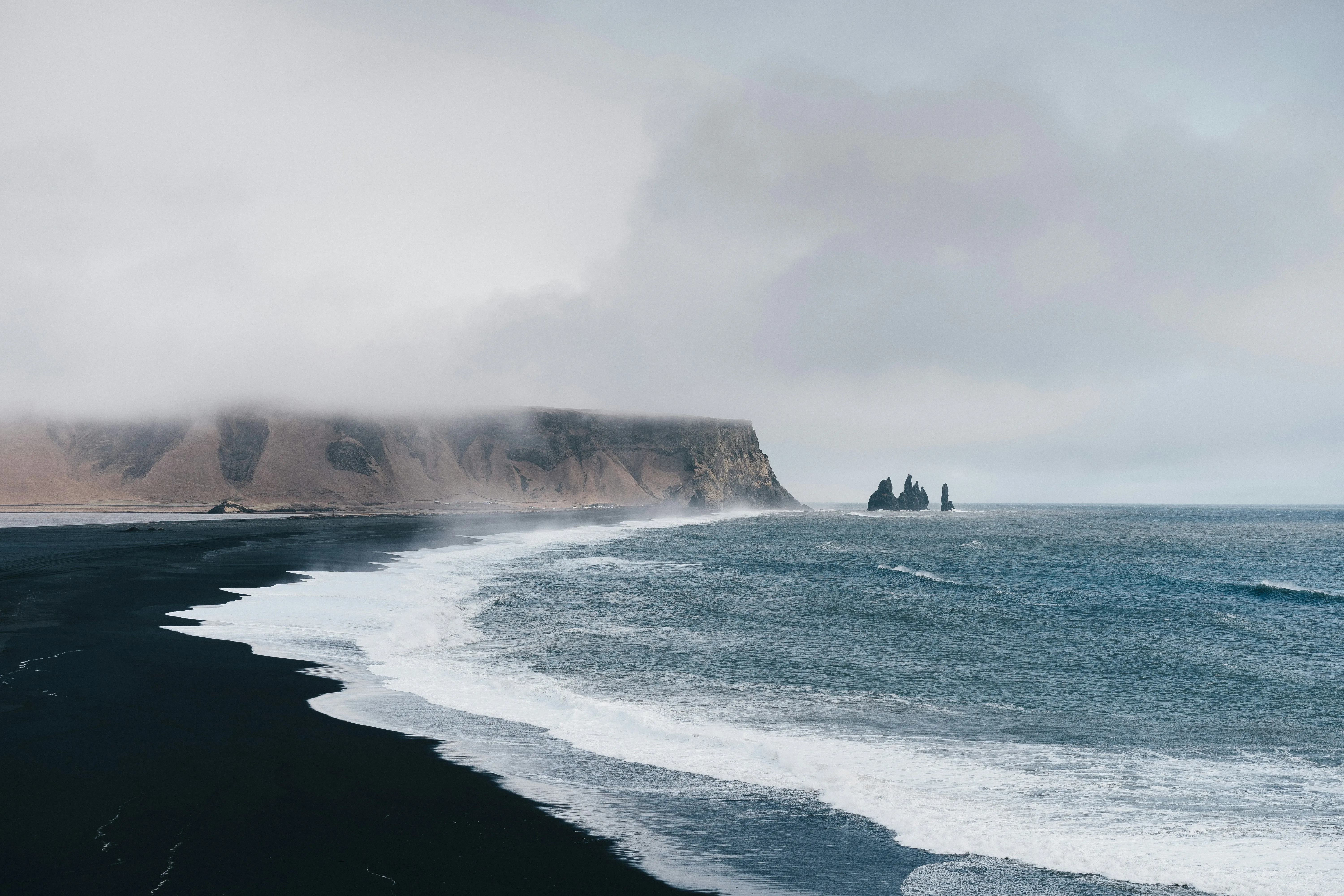
The south coast of the island offers a landscape of contrasts marked by glaciers and dark sand beaches. In this region, iconic waterfalls such as Seljalandsfoss, which allows you to walk behind its water curtain, and Skógafoss, known for its width and the force of its fall, are located. Continuing east, you reach the town of Vík, famous for the rock formations of Reynisdrangar and the black sand beach of Reynisfjara. This stretch of the island also houses the Vatnajökull National Park, where you can visit the Jökulsárlón glacier lagoon, a place where icebergs float calmly before reaching the ocean.
Towards the north, the geography becomes more rugged and less traveled, offering an experience of greater isolation. The city of Akureyri serves as the hub of the region, surrounded by mountains and located at the end of a long fjord. Nearby, Lake Mývatn is an essential stop to observe volcanic activity, with lava fields, pseudocraters, and sulfur formations in Hverir. In this northern area, you also find the Dettifoss waterfall, considered one of the most powerful in Europe due to the volume of water it carries.
West Iceland features the Snæfellsnes Peninsula, often described as a miniature summary of the country because it concentrates volcanoes, glaciers, and small fishing villages in a small area. Mount Kirkjufell, with its characteristic conical shape, is one of the most recognizable geographic elements of this area. On the other hand, the Westfjords represent the most remote and wild part of the island, with cliffs like Látrabjarg, inhabited by large colonies of seabirds, and a coastline difficult to access that maintains the purest essence of the Nordic landscape.
Throughout the territory, the culture of water is a constant. It is common to find thermal pools and bathing areas integrated into the landscape, both in modern facilities and natural pools, which are part of local daily life. Additionally, depending on the time of year, visitors can participate in activities related to wildlife observation, such as cetaceans in Húsavík, or go hiking in the highlands in the Landmannalaugar region, known for its colorful mountains and lava fields.
Tip: You cannot miss Þingvellir National Park, the most emblematic place in the country.
✈️ Best time to travel
Choosing the ideal time to visit Iceland depends fundamentally on the experiences you are looking for, as the country transforms drastically with the change of seasons. While the warmer months allow for exploring the interior of the island and enjoying almost endless days, the winter period offers a landscape tinged with white and the possibility of observing unique atmospheric phenomena. The Icelandic climate is known for its variability, which invites traveling with a flexible mindset and appropriate equipment for any forecast.
During the summer, accessibility is total, allowing travel on secondary roads and trails that remain closed the rest of the year. Conversely, the transition months and winter focus on observing northern lights, visiting ice caves, and a calmer atmosphere in rural areas. Whatever the choice, the country’s nature maintains its imposing character, alternating between the intense green of the summer season and the dramatic contrasts of autumn and spring.
| Season | Months | Typical weather | What to expect | Tourist influx |
|---|---|---|---|---|
| Spring | Mar – May | Transition from cold to temperate (-2°C to 7°C). Thawing and moderate winds. | Sighting of the first migratory birds, lengthening days, and landscapes in the process of blooming. | Medium-Low (⭐⭐) |
| Summer | Jun – Ago | Mild temperatures (10°C to 15°C). Midnight sun and occasional rains. | Access to the Highlands, hiking routes, local festivals, and whale watching. | High (⭐⭐⭐⭐⭐) |
| Autumn | Sep – Nov | Drop in temperatures (0°C to 10°C). Higher probability of rain and wind. | First northern lights, ochre colors in the vegetation, and traditional livestock gathering activities. | Medium (⭐⭐⭐) |
| Winter | Dic – Feb | Persistent cold (-5°C to 3°C). Frequent snow and few hours of natural light. | Snowy landscapes, ice caves, starry skies with auroras, and year-end celebrations. | Medium-High (⭐⭐⭐⭐) |
🗣️ Basic vocabulary
Although the vast majority of Icelanders speak excellent English, knowing some basic words in their local language is a gesture of courtesy that is usually appreciated. These expressions will be useful for navigating daily situations, such as greeting when entering an establishment or thanking for a service received during your stay.
It is not necessary to delve into the complex grammar of Icelandic to improve your travel experience. Having a simple repertoire of phrases will allow you to interact more closely with local inhabitants and move with greater confidence around the country.
- Halló: Hello.
- Takk: Thank you.
- Já: Yes.
- Nei: No.
- Bless: Goodbye.
- Afsakið: Sorry or excuse me.
- Hvar er…?: Where is…?