


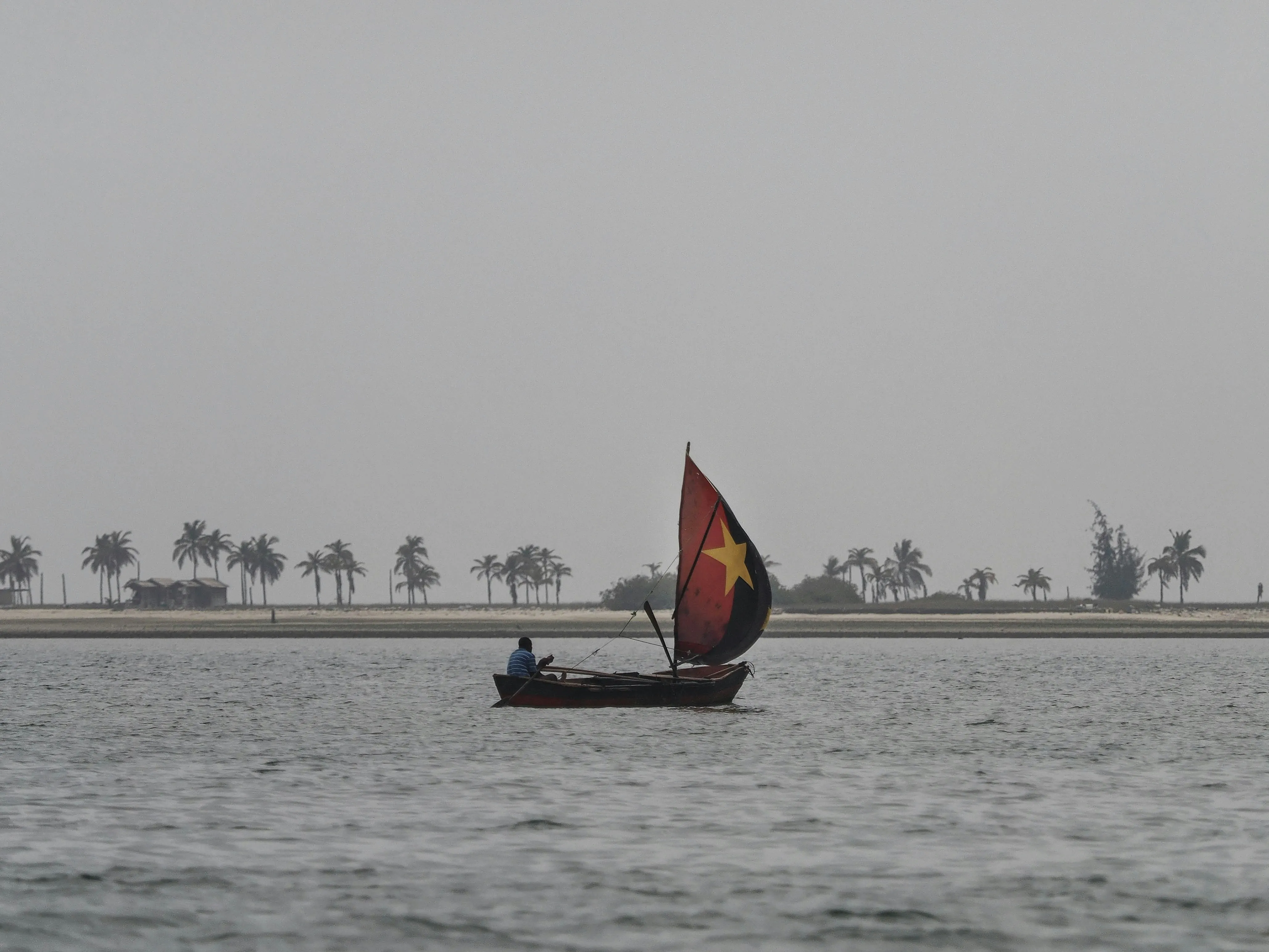
Angola
Discover fascinating Angola, where the tropical jungle merges with infinite deserts, majestic waterfalls, and a pristine Atlantic coast full of rich African culture.
Quick Facts
- Capital
- Luanda
- Language
- Portuguese
- Umbundu, Kimbundu, Kikongo, and Chokwe
- Currency
- Angolan Kwanza (AOA)
- Best time to visit
- From May to September, during the dry and cool season known as Cacimbo.
- Budget per day
- $60 - $250 per day
- Climate
- Humid tropical climate in the north and arid areas in the south, marked by a dry season and a season of heavy rains.
- Connectivity
- low
- Easily available at airports and official stores of local operators such as Unitel.
- Electricity
- Type C / F (230V)
- Local transport
- limited
- Card usage
- cash is used more
- Tipping
- optional
🌎 Introduction
Walking through this corner of southwestern Africa means encountering a landscape of contrasts that transforms as the Atlantic breeze is left behind. From the reddish cliffs facing the ocean to the plains dotted with the silhouette of imbondeiros, the territory offers a diverse geography where the Namibe desert and the fertile highlands of the interior coexist. The passage of the seasons, marked by the arrival of the cacimbo with its cool air or the intensity of the rains, dictates the rhythm of a land that preserves a nature yet to be interpreted.
The Angolan identity is clearly perceived in daily life, whether in the bustle of Luanda’s markets or in the tranquility of the villages where time seems to stand still. Music is the common thread that unites its people, with genres like semba resonating in family gatherings around a plate of funge. It is a culture of living traditions, where the heritage of ancient kingdoms intertwines with a slow-paced modernity, inviting one to calmly observe the richness of its customs and the serenity of its horizons.
🛡️ General Safety
Angola is a country that has experienced notable stabilization and openness to tourism in the recent decades. Although it is not considered a high-risk destination, traveler safety requires a proactive and cautious attitude. The situation has significantly improved since the end of the civil conflict, but social and economic challenges that influence public safety still persist.
In general terms, the safety level in Angola can be described as medium. This means that, while it is possible to travel through the country and enjoy its attractions, the tourist must observe basic rules of prudence, avoid certain risky behaviors, and stay informed about the local situation in each province they visit.
Crime and common risks
Crime in Angola is usually motivated by opportunity and the economic situation. The most common incidents that can affect visitors are:
- Theft and minor robberies: Especially frequent in crowded places such as outdoor markets, public transport stops, and areas with high pedestrian traffic.
- Robbery with force: Although less frequent, there may be cases of snatchings from motorcycles or thefts of bags and backpacks inside vehicles stopped at traffic lights (a technique known as “smash and grab”).
- Scams: Attempts at overcharging for unregulated services or small scams with currency exchange on the black market may occur.
- Landmines: This is a specific risk in rural and remote areas. Although great demining efforts have been made, it is vital to never leave the beaten paths and follow signage in areas that were affected by the war conflict.
Safety in cities and tourist areas
Safety varies considerably by location. Luanda, the capital, presents different challenges than the interior provinces.
- Luanda: As a large metropolis, it requires greater vigilance. It is recommended to avoid walking around the city during the night, even in areas that seem safe. Neighborhoods like Ilha do Cabo or Marginal are pleasant during the day, but it is advisable to travel by private vehicle at nightfall.
- Tourist zones: In points of interest such as Benguela, Namibe, or the Kalandula Falls, the atmosphere is usually much more relaxed and safe.
- Practical tips: Avoid ostentatiously showing valuables, such as high-end cameras, jewelry, or large amounts of cash. It is preferable to use mobile phones discreetly and in safe places.
Transportation safety
The transport system in Angola has particularities that the traveler should know to move with confidence.
- Driving: In Angola, driving is on the right. The condition of the main roads between provinces has improved, but many secondary roads are still dirt and can be in poor condition, especially in the rainy season.
- Public transport: The “candongueiros” (blue and white vans) are the most common means, but they are usually very crowded and do not always comply with road safety standards.
- Taxis and apps: The use of recognized private transport apps or taxis recommended by trusted hotels is advised, as they offer greater traceability and security.
- Vehicle rental: If you decide to rent a car, it is advisable to opt for a 4x4 vehicle if you plan to leave the main urban centers and avoid driving at night due to the lack of lighting and the presence of animals or vehicles without lights on the road.
Natural and climatic risks
Angola is a geographically diverse country, and natural risks are closely linked to the cycle of seasons.
- Floods: During the rainy season (usually from November to April), sudden floods and strong storms can occur, affecting communications and road infrastructure, especially in the north and center of the country.
- Extreme heat: In areas such as the Namibe Desert or the tropical north, temperatures can be very high. Constant hydration and protection from solar radiation are fundamental.
- Prevention: Before going on hiking routes or expeditions to national parks, always consult local weather forecasts and, preferably, be accompanied by local guides.
Local legislation and regulations
Compliance with local laws is essential to avoid legal complications during the trip.
- Documentation: It is mandatory to always carry a valid ID (passport with a valid visa). It is recommended to carry a certified copy and leave the original in the hotel safe.
- Photography: It is strictly forbidden to photograph government buildings, military installations, airports, bridges, and uniformed personnel (police or army). Doing so can lead to equipment confiscation and even arrests.
- Drugs: Angolan legislation is very severe with the possession, consumption, or trafficking of narcotic substances, with long-term prison sentences.
- Export: There are strict restrictions on the export of certain handicraft objects, ivory, or protected species without the corresponding permits.
Safety for specific groups
- Female travelers: Angola is generally a respectful country, but women traveling alone may attract unwanted attention. It is advised to dress discreetly and avoid walking unaccompanied in isolated areas or during the night.
- LGTBIQ+ travelers: Although Angola has taken legal steps toward decriminalization and protection against discrimination, society remains mostly conservative. It is recommended to maintain discretion in public displays of affection to avoid uncomfortable situations.
- Children and the elderly: There are no specific risks beyond the need to have good medical insurance and be up to date with recommended vaccines (such as yellow fever, which is mandatory to enter the country).
Emergencies and assistance
In case of needing help, these are the key points:
- Emergency numbers: The general number for the National Police is 113, the Fire Department is 115, and for general medical emergencies, 112 or 116 is usually used.
- Medical assistance: In main cities, there are private clinics with international standards. However, for serious cases, medical evacuation is usually necessary, so having comprehensive travel insurance coverage is indispensable.
- Communication: It is useful to learn some basic phrases in Portuguese, as communication with emergency services will be much smoother than in English or other languages.
”> Tip: Whenever you travel off the main routes in rural areas, do so with a licensed local guide; their knowledge will not only enrich your cultural experience but is the best guarantee to avoid areas with a risk of forgotten mines.”
📝 Entry requirements
To organize a trip to Angola, the first essential requirement is to have a valid passport with a validity that is, preferably, more than six months from the time of entry. It is recommended that the document has at least a couple of blank pages so that authorities can stamp the corresponding entry and exit stamps at border controls.
Currently, access to Angolan territory has been significantly simplified for recreational stays. Many international travelers can benefit from systems that allow entry for short-term tourist stays without the need for complex prior procedures. Typically, the maximum stay under this modality is usually thirty days per entry, with a total maximum limit of days per year that allows for a slow-paced discovery of the country’s main attractions.
Upon arrival at airports or land entry points, it is common for immigration personnel to request proof of an onward travel ticket out of the country, whether back to the place of origin or to a third destination. Similarly, the tourist might have to prove they have sufficient means of subsistence to cover their stay, for which it is advisable to have bank statements or proof of financial solvency.
In the customs section, standard international regulations on the import of goods apply. Travelers carrying personal-use medications must bring the necessary medical prescription to avoid misunderstandings. On the other hand, there is control over the export of certain objects of cultural or natural value, and the entry of foreign currency above certain thresholds must be appropriately declared according to local authority guidelines.
From a health perspective, the most widespread requirement is the presentation of the international certificate of vaccination against yellow fever. In addition to this measure, it is advisable to consult with a tropical medicine center before the trip to evaluate other preventive recommendations, considering that the environment and climate may require additional precautions to maintain good health throughout the tourist experience.
🌍 Essential destinations in Angola
Angola offers a diversity of landscapes ranging from pristine coasts to impressive geological formations. Below are some of the most highlighted points to visit:
- Luanda: The country’s capital stands out for its contrast between its modern skyscrapers and the historical legacy of the Fortaleza de São Miguel. The waterfront, known as the Marginal, is an ideal place to walk and observe local life.
- Kalandula Falls: Located in the Malanje province, these are among the largest waterfalls in Africa. Their water drop and the surrounding green environment offer a natural spectacle of great beauty.
- Namibe Desert: In this region, one can observe the Welwitschia mirabilis, a millenary plant that survives in extreme conditions. The desert landscape meets the Atlantic Ocean, creating memorable views.
- Fenda da Tundavala: Near the city of Lubango, this enormous geological abyss offers one of the country’s most spectacular panoramas, where the plateau drops abruptly toward the coastal plains.
- Kissama National Park: It is the main destination for those looking to observe African fauna, including elephants and various species of antelopes, in a protected savanna environment.
🍲 Gastronomy and culture
Angolan cuisine is a fascinating blend of local traditions with external influences, resulting in hearty dishes full of flavor. Some key elements of its culinary culture are:
- Funge: This is the basic accompaniment par excellence, made from cassava or corn flour. It has a consistency similar to a thick puree and is served with almost all stews.
- Muamba de Galinha: It is a chicken stew cooked with palm oil, okra, and spices. It is considered one of the national dishes and stands out for its intense aroma.
- Calulu: A traditional stew that can be made with fish or meat, prepared with sweet potato leaves, spinach, tomato, and palm oil.
- Fish and seafood: Given the country’s extensive coastline, seafood products such as shrimp, snapper, or lobster are highly prized and are usually prepared on the grill.
Music and dance also occupy a central place in the country’s identity. Genres like Kizomba and Semba are not only popular locally but have crossed borders, reflecting the cheerful and welcoming spirit of its inhabitants.
💡 Tips for the traveler
To fully enjoy your stay in this African destination, it is advisable to keep in mind a series of practical general recommendations:
- The climate varies by region and altitude, so it is recommended to bring light cotton clothing for coastal areas and some warm clothing if you plan to visit the highlands or the central plateau.
- The local currency is used for most daily transactions. Although there are ATMs in large cities, it is preferable to have cash in international currency to exchange at authorized establishments.
- The official language is Portuguese, and knowing some basic phrases can greatly facilitate interaction with the local population, who are usually friendly and open with visitors.
- The consumption of bottled water is recommended, as well as paying attention to the hygiene of raw foods to avoid common digestive disorders in international travel.
- Transportation between provinces can be done by plane for long distances or using all-terrain vehicles, as some roads may present challenges depending on the time of year.
🏥 Basic health considerations
If you are preparing for your trip to Angola, it is important to take a moment to organize everything related to your well-being during your stay. You will see that the country offers incredible landscapes and experiences, but the healthcare system has significant limitations that you should know beforehand. In urban areas, especially in Luanda, you will find private clinics with acceptable standards, while in rural areas, assistance is much more precarious and limited. You should keep in mind that the cost of private care for foreigners is usually high, so it is essential to have financial solvency or good backing. The main language in which you will be treated is Portuguese, although in some private centers in the capital you might find staff who speak English.
Hiring travel medical insurance is not just a recommendation, but an absolute necessity before landing in the country. It is advisable to verify that your policy includes the broadest possible coverage, paying special attention to medical repatriation and ambulance plane transfer if necessary. As the costs in quality private centers are high, having insurance that manages payments directly will save you many logistical and financial problems if any unforeseen event arises.
Regarding vaccines, you will be required to present the international certificate of vaccination against yellow fever to enter the country. In addition to this legal obligation, it will be very useful to have your official vaccination schedule up to date. It is highly recommended that you consult with a travel medicine center about other common protections, such as those for hepatitis A and B, typhoid fever, or tetanus, so that your time in the country is much more peaceful.
If you need to take any specific medication regularly, it is best to bring it with you from home in sufficient quantities for the entire trip. You will find that local pharmacies may not have the exact medicine you use. I suggest you keep the drugs in their original boxes and always carry the medical prescription or a report from your doctor, preferably translated, to avoid misunderstandings at customs controls. It is also a good idea to prepare a small first-aid kit with pain relievers, gastric protectors, and basic dressing materials.
The greatest health risk you will encounter in Angola is malaria, which is present throughout the territory all year round. Therefore, it is advisable to speak with a professional about preventive medication before leaving. During the trip, you will find that the use of repellents, long-sleeved clothing at dusk, and mosquito nets will be your best defense. Additionally, due to the tropical climate, heat and humidity can play tricks on you, so you will need to hydrate constantly to avoid heatstroke or dehydration.
Regarding hygiene and food, the golden rule is to always consume bottled water and ensure that the seal is intact. Avoid ice in drinks and natural juices that you haven’t prepared yourself. You will find very tempting street food, but if you decide to try it, try to ensure they are well-cooked foods served very hot. Regarding fruits and vegetables, you can enjoy them without fear if you peel them yourself or if they have been washed with potable water.
In case you suffer a medical emergency, the general telephone number is 112. However, you should know that the public ambulance service can be slow or unavailable in certain areas. In critical situations within large cities, it is often faster to travel by your own means to the nearest private clinic covered by your insurance.
As final tips for you to enjoy to the fullest, remember to always carry a hand sanitizer gel, avoid bathing in freshwater lakes or rivers to prevent parasites, and constantly protect your skin from the intense sun. If you plan these details in advance, you can focus on discovering the wonders this country has in store for you without worrying excessively about your health.
🚌 Transportation within the country
Moving through the territory requires proper planning due to the size of the country and the characteristics of its infrastructure. The airplane is one of the most used means to cover long distances between the main provincial capitals, as it allows for crossing the national geography quickly. For land travel, long-distance buses connect various urban centers, although the frequency and duration of trips can vary by region and road conditions.
In the urban environment, collective minibuses are the most widespread and popular means of transport. These vehicles usually do not have fixed stops or strict schedules, so their use requires some adaptation by the visitor. On the other hand, the railway system offers specific routes that link strategic points on the coast with the interior, being an interesting option for observing the landscape, although its network is not yet global or excessively fast.
The use of taxis is common in larger cities, where transport services requested through mobile applications have also gained ground, providing a greater sense of predictability. However, signage is often scarce and information about routes is not always available in several languages, so mastering some basic expressions is of great help for managing trips and ticket purchases.
There is a notable difference between the infrastructure of large cities and rural areas. While movement is constant in urban centers, public transport is much more limited in remote areas and largely depends on private or shared vehicles. Comfort and punctuality can be affected by external factors, so it is recommended to approach travel with flexibility and extra time.
For those seeking greater independence, vehicle rental, preferably with a local driver, is a frequent alternative. This option facilitates access to places of natural interest where regular transport does not easily reach. In any case, the pace of travel is usually slow, reflecting the logistical reality of an environment that continues to develop its internal connections.
Tip: Try to schedule your important travel during daylight hours and always confirm the exact departure location a day before traveling.
🤵 Culture and etiquette
In Angola, the social interaction always begins with a cordial greeting. It is common to dedicate time to polite formulas before getting down to business, whether in a shop or a professional setting. The handshake is the most common form of greeting between men and women, often accompanied by direct eye contact that conveys sincerity. In more informal contexts, people with greater trust may greet each other with several kisses on the cheeks or light hugs, depending on the region and the closeness of the relationship.
Respect for hierarchy and elders occupies a central place in daily coexistence. It is common for formal address to be used toward older people or those in positions of authority, avoiding the use of first names until a closer relationship is established. In public spaces, maintaining a moderate tone of voice and a calm attitude facilitates harmonious integration with the environment, as excessively loud or confrontational attitudes are usually perceived negatively.
The perception of time in daily life may show greater flexibility than in other contexts. Although punctuality is valued in official and business appointments, in social meetings and daily life, it is common for schedules to adapt to the rhythm of the moment. This attitude reflects a priority for the quality of human interactions over the rigidity of the clock, so showing patience and adaptability to possible delays is fundamental for any visitor.
Hospitality is a hallmark and sharing a meal is considered a gesture of goodwill and openness. If an invitation to a private home is received, it is a sign of courtesy to accept at least a small portion of what is offered as a sign of appreciation toward the host. In restaurants in urban areas, tips are well received when the service has been satisfactory, although there is no strict rule on the amount, and it is advisable to observe the local dynamics of each establishment.
When visiting places with strong traditional or religious roots, it is important to maintain a discreet attitude and dress according to the environment, opting for clothes that are not excessively informal in ceremonies or rural communities. Respect for local traditions also implies always asking for permission before taking photographs of people or their homes, valuing the privacy and dignity of residents. Politeness and active listening are the best tools for understanding the country’s social reality.
“Tip”: Before starting any conversation, transaction, or request for information, make sure to give a formal greeting and briefly ask about the well-being of your interlocutor; omitting this social preamble can be perceived as a lack of courtesy.
🍛 Typical gastronomy
Angolan cuisine is the result of a rich fusion between African roots and colonial influence, creating a culinary identity based on products from the land and the sea. The central element of most meals is funge, a consistent dough made with cassava or corn flour that serves as a base and accompaniment for almost all stews. Flavors are usually intense due to the recurring use of palm oil, which provides an orange color and a dense, unctuous texture to traditional preparations.
In coastal areas, fresh fish and seafood dominate the diet, while in interior regions, poultry and goat meats gain more importance. The use of local vegetables such as okra, sweet potato leaves, and various varieties of beans is very common. Dishes are usually seasoned with gindungo, a very spicy local type of chili that is generally presented in a separate sauce so that each diner can adjust the spice level to their personal taste.
Regarding social habits, lunch is the main meal of the day and is usually enjoyed slowly. In more traditional settings, sharing food is a gesture of hospitality and it is common for dishes to be placed in the center of the table. Etiquette in restaurants in the main cities follows international standards, although in simpler and local establishments there is a more informal and close atmosphere, where food is prepared in a homemade and artisanal way.
To accompany the meal, bottled water is the most recommended option for travelers. However, local beers enjoy great popularity and are easily found throughout the territory. Tropical fruit juices and infusions are also common. After eating, it is common to consume fresh seasonal fruit, such as mango, papaya, or pineapple, which stand out for their intense flavor and freshness throughout the country.
| Dish | Description | Main ingredients | Where to try it | Tip |
|---|---|---|---|---|
| Muamba de galinha | The country’s most emblematic stew, with a thick texture and deep flavor. | Chicken, palm oil, okra, and garlic. | Traditional restaurants in any city. | Always try it accompanied by funge for an authentic experience. |
| Calulu de peixe | A traditional stew that combines fresh and dried fish with vegetables. | Fish, sweet potato leaves or spinach, okra, and tomato. | Coastal areas like Luanda or Benguela. | It is a nutritious and hearty dish, ideal for a full lunch. |
| Mufete | A typical feast of grilled fish very popular in celebrations. | Grilled fish, beans with palm oil, and boiled plantain. | Beach bars and outdoor markets. | It is usually accompanied by a very refreshing onion and tomato salad. |
| Feijão de óleo de palma | A bean stew with a creamy texture and a very characteristic flavor. | Beans, palm oil, and occasionally, pieces of dried fish. | Small local restaurants and eateries. | It is the perfect accompaniment for meat or fried fish dishes. |
| Arroz de garoupa | A preparation of soupy or dry rice with rockfish. | Grouper (garoupa), rice, vegetables, and local spices. | Port cities and restaurants specializing in seafood. | Make sure the fish is the catch of the day to enjoy its maximum quality. |
📷 Areas and places to visit
Angola is a destination that surprises with the variety of its landscapes and the depth of its history. The capital, Luanda, is usually the starting point for any traveler. In this city, an immediate contrast is perceived between the modernity of its urban profile facing the ocean and the colonial legacy that is still preserved. The Fortaleza de São Miguel, located atop a hill, offers a historical perspective of the country and expansive views of the bay. Nearby, the National Museum of Anthropology allows visitors to learn about the ethnic and cultural diversity of the different provinces through its collections of masks and traditional utensils. Strolling along the Avenida Marginal or visiting Ilha do Cabo is a common activity to integrate into the capital’s social life, where numerous dining spaces are found.
To the south, the province of Benguela stands out for its Portuguese-influenced architecture and its slower pace. It is an area recognized for its coastal zones, such as Baía Azul, where the calm waters invite relaxation. In this region, the combination of well-preserved historic buildings and the proximity of natural beaches creates an environment conducive to those seeking more relaxed tourism. Local markets in the area are interesting meeting points to observe the exchange of fresh produce and regional crafts.
In the interior of the country, the province of Malanje is home to one of the most representative natural monuments: the Kalandula Falls. This waterfall, fed by the Lucala River, stands out for its great extent and the lushness of the vegetation surrounding it. Not far away are the Black Rocks of Pungo Andongo, large-scale rock formations that stand out in the plain and are linked to historical legends of local resistance. It is an ideal area for hiking and landscape photography without large crowds.
The city of Lubango, located on the Huíla plateau, offers a cooler climate and mountain landscapes. One of the most visited points is the Fenda da Tundavala, a natural abyss that marks the transition between the plateau and the coastal lowlands, providing a view of great depth. In the same area, the Cristo Rei monument watches over the city from above. Road routes in this province, such as the famous Serra da Leba with its winding curves, are an experience sought after by travelers who enjoy scenic drives.
For those seeking contact with native fauna and flora, Kissama National Park is the most accessible reserve from the capital. Here, it is possible to observe elephants, giraffes, and various species of antelopes in a savanna environment dotted with baobabs, the most emblematic trees of the region. The Cuanza River borders this park, allowing for river excursions that show a different perspective of the ecosystem. In the far south, the province of Namibe presents a desert landscape that reaches the sea, home to the Welwitschia mirabilis, a millenary plant unique to this part of the world.
Finally, historical interest is also concentrated in the north, in M’banza-Kongo. This place was the capital of the ancient Kingdom of Kongo and has been recognized for its archaeological and cultural value. The ruins of the old cathedral and the vestiges of the royal palace offer a glimpse into the political and social organization of the region before and during the colonial era. The mix of ancestral traditions and the influence of religious missions gives this area a quiet and reflective character, very different from the hustle and bustle of modern urban areas.
“Tip”: You cannot miss visiting the Kalandula Falls, the most emblematic place in the country.
✈️ Best time to travel
Angola has a predominantly tropical climate divided into two very distinct periods: the dry season, locally known as Cacimbo, and the rainy season. Choosing the ideal time to visit the country depends largely on the activities to be carried out, although in general, the period of least rainfall usually offers more comfortable conditions for road travel and exploring natural areas.
During the driest months, temperatures are cooler and visibility in national parks improves considerably, facilitating the observation of local fauna. Conversely, the rainy season transforms the landscape into an intense green environment and is the time when riverbeds and waterfalls show all their splendor, although it requires more detailed planning due to the state of some routes.
| Season | Months | Typical climate | What to expect | Tourist influx |
|---|---|---|---|---|
| Spring | Mar – May | Transition toward the end of the rains, with warm temperatures and decreasing humidity. | Very green landscapes, lush vegetation, and high-flowing rivers after the wet period. | ⭐⭐ Medium |
| Summer | Jun – Aug | Dry season (Cacimbo). Cooler temperatures, clear skies, and absence of rain. | Ideal time for wildlife viewing in national parks and hiking routes. | ⭐⭐⭐ High |
| Autumn | Sep – Nov | Gradual increase in temperatures and the beginning of the first rains. | Favorable time for bird watching and the start of flowering for various species. | ⭐⭐ Medium |
| Winter | Dic – Feb | Hot climate, high humidity levels, and frequent, intense rains. | Purely tropical environment; ideal for enjoying the coast and beach areas. | ⭐ Low |
🗣️ Basic vocabulary
Knowing some basic expressions in Portuguese, the official language of Angola, will help you manage more easily during your trip. Although other languages are used in certain tourist environments, using simple terms in daily interactions facilitates communication with local residents and shows politeness.
These words and phrases are useful for common situations, such as greeting, making basic purchases, or asking for directions, making your experience smoother and more practical.
- Bom dia / Boa tarde: Good morning / Good afternoon.
- Por favor: Please.
- Obrigado / Obrigada: Thank you (the ending “o” is used if the speaker is male and “a” if female).
- Quanto custa?: How much does it cost?
- Onde fica…?: Where is…?
- Desculpe: Excuse me or sorry.
- Sim / Não: Yes / No.
- A conta, por favor: The check, please.