


Netherlands
A destination of flat landscapes, historic canals, windmills, and vibrant tulip fields that invites exploration of cities with a cosmopolitan and very relaxed atmosphere.
Quick Facts
- Capital
- Amsterdam
- Language
- Dutch
- Frisian, English (widely spoken)
- Currency
- Euro (€)
- Best time to visit
- From mid-April to October, with spring being the highlight to see the blooms.
- Budget per day
- $80 - $220 per day
- Climate
- Temperate maritime climate characterized by mild summers, cool winters, and frequent moderate rainfall throughout the year.
- Connectivity
- good
- Very easy to obtain at airports, local phone shops, and via eSIM.
- Electricity
- Type C / F (230V)
- Local transport
- good
- Card usage
- widespread
- Tipping
- optional
🌎 Introduction
Beyond the iconic image of its canals and bicycles, this corner of northwestern Europe is defined by a singular relationship with water and the horizon. It is a territory where the landscape is drawn at ground level, stretching across plains that change color with the passing of the seasons and which have been shaped with patience over the centuries. Here, daily life unfolds amidst exposed brick architecture, bridges that rise as boats pass, and an Atlantic light that invites observation.
The identity of the Netherlands is perceived in details ranging from the bustle of its traditional markets to the calm of the paths that run through dunes and flower fields. There is a natural balance between the avant-garde of its cities and the weight of its history, something that is visible both in contemporary design and in the preservation of its ancient windmills. It is an environment that offers subtle contrasts, where popular celebrations dye the streets orange and hospitality is experienced in cozy spaces, designed to enjoy time without haste.
🛡️ General safety
The Netherlands is internationally considered one of the most safe and stable destinations for tourism. The country enjoys a low crime rate and a very efficient public safety infrastructure, allowing travelers to move with a great sense of tranquility both day and night.
Compared to other global destinations, the safety level is very high. Nevertheless, as in any country with a massive tourist influx, it is necessary to maintain common sense and follow certain preventive guidelines, especially in areas with higher concentrations of people.
Crime and common risks
Although violent crimes against tourists are extremely rare, the main risk lies in petty property crimes. The most common incidents include:
- Theft and pickpocketing: These are common in busy areas of Amsterdam, such as Dam Square, the Red Light District, and major train stations. Pickpockets often act in organized groups, taking advantage of distractions on public transport.
- Bicycle theft: This is the most frequent crime in the country. If you decide to rent one, make sure to always use two high-quality locks and anchor it to a fixed support.
- Street scams: Cases of “fake police” dressed in civilian clothes asking to check wallets for counterfeit bills have been reported. It is important to know that real police will never ask to see your cash.
- Street substance sales: In some cities, strangers may offer drugs on the street. It is recommended to ignore these offers, as the substances are often dangerous or adulterated.
Safety in cities and tourist areas
Dutch urban centers are very well monitored and safe for walking. However, it is worth keeping the following particularities in mind:
- Tourist neighborhoods: In Amsterdam’s Red Light District, security is constant, but the atmosphere can become somewhat chaotic at night due to alcohol consumption. It is recommended not to take photographs of the windows out of respect and to avoid conflicts with security personnel.
- Public transport: Stations like Amsterdam Centraal are points where luggage should be especially watched, particularly when validating tickets or checking schedule boards.
- Lighting: Most cities have excellent lighting, allowing for confident strolls along canals and main streets during night hours.
Transport safety
The transport system in the Netherlands is one of the best in the world and stands out for its punctuality and safety.
- Public transport: Trains, trams, and buses are safe. It is mandatory to validate your ticket when entering and exiting; failure to do so can result in considerable fines.
- Taxis and VTC: Official taxis are identifiable by their blue license plates. They are safe and regulated services, though very reliable private transport apps are also available.
- Driving: In the Netherlands, you drive on the right. Roads are in perfect condition, but drivers must pay extreme attention to bike lanes. Cyclists usually have priority, and thousands of them are constantly circulating.
- Road rules: Respect for speed limits and traffic signs is absolute, and fines for violations are high and processed quickly.
Natural and climatic risks
The country does not present extreme natural risks such as earthquakes or hurricanes, but its particular geography requires attention to certain factors:
- Flooding and wind: Because much of the country is below sea level, there are very advanced defense systems. The real risk for tourists is strong storms and gusty winds that can occur in autumn and winter, occasionally affecting train circulation.
- Variable weather: The weather can change drastically in a few hours. Extreme cold is not common, but humidity and wind can increase the perception of cold. It is recommended to always check local weather alerts if outdoor activities are planned.
Legislation and local norms
There are rules that visitors should know to avoid misunderstandings with local authorities:
- Documentation: It is mandatory to always carry a valid identity document (passport or national identity card, depending on origin). The police can request it at any time.
- Drug policy: Although a policy of tolerance toward soft drugs exists in “coffeeshops,” their consumption in public spaces is usually prohibited in many municipal areas and can lead to fines.
- Photography: It is strictly forbidden and a cause for confrontation to photograph workers in the Red Light District.
- Respect for the environment: Uncivil behavior (urinating in the street, excessive noise, or alcohol consumption in non-permitted areas) is sanctioned with immediate fines.
Safety for specific groups
The Netherlands is a global benchmark for tolerance and inclusion:
- Female travelers: The country is exceptionally safe for women traveling alone. The precautions to take are the same as in any modern European city.
- LGTBIQ+ travelers: It is one of the most welcoming destinations in the world for this group. Discrimination is socially rejected and legally prosecuted.
- Children and the elderly: Infrastructure is very accessible, with ramps, elevators, and adapted transport. Parks and public spaces are very safe environments for families.
Emergencies and assistance
In the event of an incident, the response system is fast and multilingual:
- Single emergency number: You must dial 112 to contact police, ambulances, or firefighters.
- Police (non-emergencies): For cases that do not require an immediate response (such as reporting a theft), the number is 0900-8844.
- Medical assistance: The country has top-tier hospitals. If you need non-urgent medical attention, you can go to a “Huisartsenpost” (after-hours medical clinic).
- Reports: In case of theft of belongings, it is essential to go to the nearest police station to obtain a police report, which is necessary for any subsequent travel insurance claim.
Tip: Always pay attention to the red-painted bike lanes; crossing them without looking is the most common accident risk for distracted tourists in the cities.
📝 Entry requirements
To plan a tourist trip to the Netherlands, it is essential to have a passport with a minimum validity that usually extends to at least three months after the intended departure date from the territory. Most international travelers visiting the country for leisure do not require a prior visa for short stays, thanks to existing exemption agreements for general tourism. However, it is worth noting that the stay permit is usually limited to a maximum period of ninety days within a one-hundred-and-eighty-day window.
At entry control points, whether airports or land borders, authorities may request documents justifying the purpose of the visit. Among these elements, the importance of having an onward transport ticket out of the country or the free circulation zone stands out, as well as proof of confirmed accommodation for the first nights. Similarly, you may be required to demonstrate possession of sufficient economic means to cover daily expenses during the stay, which can be evidenced through bank statements or availability of cash.
Regarding customs regulations, there are standard controls for the entry of certain products. It is fundamental to consider that the transport of medications for personal use should preferably be accompanied by a medical prescription translated or in international format to avoid inconveniences. Generally, there are restrictions on the entry of fresh food, plants, or unprocessed products of animal origin. Personal valuables, such as photographic or electronic equipment, are usually allowed as long as their quantity does not suggest a commercial purpose.
From a health perspective, mandatory vaccinations are not usually required for the entry of international tourists under normal conditions. Despite this, it is regularly recommended to have travel insurance with broad medical coverage, as this facilitates access to healthcare in the event of any health unforeseen. Staying informed about general wellness recommendations will allow the travel experience to unfold with total peace of mind.
The key points for access to the country are summarized below:
- Main documentation: Valid passport with at least three months’ validity after the intended stay.
- Stay permit: Generally, a maximum of 90 days is allowed for tourist purposes.
- Justification of departure: It is advisable to carry a return ticket or a ticket for departure to a third destination.
- Economic solvency: Possible requirement to demonstrate funds to pay for the trip.
- Health and prevention: Recommendation of international medical insurance; usually no required vaccinations.
- Customs controls: Limitations on the entry of certain foods, plants, and medications without a medical prescription.
🏥 Basic health considerations
If you are planning a trip to the Netherlands, you will be glad to know that you are visiting one of the countries with the highest health standards in the world. You will not have to worry about tropical diseases or extreme risks, but it is always better to go prepared so that any unforeseen event remains just an anecdote.
The Dutch healthcare system is excellent, modern, and very efficient. You will find top-tier hospitals and well-stocked pharmacies in practically any city. Most health personnel speak impeccable English, so communication will not be a problem if you do not speak Dutch. However, you should keep in mind that healthcare there is mostly private and costs for tourists can be high if you do not have adequate coverage.
Although it is not a legal requirement to enter the country, taking out travel medical insurance is something we totally recommend. A simple visit to the emergency room or a diagnostic test can be quite expensive. Ideally, your insurance should include broad coverage for hospitalization, medical transfers, and repatriation if necessary. If you reside in the European Union, do not forget to carry your European Health Insurance Card, though remember that it does not always cover 100% of costs or certain private services.
Regarding vaccinations, there are no mandatory ones to enter the Netherlands. It is enough to have your usual official vaccination schedule up to date. Being a country with a temperate climate and very strict hygiene standards, there are no risks of serious endemic diseases that require preventive medication.
If you need to bring your own medication, it is best to transport it in its original packaging. If you take specific drugs, especially those that fall into the category of narcotics or psychotropics like certain sleeping pills or strong painkillers, it is essential that you carry a medical prescription translated into English or the corresponding official certificate. For common medicines like a basic painkiller, you will easily find pharmacies (drogisterij) where they will assist you very professionally.
Regarding common health risks, the climate is the main factor to keep in mind. In winter, cold and humidity can be intense, so make sure to dress warmly. If you plan to go hiking in wooded areas or dunes during spring and summer, it is advisable to watch for ticks, which can transmit Lyme disease. Otherwise, you will not find major risks from insects or problems with altitude.
Regarding water and food, you can be totally at ease. Tap water in the Netherlands is of exceptional quality, even better than many bottled waters, so you can refill your bottle without fear. The levels of food hygiene in restaurants and street stalls are very rigorous, so you can try local delicacies like herring or waffles with total safety.
In case you find yourself in a serious medical emergency, the phone number you should dial is 112. It is the single emergency number and they will assist you quickly. If the problem is not urgent, it is standard to go first to a general practitioner (huisarts), although as a tourist it is simplest for your insurance to tell you which center to go to directly.
As final practical recommendations, we suggest always carrying your insurance contact information and a small first-aid kit with the basics for minor scrapes or mild pain. Staying hydrated and wearing comfortable shoes for long walks or bike rides through its flat cities will be your best ally to enjoy the trip without health setbacks.
🚌 Transport within the country
Moving around the Netherlands is a simple task thanks to its connected and efficient infrastructure network. The train stands as the main means of transport for moving between different provinces, offering broad coverage that links urban centers quickly. In larger cities, using the tram and metro is most common for visitors, while the bus completes the offering by reaching outlying neighborhoods and smaller towns.
Ease of use is one of the features that define the system. Signage is usually very clear and present at strategic points in stations and stops. Additionally, most service personnel and ticket machine interfaces allow interaction in several languages, which facilitates ticket purchasing and orientation without needing to know the local language.
In rural or less populated areas, the frequency of transport may decrease, making the bus the necessary alternative for exploring landscapes off the conventional routes. In regions with water presence, such as coastal or river areas, ferries operate regularly and are naturally integrated into daily journeys. The use of a car is possible, although in urban centers traffic and pedestrian priority make it less recommended than public transport.
Regarding taxi services and private transport, they are mainly available at train stations, airports, and hotel zones. In general, transport in this destination stands out for its comfort and punctuality, generating a sense of constant reliability for organizing any itinerary. Due to short internal distances, airplanes are not used for travel within the country.
Tip: It is recommended to always verify the destination station name and the line direction on the platform information boards before boarding the vehicle.
🤵 Culture and etiquette
In the Netherlands, social coexistence is based on respect for privacy and individual autonomy. In daily dealings, clarity and directness in communication are notably valued, so interactions tend to be straightforward and without unnecessary beating around the bush. When greeting for the first time, a firm handshake accompanied by direct eye contact is most common. In public spaces, a moderate tone of voice is usually maintained, and it is appreciated that personal space is respected, avoiding spontaneous physical contact with people outside one’s inner circle.
Punctuality is a fundamental pillar of Dutch social organization. Arriving exactly at the agreed time, whether for a professional meeting or a social date, is considered an essential sign of consideration for others’ time. Likewise, the use of public space requires special attention to integrated norms, such as strict respect for bike lanes, which are priority transport routes and not pedestrian zones. In public transport and shops, orderly behavior and respect for the turn of arrival are valued.
In the realm of gastronomy and social gatherings, it is common for visits to private homes to be organized in advance, as prior planning is a widespread custom. During meals in restaurants, it is common for the bill to be split equally among diners. Regarding tipping, although service is usually included in the price, it is customary to round up the amount or leave a small additional percentage if the service has been satisfactory, always on a voluntary basis.
Respect for diversity and tolerance are deeply rooted values, so an open attitude toward different lifestyles is expected. When visiting places of worship or monuments, it is recommended to maintain a discreet attitude and follow specific instructions for each location. Similarly, it is important to show consideration when walking past homes; due to traditional architecture, many houses have large windows without curtains, but it is considered impolite to look intrusively into private property.
Tip: Punctuality is considered a basic form of respect; if you are going to be even a few minutes late for an appointment, it is highly recommended to give notice in advance to avoid it being perceived as a lack of courtesy.
🍛 Typical gastronomy
The gastronomy of the Netherlands is defined by its simplicity and practical character, moving away from complex preparations to focus on nutritious and comforting dishes. Historically influenced by its agricultural and maritime past, the local diet is based on basic products such as potatoes, seasonal vegetables, North Sea fish, and an exceptional variety of dairy products. It is common to find balanced flavors where ingredients maintain their natural essence, sometimes integrating spices inherited from old trade routes.
Eating habits in this region have a structure marked by functionality. Lunch is usually a light meal, typically consisting of cold sandwiches or quick snacks. In contrast, dinner represents the main gathering of the day and is traditionally held early, around six or seven in the evening. A relevant cultural aspect is the borrel, a moment of socialization after the workday where drinks and small snacks are shared in a relaxed atmosphere.
Cheese is one of the pillars of its culinary identity, with varieties ranging from creamy and mild textures to very aged specimens with an intense flavor. In local markets, the consumption of marinated fish is common, a deeply rooted custom that is part of the daily landscape. Regarding drinks, coffee is a constant throughout the day, while beer, especially lagers and craft beers, holds a prominent place in leisure moments and dinners.
In restaurants, the atmosphere is usually informal and welcoming, seeking to make the diner feel comfortable and unhurried. It is not necessary to follow strict etiquette protocols in most establishments, though punctuality in reservations is valued. Service is often efficient but leisurely, allowing for conversation—an essential element of the local gastronomic experience that residents associate with well-being and good company.
| Dish | Description | Main Ingredients | Where to try it | Tip |
|---|---|---|---|---|
| Stamppot | Rustic mashed potatoes mixed with vegetables, served hot. | Potatoes, kale or sauerkraut, and smoked sausage. | Traditional cuisine restaurants and local homes. | Try it during the winter months for a more authentic experience. |
| Haring | Raw herring that has been cured in brine in the traditional way. | Herring, chopped raw onion, and pickles. | Specialized street stalls (haringhandels). | Hold it by the tail, tilt your head back, and eat it in one bite. |
| Bitterballen | Spherical croquettes with a creamy interior and a very crunchy exterior. | Minced beef, broth, flour, and breadcrumbs. | Cafes, bars, and during “borrel” time. | Be careful with the temperature of the filling, which is usually very hot. |
| Stroopwafel | Two thin waffles joined by a sweet syrup filling. | Flour, butter, brown sugar, and caramel syrup. | Open-air markets and bakeries. | Place the waffle over a hot cup of coffee to soften the syrup. |
| Erwtensoep | Very thick pea soup, typical of the cold season. | Split peas, vegetables, pork, and sausage. | Traditional inns and stalls at winter events. | It is considered at its optimal point if the spoon stands vertically in the soup. |
📷 Areas and places to visit
A journey through the Netherlands usually starts in its capital, Amsterdam. This city is recognized for its intricate canal network from the 17th century, which allows for discovering the historic center from a different perspective. Walking through its streets, you will find points of great cultural value such as Dam Square and the Jordaan neighborhood, characterized by its narrow houses and quieter secondary canals. In the artistic field, the Museum District houses globally relevant institutions like the Rijksmuseum, where Dutch painting masterpieces are exhibited, and the Van Gogh Museum, dedicated to the life and work of the famous painter.
Moving south, the urban geography presents a notable contrast in Rotterdam. Unlike other historic cities, this locality stands out for its avant-garde and modern architecture, the result of reconstruction after World War II. Among its most unique constructions are the Cube Houses and its great port, one of the most important in the world. Nearby is The Hague, which serves as the political center of the country. There, you can visit the Binnenhof complex, seat of parliament, and the Peace Palace. Additionally, the city features the coastal area of Scheveningen, a popular destination for walking along the North Sea.
The cities of Delft and Utrecht offer a more leisurely and traditional atmosphere. Delft is famous for its production of blue pottery and its well-preserved old town full of stone bridges. On the other hand, Utrecht possesses a unique character thanks to its canals with wharves situated below street level, which today function as terraces. Its most visible element is the Dom Tower, the highest church tower in the country, which marks the center of its medieval layout. These locations are ideal for excursions that combine university history with local life in their markets.
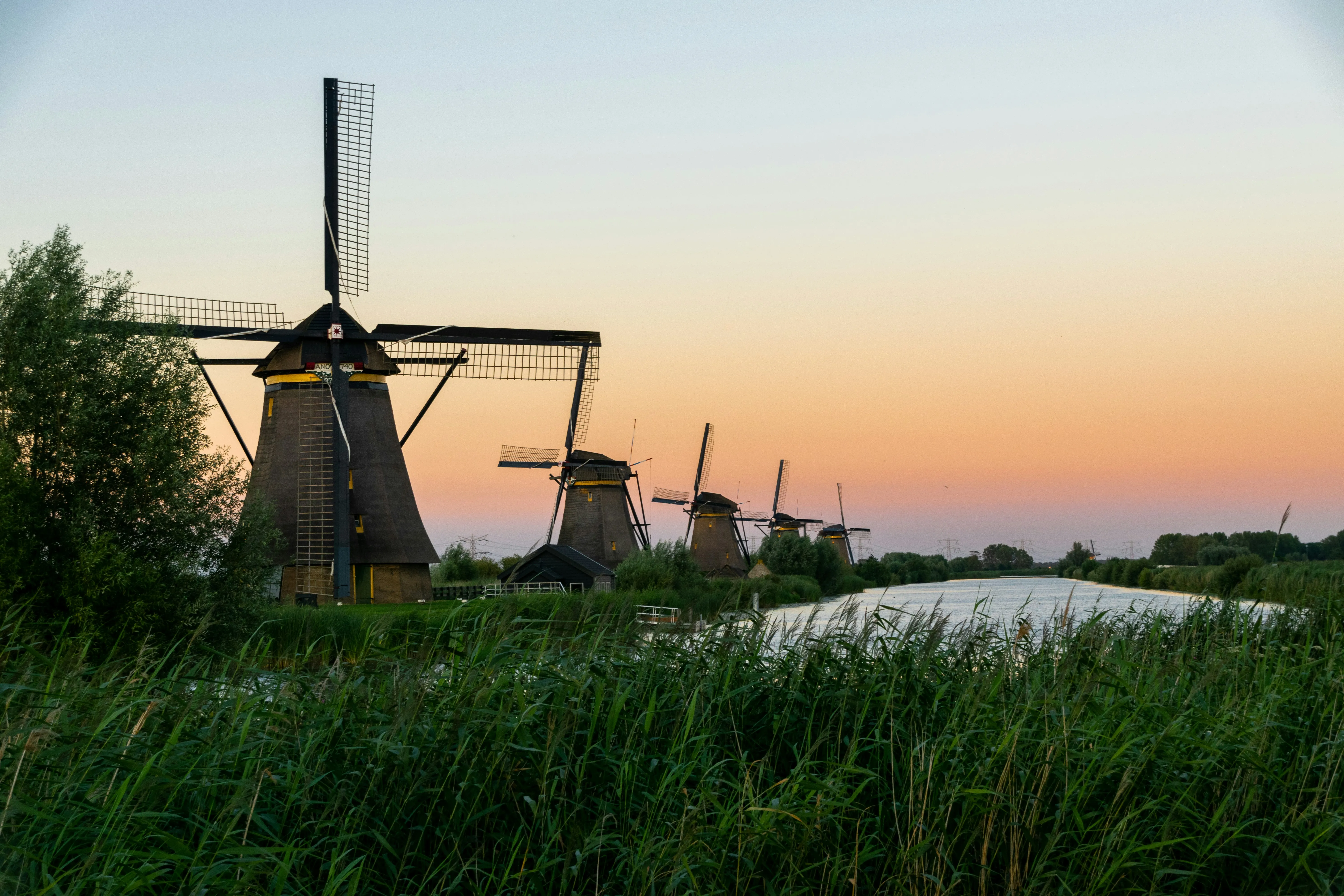
The Dutch rural landscape allows for an understanding of the historical relationship of its inhabitants with water. The Kinderdijk area, protected by UNESCO, preserves a set of nineteen original windmills that served to drain the polders. Similarly, in Zaanse Schans, you can visit a recreation of industrial life from the 18th and 19th centuries, with working mills and craft workshops where traditional wooden clogs are made. During the spring months, the Lisse region takes center stage for the blooming of the tulip fields, which draw stripes of color across the plain.
For those seeking natural environments, the Hoge Veluwe National Park offers a combination of forests, heathlands, and sand dunes that can be explored using the park’s public-use bicycles. In the far north, the Frisian Islands, located in the Wadden Sea, present a wild landscape of extensive beaches and unique biodiversity. Finally, the commercial character of the country is reflected in cities like Gouda and Alkmaar, where traditional cheese markets are maintained, an activity that allows for learning about the mercantile customs that have defined the region for centuries.
“Tip”: You cannot miss visiting the canals of Amsterdam, the most iconic place in the country.
✈️ Best season to travel
Choosing the ideal time to visit the Netherlands depends largely on personal preferences regarding weather and the activities one wishes to perform. This destination has a temperate oceanic climate, which translates into cool winters and moderate summers, with rainfall that can appear at any time of the year, though it is rarely extreme. The landscape changes significantly according to the calendar, offering everything from flower-covered fields to canals surrounded by autumnal tones.
In general, most travelers opt for the months between April and September to take advantage of the most pleasant temperatures and extended daylight hours. However, each season has its own character: spring stands out for its iconic bloom, summer for its outdoor cultural dynamism, and the colder months for a quieter and more cozy atmosphere, ideal for those seeking a cultural experience in museums and indoor spaces.
| Season | Months | Typical weather | What to expect | Tourist crowds |
|---|---|---|---|---|
| Spring | Mar – May | Mild and changeable, with cool breezes and sunny days interspersed with rain. | Blooming of tulips and bulbs, green landscapes, and opening of botanical gardens. | High ⭐⭐⭐⭐ |
| Summer | Jun – Ago | Warm and pleasant temperatures, very long days, and low probability of frost. | Outdoor festivals, life on canal terraces, and nautical activities. | High ⭐⭐⭐⭐⭐ |
| Autumn | Sep – Nov | Drop in temperatures, more frequent winds, and progressive increase in rainfall. | Ochre-toned foliage in parks, art events, and a more leisurely urban atmosphere. | Medium ⭐⭐⭐ |
| Winter | Dic – Feb | Cold, with gray skies, short days, and possibility of occasional snow or frost. | Cozy atmosphere, ice skating, museums without waits, and traditional markets. | Low ⭐⭐ |
🗣️ Basic vocabulary
Although the vast majority of the population in the Netherlands is fluent in English, knowing some basic Dutch expressions facilitates interaction with locals. It is a gesture of courtesy that is usually well-received in everyday situations, such as entering a shop, ordering at a cafe, or buying transport tickets.
Having this small repertoire on hand will allow you to move with more confidence and better understand your surroundings during your stay, making simple day-to-day transactions smoother and more personal.
- Hoi / Hallo: Hello.
- Dank je wel: Thank you very much.
- Alstublieft: Please (also used when handing something to someone, meaning “here you go”).
- Ja / Nee: Yes / No.
- Tot ziens: Goodbye or see you later.
- Pardon: Pardon or excuse me.
- De rekening, alstublieft: The bill, please.
- Spreekt u Engels?: Do you speak English?