


Sri Lanka
Antiquity and nature merge on this tropical island, offering sacred temples, tea plantations, pristine beaches, and fascinating wildlife for travelers.
Quick Facts
- Capital
- Sri Jayawardenepura Kotte
- Language
- Sinhalese
- Tamil and English
- Currency
- Sri Lankan Rupee (LKR)
- Best time to visit
- From December to March for the west and south; from May to September for the east coast.
- Budget per day
- $30 - $90 per day
- Climate
- Tropical monsoon climate, warm throughout the year, with two rainy seasons affecting different areas of the island alternately.
- Connectivity
- medium
- Very easy to obtain at the airport and local shops, with wide options for data and eSIM.
- Electricity
- Type D / G (230V)
- Local transport
- acceptable
- Card usage
- cash is used more
- Tipping
- yes
🌎 Introduction
Bathed by the waters of the Indian Ocean, this island unfolds a landscape where the intense green of the tea plantations in the highlands often merges with the morning mist. The rhythm of life here is usually marked by the monsoons, which alternate their presence between one coast and another, conditioning everything from the fishermen’s work to the light that bathes the ancient stone temples. It is a corner of the world where nature seems to constantly reclaim its space, enveloping both the ruins of past civilizations and the small villages that dot the interior.
The country’s identity is perceived in the daily details: the aroma of curry and cinnamon escaping from the kitchens, the color of the festivals celebrating the phases of the moon, or the pause of those who visit sacred places with lotus flowers in their hands. Between the mountains and the palm-fringed coasts, centuries-old traditions and a cultural legacy coexist where Buddhist roots and influences from other eras intertwine naturally. This diversity of environments and customs forms a serene mosaic, ideal for those seeking to closely observe a slow-paced way of life linked to the land.
🛡️ General safety
Sri Lanka is a destination that, in general terms, is considered safe for international travelers. Hospitality is one of the hallmarks of the country, and most visits pass without serious incidents. After overcoming periods of political and economic instability in recent years, the country has regained notable stability, focusing fully on tourism as an economic engine.
General safety level
- The general safety rating in Sri Lanka is at a medium-high level. It is a country where tourists feel welcome and respected.
- Compared to other destinations in Southeast Asia, violent crime rates are very low, especially those directed toward foreigners.
- The current context is one of normalcy, although it is advisable to stay informed about the local economic situation, which can generate occasional protests, generally peaceful and far from the main tourist routes.
Crime and common risks
- The most common risk is petty crime, such as opportunistic theft or pickpocketing in crowded places, train stations, and popular beaches.
- Tourist scams are the most frequent problem. These often include overcharging on tuk-tuk journeys, spontaneous “guides” who demand unagreed payments, or the gem and spice shop scam with inflated prices.
- An infrequent but existing risk is the consumption of adulterated drinks in very specific nightlife areas; it is recommended to always watch your drinks.
Safety in cities and tourist areas
- In urban centers like Colombo or Kandy, safety is high during the day. At night, it is recommended to walk on well-lit streets and avoid poorly traveled peripheral areas.
- Tourist neighborhoods usually have a presence of the Tourist Police, who are friendly and accustomed to dealing with foreigners.
- On public transport, especially on very crowded trains, it is convenient to carry your backpack or bag in front to avoid accidental zipper openings.
Safety in transport
- In Sri Lanka, you drive on the left, a legacy of its colonial past that is vital to remember if you decide to rent a vehicle.
- Public transport (buses and trains) is economical and widely used. Private buses tend to drive aggressively, so caution is recommended when crossing streets or if traveling in them.
- To use taxis and tuk-tuks, the safest option is to use transport applications (such as PickMe or Uber) to ensure a fair price and a record of the journey. If taking one on the street, it is essential to agree on the price before getting in or verify that the meter works.
Natural and climatic risks
- The main climatic risk is the monsoons, which occur at different times depending on the area of the island (the southwest from May to September and the northeast from October to January). They can cause occasional flooding and strong sea currents.
- Extreme heat and high humidity can cause dehydration or heat stroke if preventive measures are not taken.
- In coastal areas, it is fundamental to respect safety flags and local indications, as currents can be very strong even with the sea apparently calm.
Legislation and local norms
- Sri Lanka has very strict laws regarding respect for religious symbols. It is forbidden to be photographed with your back to a Buddha statue or to have visible tattoos of Buddhist deities, which can lead to arrests or deportations.
- Drug laws are extremely severe, including life imprisonment or even the death penalty for possession of small amounts of narcotic substances.
- It is recommended to dress modestly (shoulders and knees covered) when visiting temples and sacred places to avoid penalties or denial of entry.
Safety for specific groups
- Female travelers: In general, it is a safe destination, but it is recommended to avoid walking alone in remote places or lonely beaches during the night. Dressing discreetly outside of beach areas helps avoid unwanted attention.
- LGTBIQ+ travelers: Although society is conservative and old laws exist in the penal code, they are not usually applied to tourists. Nonetheless, absolute discretion is recommended, and avoiding public displays of affection to prevent misunderstandings or uncomfortable situations.
- Children and the elderly: Sri Lanka is an excellent destination for families. The biggest risk is food hygiene (avoid non-bottled water) and the condition of the sidewalks, which can be irregular for people with reduced mobility.
Emergencies and assistance
- The main police emergency number is 119.
- For medical emergencies and ambulances, the general number is 1990 (Suwa Seriya service), which is efficient and free.
- In case of an incident, you should go to the Tourist Police, whose agents usually speak English and are trained to help the traveler in managing reports or lost documents.
Tip: Always use transport applications with GPS for your transfers in the cities; not only will you ensure you pay the official fare, but you will also have the backing of a digital record of your trip and the driver.
📝 Entry requirements
To undertake a tourist trip to Sri Lanka, the fundamental requirement is to have a passport with a minimum validity of six months from the date of entry into the territory. It is convenient for the document to have enough free pages for the corresponding entry and exit stamps, thus ensuring smooth transit through border control points.
In most cases, visitors must process an electronic travel authorization before their arrival. This permit usually grants an initial stay of up to thirty days for tourist purposes, allowing them to enjoy the country’s attractions legally. Although the process is generally simple, it is recommended to manage it before the start of the flight to avoid delays.
During the entry process, immigration authorities may request the presentation of an exit ticket from the country or for a continuation of the trip to another destination. Likewise, it may be required to demonstrate possession of sufficient economic funds to cover subsistence expenses during the planned stay period, although this is not usually requested systematically from all travelers.
Regarding customs regulations, there are standard limitations on the amount of alcohol and tobacco that can be introduced without declaring. It is especially important to exercise caution with certain medications for personal use, which should preferably travel in their original packaging and be accompanied by a medical prescription if they contain regulated substances. There are also strict controls on the export of antiquities and certain natural or biological resources.
From a health perspective, a specific vaccination record is not usually required for general entry into the country. However, the yellow fever vaccine may be required for those who have transited through or originate from areas where the disease is endemic. It is always recommended to maintain a preventive approach and consult on current health suggestions for each traveler’s profile.
- Identity document: Passport valid for at least six months from entry.
- Stay permit: Mandatory electronic authorization for most visitors.
- Duration of stay: Standard period of thirty days for tourist activities.
- Exit documentation: Need to have a return ticket or one to another country.
- Financial resources: Possibility of proving economic means for the stay.
- Customs regulations: Control over prescription medications, animal, and vegetable products.
- Health requirements: Yellow fever certificate only if coming from risk areas.
🏥 Basic health considerations
You will find that the healthcare system in Sri Lanka offers reasonable quality, especially in urban areas and the capital, Colombo. Although the country has a public health network, as a tourist, you will most likely prefer to use private healthcare, as the waits are shorter and the facilities are usually better equipped to treat travelers. Private consultation prices are moderate compared to other destinations, but for any major intervention or admission, costs can rise quickly. An important advantage is that the vast majority of medical staff speak English fluently, so you will be able to communicate and explain your symptoms without problems.
Taking out travel medical insurance is not a legal requirement to enter the country, but it is totally recommended for moving around with peace of mind. It is fundamental that your policy includes broad hospitalization coverage and, above all, medical repatriation. In case of an accident in rural or remote areas, the transfer to a top-level hospital or to your home country could be extremely expensive if you do not have this support.
Regarding vaccines, there are none that are mandatory in a general way for all travelers, with the exception of yellow fever if you come from a country where the disease is endemic. However, to travel safely, it is highly advisable to have your routine vaccination schedule up to date. Additionally, you might consider with a health professional the recommendation to protect yourself against Hepatitis A, Hepatitis B, and typhoid fever, especially if you plan to move through less touristy or rural areas.
If you are following a specific medical treatment, we recommend bringing all the necessary medication for the total duration of your stay. It is vital to transport the drugs in their original packaging and accompany them with a prescription or medical report written in English. You must be especially careful with medications containing psychotropic substances or opioid derivatives, as legal restrictions are strict and you could have problems at customs if they are not properly justified. A small first-aid kit with painkillers, stomach protectors, and disinfectant will be very useful.
The most common health risks you will find are linked to the tropical climate of the island. Intense heat and high humidity can cause dehydration or heat stroke, so drinking fluids constantly is essential. Mosquitoes are the main factor to monitor, as although the country has been certified as malaria-free, Dengue is still present in several regions. The best prevention will always be to use a good insect repellent and wear clothing that covers arms and legs during the hours of greatest activity for these insects, such as sunrise and sunset.
Regarding water and food, the basic rule is do not consume tap water. You can buy bottled water in almost any corner of the country, which is the safest option. Regarding local gastronomy, you can try exquisite dishes in many places, but we recommend that you opt for food that has been cooked to order and is served hot. Avoid ice cubes in drinks and be cautious with fruits that you cannot peel yourself or with raw salads, as the level of hygiene in handling fresh food can vary greatly from place to place.
If you find yourself in a medical emergency, the telephone number you should know is 1990. This is a free emergency ambulance service that works very efficiently in a large part of the national territory. The personnel on these ambulances are trained to provide basic assistance and transfer you to the nearest appropriate medical center.
As final practical recommendations, try to maintain constant hand hygiene, either with soap and water or with hydroalcoholic gel. Do not forget to apply high-factor sun protection regularly, as the sun at these latitudes is very strong even when the sky is overcast. By following these simple guidelines, your experience in the country will be much safer and more pleasant.
🚌 Transport within the country
To move around Sri Lanka, travelers usually combine various means that allow them to get to know the island at different paces. The train is one of the most emblematic modes of transport, especially for traveling through the mountainous interior and the coast, offering a leisurely way to see the landscape. For its part, the bus network is very extensive and reaches practically every corner of the country, being the most frequent and accessible option for routes where the railway does not reach.
The use of public transport is functional for visitors, as signage at main stations usually includes indications in English. Ticket purchasing is done easily at station ticket offices or directly upon boarding the vehicle, depending on the chosen medium. Although the system is intuitive, it requires a certain capacity for adaptation on the part of the tourist, as traffic organization is more traditional than technological.
There are notable differences between large cities and rural areas. In urban centers, traffic is usually dense and noisy, while in the countryside, journeys are quieter but can be conditioned by the terrain. For short trips and urban mobility, three-wheeled vehicles or tuktuks are fundamental, functioning similarly to a taxi and allowing for great agility. The option of renting a car with a driver for greater flexibility on personalized routes is also common.
Regarding comfort and reliability, transport on the island is characterized by being an authentic experience rather than by rigorous punctuality. Travel times can be longer than expected due to the geography of the terrain and the condition of some roads. The level of comfort varies according to the type of transport selected, so it is common for international travelers to alternate between public transport and private services to balance the experience.
Tip: It is recommended to use the train for travel through the highlands area, as it allows you to enjoy the views with greater tranquility than road transport.
🤵 Culture and etiquette
Society in Sri Lanka is characterized by profound hospitality and an affable treatment of those who visit the country. The traditional greeting, the Ayubowan, is usually performed by joining the palms of the hands at chest height and slightly bowing the head, a gesture that symbolizes the wish for a long life for the interlocutor. In daily dealings, a calm tone of voice and quiet body language predominate, with patience and courtesy valued in daily interactions, whether in shops, markets, or in the use of public transport.
Respect for hierarchies and figures of authority, especially the elderly and members of religious communities, is a fundamental pillar of coexistence. When visiting sacred places, it is standard to cover shoulders and knees, as well as to remove shoes and any headgear before entering the enclosure. In these spaces, an attitude of reflection is observed, and one avoids turning their back directly to representations of Buddha, always maintaining a position that denotes consideration for the symbols of the environment.
In the realm of social customs and daily habits, there is a distinction in the use of hands for certain actions. It is preferred to use the right hand for eating, handing over objects, paying, or performing any type of exchange, as it is associated with respect and hygiene. Regarding physical contact, public displays of affection tend to be very discreet, and it is common to maintain a prudent personal distance during conversations. The perception of time and punctuality can be more flexible than in other regions, reflecting a paced lifestyle adaptable to circumstances.
Gastronomy is a social meeting point where it is common to share different preparations. Although cutlery is provided in establishments oriented toward tourism, it is common to observe the practice of eating with the hands, always using the right. Regarding tips, it is a widespread custom to leave a small gratuity in restaurants, even if there is already a service charge, as well as for staff who provide transport or assistance services, as recognition for the care and effort dedicated.
Tip: It is very common for local inhabitants to make a slight lateral movement of the head (similar to a wobble) during a conversation; this gesture usually indicates assent, understanding, or simply that attention is being paid, so interpreting it positively greatly facilitates communication.
🍛 Typical gastronomy
Sri Lankan cuisine is a reflection of its history and geography, characterized by a fusion of aromas and spices that create intense and varied flavors. The base of the daily diet is rice, which is commonly combined with a wide variety of vegetable, legume, meat, or fish curries. The use of coconut, whether in the form of milk, oil, or shredded, is fundamental in almost all preparations, providing a smooth texture that balances the frequent use of condiments such as cinnamon, cardamom, cloves and, very prominently, chili.
Eating habits on the island are usually marked by simplicity and the freshness of local products. A distinctive aspect is the preparation technique of curries, where spices are toasted to highlight their properties before being incorporated into the dish. Spiciness is a common element in the local diet, although in establishments oriented toward visitors, the intensity is usually adapted. In addition to main dishes, snacks or “short eats” are very popular at any time of day, generally consisting of small filled pastries or fried foods.
Regarding cultural considerations, it is important to know that the traditional way of eating is with the right hand, as the left is considered impure in social contexts. Although cutlery is offered in most restaurants, you will notice that locals prefer to mix the rice and curries with their fingers to better appreciate the textures. Regarding schedules, lunch is usually the main and most abundant meal of the day, while dinners tend to be somewhat lighter and are served relatively early.
Drinks also play a relevant role at the table. Ceylon tea is the national drink par excellence, commonly consumed with milk and sugar at various times of the day. Another very frequent option is King Coconut water, which is sold fresh at numerous roadside stalls. In social settings, it is common to find fresh tropical fruit juices and, in certain contexts, traditional fermented drinks obtained from the sap of palm trees.
| Dish | Description | Main ingredients | Where to try it | Tip |
|---|---|---|---|---|
| Rice and Curry | The basic national dish composed of a serving of rice accompanied by several small bowls. | Rice, lentils (dhal), seasonal vegetables, and fish or meat. | Local restaurants and guesthouses throughout the country. | Mix small portions of each curry with the rice to savor the contrasts. |
| Kottu Roti | A rhythmic dish prepared by chopping flatbread on a hot metal griddle. | Roti bread, vegetables, egg, spices, and optionally meat. | Street food stalls, especially at dusk. | It is a hearty dish, ideal for an informal and inexpensive dinner. |
| Hoppers (Appa) | Thin bowl-shaped pancakes, crispy on the edges and fluffy in the center. | Rice flour, coconut milk, and sometimes an egg in the center. | Breakfast stalls or street stalls in the afternoon. | Try them accompanied by “lunu miris,” a very aromatic onion and chili paste. |
| Pol Sambol | A dry and spicy accompaniment served with almost any meal. | Freshly grated coconut, red chili, red onion, and lime juice. | Available anywhere serving traditional food. | Be cautious with the initial amount, as it is usually one of the spiciest side dishes. |
| Lamprais | A Dutch-influenced dish consisting of a combination of foods baked inside a leaf. | Rice cooked in broth, meat meatballs, curries, and sambol wrapped in a banana leaf. | Specialized restaurants in the Colombo and central areas. | The banana leaf is not eaten; its function is to provide a unique smoky aroma to the dish. |
📷 Areas and places to visit
Sri Lanka is a destination that stands out for its ability to bring together an enormous diversity of landscapes and experiences in a relatively compact territory. One of the most relevant regions is the so-called Cultural Triangle, located in the center of the island. In this area, the vestiges of the country’s ancient civilizations are located, such as the cities of Anuradhapura and Polonnaruwa, where it is possible to tour the ruins of palaces, monasteries, and giant stone stupas that narrate centuries of history. Nearby are the Dambulla Caves, a complex of underground temples housing one of the most important collections of religious art in the region.
The island’s relief changes drastically when heading toward the interior highlands. The city of Kandy stands as the spiritual core of this area, famous for housing the Temple of the Tooth Relic, a fundamental pilgrimage site. The surroundings of Kandy, encircled by hills and botanical gardens, serve as a gateway to the mountainous regions of Nuwara Eliya and Ella. In these areas, the climate is cooler and the landscape is dominated by extensive tea plantations that carpet the hillsides. Train journeys through these valleys are one of the most common activities to appreciate the transition between tropical forests and cloudy peaks.
Wild nature is another pillar of the country, with a network of protected spaces that allow for observing local fauna in the wild. Yala National Park and Udawalawe are key points for those seeking to get close to Asian elephants, leopards, and a wide variety of migratory birds. These parks offer a marked contrast to urban areas, allowing the visitor to delve into savanna and dry forest ecosystems that remain practically unaltered.
As for the coastline, the south and southwest coast combines history and relaxation. The fortified city of Galle is an exceptional example of European colonial influence on local architecture, with its walls facing the ocean and cobbled streets full of life. Nearby stretch popular beaches like Mirissa or Unawatuna, ideal for those who enjoy water activities or simply resting by the sea. Conversely, the east coast, with areas like Trincomalee and Arugam Bay, offers a quieter and distinct atmosphere, with extensive beaches and unique conditions for surfing at certain times of the year.
Finally, the capital, Colombo, represents the more modern and cosmopolitan face. It is a city of contrasts where recently built skyscrapers coexist with traditional markets like Pettah and buildings from the colonial administrative era. Strolling through its neighborhoods allows one to understand the mix of cultures and religions that coexist on the island, additionally offering a wide range of national museums and cultural centers that help contextualize the historical richness of the entire territory before moving toward the rural or coastal areas.
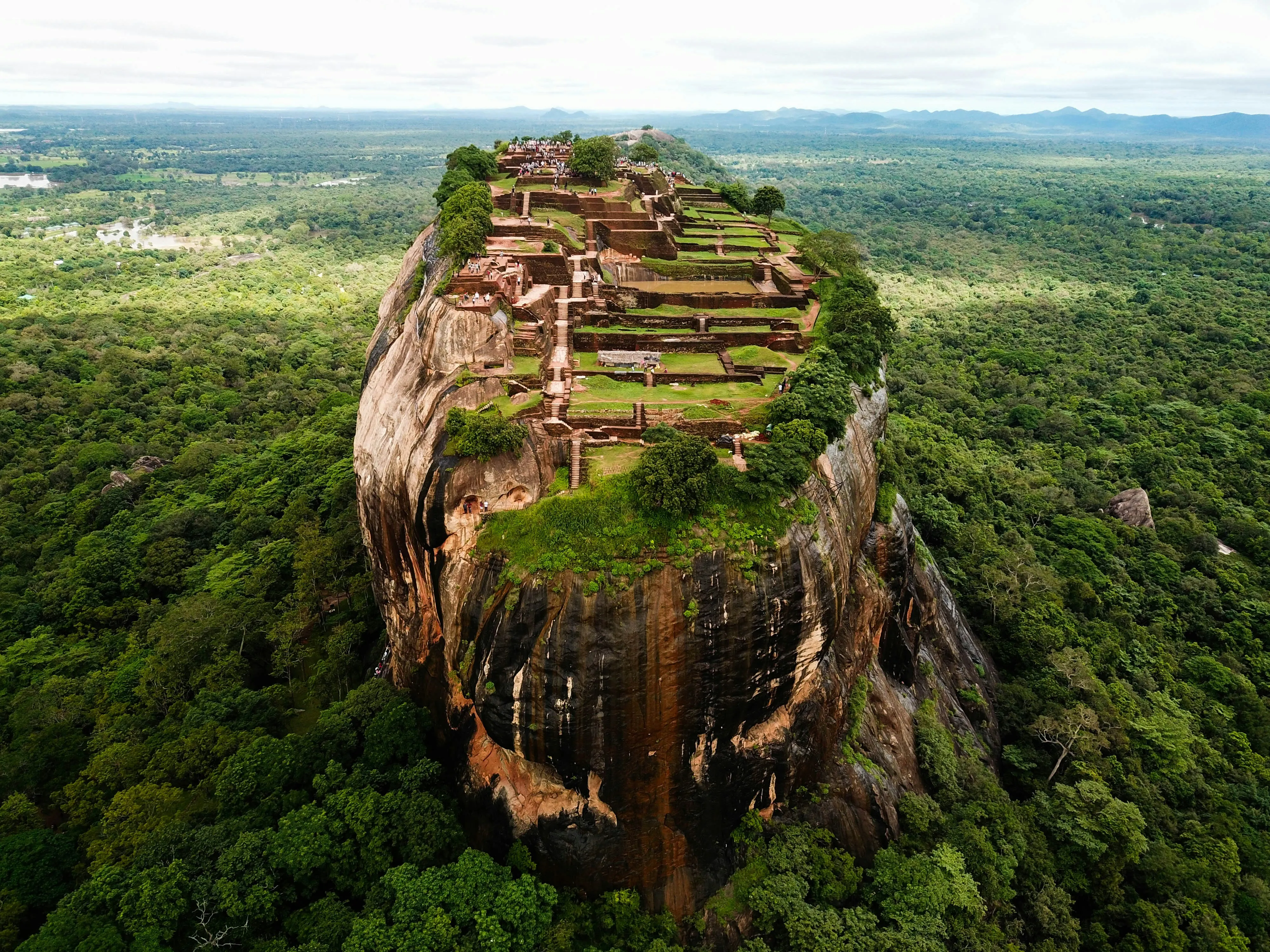
“Tip”: You cannot miss visiting Sigiriya, the most emblematic place in the country.
✈️ Best time to travel
Sri Lanka is a destination that can be visited during practically the entire year thanks to its tropical climate and its particular monsoon regime. Due to its location, the island experiences two rainy periods that affect different regions at different times: while on one coast there may be rainfall, on the opposite coast the sun usually shines. Therefore, the choice of the ideal time will mainly depend on the geographic areas you wish to explore and the type of activities you seek to perform.
In general, the period between December and March is considered very favorable for visiting the beaches of the south and west, as well as the mountainous areas of the interior. Conversely, from May to September, the east coast and the north offer the best climatic conditions. This duality allows the traveler to always find a part of the country with a pleasant environment, exuberant landscapes, and active wildlife ready to be observed in its national parks.
| Season | Months | Typical climate | What to expect | Tourist influx |
|---|---|---|---|---|
| Spring | Mar – May | Warm temperatures and increasing humidity; start of rains in the southwest toward May. | Traditional New Year celebrations in April and good conditions for sailing in the south. | Medium ⭐⭐⭐ |
| Summer | Jun – Aug | Dry and sunny weather in the east and north; moderate rains in the rest of the island. | Large cultural festivals like the Esala Perahera in Kandy and excellent surfing on the east coast. | Medium-High ⭐⭐⭐⭐ |
| Autumn | Sep – Nov | Transition period with frequent rains and cloudy skies across much of the territory. | Very green landscapes, quiet surroundings, and the start of the arrival of migratory birds. | Low ⭐⭐ |
| Winter | Dic – Feb | Dry and sunny in the south, west, and center; possible rains in the northeast. | Optimal season for whale watching in the south and hiking through tea plantations. | High ⭐⭐⭐⭐⭐ |
🗣️ Basic vocabulary
Although it is possible to communicate in English in most tourist areas of Sri Lanka, learning a few words in Sinhalese (the majority language) facilitates interaction with the local population. Simple gestures such as greeting or saying thank you in their language are usually well received and help create a closer atmosphere in shops, transport, or accommodation.
It is not necessary to delve into grammatical rules to make yourself understood. Knowing a few basic terms will allow you to move with more confidence and resolve everyday situations in a practical way during your stay on the island.
- Ayubowan: This is the traditional greeting and means “may you have a long life.” It is used for both hello and goodbye.
- Stutiyi: Thank you. It is one of the most useful words after receiving a service or directions.
- Ow / Naa: Yes / No. These are short and direct terms, fundamental for answering quick questions.
- Karunakara: Please. It is used when ordering in a restaurant or requesting help.
- Meeka kiyada?: How much is this? Very practical for asking prices in local markets or shops.
- Epa: I don’t want it. It is a clear way to decline offers from vendors or services you do not need.
- Hondai: Good or well. Used to indicate that you agree with something or that the food is to your liking.