


Morocco
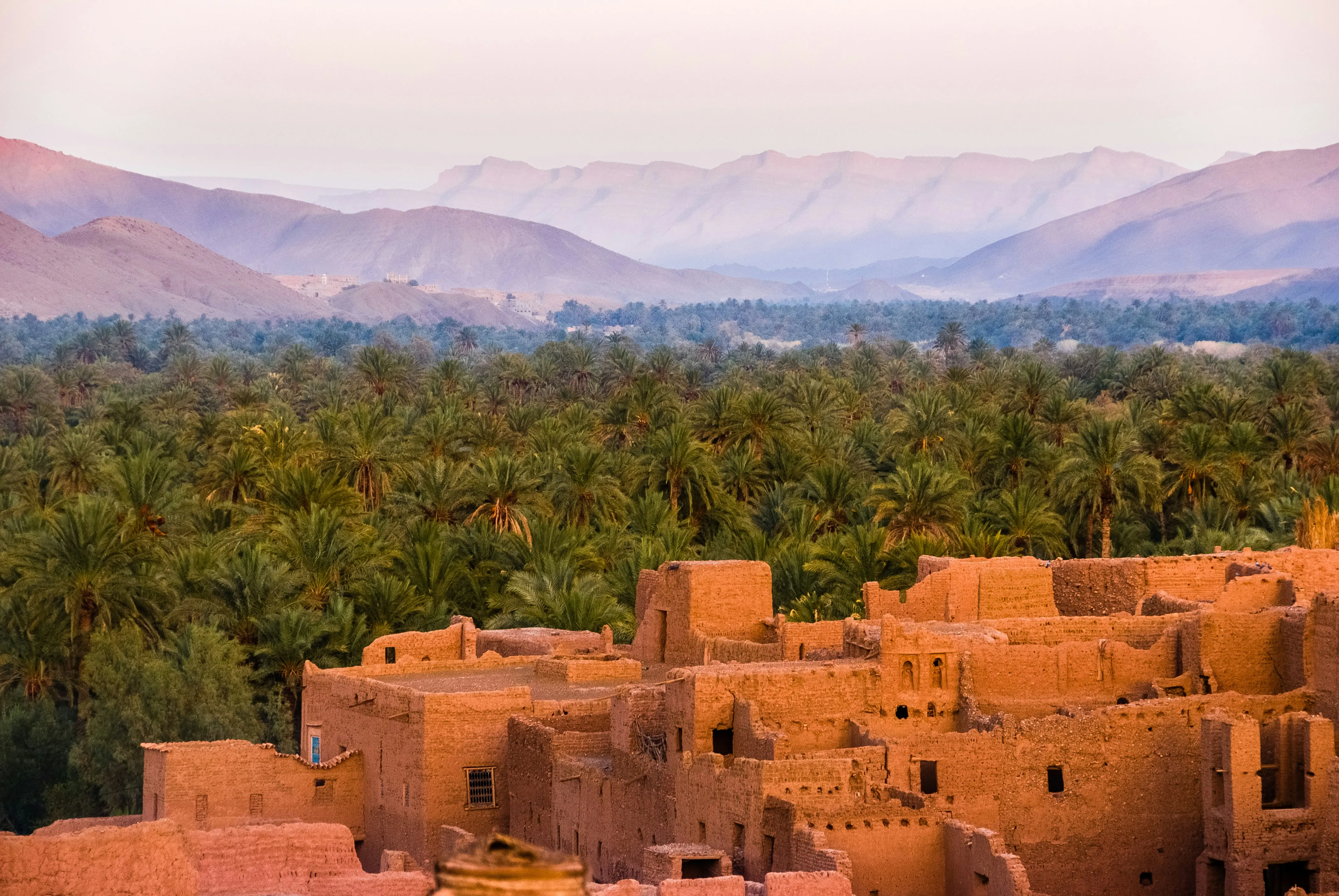
A kingdom of contrasts where infinite deserts, snow-capped mountain ranges, and millennial medinas merge into a vibrant, authentic, and welcoming cultural experience.
Quick Facts
- Capital
- Rabat
- Language
- Arabic
- Berber (Tamazight), French, Spanish
- Currency
- Moroccan Dirham (MAD)
- Best time to visit
- Spring (March to May) and autumn (September to November) for its mild climate.
- Budget per day
- $30 - $120 per day
- Climate
- Mediterranean in the north and the coast, shifting to a continental climate in the interior and desert-like in the southern regions.
- Connectivity
- medium
- Very easy to obtain at airports, transport stations, and local shops.
- Electricity
- Type C / E (220V)
- Local transport
- acceptable
- Card usage
- cash is more commonly used
- Tipping
- optional
🌎 Introduction
A short distance from the Iberian Peninsula, the landscape transforms to give way to a territory where light and contrasts define daily life. In this corner of the Maghreb, life unfolds between the murmur of the medinas and the calm of large open spaces. It is a place where time seems to stretch, allowing ancestral customs to coexist naturally with modernity, whether in the bustle of a market at sunset or in the serenity of a mountain village.
The country’s geography unfolds in a succession of scenarios that change according to the time of year. From the peaks of the Atlas, which retain snow during the winter months, to the ocher plains that stretch inland, nature offers nuances ranging from the green of the valleys in spring to the deep blue of the coastal cities. In every corner, the aromas of mint tea and freshly ground spices permeate the air, forming part of a cultural identity expressed through hospitality and leisurely gastronomy.
🛡️ General Safety
Morocco is generally considered a safe country for international tourism. The Moroccan government places great importance on the tourism sector, which translates into a constant police presence in the main cities and the creation of a specific unit called the Tourist Brigade.
- General Assessment: The safety level is medium-high. Although not exempt from minor risks, most travelers complete their stay without serious incidents.
- Traveler Context: Morocco is a country of contrasts where modernity and tradition coexist. Respect for local customs and common sense are the best tools to ensure a pleasant experience.
Crime and Common Risks
Most incidents affecting tourists are non-violent in nature. The main risk is usually related to opportunism and craftiness.
- Minor Thefts: Pickpockets usually operate in high-traffic areas such as souks (markets), main squares (such as Jemaa el-Fna in Marrakech), and public transport. It is essential to watch your belongings in these places.
- Scams and “Fake Guides”: It is very common for people to insistently offer to guide tourists through the medinas, often taking them to specific shops where they receive commissions or demanding payment at the end. Ideally, hire duly accredited official guides.
- Abusive Prices: Occasionally, prices for products or services can be disproportionately inflated. It is always recommended to agree on the price beforehand (especially in taxis and for purchases without a marked price).
- Rare Risks: Violent crimes against tourists are extremely rare, but it is advisable to avoid walking through peripheral or poorly lit areas at night.
Safety in Cities and Tourist Areas
Safety varies slightly depending on the urban environment the traveler is in.
- Medinas: Ancient cities (medinas) are labyrinthine. Although safe, it is easy to become disoriented. In cities like Fez or Marrakech, it is recommended to stay on the main roads and avoid lonely alleys after dark.
- Modern Zones (Ville Nouvelle): They are usually wide, with regular surveillance and an atmosphere similar to any European city, making them very safe areas for walking.
- Urban Public Transport: Buses can be hotspots for petty theft due to crowds. Trams in Casablanca and Rabat are modern and have their own security.
Transport Safety
Moving around Morocco is simple, but requires knowing certain local dynamics.
- Taxis: There are “Petit Taxis” (urban) and “Grand Taxis” (interurban). In the small ones, make sure the driver turns on the taximeter; in the large ones, the price is usually fixed per seat or for the entire vehicle.
- Driving: In Morocco, you drive on the right. The condition of the main highways is excellent, but secondary roads can be narrow or have potholes. Night driving outside cities is not recommended due to the possible presence of pedestrians, animals, or poorly lit vehicles.
- Trains (ONCF): It is one of the safest and most efficient transport systems on the continent, especially the high-speed train (Al Boraq).
Natural and Climatic Risks
The climate and geography impose their own challenges according to the region and time of year.
- Extreme Heat: During the summer months (especially in July and August), temperatures in inland cities and desert areas can exceed 45°C. Precautions should be taken against dehydration and heat stroke.
- Earthquakes: Morocco is located in an area of moderate seismic activity. Although serious events are infrequent, it is convenient to know the basic self-protection rules.
- Floods: In mountain areas and valleys, torrential rains can cause flash floods in riverbeds (wadis), even if it is not raining in that exact spot.
Legislation and Local Norms
Respecting local laws is fundamental to avoiding legal problems that can be more severe than in other countries.
- Religion and Customs: One should dress with certain modesty, especially when visiting religious sites or less touristy rural areas (covering shoulders and knees is good practice).
- Alcohol Consumption: Alcohol consumption is allowed in licensed establishments (hotels, some restaurants and bars), but drinking in public or showing signs of drunkenness can lead to fines or arrests.
- Photography: It is strictly forbidden to photograph military installations, government buildings, ports, or security personnel (police and military).
- Drugs: Morocco has very strict laws against the possession, consumption, or trafficking of narcotic substances. Prison sentences are high.
Safety for Specific Groups
- Female Travelers: Morocco is safe for women traveling alone, although they may receive unwanted attention in the form of comments or persistent stares. It is recommended to ignore these interactions and dress discreetly to minimize interest.
- LGTBIQ+ Travelers: Homosexuality is illegal in Morocco. Although there is usually no active persecution against tourists, absolute discretion is essential in public to avoid legal or social problems.
- Traveling with Children and the Elderly: Morocco is a culture that venerates children and deeply respects the elderly. It is a very welcoming destination for families, although care should be taken with accessibility in the medinas (steps, cobbled streets).
Emergencies and Assistance
It is important to have basic contact numbers at hand in case of any inconvenience.
- Police (in cities): 19
- Royal Gendarmerie (outside cities): 177
- Ambulances and Firefighters: 15
- Assistance: If you suffer a theft or loss of documents, you must go to the nearest police station to file a report (constat de plainte), an indispensable document for consular procedures or insurance claims.
Tip: Always use map applications with offline download to orient yourself in the medinas and politely but firmly decline any unsolicited help from spontaneous guides by saying “La, shokran” (No, thank you).
📝 Entry Requirements
For a tourist trip to Morocco, the fundamental document is the passport, which must be valid for the entire stay. It is a recommended practice that the document has a minimum validity of six months from the moment of crossing the border to avoid administrative inconveniences. For most visitors arriving for recreational purposes, a prior visa is not required, allowing smooth entry into the national territory through its various airports, ports, and land borders.
The permitted stay for those traveling as tourists usually has a maximum duration of ninety days. Upon arrival at the checkpoints, it is common for border agents to request the completion of a registration form and, occasionally, they may ask the traveler to show an exit ticket confirming their intention to leave the country within the legal timeframe. Similarly, although not consulted in all cases, it is convenient to be able to demonstrate having sufficient economic funds to cover the costs of the trip and stay.
In the field of customs, there are standard regulations regarding what can be brought into the country. Usual personal items are permitted, but there are clear restrictions on the import of certain technical equipment, such as drones, which usually require a special prior authorization. Regarding medications, it is advised that these travel in their original packaging and be accompanied by a medical prescription. There are also quantitative limits for products such as tobacco or alcohol, the excess of which could be subject to declaration or retention at the entry point.
From a health standpoint, generally no mandatory vaccines are established for international tourists arriving from major source markets. However, it is suggested that the traveler has their usual vaccines up to date and considers contracting travel insurance with broad medical coverage to cover any eventuality. Health controls are usually minimal, except in exceptional contexts, which facilitates a calm and organized arrival experience for the average tourist.
- Main Document: Passport with validity exceeding six months.
- Visa Necessity: Habitual exemption for short tourist stays.
- Length of Stay: A general limit of ninety days per visit.
- Travel Documents: Possible request for a return ticket and accommodation details.
- Customs Control: Restrictions on drones and need for a prescription for certain medications.
- Health Recommendations: Absence of generically required vaccines and convenience of medical insurance.
🏥 Basic Health Considerations
When preparing for your trip to Morocco, it is important to know how its health system works to move with peace of mind. In large cities like Marrakech, Rabat, or Casablanca, you will find private clinics of good quality with modern equipment and well-trained professionals. However, in rural or more remote areas, assistance can be much more limited and basic. As a tourist, it is most common to turn to private healthcare, as the public sector is usually quite saturated. Bear in mind that costs in private clinics can be high, so payment in advance or a financial guarantee is always requested before attending to you. Regarding language, most health personnel speak French and Arabic, although in centers oriented towards foreigners, you might find someone who speaks some English or even Spanish.
Contracting travel medical insurance is not a mandatory requirement to enter the country, but it is highly recommended. Good insurance will give you the peace of mind of not having to shell out large sums of money in case of an unforeseen event. It is essential that your policy includes broad coverage for hospitalization, medical transfers, and repatriation to your place of residence. In an environment where distances can be long and access to certain specialists complicated, having the backing of an insurer will make things much easier if you need urgent assistance.
In the vaccine section, none are mandatory by law to enter Moroccan territory. In any case, it is most sensible to have your official vaccination schedule up to date. Additionally, some travelers choose to protect themselves against Hepatitis A and typhoid fever, especially if they plan to move through less urban areas or try a lot of local food. It is always a good idea to consult your primary care doctor or an international vaccination center a few weeks in advance for personalized advice based on your history.
If you need to bring your own medication, you will see that there are usually no problems as long as you carry just enough for your stay. It is very important to keep the drugs in their original packaging and to accompany them with a medical prescription or a report from your doctor explaining the treatment. If you use psychotropic or narcotic drugs under prescription, make sure to carry an official medical certificate to avoid any misunderstanding at customs. A small basic first-aid kit with pain relievers, gastric protectors, disinfectant, and materials for minor injuries will get you out of more than one tight spot.
Regarding common risks, the climate is the factor you should watch most. The intense heat in summer can cause dehydration or heat stroke, so you will have to drink plenty of water and protect yourself from the sun constantly. If you are going to go trekking in the Atlas or mountain areas, keep in mind the altitude and sudden temperature changes between day and night. On the other hand, do not worry too much about insect-borne diseases, as the risk is generally low, although using a good repellent at sunset never hurts to avoid annoying bites.
Hygiene with water and food is the point where you should pay the most attention. Tap water is not always safe for tourist consumption, so I recommend always drinking bottled water and ensuring that the bottle is sealed when opened. It is also better to avoid ice cubes and raw salads if you are not in a place of total trust. Regarding street food, you will be able to try delicious dishes, but try to choose stalls that have a high turnover of people and where you see that the food is cooked on the spot and at high temperatures. Washing your hands frequently or using disinfectant gel will be your best habit during the trip.
In case you find yourself in a medical emergency situation, the main number to call is 15, which corresponds to firefighters and ambulances. You can also use 190 to contact the police in urban areas. You should know that the public ambulance service may not be as fast as you would like, so in critical situations within a city, it is sometimes more effective to call a taxi or use a private vehicle to get to the nearest private clinic.
To finish your preparation, remember that prevention is the best tool at your disposal. Stay well-hydrated, use sunscreen generously, and do not skimp on the quality of your travel insurance. If you follow these simple guidelines, your experience traveling through the landscapes and cities of this country will be much more pleasant and safe. Do not forget that if any symptoms persist, it is best to seek professional advice as soon as possible and not self-medicate with unknown drugs that you might find in local pharmacies.
🚌 Transport Within the Country
Moving around the territory is possible through a network that combines trains, buses, and internal flights. The railway is a common option for traveling between major cities, offering a smooth and efficient connection. To reach areas where the rail line does not reach, buses cover the vast majority of the geography, facilitating access to more remote, desert, or mountainous regions. In certain points along the coast, it is also possible to find connections via ferry for specific routes.
The user experience for the visitor is usually simple, as the main stations have clear signage and staff usually communicate in several languages. Ticket purchasing is a standard process that can be done directly at the terminals, allowing for the organization of trips with a certain level of autonomy and ease without needing prior technical knowledge.
There is a clear distinction between urban and rural environments. In large metropolises, it is common to find modern and well-integrated tram systems that facilitate movement between points of interest. However, in more remote areas, transport depends on vehicles adapted to the terrain’s topography, where travel times can be longer and the driving style adjusts to local conditions.
Taxis play an essential role in daily mobility and are generally divided into two types: those intended for short trips within urban limits and larger vehicles designed for long distances between different locations. They are an ever-present alternative in any population center and are fundamental for reaching destinations where large-capacity collective transport does not have a fixed stop.
In general terms, means of transport offer an adequate level of comfort and punctuality for international tourism. While railway services and main bus lines tend to be quite regular, the frequency can vary in rural travel. This infrastructure allows for a balanced exploration of the country, effectively connecting cultural centers with natural landscapes.
Tip: It is recommended to confirm the exact location of stations before starting the trip, as in some cities transport terminals may be located in different areas depending on the medium chosen.
🤵 Culture and Etiquette
Hospitality is a fundamental pillar in Moroccan society, where interpersonal treatment is characterized by kindness and pause. When greeting, it is customary to use the right hand, either for a handshake or by placing it over the heart as a gesture of respect and sincerity after contact. Social interactions usually begin with an exchange of courtesies about general well-being before addressing any practical matters, with patience and a willingness to converse without haste being positively valued.
In public spaces, discretion is an appreciated norm of conduct. It is recommended to maintain a moderate tone of voice and observe a reserved attitude regarding personal displays of affection, maintaining a clear distinction between the private and social spheres. Regarding punctuality, the concept of time tends to be more flexible than in other cultures, so it is common for appointments or meetings to unfold at a more relaxed and less rigid pace.
Gastronomy occupies a central place in social life, and accepting a mint tea is considered a gesture of courtesy when invited. In traditional contexts, especially when sharing common platters of food, the right hand should be used to handle the food. In service establishments, tipping is a common and widespread practice as a recognition of the service received, although the amount is always at the visitor’s discretion.
Respect for religious traditions and places of worship is fundamental for harmonious coexistence. During the month of Ramadan, schedules and daily rhythms are transformed, so it is considered a gesture of consideration to avoid eating or drinking in public spaces during fasting hours. Likewise, it is important to show sensitivity when taking photographs, and it is always advisable to request prior permission before portraying people or scenes that could compromise others’ privacy.
“Tip”: When receiving an invitation or a gift, always use the right hand to accept it, as this gesture is perceived as a sign of respect and politeness toward the host.
🍛 Typical Gastronomy
The cuisine of Morocco is the result of a rich fusion of Berber, Arabic, and Mediterranean influences. It is characterized by a masterful use of spices, which do not seek heat, but depth of flavor. Ingredients such as cumin, saffron, ginger, cinnamon, and cilantro are fundamental pillars, along with olive oil, citrus fruits, and dried fruits, which often appear in both savory and sweet dishes.
The rhythm of meals in the country reaches its peak at lunch, which is considered the main time for gathering. It is common for food to be served in large platters for sharing, reinforcing the sense of community and hospitality. In traditional settings, bread serves an essential function, as it is often used as a utensil to scoop stews directly from the plate.
Regarding customs in establishments, schedules are usually flexible, although lunch is typically served between 1:00 PM and 3:00 PM. Mint tea is the national drink and a symbol of welcome; it is consumed at any time, and accepting it is considered a gesture of courtesy. In urban areas, it is common to find a wide variety of natural fruit juices, especially orange, which accompany breakfasts or afternoons in squares and avenues.
Table etiquette is simple but important. In more local contexts, it is common for water to be offered to wash hands before starting. Although the use of cutlery is the norm in restaurants oriented toward tourism, observing how locals handle bread with the right hand is a fascinating part of the cultural experience. Food is, above all, a social act enjoyed without haste.
| Dish | Description | Main Ingredients | Where to try it | Tip |
|---|---|---|---|---|
| Couscous | Steamed wheat semolina accompanied by a stew. | Semolina, varied vegetables, chickpeas, and meat (lamb or chicken). | Restaurants across the country, especially on Fridays. | Try the “seven vegetables” version for a complete experience. |
| Tagine | Slow-cooked stew named after the clay pot where it is cooked. | Meat or fish, vegetables, preserved lemons, and olives. | Roadside stalls, souks, and traditional restaurants. | The lamb version with prunes and almonds offers a delicious sweet-savory contrast. |
| Pastilla | Fine stuffed pastry that combines sweet and savory flavors. | Phyllo dough, chicken or pigeon, almonds, cinnamon, and powdered sugar. | Especially famous in the city of Fez. | It is usually served as a starter at celebrations and special occasions. |
| Harira | Nutritious and very aromatic traditional soup. | Tomato, legumes (lentils and chickpeas), meat, and fresh herbs. | Very common in street stalls in the medinas at sunset. | Accompany it with dates to balance its intense and spicy flavor. |
| Zaalouk | Cooked salad served warm or cold. | Eggplant, tomato, garlic, olive oil, and spices. | As part of the starters in almost any traditional menu. | Enjoy it by dipping traditional freshly baked bread directly into it. |
📷 Areas and Places to Visit
Morocco is a destination that stands out for its remarkable geographical and cultural diversity, offering the traveler a constant contrast between the effervescence of its cities and the serenity of its natural landscapes. The tour of the country usually begins in its imperial cities, urban centers that preserve much of the region’s dynastic history. Marrakech is, without a doubt, one of the most visited points, where life revolves around its medina. Getting lost in the network of streets in the Souk allows you to get to know local craftsmanship up close, while buildings such as the Bahia Palace or the Saadian Tombs show the architectural wealth of past eras.
To the north, the city of Fez presents itself as the spiritual and intellectual heart of the country. Its medina, Fes el-Bali, is one of the largest and most complex pedestrian areas in the world, declared a World Heritage Site. In this environment, it is possible to observe traditional work in the leather tanneries and visit the Al Quaraouiyine Mosque, one of the oldest educational institutions in existence. Not far away is Meknes, another historical seat of power, known for its imposing monumental gates such as Bab Mansour and its royal granaries.
The Atlantic facade offers a different atmosphere, marked by the sea breeze and the influence of various cultures. Casablanca represents the most modern and cosmopolitan face, highlighting the Hassan II Mosque, a building that combines contemporary engineering with traditional craftsmanship on the edge of the ocean. Following the coast south, the walled city of Essaouira invites a slower stroll through its fishing port and defensive bastions, being a recurring place for those looking to enjoy the sea and cultural festivals linked to traditional music.
In the north, the physiognomy of urban centers changes again. Tangier acts as a gateway between continents, maintaining an international air in its kasbah. On the other hand, in the Rif mountain range, Chefchaouen is located, recognizable by the blue tones of its house facades, which creates a very particular urban environment differentiated from the rest of the country. Meanwhile, the administrative capital, Rabat, balances its political function with historical attractions such as the Hassan Tower and the Chellah Necropolis, surrounded by well-kept gardens that contrast with the bustle of other metropolises.
The geography of the interior is dominated by the imposing Atlas mountain range, a relief that separates coastal areas from arid regions. Here, the landscape transforms into fertile valleys and villages of adobe architecture. It is an ideal area for hiking or learning about the lifestyle of rural communities. A fundamental transition point is Ouarzazate, home to the famous Ait Ben Haddou Kasbah, a fortified city that has served as a setting for numerous film productions and faithfully represents the defensive architecture of the south.
Finally, the east of the country gives way to the Merzouga dunes, in the Sahara Desert. In this region of Erg Chebbi, the golden sand landscape offers a peaceful experience, far from urban centers. Activities usually focus on excursions to contemplate the sunrise or sunset and on learning about nomadic culture. The contrast between the snow-capped peaks of the Atlas, the Atlantic beaches, and the desert dunes summarizes the plurality of a country that allows combining cultural visits to museums and monuments with the contemplation of very diverse natural environments.
“Tip”: You cannot miss visiting Jemaa el-Fna Square, the most emblematic place in the country.
✈️ Best Time to Travel
Morocco is a destination that can be visited all year round thanks to its geographical diversity, which spans from the Atlantic and Mediterranean coasts to the peaks of the Atlas and the dunes of the Sahara. Generally, the intermediate seasons offer a climatic balance that facilitates travel between different regions, allowing for moderate temperatures in both imperial cities and rural areas.
The climate varies notably by area: while coastal areas enjoy a constant breeze and mild temperatures, the country’s interior experiences more marked contrasts. The choice of travel time will depend on whether you are looking for outdoor activities, such as mountain hiking, or if you prefer a cultural immersion in the medinas, where traditional architecture naturally helps regulate the thermal sensation.
| Season | Months | Typical Climate | What to Expect | Tourist Influx |
|---|---|---|---|---|
| Spring | Mar – May | Mild and pleasant temperatures in almost the entire country. | Green landscapes, valleys in bloom, and long days with clear skies. | ⭐⭐⭐⭐ (High) |
| Summer | Jun – Aug | Intense heat in the interior and the desert; cool climate on the coast. | Music festivals, coastal activities, and routes through the high Atlas mountains. | ⭐⭐⭐ (Medium) |
| Autumn | Sep – Nov | Gradual drop in temperatures after summer; mild weather. | Harvest season, ideal conditions for desert excursions, and soft light. | ⭐⭐⭐⭐ (High) |
| Winter | Dec – Feb | Sunny but cool days; cold nights and snow in high areas. | Snowy peaks, less crowded cities, and a quiet atmosphere in the medinas. | ⭐⭐ (Low - Medium) |
🗣️ Basic Vocabulary
Learning a few words in Moroccan Arabic (Darija) greatly facilitates daily life during a trip to Morocco. Although in many tourist areas it is possible to communicate in Spanish or French, using some basic local expressions helps interactions flow more smoothly and closely in common situations, such as in markets, transport, or restaurants.
You don’t need to know the grammar in depth to get by better; simply memorizing some greetings and courtesy formulas is enough. These small interactions allow you to show respect for the local culture and help resolve practical needs more naturally during the stay.
- Salam alaykum: Universal greeting meaning “peace be upon you.” It is usually answered with “Alaykum salam.”
- Shukran: Thank you.
- La, shukran: No, thank you. It is a polite way to decline offers on the street or in shops.
- Bsh’hal?: How much is it? A key question to find out the price of products or services.
- Iyeh: Yes.
- La: No.
- Inshallah: God willing. It is constantly used to refer to future plans or wishes.
- Labass: Used both to ask “how are you?” and to reply that everything is fine.
- Afuan: You’re welcome or sorry (depending on the context).