


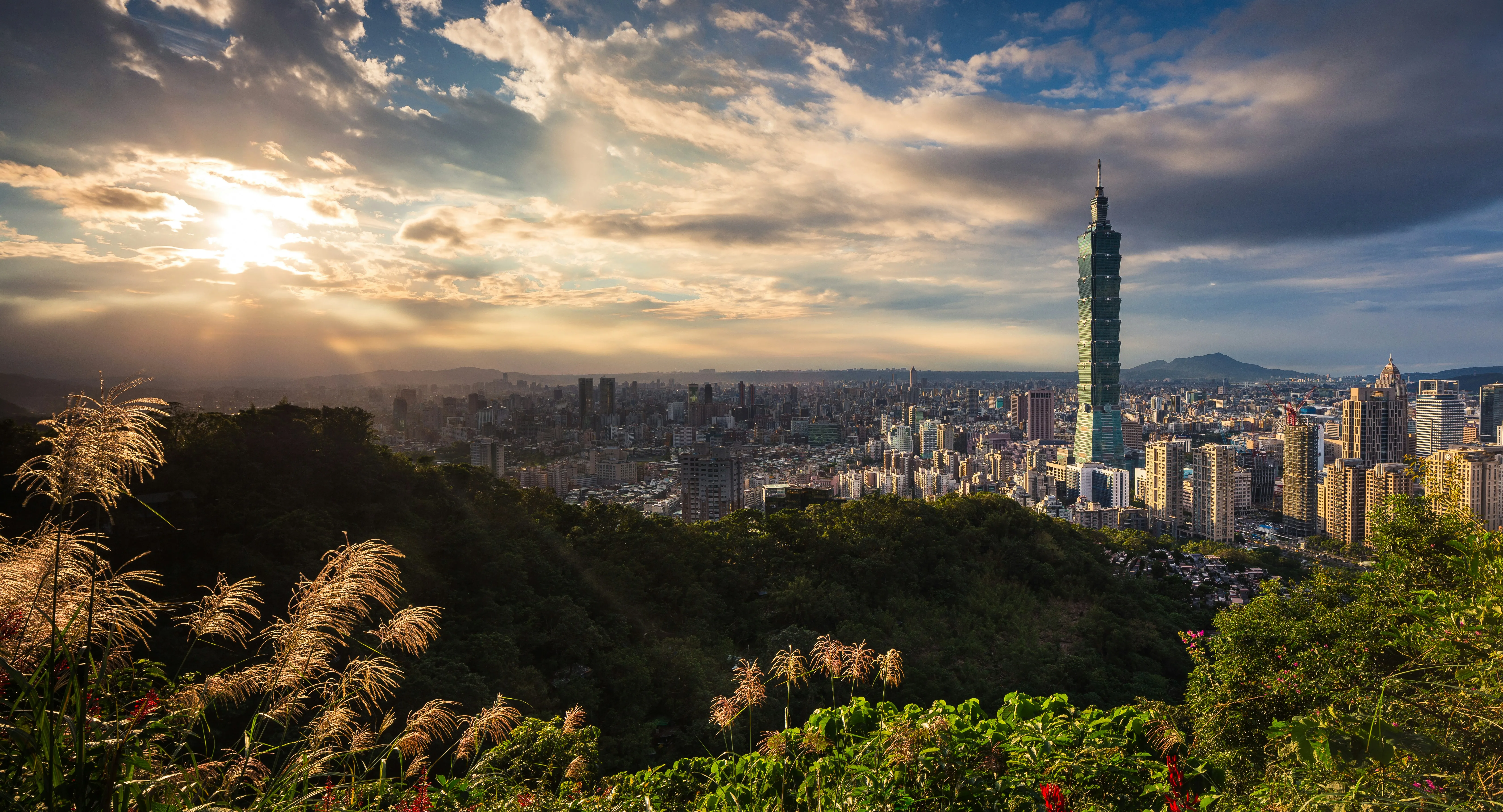
Taiwan
An archipelago that combines technological modernity with ancient temples, stunning national parks, and vibrant street food in its lively night markets.
Quick Facts
- Capital
- Taipei
- Language
- Mandarin Chinese
- Taiwanese, Hakka, and indigenous languages
- Currency
- New Taiwan Dollar (TWD)
- Best time to visit
- Between October and December or from March to May to avoid typhoons and extreme heat.
- Budget per day
- $40 - $130 per day
- Climate
- Subtropical climate in the north and tropical in the south, with hot, humid summers and mild winters in low-lying areas.
- Connectivity
- good
- Very easy to obtain at airports, official mobile stores, and convenience stores.
- Electricity
- Type A/B (110V)
- Local transport
- good
- Card usage
- acceptable
- Tipping
- no
🌎 Introduction
There are places where the rhythm of modernity and the tranquility of nature seem to have found a unique balance. To the east of the Asian continent, this island presents itself as a mosaic of contrasts that go far beyond its urban centers. Here, skyscrapers coexist naturally with temples where the scent of incense mixes with mountain mist, and the bustle of night markets serves as a counterpoint to the serenity of tea plantations climbing the hillsides.
Daily life is governed by traditions that mark the pulse of the seasons, from the light of lanterns celebrating the start of the lunar calendar to the cherry blossoms announcing spring. Gastronomy, a fundamental pillar of its identity, unfolds on every corner, offering comforting flavors in both simple street stalls and tea ceremonies that invite a pause. It is a territory that combines the strength of its marble cliffs with the kindness of its people, always ready to share their cultural legacy.
Traveling through its landscapes allows a glimpse into its own identity, forged over time and manifested in a varied geography. Whether in the stillness of its ancient forests or the dynamism of its cities, one perceives a harmony that defines this corner of the world. It is, in essence, a destination of nuances where the ancient and the contemporary dialogue without stridency, offering an intimate experience through its daily scenes and natural environment.
🛡️ General Safety
Taiwan is internationally recognized as one of the safest and most welcoming destinations in the world for travelers. The combination of a culture based on respect, modern infrastructure, and efficient surveillance allows tourists to enjoy their stay with a peace of mind hard to find in other regions.
General safety level
- The safety level in Taiwan is very high. The country often appears in the top positions of global safety indices, standing out for its very low rate of violent crime.
- Compared to other international destinations, the risk to tourists is very low, allowing for walking through most cities at any time of day or night without major concerns.
- The context for the traveler is one of social peace and order. Local inhabitants are usually extremely honest; it is common for lost items to be returned to their owners through police stations or public transport service centers.
Crime and common risks
- Violent crimes against tourists are practically non-existent. Travelers can feel safe in almost any environment.
- Petty theft or minor robbery (such as pickpocketing) is rare, but can occur in crowded places, such as night markets or busy commercial areas like Ximending in Taipei.
- Scams are not common, although in highly touristy areas it is always advisable to verify prices before consuming, especially at cut fruit stalls or unregulated services.
- An uncommon but mentionable risk is that of minor traffic-related incidents, due to the high density of motorcycles and scooters in urban areas.
Safety in cities and tourist areas
- Urban centers and tourist neighborhoods have excellent lighting and surveillance via security cameras, which deters criminal activity.
- Public transport (MRT in Taipei and Kaohsiung) is extremely safe, clean, and monitored. There are no “no-go zones” or dangerous neighborhoods that tourists should avoid for personal safety reasons.
- As a practical recommendation, it is enough to apply basic common sense: do not leave belongings unattended in public places and keep backpacks closed in crowds.
Safety in transport
- Public transport is one of the pillars of the country due to its punctuality and safety. High-speed trains (THSR) and conventional trains meet rigorous international safety standards.
- Taxis are safe, affordable, and the vast majority use a meter. It is advisable to have the destination address written in Chinese characters, as not all drivers speak English.
- In Taiwan, people drive on the right. If you decide to rent a vehicle, you must take special care with the constant flow of motorcycles, which sometimes perform unexpected maneuvers between cars.
- Main roads are in excellent condition, although mountain routes can be narrow and winding, requiring attentive driving.
Natural and climatic risks
- Taiwan is located on the Pacific Ring of Fire, so earthquakes are frequent. Most are imperceptible or very mild, and modern buildings are designed with advanced anti-seismic technology.
- The typhoon season usually occurs between the months of June and October. These phenomena can cause torrential rain, strong winds, and, occasionally, landslides in rural or mountain areas.
- Extreme heat and high humidity are real risks during the summer, which can cause dehydration or heat stroke if enough water is not consumed and shade is not sought.
- It is recommended to follow the instructions of local authorities and check weather forecasts if planning to hike in national parks like Taroko.
Local legislation and norms
- Laws regarding drug trafficking and possession are extremely severe in Taiwan, with very long prison sentences and even the death penalty in trafficking cases. There is zero tolerance in this regard.
- In the subway system (MRT), it is strictly forbidden to eat, drink, or chew gum. Failure to comply with this rule carries immediate fines.
- Public behavior must be respectful. Shouting or causing disturbances in public is considered very inappropriate and can attract the attention of authorities.
- It is mandatory to always carry official identification (passport), although it is not usually requested routinely by the police.
Safety for specific groups
- Female travelers: Taiwan is an exceptionally safe destination for women traveling alone. Street harassment is almost non-existent and it is safe to move around cities at night.
- LGTBIQ+ travelers: The country is a pioneer in rights in Asia, being the first to legalize equal marriage in the region. Society is generally very tolerant and respectful of diversity.
- Traveling with children or the elderly: Infrastructure is very friendly, with elevators in all metro stations, clean bathrooms, and a culture that deeply respects the elderly and families.
Emergencies and assistance
- The main emergency numbers are: 110 for police and 119 for fire and ambulance.
- Emergency service personnel are professional and efficient. In large cities, it is likely to find operators who speak basic English.
- In case of an incident, the Tourist Police in cities like Taipei can offer specific assistance and help in the language. It is always advisable to travel with private medical insurance, as while care is excellent, it can be expensive for foreigners without coverage.
Tip: Download the official Taiwan emergency alert app and keep public alert system notifications active on your mobile to receive immediate warnings about earthquakes or typhoons.
📝 Entry Requirements
To plan a trip to Taiwan, it is essential to have a passport that maintains a minimum validity of six months from the time of arrival in the territory. Although access is usually straightforward for many international travelers, it is advisable to check the visa situation according to your origin, as many visitors have a visa exemption for short stays dedicated exclusively to tourist activities.
The maximum duration allowed for these tourist visits is usually between thirty and ninety days, depending on current international agreements. During the entry process, immigration authorities may request the presentation of a confirmed onward ticket that matches the allowed stay period, as well as proof demonstrating the availability of sufficient financial funds to cover planned expenses during the stay.
At airport checkpoints, travelers go through standard security and customs procedures. It is important to note that there are strict restrictions on the import of fresh products, especially fruits and meat derivatives, whose entry may be very limited by biosecurity regulations. Regarding medications, it is advised that these be accompanied by their corresponding prescription or medical order to avoid inconveniences during the inspection of personal items.
From a health perspective, mandatory vaccines are not usually required to enter the country, unless coming from areas with a risk of transmission of very specific diseases. However, it is common practice and recommended to have a prior consultation at a travel medicine center to receive personalized advice on recommended vaccines and other general prevention measures related to health during the trip.
- Main documentation: Passport with at least six months of validity.
- Stay permits: Visa exemptions available for short tourist stays.
- Transport: An onward or return ticket is commonly required.
- Solvency: Possible request for proof of sufficient financial resources.
- Customs and food: General prohibition on bringing in meat products, fruits, and fresh plants.
- Luggage and medicines: It is recommended to carry medical prescriptions for specific personal treatments.
- Health: Recommendation to consult the status of routine vaccines before departure.
🏥 Basic Health Considerations
On your trip to Taiwan, you will find a first-rate healthcare system, considered one of the most efficient and modern in the world. As a tourist, you will have access to both public and private healthcare, although it is most common to go to private clinics or the international wings of large hospitals. You should keep in mind that costs for foreigners are high if you do not have coverage, as any consultation, diagnostic test, or hospital admission can represent a significant expense. Regarding communication, you will not have major difficulties in the main cities, as much of the medical staff speaks English fluently.
Taking out travel medical insurance is highly recommended, even if it is not a mandatory requirement to enter the country. It is essential to choose a policy that includes broad coverage for hospitalization, surgical interventions, and medical repatriation. Having this support will allow you to enjoy your stay with peace of mind, knowing that any medical unforeseen event will be covered without affecting your travel budget.
Regarding vaccines, there are no mandatory vaccines to enter Taiwan. In most cases, simply having your routine vaccination schedule up to date will be enough for a safe trip. If you plan to take routes through very deep rural areas or stay for very long periods, you could consult about vaccines against Hepatitis A or typhoid fever, but for a conventional tourism trip, it is usually not necessary.
If you need to carry your own personal medication, it is very important to always transport it in its original container and accompanied by a copy of the medical prescription or a certificate in English. Taiwan has strict regulations on the entry of certain substances, especially those containing stimulants or strong painkillers, so carrying documentation will avoid problems at customs. If you forget something basic, you will find many well-equipped pharmacies where you can buy over-the-counter products without problems.
The most common health risk you will notice is related to the climate, due to the high temperatures and strong humidity that can cause dehydration or heat stroke if you do not take care. You will also see that there is a presence of mosquitoes, especially in areas with vegetation or during the hottest months, so the use of repellent is a good idea to avoid annoying bites. Otherwise, Taiwan is a very safe destination and you will not have to worry about unusual serious diseases.
Regarding the consumption of water and food, you will see that the hygiene standards are excellent. Although tap water is treated, the general recommendation for travelers is to drink bottled or filtered water, which you will easily find in any convenience store. As for food, you can try dishes from the night markets with total peace of mind, as the product turnover is very high and the stalls usually maintain a good level of cleanliness.
If you find yourself in a medical emergency situation, the phone number you should dial for emergencies is 119. The ambulance service works very quickly and efficiently, taking you to the nearest hospital that can handle your case. It is always useful to have your insurance contact details handy so they can coordinate assistance from the very first moment.
As final tips for your day-to-day, it will be useful to always carry a small bottle of hand sanitizer gel and drink fluids constantly to combat the humidity. It is also a good idea to have your hotel address written in Chinese characters, in case you have to give it to an ambulance or taxi driver in a moment of need.
🚌 Transport Within the Country
Moving around the territory is a simple task thanks to a modern infrastructure that effectively connects the points of greatest interest. The train is positioned as the backbone for traveling between coastal towns, offering different types of services according to the urgency of the journey. In large metropolitan areas, the metro is the preferred means for its regularity and cleanliness, allowing visitors to move with total autonomy through the different districts without complications.
Ease of use is one of the hallmarks of the transport system. Most stations have clear and bilingual signage, which considerably simplifies buying tickets and orientation during transfers. Buses complement the rail network, being fundamental for reaching inland destinations, mountain areas, or natural parks where the terrain prevents the passage of train tracks.
There is a notable difference between urban mobility and that of rural areas. While in cities the frequency of service is very high, in more remote environments schedules may be more spaced out, requiring more foresight from the traveler. The use of taxis is very common and accessible in populated centers, being a comfortable alternative for direct journeys. For those seeking more independence in remote areas, car rental is a viable option, although public transport usually covers the vast majority of needs.
Punctuality and comfort are constants in travel, creating a great sense of reliability. To visit the small islands surrounding the main one, there are ferry services that operate regularly. For their part, internal flights play a secondary role because land distances are covered in very competitive times. In general, the system is designed so that the travel experience is fluid and predictable at all times.
Tip: It is advisable to always check the information panels at stations, as they offer real-time updated data on departure platforms.
🤵 Culture and Etiquette
Taiwanese society is distinguished by a profound courtesy and a sense of order that facilitates coexistence in its urban centers and rural spaces. In daily life, respect for unwritten rules, such as maintaining strict turns in lines for any service or giving up seats to those who need them most on public transport, is a fundamental practice. Discreet behavior in shared spaces is particularly valued, where the use of a low voice volume and moderation when talking on the phone contribute to maintaining a calm and respectful environment for everyone.
In interpersonal dealings, kindness and hospitality are usually the general rule. Greetings are typically simple, consisting of a slight nod or a soft handshake. It is important to keep in mind that close physical contact is not common among people who do not have a prior bond of trust, so preserving personal space is perceived as a sign of consideration toward the interlocutor. Likewise, punctuality is considered an essential value that reflects respect for commitments made and for the time of others.
In the realm of social interactions and consumption, there are gestures that demonstrate good manners, such as using both hands when giving or receiving objects, whether they are business cards, gifts, or change when paying in a shop. Regarding table manners, the use of chopsticks requires some attention; one should avoid sticking them vertically into a bowl of rice, as this gesture is traditionally associated with funeral rites. On the other hand, a tipping culture is not common, and in most establishments, no additional payment is expected beyond the indicated amount, other than service charges that some restaurants may include directly on the bill.
When visiting temples or places of worship, it is essential to show a calm and respectful attitude. It is recommended to observe the behavior of worshippers to follow the proper flow of traffic and not intrude on prayers or ceremonies. Although many religious sites allow access to visitors, maintaining silence and showing an observant attitude is the best way to show deference toward local traditions and sacred spaces. Hierarchy and respect for the elderly also occupy a relevant place in the social structure, manifesting in a deliberate and attentive manner toward older people.
Tip: When interacting with the local population, it is very useful to adopt a patient attitude and avoid direct confrontations in public, as preserving social harmony and preventing the interlocutor from feeling embarrassed are fundamental pillars for fluid and positive communication.
🍛 Typical Gastronomy
The gastronomy of Taiwan is the result of a rich fusion of influences, combining the culinary traditions of mainland China with Japanese touches and roots from the island’s indigenous peoples. Eating is one of the most important social activities in the country, which has given rise to a vibrant culture where night markets play a central role in daily life, offering an immense variety of preparations in a relaxed atmosphere.
Taiwanese flavors are usually balanced and aromatic, highlighting the use of fresh ingredients such as seafood, pork, and a wide diversity of vegetables. It is very common to find dishes that play with the contrast between sweet and savory, enhanced with Thai basil, ginger, green onion, and soy sauce. A fundamental concept in its cuisine is the “Q” texture, a term that describes those foods with an elastic, firm, and chewy consistency, highly prized in noodles, tapioca pearls, and rice cakes.
Regarding eating habits, Taiwanese people usually eat at early hours; lunch is served around noon and dinner usually starts from six in the evening. In local establishments, it is common to share a table with other diners if the place is busy, and the use of chopsticks is the general rule. There is no culture of leaving a tip, as service is usually included in the bill or an additional payment is simply not expected.
Tea is the island’s beverage par excellence, especially the Oolong tea varieties grown in high mountain areas. It is consumed both traditionally and in more contemporary formats, served cold and mixed with milk or fruit. During meals, it is common to accompany dishes with light broths that serve for hydration, as water is not always served automatically in simpler restaurants.
| Dish | Description | Main Ingredients | Where to try it | Tip |
|---|---|---|---|---|
| Beef noodle soup | Considered the national dish, it is a dark, aromatic broth with tender meat. | Beef, wheat noodles, soy sauce, and spices. | Specialized restaurants in any city on the island. | Add pickled vegetables that are usually offered separately to contrast the flavor. |
| Xiao Long Bao | Small steamed dumplings that contain broth inside. | Flour dough, minced pork, and gelatinized broth. | Dim sum restaurants and specialized local spots. | Place it on a spoon, make a small cut to release the steam, and eat it carefully. |
| Gua Bao | Known as the “Taiwanese burger,” it is a steamed bun with an intense flavor filling. | Steamed bun (baozi), pork belly, ground peanut, and cilantro. | Night markets and street stalls. | It is an ideal option to eat while standing as you browse the market stalls. |
| Oyster omelet | A market classic with a unique texture, between crispy and gelatinous. | Small oysters, eggs, potato or tapioca starch, and sweet sauce. | Night markets, especially in coastal areas like Keelung. | It is usually served with a reddish sauce that balances the seafood flavor. |
| Three-cup chicken | A traditional stew whose name comes from the proportions of its original sauce. | Chicken, sesame oil, soy sauce, and rice wine. | Home-style restaurants or “re chao” (local taverns). | Don’t forget to eat the basil leaves, which provide the dish’s characteristic aroma. |
📷 Areas and Places to Visit
The capital, Taipei, functions as the main gateway and is the perfect reflection of the coexistence between technological modernity and traditional roots. In the heart of the city, the Taipei 101 building stands out on the horizon, allowing for observation of the city’s expanse from its observation decks. A short distance away, the urban pulse is felt in districts like Ximending, known for its dynamic atmosphere, or in the historic neighborhood of Wanhua, where the Longshan Temple is located, a spiritual center of great relevance where one can observe local devotion amidst clouds of incense and detailed architecture.
For those interested in artistic heritage, the National Palace Museum houses one of the most important collections of imperial art in the world, spanning centuries of history in an environment surrounded by green hills. Not far away, the Chiang Kai-shek Memorial Hall, with its imposing white structure and blue roof, offers a space for reflection and walks through its large gardens and plazas, where cultural events are frequently held outdoors.
To the north, the geography becomes more rugged and picturesque. The old mining town of Jiufen is a destination that stands out for its narrow, steep streets, filled with traditional teahouses overlooking the coast. Very close by is Shifen, a place where the old railway line is still active and visitors usually participate in the tradition of releasing paper lanterns, in addition to visiting its natural waterfalls. These areas provide insight into the region’s industrial past in a very characteristic mountain setting.
The east of the island is home to some of the most unique natural landscapes in Asian geography. Taroko National Park is the indisputable point of reference, characterized by its deep marble gorges carved by the Liwu River. Walking its trails, crossing its suspension bridges, and observing temples integrated into the rock, such as the Eternal Spring Shrine, allows one to understand the geological magnitude of the area. It is an ideal area for hiking and observing craggy landscapes that contrast with the plains of the west coast.
In the central area, the mountains gain height and offer a cooler climate. The Alishan region is famous for its ancient cedar forests and its historic forest railway routes. It is a common place to witness the sea of clouds phenomenon at sunrise. Nearby, Sun Moon Lake presents itself as a serene environment, surrounded by cycling paths and small villages where it is possible to learn more about the local indigenous communities through their cultural centers and crafts.
Descending toward the south, the environment becomes warmer and more relaxed. Tainan, the oldest city in the country, is considered the historical and cultural heart. Its streets are filled with ancient temples, colonial-era fortifications, and small museums that narrate the island’s evolution. On the other hand, the city of Kaohsiung shows a more contemporary and artistic facet, especially in the Pier-2 Art Center, a port area of old warehouses converted into galleries and exhibition spaces.
The southern tip is occupied by Kenting National Park, a tropical climate zone known for its white sand beaches and coral formations. It is a destination oriented toward relaxation and outdoor activities near the sea. Regardless of the region chosen, night markets represent an essential activity in any itinerary, as they function as the center of social and gastronomic life in all the country’s cities, offering an authentic vision of daily local life.
Tip: You cannot miss visiting Taroko National Park, the most emblematic place in the country.
✈️ Best Time to Travel
The choice of the ideal time to visit Taiwan depends largely on personal preferences regarding climate and the activities one wishes to perform. Being an island with a mainly subtropical and tropical climate, temperatures are usually mild for much of the year, although humidity and rainfall vary significantly between seasons.
Generally, transition periods offer the most balanced conditions for exploring both the cities and the mountain areas. While autumn stands out for its clear skies and pleasant temperatures, spring allows for enjoying the awakening of nature and a fresh atmosphere, ideal for visiting the island’s various national parks and hiking routes.
| Season | Months | Typical Climate | What to Expect | Tourist Influx |
|---|---|---|---|---|
| Spring | Mar – May | Mild temperatures (20-25 °C). Gradual increase in humidity and light rains toward May. | Cherry blossoms, flower festivals, and tea harvesting in mountain areas. | Medium ⭐⭐⭐ |
| Summer | Jun – Aug | Intense heat and high humidity. Temperatures above 30 °C and possibility of typhoons. | Vibrant green landscapes, coastal activities, and traditional festivals like the Dragon Boat Festival. | Medium-High ⭐⭐⭐⭐ |
| Autumn | Sep – Nov | Dry climate and clear skies. Very pleasant temperatures and decrease in humidity. | Autumn foliage in the highlands, optimal visibility at viewpoints, and celebration of the Mid-Autumn Festival. | Medium ⭐⭐⭐ |
| Winter | Dec – Feb | Cool and cloudy in the north; mild and dry in the south. Occasional snow on high peaks. | Natural hot springs season, Lantern Festival, and Lunar New Year festivities. | High ⭐⭐⭐⭐⭐ |
🗣️ Basic Vocabulary
Although it is possible to communicate in English in the main cities and tourist areas of Taiwan, knowing some basic expressions in Mandarin Chinese will help you navigate with greater ease. Taiwanese people usually appreciate it when visitors try to use their language, which can facilitate interaction in markets, local restaurants, or when using public transport.
It is not necessary to delve into the complexity of tones or grammar for these words to be useful. With this small repertoire, you can cover the most common courtesy and communication needs during your stay on the island.
- Nǐ hǎo: Hello.
- Xièxiè: Thank you.
- Bù hǎoyìsi: Excuse me or sorry (used constantly to ask for passage, get a waiter’s attention, or before asking a question).
- Qǐng: Please.
- Zàijiàn: Goodbye.
- Duōshǎo qián?: How much does it cost?
- Wǒ bù huì shuō zhōngwén: I don’t speak Chinese.
- Jiézhàng: The bill, please.