


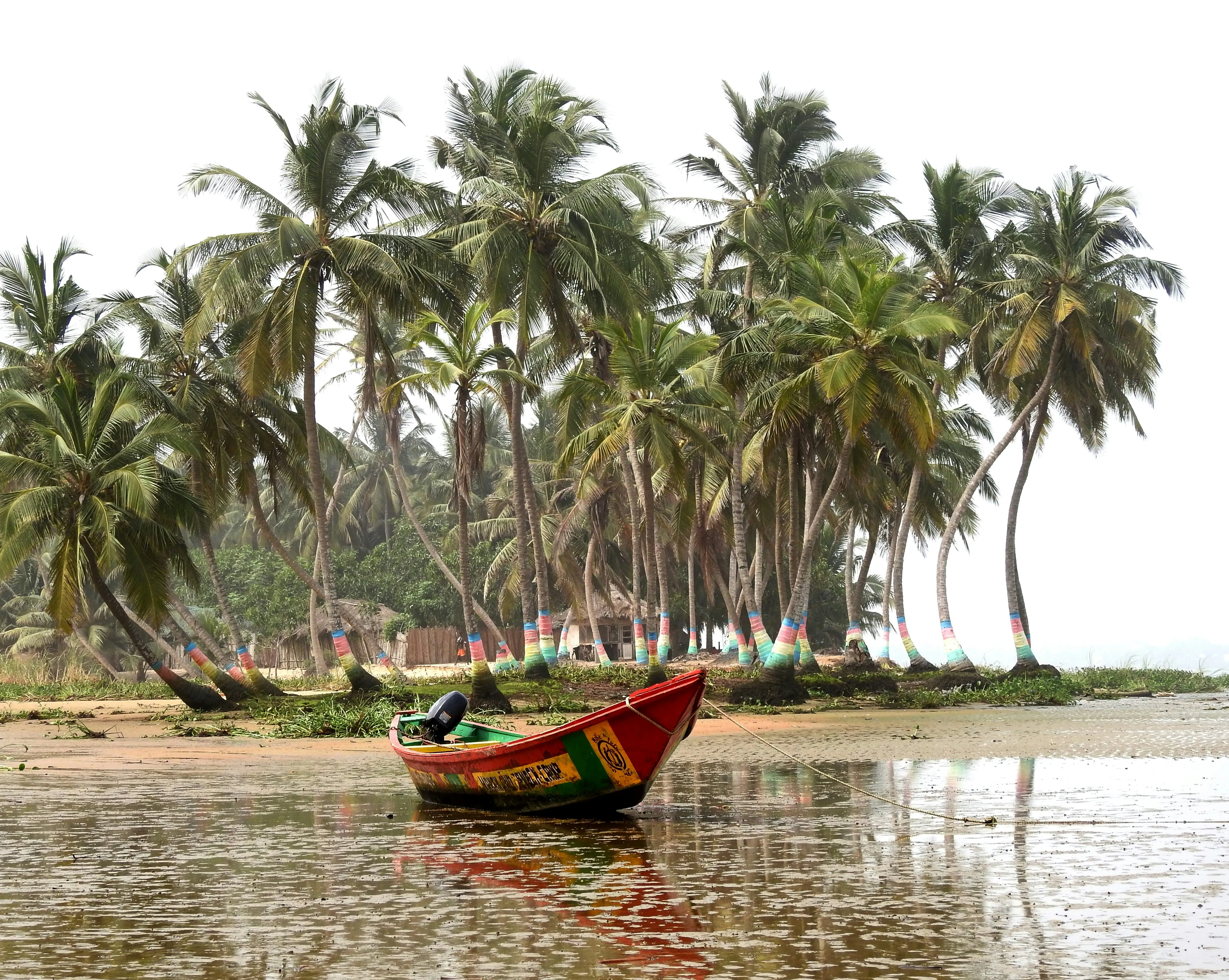
Ghana
Ghana offers a vibrant mix of colonial history, golden beaches, lush tropical jungles, and a welcoming culture that invites you to discover the essence of Africa.
Quick Facts
- Capital
- Accra
- Language
- English
- Akan, Twi, Ewe, Ga
- Currency
- Ghanaian Cedi (GHS)
- Best time to visit
- From November to March, during the dry season.
- Budget per day
- $35 - $120 per day
- Climate
- Warm and humid tropical climate, with well-differentiated dry and rainy seasons throughout the year.
- Connectivity
- medium
- Very easy to obtain at airports and local shops with a passport.
- Electricity
- Type G / Type D (230V)
- Local transport
- acceptable
- Card usage
- cash is used more
- Tipping
- optional
🌎 Introduction
Washed by the waters of the Gulf of Guinea, Ghana presents itself as a mosaic where the rhythm of daily life keeps pace with the bustle of the markets and the swaying of fishing nets on the coast. This corner of West Africa preserves its own identity, perceived in the closeness of its people and the liveliness of traditions that remain very much present. In its streets, the modernity of urban centers coexists with the calm of villages, where the aroma of freshly made fufu and the colors of kente fabrics are part of the usual landscape.
The natural environment transforms as one travels inland, leaving the beaches behind to make way through tropical jungles and savanna plains. The calendar is marked by the alternation between the rainy season and the arrival of the Harmattan, the Sahara wind that transforms the light and the atmosphere during the driest months. In this setting, history is felt both in the ancient coastal fortresses and in the traditional festivals that, with their dances and rituals, keep a balanced and diverse cultural legacy alive.
🛡️ General safety
Ghana is widely recognized as one of the most stable and safe countries in West Africa. For the international traveler, the country offers a welcoming atmosphere, often described as an excellent gateway to the continent due to its social and political tranquility.
General safety level
- The general safety rating for tourists in Ghana is at a low-to-moderate risk level, comparable to or even better than that of other international developing tourist destinations.
- The country enjoys a consolidated democracy and a peaceful social environment, which translates into a relatively quiet travel experience free from internal conflicts.
- The context for the traveler is one of hospitality; Ghanaians are usually very friendly towards visitors, although, as in any destination, it is necessary to maintain common sense and basic precautions.
Crime and common risks
- The most common crimes are petty theft and bag snatching, especially in crowded areas such as outdoor markets or bus stations.
- Internet scams or romantic and commercial fraud are known in the region, although they usually affect the average tourist less and those who establish prior financial or personal relationships online more.
- It is advisable to exercise extreme caution on beaches at night, as isolated cases of robberies with intimidation have been reported in secluded areas.
- A rare but mentionable risk is informal road checkpoints in remote areas, although the police presence is usually legitimate and professional.
Safety in cities and tourist areas
- In urban centers such as Accra or Kumasi, safety is good during the day. In neighborhoods like Osu (in the capital), which is popular with tourists, it is safe to walk around, but using private transport is recommended after dark.
- Makola Market is a place where you must be especially careful with your belongings due to the crowds.
- In rural tourist areas, such as the Volta Region or national parks, the crime level is practically non-existent, making the environment very safe for visitors.
- It is recommended to avoid walking alone in poorly lit areas or unknown peripheral neighborhoods after sunset.
Safety in transport
- The most common public transport is the tro-tros (shared minibuses). Although they are economical, the road safety of these vehicles can be poor due to maintenance and reckless driving.
- The use of ride-hailing apps (such as Uber or Bolt) and official taxis is highly recommended, especially in cities, for their traceability and safety.
- If you decide to rent a vehicle, you should know that in Ghana you drive on the right.
- Driving at night outside the cities is not advisable due to lack of lighting, the presence of animals on the road, and the irregular state of some road sections.
Natural and climatic risks
- The most relevant natural risk is flash flooding that occurs during the rainy season (mainly from April to June and in September-October).
- Extreme heat and high humidity can pose a health risk; it is vital to maintain constant hydration and sun protection.
- The Harmattan wind, which arrives from the Sahara between December and February, can fill the air with fine dust, affecting people with respiratory problems and reducing visibility.
Local legislation and norms
- Ghana has very strict laws against drug use and trafficking; prison sentences are severe even for possession of small quantities.
- It is mandatory to always carry official identification (or a copy of your passport), as authorities may request it at any time.
- It is recommended to be respectful of local authorities and traditional chiefs in villages. Always ask for permission before taking photographs of people or official/military buildings.
- Public behavior should be moderate; excessively effusive displays of affection are not common and may be frowned upon in conservative settings.
Safety for specific groups
- Female travelers: Ghana is considered a safe destination for women traveling alone. However, it is possible to receive unwanted attention or persistent comments, which are generally harmless but can be annoying. It is recommended to dress modestly in rural areas to respect local customs.
- LGTBIQ+ travelers: It is important to note that same-sex relationships are illegal in Ghana and socially not accepted. Absolute discretion is recommended, and any public display of affection should be avoided to prevent legal problems or hostile situations.
- Children and the elderly: These are highly respected groups in Ghanaian culture. The main challenge is the infrastructure (uneven sidewalks and lack of ramps), so it is recommended to plan transfers well and have assistance if there is reduced mobility.
Emergencies and assistance
- The unified emergency number in Ghana is 112, which connects to the police, ambulance services, and fire department.
- The tourist police are present in the main areas of interest and are usually attentive and helpful to foreigners.
- In the event of an incident, it is essential to remain calm, go to the nearest police station to file a report, and contact the corresponding consular representation if necessary.
- Quality medical services are concentrated in Accra, so in case of a serious medical emergency outside the capital, immediate transfer to a private center in the main city is recommended.
Tip: Avoid using high-value electronic devices ostentatiously in crowded markets and choose to always carry a small amount of cash in local currency (cedis) for your daily expenses.
📝 Entry requirements
To organize a trip to Ghana, it is fundamental to keep in mind that documentation is the main pillar of preparation. The primary document for any traveler is the passport, which must have a residual validity that usually extends up to six months after the planned date of arrival in the territory. It is recommended that the document has several free pages for the entry and exit stamps that are stamped at the various border controls.
The vast majority of international visitors usually require a tourist visa prior to the start of the journey. This permit usually authorizes stays for specific periods, often up to ninety days, and its processing is usually carried out before departure. During the entry process, authorities often request the presentation of a return ticket or a ticket continuing to another destination, as well as proof of financial means sufficient to cover the stay and planned expenses during the visit.
Controls at airports and land border points are standardized processes where identity and the purpose of the trip are verified. Regarding health, it is common to request the international certificate of vaccination, highlighting the yellow fever vaccine as a frequent requirement for entering the country from almost any origin. It is advisable for the traveler to keep their health documentation handy along with their personal identification.
Regarding customs and baggage regulations, there are general guidelines that visitors must observe to pass through checkpoints smoothly and without setbacks:
- Personal use medications must be accompanied by their corresponding prescription or medical report to justify their possession to the authorities.
- The transport of electronic devices for private use is permitted, although the entry of professional equipment or unusual quantities of new items could be subject to declaration.
- There are limits set on the amount of foreign currency that can be introduced or withdrawn from the country without making a formal declaration to customs services.
- The export of art objects, antiques, or wood carvings of cultural value often requires specific permits to ensure the protection of Ghanaian national heritage.
- It is recommended to avoid bringing in fresh food products, plants, or seeds to comply with local biosecurity and agricultural protection regulations.
- Personal use items, such as clothing and toiletries, do not usually have restrictions as long as the quantities are reasonable for the duration of the trip.
🏥 Basic health considerations
When preparing for your trip to Ghana, it is fundamental to keep in mind that the country’s health system presents significant contrasts. In large cities like Accra or Kumasi, you will find good quality private clinics with international standards, where medical staff will usually communicate with you in English. However, in rural areas, resources are much more limited. You should know that medical care for foreigners usually has a high cost, so private centers often require payment in advance or a guarantee of solvency before treating you.
Taking out travel medical insurance is not mandatory to enter the country, but it is absolutely essential for your peace of mind. We recommend that your policy has broad coverage, which must include hospitalization and, most importantly, medical repatriation by emergency aircraft. In the event of a serious complication, you might need to be transferred to another country with more advanced infrastructure, and the cost of this service without insurance is prohibitive.
Regarding vaccines, the yellow fever vaccine is the only mandatory one, and you will be asked for your international certificate of vaccination upon arrival at the airport. Beyond this, it is very important that you have your official vaccination schedule up to date. It will also be very useful to consult with a travel medicine center about vaccines for hepatitis A and B, typhoid fever, and meningitis, especially if you plan to move through less touristy areas or live closely with the local population.
For your personal first-aid kit, you can carry your usual medication as long as it is in its original packaging and accompanied by a medical prescription or a report in English justifying its use. It is highly recommended to add a good insect repellent with a high concentration of DEET, gastric protectors, basic painkillers, and oral rehydration salts. There are usually no severe legal restrictions for common-use medications, but it is always better to travel with documentation proving your treatments.
The most relevant health risk you will encounter in Ghana is malaria, which is present throughout the country all year round. Therefore, it is essential to undergo malaria prophylaxis treatment following your doctor’s instructions before, during, and after the trip. Additionally, the tropical climate with its intense heat and humidity can cause dehydration or heat stroke if you do not take care of yourself. During the Harmattan wind season, fine desert dust can irritate your eyes and respiratory tract, so if you suffer from asthma, you should go well-prepared.
Regarding hygiene and food, the golden rule is do not drink tap water under any circumstances. You will find bottled water or water in sealed bags everywhere, and that is what you should use even for brushing your teeth. You can try the delicious local food, but always make sure that the food is well-cooked and served hot. Avoid raw vegetables, fruits that you do not peel yourself, and ice in drinks if you are not sure of its origin. Hygiene in tourist establishments is usually acceptable, but it is always good to carry hand sanitizer gel.
In an emergency situation, the telephone number to call an ambulance is 193. However, you should bear in mind that traffic in large cities can be very heavy and ambulances might take time to arrive. In many cases, if the situation allows, it will be much faster to travel by your own means or by taxi to the nearest private hospital for immediate attention.
As final recommendations for you to enjoy to the maximum, remember to always sleep under a mosquito net if you are not in a perfectly sealed and air-conditioned room. Wear light-colored clothing that covers arms and legs at sunset, which is when mosquitoes are most active. If you follow these basic guidelines and act with common sense, your experience in this vibrant country will be much safer and more pleasant.
🚌 Transport within the country
To move between the different regions of Ghana, the long-distance bus is the most common means of transport among travelers touring the country. These vehicles connect the main cities and offer an acceptable level of comfort for long journeys. In addition to the road, there are domestic flights that link the capital with other important urban centers, being a fast option for those who need to cover large distances in a short time. Although the country has some railway lines, their use is limited and focused on very specific routes.
Navigating the transport system is relatively simple for the visitor, as communication and signage are usually in English. In the main terminals of the cities, the processes for obtaining tickets are direct, facilitating the autonomous organization of the trip. In large cities, mobility is constant and dynamic, while in rural areas, transport is more informal and depends on shared vehicles that usually start their journey once the passenger quota is filled.
Taxis and transport services managed through mobile applications are very common in urban centers, representing a comfortable alternative for short and direct trips. Regarding punctuality and reliability, larger transport services usually follow established schedules, although external factors such as road conditions or traffic density can influence the final duration of the journey. The general feeling is of a functional and accessible system for the international tourist.
Tip: It is advisable to allow sufficient time margin for road travel, as traffic conditions at city entrances can delay arrival at your destination.
🤵 Culture and etiquette
In Ghana, interpersonal treatment is based on courtesy and recognition of the other. Greetings are an essential part of daily life; they are not considered a mere formality, but a way to establish a human connection before starting any conversation, inquiry, or commercial transaction. When greeting, a handshake is customary, and it is fundamental to perform this gesture always with the right hand, as this limb is traditionally associated with hygiene, respect, and positive actions. Similarly, any object, payment, or gift should be delivered or received preferably using the right hand or both hands if one wishes to emphasize gratitude.
Communication is usually deliberate and friendly, avoiding direct confrontations in public spaces. There is deep respect for hierarchy and the experience that age grants, so addressing older people with deference is a widespread and valued social practice. In shared spaces, the voice volume is usually moderate, and patience is appreciated in waiting situations. Regarding punctuality, it is common to find a more flexible view of time in social encounters, a phenomenon that requires an open attitude from the visitor, although in transport or professional organization contexts, there is an effort to maintain greater rigor.
In terms of gastronomy and visits, hospitality is a cultural pillar. It is frequent for travelers to be invited to share a meal; in these cases, the gesture of tasting the food is welcomed as a sign of integration. If you choose to follow the traditional custom of eating with your hands, you must exclusively use the right hand. Regarding tipping, although there is no strict rule, tips are well-received in the service and restaurant sectors as recognition for the treatment received, provided they are delivered discreetly.
Dress plays a relevant role in social image, especially in places of worship, ceremonies, and rural settings. It is recommended to dress neatly and discreetly, trying to cover shoulders and knees in formal or religious contexts to show respect for local sensitivity. When visiting communities or attending festivities where traditional authorities are present, it is advisable to observe the behavior of residents and follow their instructions. Finally, regarding photography, basic courtesy dictates asking for permission before photographing people, which allows for a more balanced and respectful interaction with others’ privacy.
Tip: Always use your right hand to greet, eat, or exchange objects and money, as using the left hand in these social interactions can lead to misunderstandings in the local courtesy protocol.
🍛 Typical gastronomy
The cuisine of Ghana is characterized by being hearty, aromatic, and often quite spicy. The flavors are built on bases of ginger, garlic, onion, and chili, which are combined with local oils such as palm or coconut. A fundamental element on the Ghanaian table are the carbohydrate-rich sides, known generically as “swallow,” which serve as a base to enjoy a wide variety of stews and soups that constitute the core of the daily diet.
Among the basic ingredients, yam, cassava, plantain, and corn stand out. These products are transformed into fermented or cooked doughs that are served with thick broths of fish, goat meat, or peanut. Legumes, especially beans, also occupy a central place in the diet, providing soft and nutritious textures in dishes that are usually slow-cooked to integrate all the flavors of local spices.
The experience of eating in Ghana has a strong social and cultural component. It is very common to find so-called “chop bars”, small traditional local spots where homemade dishes are served simply. One of the most important etiquette rules is the use of the right hand for eating, especially when it comes to foods that require molding the dough with the fingers to pick up the stew. Before starting, a container with water and soap is usually offered to wash hands, an essential gesture of courtesy in both homes and public establishments.
As for drinks, local infusions of hibiscus (known as bissap) and ginger juice are very common refreshing options. In coastal and rural areas, palm wine is a prized traditional drink, while in cities, it is common to accompany meals with water or soft drinks. Meal times are usually flexible, although lunch is often the main moment of the day, especially in urban environments and markets.
| Dish | Description | Main ingredients | Where to try it | Tip |
|---|---|---|---|---|
| Jollof Rice | Reddish spiced rice cooked in a tomato base. | Rice, tomato, onion, peppers, and spices. | Restaurants and food stalls throughout the country. | It is usually accompanied by fried chicken or a boiled egg. |
| Fufu | Elastic and soft dough served submerged in soup. | Mashed cassava and plantain. | Traditional “chop bars” in the south and center. | Tradition dictates that it should not be chewed, but swallowed directly with the broth. |
| Red Red | Bean stew with a sweet and slightly spicy flavor. | Black-eyed peas, palm oil, and fried plantain. | Market stalls and homemade food spots. | It is an excellent option for those looking for a nutritious and less spicy dish. |
| Banku with Tilapia | Fermented dough served with grilled fish and sauces. | Corn, cassava, and fresh fish (tilapia). | Coastal areas and restaurants in the Accra region. | It is usually accompanied by shito, a very tasty black pepper sauce. |
| Kelewele | Very aromatic fried plantain snack or side dish. | Ripe plantain, ginger, and chili. | Street vendors, especially at nightfall. | It is the ideal accompaniment for bean dishes or as a light snack. |
📷 Areas and places to visit
The capital, Accra, functions as the main gateway and offers a first contact with the country’s diversity. In this metropolis, historic neighborhoods like Jamestown, with its emblematic lighthouse and traditional fishing atmosphere, coexist with more modern and dynamic areas. It is essential to walk through the Kwame Nkrumah Memorial Park, a space dedicated to independence, and visit the National Museum of Ghana, which allows for a better understanding of the region’s artistic and archaeological heritage. The hustle and bustle of markets like Makola reflects daily life and local commerce, where constant activity characteristic of the city can be observed.
Following the coastline to the west, the Central Region houses some of the most significant historical testimonies on the continent. The cities of Cape Coast and Elmina are known for their imposing castles and forts, declared World Heritage Sites. These defensive constructions offer a journey through centuries of history and allow for an understanding of the area’s commercial and colonial past. Nearby, Kakum National Park protects a vast expanse of tropical jungle. Its main draw is the canopy bridge system that allows walking among the treetops, facilitating the observation of flora and fauna from a different perspective.
Inland, the city of Kumasi stands as the cultural heart of the Ashanti people. It is an ideal place to learn about local monarchical traditions by visiting the Manhyia Palace Museum. The area is famous for its craftsmanship, especially for the production of Kente fabrics in nearby villages like Bonwire, where the meticulous manual weaving process can be observed. The Kejetia market, one of the largest in the region, is a central point where all kinds of products are exchanged, from food to tools and traditional textiles.
Northern Ghana presents a savanna landscape that contrasts notably with the forested south. In this region, Mole National Park is the country’s largest protected area, where it is possible to take routes to observe elephants, antelopes, and various bird species in their natural habitat. Very close by is the Larabanga Mosque, an outstanding example of Sudanese-style architecture made of mudbrick. This area allows for an appreciation of a slower pace of life and rural architecture that has remained faithful to its roots over the years.
The eastern zone, marked by the presence of Lake Volta, offers landscapes of hills and waterfalls. The Wli Waterfalls, located near the border with Togo, are a popular destination for those who enjoy hiking and pristine natural environments. On the other hand, the western coast, near the border with Ivory Coast, stands out for its coastal villages like Busua, ideal for resting by the ocean. In this same region is Nzulezo, a village built entirely on stilts on Lake Tadane, showing a truly singular form of human adaptation to the aquatic environment.
“Tip”: You cannot miss visiting Cape Coast Castle, the most emblematic site in the country.
✈️ Best time to travel
Ghana has a tropical climate that is mainly divided into two periods: the dry season and the rainy season. Choosing the ideal time to visit the country depends largely on the activities you wish to perform. Generally, the months coinciding with the northern winter are the most popular, as the absence of rain facilitates road travel and allows for the enjoyment of cultural festivities in a dry and sunny environment.
However, each time of year offers a different perspective of the country. While the drier months are excellent for wildlife observation in the northern national parks, the rainy season transforms the landscape into a setting of intense greens and allows for the contemplation of waterfalls at their maximum splendor. Despite climatic variations, temperatures remain warm throughout the year, making Ghana a viable destination in any season if planned properly.
| Season | Months | Typical climate | What to expect | Tourist influx |
|---|---|---|---|---|
| Spring | Mar – May | Intense heat with increasing humidity; start of occasional rains. | Landscapes beginning to turn green and preparation for agricultural festivals. | Medium |
| Summer | Jun – Aug | Cooler temperatures but with frequent and abundant rainfall. | Exuberant nature, voluminous waterfalls, and overcast skies. | Low ⭐⭐ |
| Autumn | Sep – Nov | Transition toward dry weather; rains gradually decrease. | Large cultural celebrations and improvement of hiking routes. | Medium ⭐⭐⭐ |
| Winter | Dec – Feb | Dry and clear weather; presence of the Harmattan wind from the desert. | Wildlife sightings, sunny beaches, and a vibrant festive atmosphere. | High ⭐⭐⭐⭐ |
🗣️ Basic vocabulary
Although English is the official language of Ghana and is used in administration and commerce, knowing some words in Twi—the most widespread local language—is very useful for daily life. Ghanaians appreciate it when visitors show interest in their culture, and using simple expressions can greatly facilitate interactions in markets, transport, or everyday situations.
It is not necessary to delve into complex grammatical rules to make yourself understood. It is enough to memorize some greetings and formulas of courtesy that will help you move with greater confidence and respect during your stay. These are the most frequent and practical expressions:
- Akwaaba: Welcome.
- Eté sèn?: How are you?
- Eye: Well or all good (used as a response to the previous question).
- Medaase: Thank you.
- Me pa wo kyɛw: Please.
- Maakye: Good morning.
- Aane: Yes.
- Daabi: No