


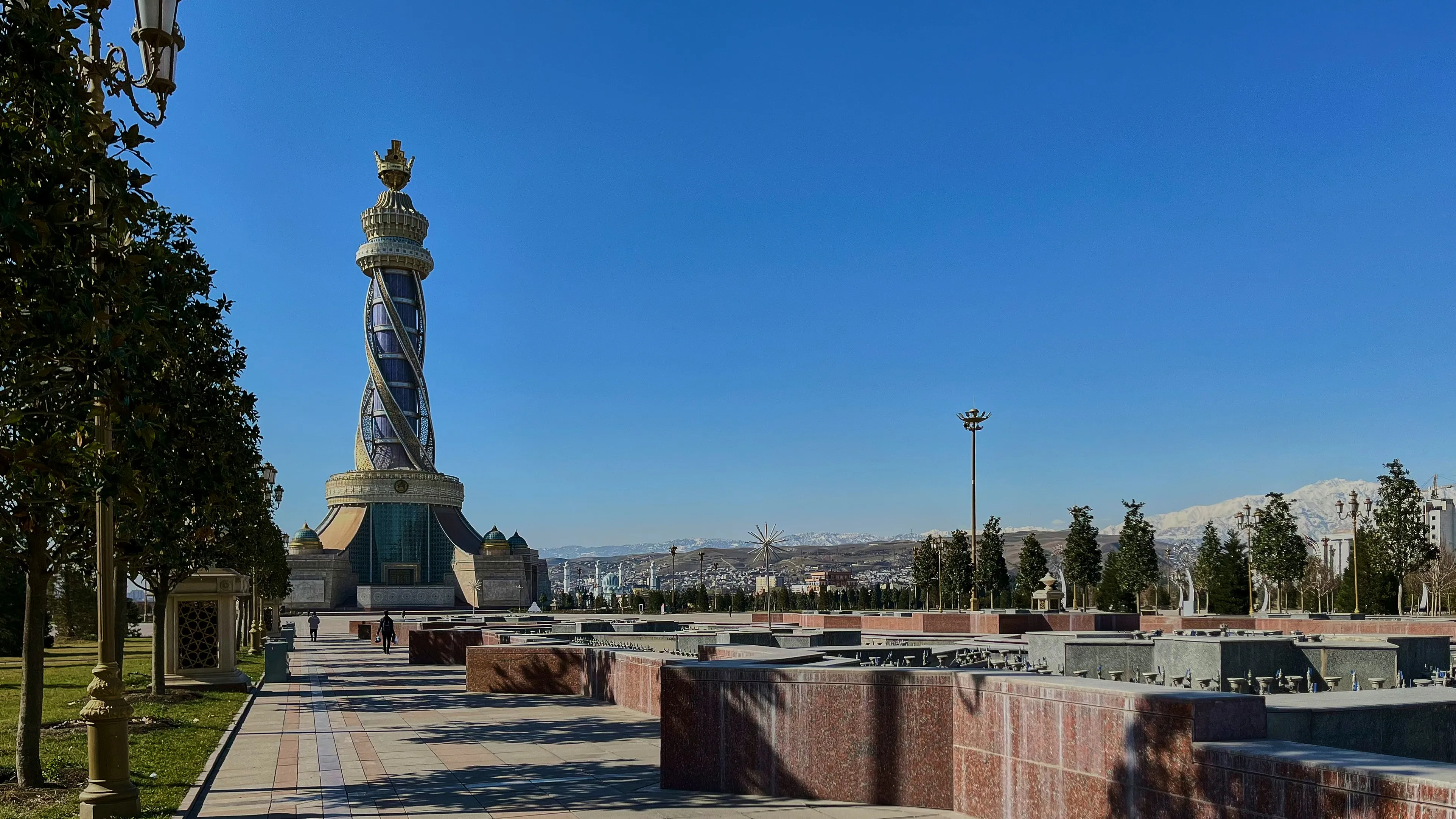
Tajikistan
Discover imposing Pamir mountains, turquoise lakes, and the rich heritage of the Silk Road in this authentic Central Asian destination.
Quick Facts
- Capital
- Dushanbe
- Language
- Tajik
- Russian
- Currency
- Tajikistani Somoni (TJS)
- Best time to visit
- From late spring to early autumn (May to September)
- Budget per day
- $25 - $75 per day
- Climate
- Continental climate with very hot summers in the valleys and extremely freezing winters in the high mountain regions.
- Connectivity
- medium
- It is easy to obtain local SIM cards at airports and official stores in cities by presenting your passport.
- Electricity
- Type C / F (220V)
- Local transport
- limited
- Card usage
- more cash is used
- Tipping
- optional
🌎 Introduction
Tajikistan stretches between the great massifs of Central Asia, where the Pamir mountain range and interior valleys draw a landscape that transforms with the passing of the seasons. It is a territory where Persian heritage manifests in the calm of its markets and the natural hospitality of its inhabitants. In mountain villages and cities, life usually proceeds at a slow pace, amidst the aroma of freshly baked bread and conversations that linger over a teapot, reflecting a culture that values closeness and shared time.
The country’s identity is closely linked to a geography of altitudes and a history forged by ancient trade routes. During the spring, communities celebrate the rebirth of the land with traditional festivities, while the summer thaw allows for the appreciation of the clarity of its lakes and the serenity of high mountain landscapes. This is a destination that presents itself with simplicity, where traditions coexist with a natural environment that marks daily life and defines the welcoming character of its people.
🛡️ General safety
Tajikistan is a destination that is generally considered safe for tourists, especially compared to other countries in the region. The atmosphere is usually hospitable and welcoming to foreign visitors. However, being a country with a developing tourism infrastructure and extreme geography, it requires travelers to be cautious and well-informed before starting their route.
General safety level
- The general safety rating in Tajikistan is a medium-low risk level, with the greatest dangers centered on geographical and climatic conditions rather than social violence.
- Compared to international standards, the rate of violent crime against foreigners is very low.
- The context for the traveler is that of a stable country, although with a strong police and military presence in border areas and in the Gorno-Badakhshan Autonomous Region (GBAO).
Crime and common risks
- The most common crimes are minor theft and pickpocketing, which usually occur in crowded places such as open markets (bazaars) and transport stations.
- Isolated cases of scams related to unofficial currency exchange or individuals posing as police officers to request documentation and, subsequently, an immediate “fine” have been reported.
- It is advisable to take extra precautions in the capital’s nightlife areas, avoiding walking alone on poorly lit or sparsely traveled streets.
- A rare but real risk is the possibility of border incidents in undelimited areas, especially on the borders with Kyrgyzstan, so it is recommended to always stay on main routes.
Safety in cities and tourist areas
- Dushanbe, the capital, is a modern and safe city during the day. Main parks and avenues are well-guarded.
- In peripheral or less touristy neighborhoods, lighting can be poor, so the use of private transport applications is recommended for moving around at night.
- In the Gorno-Badakhshan (Pamir) region, safety strictly depends on the local political situation. It is mandatory to obtain a special permit (GBAO permit) to travel to this area, and it is essential to follow the instructions of local authorities.
- In bazaars, such as Panjshanbe in Khujand, it is recommended to wear backpacks on the front and not carry valuables in plain sight.
Transport safety
- In Tajikistan, people drive on the right. However, the condition of the roads, especially outside main routes, can be precarious due to the mountainous terrain.
- Urban public transport (buses and trolleybuses) is safe, although it is often very crowded.
- Shared taxis are the most common way to travel between cities. It is recommended to agree on the price before getting in and ensure the vehicle is in acceptable mechanical condition.
- The use of rental vehicles without a driver is not very common due to the difficulty of the terrain. If you choose to drive, special care must be taken with livestock on the road and the lack of signage in mountain passes.
Natural and climatic risks
- Tajikistan is an area of high seismic activity. Earthquakes are relatively frequent, although most are of low intensity.
- During winter and the spring thaw, avalanches and landslides are real risks on high mountain roads, especially on the Pamir Highway (M41) and the Anzob Tunnel.
- Extreme heat in summer can exceed 40°C in the lowlands, while in winter, temperatures in the mountains drop drastically below zero.
- It is always recommended to check weather and road conditions before embarking on long trips and to have adequate equipment for extreme cold if visiting the Pamir area.
Local legislation and norms
- Tajikistan has very strict laws against drug trafficking and consumption, with long-term prison sentences.
- It is forbidden to photograph government buildings, military installations, bridges, or critical infrastructure. It is always better to ask before taking a photo if security agents are nearby.
- It is mandatory to always carry your original passport and entry registration (if the accommodation has not handled it automatically), as police checks on the road are frequent.
- Although the country is officially secular, the culture is predominantly conservative Muslim. It is recommended to dress modestly (shoulders and knees covered), especially in rural areas and places of worship, to avoid misunderstandings or disrespect.
Safety for specific groups
- Female travelers: Generally safe, but it is recommended to avoid walking alone at night and to dress discreetly to avoid unwanted attention. In rural areas, treatment is usually very respectful but traditional.
- LGTBIQ+ travelers: Homosexuality is not illegal, but it remains a major social taboo. Public displays of affection are not recommended, as they can generate hostility or problems with the authorities. Discretion is essential.
- Children and seniors: There are no specific additional risks, although the lack of advanced medical infrastructure outside Dushanbe and the extreme altitude of some regions can be a challenge for people with pre-existing health conditions.
Emergencies and assistance
- The main emergency numbers are: 101 (Fire), 102 (Police), and 103 (Ambulance). Operators are likely to only speak Tajik or Russian.
- Quality medical assistance is limited to the capital. For any mountain or hiking activity, it is essential to have travel insurance that covers air medical evacuation.
- In the event of an incident, the nearest consular representation should be contacted immediately, and a police report requested if it involves theft, although the process can be slow and bureaucratic.
Tip: Always keep a digital and physical copy of your passport and visa separate from the originals, and ensure you register with local authorities if your stay exceeds ten business days.
📝 Country entry requirements
To embark on a trip to Tajikistan, the first indispensable element is to have a valid passport whose validity extends, preferably, at least six months beyond the planned date of entry into the territory. It is essential that the document is in optimal physical condition and has enough space available for the control stamps that authorities will apply when crossing the border, whether through its international airports or by land.
Regarding entry authorization, most international travelers require a tourist visa. However, there are visa exemption regimes for short stays that apply to citizens of various origins, as well as electronic processing systems that speed up the process before arrival. The maximum duration of stay allowed under this modality is usually between 30 and 60 days, a period that is usually sufficient for leisure, cultural, or hiking activities throughout the Tajik geography.
During the immigration control process, authorities may request the presentation of an exit ticket from the country or an itinerary confirming the continuation of the journey to another destination. Likewise, it is advisable to have proof of possession of sufficient economic funds to cover maintenance and accommodation expenses during the visit. A relevant aspect after arrival is registration with local authorities, a procedure usually managed by hotel establishments, but which the tourist must supervise if they choose to stay in private homes for an extended period.
In the customs area, controls are usually thorough, especially regarding the entry of medications. Certain analgesic or psychotropic substances that are common elsewhere may be strictly regulated in this destination, so it is advisable to always carry the translated medical prescription and in its original packaging. Similarly, there is an obligation to declare cash currency if it exceeds the limits established by local regulations, in order to avoid inconveniences when leaving the country.
Regarding health, mandatory vaccinations are not usually required for general entry, unless coming from areas with a risk of transmission of specific diseases. However, it is considered prudent for the traveler to have the usual recommended vaccinations for international travel and to have medical insurance with broad coverage. Regarding other products, there are standard restrictions on the import of fresh food or products of plant and animal origin that could be seized for biological safety reasons.
- Passport validity: A minimum validity of six months from entry is recommended.
- Stay processing: Verification of the need for an electronic visa or exemption according to the traveler’s nationality.
- Additional documentation: Possible requirement of a return ticket and proof of financial means.
- Medication control: Need for a medical prescription for specific drugs and controlled substances.
- Declaration of valuables: Registration of large amounts of cash when entering the country.
- Health and prevention: Recommendation of travel insurance and consultation of advisable vaccines before departure.
- Local registration: Obligation to notify stay to the authorities if the accommodation is not a hotel.
🏥 Basic health considerations
When preparing for your trip to Tajikistan, it is important to know that the country’s healthcare system is quite limited. In the capital, Dushanbe, you will find some private clinics offering an acceptable level of care for minor problems, but in rural areas, the infrastructure is very basic. Medical staff usually speak Tajik or Russian, so you will likely need help communicating if you do not master these languages. Although consultation prices are low compared to international standards, the quality of supplies and equipment may not be what you expect.
Taking out travel medical insurance is not mandatory to enter the country, but it is absolutely essential for your safety and peace of mind. You must ensure that your policy includes very broad coverage for medical repatriation and emergency medical evacuation. If you plan to travel through remote areas like the Pamir Highway, this point is vital as any emergency transfer from there to an equipped hospital can be extremely expensive and complex to organize.
Regarding vaccinations, there are none that are mandatory for general access to Tajikistan. The most sensible thing is to have your usual vaccination schedule up to date. Protection against Hepatitis A and typhoid fever is usually recommended, as these are illnesses you could contract through water or food that is not in perfect condition. It is always a good idea to consult with a specialized travel doctor a few weeks before your departure for advice tailored to your health.
If you need to carry personal medication, you have to be very careful. Tajikistan has strict laws on the entry of certain drugs, especially those containing psychotropic substances or opium derivatives, even in low doses present in some common analgesics or syrups. It is essential that you carry your medications in their original packaging and always accompanied by an official medical prescription, preferably translated into English or Russian. A basic first aid kit with disinfectants, dressing materials, antihistamines, and something for stomach discomfort will be very useful during the journey.
Among the most frequent risks you will encounter is altitude sickness, especially if you head to the Pamir region where altitudes easily exceed four thousand meters. You should acclimatize gradually to avoid dizziness or persistent headaches. Additionally, the weather can be extreme in both directions: you will have to protect yourself from dehydration and intense heat in the valleys during summer and from severe cold in mountain areas. Insects do not usually represent a serious danger of disease transmission on usual tourist routes, but it is advisable to use repellent in rural areas or near rivers.
Regarding hygiene, you must be clear that tap water is not potable. You should always drink bottled, boiled, or water filtered by yourself with purification tablets or portable filters. It will also help to avoid ice in drinks and peel any fruits you buy in local markets yourself. Street food is part of the experience and you can try delicious dishes, but try to choose places where you see the product is cooked over high heat and on the spot.
In case of a medical emergency, the telephone number to call an ambulance is 103. Keep in mind that response times can be slow outside urban centers and that the equipment of emergency vehicles is often old. In cities, it will often be faster and more efficient to travel by your own means to one of the private clinics recommended by your medical insurance.
As final practical recommendations, remember to always stay well hydrated and carry a small hand sanitizer gel to use before eating. Do not push your physical pace during the first few days if you are in high-altitude areas and always listen to what your body tells you. If you follow these basic guidelines, you can dedicate yourself to enjoying Tajik hospitality and its incredible landscapes with much more confidence.
🚌 Transport within the country
Moving around Tajikistan means adapting to a predominantly mountainous terrain where road transport is the main protagonist. The most common option for travelers is shared vehicles and SUVs, as the railway network is very limited and there is no metro service in any of its cities. Domestic flights function as an alternative to connect the capital with some major cities, although their operation depends on weather conditions.
Regarding ease of use, public transport can present certain challenges for visitors. Signage is usually in Cyrillic alphabet or the local language, and communication in other languages is not always easy at stations or departure points. It is not common to find digital or centralized ticket purchasing systems for long journeys, so direct interaction with drivers or at meeting points is the general rule.
There is a marked contrast between large cities and rural or mountain areas. In the capital, it is possible to use trolleybuses and buses that run regularly along the main roads. However, when venturing into more remote regions, infrastructure is much simpler and travel is done in vehicles prepared for difficult terrain, where the condition of the routes directly influences the duration of the trip.
Shared taxis represent the most widespread method for covering distances between different regions. These vehicles usually depart from specific points in the cities and do not have a fixed departure time; instead, they start moving once all seats have been occupied. In urban areas, individual taxis are very common and are a comfortable way to move from one point to another without complications.
The general feeling for the traveler is that of a system that requires patience, as punctuality is not a strict characteristic of land transport. Comfort varies significantly according to the type of vehicle hired and the condition of the pavement, and it is common for journeys through high mountain areas to be more fatiguing.
Tip: It is advisable to organize transfers with enough lead time, as the departure dynamics of the vehicles and the characteristics of the terrain can prolong trips longer than initially planned.
🤵 Culture and etiquette
In Tajikistan, the greeting is a fundamental pillar of social interaction and reflects the hospitality of its population. Among men, a handshake is common, often accompanied by the gesture of placing the right hand over the heart as a sign of sincerity and respect. When interacting with women, the most common is a verbal greeting or a slight nod of the head, unless they initiate physical contact. Respect for hierarchies and the elderly is essential in daily life, so it is a recommended practice to give way or a seat to older people and address them in a calm tone.
Behavior in public spaces tends to be discreet and moderate. It is valued to maintain a low voice volume and avoid excessively effusive gestures or very marked displays of affection in the street, always maintaining an attitude of sobriety. Regarding punctuality, there is a natural flexibility in social encounters, where the development of the conversation and the strengthening of personal bonds usually take precedence over the rigidity of established schedules.
Hospitality is one of the deepest hallmarks of local culture. If invited to visit a home, it is considered a basic gesture of courtesy to remove one’s shoes upon entering the house. During meals, bread occupies a symbolic and sacred place; it is recommended to treat it with special care, avoiding placing it upside down or wasting it. Regarding tips, although they are not mandatory, in urban centers it is increasingly common for restaurants to include a service percentage in the bill or for diners to leave a small extra as a sign of appreciation.
When visiting places of worship or rural areas with more established traditions, it is important to observe dress codes, opting for clothing that covers the shoulders and legs. In mosques, it is mandatory to remove shoes and, in the case of women, it is common to cover the hair with a scarf as a gesture of consideration. Observing the behavior of residents and acting with deference toward their customs allows the traveler to integrate naturally into the environment and enjoy the cultural richness of the country harmoniously.
Tip: Whenever offering or receiving an object, a gift, or food, it is recommended to use the right hand, as the left is traditionally reserved for tasks related to personal hygiene.
🍛 Typical gastronomy
The gastronomy of Tajikistan is a reflection of its location in the heart of Central Asia and its heritage on the Silk Road, combining Persian influences with the traditions of nomadic peoples. It is characterized by being a simple, nutritious, and comforting cuisine, where local and seasonal products are the absolute protagonists. Grains, legumes, and meat are the fundamental pillars that sustain the daily diet of Tajiks.
The most valued ingredient in their kitchens is lamb meat, although beef is also consumed frequently. These dishes are usually cooked slowly to highlight natural flavors, using spices subtly such as cumin, coriander, dill, and parsley, without seeking intense heat. A distinctive element is the use of vegetables such as yellow carrots, onions, and turnips, which provide a characteristic sweetness to long-cooked stews.
The culture around the table is fundamental in the social life of the country and is full of symbolism. Bread, known as non, is considered sacred; it must never be placed upside down or wasted, and tradition dictates that it must be broken with the hands instead of using a knife. It is very common to eat around a low table or on a carpet on the floor called a dastarkhan, sharing central dishes that foster coexistence among diners.
Tea, especially green tea, is the national drink and the backbone of any social interaction. It is served hot in small bowls called piala and accompanies every moment of the day, from breakfast to dinner. Regarding customs in restaurants, hospitality is very generous and it is common for meals to begin with a variety of dried fruits, fresh fruits, and local sweets before moving on to more substantial main dishes.
| Dish | Description | Main ingredients | Where to try it | Tip |
|---|---|---|---|---|
| Osh (Plov) | The national dish par excellence, cooked in a large iron cauldron. | Rice, lamb meat, yellow carrots, and spices. | Specialized restaurants and celebrations throughout the country. | Mix it well before eating so the juices from the bottom integrate with the rice. |
| Qurutob | Traditional dish highly valued for its unique texture and flavor. | Dry cheese balls (qurut), broken bread, fried onion, and flaxseed oil. | Specialized places in Dushanbe and the southern region. | It is usually served in a large wooden bowl to be shared among several people. |
| Sambusa | Thin and crispy dough pastries baked in clay ovens. | Minced meat, onion, lamb fat, or pumpkin. | Street stalls, markets, and local bakeries. | Eat them fresh out of the oven to enjoy their crispy texture. |
| Shurbo | Clear but very substantial soup served as a main dish. | Meat with bone, potatoes, carrots, and fresh herbs. | Traditional eateries and mountain restaurants. | Always accompany the soup with a piece of non bread to dip in the broth. |
| Mantu | Thin dough dumplings or meatballs steamed. | Minced meat, onion, and spices, served with sour cream. | Regional cuisine restaurants and bazaars. | Be careful when taking the first bite, as they usually contain very hot broth inside. |
📷 Areas and places to visit
Tajikistan is a destination where high mountain nature and the traces of the ancient Silk Road are constantly intertwined. The capital, Dushanbe, is usually the entry point for most travelers. It is a city that has undergone a remarkable transformation, combining wide tree-lined avenues with neoclassical and modern architecture buildings. In the neuralgic center, the Ismoil Somoni Statue and Rudaki Park stand out as green spaces that invite a quiet stroll. For those looking to immerse themselves in history and local culture, the National Museum of Tajikistan offers a complete view of the country’s heritage, while the Mehrgon Bazaar allows for close observation of daily bustle and Tajik hospitality among stalls of dried fruits and spices.
To the north lies the city of Khujand, one of the oldest settlements in Central Asia. Located on the banks of the Syr Darya River, this area shows a more historical and commercial profile. The Khujand Fortress, rebuilt on millennial foundations, houses museums that narrate the region’s past. Not far away, the Panjshanbe Bazaar stands out for its striking architecture and for being one of the most authentic and lively markets in the country, where the exchange of local products remains the engine of social life. Near this area is also Penjikent, known for its archaeological ruins and its proximity to the settlements of Sarazm, declared a World Heritage Site.
The true geographical heart of Tajikistan is occupied by the Fann Mountains, a favorite area for active tourism and lovers of alpine landscapes. Here, the turquoise color of lakes like Iskanderkul contrasts with the arid and craggy peaks. It is an ideal area for hiking of various difficulties that connect small rural villages, where life proceeds at a very different pace than in the cities. Visitors usually walk the trails leading to the Seven Lakes (Haft Kul), a succession of water mirrors in the Shing Valley that change hue according to the daylight and depth.
In the east of the country extends the vast Pamir Mountain Range, a remote and sparsely populated region that offers a more austere and unique travel experience. The main route is the Pamir Highway (M41), one of the most internationally recognized roads for its altitude and the sobriety of its lunar landscapes. On this journey, it is common to stop at the Wakhan Valley, a meeting point of cultures that separates Tajikistan from Afghanistan by the Panj River. In this area, ancient stone fortresses can be visited, such as Yamchun, and natural thermal waters enjoyed, all surrounded by the imposing silhouettes of the Hindu Kush mountains.
The country’s diversity also manifests in its traditions and activities. While in urban areas it is possible to enjoy visits to tea houses (chaikhanas) decorated with intricate wood carvings, in rural areas the experience centers on contact with local communities and learning textile craft techniques. The contrasts between the fertile valleys of the west and the desert plateaus of the east allow each region to offer a different perspective of Tajik identity, always maintaining a balance between respect for millennial traditions and openness to the visitor.
“Tip”: You cannot miss visiting the Pamir Mountain Range, the most emblematic place in the country.
✈️ Best season to travel
Tajikistan is a destination conditioned by its mountainous geography, which generates significant climatic contrasts according to altitude. The choice of date depends on whether the main interest is high mountain trekking, cultural tourism in cities, or the observation of natural landscapes. Generally, transition periods provide the most balanced temperatures for exploring the country comprehensively.
During the warmest months, the routes of the Pamir mountain range become accessible, allowing exploration of areas that remain isolated the rest of the year. Conversely, spring and autumn are ideal for visiting the valleys and urban centers, where the climate is milder and allows for the enjoyment of local traditions and Tajik hospitality without the extreme temperatures of winter or mid-summer in the lowlands.
| Season | Months | Typical climate | What to expect | Tourist influx |
|---|---|---|---|---|
| Spring | Mar – May | Mild temperatures in the valleys; frequent rains in April. | Thaw, green valleys, and celebration of Nowruz (Persian New Year). | Medium (⭐⭐) |
| Summer | Jun – Aug | Intense heat in cities (Dushanbe); cool and dry in the mountains. | Ideal time for trekking in the Pamir and high mountain road routes. | High (⭐⭐⭐) |
| Autumn | Sep – Nov | Clear days, dry air, and gradually decreasing temperatures. | Golden landscapes, markets full of local products, and optimal conditions for photography. | Medium (⭐⭐) |
| Winter | Dec – Feb | Severe cold, abundant snow, and closed mountain passes. | Snowy landscapes, absolute tranquility, and cultural life centered indoors. | Low (⭐) |
🗣️ Basic vocabulary
Although Russian is frequently used in Tajikistan, the official language is Tajik, a language related to Persian. Knowing some basic expressions in this language is a great help for getting by in daily situations, such as making purchases at a market or using public transport, and it is usually a gesture much valued by the local population.
Learning these simple terms will allow you to show courtesy and will facilitate communication in less touristy areas of the country, where knowledge of other languages may be limited.
- Assalomu alaykum: Formal greeting (literally, “peace be with you”).
- Rahmat: Thank you.
- Salom: Hello (informal version).
- Lutfan: Please.
- In chand pul ast?: How much does this cost?
- Ha: Yes.
- Ne: No.
- Khayr: Goodbye