


Panama
Panamanian, a melting pot of cultures between two oceans, offers lush jungles, the iconic canal, modern skyscrapers, and paradisiacal Caribbean islands for every adventurous traveler.
Quick Facts
- Capital
- Panama City
- Language
- Spanish
- English
- Currency
- Panamanian Balboa and US Dollar
- Best time to visit
- From mid-December to mid-April.
- Budget per day
- $45 - $150 per day
- Climate
- Maritime tropical with warm and humid temperatures year-round; it has a short dry season and a prolonged rainy season.
- Connectivity
- good
- Very easy to obtain at airports, official stores, and local kiosks.
- Electricity
- Type A/B (110V)
- Local transport
- acceptable
- Card usage
- acceptable
- Tipping
- yes
🌎 Introduction
Panama unfolds as a narrow bridge of land where the rhythm of life is set by the tides of two oceans. It is a place where the Caribbean breeze meets the vastness of the Pacific, creating a tropical environment that alternates months of radiant sun with afternoons of generous rain that keep the landscape eternally green. Walking through its streets means moving between the modern silhouette of glass buildings and the slow-paced charm of colonial neighborhoods, where time seems to advance in a calmer way.
The country’s identity is perceived in daily details: the aroma of coffee from the highlands, the colorful hand-woven polleras, or the flavor of a sancocho shared with family. It is a territory of natural contrasts, where just a short distance from urban activity lie archipelagos of calm waters and cloud forests that house diverse fauna. Local festivities and the music that accompanies the days reflect a mixed heritage that has turned this corner of the isthmus into a historic meeting point for cultures from all over the world.
🛡️ General Safety
General safety level
Panama is currently positioned as one of the safest and most stable countries in Central America for international tourism. The safety level is considered medium-high, allowing thousands of travelers to visit its main attractions every year without significant incidents, provided that basic common-sense guidelines are followed.
Although the country enjoys relative tranquility, there is a marked contrast between rural areas, protected tourist areas, and certain urban sectors. The context for the traveler is generally welcoming, as the country has a developed tourist infrastructure and police specialized in assisting visitors in high-traffic areas.
Crime and common risks
As in any destination with a large influx of visitors, the most frequent risk is minor or opportunistic crime. Incidents are usually related to the neglect of personal items in public places.
- Pickpocketing and bag snatching: These are common in busy areas such as markets, public transport stations, and some popular beaches.
- Minor scams: Situations involving overcharging for unregulated services or unsolicited “help” at ATMs can occur.
- Specific risk zones: It is fundamental to avoid the Darien Gap (border with Colombia), an extremely dangerous jungle area due to the presence of irregular groups and the lack of infrastructure.
- Valuables: It is recommended not to show obvious signs of wealth, such as flashy jewelry or high-end photographic equipment, in areas that are not strictly tourist-oriented.
Safety in cities and tourist areas
Safety varies considerably depending on the location. In Panama City, the financial center and areas like Punta Pacifica or Costa del Este are very safe. Casco Viejo, despite being surrounded by humbler neighborhoods, has a strong presence of Tourist Police and is safe to walk in during the day and night.
- Difference between cities: While the capital is mostly safe within its tourist circuits, the city of Colón requires much greater caution. It is recommended to visit it only with authorized guides and to avoid walking through secondary streets.
- Neighborhoods to avoid: In the capital, neighborhoods like El Chorrillo, Curundú, or San Miguelito are not tourist areas and present higher crime rates, so traveling through them is discouraged.
- Public transport: The Panama Metro is modern, clean, and very safe. In contrast, urban buses (diablos rojos or metrobús) require being more attentive to personal belongings due to crowding.
Transport safety
Getting around Panama is simple, but it is advisable to choose the transport method well to ensure peace of mind during the journey.
- Driving: In Panama, you drive on the right. Main roads, such as the Inter-American Highway, are in good condition, although local driving can be somewhat erratic and aggressive.
- Taxis: They do not usually use meters, so it is essential to agree on the price before getting in. It is recommended to use taxis recommended by hotels or official stands.
- Private transport platforms: The use of applications like Uber or Cabify is very common, legal, and offers an extra layer of security as the route and the driver’s identity are recorded.
- Car rentals: This is a safe option for touring the country. It is advised never to leave valuables in sight inside the car when parking at beaches or viewpoints.
Natural and climatic risks
Panama has a tropical climate and, although it is outside the main path of Caribbean hurricanes, it presents certain seasonal climatic risks.
- Rain and flooding: The rainy season runs from May to December. Rainfall can be intense and cause flash floods or landslides in rural and mountain areas.
- Extreme heat: High temperatures and constant humidity can cause dehydration or heat stroke. It is vital to drink bottled water constantly.
- Rip currents: On some Pacific and Caribbean beaches, currents can be strong. Lifeguards are not always present, so extreme caution should be exercised when swimming.
- Seismic activity: The country is located in a zone of tectonic activity, although large-magnitude earthquakes are not frequent. It is advisable to know the basic evacuation protocols of hotels.
Legislation and local norms
Compliance with local laws is essential to avoid serious legal problems that can lead to prison sentences or high fines.
- Documentation: It is mandatory to always carry an original identification or a copy of the passport with the entry stamp. Authorities may request it at any time.
- Prohibited substances: Panama has extremely strict laws against the consumption, possession, or trafficking of drugs. Penalties are severe and no distinctions are usually made for foreigners.
- Public behavior: Alcohol consumption in public areas is usually restricted or frowned upon outside of authorized terraces.
- Respect for authority: A respectful attitude should always be maintained before police checkpoints, which are common on roads in the interior of the country.
Safety for specific groups
- Solo female travelers: Panama is a safe destination for women traveling alone. Nevertheless, it is recommended to avoid walking in poorly lit or lonely areas at night and to use app-based transport instead of street taxis if traveling unaccompanied.
- LGTBIQ+ travelers: Although homosexuality is not criminalized, Panamanian society can be conservative in certain areas. Very evident public displays of affection could generate stares or uncomfortable comments in rural areas, although in the capital tolerance is much higher.
- Children and the elderly: The country is very family-friendly. The main risks for these groups are the intense heat and the condition of some sidewalks, which can make mobility difficult with strollers or wheelchairs.
Emergencies and assistance
Panama has efficient emergency services, especially in urban and tourist areas.
- Emergency numbers: The main number for any type of emergency (Police, Ambulance, Firefighters) is 911. To contact the National Police directly, 104 can also be used.
- Medical care: In the capital, there are private hospitals of international standard. It is strongly recommended to travel with comprehensive medical insurance, as private healthcare is expensive and public healthcare can suffer from saturation.
- Tourist Police: There is a specific unit identifiable by their white armbands. They are trained to assist tourists and usually speak several languages.
Tip: Always carry a color photocopy of your passport with you and keep the original in the safe of your accommodation to avoid setbacks in case of loss or theft.
📝 Entry requirements to the country
To plan a visit to Panama, the first fundamental step is to ensure you have a valid passport. Generally, migration authorities suggest that the document should have a minimum validity of several months at the time of entry into the national territory. Most international travelers coming for leisure or recreation purposes are usually exempt from the need for a prior visa, obtaining a stay permit directly upon arrival at border or airport checkpoints.
The duration of the stay allowed for tourists is usually generous, facilitating travel through the various regions of the country. However, it is common for migration officers to request proof that the traveler will leave the country within the legal period, for which it is recommended to have a confirmed onward ticket. Similarly, it is frequent to be required to demonstrate having sufficient financial solvency to cover personal expenses for the duration of the visit.
At entry points, routine security checks are carried out to ensure an orderly transit. Regarding customs regulations, there are rules on the introduction of fresh food products, seeds, or plants, with the aim of protecting the local ecosystem. Personal use items are usually tax-free, but in the case of transporting specialized medications, it is advisable to carry the corresponding medical prescription to avoid inconveniences during luggage inspection.
In the health field, it is advisable to review general recommendations before starting the journey. While complex health requirements are not usually required universally, the yellow fever vaccine may be necessary depending on the destinations previously visited by the traveler. It is considered a prudent practice to have travel insurance with medical coverage to ensure a peaceful experience in the face of any eventuality during the stay at the destination.
The following are key points to consider for access to the territory:
- Identity documentation: It is essential to present an original passport in good condition and with remaining validity.
- Stay permits: Tourists usually receive a temporary stay authorization upon crossing the border, subject to the current regulations of the time.
- Proof of funds: Travelers may be required to show means of payment, such as credit cards or cash, that prove their economic capacity.
- Continuity of the trip: Have a transport reservation documenting the departure from the country to the place of origin or to a third destination.
- Customs regulations: It is important to declare any amount of cash that exceeds established thresholds and avoid the transport of unauthorized agricultural products.
- Health prevention: Prior consultation on recommended vaccines and possession of health certificates if the travel itinerary includes biological risk zones.
🏥 Basic health considerations
When planning your trip to Panama, health is an aspect you must have under control to enjoy the experience without setbacks. You will find that the Panamanian health system is one of the most advanced in the region, especially in the capital. Private medical care in Panama City meets international standards, with state-of-the-art technology and highly qualified personnel who, for the most part, speak Spanish and English fluently. However, you must keep in mind that in rural areas or in the more distant archipelagos, resources are much more limited and health centers usually only attend to basic needs.
Although public healthcare exists, as a tourist you will primarily access the private network, where care is fast but costs are high, sometimes resembling prices in the United States. For this reason, taking out travel medical insurance is not a legal requirement to enter the country, but it is a recommendation you should not overlook. It is fundamental that your policy includes broad coverage for hospitalization, surgery, and medical repatriation, as any serious incident without insurance could involve a very significant financial outlay.
Regarding vaccines, for traveling to Panama it is usually enough to have the standard vaccination schedule of your place of residence up to date. There are no mandatory vaccines in general, unless you come from a country where yellow fever is endemic, in which case you will be asked for the vaccination certificate. Preventively, and depending on the areas you plan to visit, you might consider vaccines for Hepatitis A and B or typhoid fever, especially if you are going to move through rural or less touristy areas.
If you are undergoing any medical treatment, it is most advisable to carry all the necessary medication for the duration of your stay, always in its original packaging. Do not forget to include the original medical prescription or a report from your doctor translated into English or Spanish to avoid inconveniences at customs. For minor ailments, you will find well-equipped pharmacies in any urban center, where you can buy basic painkillers or antihistamines without problems.
Regarding environmental risks, the main factor to consider is the tropical climate. The sun is very strong throughout the year, so sunburns and dehydration are frequent if you do not take precautions. You will also find mosquitoes in jungle or coastal areas, so the use of a good repellent is essential to prevent diseases like dengue or Zika, which have a seasonal and localized presence. There are no significant altitude risks, but high humidity can be exhausting for the first few days.
Excellent news is that in Panama City and in many of the provincial capitals, tap water is potable and safe for consumption, something uncommon in the area. However, in more remote places like Bocas del Toro or the Guna Yala region, it is preferable to always opt for bottled water. Regarding food, hygiene standards in restaurants are usually good, although it is always advisable to use common sense when trying dishes at street stalls to avoid mild stomach upsets.
For any serious situation, the number you must remember is 911, which centralizes medical emergencies and the ambulance service. In the main cities the service is efficient, although during peak hours traffic can delay the arrival of relief services.
As final tips for your well-being, I suggest you drink water constantly even if you don’t feel thirsty and wear light clothing made of natural fabrics. Always carry a small first-aid kit with disinfectant, bandages, and some gastric protector. With these basic precautions, your time in this isthmus will be a comfortable and safe experience.
🚌 Transportation within the country
To move around Panamanian territory, travelers have a network that combines modern options with more traditional transport. In the capital, the metro and the urban bus system are the pillars of mobility, while for traveling between provinces, it is common to use long-distance buses or internal flights that quickly connect the most distant regions. In coastal areas and archipelagos, travel is mainly carried out via ferries and small boats.
The use of public transport in urban areas is relatively simple, with understandable signage and organized access systems. However, there is a notable difference compared to rural areas, where transport is usually more informal and schedules are less strict. In these environments, communication with local inhabitants in the language of the country is key to knowing the stopping points and the frequency of the smaller vehicles that connect the towns.
Taxis are a very common means throughout the country, as are transport services requested through mobile applications in the main cities. These services provide a comfortable and direct alternative for visitors. It is common for the destination to be agreed upon beforehand in urban trips, as the operation of these services and the way the routes are managed can differ from what is usual in other destinations.
The general feeling regarding transport is of acceptable reliability, especially on main routes and national aviation services. The roads that cross the country also allow for the use of rental cars, facilitating traveler autonomy. Although punctuality is the norm on long-distance trips, traffic in urban centers can significantly influence travel times, so it is advisable to organize transfers with sufficient margin.
Tip: It is very useful to plan the access methods to mass transport systems in the cities, as the prior acquisition of physical media for payment of the trips is often required before accessing the stations.
🤵 Culture and Etiquette
Panamanian society is characterized by friendly and hospitable interpersonal treatment, where manners and courtesy play a fundamental role in daily coexistence. When starting any interaction, it is essential to dedicate a moment to preliminary greetings before making a inquiry or request. The use of phrases like “buenos días” (good morning) or “buenas tardes” (good afternoon) is indispensable, both when entering a small shop and when addressing a stranger on the street. In formal contexts or when dealing with elderly people, it is recommended to use the titles Señor or Señora followed by the last name, or the professional title if known, which is interpreted as a clear sign of respect and deference.
Regarding physical contact and non-verbal language, the standard greeting between men is usually a firm handshake, while between women or between men and women who already know each other, a greeting with a kiss on the cheek is frequent. The volume of voice in public spaces and social gatherings is usually lively and somewhat high, reflecting a communicative and open nature. However, in communication, diplomacy and courtesy are valued, often avoiding direct negative responses or verbal confrontations, preferring softer ways of expressing disagreement to maintain harmony in treatment.
Regarding punctuality, there is a distinction depending on the environment. In the professional sphere, official appointments, or tourist services, punctuality is expected, and it is the rule that governs professional commitments. On the contrary, in social commitments or invitations to private homes, the concept of time is more flexible and it is not considered impolite to arrive with a margin of delay past the agreed time. As for personal image, despite the tropical climate, in urban centers like Panama City, a neat style of dress predominates; it is common to use long pants and closed footwear for administrative procedures or going to restaurants, with beachwear strictly limited to coastal areas.
In the gastronomic and social sphere, customs follow Western protocols. When visiting a restaurant, it is a common practice to leave a 10% tip on the value of consumption, which in many cases is already suggested on the bill. If an invitation to a home is received, it is a well-regarded gesture to bring a small gift for the hosts. During meals, slow-paced conversation and respect for speaking turns are appreciated. It is important to have special consideration when visiting indigenous regions (comarcas), where their own rules of authority and traditions apply; in these cases, it is fundamental to observe local behavior and show an attitude of listening and respect toward their authorities and community processes.
Places of worship and historical monuments require an attitude of silence and modest dress, avoiding excessively informal clothing out of respect for the character of the site. Panama possesses great ethnic and cultural diversity, so showing an open attitude and avoiding judgments about local traditions facilitates natural integration. Calm treatment, patience in services, and the constant use of polite words like “por favor” (please) and “gracias” (thank you) are the best tools for the traveler to navigate successfully and naturally in any corner of the country.
“Tip”: Before asking any Panamanian for information or help, always remember to greet them with a “buenos días” or “buenas tardes” and add a brief “¿cómo está?” (how are you?). Entering directly into the reason for the inquiry without this courtesy preamble can be perceived as a gesture of excessive coldness or lack of manners.
🍛 Typical Gastronomy
The cuisine of Panama is a reflection of its history and its privileged geographical position, functioning as a meeting point for various cultures. It is characterized by being a fusion of influences: indigenous, African, and Spanish, resulting in comforting and simple flavors based on the products of the land. Rice and corn are the fundamental pillars of the daily diet, usually accompanied by legumes and tubers such as cassava (yuca), yam (ñame), or otoe.
One of the hallmarks of the local palate is the use of culantro, an herb similar to cilantro but with a much more potent aroma and flavor, which is used as a base for most stews. As a country surrounded by two oceans, fresh fish and seafood are essential elements, especially in coastal regions and archipelagos. In these areas, the use of coconut milk to provide creaminess and a sweet nuance to rice and protein preparations is very common.
Regarding eating habits, breakfast is usually a hearty, hot meal, frequently including fried corn or wheat flour dough. Lunch represents the main meal of the day and is generally served in generous portions. It is very common to visit fondas, which are small establishments serving home-cooked food where daily menus are offered quickly. In city restaurants, the service is friendly and relaxed, and although there is no strict etiquette, close treatment is valued.
To accompany meals, Panamanians usually opt for chichas, which are drinks made with natural seasonal fruits, water, and sugar. Coffee also holds a privileged place in the local culture, especially the varieties produced in the highlands of the Chiriquí province. In the social sphere, food is understood as a moment for sharing, without haste, integrating local products into recipes that have been passed down from generation to generation.
| Dish | Description | Main Ingredients | Where to try it | Tip |
|---|---|---|---|---|
| Sancocho | Thick chicken broth considered the national dish. | Free-range chicken, yam, and culantro. | Fondas and traditional cuisine restaurants. | It is usually served with a side of white rice. |
| Ceviche | Raw fish or seafood marinated in citrus. | White fish, lime juice, onion, and habanero-style pepper (ají chombo). | Seafood markets and coastal stalls. | It is traditional to enjoy it accompanied by small salt crackers. |
| Carimañola | Ellipse-shaped fried cassava fritter with a filling. | Cassava dough, seasoned ground meat or cheese. | Breakfast stalls and cafeterias. | Ideally eaten freshly made to appreciate the crunchy texture. |
| Arroz con Guandú | Rice cooked with a very aromatic local legume. | Rice, pigeon peas (guandú), and often coconut milk. | Typical food restaurants throughout the country. | It is the perfect accompaniment for stewed meat dishes. |
| Patacones | Fried and flattened green plantain slices. | Green plantain and salt. | Practically in any restaurant as a side dish. | Order them with a bit of garlic sauce or national cheese on top. |
📷 Areas and places to visit
Panama is a destination that surprises with its ability to integrate a cutting-edge metropolis with virtually unchanged natural environments. Panama City is the natural starting point for any traveler, offering a unique architectural contrast. On one hand, Casco Viejo invites you to walk among restored colonial buildings, charming squares, and cultural centers that tell the story of the Spanish era. On the other hand, the modern urban profile of the financial zone stands out for its skyscrapers overlooking the Pacific Ocean, creating a unique skyline in the region.
On the outskirts of the capital, history goes even further back with the ruins of Panamá Viejo, the remains of the first city founded by Europeans on the Pacific coast. For those seeking to understand the natural wealth of the isthmus, the BioMuseo is a necessary stop, focusing on how the emergence of this strip of land changed the planet’s biodiversity. Nearby, the Amador Causeway connects several islands and offers ideal spaces for walking, ship watching, and outdoor leisure.
The Panama Canal is, without a doubt, the country’s most recognizable element. Visiting the locks, especially the Miraflores locks, allows you to closely observe the operation of this engineering feat and understand its importance in global trade. In addition to the technical infrastructure, the canal’s surroundings have protected forest areas, such as Soberanía National Park, where it is possible to walk historic trails and observe a wide variety of birds and tropical fauna in their natural habitat.
Towards the interior, the highlands offer a cooler climate and a landscape dominated by mountains and coffee plantations. The town of Boquete is the epicenter for those who enjoy hiking trails and contact with nature, being the gateway to Volcán Barú, the highest point in the country from where both oceans can be seen on clear days. In this region, it is common to visit farms dedicated to high-altitude coffee cultivation, as well as to enjoy local festivals celebrating flowers and the harvest.
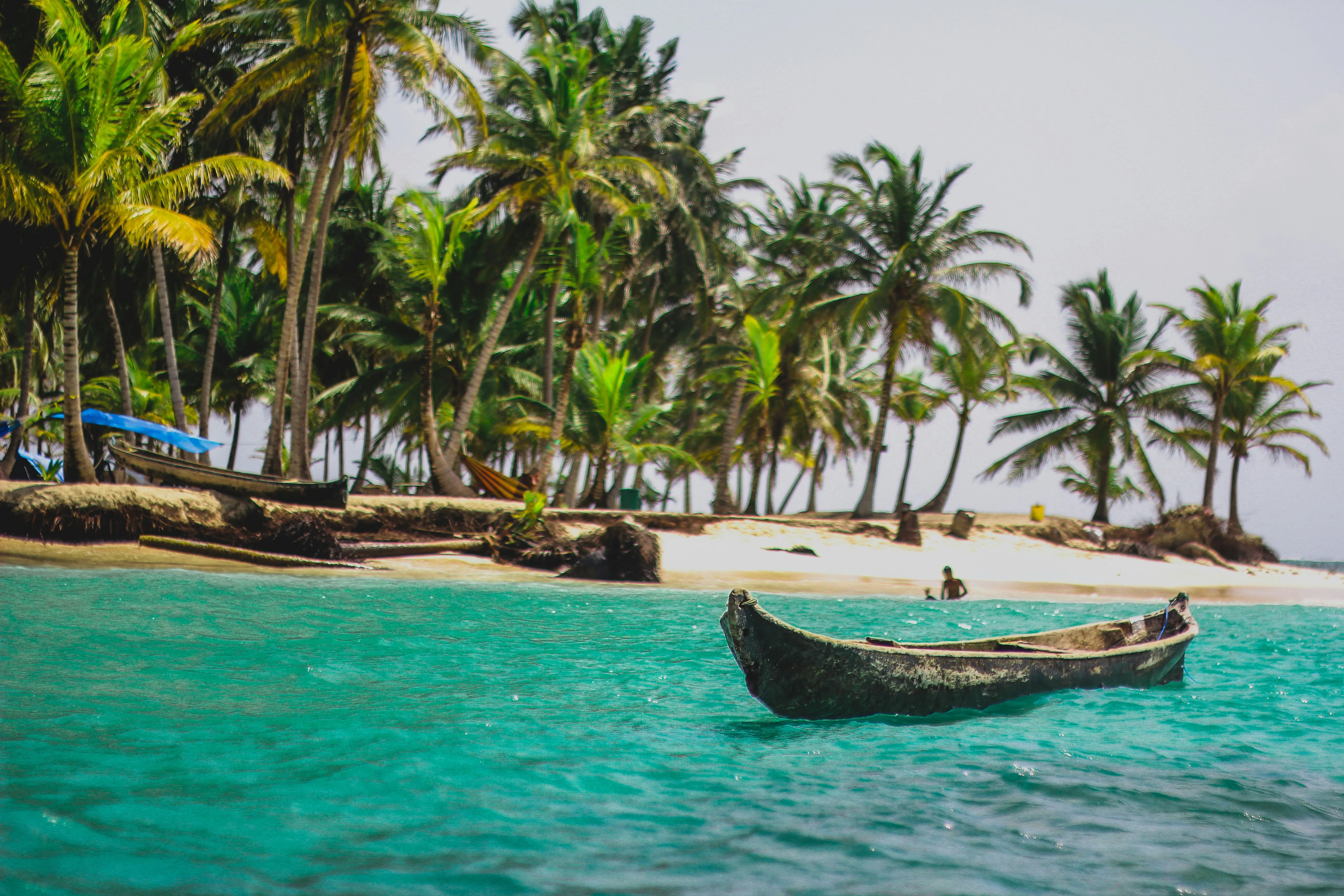
The Caribbean coast presents a different atmosphere, marked by Afro-Antillean culture and crystal-clear waters. The Bocas del Toro archipelago is one of the most sought-after destinations for its white-sand beaches, mangroves, and the possibility of diving or snorkeling in coral reefs. In contrast, the Guna Yala region (San Blas) allows visitors to learn about a model of community management by the Guna indigenous people, in an environment of hundreds of small islands where time seems to have stopped.
For lovers of the sea and tranquility, the Pacific coast also has gems like the Pearl Islands or Coiba National Park. The latter, declared a World Heritage Site, is a former penal colony turned into a marine reserve, considered one of the best places for observing whales, manta rays, and exceptional underwater fauna. In the rural areas of the Azuero Peninsula, the traveler can immerse themselves in deeply rooted traditions, learning about the creation of handicrafts and typical clothing in small towns full of color.
Tip: You cannot miss visiting the Panama Canal, the most emblematic place in the country.
✈️ Best time to travel
Panama has a tropical climate that maintains warm temperatures consistently throughout the year. The choice of the ideal time for the visit depends mainly on preferences regarding precipitation, as the country is divided into two marked periods: the dry season and the rainy season. While the months with less rain are conducive to hiking and coastal activities, the precipitation season transforms the landscape into an intense green environment and allows for a more relaxed atmosphere.
The travel experience varies by region; the Caribbean coast is usually more humid than the Pacific, and mountain areas, like Chiriquí, offer a notable coolness compared to the capital. In general, the traveler will find a vibrant country where nature and culture manifest in different ways depending on the calendar month, allowing for the stay to be planned based on whether one seeks constant sun or the sighting of fauna in its most exuberant habitat.
| Season | Months | Typical climate | What to expect | Tourist influx |
|---|---|---|---|---|
| Spring | Mar – May | High temperatures (24-32°C). Transition from dry climate to start of rains. | Holy Week celebrations, landscapes beginning to turn green, and prolonged sunny days. | ⭐⭐⭐ (Medium / High) |
| Summer | Jun – Aug | Moderate humidity, stable temperatures, and intermittent rain, generally in the afternoon. | Start of humpback whale watching in the Pacific and good surfing conditions. | ⭐⭐ (Medium) |
| Autumn | Sep – Nov | Wettest season, high humidity, and frequent cloudy skies. | Parades for the national holidays in November and sea turtle observation on the coasts. | ⭐ (Low) |
| Winter | Dec – Feb | Dry climate, clear skies, and trade winds that cool the environment. | Cruise season, local festivals, flower fairs, and optimal conditions for the islands. | ⭐⭐⭐⭐ (High) |
🗣️ Basic vocabulary
Knowing some local expressions in Panama will help you move more smoothly and connect better with people during your stay. Although the main language is Spanish, there are specific terms that usually appear in daily situations, such as when ordering something in a shop or using public transport.
Keeping these words in mind will facilitate understanding in informal contexts and allow you to navigate the country’s daily life more naturally, avoiding common confusion when hearing local speech.
- ¡Qué xopá!: Very informal greeting, equivalent to “What’s up?” or “How’s it going?”.
- Pinta: Common way to refer to a beer.
- Tranque: Term used to describe a traffic jam or traffic congestion.
- Chiva: Small bus or collective transport usually seen in rural areas or specific routes.
- Vaina: Placeholder word used to refer to any object, situation, or matter.
- Parquear: Means to hang out with people to pass the time or go out for leisure.
- Chenchén: Colloquial term to refer to money.