


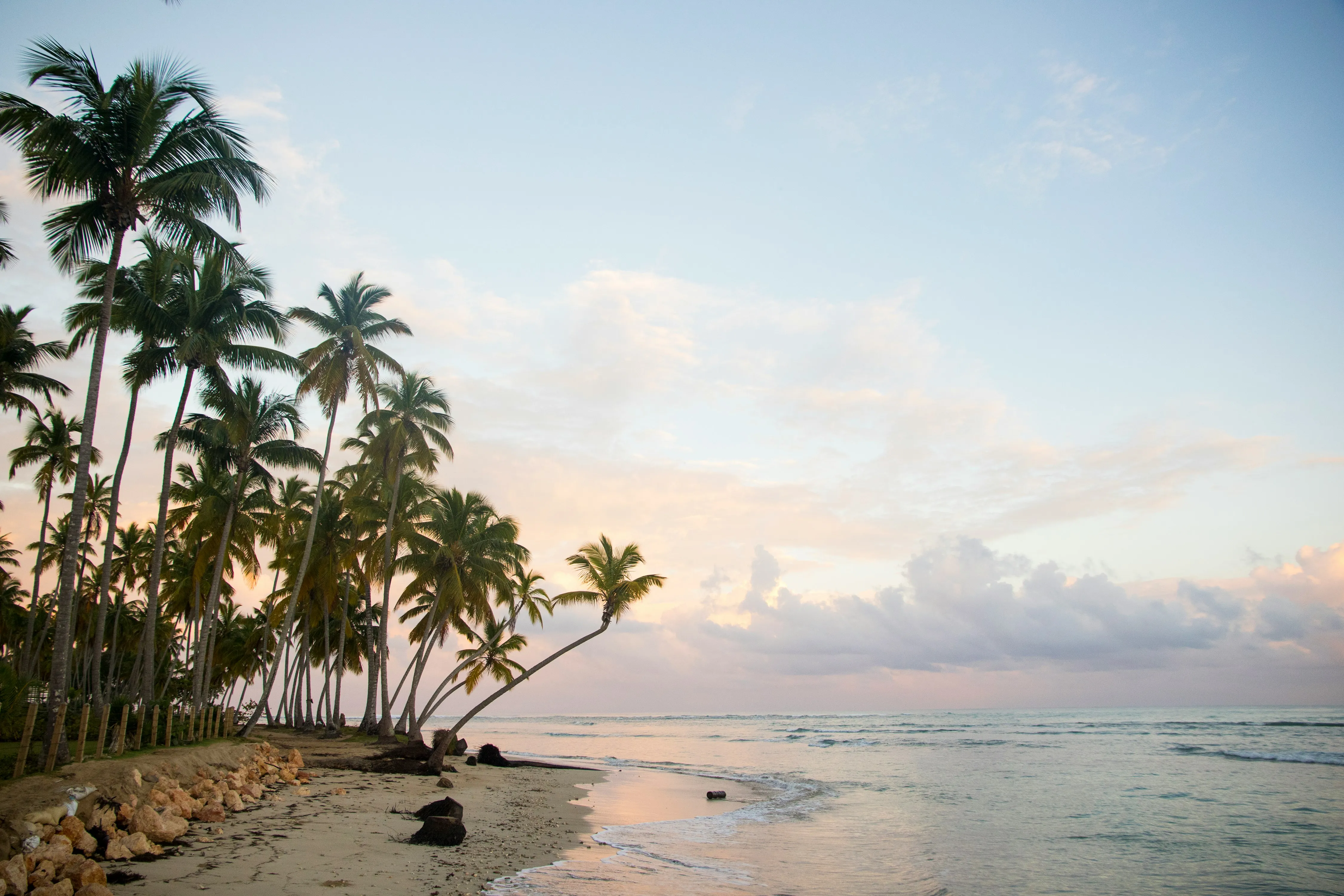
Dominican Republic
Discover a Caribbean destination with white beaches, historical culture in Santo Domingo, exuberant nature, and the great warmth of its hospitable people.
Quick Facts
- Capital
- Santo Domingo
- Language
- Spanish
- None
- Currency
- Dominican Peso (DOP)
- Best time to visit
- From December to April to avoid rain and hurricane season.
- Budget per day
- $50 - $150 per day
- Climate
- Warm tropical throughout the year with high humidity and a moderate rainy season.
- Connectivity
- medium
- Very easy to obtain at airports and official local operator stores.
- Electricity
- Type A/B (110V)
- Local transport
- acceptable
- Card usage
- acceptable
- Tipping
- optional
🌎 Introduction
Sharing the heart of the Antilles, this territory unfolds between the Atlantic breeze and the calm of the Caribbean, offering much more than the conventional image of white sand and coconut trees. Moving into its geography, the landscape transforms rapidly: from the desert dunes of the south to the fertile valleys and the peaks of the central mountain range, where the climate invites one to seek warmth while contemplating the intense green of the coffee plantations. It is a land of contrasts, where nature and the terrain dictate a slow and welcoming pace of life.
The identity of its towns is perceived in everyday details, such as the aroma of freshly brewed coffee in the morning, the sound of domino tiles on wooden tables, or the music that naturally accompanies any meeting. Its traditions, ranging from the colorful carnivals of February to a gastronomy based on local products, reflect a cultural fusion that defines the character of its people. In the cooler months, the coasts become the stage for humpback whales, an event that, along with the serenity of its fishing villages, shows the most authentic and diverse facet of this Caribbean corner.
🛡️ General Safety
The Dominican Republic is one of the most visited destinations in the Caribbean and, in general terms, offers a safe and welcoming environment for international tourists. The country has made great efforts to professionalize visitor care, maintaining a safety level that can be considered moderate. The vast majority of trips occur without any setbacks, provided that basic prudence recommendations that would apply in any high-traffic international destination are followed.
General safety level
- The overall safety rating for tourists is good, especially within established tourist circuits and hotel complexes.
- Compared to other countries in the region, the Dominican Republic is at a medium-low risk level for travelers, standing out for the hospitality of its people.
- The context for the traveler is one of tranquility, although it is necessary to be aware that social and economic contrasts exist that require maintaining a vigilant attitude in urban environments outside protected areas.
Common crime and risks
- The most frequent crime is petty theft or oversight, such as the theft of wallets, mobile phones, or bags on public beaches and crowded areas.
- Drive-by snatching from motorcycles (locally known as “motoladrones” incidents) can occur in large cities; it is recommended not to walk with valuables near the roadway.
- Scams and overpricing are common risks in high-density tourist areas. It is advisable to be wary of excessively generous offers from strangers or unofficial guides.
- Credit card fraud or magnetic stripe cloning can happen, so it is recommended to pay in cash whenever possible or not lose sight of the card during the transaction.
Safety in cities and tourist areas
- Urban centers such as Santo Domingo or Santiago require more precaution than coastal areas. In the capital, the Colonial Zone is very safe thanks to constant surveillance, but it is advisable to avoid non-tourist peripheral neighborhoods.
- Resort areas (such as Punta Cana, Bávaro, or Bayahibe) are extremely safe and have 24-hour private security.
- In cities, it is recommended to move with tranquility during the day and limit walking trips through unknown areas at night.
- The use of the Tourism Police (POLITUR) is an excellent resource, as they are present in all areas of interest to guarantee the visitor’s well-being.
Safety in transportation
- In the Dominican Republic, you drive on the right.
- Informal public transport, such as “conchos” (shared cars) or “motoconchos” (motorcycle taxis), does not always meet road safety standards and is not recommended for tourists seeking maximum safety.
- The use of private transport applications (such as Uber) is highly recommended in cities, as it allows for driver identification and route recording.
- Hotel taxis and registered private transport companies are the safest and most reliable option for long transfers.
- If you decide to rent a vehicle, you should know that traffic can be chaotic and unpredictable. Night driving on roads is totally discouraged due to the lack of lighting and the possible presence of animals or vehicles without lights.
Natural and climatic risks
- The most relevant natural risk is the hurricane season, which occurs seasonally from June 1 to November 30.
- Torrential rains can cause localized flooding quickly, especially in mountain areas or near rivers.
- Extreme heat and high solar radiation are constant; it is vital to stay hydrated and use sun protection to avoid heatstroke.
- Although the country is in a zone with seismic activity, large-magnitude earthquakes are not frequent.
Local legislation and regulations
- There is a zero tolerance policy for drugs. Possession, even in minimal quantities, entails severe prison sentences and very high fines.
- It is mandatory to always carry a copy of your passport and the entry card to the country (or the corresponding digital record) in case authorities request identification.
- Failure to comply with traffic rules or public disturbance can lead to administrative detention until the situation is resolved.
- It is forbidden to take certain natural elements out of the country such as corals, conch shells, or protected species; fines at the airport are strict.
Safety for specific groups
- Female travelers: The country is generally safe, although “catcalling” or comments from men on the street are common. It is recommended to avoid walking alone on isolated beaches or dark areas at night.
- LGTBIQ+ travelers: Although Dominican society is mostly conservative, there is respect toward tourists. In resort areas there is total openness, although outside of them, discretion is recommended to avoid uncomfortable looks or comments.
- Travel with children or the elderly: It is an ideal destination for families. Precautions should focus on mosquito protection (to prevent diseases like dengue) and the exclusive consumption of bottled water to avoid stomach problems.
Emergencies and assistance
- The main and unified emergency number in much of the national territory is 911.
- If you are in a tourist area without 911 coverage, you can contact the Tourism Police assistance (POLITUR).
- Medical services in private clinics in tourist areas are of high quality, but very expensive. It is essential to have travel insurance with extensive medical coverage.
- In case of theft or loss of documents, you must go to the nearest prosecutor’s office to file a report (“querella”), a document that will be necessary for any subsequent procedures at your embassy.
Tip: Always use the safe in your room to store your original passport and the bulk of your cash; for your daily outings, take only a photocopy of the document and the amount of money you plan to spend.
📝 Entry requirements
To plan a trip to the Dominican Republic, it is essential to have a valid passport with an expiration date that covers the entire intended stay. Local immigration authorities usually require the identity document to be in good condition and internationally recognized. Additionally, it is a common practice for travelers to be asked to present an exit ticket from the country, either back to their place of origin or toward a third destination, to confirm the intention to finish the visit within the permitted periods.
Regarding entry authorizations, a large portion of international visitors does not need to manage a prior visa for stays for tourism purposes. Instead, access is usually facilitated through the payment of specific fees or obtaining a tourist card, which in many cases is already included in the price of airfare. The usual period of stay for these cases is typically thirty days, although there is the possibility of requesting an extension from the competent authorities if you decide to extend your time in the national territory.
During the arrival process at airports or ports, travelers must complete control forms where basic data and the place of accommodation are declared. It is recommended to have proof of sufficient financial solvency to cover expenses during the stay, as well as confirmation of the hotel reservation or the address of the residence where you will stay. Customs controls are standard processes where it is verified that the contents of the luggage comply with personal and non-commercial use regulations.
Regarding health and customs regulations, it is recommended to take the following points into account for a fluid entry:
- Customs controls: Travelers can enter with their personal effects and gift items that do not exceed the permitted value limits. It is important to declare sums of cash that exceed the thresholds established by local regulations to avoid seizures or additional procedures.
- Personal use medications: It is suggested to carry necessary medications accompanied by their corresponding medical prescription or professional order, especially if they are controlled substances or drugs that must be transported in considerable quantities for prolonged treatments.
- Food and biological products: The entry of fresh food, plants, seeds, or products of animal origin is usually restricted to protect the ecosystem and local agriculture. It is advised to avoid transporting these items to speed up the passage through biosafety controls.
- Health requirements: Vaccination certificates are not usually required in a generalized manner for entry into the country. However, it is advisable to have the usual vaccines from the international calendar and consult preventive health recommendations for tropical climate zones.
- Electronic equipment: Transporting personal use devices such as cameras or computers is allowed, although the entry of professional equipment or drones could be subject to specific registration regulations or flight permits depending on their technical characteristics.
- Security environment: At entry points, immigration and customs personnel perform inspections that are part of standard security protocols. Maintaining a collaborative attitude and having documentation at hand significantly facilitates these procedures.
🏥 Basic health considerations
In the Dominican Republic, you will find a dual health system where quality varies significantly between the public and private sectors. If you have to see a doctor, you will most likely end up in a private clinic, as they have the best standards of equipment and care in tourist areas such as Punta Cana, Puerto Plata, or Santo Domingo. You will see that staff usually speak Spanish, although in centers oriented toward foreigners, it is very frequent that you can communicate in English without major problems. The costs of private healthcare are high, so any simple consultation or treatment can mean a significant expense if you do not have support.
Although it is not a mandatory requirement to cross the border, taking out travel insurance is essential to move around the country with peace of mind. We recommend that your policy include extensive coverage for medical expenses, hospitalization, and medical repatriation, as an emergency transfer can be extremely expensive. Having this support will allow you to receive rapid attention in the best hospital centers without your wallet suffering the consequences.
Regarding vaccines, there is no mandatory vaccine to enter Dominican territory, unless you are coming from a country with a risk of yellow fever transmission. For your peace of mind, the ideal is to have your usual vaccination schedule up to date. Some travelers choose to protect themselves against hepatitis A and B or typhoid fever as a precaution, but the most sensible thing is to consult with your health center before departing so they can give you a personalized recommendation.
If you need to carry your own medication, you can do so without problems as long as you keep it in its original container and carry the corresponding medical prescription with you. This is especially important if it involves psychotropic drugs or those for very specific use, to avoid any misunderstanding at customs. You will see that in major cities there are well-stocked pharmacies, although you will not always find the same brands as in your place of origin.
The most common health risks are related to the tropical climate. The heat and humidity can play tricks on you if you don’t hydrate well, so you should pay attention to prolonged sun exposure. Insects are another factor to consider, as in certain seasons and areas they can transmit diseases such as dengue or zika. You can avoid these inconveniences by using a good repellent and wearing light clothing that covers the skin at sunset or in areas with a lot of vegetation.
A critical point you must remember is that tap water is not potable. You will find bottled water everywhere and it is the only one you should consume, even for brushing your teeth if you have a sensitive stomach. Regarding food, you can enjoy local gastronomy with peace of mind, but we advise you to be careful with street stalls if they do not have obvious hygiene measures or if the food has been exposed to the sun for a long time.
In case you find yourself in a medical emergency situation, the phone number you should dial is 911. This service coordinates emergency care and the dispatch of ambulances, although you should know that in rural or very remote areas the response may be somewhat slower than in large urban centers.
To make your stay perfect, we recommend carrying a small first-aid kit with pain relievers, gastric protectors, and disinfectant for small wounds. Don’t forget to apply high-factor sunscreen recurrently, as the Caribbean sun burns very intensely even on cloudy days. If you follow these basic tips, you can focus solely on enjoying the landscapes and the hospitality of the island.
🚌 Transportation within the country
To move around the Dominican geography, the road network is the main axis connecting the different regions. Travelers usually opt for long-distance buses for journeys between cities, as these vehicles have adequate comfort standards and usually meet their scheduled times. In denser urban areas, such as the capital, there is a modern metro system that facilitates rapid movement without depending on surface traffic.
In rural and coastal areas, transport becomes more informal. The use of shared vehicles known locally as guaguas is very common; they travel specific routes and stop at the passenger’s request. On the other hand, to cross to certain peninsulas or nearby islands, the ferry or small boats are the usual means of connection. Internal flights are an option available for long distances, although their use is less frequent than land transport.
Road and transport signage is mainly in Spanish, so knowing some basic words facilitates orientation. Ticket purchases are usually made at the terminals themselves or directly when boarding the vehicle in the case of local transport. In large cities and tourist centers, the use of taxis and transport services managed through mobile applications is a very widespread alternative due to its convenience.
The general feeling when using transport is one of flexibility, especially off the main routes. While long-distance services are more structured and reliable, local transport in less urbanized areas requires more patience and a willingness to adapt to the local rhythm. Car rental is also a frequent option for those seeking total autonomy, always keeping in mind that the driving style may differ from other places.
Tip: It is recommended to confirm the exact departure point and return schedules in advance at the terminals, as the organization can vary depending on the chosen destination.
🤵 Culture and Etiquette
Dominican society is characterized by a close and friendly treatment where social interactions are usually marked by hospitality and openness toward the visitor. When greeting, the use of handshakes is common in formal contexts or between strangers, while between people with more trust, a kiss on the cheek or a brief hug is frequent. The use of courtesy titles such as señor or señora, followed by the last name or even the first name, is a common way to show respect, especially toward older people or those in positions of authority.
In public spaces, the atmosphere is usually vibrant and communicative. It is normal for conversations to take place at a high voice volume and for music to be a constant element in daily life, reflecting a dynamic and expressive culture. Light physical contact during a talk is generally perceived as a sign of empathy and naturalness. Regarding punctuality, the pace of life can be more flexible in social contexts, so it is frequent that informal meetings do not start exactly at the scheduled time, although in the professional field, adherence to schedules is valued.
Personal image is a relevant aspect in daily coexistence. It is valued to go to public places, especially in urban environments or institutions, with careful and clean attire. In the case of visits to churches, cathedrals, or other places of worship, it is considered appropriate to dress modestly, avoiding excessively informal clothing as a sign of consideration toward religious traditions. Likewise, in hospitality establishments, although the bill usually includes a service charge, it is a widespread and appreciated custom to leave an additional tip if the service has been satisfactory.
In the area of meals and hospitality, sharing food is a social act of great relevance. If an invitation to a home is received, it is considered a gesture of courtesy to taste the dishes offered, as culinary generosity is a fundamental pillar of their identity. In conversations, it is preferable to maintain a cordial and constructive tone. Respect for family and social hierarchies is a value present in daily life, and observing the behavior of locals carefully will allow the traveler to integrate easily into any context.
Tip: When entering a small establishment, boarding public transport, or starting any procedure, greeting with a “buenos días” or “buenas tardes” (good morning or good afternoon) directed to everyone present is a basic rule of courtesy that facilitates a warm and respectful welcome.
🍛 Typical Gastronomy
The gastronomy of the Dominican Republic is the result of a cultural fusion that combines Taíno, Spanish, and African influences. This mix has given rise to a cuisine of defined and comforting flavors, where the use of local and fresh ingredients is the norm. The sofrito, a base of natural seasonings such as garlic, onion, pepper, and oregano, constitutes the soul of most of its preparations, providing a characteristic aroma and taste without resorting to intense spices.
Lunch is the most important meal of the day and usually takes place between twelve and two in the afternoon. The quintessential everyday dish is La Bandera, a combination of rice, beans (habichuelas), and meat that represents the base of the national diet. On the other hand, the plantain is an omnipresent ingredient consumed in various ways: fried, boiled, or mashed, and is present both at breakfast and as an accompaniment to main meals.
Regarding social customs, eating is an act of conviviality and hospitality. In restaurants, the treatment is usually friendly and close, and it is not strange for meals to linger into a quiet “sobremesa” (after-meal talk). Regarding drinks, Dominicans usually accompany their dishes with natural fruit juices or water, leaving coffee for the end of lunch. Coffee is an essential part of the local culture, generally served black and with sugar, being a common gesture of courtesy in any home or establishment.
The country’s geography also influences regional specialties. While meat stews and tubers like yucca or yautía predominate in the interior, in coastal areas the focus is on fresh fish and the use of coconut milk, especially in the northeast region. This diversity allows the traveler to find varied options ranging from hearty dishes for the countryside to lighter and marine preparations facing the ocean.
| Dish | Description | Main Ingredients | Where to try it | Tip |
|---|---|---|---|---|
| La Bandera | Balanced daily national lunch. | White rice, stewed beans, meat (chicken or beef), and salad. | Creole food restaurants and local diners. | It is common to accompany it with a slice of fresh avocado if it is in season. |
| Mangú | Smooth puree traditionally served at breakfast. | Mashed green plantains with butter and red onion on top. | Hotels, cafes, and breakfast stalls. | Order it with “los tres golpes”: egg, fried cheese, and Dominican salami. |
| Sancocho | Thick and nutritious broth for special occasions. | Various meats, tubers (yucca, yautía), plantain, and pumpkin. | Traditional restaurants and family celebrations. | It is usually served with a side of white rice to mix as desired. |
| Mofongo | Substantial dish of Afro-Caribbean origin. | Fried green plantain mashed with garlic and pork cracklings. | Especially common in Santo Domingo and the northern zone. | It is recommended to try it with a bit of meat broth to hydrate the mash. |
| Pescado con coco | Coastal specialty with a mild and aromatic flavor. | Fish of the day, coconut milk, peppers, and spices. | Beach restaurants, especially in the Samaná area. | It is the ideal dish to enjoy the most tropical flavors of the peninsula. |
📷 Areas and places to visit
The Dominican Republic offers a diversity that goes far beyond its best-known image, combining a rich historical legacy with natural landscapes that vary from turquoise coasts to imposing mountain formations. Starting with its capital, Santo Domingo, the traveler can immerse themselves in history in the Colonial Zone, declared a World Heritage Site. Walking through its cobblestone streets allows one to observe the Primal Cathedral of America or the Alcázar de Colón, while the area’s museums offer a detailed view of the colonial era and pre-Hispanic art. The contrast between this historical core and the dynamism of the modern city, with its cultural centers and urban life, defines the capital’s identity.
Toward the east of the country lies the most popular region for those seeking rest and contact with the sea. Locations like Punta Cana and Bávaro are recognized for their extensive strips of white sand and calm waters. In this area, it is common to take catamaran excursions to Saona Island or Catalina Island, where one can enjoy protected natural environments. Activities here usually focus on the aquatic environment, allowing exploration of coral reefs or practicing wind sports in nearby coastal areas.
The Samaná Peninsula, located in the northeast, represents the most exuberant and green face of the country. It is a region characterized by its dense palm groves and elevations that fall directly into the ocean. Here is the Los Haitises National Park, a collection of mangroves and rock formations that house caves with ancient rock art. Nearby, the El Limón Waterfall invites hiking through the tropical jungle to reach its cascade. Additionally, this area is famous for humpback whale watching during the first months of the year in Samaná Bay.
On the north coast, the province of Puerto Plata combines the Victorian architecture of its historical center with prominent natural attractions. It is possible to ascend the Cable Car to the top of Loma Isabel de Torres for a panoramic view of the entire Atlantic coast. Culture enthusiasts can visit the Amber Museum or the San Felipe Fortress, while adventure fans usually head to the 27 Charcos de Damajagua, a set of waterfalls and natural pools that allow for an active river tour. Nearby towns like Cabarete are international centers for surfing and kitesurfing due to their constant wind conditions.
Toward the interior of the country, the landscape transforms drastically in the regions of Jarabacoa and Constanza, located in the Central Mountain Range. Known as the Dominican Alps, these areas offer a much cooler climate and an environment of pine forests and agricultural valleys. It is the ideal destination for mountain tourism, with routes leading to Pico Duarte, the highest elevation in the Caribbean. The region’s fast-flowing rivers allow for activities such as canyoning or freshwater canoeing, moving away from the purely coastal atmosphere.
Finally, the southwest of the country shows a more arid and wild side, away from traditional tourist circuits. In this region, Bahía de las Águilas stands out, considered one of the clearest and best-preserved beaches, located within the Jaragua National Park. The biodiversity of the area is evident in Lake Enriquillo, a natural reserve where crocodiles and flamingos inhabit a hypersaline water ecosystem below sea level. The contrasts between the salt fields of Baní and the vegetation of the sierra offer a unique perspective of Dominican geography.
Tip: You cannot miss visiting the Colonial Zone of Santo Domingo, the most emblematic place in the country.
✈️ Best time to travel
The Dominican Republic enjoys a tropical climate that allows for visits at any time of the year, maintaining constant warm temperatures. However, the travel experience varies mainly depending on the rainfall pattern and humidity. The choice of the ideal time depends on whether one prioritizes the dry and stable weather of the cooler months or prefers a quieter and more authentic atmosphere, accepting the possibility of occasional tropical showers.
Generally, the period between December and April is considered the most balanced, as it coincides with the dry season, offering clear skies and pleasant temperatures for enjoying both the coast and the mountainous interior. Nevertheless, the rest of the year offers its own attractions, such as more exuberant vegetation and the opportunity to participate in less crowded local festivities.
| Season | Months | Typical Climate | What to Expect | Tourist Influx |
|---|---|---|---|---|
| Spring | Mar – May | Mild temperatures and decreasing humidity. | Humpback whale watching (March) and Easter festivities. | ⭐⭐⭐ (Medium) |
| Summer | Jun – Aug | Hot and humid weather with brief showers. | Long sunny days, ideal for water sports and music festivals. | ⭐⭐⭐⭐ (Medium-High) |
| Autumn | Sep – Nov | Higher probability of rain and tropical storms. | Very green landscapes, quieter environment, and greater contact with local culture. | ⭐⭐ (Low) |
| Winter | Dic – Feb | Dry, sunny weather with cool night temperatures. | Christmas celebrations, lively atmosphere on the beaches, and carnivals in February. | ⭐⭐⭐⭐⭐ (High) |
🗣️ Basic Vocabulary
Knowing some local expressions from the Dominican Republic will help you move more smoothly during your stay. Although the official language is Spanish, Dominicans use specific terms and idiomatic turns that facilitate communication in daily situations, such as when using public transport or buying in small establishments.
It is not necessary to master local slang, but understanding these words will allow you to better connect with residents and resolve practical situations more easily. Below are some of the most common terms you will hear during the trip.
- ¿Qué lo que?: Very common informal greeting, equivalent to “What’s up?” or “How’s it going?”.
- Un chin: Means “a little bit” or a small amount of something, very useful when ordering food or drink.
- Guagua: Refers to the bus or collective transport, essential for moving between locations.
- Vaina: Multi-purpose word that usually refers to a “thing”, object, or indeterminate situation.
- Concho: Vehicle (car or motorcycle) that functions as urban public transport.
- Nítido: Adjective indicating that something is very good, excellent, or that everything is in order.
- Colmado: Small neighborhood grocery store that usually also serves as a social meeting point.
- Bacano: Used to describe something that is good, attractive, or of quality.