


Guatemala
Guatemala offers a vibrant fusion of Mayan heritage, towering volcanoes, and colonial cities surrounded by nature, providing a unique and unforgettable cultural and landscape experience.
Quick Facts
- Capital
- Guatemala City
- Language
- Spanish
- Mayan languages, Xinca, and Garifuna
- Currency
- Quetzal (GTQ)
- Best time to visit
- From November to April, during the dry season
- Budget per day
- $35 - $120 per day
- Climate
- Tropical and subtropical climate; hot and humid on the coasts, while the highlands enjoy temperate and cool temperatures.
- Connectivity
- medium
- Very easy to obtain at airports, kiosks, and local shops; eSIM options are available.
- Electricity
- Type A/B (120V)
- Local transport
- acceptable
- Card usage
- acceptable
- Tipping
- yes
🌎 Introduction
Under the sky of Central America lies a territory where geography breaks into a succession of volcanoes, valleys, and jungles. It is a corner of the world where the climate usually maintains a constant mildness for much of the year, allowing green to be the dominant color in almost any scene. The environment changes character within a few kilometers, transitioning naturally from the dark sand coasts of the Pacific to the serenity of mountain lakes and the archaeological sites that emerge from the northern vegetation.
This natural wealth coexists with a cultural identity that can be felt in everyday scenes. It is manifested in the colorful hand-woven textiles, in the aroma of coffee that wafts along the hillsides, and in the sound of the marimba that accompanies popular celebrations. It is a country that has managed to integrate the legacy of the Mayan civilization with current customs, creating a mosaic of traditions where respect for the land and the slow pace of its towns invite one to observe life from a different perspective.
🛡️ General safety
Guatemala is a country with extraordinary cultural and natural wealth that attracts thousands of visitors every year. In terms of security, the country presents a medium risk level, similar to other destinations in the Central American region. The vast majority of trips occur without incident, provided the tourist acts with common sense and follows basic safety recommendations. It is a destination where hospitality is the norm, but it requires a proactive and vigilant attitude, especially in large urban centers.
General safety level
- The general safety rating for tourists is moderate. Although there are public safety challenges, the main tourist areas usually have reinforced surveillance.
- The context for the traveler is one of marked contrasts: while rural areas and historical centers like Antigua are generally quiet, some areas of the capital require greater precautions.
- It is not necessary to travel with fear, but with foresight, informing yourself beforehand about the specific routes and destinations to visit.
Crime and common risks
- The most common crimes that can affect tourists are pickpocketing and theft of belongings, especially in crowded places such as markets, bus stations, or main squares.
- Minor scams in service prices or currency exchange are risks that, although they do not compromise physical integrity, can occur in high-traffic areas.
- Although infrequent toward foreign tourists, there are risks of robbery with intimidation on little-traveled hiking trails or during night hours. It is always recommended to carry out mountain or volcano activities with authorized guides.
- The use of ATMs on the street should be avoided; it is preferable to use those located inside shopping centers or banks with security.
Safety in cities and tourist areas
- Antigua Guatemala, Lake Atitlán, and Tikal are considered very safe destinations for visitors, thanks to the strong presence of the tourist police (PROATUR).
- In Guatemala City, safety varies significantly by zone. Zones 1, 4, 9, 10, 14, and 15 are usually the most frequented by tourists and have better security conditions, although alertness must always be maintained.
- It is recommended to avoid walking in poorly lit or lonely areas after sunset, even in cities considered safe.
- It is advisable to leave valuables, original passports, and excess cash in the hotel safe and carry only a copy of the documentation.
Safety in transport
- Urban public transport and the famous “chicken buses” (colorful long-distance buses) are generally not recommended for tourists due to reckless driving and the risk of theft.
- For travel between cities, the safest option is to hire private shuttle services or first-class buses (luxury transport).
- In cities, the use of transport applications (such as Uber) or taxis requested by phone from the hotel or restaurant is recommended, avoiding taking taxis directly on the street.
- In Guatemala, driving is on the right. If you decide to rent a vehicle, you should know that the state of the roads can be irregular and signage scarce in rural areas. Driving at night on the country’s roads is strongly discouraged due to the lack of lighting and possible obstacles on the road.
Natural and climatic risks
- Guatemala is located in an area of high seismic activity, so tremors are relatively common. Most are imperceptible, but it is advisable to know the “drop, cover, and hold on” protocols.
- The country has several active volcanoes. If you plan to make ascents, it is vital to consult the status of volcanic activity in the INSIVUMEH bulletin and follow the instructions of local authorities.
- The rainy season (from May to October) can cause flooding or landslides that affect roads. Hurricanes can affect the Atlantic coast during this same period.
- In low-lying and jungle areas, the heat can be intense, so constant hydration is essential to avoid heat stroke.
Local laws and regulations
- Guatemalan legislation is very strict regarding the consumption and possession of drugs; prison sentences are severe and no distinctions are usually made for foreigners.
- It is forbidden to photograph military or government buildings in certain areas, as well as people (especially children) without their prior consent. It is a matter of respect and cultural safety.
- The export of original archaeological pieces (Mayan) or protected species of flora and fauna is a serious crime that carries prison sentences.
- Failure to comply with local laws can lead to immediate arrests and long legal processes.
Safety for specific groups
- Women travelers: Guatemala is a destination that many women visit alone without problems. However, it is recommended to avoid walking alone at night and to be cautious of unwanted approaches, always maintaining a firm attitude.
- LGTBIQ+ travelers: Although homosexuality is legal, Guatemala is a mostly conservative society. In tourist areas and in the capital, there is tolerance, but discretion is recommended in rural areas or areas less accustomed to tourism to avoid uncomfortable situations.
- Children and the elderly: The country is welcoming to families. The main challenge is accessibility (cobblestone streets in Antigua) and the need to protect well from the sun and mosquitoes in jungle areas.
Emergencies and assistance
- The main emergency number for the National Civil Police is 110.
- For specific assistance to tourists, there is PROATUR (Tourist Assistance), whose number is 1500. They offer accompaniment and support in case of incidents, as well as information on safe routes.
- Private health services in Guatemala City and Antigua are of good quality, but can be expensive, so it is essential to travel with international medical insurance with broad coverage.
- In case of loss of documents, you must go to the nearest police station to file a report (“denuncia”), which will be necessary to process temporary documents at your embassy or consulate.
Tip: Always use the services of PROATUR (phone 1500) if you have doubts about the safety of a hiking trail or road; their assistance is free, bilingual, and very efficient for the international traveler.
📝 Entry requirements
To undertake a trip to this destination, the fundamental document that every traveler must carry is a valid passport in good condition. It is common practice for local authorities to suggest that this document have a minimum validity of six months from the time of entry into the national territory. Depending on current international agreements and the nationality of the visitor, a large portion of foreign tourists are usually exempt from managing a prior visa for short recreational stays, obtaining entry permission directly at the border post.
Regarding the authorized stay, tourists usually receive permission to transit or stay in the country for a period that frequently reaches 90 days. It is important to consider that this period may be shared with other nations in the region due to free movement agreements. During the entry process at airports or land borders, immigration officials may request the presentation of an exit ticket confirming the intention to leave the country within the permitted period, as well as proof of sufficient financial solvency to cover the expenses planned during the stay.
Border controls are routine processes where documentation is verified and, occasionally, a brief interview is conducted regarding the planned itinerary or place of accommodation. In the field of customs, there are common restrictions on the import of certain products to protect local security and the ecosystem. Generally, the entry of personal use items and basic electronic devices is allowed. The transport of fresh food, plants, or seeds is usually strictly regulated or limited, requiring special permits that do not usually apply to the average tourist.
From a health point of view, specific vaccines are not usually required universally for all travelers, although it is always recommended to be up to date with the standard vaccination schedule. However, for those coming from regions where certain diseases are endemic, it may be necessary to present an international vaccination certificate, such as for yellow fever. It is advised that personal medications be transported in their original packaging and, in the case of substances requiring control, be accompanied by a copy of the medical prescription.
The following are the key points to keep in mind for access to the country:
- Passport validity: It is recommended that the document have at least six months of remaining validity.
- Maximum stay: Periods of up to 90 days are generally granted for tourist activities.
- Proof of exit: Have a plane or land transport ticket confirming the departure from the territory.
- Financial resources: Have demonstrable economic means if authorities request them.
- Health certificates: Documentation of specific vaccines only if coming from certain risk areas.
- Restricted products: Limitations on the entry of agricultural products, weapons, or large sums of undeclared cash.
- Medical insurance: Recommendation to have a travel policy with international coverage for any eventuality.
🏥 Basic health considerations
If you plan to visit Guatemala, it is important to know how to handle health issues so that your trip is as pleasant as possible. In the main cities, such as Guatemala City or Antigua, you will find a network of private clinics and hospitals of an excellent level, with modern technology and well-trained professionals. On the other hand, the public health system is free but often has resource limitations and long waiting times, so as a tourist it will always be better for you to go to private centers. Prices in these establishments can be high, so it is better to be prepared. Regarding communication, you will not have any problems since the health personnel habitually speak Spanish.
Taking out travel medical insurance is not a mandatory legal requirement to enter the country, but it is something totally recommended. Ideally, your policy should include broad coverage for hospitalization, surgical interventions and, above all, medical repatriation in case of need. Having this support will allow you to move with the peace of mind of knowing that any medical unforeseen event will not represent a major financial blow to you.
Regarding vaccines, there are no mandatory vaccination requirements for travelers, unless you come from an area where yellow fever is endemic. The most sensible thing is to verify that your official vaccination schedule is up to date. Additionally, you might consider protection against Hepatitis A and typhoid fever, which are common recommendations for those who decide to explore tropical destinations and try local food in various environments.
If you need to take personal medication with you, you can do so without problems, but it is highly recommended that the medications be in their original packaging. If they are specific treatments or drugs that require control, carrying a medical prescription or a certificate signed by your doctor will avoid any doubt at customs controls. In urban areas, you will see that there are well-stocked pharmacies where you can buy basic first aid kit items, although it is always useful to bring painkillers, antihistamines, and some gastric protector from home.
Health risks in the country vary depending on the area you visit. In the lowlands and jungle regions, such as Petén, heat and humidity are constant, which favors the presence of mosquitoes. It is essential that you use insect repellent generously to avoid discomfort and prevent diseases transmitted by bites. If your route includes the highlands or high-altitude cities, you might feel the effects of altitude, such as fatigue or slight headaches. The recommendation in this case is to hydrate well and allow your body to acclimatize gradually. In addition, solar radiation is strong throughout the territory, so the use of sunscreen is a daily necessity.
A key aspect for your well-being is the consumption of water and food. In Guatemala, it is not safe to drink water directly from the tap, so you should always opt for bottled or treated water. You will find purified water easily in hotels and shops. As for food, you can try delicious dishes in markets and street stalls, but try to choose those places that maintain a good appearance of hygiene and where the food is served well-cooked. It is preferable that the fruits you consume are peeled by yourself to avoid any stomach upset.
In case of a medical emergency, the number to dial is 123 to contact the firefighters, who manage most ambulance transfers, or 128 for the Red Cross. You should know that, although the service works, in rural areas or areas with a lot of traffic the response may not be as fast as you would like, so in mild situations it is sometimes more practical to seek a private transfer to the nearest hospital.
As final tips for your stay, always remember to maintain good hand hygiene, carry a small disinfectant in your backpack, and do not expose yourself to the sun during the central hours of the day without protection. If you follow these simple guidelines, your experience in the country will be magnificent and you will only take home good memories of its landscapes and its culture.
🚌 Transport within the country
Moving around Guatemala is mainly done by road, this being the backbone of national travel. Travelers usually opt for shared microbuses (shuttles) or private transport services that connect the points of greatest interest. To cover long distances in a short time, there are internal flights that link the capital with the northern regions. In specific areas such as lakes or rivers, water transport in motorboats (lanchas) is the usual and necessary means to move between different populations.
The use of conventional public transport requires some adaptability on the part of the visitor. Signage at stations and stops can be scarce, and ticket management is usually done in person and directly at the time of travel. Although it is possible to find assistance in tourist centers, the Spanish language is essential to understand routes and destinations. The organization of journeys is usually informal, so it is advisable to confirm the stops with the operators before starting.
There is a clear distinction between mobility in large cities and the rural environment. In urban centers, the offer is more diverse and structured, while in rural areas and mountain villages, schedules are more limited and vehicles are usually simpler. For short journeys within small towns, the use of mototaxis (tuk-tuks) is very frequent, allowing for agile movement through narrow and steep streets.
Taxis and transport services requested through digital applications are common and accessible in metropolitan areas. These services offer a functional alternative for urban travel or transfers to airports. Regarding comfort and punctuality, land travel times can vary considerably due to the topography of the terrain and traffic density, factors that influence the regularity of travel.
Tip: It is recommended to plan transfers with sufficient time to adapt to road conditions and local rhythms.
🤵 Culture and etiquette
Social interaction in Guatemala is governed by constant courtesy and a markedly friendly interpersonal treatment. It is essential to greet when entering any establishment, transport, or when starting a conversation, using formulas such as “buenos días” (good morning) or “buenas tardes” (good afternoon), as omitting this step can be perceived as a lack of attention. The use of “usted” (formal you) is the general norm when interacting with strangers or older people, reflecting deep respect for hierarchy and personal experience within the social structure.
In public spaces, a moderate voice volume and discreet behavior that avoids calling unnecessary attention predominate. Physical interactions are usually gentle; the most common greeting among men or in formal settings is a light handshake, while among people who already know each other, a kiss on the cheek or a brief hug is common. Regarding time management, although there is some time flexibility in social contexts, punctuality is positively valued in the field of tourist and professional services.
When eating, it is a deeply rooted custom to wish “buen provecho” (enjoy your meal) to people nearby, even if they are strangers in a restaurant. In hospitality establishments, it is customary to leave a ten percent tip, which usually appears already suggested on the bill. If an invitation to a private home is received, it is a gesture of courtesy to value local hospitality, and it is well-regarded to bring a small gift for the hosts, such as flowers or some pastry product.
Respect for traditions and spirituality is a central pillar of the country’s identity, especially in areas with a strong heritage of Mayan culture. When visiting churches, archaeological sites, or attending traditional ceremonies, it is recommended to maintain an observant and silent attitude, dressing discreetly and modestly. It is of vital importance to show sensitivity toward traditional clothing and sacred objects, avoiding interfering in rituals and always asking permission before taking photographs of people or during private acts.
Tip: Always greet when entering shops or transport with a simple “buenos días” or “buenas tardes”; it greatly facilitates any subsequent interaction and is the basis of local hospitality.
🍛 Typical gastronomy
Guatemalan gastronomy is a reflection of its rich cultural heritage, where Mayan traditions merge with Spanish influences from the colonial era. The basis of the daily diet revolves around three fundamental pillars: corn, beans, and chili. These ingredients are transformed into a wide variety of textures and flavors, highlighting the use of ancestral techniques such as the use of the comal to cook the indispensable corn tortillas that accompany almost any meal of the day.
One of the most distinctive features of its cuisine is the use of recados, thick sauces prepared with spices, toasted seeds, and roasted vegetables that serve as a base for various meat stews. The flavor is usually comforting and aromatic, but rarely results in being excessively spicy, as the spicy sauce is usually served separately so that each diner can adjust the intensity to their personal taste. In addition, the use of aromatic plants and local vegetables brings a characteristic freshness to the broths and side dishes.
Regarding eating habits, the traditional breakfast is one of the most important and complete meals, usually including eggs, black bean puree, fried plantain, and cheese. Lunch is considered the main meal and is usually served between noon and two in the afternoon. In most establishments, the service is attentive and hospitable, maintaining a relaxed atmosphere where the diner is not rushed.
To accompany dishes, the consumption of frescos, natural drinks made with seasonal fruits, or rice horchata is very common. In the afternoon, or in colder climates, atoles (hot and thick corn or cereal drinks) are very popular. Guatemalan coffee, internationally recognized for its quality, is usually enjoyed at any time, frequently accompanied by pan dulce (sweet bread) for a snack.
| Dish | Description | Main ingredients | Where to try it | Tip |
|---|---|---|---|---|
| Pepián | Traditional stew thickened with toasted seeds, considered cultural heritage. | Meat (chicken or beef), pumpkin seeds, sesame, and mild chilies. | Local cuisine restaurants in Antigua and Guatemala City. | Accompany it with white rice to take advantage of all the recado sauce. |
| Kak’ik | Broth of pre-Hispanic origin, reddish in color and intense in flavor but not spicy. | Turkey (chunto), cilantro, achiote, and various spices. | Alta Verapaz region and specialized restaurants in Cobán. | It is usually served with a “tamalito de viaje” (white corn dough) on the side. |
| Jocón | Light green stew, very aromatic and representative of the western part of the country. | Chicken, green tomatillo, cilantro, green bell pepper, and scallion. | Traditional eateries in Quetzaltenango and highland areas. | It is ideal for those looking for a herbal and fresh flavor without complications. |
| Tamales | Steam-cooked corn dough in vegetable leaves, typical of celebrations. | Corn, tomato recado, pork or chicken meat, and olives. | Local markets and traditional food stalls on weekends. | There are “colorado” (red) and “negro” (black) versions (the latter are sweeter). |
| Rellenitos | Popular dessert or snack that combines sweet and salty flavors. | Cooked ripe plantain, sweet bean puree, and chocolate. | Street food stalls and markets throughout the country. | Order them freshly made so the plantain dough is crispy and hot. |
📷 Areas and places to visit
Guatemala is a country that stands out for its enormous diversity, offering the traveler a balanced mix of historical heritage, virgin nature, and a living culture that manifests itself in every corner. While traveling through its territory, it is possible to go from the volcanic peaks of the highlands to the thick tropical jungle in a matter of a few hours, finding on the way vestiges of one of the most fascinating civilizations in history and colonial cities that seem frozen in time.
The city of Antigua Guatemala is, for many, the ideal starting point. This former colonial capital is characterized by its cobblestone streets, its pastel-colored facades, and the imposing ruins of churches and convents that were marked by past seismic activity. Walking through the Santa Catalina Arch or visiting the Plaza Mayor allows one to understand the importance of its urban layout. In addition, the city is surrounded by three large volcanoes that dominate the horizon and offer hiking routes for those looking for a more active experience in contact with the natural environment.
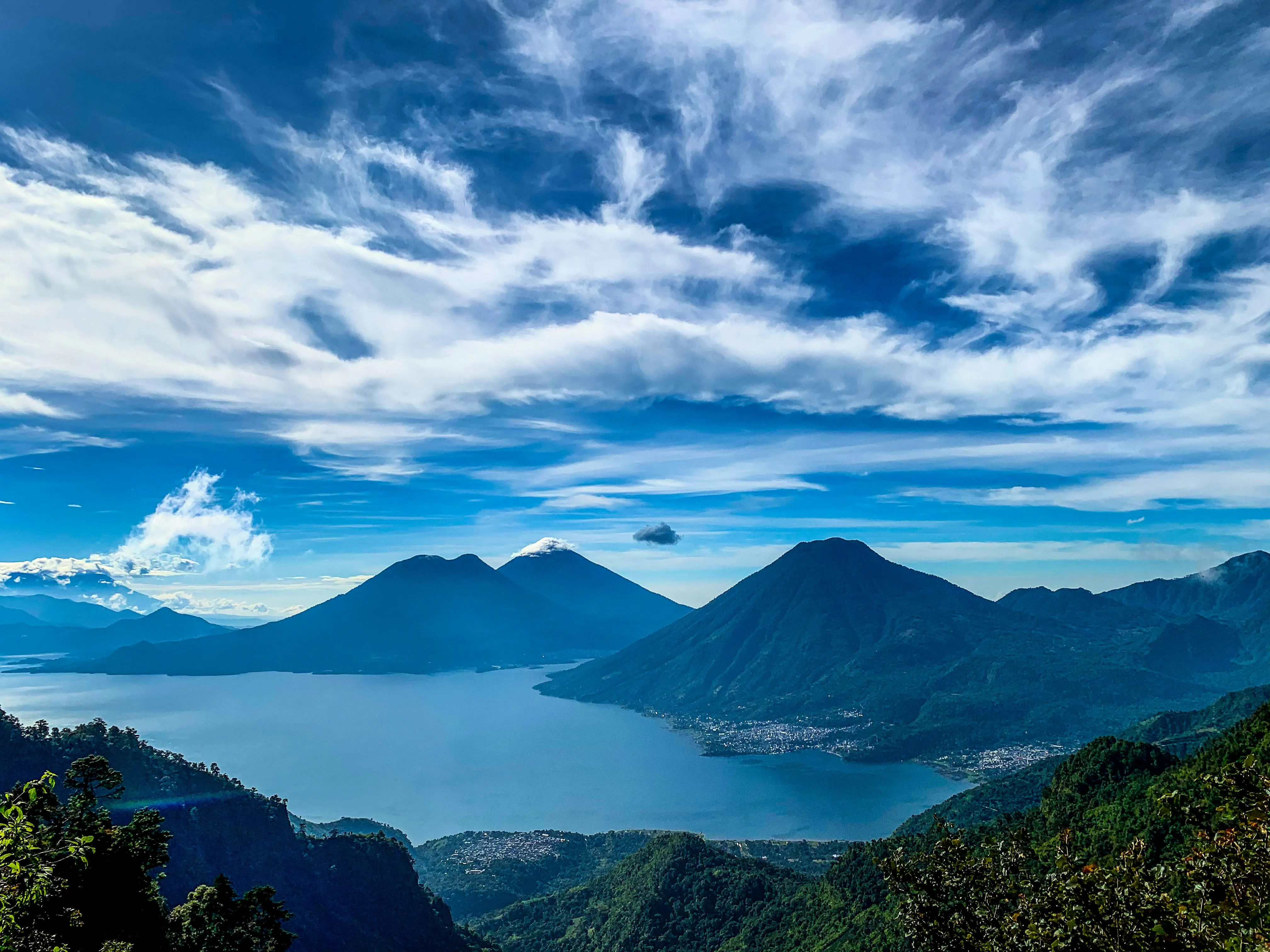
In the heart of the highlands is Lake Atitlán, a body of water surrounded by volcanoes and small towns where indigenous culture maintains a notable presence. Each town bordering the lake has its own identity; while some are known for their tranquility and meditation centers, others stand out for their weaving cooperatives and the artisanal work of local painters. Boat trips between towns allow one to appreciate the magnitude of the landscape and the daily life of the communities that inhabit its shores.
To delve into the cultural heritage, the Chichicastenango market is a relevant stop. This commercial center is one of the most traditional in the region, where textiles, ceramics, and agricultural products are displayed on market days. A point of great interest here is the Santo Tomás Church, a building where religious syncretism is observed through rituals that combine ancestral traditions with colonial elements. It is a space for social and spiritual encounter that reflects the identity of the country’s interior.
Toward the north, in the region of Petén, the landscape changes drastically to a dense jungle that guards ancient ceremonial centers. In this area is the Tikal National Park, an archaeological complex where pyramids emerge above the tree canopy. In addition to the importance of its temples and stelae, the environment allows for the observation of local fauna, such as howler monkeys and tropical birds, making the visit an experience that combines archaeology with biology. Near there, the island of Flores, located in Lake Petén Itzá, offers a relaxed setting with picturesque houses and a varied range of services for the visitor.
Guatemalan nature also has prominent exponents in the area of Alta Verapaz, specifically in Semuc Champey. This natural monument consists of a limestone bridge under which the Cahabón River flows, forming a series of stepped turquoise water pools. It is an ideal place for swimming and exploring nearby caves, representing the wildest and least urban side of the country. The contrast between these aquatic formations and the mountain vegetation is one of the most characteristic scenes of the local geography.
On the Caribbean coast, the atmosphere transforms again upon arriving at Río Dulce and the town of Livingston. This area differs from the rest of the country due to its Garifuna cultural influence, which is manifested in its gastronomy, music, and pace of life. The river journey along the river, flanked by high rock canyons and exuberant vegetation, is one of the most emblematic routes, connecting Lake Izabal with the sea. It is a region where water is the main means of transport and life passes slowly among mangroves.
Finally, Guatemala City, the modern and nerve center of the country, offers a different perspective. The Historic Center houses emblematic buildings such as the National Palace of Culture and the Metropolitan Cathedral. For those interested in history and art, the capital has specialized museums in archaeology and pre-Hispanic textiles that help contextualize everything seen in other regions. The contrasts between the more contemporary neighborhoods and the traditional areas show the evolution of a society that looks to the future without forgetting its roots.
Tip: You cannot miss visiting Tikal, the most emblematic place in the country.
✈️ Best time to travel
Guatemala has a tropical climate that is mainly divided into two periods: the dry season and the rainy season. Due to its varied topography, temperatures can change considerably between the lowlands of the Petén jungle or the coasts, and the mountainous areas of the highlands. The choice of travel time usually depends on whether one prefers to enjoy clear days for hiking or greener and lusher landscapes.
Generally speaking, the period between November and April is the one that offers the most stable climatic conditions, facilitating road travel and outdoor activities. However, the rainy months also have their appeal, as nature shows itself in all its splendor and archaeological sites present a more vibrant appearance, allowing one to get to know the local culture in a quieter environment.
| Season | Months | Typical climate | What to expect | Tourist influx |
|---|---|---|---|---|
| Spring | Mar – May | Warm temperatures and dry environment; heat increases in the lowlands. | Traditional Holy Week (Semana Santa) celebrations, clear skies, and drier vegetation. | ⭐⭐⭐⭐ (High) |
| Summer | Jun – Aug | Start of the rainy season, with intermittent showers, usually in the afternoon. | Landscapes regaining their greenery, turtle sightings on the coast, and less haze. | ⭐⭐⭐ (Medium) |
| Autumn | Sep – Nov | More frequent rains at the beginning, cooling down toward November with gentle winds. | Giant kite festivals in November and exuberant nature throughout the country. | ⭐⭐ (Medium - Low) |
| Winter | Dec – Feb | Dry climate, sunny days, and cool nights, especially in mountain areas. | Optimal conditions for volcano ascents and clear visibility at Mayan ruins. | ⭐⭐⭐⭐ (High) |
🗣️ Basic vocabulary
Knowing some local expressions will allow you to navigate with greater ease during your stay in Guatemala. Although the official language is Spanish, there are specific terms and idioms frequently used in markets, transport, and commercial establishments.
Using these words not only facilitates daily interactions, such as greeting or asking for directions, but also usually generates a friendly response from the locals upon noticing interest in their way of speaking.
- ¿Qué onda?: A very common informal greeting, equivalent to “how are you?” or “what’s up?”.
- Cabal: Used to indicate that something is exact, correct, or that one agrees with what someone just said.
- Chilero: Adjective to describe something that is pretty, nice, or of good quality.
- Camioneta: The term used to refer to public transport buses, both urban and extra-urban.
- Patojo/a: Word used to refer to a child or young person.
- ¡Buen provecho!: A common courtesy said when entering or leaving a place where people are eating, or when finishing one’s own meal.
- Sencillo: Refers to cash in small bills or coins to facilitate change.
- Chucho: Colloquial term to refer to a dog.