


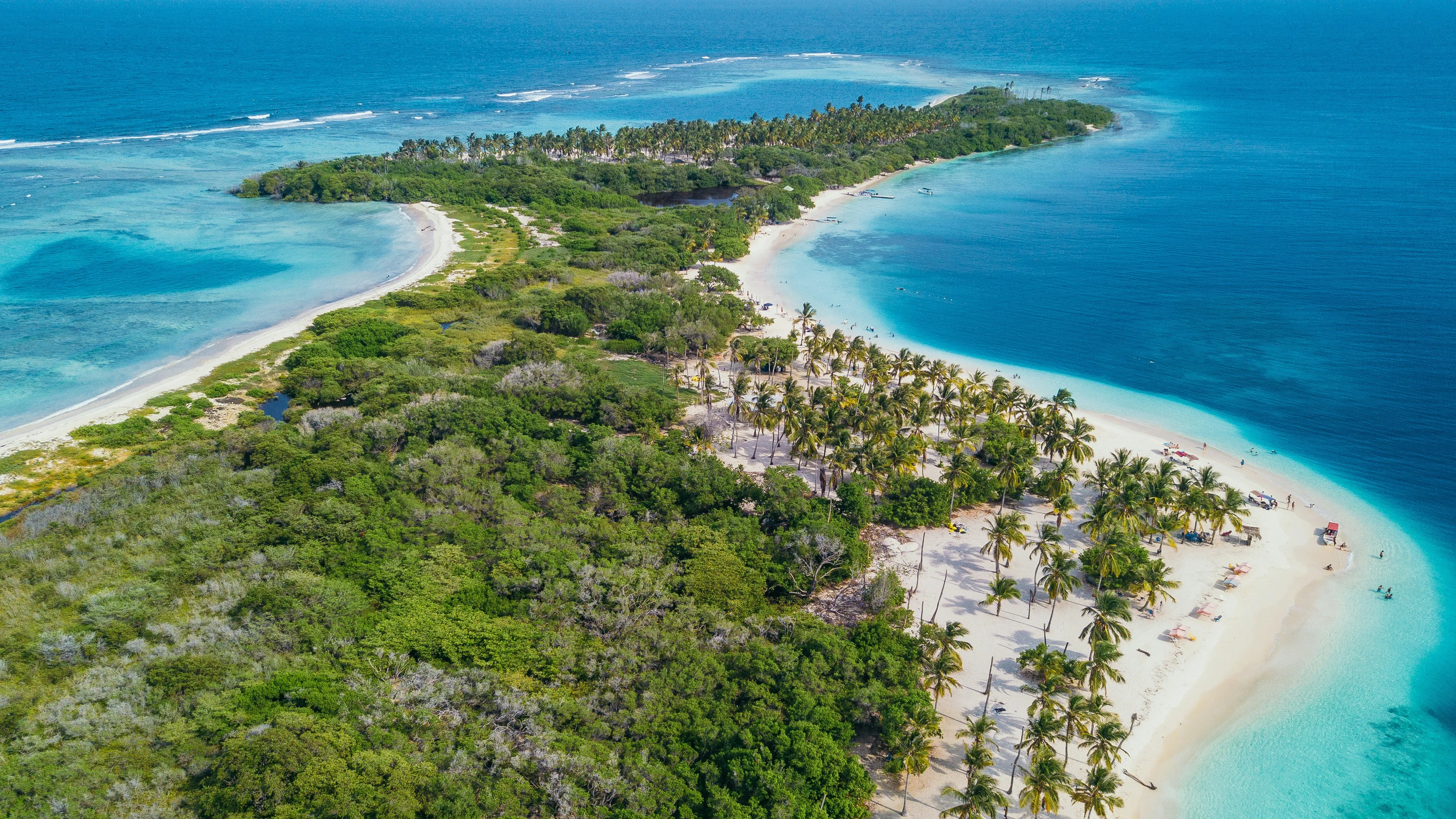
Venezuela
Explore a nation of fascinating contrasts with deep jungles, dreamlike Caribbean beaches, and snow-capped peaks, offering amazing biodiversity for nature lovers.
Quick Facts
- Capital
- Caracas
- Language
- Spanish
- Indigenous languages
- Currency
- Bolívar (VES) and US Dollar (USD)
- Best time to visit
- From December to April during the dry season.
- Budget per day
- $40 - $120 per day
- Climate
- Warm tropical climate with thermal variations according to altitude, presenting a marked dry and rainy season.
- Connectivity
- low
- Easy to obtain through local operators.
- Electricity
- Type A/B (120V)
- Local transport
- limited
- Card usage
- cash is used more
- Tipping
- optional
🌎 Introduction
At the northern tip of South America, the landscape constantly transforms between the Caribbean breeze and the last foothills of the Andes. It is a territory where the rhythm of life is closely linked to the cycle of its two seasons: the rainy months that transform the color of the plains and the dry season that clears the horizons. In its towns and cities, daily life flows with a welcoming simplicity, marked by the aroma of coffee in the mornings and the warmth of an always close treatment.
The essence of the country is manifested in the coexistence of very different environments, from ancient rock formations in the south to the vibrant life of its coastal areas. Popular traditions and local festivities coexist with a simple and shared gastronomy, where the arepa is the axis of any table. This combination of varied geography and a deep-rooted cultural identity creates a setting with its own nuances, which is shown authentically through its customs and tropical light.
🛡️ General safety
Venezuela is a country with a security situation that requires detailed planning and conscious behavior on the part of the traveler. Unlike other mass tourist destinations, it is considered a moderate-to-high risk destination in terms of public safety, which implies that the tourist must take extreme usual precautions.
The context for the traveler is one of contrasts: while isolated nature enclaves are usually very safe, large urban centers present greater challenges. The key to a peaceful stay lies in prevention, the use of authorized tourist services, and avoiding ostentation at all times.
Crime and common risks
Crime is one of the factors to take into account, especially in large cities. The most frequent risks include:
- Thefts and robberies: They are common in crowded areas, transport stations, and markets. It is recommended not to carry jewelry, high-end watches, or expensive cameras in plain sight.
- Scams: They can occur in informal currency exchange transactions or through unregulated tourist services. It is essential to use official channels or those recommended by accommodations.
- Mobile device thefts: The use of smartphones in public areas should be limited to safe places (inside shops, hotels, or shopping centers).
- Minor incidents: Although less frequent if rules are followed, insecure situations can occur at night or in non-tourist peripheral areas.
Safety in cities and tourist areas
Safety varies significantly depending on the geographical location and the type of environment:
- Urban centers: Cities like Caracas present a marked division. Areas in the east of the capital (such as Chacao or Baruta) are usually safer and more guarded than the center or the west, although caution must be constant in all of them.
- Isolated tourist areas: Destinations such as Canaima, Los Roques, or the Las Aves Archipelago are considered very high-security bubbles, as access is restricted and the environment is highly controlled.
- Practical recommendations: It is advisable to always move in groups, avoid walking the streets after dark, and stay within the circuits recommended by local guides.
Safety in transportation
Movement through the country must be planned in advance, always prioritizing private services:
- Public transport: The use of the metro or urban buses is not recommended for foreign tourists due to crowding and the risk of theft.
- Taxis and transfers: Taxis should never be taken directly on the street. The ideal is to use recognized transport applications (such as Ridery or Yummy), radio-taxi services requested from the hotel, or previously contracted private transfers.
- Rental vehicles: This is not the most recommended option for foreigners due to the variable state of the roads and the shortage of fuel in certain regions.
- Driving rules: In Venezuela, you drive on the right. The use of seat belts is mandatory, and it is recommended to always drive with door locks activated and windows up. Driving at night on highways should be avoided due to the lack of lighting and possible obstacles.
Natural and climatic risks
Venezuela is a country with a diverse geography that presents specific seasonal risks:
- Rain and floods: The rainy season (from May to November) can generate rising rivers and landslides in mountainous areas, occasionally affecting roads.
- Seismic risk: The north of the country is a zone of seismic activity, so there are evacuation protocols in hotels and public buildings that the traveler should be aware of.
- Extreme heat: In coastal areas and in the plains, temperatures can be very high. Constant hydration and sun protection are vital.
Legislation and local rules
It is fundamental to respect the local legal framework to avoid serious inconveniences:
- Documentation: It is mandatory to always carry original identification or, at least, a copy of the passport with a valid entry stamp.
- Prohibited photography: It is strictly prohibited to photograph or record military installations, government buildings, airports, or uniformed personnel. Non-compliance can lead to arrests and confiscation of equipment.
- Prohibited substances: Laws against drug trafficking and consumption are extremely severe, with long-term prison sentences regardless of nationality.
- Currency: Although the use of the US dollar is widespread, there are regulations on currency exchange that must be carried out through authorized operators to avoid fraud.
Safety for specific groups
- Solo female travelers: It is recommended to avoid walking alone at night and to maintain a discreet profile. In general, the treatment towards tourists is respectful, but it is advisable to be alert to excessively persistent approaches.
- LGTBIQ+ travelers: Although there are no laws criminalizing sexual orientation, Venezuelan society can be conservative in certain areas. Discretion with public displays of affection outside of very cosmopolitan environments is recommended.
- Children and the elderly: Venezuela is a country that values family very much. There are no specific risks for these groups beyond the general ones, although special attention should be paid to water quality (always drink bottled) and transfer times, which can be long.
Emergencies and assistance
In case of requiring immediate help, the traveler must know the basic communication channels:
- Single emergency number: The national number is 911, which centralizes police, fire, and ambulance services.
- Police: There are various security forces (National, State, and Municipal). In tourist areas, it is common to find the “Tourist Police,” which is usually more approachable for the traveler.
- Healthcare assistance: It is strongly recommended to travel with broad coverage medical insurance, as private clinics (where quality care is guaranteed) have high costs for foreigners.
Tip: Always use private transfers organized by your accommodation and avoid taking out your mobile phone in the middle of the street to check maps or messages.
📝 Entry requirements
To organize a trip to Venezuela, the first fundamental aspect is to have a valid passport. It is common for local authorities to suggest that the document has a minimum validity, frequently six months at the time of entry, to avoid inconveniences during passage through immigration controls. Travelers must ensure that the document is in good physical condition and has enough free pages for the corresponding stamps.
Regarding entry authorization, the need for a tourist visa depends largely on the traveler’s country of origin. While citizens of various nations can enter for recreational purposes without the need for this prior process, others might require processing through consular representations. Generally, the maximum permitted stay as a tourist is usually around 90 days, although this figure can be subject to the discretion of officials at the point of arrival.
Upon arriving at international airports or border posts, it is common for immigration personnel to request proof of intent to leave the country. This is usually done by presenting a return ticket or a continuation ticket to a third destination. Likewise, a demonstration of sufficient financial solvency to cover expenses during the stay in the territory may occasionally be requested, whether through cash, bank statements, or credit cards that back the stay.
Regarding customs controls, there are standard regulations on the items that can be brought in. Personal items and commonly used electronic equipment are usually exempt from taxes, provided they do not suggest commercial purposes. In the case of medications, it is highly recommended to carry them in their original containers and accompanied by a clear and legible medical prescription. The entry of products of animal or vegetable origin is usually restricted to protect the local ecosystem, so it is preferable to avoid transporting unprocessed fresh food.
Finally, in the field of health, it is advisable to review the recommendations on vaccination. Although not always systematically required for all profiles, the yellow fever vaccine is frequently advised for those planning to visit jungle areas or national parks. It is also suggested to have travel insurance with broad medical coverage, as it facilitates access to health services in case of any eventuality during the stay in the country.
- Main documentation: Passport with a minimum recommended validity of six months.
- Stay permits: Visa according to nationality or standard tourist permit.
- Length of stay: A stay of up to 90 days is generally allowed.
- Proof of exit: Transport ticket confirming departure from the country.
- Financial resources: Possibility of demonstrating sufficient funds for the trip.
- Baggage and customs: Restrictions on fresh food and the need for prescriptions for medicines.
- Health prevention: Recommendation of specific vaccines according to the destination area.
🏥 Basic health considerations
In Venezuela, you will encounter a dual reality regarding medical care. The public system often faces difficulties with supplies and maintenance, so as a tourist, it is very likely that you will always end up going to private healthcare. Private clinics in major cities have good quality equipment and well-trained professionals who speak Spanish, although in some elite centers you might find staff who can manage in English. You must keep in mind that private healthcare costs are high and payment in advance or a financial guarantee is generally required, so it is not something you want to pay for on your own.
Having travel insurance is not a legal entry requirement for all tourists, but it is considered completely essential. It is fundamental that your policy includes very broad coverage for hospitalization, surgical interventions, and medical repatriation. If you plan to visit remote places like the Amazon or Angel Falls, make sure the insurance also covers transfers by small plane or helicopter, as evacuation costs in these areas are prohibitive if you don’t have support.
To travel to the country, the first thing you should do is verify that your official vaccination schedule is up to date. Mandatory vaccines are not usually required for entry, unless you come from a country with a risk of yellow fever transmission. However, the yellow fever vaccine is highly recommended if you are going to visit jungle areas, national parks, or southern states. You might also consider vaccines against hepatitis A and B and typhoid fever if your travel plan includes rural areas or long stays. It is always a good idea to go to your regular health center a few weeks before flying for personalized advice.
If you take any medication regularly, the smartest thing is to bring it with you from home in its original container and accompanied by the medical prescription. In local pharmacies, you might find it difficult to locate specific brands or certain active ingredients. Do not forget to include analgesics, antihistamines, gastric protectors, and a good wound disinfectant in your personal first-aid kit. There are no unusual legal restrictions for common medications, but it is always better to take only the amount necessary for your stay.
The tropical climate in much of the country favors the presence of mosquitoes that can transmit diseases such as dengue, Zika, or Chikungunya, so the use of a powerful repellent will be your best defense. If you are going to visit the Andes mountain range, you might feel the effects of altitude sickness, so it is advisable to ascend gradually and stay hydrated. On the other hand, the Caribbean sun is very strong, so sunburn and heatstroke are real risks if you don’t use adequate sun protection and expose yourself for too long during the central hours of the day.
The golden rule regarding food is to always drink bottled water and avoid ice cubes if you are not certain they have been made with filtered water. You will find delicious street food, like the famous arepas, but try to choose stalls that have a good turnover of customers and where you see that the food is cooked to order. As for fruits and vegetables, the safest thing is to consume those that you can peel yourself or that are well cooked to avoid any stomach upset that ruins your vacation.
For any serious health emergency, the number you should dial is 911. You should know that the public ambulance service can be quite limited in terms of speed and equipment. In case of an emergency in an urban area, the most efficient thing is usually to directly contact your medical insurance’s assistance service, as they will coordinate the rapid transfer to the nearest private clinic with the best resources.
As final tips, always carry a small bottle of disinfectant hand gel with you and use it before every meal. Avoid walking barefoot in rural areas or beaches you don’t know to prevent skin infections. If you feel unwell or have a persistent fever after an excursion in nature, do not hesitate to see a doctor immediately, as early detection is key to treating any tropical condition simply and effectively.
🚌 Transportation within the country
To move around the territory, the plane is a fundamental means when it comes to covering long distances between major cities and the most remote natural destinations. Due to the geographical extent, local airlines regularly connect different regions, facilitating access to places that are difficult to reach by road. On the other hand, the bus is the frequent option for intercity trips, with various types of services depending on the chosen route.
In urban environments, the metro is an alternative present in some cities, although its use requires prior knowledge of how the stations function. In large cities, signage is usually basic and in Spanish, so interacting with residents is useful for orientation. In contrast, in rural areas, public transport is usually less regular and depends more on smaller vehicles that operate more informally.
The use of taxis is common for direct trips or transfers from airports. In recent times, mobile transport applications have spread to the most populated cities, providing a comfortable alternative for the visitor. Regarding maritime transport, the ferry is the necessary link to access the main islands from coastal ports, with periodically scheduled departures.
The comfort and punctuality of trips can vary depending on the state of the infrastructure and the selected means of transport. Although flights usually maintain a stable schedule, road transfers may require more time than initially planned. For this reason, moving around the country usually demands flexible organization adapted to the local circumstances of the moment.
Tip: It is advisable to plan trips with sufficient time and verify the availability of routes with local operators before the planned departure.
🤵 Culture and etiquette
Venezuelan society is characterized by a close and communicative treatment in daily interactions. It is common for meetings to begin with a cordial greeting, whether it is “buenos días” (good morning) or “buenas tardes” (good afternoon), even between people who do not know each other when meeting in public spaces such as elevators or shops. Physical contact is an integral part of communication; a firm handshake is the norm in formal contexts, while in social situations, the use of affectionate gestures such as a kiss on the cheek or a brief hug is frequent, reflecting a culture oriented towards hospitality and openness.
In conversations, the use of an animated tone of voice and the employment of expressive sign language are common elements that denote enthusiasm for social exchange. Regarding time management, there is a tendency towards flexibility in punctuality when it comes to social gatherings or informal meetings. However, in the professional field or in medical and official appointments, the effort to meet established schedules is appreciated as a sign of consideration and respect for others’ time.
When sharing a meal, the act of sitting at the table is understood as a fundamental moment of socialization and coexistence. If a traveler is invited to a private home, it is a gesture of courtesy to bring a small gift for the hosts, such as sweets or flowers. Regarding tipping, although some establishments include a service charge on the bill, it is a common practice to leave an additional gratuity if the service received has been satisfactory, with this gesture being especially valued in the restaurant sector.
Respect for the elderly and figures representing authority or hierarchy is a value deeply rooted in civic life. In public spaces, it is recommended to maintain balanced behavior that harmonizes with the environment. When visiting places of worship, national monuments, or participating in traditional festivities, it is fundamental to observe an attitude of reverence and follow local indications regarding clothing or the use of cameras, always showing deference for beliefs and traditions that are part of the local identity.
Tip: When starting a conversation with strangers or older people, the initial use of the formal address “usted” and courtesy formulas such as “señor” (Mr.) or “señora” (Mrs./Ms.) allows for establishing a base of mutual respect before transitioning to more informal or familiar language.
🍛 Typical gastronomy
Venezuelan gastronomy is characterized by being a fusion of indigenous, African, and European influences, resulting in a varied table full of contrasts. The fundamental ingredient in daily life is corn, present above all in the form of cooked or grilled dough. Flavors usually balance sweet and savory, frequently using elements such as ripe plantain and legumes. It is common for meals to be accompanied by various sauces, with avocado sauce being one of the most popular in local homes and establishments.
Regarding eating habits, breakfast is a fundamental and hearty meal, while lunch is usually the main time of the day to sit at the table. Dinner tends to be lighter, though very social. Meal times are typical for the region, with lunch being served between noon and two in the afternoon. In cities, it is common to find street food stalls that operate until late at night, reflecting the dynamic character of its culinary culture.
In restaurants, the atmosphere is usually relaxed and welcoming. Strict formal etiquette is not required except in very specific places in large cities. When asking for the bill, it is common for service not to be included, so a gratuity according to the service received is usually left. To accompany dishes, people usually opt for natural fruit juices, cold infusions of sugar cane with lemon, or the omnipresent coffee, which is consumed in different variants according to the amount of milk or the intensity of the roast.
| Dish | Description | Main Ingredients | Where to try it | Tip |
|---|---|---|---|---|
| Arepa | Round corn bread that is opened and filled with various ingredients. | Corn flour, water, salt, and various fillings (cheese, meat, avocado). | In any city, in specialized places called areperas. | It is the most versatile dish; it can be eaten for breakfast, lunch, or dinner. |
| Pabellón Criollo | A combination of ingredients that represents the country’s tradition. | White rice, shredded beef, black beans, and fried plantain. | Home-style or traditional food restaurants throughout the country. | Sometimes served with a fried egg on top or grated cheese over the beans. |
| Cachapa | A sweet tender corn pancake that is folded in half. | Ground tender corn, milk, sugar, and “queso de mano” (handmade cheese). | Popular markets and roadside stops in rural areas. | Always order it with a generous portion of butter to highlight its flavor. |
| Asado Negro | Beef cooked slowly in a dark, sweet sauce. | Beef cut (eye of round), “papelón” (brown sugar), and spices. | Regional gastronomy restaurants or family celebrations. | Ideally accompanied by white rice to make the most of the abundant sauce. |
| Tequeños | Wheat dough sticks filled with cheese and fried until crispy. | Wheat flour and semi-hard white cheese. | As a starter in restaurants or at fast-food stalls. | They are the quintessential appetizer; they are best enjoyed when freshly made. |
📷 Zones and places to visit
Venezuela is a country of marked geographical contrasts, where Andean peaks, extensive plains, and coasts bathed by the Caribbean Sea coexist. The capital, Caracas, sits in a valley at the foot of El Ávila hill, a mountain massif that defines the city’s physiognomy and offers hiking trails with views toward the coast. In the city’s historic center, Plaza Bolívar and the National Pantheon stand out as key points for understanding national history, along with the Bellas Artes district, which concentrates relevant museums such as the National Art Gallery or the Museum of Science.
To the west, the Andes mountain range offers a landscape of high peaks and towns with a coffee-growing tradition. In cities like Mérida, it is common to visit the main market and walk trails that lead to glacial lagoons located at high altitudes. Nearby, the state of Falcón is home to the city of Coro, recognized for its colonial mud architecture and cobbled streets, which contrasts with the Médanos de Coro, a system of dunes that transports the visitor to a desert environment facing the sea.
The coastline is one of the greatest attractions for international tourism. The Archipelago of Los Roques stands out for its coral formations and calm waters, ideal for observing marine fauna and practicing gentle water sports. On the other hand, Margarita Island combines service areas with historic fortifications, such as the Santa Rosa Castle or the San Carlos Borromeo Castle, which attest to the region’s defensive past. In these island areas, activities usually revolve around the coast and gastronomy based on seafood.
In the southeast of the territory lies the Canaima National Park, one of the oldest geological regions on the planet. Here, the landscape is dominated by tepuis, vertical-walled plateaus that rise from the jungle. This is the area where Angel Falls is located, a massive waterfall accessible mainly through river navigation or overflights. Contact with nature is complemented by a visit to the Canaima Lagoon and its various waterfalls, where the coloring of the environment and tropical vegetation create a singular atmosphere.
Finally, the east and south show the country’s fluvial wealth. The Orinoco Delta allows for learning about jungle ecosystems and life linked to river channels. In contrast, the Llanos (Plains) region offers a wide horizon where bird watching, caimans, and other wild animals set the pace of excursions. This diversity ensures that the visitor finds everything from the cultural bustle and museums of urban areas to the silence of snow-capped peaks or the immensity of the Guyanese jungle.
“Tip”: You cannot miss visiting Angel Falls, the most emblematic place in the country.
✈️ Best time to travel
Venezuela has a tropical climate that allows for visits at any time of the year, although the experience varies significantly according to the rainfall regime. Primarily, the country goes through two periods: the dry season (from December to April) and the rainy season (from May to November). The choice of the ideal time will depend on the traveler’s interests, as while the dry months facilitate access to beaches and hiking routes, the rainy season is when the waterfalls and jungle vegetation reach their maximum splendor.
Given its geographical location, temperatures tend to remain constant and warm in most of the territory, cooling down only in higher altitude areas, such as the Andes mountain range. It is important to keep in mind that the flow of rivers conditions navigation to certain emblematic natural spots; therefore, those looking to contemplate great waterfalls will find a more impressive landscape during and shortly after the months of highest humidity.
| Season | Months | Typical Climate | What to Expect | Tourist Inflow |
|---|---|---|---|---|
| Spring | Mar – May | Warm and dry at first, with increasing humidity at the end. | Transition towards greenery; good visibility for wildlife spotting in the plains. | Medium (⭐⭐) |
| Summer | Jun – Aug | Humid, with frequent rains and stable temperatures. | Rivers with high flow, ideal for seeing waterfalls and enjoying vibrant jungle landscapes. | Medium-High (⭐⭐⭐) |
| Autumn | Sep – Nov | Mild temperatures and rains that begin to subside. | Very green landscapes after the rains and greater ease for river excursions. | Medium-Low (⭐⭐) |
| Winter | Dec – Feb | Dry, with clear skies and cooler temperatures at night. | Sunny days perfect for enjoying the beaches, diving, and mountain routes. | High (⭐⭐⭐⭐) |
🗣️ Basic vocabulary
Knowing some local expressions in Venezuela will facilitate communication and daily interaction during your trip. Although the language is Spanish, there are specific terms and idiomatic phrases used frequently in common situations, such as greeting, shopping, or asking for directions.
Using these words naturally will help you move with greater ease in shops and transportation, allowing you to connect better with local people and solve practical needs simply.
- Épale: Very common informal greeting, equivalent to “hello” or “what’s up?”.
- Pana: Word used to refer to a friend, companion, or a person who is pleasant.
- Chévere: Adjective indicating that something is good, positive, or that a situation is fine.
- A la orden: Courtesy expression frequently used as a response to “thank you” or to indicate a willingness to help.
- Vaina: A very versatile placeholder word used to refer to almost any object, situation, or matter.
- ¿En cuánto sale?: Practical phrase to ask the price of a product or the cost of a service.
- Carro: Term used to refer to a car or automobile.
- Cuchillo: Expression that, in shopping contexts, is used to indicate that something is very expensive.