


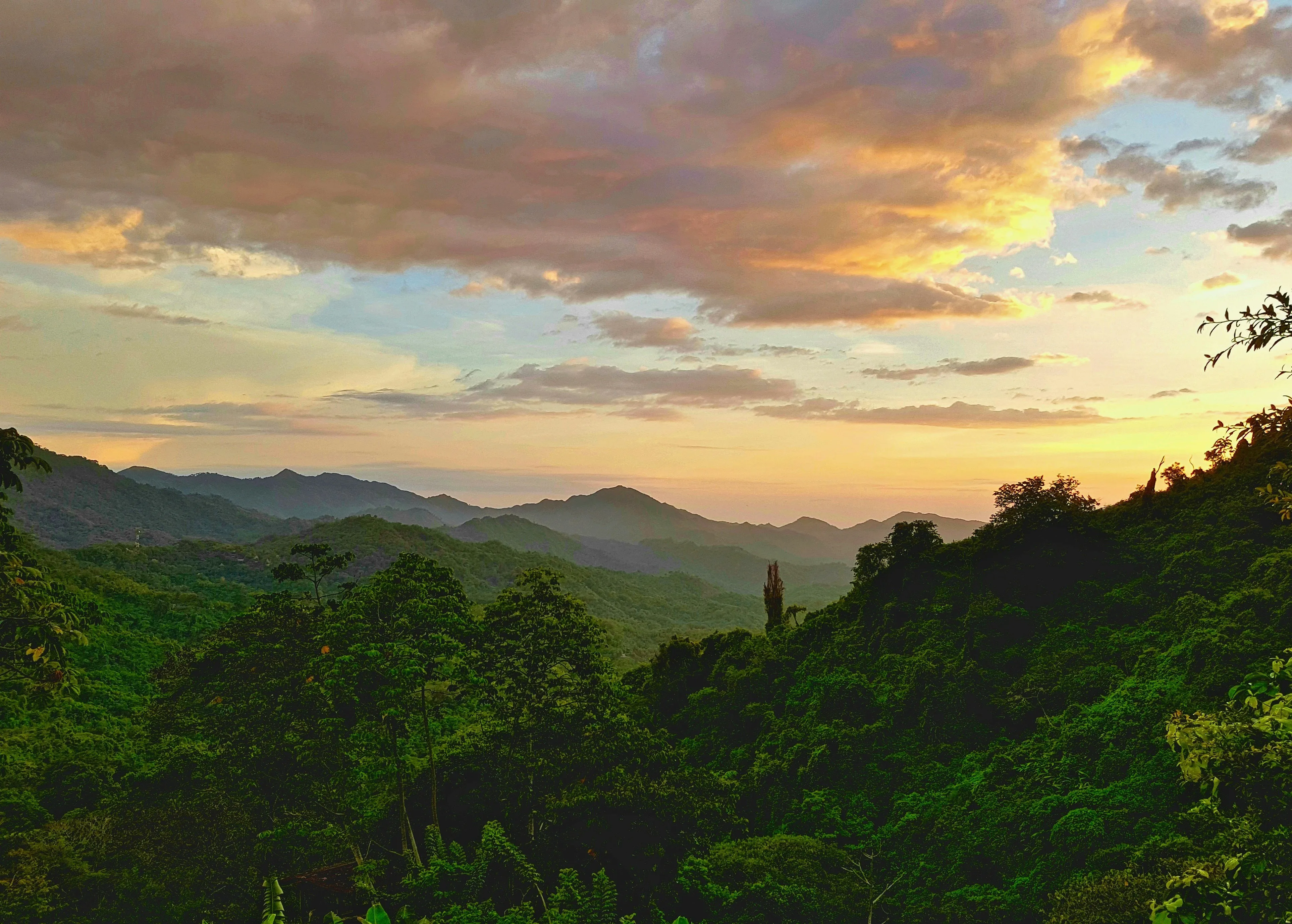
Colombia
Explore a vibrant country that unites tropical jungles, colonial cities, and Caribbean beaches, offering unique hospitality in a diverse natural environment full of life.
Quick Facts
- Capital
- Bogota
- Language
- Spanish
- Indigenous and Creole languages
- Currency
- Colombian Peso (COP)
- Best time to visit
- From December to March and from July to August, coinciding with the driest times of the year.
- Budget per day
- $30 - $100 per day
- Climate
- Tropical climate that varies according to altitude, from hot zones on the coast to temperate and cold zones in the Andes.
- Connectivity
- medium
- It is very easy to purchase SIM or eSIM cards at airports, shopping centers, and official telephone stores.
- Electricity
- Type A/B (110V)
- Local transport
- acceptable
- Card usage
- acceptable
- Tipping
- optional
🌎 Introduction
There are corners where time seems to stand still between coffee plantations and Andean peaks that look out toward two different oceans. In this territory, the concept of seasons fades away to make room for a thermal diversity that allows one to go from the freshness of the mountains to tropical heat in just a few hours. It is a place where daily life is experienced between the aroma of freshly brewed coffee and the bustle of local markets, where intensely colored fruits and music escaping from entryways are part of the habitual landscape.
The identity of this land has been forged through a mix of traditions manifested in the simplicity of its gastronomy and in festivities that fill the streets with life and rhythm. From the architecture of towns with colonial heritage to the dynamism of its urban centers, a natural balance between history and the present is perceived. The closeness of its people and the constant presence of exuberant nature define its own character, inviting one to discover an environment where variety is the dominant note.
🛡️ General safety
Colombia is a country that has experienced a positive and significant transformation in recent decades in terms of security. Currently, it is positioned as a vibrant destination that welcomes millions of international tourists every year. However, as in any large destination, it is essential to travel with a focus on prevention and common sense.
General security level
- The general assessment of the country in terms of security for tourists is considered medium level. While the main tourist areas are safe, significant contrasts still exist between developed urban areas and certain remote rural zones.
- Compared to other destinations in the region, Colombia offers a robust tourist infrastructure and a constant police presence at the points of greatest interest, which facilitates a peaceful experience for the informed traveler.
- The current context is one of openness and hospitality; Colombians are known for their extreme kindness toward visitors, although it is recommended to always stay within the established tourist routes.
Crime and common risks
- The most common crime is petty theft or pickpocketing, especially of mobile phones, cameras, or wallets in crowded places.
- Overpricing scams in unregulated tourist services or street taxis can occur, especially in coastal areas like Cartagena.
- A rare but mentioned risk in local guides is the use of chemical substances (such as scopolamine) in drinks to incapacitate individuals; this occurs mainly in unregulated nightlife environments and is prevented by not accepting drinks from strangers.
Safety in cities and tourist areas
- In urban centers like Bogota, Medellin, and Cali, security varies significantly between neighborhoods. Tourist and financial areas are usually heavily guarded and safe to walk during the day.
- In mass public transportation systems (such as TransMilenio or the Medellin Metro), it is necessary to watch personal belongings due to crowds.
- It is recommended to avoid walking through desolate historic centers late at night. It is preferable to move between safe neighborhoods using app-based transportation services.
Transportation safety
- Intercity public transport via buses is very common and safe during the day, connecting the main cities efficiently.
- Regarding urban transport, the use of taxis requested through mobile applications or private transport platforms is recommended instead of taking them directly on the street to ensure trip traceability.
- In Colombia, people drive on the right. If you decide to rent a vehicle, you should know that the geography is very mountainous, which implies roads with many curves and longer travel times than expected.
- The use of seat belts is mandatory, and it is recommended to avoid night driving on secondary roads.
Natural and climatic risks
- Colombia is located in a zone of seismic activity, so low-intensity tremors are relatively common. Hotels and public buildings have clear evacuation protocols.
- Due to its tropical location, there are rainy seasons (usually between April-May and October-November) that can generate landslides in mountain areas, temporarily affecting road traffic.
- In high-altitude cities like Bogota, soroche or altitude sickness can affect some travelers, manifesting as a headache or mild fatigue during the first few days.
Local legislation and norms
- Colombia has a zero-tolerance policy toward drug trafficking and consumption. Prison sentences are severe, and judicial processes can be long and complex.
- Sexual exploitation, especially of minors, is punished with very high prison sentences, and there is active surveillance by authorities in hotels and airports.
- It is advisable to always carry a copy of your passport (physical or digital) and leave the original document in the hotel safe while on excursions.
Safety for specific groups
- Female travelers: Colombia is a safe destination for women traveling alone, provided general recommendations are followed. In party environments, it is advisable to be accompanied and always watch your drink.
- LGBTIQ+ travelers: Large cities like Bogota and Medellin are very open and have a wide range of inclusive leisure options. In more traditional rural areas, it is recommended to maintain a discreet attitude.
- Traveling with children or the elderly: The country is very family-oriented. The main limitations may be architectural barriers (steep or cobbled streets) in colonial towns and the effect of altitude on people with respiratory problems.
Emergencies and assistance
- The unified emergency number throughout the national territory is 123.
- The Tourism Police is a specialized body often found at points of interest; they wear uniforms with green badges and usually speak some English.
- In case of an incident or loss of documents, you should go to the nearest Prosecutor’s Office (URI) to file the respective report, which is necessary for consular procedures or travel insurance.
Tip: Apply the local rule of “no dar papaya”, which means not flaunting valuables unnecessarily or exposing yourself to avoidable risky situations so as not to tempt opportunity.
📝 Entry requirements to the country
To plan a trip to this South American destination, the first aspect to consider is identity documentation. International travelers must have a valid passport at the time of entry. It is a recommended practice that this document has a residual validity of at least six months to avoid inconveniences during the immigration control process. It is not usually required for the passport to have an excessive number of free pages, although space is needed for the entry stamp.
Regarding access authorizations, a large number of nationalities do not require a tourist visa for short-term stays. In these cases, the entry permit is granted directly at the point of arrival, whether it is an airport or a land border. The initially permitted stay is usually 90 days, with the possibility of requesting an extension from local immigration authorities if you wish to extend the visit for a similar period, without exceeding the maximum annual limit established for visitors.
It is common for immigration officers to ask travelers to present an exit ticket from the country, either back to the place of origin or to a third destination, as a guarantee that the permitted stay time will be respected. Likewise, on some occasions, proof of financial solvency may be required to demonstrate that the tourist has sufficient funds to cover their expenses during their stay in the national territory.
Passing through customs controls involves compliance with standard regulations regarding the entry of goods. Travelers can carry their personal items and common electronic equipment without major formalities. However, the entry of specific medications must be duly justified with the respective medical prescription. There are restrictions on the entry of fresh food, seeds, or unprocessed animal products to protect the local ecosystem. On the other hand, if carrying amounts of cash that exceed standard international limits, it is necessary to make the corresponding declaration to customs authorities.
From a health point of view, an extensive list of vaccines is not required for general entry into the country. However, for those travelers planning to move to jungle areas or specific natural parks, it is recommended to have the yellow fever vaccine. It is advisable that this immunization be carried out at least ten days before heading to those areas. Maintaining travel insurance with medical coverage is always a useful suggestion to ensure a peaceful stay in the face of any health unforeseen event.
- Primary documentation: Passport with a recommended minimum validity of six months.
- Tourist visa: Generally not required for short stays in most international cases.
- Length of stay: Standard permit of up to ninety days, renewable under specific conditions.
- Additional proof: Possible request for a return ticket and demonstration of financial means.
- Health: Recommendation of yellow fever vaccine for visits to natural and jungle environments.
- Customs: Control of fresh products, seeds, and declaration of large sums of cash.
- Medications: Use of medical prescription for specific treatments during the trip.
🏥 Basic health considerations
Colombia has a high-quality health system in its main urban centers. If you visit cities like Bogota, Medellin, or Cali, you will find private clinics with advanced technology and very well-prepared professionals. Access to healthcare for tourists is usually through the private network, as the public one can be more crowded and waiting times are usually longer. Keep in mind that medical costs for foreigners can be high if you do not have prior coverage, so it is essential to have financial backing. Regarding the language, health personnel usually speak Spanish, although in international centers in large cities, it is possible to find doctors who speak English.
Taking out travel medical insurance is not a strictly mandatory legal requirement to enter the country, but it is totally recommended for your peace of mind. Good insurance will allow you to enjoy your stay without worrying about possible financial setbacks. Make sure your policy includes broad coverage for hospitalization, ambulance transfers, and, very specifically, medical repatriation. If you plan to engage in adventure activities or high-risk sports, verify that the insurance also covers these types of specific situations.
Regarding vaccines, there are currently no mandatory vaccines to enter the national territory in general, but a yellow fever certificate is required if you plan to visit jungle areas or specific natural parks such as Tayrona or the Amazonas. It is advisable to have your regular vaccination schedule up to date. Additionally, to move around low-altitude rural areas, you might consider vaccines for hepatitis A and B. The most recommended action is to consult with a preventive medicine center before starting your adventure to receive personalized advice.
If you need to carry personal medication, it is ideal to transport it in its original packaging to avoid confusion. For specific or chronic-use medications, it is very important to carry the medical prescription or a report from your doctor justifying its use, preferably in Spanish. You will not find major legal restrictions for common-use medications, but it is always better to be cautious. A small first-aid kit with pain relievers, disinfectants, antihistamines, and basic bandaging materials will be enough to resolve minor incidents along the way.
Health risks vary significantly depending on the region you choose to visit. In high-altitude cities, such as the capital, you could feel the effect of altitude or soroche, which usually manifests with a headache or fatigue. In coastal or jungle areas, the heat and humidity are very intense, so you must monitor constant hydration. Insects are common in areas below 2,200 meters above sea level, so the use of a good repellent is key to preventing diseases like dengue or Zika, which have a seasonal presence in these warm zones.
Regarding water and food, you will see that in large capitals tap water is usually potable, although if you have a sensitive stomach, we recommend always drinking bottled water to avoid discomfort. As for street food, it is one of the great experiences of the country, but you should always look for stalls that maintain a good appearance of hygiene and product rotation. Washing your hands frequently and peeling fruit yourself are simple habits that will save you unnecessary digestive setbacks.
In case of a health emergency, the single number you should dial is 123. This service coordinates ambulance and police assistance at a national level. Urgent care in major cities is usually efficient, although traffic can complicate travel during peak hours, which is why private clinics are usually the fastest option for travelers with active medical insurance.
Finally, we leave you with some final practical recommendations. Always use sunscreen, even on cloudy days in the mountains, as radiation is very strong due to the proximity to the equator. If you feel unwell from the altitude, rest, eat lightly, and avoid alcohol during the first few hours of your arrival. With a little common sense and adequate insurance, you will find that your trip proceeds with total normality and safety.
🚌 Transport within the country
Mobility in Colombia is heavily influenced by its mountainous geography, which makes the airplane the most efficient means to cover long distances between major cities. For land travel, the bus is the most common and widespread option, with a network that connects the vast majority of the country’s municipalities. In coastal or river regions, such as the Amazon or the Pacific, the use of motorboats and vessels is fundamental and, at times, the only way to access certain tourist destinations.
In large urban areas, travelers will find mass transit systems and metro networks that facilitate movement through points of interest. Signage in these systems is usually clear, and tickets can be easily purchased at ticket offices or automatic machines. However, in rural areas, transport becomes more informal and depends on smaller vehicles or those adapted to difficult terrain, where route organization is less rigid and schedules may vary according to demand.
The use of taxis and private transport services through applications is very common in cities and is a convenient alternative for direct trips. Regarding reliability, while air transport is usually punctual, road trips can be affected by the topography of the terrain, so it is normal for journeys to take longer than expected. The feeling of comfort on long-distance buses is generally good, with vehicles equipped for long trips.
Tip: It is recommended to plan land transfers with sufficient time to adapt to mountain road conditions.
🤵 Culture and etiquette
Colombian society is distinguished by a markedly polite and hospitable treatment of visitors. In daily interactions, the use of courtesy formulas such as “por favor” (please) and “gracias” (thank you) is fundamental to establishing a harmonious atmosphere. The use of the pronoun “usted” (formal you) is very common, even in informal or family contexts in certain regions, as a sign of respect and deference. When addressing elderly people or in customer service contexts, it is habitual to prepend titles such as “señor” (Mr.) or “señora” (Mrs.) to maintain an appropriate and polite tone.
Regarding greetings, the usual first contact is a firm but brief handshake. Between people who already share a certain degree of trust, the greeting is usually more affectionate, including a single kiss on the right cheek between women or between men and women. Moderate physical contact and a close interpersonal distance are aspects integrated into daily communication, reflecting an attitude of proximity and warmth in social dealings. The volume of voice in public spaces is usually moderate, with discretion valued in enclosed environments or transportation services.
Communication tends to be indirect and diplomatic. Out of courtesy, it is frequent for direct negative answers or open confrontations to be avoided, preferring expressions that soften the refusal to maintain cordiality. Regarding punctuality, there is an accepted flexibility in strictly social commitments; however, in professional, institutional, or scheduled tourist services, compliance with established schedules is valued. In private meeting contexts, arriving a few minutes after the agreed time is considered a common and accepted practice.
In the gastronomic field, table etiquette follows international guidelines. When invited to a private home, it is an appreciated gesture to bring a small gift for the hosts. In restaurants, a tip is usually suggested on the bill as a voluntary concept, generally around 10% of the total value. Although its payment is not a legal obligation, it is considered a social norm of gratitude for the service received in most urban contexts.
Finally, it is important to show an attitude of special respect when visiting places of worship or participating in traditional and civic festivities. During religious ceremonies, it is recommended to maintain quiet behavior and dress discreetly. Likewise, the social structure usually gives relevant importance to hierarchies and experience, so treatment toward older people should always be imbued with special consideration and attention.
“Tip”: Using the expression “qué pena” as a way to apologize for small interruptions or misunderstandings is an excellent way to show respect and naturally adapt to local courtesy codes.
🍛 Typical gastronomy
The gastronomy of Colombia is the result of a rich blend of indigenous, African, and Spanish traditions, resulting in a diverse culinary offer that varies significantly by region. In the Andean interior, hearty soups and meat-based dishes predominate, while in coastal areas, the protagonists are fresh fish, coconut, and rice. Corn, plantains, and a wide variety of tubers such as cassava (yuca) or different types of potatoes constitute the fundamental basis of the daily diet throughout the territory.
Regarding eating habits, breakfast is usually a hearty meal that can include hot dishes, corn doughs, or eggs. Lunch represents the main meal of the day and is usually served between twelve and two in the afternoon; it frequently consists of a soup for the first course followed by a main dish that includes rice, legumes, and a protein. In the evening, dinner tends to be lighter and simpler. It is very common to accompany all meals with natural fruit juices, taking advantage of the immense variety of tropical fruits available year-round.
Coffee culture is an essential pillar of daily life. The tinto, a black coffee served in small cups, is consumed at any time of the day as a gesture of hospitality or social meeting. In restaurants, the service is usually friendly and close, maintaining a relaxed atmosphere without excessively rigid protocols. The act of eating is understood as a slow moment to share, where respect and cordiality are the basic rules of etiquette.
| Dish | Description | Main Ingredients | Where to try it | Tip |
|---|---|---|---|---|
| Bandeja Paisa | The most generous and representative dish of the interior, known for its great variety of components. | Rice, beans, ground meat, chicharrón (pork belly), egg, avocado, and arepa. | Antioquia region and Medellin, in traditional restaurants. | It is a very substantial dish, ideal for sharing or eating with a large appetite. |
| Ajiaco Santafereño | A thick and comforting soup, traditional from the cold zones of the mountain range. | Three types of potatoes, chicken, corn, and a herb called guascas. | Bogota and surroundings, in places specialized in Andean cuisine. | It is usually served with heavy cream and capers on the side to add to taste. |
| Arepa | A corn cake that accompanies almost any meal or is consumed alone as a snack. | Ground corn or corn flour, water, and salt; sometimes stuffed with cheese. | Throughout the country, from street stalls to restaurants. | Try regional variants, such as the arepa de huevo on the Caribbean coast. |
| Sancocho | A dense and complete soup that varies by region, considered a family dish par excellence. | Meat (chicken, beef, or fish), plantain, cassava, potato, and corn on the cob. | Very common in Valle del Cauca and rural areas across the country. | It is the typical dish for Sunday lunches; it is usually accompanied by white rice. |
| Arroz con Coco | A sweet and savory side dish typical of coastal areas, with a very characteristic flavor. | Rice, coconut milk, and occasionally raisins or brown sugar. | Caribbean region (Cartagena, Santa Marta) and the Pacific. | Pairs perfectly with fried fish and fresh salad in front of the sea. |
📷 Zones and places to visit
Colombia is a country marked by a diverse geography that ranges from the high Andean peaks to the coasts bathed by two oceans. In the center of the territory lies Bogota, the capital, situated on an extensive savanna. Its historical center, known as La Candelaria, is an enclave of cobbled streets and colonial architecture where fundamental institutions such as the Gold Museum, which houses a vast collection of pre-Hispanic goldsmithing, and the Botero Museum are located. To get a complete view of the metropolis, the ascent to the hill of Monserrate is a common activity that allows one to appreciate the magnitude of the city.
Toward the northwest, the city of Medellin represents innovation and urban transformation. It is known for its pleasant climate and public spaces such as Plaza Botero, an open-air museum with monumental sculptures. From here, it is easy to travel to the Antioquia region to visit Guatapé, a town famous for its colorful baseboards (zócalos) and the Piedra del Peñol, a large monolith that offers a panoramic view over a complex of reservoirs. This area combines the modernity of urban life with the tranquility of rural mountain landscapes.
The northern coast houses one of the main historical attractions of the continent: Cartagena de Indias. Its Walled City and the Getsemaní neighborhood preserve the layout and aesthetics of the colonial era, protected by bastions and fortresses such as the San Felipe de Barajas Castle. Very close by, biodiversity manifests in the Tayrona National Natural Park, an area where tropical jungle meets the Caribbean Sea, offering hiking trails and beaches in a natural setting. The nearby city of Santa Marta serves as a starting point for excursions to the Sierra Nevada, the highest coastal mountain in the world.
In the interior of the country, the Coffee Axis (Eje Cafetero) displays the cultural landscape internationally recognized for its coffee plantations. Towns like Salento stand out for their traditional architecture houses and their proximity to the Cocora Valley, where wax palms, the national tree, grow. Activities in this region focus on learning about agricultural processes and walking along natural trails. Other municipalities of historical interest in the Andean zone are Villa de Leyva and Barichara, appreciated for their state of conservation and their slow-paced atmosphere, which transports the visitor to past centuries.
For those seeking a remote nature experience, the Colombian Amazon offers direct contact with the jungle ecosystem from the town of Leticia. It is an ideal place for wildlife observation and cultural exchange with local communities. On the other hand, the country has island territories such as San Andres and Providencia, islands located in the Caribbean known for their coral formations and waters of multiple shades, ideal for diving and nautical activities in a relaxing environment.
“Tip”: You cannot miss visiting Cartagena de Indias, the most emblematic place in the country.
✈️ Best season to travel
Colombia is a destination that can be visited throughout the year due to its geographical location near the equator, which allows it to maintain relatively constant temperatures. However, the travel experience is mainly marked by precipitation cycles. Dry periods and rainy periods are distinguished, transforming the landscape, influencing the flow of rivers, and determining the ease of performing outdoor activities such as hiking or wildlife watching.
The choice of the ideal time depends on the type of environment one wishes to explore. While coastal regions and plains are usually very hot, Andean zones present a cooler and more variable climate. In general, months with a lower probability of rain allow for full enjoyment of beaches and mountain routes, while transition periods offer a greener and more exuberant perspective of the local nature.
| Season | Months | Typical Climate | What to Expect | Tourist Influx |
|---|---|---|---|---|
| Spring | Mar – May | Transition to moderate rains and stable humidity. | Very green landscapes, Holy Week celebrations, and flowering in Andean valleys. | Medium ⭐⭐ |
| Summer | Jun – Aug | Intermediate dry period with frequent winds. | Whale watching season in the Pacific and urban cultural festivals. | High ⭐⭐⭐ |
| Autumn | Sep – Nov | Higher rainfall index in much of the country. | Maximum flow in rivers and waterfalls, ideal for nature tourism in the Amazon. | Low ⭐ |
| Winter | Dec – Feb | Dry, sunny climate with clear skies. | Regional fair season, carnivals, and optimal conditions for Caribbean beaches. | Very High ⭐⭐⭐⭐ |
🗣️ Basic vocabulary
Although Spanish is the official language, local expressions and idioms are used in Colombia that are worth knowing. Learning these words will help you move more easily in everyday situations, such as greeting, ordering something in an establishment, or interacting with the inhabitants in a simple way.
It is not necessary to master the local dialect, but using common terms facilitates communication and shows interest in the local culture. Here is a selection of practical words and phrases for your daily life during the trip.
- ¿Qué más?: A very frequent informal greeting equivalent to “how are you?” or “what’s up?”.
- A la orden: A common expression used by vendors and servers to indicate they are at your disposal or as a response to “thank you”.
- Tinto: Refers to a plain black coffee, usually served in a small cup.
- Regalar: Often used to ask for something you are going to buy or consume. For example, “me regala un agua” is a polite way to say “please give/get me a water”.
- Con gusto: The standard and polite response to say “you’re welcome” after receiving thanks.
- Chévere: A common adjective to say that something is good, pleasant, or fun.
- Parce: An informal way to refer to a friend or acquaintance, similar to “mate” or “buddy”.
- La cuenta, por favor: A simple phrase to request the bill in a restaurant or café.