


Croatia
Discover a country of crystal-clear coasts, medieval walled cities, and stunning natural parks, where history and nature merge in a unique setting.
Quick Facts
- Capital
- Zagreb
- Language
- Croatian
- English, German, and Italian
- Currency
- Euro (EUR)
- Best time to visit
- From May to June and from September to October for ideal weather
- Budget per day
- $70 - $200 per day
- Climate
- Mediterranean on the coast with warm, sunny summers, and continental interior with cold winters and mild summers.
- Connectivity
- good
- Very easy to obtain at airports, kiosks, and phone shops, with a wide range of eSIM cards available.
- Electricity
- Type C / F (230V)
- Local transport
- acceptable
- Card usage
- very widespread
- Tipping
- optional
🌎 Introduction
Between the calm waters of the Adriatic and the forested peaks that guard its interior, this corner of Southeast Europe unfolds like a mosaic of contrasts. The white limestone of the coastal cities coexists with the red of their rooftops, while the rhythm of life is marked by the coming and going of boats connecting hundreds of islands. It is a place where the sea breeze mixes with the scent of lavender and pine, offering a slow transition between Mediterranean heritage and the essence of Central Europe.
Croatian identity is perceived in everyday details: from the deep-rooted coffee culture that fills the squares at any time, to the diversity of a cuisine that moves from olive oil and fresh fish to the comforting stews of the inland regions. Whether under the clear light of summer or among the mists that envelop its lakes and waterfalls when autumn arrives, the territory suggests a careful reading of its history and traditions, present both in its popular festivities and in the simplicity of its local markets.
🛡️ General Safety
Croatia is widely considered one of the safest destinations in Europe and the world for travelers. The country enjoys a remarkably low crime rate, allowing tourists to enjoy its landscapes and cities with a constant sense of peace.
In comparative terms, the level of security is very high. It is a country where social life takes place largely on the street and where walking at night in most urban areas does not pose a significant risk. However, as in any destination that receives a large volume of visitors, it is essential to apply common sense and be aware of certain local peculiarities.
Crime and common risks
Although violence is extremely rare, minor property crimes are the most common, especially during the high season (June to September).
- Pickpockets and petty theft can occur in crowded areas, such as the old town of Dubrovnik, the surroundings of Diocletian’s Palace in Split, or the main transport stations in Zagreb.
- There are occasional reports of scams in nightclubs or “gentleman’s clubs,” where drink prices can be disproportionately inflated. It is advisable to always check the price list before consuming.
- A specific risk in Croatia, though very localized, is the presence of landmines remaining from past conflicts. These are found only in remote rural areas, far from tourist routes. Affected areas are clearly marked with red triangular signs. Never ignore these signs if you decide to hike in less-traveled mountain areas.
Safety in cities and tourist areas
Croatian cities are generally very safe at any time of day. Historic centers are well-lit and are usually monitored by discreet but effective police patrols.
- Public transport, such as trams in Zagreb or city buses in coastal cities, is safe and reliable. You should only watch your belongings during peak hours.
- There are no “no-go” neighborhoods or exclusion zones in the main tourist cities, although it is always prudent to avoid poorly lit parks or deserted industrial areas during the early hours of the morning.
- On beaches, avoid leaving valuables unsupervised while swimming, especially in areas most frequented by international tourists.
Safety in transport
Transport in Croatia is modern and efficient, allowing for fluid mobility throughout the territory.
- In Croatia, people drive on the right. Motorways are of excellent quality and are subject to tolls.
- Secondary roads on the coast (such as the famous Adriatic highway) are spectacular but can be narrow, winding, and dangerous if driving excessively fast, especially in rain or during the strong wind known as Bura.
- Regarding taxis, it is recommended to use official apps or agree on the price before starting the journey to avoid overcharging. App-based private transport services work well in larger cities.
- Ferries and catamarans connecting the islands comply with very strict safety regulations. In bad weather, some routes may be canceled for safety.
Natural and climatic risks
Croatia presents some natural risks that, while not frequent, are worth knowing for preventive action.
- Forest fires: During the summer months, due to high temperatures and dryness, the risk of fires is high in coastal areas and islands. It is strictly forbidden to build fires in open spaces.
- Strong winds: The “Bura” wind can reach very high speeds, causing the closure of bridges and sections of motorways. If you rent a vehicle, always check the weather forecasts.
- Seismic activity: Croatia is located in a zone with geological activity. Although major earthquakes are rare, they can occur. It is useful to know basic self-protection rules (drop, cover, and hold on).
Local legislation and norms
Compliance with local norms ensures a smooth stay. Croatian authorities are usually strict with public order.
- The consumption of alcohol in public spaces is prohibited or restricted in the historic centers of several cities (such as Hvar or Split), with fines that can be issued immediately.
- The use, possession, or trafficking of drugs is severely punished, even for small amounts intended for personal consumption.
- It is mandatory to always carry a valid identity document (passport or ID card for EU citizens).
- Respectful clothing (shoulders and knees covered) is required in churches and monasteries.
Safety for specific groups
- Solo female travelers: Croatia is an excellent destination for women traveling alone. Street harassment is minimal and personal safety levels are very high.
- LGTBIQ+ travelers: Although the country is mostly conservative, LGTBIQ+ tourism is well received in coastal areas and the capital. However, public displays of affection may attract stares or comments in rural or less touristy areas, so discretion is recommended outside the usual circuits.
- Travel with children and the elderly: The infrastructure is adequate and the environment is very safe. Caution should be taken with the stone terrain and stairs of medieval cities, which can be slippery or difficult for mobility.
Emergencies and assistance
Croatia has modern emergency services and a good quality healthcare network in the main cities.
- The single emergency number is 112, which centralizes police, fire, and ambulance services. They provide assistance in several languages, including English.
- The police (Policija) are professional and usually help tourists kindly. In case of theft, it is essential to go to a police station to obtain the official report necessary for insurance or consular procedures.
- On small islands, access to specialized medical services may require transport to the mainland, which is done via ambulance boats or helicopters in serious cases.
Tip: Always keep a photo or digital copy of your passport in the cloud and avoid carrying all your cash or credit cards in the same wallet while exploring cities.
📝 Entry Requirements
To organize a trip to Croatia, it is essential to ensure that your passport or official identity document is in good condition and has a validity that covers the entire planned stay. It is advisable for the document’s validity to extend for an additional period after the departure date to avoid potential inconveniences at border crossings.
For most trips for tourism purposes, a prior visa is not usually required for short stays. The maximum time allowed to stay in the territory as a visitor is typically ninety days within a given period, which facilitates leisure trips and cultural tours through the region.
Upon arriving at access points, whether by air, sea, or land, authorities may request the presentation of a return ticket or a continuation ticket to another destination. It is also possible that you may be asked to demonstrate possession of sufficient economic funds to cover travel and accommodation expenses during the visit.
Regarding customs regulations, the entry of personal items and standard luggage is permitted. However, there are generic restrictions on the quantity of certain products such as tobacco and alcohol, as well as limitations on the transport of food of animal or vegetable origin. If traveling with medication, it is recommended to carry the corresponding medical prescription to justify its use before standard controls.
From a health perspective, there are usually no mandatory vaccinations to enter the country, although it is always preferable to keep the generally recommended vaccination schedule up to date. Having travel insurance with medical coverage is a suggested practice to ensure necessary assistance in the event of any health mishap during the stay.
🏛️ Places of Interest and Highlighted Activities
The Croatian territory stands out for its diversity of landscapes, combining historic cities with a rugged coastline and beautiful natural parks. Visitors usually focus their journey on the following key points:
- Dubrovnik: Known as the pearl of the Adriatic, this city is famous for its imposing stone walls and its old town, which preserves exceptional medieval and baroque architecture.
- Split: The historic core develops around Diocletian’s Palace, a Roman structure that has been organically integrated with modern urban life.
- Plitvice Lakes National Park: A system of interconnected lakes and waterfalls surrounded by dense forests, ideal for hiking and nature observation.
- Zadar: A coastal city highlighting Roman remains and modern art installations that interact with the sea.
- Istria: A peninsula offering charming towns with Venetian influence and a rich cultural and archaeological heritage.
🍽️ Gastronomy and Local Culture
The region’s cuisine reflects a mix of Mediterranean and Central European influences, adapting to the local products of each geographical area.
- On the coast, fresh fish and seafood predominate, prepared simply with olive oil and local aromatic herbs.
- Olive oil and wine are fundamental pillars of local production, with indigenous varieties highly valued for their quality.
- In the interior, dishes tend to be more substantial, highlighting roasted meats and traditional stews.
- Artisan cheeses, especially those from the islands, are recognized for their intense flavor due to the diet of sheep grazing in areas rich in saltpeter and aromatic plants.
- Coffee culture is an essential part of daily life, with busy squares where residents usually socialize peacefully during the day.
🌤️ Climate and Practical Tips for the Traveler
The climate varies significantly between the coastal area and the interior, which influences the travel experience depending on the chosen time.
- On the coastline, the climate is Mediterranean, with dry, sunny summers and mild winters that allow for visits during much of the year.
- The interior presents a continental climate, with cold winters that can include snowfall and summers with pleasant temperatures.
- The currency used is the euro, which facilitates transactions for most international tourists, and the use of credit cards is widely extended in shops and hotels.
- Transport between the main cities can be done comfortably by bus, which is the most common land medium, or by ferries to access the numerous islands of the archipelago.
- It is common for local commerce to have long hours during the months of highest tourist influx, although in less crowded areas, hours may be more limited.
🏥 Basic Health Considerations
Croatia has a high-quality health system and a network of hospitals and health centers, known locally as dom zdravlja, well-distributed throughout the territory. As a tourist, you will find access to both public and private healthcare. While care is efficient, costs in private clinics can be high if you do not have prior support, so you will see that prices are similar to the European Union average. In the most touristy areas and large cities like Zagreb, Split, or Dubrovnik, it is very common for medical staff to speak English fluently, which will greatly facilitate communication if any unforeseen event arises.
Taking out travel medical insurance is not a legal requirement to enter the country, but it is an essential recommendation for your peace of mind. Ideally, your policy should include broad coverage for hospitalization, medical transfers, and repatriation. Having this support will allow you to receive care in top-level private centers without having to pay large amounts of money out of pocket, especially in situations requiring complex diagnostic tests or emergency transfers.
There are no mandatory vaccinations for international travelers to Croatia. In general terms, it will be enough to have your standard vaccination schedule up to date. If you plan to go on long hikes in very forested or rural areas of the north during spring or summer, you could consult your doctor about the recommendation for the tick-borne encephalitis vaccine, although for a conventional tourist trip through cities and the coast, it is not necessary.
If you are on a specific treatment, it is best to bring the necessary medication for your entire stay. You will find pharmacies, identified with a green cross and the word ljekarna, very easily in any urban center. However, to purchase medications that require a prescription, it is essential to present the original medical document. It is advisable to transport medicines in their original packaging and, if possible, carry a copy of the medical prescription to avoid any inconvenience at customs controls or when looking for a local replacement.
The main health risks you might experience are related to the natural environment and climate. During the summer months, heat and solar radiation on the Adriatic coast can be very intense, so hydration and sun protection should be your priorities. On beaches, which are usually rock or pebble, you will notice the frequent presence of sea urchins, so you can avoid uncomfortable stings by wearing water shoes. In inland areas and forests, the risk of insect bites is common for any European natural environment.
The level of food hygiene in the country is excellent and meets the strictest standards. You can try local gastronomy in restaurants and markets with total safety. Furthermore, tap water is potable and of very good quality in practically the entire country, so you will find it very easy to stay hydrated using reusable bottles without needing to buy bottled water constantly.
In case you need immediate medical assistance, the emergency number is 112, which is free and centralized for all types of emergencies. You can also dial 194 to contact the ambulance service directly. The urgent care service works effectively, and emergency teams are used to dealing with foreign visitors, especially during the high season.
As final practical recommendations, I advise you to always carry a physical or digital copy of your medical insurance. If you visit the islands, keep in mind that health centers may be more limited than on the mainland, so for minor consultations, it is better to go to on-call pharmacies. Don’t forget to protect yourself from mosquitoes if you are going to dine near lakes or damp areas and enjoy your trip with the security of being in a destination with very reliable health standards.
🚌 Transport Within the Country
Moving through Croatian territory is a simple task thanks to a communications network adapted to the country’s geography. The bus stands out as a frequent and practical land transport medium for moving between different locations, as it has wide coverage reaching almost all points of interest. For those wishing to visit the islands, the ferry and catamaran are essential elements in any itinerary, allowing for constant connection between the mainland and the island environment in an organized manner.
The train has more limited use and is concentrated mainly in the north and the interior, connecting the capital with some important cities, but without covering the entire coast. Therefore, many visitors opt for car rental, an option that provides flexibility to explore rural areas and natural landscapes where public transport may be less frequent. In urban centers, systems of local buses and the tram in cities like the capital facilitate daily movements smoothly.
The user experience for the traveler is functional and comfortable. Signage at stations and ports is clear, facilitating orientation. Ticket management is a straightforward process carried out at official sales points or at the terminals themselves. Transport staff in areas with the highest visitor influx usually have language skills, simplifying communication. Meanwhile, taxis and other ride-hailing services operate normally in cities and strategic points like airports or ports.
Regarding reliability, services usually meet scheduled times, although it is convenient to keep in mind that during the summer months, road traffic and port activity increase significantly. Transport in this destination is perceived as a safe and balanced system, suitable for touring both the monumental areas of cities and coastal and rural landscapes with peace of mind.
Tip: Verify boat schedules before traveling to the port, as the frequency of maritime connections varies depending on the season.
🤵 Culture and Etiquette
Social interaction in Croatia usually begins with a formal greeting and a firm handshake, maintaining eye contact as a sign of frankness and respect. Although the treatment becomes closer quickly, it is common to address people by their title or surname in initial or professional contexts until a more familiar tone is suggested. Local residents appreciate visitors using some basic words in Croatian, which is perceived as a gesture of courtesy and openness toward their culture.
Regarding behavior in public spaces, maintaining a moderate voice volume is valued, especially on transport and in resting places. Punctuality is a generalized norm for formal appointments, transfers, and services, while in social gatherings there is greater flexibility, especially in coastal regions where the pace of life is slower. Physical contact between acquaintances is common, including hugs or kisses on the cheeks, but with strangers, it is preferred to keep a respectful personal distance.
The coffee culture is one of the most deep-rooted customs; sitting on a terrace for a long time is a fundamental social ritual that should not be rushed. In the gastronomic field, a tip is not usually included as a requirement on the bill, with it being common to leave around 10% if the service was satisfactory. When invited to a private home, it is a gesture of courtesy to bring a small gift, such as flowers or chocolates, and it is frequent for hosts to offer food or drink generously as a sign of hospitality.
Respect for religious heritage and traditions is essential when touring the country. When visiting churches or monasteries, it is necessary to dress modestly, covering shoulders and knees, and to maintain a strict silence if a service is being held. Croatians feel great pride in their local customs and history, so showing a genuine interest and an attitude of listening to their cultural stories greatly facilitates integration and mutual understanding during the stay.
“Tip”: It is advisable to avoid conversation topics related to the armed conflicts of the late 20th century or complex territorial political issues, as they are sensitive matters that are part of the recent and personal history of the population.
Typical Gastronomy
The gastronomy of Croatia stands out for its great diversity, marked by a geography that divides the country into two large culinary influences: Mediterranean on the coast and Central European in the inland regions. While fresh fish, olive oil, and aromatic herbs predominate on the coastline, in the northern and eastern areas, substantial stews, smoked meats, and dairy derivatives take center stage. This mix of traditions makes the Croatian table a reflection of its history and its strategic location on the Adriatic.
Local eating habits reflect a slow-paced lifestyle where food is, above all, a social act. Lunch is usually the main meal of the day and is enjoyed without haste. A very deep-rooted concept is the marenda, a small dish or snack taken mid-morning, especially in coastal areas, to recharge before the main meal. In restaurants, service is usually close and professional, and it is not unusual for meals to be extended with a relaxed chat.
As for drinks, coffee culture is fundamental in daily life; terraces are usually busy at any time, as sitting down for a coffee is the preferred way to socialize. The country also has a solid wine tradition, with indigenous varieties accompanying each region. Additionally, it is very common to start or finish meals with a small glass of rakija, a fruit brandy frequently offered as a gesture of welcome or hospitality.
| Dish | Description | Main Ingredients | Where to try it | Tip |
|---|---|---|---|---|
| Peka | Meat or fish slow-cooked under an iron bell covered with embers. | Lamb, veal, or octopus with potatoes and vegetables. | Traditional taverns (konobas) of Dalmatia and Istria. | Usually requires prior reservation of several hours due to its long cooking time. |
| Crni rižot | Black rice with an intense sea flavor, very popular along the entire coast. | Rice, squid or cuttlefish, and its own ink. | Fish restaurants in coastal cities like Split or Dubrovnik. | It is a light but filling dish, ideal for a dinner by the sea. |
| Pašticada | Veal stew marinated for days, with a sweet and sour flavor and very tender texture. | Veal meat, red wine, prunes, and spices. | Traditional cuisine restaurants in the Dalmatia region. | It is usually served accompanied by homemade gnocchi to take advantage of the sauce. |
| Zagorski Štrukli | Filled pastry dough that can be served boiled or baked. | Flour, fresh cheese, eggs, and sour cream. | Mainly in Zagreb and the northern Zagorje region. | It is a very versatile dish that can be eaten as a starter or as a dessert. |
| Sarma | Fermented cabbage leaf rolls filled with meat and rice. | Sauerkraut leaves, minced meat, rice, and spices. | Home-cooking restaurants in the interior of the country. | It is the star dish of the winter months and is best enjoyed very hot. |
📷 Zones and Places to Visit
Croatia is a destination that stands out for its balance between a rich historical legacy and a diverse natural environment. The capital, Zagreb, constitutes the ideal starting point for understanding the country’s culture. Divided into the Upper Town and the Lower Town, this city offers a mix of Austro-Hungarian architecture and medieval streets. Walking by St. Mark’s Church with its characteristic tiled roof or visiting the Museum of Broken Relationships allows the traveler to immerse themselves in the daily life of a European capital with a slow pace. Open-air markets, such as Dolac, are the heart of the city, where local products and traditional crafts are found daily.
To the northwest, the Istria peninsula offers an interesting contrast to the rest of the territory, merging Roman heritage with a hilly landscape reminiscent of other Mediterranean regions. In the city of Pula, an impressive Roman Amphitheatre is preserved, one of the best-preserved in the world. Nearby, coastal towns like Rovinj maintain their seafaring essence with cobbled streets climbing toward the Church of St. Euphemia. The interior of this region is known for its routes dedicated to olive oil production and truffle hunting, providing a more rural and peaceful view of the country.
Nature is a fundamental pillar of Croatian geography, and Plitvice Lakes National Park is its maximum exponent. This space, located in the center of the country, features a system of sixteen lakes interconnected by waterfalls of different heights. Visitors can explore the park through trails and wooden walkways that allow for close observation of the tufa formation and forest vegetation. It is an environment that changes drastically with the seasons, offering a different experience whether visited under the summer sun or surrounded by the ocher colors of autumn.
Descending toward the Dalmatia region, the Adriatic coast reveals its historical importance. In Split, modern life develops literally within the walls of Diocletian’s Palace, a 4th-century structure that has been inhabited uninterruptedly. The remains of Roman temples and the palace basements coexist with local cafes and shops. Following the coastline, the city of Zadar presents a combination of Roman forum ruins and contemporary elements facing the sea, where architecture is used to artistically capture the sounds of the natural environment.
The Croatian archipelago is another major attraction, composed of hundreds of islands with their own characteristics. The island of Hvar is famous for its Venetian architecture and its extensive lavender fields, while the island of Brač attracts visitors for its unique geographical formations on the coast. In Korčula, one can explore a medieval fortified town that preserves ancient traditions related to sword dancing. These islands allow for boat excursions to discover small coves or participate in local festivals celebrating music and naval history of the area.
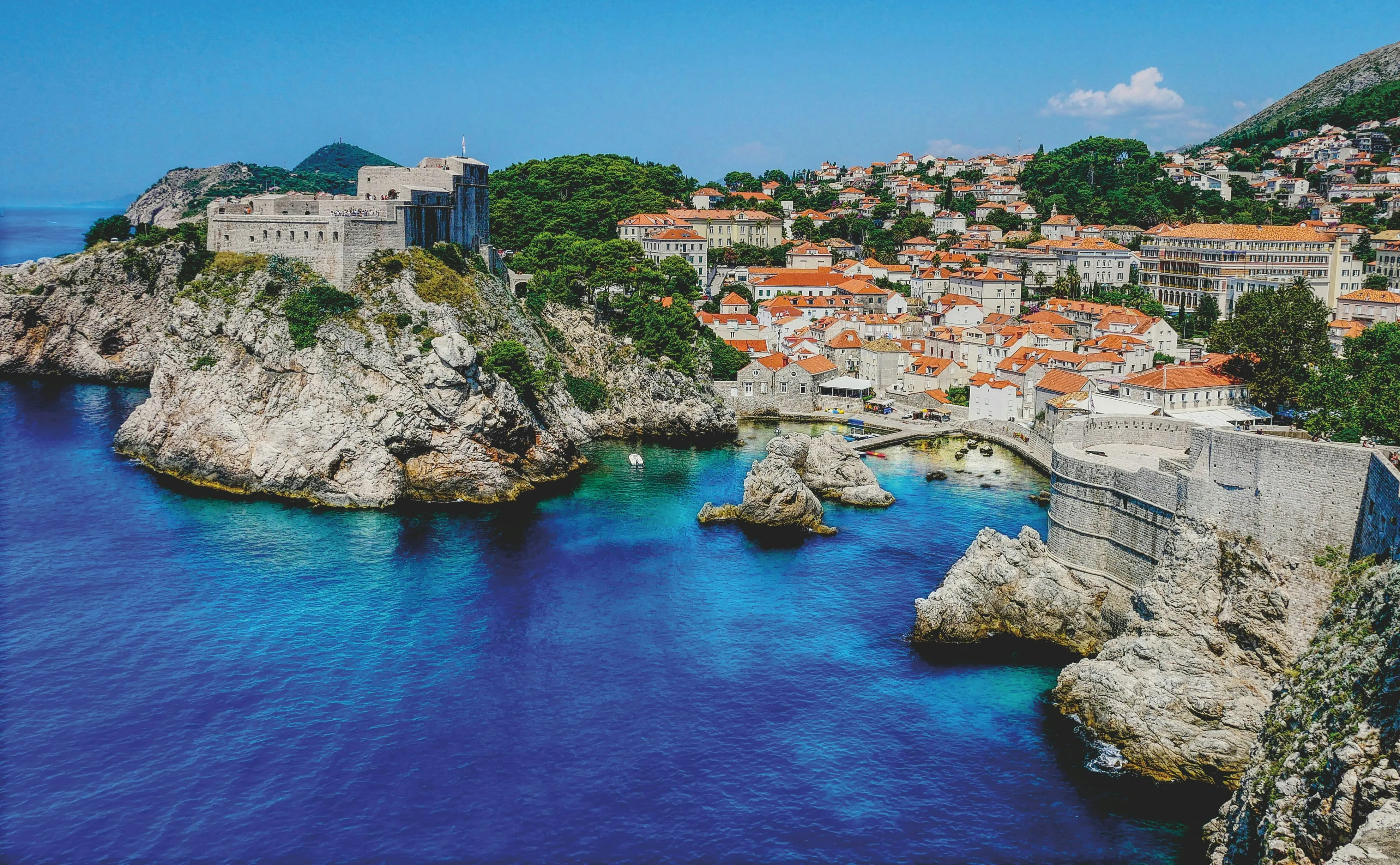
Finally, at the southern tip lies Dubrovnik, a city surrounded by a robust stone wall directly facing the sea. Its old town is a labyrinth of limestone where the Rector’s Palace and the Franciscan Monastery, which houses one of the oldest pharmacies in Europe, stand out. Walking along the main street, known as Stradun, offers a clear view of the Renaissance and Baroque urban design. The contrast between the intense blue of the Adriatic and the ocher-colored walls makes this area a reference point for understanding the ancient commercial importance of the region.
“Tip”: You cannot miss visiting Dubrovnik, the most iconic place in the country.
✈️ Best Season to Travel
Croatia offers very different experiences depending on the time of year you decide to visit. Its geography, combining an extensive Mediterranean coast with a continental climate interior, allows each season to have a particular appeal. While the warmer months focus on enjoying its islands and natural parks, the cooler months are ideal for touring its historic cities with greater tranquility and getting to know the local culture up close.
For most travelers, the choice depends on the type of activities they wish to perform. Spring and the beginning of autumn are usually considered balanced moments, as the weather is mild and allows for hiking routes or urban visits without the high temperatures of summer or the intense cold of winter in mountain areas.
| Season | Months | Typical Climate | What to Expect | Tourist Influx |
|---|---|---|---|---|
| Spring | Mar – May | Mild temperatures (15°C - 22°C) and longer days. Moderate rains. | Flowering in national parks, hiking routes, and urban cultural events. | Medium - Low ⭐⭐ |
| Summer | Jun – Aug | Hot and dry on the coast; high temperatures across the territory. | Sailing the Adriatic, outdoor music festivals, and full activity on the islands. | High ⭐⭐⭐⭐⭐ |
| Autumn | Sep – Nov | Mild at the start, progressively cooling. Ocher colors in the forests. | Grape harvests, truffle collection in the interior, and visiting monuments with more calm. | Medium ⭐⭐⭐ |
| Winter | Dec – Feb | Cold with possibility of snow in the interior; cool and humid climate on the coastline. | Christmas markets, snow sports in mountain areas, and authentic local atmosphere. | Low ⭐ |
🗣️ Basic Vocabulary
Learning some words in Croatian will help you move with more ease during your stay in the country. Although English is widely used in the most touristy areas, local inhabitants usually appreciate visitors making the effort to use simple terms for greetings or saying thank you.
These basic expressions will be useful in everyday situations, such as entering a shop, ordering in a restaurant, or asking for directions, facilitating smoother and closer communication during the trip.
- Dobar dan: Good day or hello (formal use during the day).
- Hvala: Thank you.
- Molim: Please (also used for “you’re welcome”).
- Da / Ne: Yes / No.
- Oprostite: Excuse me or sorry.
- Koliko košta?: How much does it cost?
- Račun, molim: The bill, please.
- Doviđenja: Goodbye