


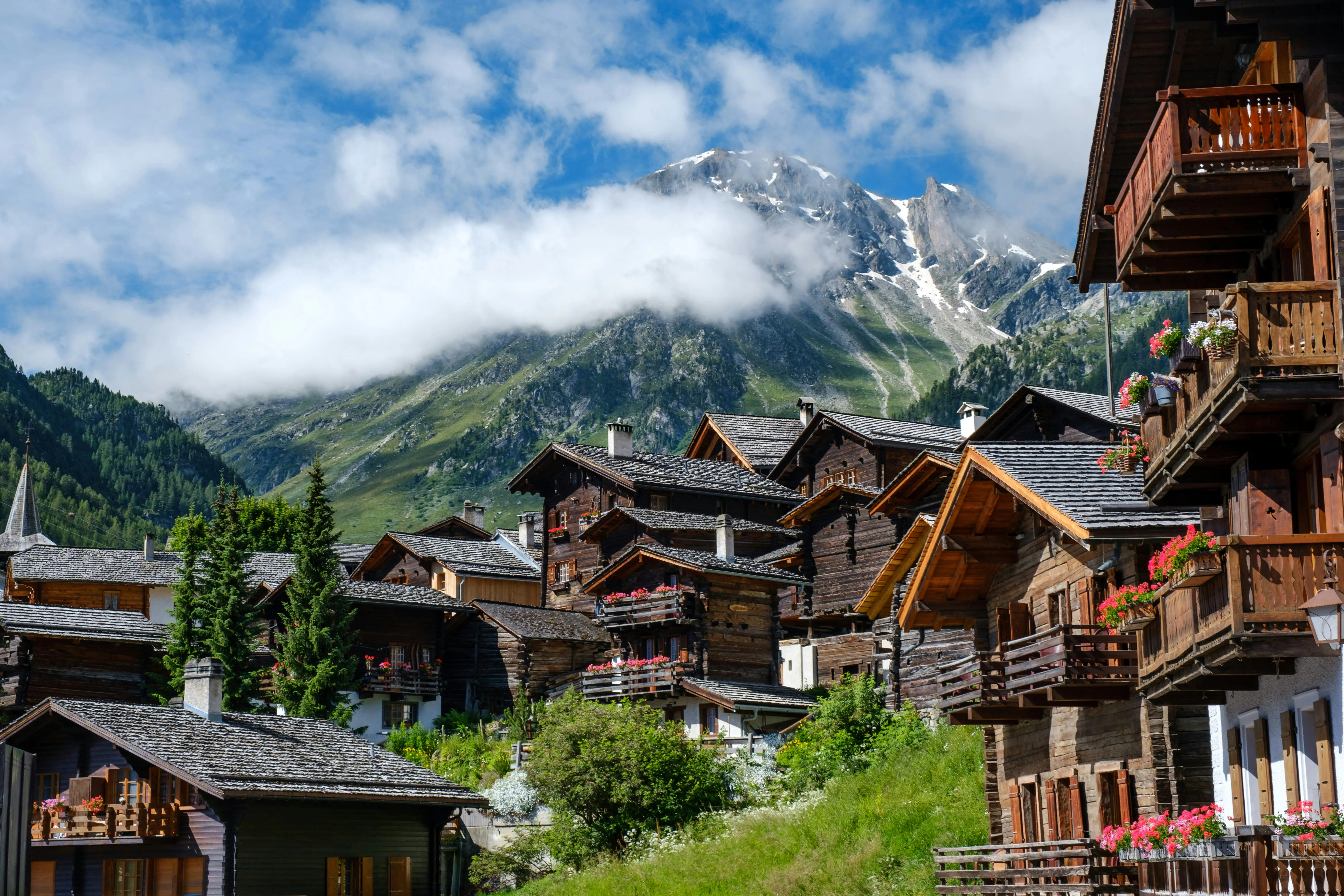
Switzerland
Discover the majestic Swiss Alps, impeccable cities next to crystal-clear lakes, and a culture of precision that combines medieval history with modernity and comfort.
Quick Facts
- Capital
- Bern
- Language
- German
- French, Italian, Romansh
- Currency
- Swiss franc (CHF)
- Best time to visit
- From June to September for hiking or from December to March for skiing.
- Budget per day
- $120 - $350 per day
- Climate
- Temperate continental climate with mild summers and cold, snowy winters, varying significantly depending on the altitude.
- Connectivity
- good
- Very easy to obtain at airports, kiosks, and telecommunications stores.
- Electricity
- Type J / Type C (230V)
- Local transport
- good
- Card usage
- widespread
- Tipping
- optional
🌎 Introduction
In the heart of the continent, where alpine peaks coexist with green valleys and mirrors of water, lies a territory that seems to follow its own beat. The transition of the seasons profoundly transforms the landscape, from the white stillness of winter to the chromatic awakening of spring, offering a setting where nature and small cities intertwine simply. It is a place where the environment invites you to observe the passing of time calmly.
This identity is built on the diversity of its regions, where several languages and traditions coexist that go far beyond the well-known clichés. It is common to find local markets in cobbled squares, hear the sound of cowbells in high meadows, or share the simplicity of local gastronomy, marked by cheeses and local products. Each corner reflects a mix of cultural influences that coexist under an atmosphere of serenity and order.
Walking through its towns and cities allows one to appreciate how traditional architecture and modern life maintain a constant balance. From the trains that cross mountain passes to the walks along the lake shores, the country shows itself as a mosaic of daily experiences. It is, in essence, a destination that reveals itself through its details, its well-preserved customs, and a deep respect for the environment that surrounds it.
🛡️ General safety
Switzerland is internationally recognized as one of the most safe and stable destinations in the world for travelers. The general level of security is very high, consistently ranking in the top positions of global peace and security indices.
The context for the traveler is one of great tranquility. The infrastructure works efficiently, and there is a deep respect for public order and rules, allowing you to enjoy the country with a sense of freedom and calm difficult to find in other places.
General level of safety
- The level of security in Switzerland is rated as very high compared to the global average.
- Violent incidents are extremely unusual, and the country maintains exceptional political and social stability.
- Travelers can move with confidence throughout the territory, in both rural areas and large urban centers, even at night.
Crime and common risks
- The main risk, although low, is petty crime related to property. This includes opportunistic theft or pickpocketing in crowded places.
- Special attention should be paid at train stations, airports, and massive tourist interest points in cities like Geneva or Zurich.
- Scams are infrequent, but it is advisable to be cautious with offers of unofficial services in very busy areas.
- Serious security incidents are exceptional, so common sense is usually sufficient protection.
Safety in cities and tourist areas
- Urban centers and tourist neighborhoods are extremely safe. It is common to see local residents leaving belongings without extreme surveillance, although tourists are not recommended to do the same.
- Public transport (trams and buses) is safe at any time of day.
- There are no “no-go zones” or exclusion areas that tourists should avoid for physical safety reasons.
- In larger cities, areas near main stations may attract homeless people or noisy groups at night, but they rarely pose a real threat to the visitor.
Transport safety
- Swiss public transport (trains, buses, and boats) is one of the safest and most punctual in the world. Onboard thefts are minimal, but it is recommended to keep an eye on luggage on long journeys.
- In Switzerland, people drive on the right. Roads are in perfect condition, although alpine orography requires caution due to sharp curves and tunnels.
- Compliance with traffic rules is strict. Speed cameras are frequent, and fines for infractions are very high.
- To drive on motorways, it is mandatory to purchase the vignette (an annual toll sticker), which must be placed correctly on the windshield.
- Taxis and private transport services are highly regulated and totally reliable.
Natural and climatic risks
- The main risk in Switzerland is related to the mountains and the alpine climate. Weather changes can be sudden and unforeseen.
- During winter and spring, there is a risk of avalanches in high mountain areas. It is imperative to respect warning signs and not ski off marked trails.
- In summer, mountain storms can be intense. It is recommended to always consult the weather forecast before going on hiking routes.
- Floods or rockfalls can occur seasonally after heavy rains, occasionally affecting secondary roads or mountain railways.
Local legislation and norms
- Switzerland has strict regulations regarding noise and rest. In many communities, there are rules about not making loud noises (such as using washing machines or doing construction work) on Sundays or after 10:00 PM.
- Civility and cleanliness are fundamental. Littering carries immediate financial penalties.
- Alcohol consumption in public is generally permitted, but disruptive behavior resulting from it is not tolerated by the authorities.
- It is mandatory to always carry a valid ID document.
Safety for specific groups
- Female travelers: Switzerland is an excellent destination for women traveling alone. The risk of harassment is very low, and safety in streets and transport is constant.
- LGTBIQ+ travelers: The country is open and respectful. Marriage equality is legal, and there are no specific risk areas for this group; public discrimination is rare and punishable by law.
- Children and the elderly: Infrastructure is perfectly adapted. Road safety and the quality of medical services make it an ideal destination for families and seniors.
Emergencies and assistance
- 112: General emergency number (valid for any emergency).
- 117: Police (police emergencies).
- 118: Firefighters.
- 144: Ambulances and medical emergencies.
- 1414: REGA (Air rescue, essential for mountain incidents).
- The Swiss police are professional, multilingual, and usually provide very efficient help to tourists. In case of an incident, going to the nearest police station is an agile and transparent process.
Tip: On mountain excursions, always use the official MeteoSwiss application and download maps for offline use, as coverage may fail in deep valleys or high peaks.
📝 Entry requirements
To organize a trip to Switzerland, the first aspect to consider is identity documentation. Most international travelers require a valid passport to cross the border. It is a recommended practice that said document has a remaining validity of at least three months beyond the planned date of the end of the stay, thus ensuring that no inconveniences arise during transit.
Regarding access permits, a large number of tourists can visit the country without the need to manage a prior visa for short-term stays. The permitted stay period under this modality is usually a maximum of 90 days within a 180-day cycle. For those planning a longer stay or having reasons other than tourism, it is suggested to consult the specific conditions applicable to their administrative situation.
Upon arrival at checkpoints, it is common for authorities to request the presentation of an exit ticket from the country or for a continuation of the trip to a third destination. Similarly, proof of sufficient financial funds to cover all expenses derived from the stay, including accommodation, food, and internal transport, may be required. Having a confirmed hotel reservation or a letter of invitation can facilitate this process.
Controls at airports and border crossings are carried out professionally and focus on maintaining security. Regarding customs restrictions, there are limits on the amount of products that can be introduced without declaring, especially in categories such as alcohol, tobacco, or certain fresh foods. If traveling with personal medications, it is recommended to keep them in their original packaging and, preferably, accompany them with a copy of the medical prescription to avoid delays in inspections.
In the field of health, mandatory vaccinations are not usually required to enter Swiss territory from most points of origin. However, it is advisable to keep the standard vaccination schedule up to date and consider contracting travel insurance with broad medical coverage. Given that local health services have a high cost for visitors, having an appropriate policy allows you to enjoy the experience with greater peace of mind.
🏔️ Highlighted tourist information
Switzerland is a destination that stands out for its alpine nature, its technical precision, and its rich cultural heritage. Below are some relevant aspects to complement the trip planning:
- Urban and natural destinations: The country offers a unique contrast between cosmopolitan cities like Zurich and Geneva, and impressive mountain landscapes in regions like the Bernese Oberland or the canton of Ticino.
- Public transport: The network of trains, buses, and boats is one of the most efficient in the world. The use of the rail system is recommended for traveling between cities and accessing the most remote valleys.
- Gastronomy: Local cuisine is closely linked to products of the land, especially highlighting the varieties of cheeses in dishes like fondue or raclette, in addition to its world-famous chocolate.
- Languages: Depending on the region visited, the traveler will encounter German, French, Italian, or Romansh-speaking areas, although the use of English is widely spread in tourist areas.
- Currency and payments: The official currency is the Swiss franc. Although the use of credit cards is common in almost all establishments, it is useful to carry small amounts of cash for local businesses or mountain areas.
- Climate and clothing: Weather conditions can vary drastically depending on altitude. It is recommended to dress in layers and have suitable footwear for walking, even if only urban centers are visited.
- Respect for the environment: There is great awareness about environmental protection. Visitors are expected to follow recycling rules and maintain civility in protected natural spaces.
🏥 Basic health considerations
You will find in Switzerland one of the most advanced and efficient health systems on the planet. Medical assistance is of exceptional quality, with modern hospitals and clinics equipped with the latest technology. As a visitor, you can access both public and private health care, although you must keep in mind that the cost of any treatment is very high. Healthcare personnel are usually polyglots and, in addition to the country’s official languages, it is very common that they can communicate with you in English without major difficulties.
Taking out travel medical insurance is something you should consider fundamental before setting foot on Swiss territory. Although it is not always a legal requirement to cross the border, the reality is that any simple consultation or unforeseen event can cost you a small fortune. Your insurance should include broad coverage for hospitalization, diagnostic tests, and repatriation. If you plan to enjoy the Alps by skiing or hiking, check that your policy specifically covers mountain rescue, as helicopter transfers are frequent and extremely expensive.
Regarding vaccines, you won’t have to worry about any legal obligation to enter the country. The most recommended thing is that you have your usual official vaccination schedule up to date. If your travel plan includes many activities in nature, such as camping or long walks through wooded areas, you might value the vaccine against tick-borne encephalitis, a risk that exists in certain regions during the warmer months.
If you need to bring your own medication, it is best to transport it in its original container to avoid confusion at customs. It is very important that you carry the medical prescription or a certificate from your doctor with you, preferably in English, especially if it involves drugs containing controlled substances. In cities, you will find well-stocked pharmacies, but keep in mind that local laws are strict and you may need a Swiss prescription for medications that are over-the-counter in other places.
The most common health risks you might experience are related to the natural environment. When moving through high-altitude areas, you could feel symptoms of altitude sickness, such as dizziness or headache, so it is advisable to ascend gradually. In winter, the extreme cold requires you to be well-equipped to avoid frostbite or hypothermia problems. Otherwise, there are no serious endemic diseases from which you should protect yourself, and the risks of dangerous insect bites are minimal, beyond the aforementioned ticks in summer.
Regarding water and food, you can be completely calm. Tap water is drinkable throughout the country and its quality is often superior to many bottled waters. You can drink even from most of the public fountains you will see in the streets, unless a sign indicates otherwise. Food hygiene is impeccable, both in luxury restaurants and in small local stalls, so the probabilities of suffering from food poisoning are extremely low.
If you find yourself in a critical situation, the number you should dial for medical emergencies is 144. This ambulance service works with amazing speed, although remember that the bill will arrive in your name or that of your insurance after the assistance. For general emergencies, you can also use 112, which is the standard European number.
As final practical advice, remember to pack a high-factor sunscreen, as radiation in the mountains is very powerful even if the sky is cloudy. If you are going to walk a lot, bring a small blister kit for rubbing. Staying hydrated and respecting acclimatization times at the summits will allow you to enjoy your stay in this country without health setbacks.
🚌 Transport within the country
The public transport network in this destination is the main axis for visitors’ travel. The train stands out as the most used means to travel long distances and connect the main urban centers with great precision. This system is complemented by an extensive network of buses and, in areas where there are large bodies of water, by boat and ferry services that allow for relaxed travel while observing the environment.
For a tourist, using these services is intuitive due to clear signaling and organization at all stops. Tickets can be easily purchased at stations, which have sales systems usually available in several languages. Coordination between schedules is designed so that transfers are smooth, which creates a constant feeling of punctuality and reliability throughout the territory.
In large cities, movement is concentrated on urban trams and buses that cover most points of interest frequently. Conversely, in rural or mountain areas, access is through bus services that reach the most isolated towns. It is important to keep in mind that some mountain villages are pedestrianized, so public transport or cable car systems are the only way of access for visitors.
Taxis and other private transport services are available mainly in urban centers and communication hubs. They are an alternative for very specific journeys or travel with a lot of luggage, although the high coverage of the rail and bus network makes the use of a car less necessary to get to know the country. In general, the infrastructure is designed so that the traveler moves with comfort and autonomy.
“Tip”: Always check the information panels on the platforms before boarding the carriage, as some trains may split during the journey to head to different destinations.
🤵 Culture and etiquette
Society in Switzerland is characterized by a coexistence based on discretion and mutual respect. When entering small establishments or crossing people on nature trails, it is common to exchange a brief greeting in the local language of the region. Personal privacy is highly valued, so it is advisable to maintain a prudent personal distance in public spaces and avoid conversations about intimate or financial topics in casual encounters or with people just met.
Punctuality is a core value in social and professional interaction, considered a basic sign of consideration for others’ time. In the public sphere, such as collective transport or residential areas, it is appreciated to maintain a moderate voice volume. Silence is especially respected during night rest hours and on public holidays, periods in which noisy activities that could alter the calm of the shared environment are avoided.
In interpersonal treatment, the use of formal courtesy formulas is the norm when addressing strangers. Initial greetings are usually made with a firm handshake, always maintaining eye contact. In closer social contexts, the way of greeting may vary according to the linguistic area, but respect for hierarchies and waiting for turns in any service are constant practices that favor the fluidity of daily life and social harmony.
Regarding gastronomic customs, it is customary to wait for the host to start or give the signal before starting to eat. When making a toast, it is fundamental to establish eye contact with each person in the group. Regarding tipping, although the service charge is already included by law in catering prices, it is a common and well-received gesture to round up the figure of the bill or leave a small additional amount if the service has been satisfactory.
Respect for the natural and cultural heritage is fundamental throughout the country. In visits to temples or places of historical importance, restrained behavior and appropriate clothing for the environment are expected. The local population maintains a very close link with the preservation of the landscape, so strictly observing the cleaning rules and the correct use of public spaces is the best way to integrate and show appreciation for the local culture.
“Tip”: When toasting, make sure to look directly into the eyes of the person whose glass you are clinking before taking the first sip, as omitting this eye contact is perceived as a lack of attention toward your interlocutor.
🍛 Typical gastronomy
The cuisine of Switzerland is a reflection of its geographical and cultural diversity, where Germanic, French, and Italian influences converge. Dairy products, especially cheese, and potatoes constitute the base of many of its most traditional dishes, historically adapted to the mountain climate. It is common for the dietary rhythm to begin with a nutritious breakfast, where cereals and fresh dairy products play a leading role, while lunch and dinner are usually the main times to taste more elaborate preparations.
Eating habits in the country usually follow Central European schedules, with a tendency to dine early, generally between 6:30 PM and 8:30 PM. In restaurants, tranquility and courtesy are valued, and although service is usually included, it is common to round up the bill as a gesture of gratitude. Tap water is of exceptional quality and is the most common drink, although the local production of wines (especially whites in the Lake Geneva area and Valais) and beer have a prominent presence at the tables.
Swiss gastronomy is characterized by the use of local and seasonal ingredients. Beyond the melted cheese dishes, which are a symbol of social cohesion and are enjoyed by sharing a common pot, there are meat stews and fish preparations in the lake areas. Pastries and chocolate also form an essential part of the culinary identity, used both in celebrations and in daily consumption.
| Dish | Description | Main ingredients | Where to try it | Tip |
|---|---|---|---|---|
| Cheese Fondue | Mixture of melted cheeses in a communal pot called a caquelon. | Gruyère cheese, Emmental, white wine, and garlic. | Mountain restaurants and cities throughout the country. | Skewer the bread firmly so it doesn’t fall into the pot. |
| Raclette | Melted cheese that is scraped over various accompaniments. | Raclette cheese, boiled potatoes, pickles, and pearl onions. | Typical of the canton of Valais, at fairs and traditional venues. | Taste the cheese while it is hot to appreciate its texture. |
| Rösti | A kind of crispy pancake made of grated and fried potatoes. | Potatoes, butter, and salt (sometimes bacon or onion). | Very common in the German-speaking area as a side or main dish. | It is the ideal accompaniment for meat dishes with sauce. |
| Zürcher Geschnetzeltes | Meat stew cut into thin strips with a creamy sauce. | Veal, mushrooms, cream, and white wine. | Traditional restaurants in the city of Zurich. | It is recommended to order it with a serving of Rösti. |
| Birchermüesli | Healthy preparation of cereals and fruits, ideal for breakfast. | Oat flakes, grated apple, nuts, milk or yogurt. | Hotels, cafes, and bakeries in any region. | Try the variations with seasonal fruits for greater freshness. |
📷 Areas and places to visit
Switzerland offers a balanced combination of sophisticated urban centers and some of the most recognizable natural landscapes in Europe. The country is organized into regions with marked cultural identities, influenced by the German, French, and Italian languages, allowing the visitor to experience remarkable diversity over relatively short distances. The contrasts between cities on lake shores and small mountain villages define the essence of this alpine destination.
In the Swiss Plateau area, the main cities that act as cultural engines are found. Bern, the capital, stands out for its medieval old town declared a World Heritage Site, where historical fountains, clock towers, and long commercial arcades invite a leisurely stroll. On the other hand, Zurich represents the most contemporary and dynamic facet, with a world-class museum offering and an urban environment that blends with the waters of its own lake. In the far west, Geneva brings a cosmopolitan and international air, housing important institutions and the iconic water jet that rises above Lake Geneva.
For those seeking direct contact with nature, the Bernese Oberland region is one of the most frequented areas. Here, towns like Interlaken, Grindelwald, or Lauterbrunnen serve as bases for exploring deep valleys, waterfalls, and high peaks. This area is ideal for mountain excursions and enjoying routes that connect traditional wooden villages. Nearby, the city of Lucerne offers a postcard image with its famous medieval wooden bridge and access to Mount Pilatus, combining architectural history with navigation through crystal-clear lakes.
Towards the south, the canton of Valais houses some of the highest peaks in the country. The small town of Zermatt, where the use of combustion cars is not allowed, is a nerve center for mountaineering and panoramic high mountain views. In contrast, the canton of Ticino shows a different face of the country, with architecture and a climate of Mediterranean influence. Cities like Lugano or Locarno offer open squares, palm trees, and a gastronomy that reflects the proximity to Southern Europe, allowing for the enjoyment of outdoor festivals and walks along lakes surrounded by lush vegetation.
Historical and artistic heritage is also manifested in specific points like Basel, considered the cultural capital for its high density of art and design museums. On the shores of Lake Geneva, Chillon Castle stands as one of the most visited historical monuments, offering a look into the region’s medieval past. Additionally, the Rhine Falls, located in the north, represent one of the most powerful natural spectacles of Swiss geography, where water is the absolute protagonist.
The tourist experience is completed with activities that integrate transport and landscape, such as trips on panoramic trains that cross alpine passes and remote valleys. In each area, it is common to find local markets of fresh products and festivals celebrating seasonal traditions, from the ascent of livestock to the pastures in spring to cultural events in the concert halls of large cities. This variety allows each region to offer a different experience, from the calm of alpine spas to the slow pace of the terraced vineyards that border the lakes.
Tip: You cannot miss visiting Mount Matterhorn, the most iconic place in the country.
✈️ Best time to travel
Switzerland is a destination that offers very different experiences depending on the time of year it is visited. The choice of the ideal moment depends largely on whether you want to enjoy snow sports in the Alps or if you prefer to walk mountain trails and swim in its crystal-clear lakes. The climate is temperate, but varies significantly with altitude, which guarantees changing landscapes of great beauty in any season.
During the warmest months, nature shows itself in all its splendor with green meadows and clear skies, facilitating access to hiking routes and outdoor activities. Conversely, the winter period transforms the country into a benchmark for ski tourism and cultural traditions linked to the cold, offering a cozy atmosphere in both cities and mountain resorts.
| Season | Months | Typical climate | What to expect | Tourist influx |
|---|---|---|---|---|
| Spring | Mar – May | Cool and variable; temperatures rising and snow melting at low altitudes. | Flowering in the valleys, contrasting landscapes between green meadows and snowy peaks. | Medium ⭐⭐ |
| Summer | Jun – Aug | Warm and pleasant; long days with occasional storm rain. | High mountain hiking, swimming in lakes, outdoor festivals, and cycling routes. | High ⭐⭐⭐ |
| Autumn | Sep – Nov | Mild at the beginning and cold at the end; shorter days and frequent fog in the valleys. | Autumn colors in the forests, grape harvest festivities, and a quiet atmosphere in the cities. | Low - Medium ⭐ |
| Winter | Dec – Feb | Cold and dry; frequent snowfall in high areas and habitual frosts. | Winter sports, traditional markets, snowy landscapes, and wellness activities. | High ⭐⭐⭐ |
🗣️ Basic vocabulary
Switzerland is a country with four official languages, although in most tourist areas, German (in its Swiss variant) and French are the most predominant. Learning a few polite words will allow you to communicate more fluidly in daily situations, such as when entering a shop, sitting in a restaurant, or asking for directions on the street.
Although most Swiss people working in the services sector speak English fluently, using local terms is a gesture of courtesy that facilitates initial contact. These are some of the most useful expressions you can use during your stay:
- Grüezi: Hello (very common term in German-speaking areas).
- Merci: Thank you (widely used in both French and German-speaking regions).
- Bitte / S’il vous plaît: Please.
- Entschuldigung / Pardon: Excuse me or sorry, useful for asking for passage or starting a query.
- Ja / Oui: Yes.
- Nein / Non: No.
- En Guete / Bon appétit: Enjoy your meal, common expression before starting to eat.
- Uf Wiederluege / Au revoir: Goodbye or see you soon.