


Lithuania
Lithuania offers a captivating old town in Vilnius, moving dunes in Curonia, and a rich Baltic history surrounded by beautiful lakes and forests.
Quick Facts
- Capital
- Vilnius
- Language
- Lithuanian
- Russian, Polish, and English
- Currency
- Euro (EUR)
- Best time to visit
- From May to September for the mild weather and long daylight hours.
- Budget per day
- $40 - $120 per day
- Climate
- Humid continental climate with pleasant summers and cold, snowy winters.
- Connectivity
- good
- Very easy to acquire at kiosks, supermarkets, and airports, with eSIM support.
- Electricity
- Type C / F (230V)
- Local transport
- good
- Card usage
- widespread
- Tipping
- optional
🌎 Introduction
Lithuania presents itself to those who approach it as a horizon where deep forests coexist with the soft light of the Baltic coast. It is a European corner where the landscape transforms slowly with the passing of the seasons, moving from the white silence of winter to the vibrant green that floods everything during the long summer days. In its streets and markets, the aroma of freshly baked rye bread and the trace of amber in the hands of artisans speak of an identity that cares for its roots and integrates them naturally into daily life.
The country’s character is perceived in that balance between the weight of its history and a serene, modern pace of life. Walking through its cities allows one to observe a constant dialogue between eras, where cobblestone streets and brick churches share space with a creative and discreet energy. Beyond the urban centers, life flows between lakes and small local traditions, offering the image of a territory that values its calm and its natural legacy without needing to resort to great artifice.
🛡️ General Safety
Lithuania currently positions itself as one of the safest and most peaceful destinations in the European Union for international travelers. The Baltic country offers a welcoming environment where serious incidents are infrequent, allowing the tourist experience to be, generally, very relaxed and free of major concerns.
General safety level
- The safety level in Lithuania is very high. The country maintains low crime rates, especially regarding violent crimes against foreigners.
- Compared to other global destinations, Lithuania is at a low risk level, similar to its Baltic neighbors and Scandinavian countries.
- The context for the traveler is one of great freedom of movement, both day and night, as long as common sense guidelines that would apply in any European capital are followed.
Crime and common risks
- The most common risk is minor crime, such as pickpocketing or theft of mobile phones. These incidents usually occur in crowded places.
- Thefts and distractions can occur at specific points such as the Vilnius Old Town, Halės Market, or the central train and bus stations.
- Currency exchange scams are uncommon today due to the widespread use of the euro, but it is always advisable to use official banking entities or ATMs.
- In nightlife areas, it is recommended to watch belongings and not accept drinks from strangers to avoid isolated incidents of drink spiking, although this is not a widespread practice.
Safety in cities and tourist areas
- The urban centers of Vilnius, Kaunas, and Klaipėda are extremely safe for walking. Tourist areas are well-lit and have a discreet but effective police presence.
- Public transport (buses and trolleybuses) is safe at any time, although it is advisable to keep an eye on belongings during peak hours when vehicles are more crowded.
- There are no “forbidden neighborhoods” or exclusion zones for tourists, although as in any city, less illuminated peripheral neighborhoods may be less welcoming during the early morning.
- Special attention is recommended in party areas during weekends, where excessive alcohol consumption by locals or tourist groups may generate some verbal friction.
Transport safety
- Public transport is efficient and reliable. It is important to always validate the ticket to avoid considerable fines from inspectors.
- For using taxis, it is advised against stopping cars directly on the street. It is much safer and more economical to use ride-sharing applications like Bolt or Uber, where the price and route are recorded.
- Regarding vehicle rentals, main roads are in good condition. Driving is on the right.
- It is fundamental to respect speed limits and traffic rules, as fines are strict and there are frequent radars on main roads.
- The use of winter tires is mandatory during cold months, something that rental companies already have planned.
Natural and climatic risks
- Lithuania does not suffer from extreme natural risks such as earthquakes, hurricanes, or volcanic eruptions.
- The main risk is of a climatic and seasonal nature. Winters can be very harsh, with temperatures well below zero degrees.
- The formation of ice patches on sidewalks and roads during winter and early spring is the most real risk, potentially causing falls or traffic accidents if caution is not taken.
- In summer, although not usual, brief heatwaves or intense thunderstorms may occur.
- It is recommended to always check the weather forecast and dress in appropriate layers if traveling between November and March.
Legislation and local norms
- Lithuania has very strict laws regarding alcohol consumption. It is forbidden to consume alcohol in public spaces (streets, parks, squares) under risk of a fine.
- The zero-tolerance policy on drugs is firm; possession of even small amounts can lead to serious legal problems.
- The hours for alcohol sales in shops are limited (generally until 8:00 PM from Monday to Saturday and until 3:00 PM on Sundays), although it can be consumed in bars and restaurants without these hourly restrictions.
- Failure to comply with coexistence rules or scandalous behavior under the influence of alcohol can lead to immediate arrest.
Safety for specific groups
- Female travelers: Lithuania is a very safe destination for women traveling alone. Respect towards women is the norm and street harassment is not common.
- LGTBIQ+ travelers: Although Lithuania is a country of conservative tradition, main cities like Vilnius are open and tolerant. Nevertheless, discretion is recommended in rural areas or less cosmopolitan environments to avoid looks or uncomfortable comments, as social acceptance is in a process of evolution.
- Traveling with children and the elderly: The country is ideal for families. Infrastructures are modern and parks and public spaces are very well adapted. Safety and cleanliness make traveling with dependent people or small children much easier.
Emergencies and assistance
- The universal emergency number in Lithuania is 112. This number centralizes police, ambulance, and fire services.
- Operators usually speak Lithuanian and English, and in many cases also Russian.
- The Lithuanian police are professional and helpful. In case of being a victim of a robbery, it is necessary to go to a police station to file a report (“pareiškimas”), essential for any subsequent insurance claim.
- Healthcare assistance is of high quality in main cities, although it is always recommended to travel with private medical insurance or the European Health Insurance Card if entitled to it.
Tip: Always keep your valuables in front pockets or internal compartments of your backpack when visiting Halės Market or Pilies Street in Vilnius, especially during the high summer season.
📝 Entry Requirements
To undertake a trip to Lithuania, it is fundamental that international travelers ensure they have a valid passport. It is usually recommended that the document has a minimum validity of at least three months beyond the intended date of departure from the territory, thus avoiding possible setbacks at control points. Regarding the visa, a large number of tourists from various countries do not require this permit for short-term stays, generally allowing a maximum stay of ninety days within a period of one hundred and eighty days for recreational purposes or personal visits.
Upon arrival, whether through airports or land borders, competent authorities may perform routine checks. The traveler may be asked to present a return ticket or continuation ticket to a third destination, as well as proof of having sufficient economic funds to cover planned expenses during the stay. Likewise, having proof of accommodation for the first nights is usually an element that facilitates smooth and calm entry.
In the area of customs restrictions, the country follows common regulations that limit the introduction of certain products. There are established limits for tobacco, alcohol, and certain perfumes. If traveling with medication, it is advisable to keep it in its original packaging and accompany it with the corresponding medical prescription. Furthermore, for biosafety reasons, the entry of certain fresh foods or products of animal origin that do not comply with current health regulations is usually restricted to protect the local environment.
From a health perspective, there are no mandatory vaccinations required for international visitors, although it is always a good practice to keep the standard vaccination schedule up to date. It is recurringly suggested to contract travel insurance that offers broad medical coverage, allowing the tourist to enjoy their stay with greater safety and peace of mind. Local medical services are efficient, but having a private policy speeds up any procedure or care that might arise unexpectedly during the trip.
Places of Tourist Interest
The country offers a historical and natural richness that manifests in its cities and protected landscapes. These are some of the most highlighted points for the visitor:
- Vilnius: The capital stands out for its old town, one of the most extensive and best-preserved in Europe, where Baroque churches and cobbled streets define its character.
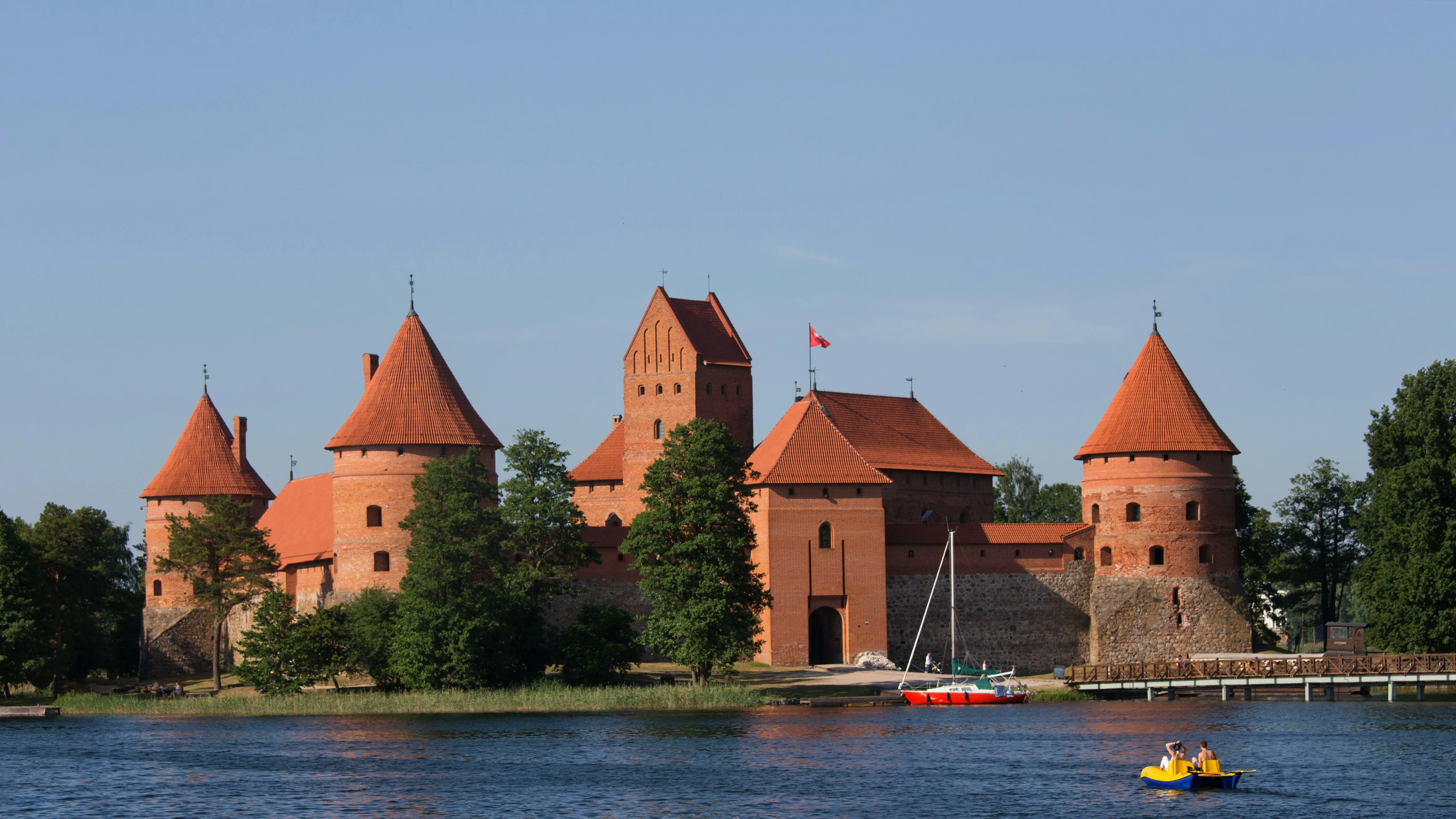
- Trakai Castle: An imposing building located on an island surrounded by lakes, representing one of the most important historical symbols of the country.
- Curonian Spit: A narrow strip of sand separating the lagoon from the sea, famous for its moving dunes and pine forests, declared a protected heritage site.
- Kaunas: Known for its interwar architecture and vibrant cultural life, it offers a mix of modern museums and medieval fortresses.
- Hill of Crosses: A place of deep spiritual significance and cultural resistance where thousands of crosses deposited by visitors from all over the world accumulate.
Gastronomy and Culture
Local cuisine is hearty and closely linked to the products of the land, especially potatoes, pork, and dairy products.
- Cepelinai: Large potato dough dumplings filled with meat, cheese, or mushrooms, considered the national dish.
- Šaltibarščiai: A vibrant pink cold soup made with beetroot, kefir, and cucumber, very popular during the summer months.
- Black Bread: It is an essential accompaniment to all meals, valued for its traditional preparation and intense flavor.
- Sūris: Local cheeses of various textures that are usually served accompanied by honey or forest fruit jams.
Summary of Practical Information
- Main Documentation: Passport with a minimum recommended validity of three months.
- Length of Stay: Generally up to ninety days for tourist activities.
- Currency: Uses the common currency of the Eurozone.
- Climate: Humid continental, with cold winters and mild, pleasant summers.
- Transport: Has an efficient network of trains and buses connecting the main cities.
- Health: Private medical insurance is recommended for greater peace of mind during the trip.
🏥 Basic Health Considerations
On your trip through Lithuania, you will realize that the healthcare system is modern and efficient, especially in urban centers such as Vilnius, Kaunas, or Klaipėda. You will find a network of public hospitals and private clinics that comply with European quality standards. Access for tourists is usually simple through emergency services, although healthcare for non-residents is paid. You will see that the prices for private consultations and treatments are moderate, but in a serious emergency, costs can rise quickly. Medical staff, especially younger professionals, usually speak English fluently, so you will be able to communicate without too many problems.
Contracting travel medical insurance is a very smart and totally recommended decision to move around with peace of mind. Although it is not mandatory to cross the border, having a policy that covers hospitalization, medical transfer, and repatriation will save you from very high unexpected costs. Ensure your insurance has broad coverage, as this will allow you to choose private centers where care is usually faster and more personalized.
Regarding vaccines, you will not find any that are mandatory to enter the country. The most important thing is that you have your routine vaccination schedule up to date. If your travel plan includes getting lost in its wonderful forests or hiking in rural areas during spring or summer, you might consider the vaccine against tick-borne encephalitis. It is a frequent recommendation for nature lovers, as these small creatures are common in the dense vegetation areas of the Baltic.
If you need to carry personal medication, you can do so as long as it is for your own consumption and is in its original packaging. To avoid any misunderstanding at checkpoints, we advise you to carry the medical prescription or a report signed by your doctor, preferably in English. In cities, you will find pharmacies (vaistinė) easily, where you can buy basic medications, although remember that for antibiotics or specific drugs you will need a local prescription.
Regarding climate-related risks, in winter you should protect yourself well from the intense cold, as temperatures drop considerably and the risk of frostbite or hypothermia exists if you do not use appropriate technical clothing. During the summer, the main risk is insect bites in humid areas. There are no altitude risks or serious endemic diseases you should worry about, so the stay is, generally, very safe.
Regarding the consumption of water and food, you can be totally relaxed. Tap water is drinkable and of good quality throughout the country, so you can refill your bottle without fear. Hygiene levels in food handling are very high, so you can try local food in both restaurants and markets with total safety and confidence.
If you find yourself in a medical emergency, the number you should dial is 112. This is the single emergency number and they will assist you to coordinate the dispatch of an ambulance or direct you to the nearest hospital. The emergency service works well and is accustomed to dealing with international visitors.
As final practical recommendations, we suggest you always carry a copy of your insurance policy on your phone and a small basic first aid kit with band-aids, disinfectant, and some painkiller. If you are going to walk in the countryside, use insect repellent and check your clothes when returning to the hotel to make sure you are not carrying any ticks with you. With these basic precautions, your stay in this beautiful country will be most pleasant.
🚌 Transport Within the Country
Moving around Lithuania is simple thanks to a well-organized transport network that connects the main points of interest. The bus is the most widespread means for traveling between cities, offering constant frequency and coverage that reaches even small towns. For its part, the train is a comfortable and relaxed option for moving between important urban centers, allowing one to contemplate the country’s natural landscape during the journey. Due to the dimensions of the territory, there are no internal flights, while the use of the ferry is indispensable for accessing specific places such as the Curonian Spit.
For the visitor, using public transport is quite intuitive. Stations usually have clear signage and it is common to find information in several languages in the most touristy areas. Ticket purchases can be managed both in person at ticket offices and through digital systems, which facilitates organizing the trip without the need for complex procedures. Punctuality and vehicle cleanliness are common characteristics that contribute to a positive travel experience.
In large cities, buses and trolleybuses cover most districts and tourist points efficiently. However, in rural areas or remote forested areas, the frequency of service is lower, so many travelers opt for a rental car to explore with total freedom. On the other hand, taxi services and ride-sharing applications are very common in the urban environment, offering a direct and functional alternative for short or night trips.
Tip: It is recommended to check the frequency of service in rural areas, as schedules can vary significantly between workdays and weekends.
🤵 Culture and Etiquette
Lithuanian society is usually characterized by a cordial but reserved character in first encounters. It is common for initial treatment to be formal, maintaining a respectful physical distance and avoiding excessive contact with unknown people. The standard greeting consists of a firm handshake accompanied by direct eye contact. In public spaces, discretion and the use of a moderate tone of voice are highly valued, as loud conversations can be perceived as a lack of consideration towards others.
Punctuality is a fundamental aspect of social and professional coexistence in Lithuania. Arriving at the agreed time is interpreted as a sign of respect for others’ time, so it is recommended to notify in advance of any unforeseen event. On the other hand, communication tends to be direct and honest, valuing clarity in the message over excessive formalities or unnecessary detours during the exchange of ideas.
When receiving an invitation to visit a private home, it is a very widespread custom to remove shoes upon entering the dwelling, so hosts usually offer slippers to their guests. It is customary to bring a small gift, such as flowers, chocolates, or wine. In the case of flowers, local tradition suggests giving an odd number, reserving even-numbered bouquets for situations of mourning or funerals. During meals, it is considered polite to wait for the host to make a gesture to begin and it is common to thank for the hospitality at the end of the encounter.
Regarding tipping, although there is no strict obligation, in the hospitality sector it is common to leave approximately 10% of the total amount if the service has been satisfactory. In places of special relevance, such as churches, cathedrals, or historical monuments, it is fundamental to maintain a solemn and silent behavior. It is recommended to dress respectfully in religious buildings, avoiding excessively informal clothing as a sign of deference toward the spiritual and cultural importance these spaces represent for the local population.
Tip: It is fundamental to show deep respect for the national identity and recent history of Lithuania, avoiding generalizations or comparisons with other political stages that may be sensitive for its inhabitants.
🍛 Typical Gastronomy
The cuisine of Lithuania is characterized by being comforting, honest, and deeply linked to the land. Its roots are found in an agricultural and forest tradition, which translates into hearty dishes historically designed to provide energy during Northern European winters. The fundamental ingredient is the potato, which is used in an almost infinite variety of preparations, from grated doughs to complex fillings, becoming the basic pillar of the local diet.
Along with the potato, dark rye bread occupies a sacred place on the Lithuanian table. It is a dense bread, with an intense and slightly acidic flavor, which usually accompanies almost all meals. Other recurring ingredients are dairy products, especially sour cream (smetona) and curd cheese, as well as mushrooms and wild berries collected in the country’s extensive forests. Flavors are usually mild but deep, with a generous use of dill as the main aromatic herb.
Regarding eating habits, the main meal is usually lunch, which typically takes place between noon and two in the afternoon. In restaurants, the atmosphere is usually cozy and relaxed, and it is common to find establishments that recreate the aesthetics of old taverns. Dinners are usually somewhat lighter, although they maintain the comforting character of the national gastronomy. There are no strict etiquette rules beyond usual courtesy, and tips, although not mandatory, are positively valued for good service.
Regarding drinks, the craft beer culture is very strong throughout the country, with varieties that follow ancestral recipes. Also noteworthy is gira (or kvass), a natural fermented drink based on rye bread that is very refreshing. For more special occasions, mead or midus, an alcoholic drink produced from honey, represents one of the oldest traditions in the region, offering a very characteristic sweet and aromatic flavor.
| Dish | Description | Main Ingredients | Where to Try It | Tip |
|---|---|---|---|---|
| Cepelinai | Large potato dough dumplings shaped like a zeppelin. | Grated potato, minced meat or cottage cheese, and sour cream sauce. | Traditional food restaurants in Vilnius and Kaunas. | Order them with fried bacon bits on top for an authentic flavor. |
| Šaltibarščiai | Vibrant pink cold soup, very popular in summer. | Beetroot, kefir, cucumber, hard-boiled egg, and dill. | Terraces and cafes across the country during warm months. | It is always served accompanied by a portion of hot boiled potatoes. |
| Kibinai | Baked shortcrust pastry turnovers shaped like a crescent. | Flour, butter, and filling of lamb or pork with onion. | Trakai, a town famous for its Karaite culture heritage. | They are ideal as a quick snack while walking near the castle. |
| Bulviniai blynai | Crispy pan-fried potato pancakes. | Grated potatoes, onion, egg, and flour. | Rural taverns and home-cooking restaurants. | Try them with a generous spoonful of sour cream or mushroom sauce. |
| Šakotis | Traditional sweet shaped like a tree with small “branches”. | Large amount of eggs, flour, sugar, and butter. | Specialized bakeries, markets, and celebrations. | Accompany it with a cup of coffee or tea to appreciate its firm texture. |
📷 Areas and Places to Visit
Vilnius, the country’s capital, constitutes the main cultural core and is the usual starting point for exploring the region. Its Old Town, recognized as a World Heritage site, stands out for being one of the most extensive in Central and Eastern Europe, characterized by a labyrinthine layout of cobbled streets. In this area, Baroque-style churches coexist with medieval-looking buildings, highlighting the Vilnius Cathedral and the imposing St. Anne’s Church. Additionally, the Užupis neighborhood offers a very particular bohemian and artistic atmosphere, with its own symbolic rules and numerous open-air art galleries that contrast with the sobriety of the historical center.
A short distance from the capital is Trakai, a town famous for its natural environment surrounded by lakes. Its greatest interest lies in the Trakai Castle, a red brick fortification located on an island in Lake Galvė. This place allows one to learn about the history of the Grand Duchy of Lithuania and discover the heritage of the Karaites, an ethnic minority of Turkic origin that settled in the area centuries ago. Their colorful wooden houses and traditional gastronomy provide added cultural value to the walks along the paths bordering the calm waters of the lake.
In the geographical heart of the country lies Kaunas, the second most important city, which stands out for its interwar modernist architecture and its university dynamism. Walking along Laisvės alėja (Liberty Avenue), one of the longest pedestrian streets on the continent, allows one to observe Lithuanian urban evolution. Among its points of historical interest, the Kaunas Castle and its picturesque town hall stand out. The city also has a varied museum offer, where one can visit spaces dedicated to painting, music, and singular thematic collections that reflect local traditions.
The Lithuanian coast presents a landscape dominated by the Baltic Sea and the influence of marine currents. Klaipėda, the most relevant port city, preserves an aesthetic of Germanic influence in its half-timbered buildings. From here, one accesses the Curonian Spit, a thin strip of sand separating the lagoon from the sea. In this area is the village of Nida, known for its large sand dunes, its pine forests, and traditional fishermen’s huts. It is an ideal area for bird watching and enjoying bicycle routes in a protected natural environment.
To the north, near the city of Šiauliai, is the Hill of Crosses, a place of great spiritual and symbolic importance. This small hillock houses thousands of crosses made of wood, metal, and stone placed spontaneously by people of various origins over the decades. Although it is not a planned monument, it represents the identity and memory of the country. The visit allows one to walk among the narrow paths created by the accumulation of these objects, offering a different perspective on the customs and resilience of the local society.
For those who prefer direct contact with more virgin nature, the Aukštaitija National Park offers a landscape of interconnected lakes and forested hills. In this rural region, it is possible to visit traditional villages where wooden architecture is preserved and ancient crafts are maintained. Hiking routes and kayak trips along the rivers are common activities to appreciate the biodiversity and calm of these lands. This contrast between the modernity of the cities and the tranquility of the forested areas defines the diversity of Lithuanian territory.
Tip: You cannot miss visiting Trakai, the most emblematic place in the country.
✈️ Best Season to Travel
Lithuania offers very different experiences depending on the time of year it is visited. Its climate, transitioning between oceanic and continental, marks the pace of activities and the landscape, transforming the environment from the extensive green forests in the warm months to the historic cities covered in snow during winter.
The choice of the ideal time depends on the traveler’s interests. While the summer months are conducive to exploring the Baltic coast and enjoying national parks with very long days, the shoulder seasons and winter allow one to discover cultural heritage and local traditions under a different light, often with a more peaceful and leisurely atmosphere.
| Season | Months | Typical Climate | What to Expect | Tourist Influx |
|---|---|---|---|---|
| Spring | Mar – May | Transition from cold to mild, with initial thaw and brighter days. | Observation of blooming in natural parks and reactivation of urban life. | Medium ⭐⭐ |
| Summer | Jun – Aug | Mild and pleasant temperatures, with maximums that invite outdoor activities. | Cultural festivals, beach days in the Curonian Spit, and hiking routes. | High ⭐⭐⭐ |
| Autumn | Sep – Nov | Progressive drop in temperatures, increase in humidity, and cool winds. | Landscapes of ochre colors in the forests and an intense cultural agenda in the cities. | Medium - Low ⭐⭐ |
| Winter | Dic – Feb | Persistent cold with temperatures frequently below zero and presence of snow. | Snowy landscapes, frozen lakes, and traditional markets in historic centers. | Low ⭐ |
🗣️ Basic Vocabulary
Learning a few words in Lithuanian, even if it is a language with a reputation for being complex due to its ancient roots, is an excellent way to better connect with local residents during your stay. Although in major cities and tourist areas English is widespread, using simple terms to greet or say thank you facilitates communication and is usually very well received as a gesture of courtesy.
It is not necessary to delve into grammatical rules to manage in daily situations. Knowing these basic expressions will help you move with more confidence in restaurants, shops, or when interacting with the people you meet during your trip through the country.
- Labas: Hello.
- Ačiū: Thank you.
- Prašau: Please (also used to say “you’re welcome”).
- Atsiprašau: Sorry or excuse me.
- Taip: Yes.
- Ne: No.
- Viso gero: Goodbye.
- Sąskaita: The bill.