


Czech Republic
A captivating destination that combines medieval history, impressive castles, and a vibrant beer culture, ideal for exploring cobblestone streets full of charm and tradition.
Quick Facts
- Capital
- Prague
- Language
- Czech
- Slovak, English, and German
- Currency
- Czech koruna (CZK)
- Best time to visit
- From May to September and during the Christmas markets in December
- Budget per day
- $45 - $130 per day
- Climate
- Temperate continental climate with mild summers and cold winters, featuring well-marked seasonal variations with frequent snowfall during the winter months.
- Connectivity
- good
- Very easy to obtain in official stores and airports, with wide availability of eSIM cards
- Electricity
- Type C / E (230V)
- Local transport
- good
- Card usage
- widespread
- Tipping
- optional
🌎 Introduction
In the heart of the continent, Czech landscapes unfold between gentle hills and valleys that seem to maintain their own rhythm. It is a place where the passing of the seasons transforms the environment in an evident way, from winters that cover city squares with calm to golden autumns that tint the dense forests of Bohemia. Its towns and cities maintain a visual harmony that narrates centuries of history through colorful facades, stone bridges, and slate roofs that peek through the morning mist.
Beyond its architecture, the identity of this region is savored in its traditional taverns, where local gastronomy and beer culture form an essential part of daily and social life. Traditions are kept alive naturally in music festivals, seasonal markets, and customs that have been passed down from generation to generation. Nature, for its part, offers an accessible refuge with trails that traverse unique rock formations and castles that appear unexpectedly amidst the vegetation.
This part of Central Europe is defined by its subtle contrasts and a welcoming atmosphere that invites one to observe the details. The tranquility of its rural areas is balanced by the cultural dynamism of its urban centers, creating a mosaic of experiences ranging from the quiet of a historic spa to the effervescence of an outdoor concert. It is, in essence, a territory with its own balanced personality, where the ancient and the contemporary coexist quite naturally.
🛡️ General Safety
The Czech Republic consistently ranks among the safest countries in the world for travelers. It offers a calm and stable environment, ideal for both urban and rural tourism.
General safety level
- The general safety rating in the country is very high. It is considered one of the European destinations with the lowest rates of violent crime.
- Compared to other international destinations, the risk is low, allowing tourists to move with considerable freedom at almost any time of day.
- The context for the traveler is one of absolute tranquility, provided that basic common sense is applied, just as one would in any large European city.
Crime and common risks
- The most common crime affecting tourists is petty theft, especially pickpockets in crowded areas.
- Places where extra caution should be exercised include Prague’s historic center, the Charles Bridge, Old Town Square, and train stations (especially Praha hlavní nádraží).
- Currency exchange scams are a real risk. It is recommended to always avoid changing money on the street and to verify commissions at exchange offices before carrying out the transaction.
- There is a risk of overcharging in restaurants in the tourist center or the charging of unsolicited “extra services.” It is advisable to always check the detailed bill.
Safety in cities and tourist areas
- Urban centers such as Prague, Brno, or Pilsen are extremely safe for walking, even at night. Tourist neighborhoods are well-lit and have a discreet but effective police presence.
- On public transport, the risk is again limited to pickpockets during rush hours or on lines heavily used by tourists (such as tram 22 in Prague).
- We recommend wearing backpacks or bags in front in very crowded places and not leaving valuables in outer pockets.
Transport safety
- Public transport (metro, tram, and bus) is very safe, efficient, and punctual. It is mandatory to validate the ticket before entering the transport zone to avoid considerable fines.
- Regarding taxis, cases of abusive fares to tourists have been reported. For greater safety, it is recommended to use transport apps like Uber or Bolt, or to order a taxi through the hotel reception to ensure a fair price.
- In the Czech Republic, driving is on the right. Main roads are in good condition, although they can be narrow in rural areas.
- There is zero tolerance for alcohol while driving (0.0%). Fines are very severe, and not even the slightest intake of alcohol is allowed if you are going to drive.
Natural and climatic risks
- The Czech Republic does not present extreme natural risks such as earthquakes or hurricanes.
- The most relevant risk is seasonal flooding, which can occur mainly in spring or after heavy rains in summer, affecting areas near the Vltava and Elbe rivers.
- In winter, snow and ice can make road transport difficult and increase the risk of falls on sidewalks, so footwear with good grip is recommended.
- During the summer, occasional episodes of intense heat can occur, although they are not the norm.
Local legislation and norms
- It is mandatory to always carry an original identity document (passport or national ID card), as the police may request it at any time.
- Alcohol consumption on the street is prohibited in certain marked areas of urban centers, and noisy or antisocial behavior can lead to fines.
- Although there is a perception of permissiveness, possession and consumption of drugs remains illegal, and non-compliance can lead to administrative or criminal sanctions depending on the amount.
- It is important to respect neighborhood rest, especially after 10:00 PM, when excessive noise can be a reason for police intervention.
Safety for specific groups
- Female travelers: The country is very safe for women traveling alone. There are no cultural restrictions and general respect is high. It is recommended to follow standard precautions at night in poorly trafficked areas.
- LGTBIQ+ travelers: The Czech Republic, and especially Prague, is a tolerant and welcoming destination. Public displays of affection are accepted, especially in large cities, without notable risks.
- Traveling with children and the elderly: It is an excellent destination for families and seniors due to the good accessibility of its cities, the safety of its parks, and the quality of health services.
Emergencies and assistance
- The universal and free emergency number is 112 (service in several languages, including English).
- Other specific numbers are: 158 (Police), 155 (Ambulance), and 150 (Firefighters).
- The police are generally professional and helpful. In case of theft, it is necessary to go to a police station to file a report (protokol o oznámení trestného činu) for insurance purposes or document replacement.
Tip: Always use ATMs of official banks and avoid changing money at street stalls to prevent paying abusive commissions or receiving old banknotes no longer in circulation.
📝 Entry requirements
To visit the Czech Republic, travelers must have a valid identity document or passport. It is advisable that the document’s validity extends several months beyond the planned end date of the trip to avoid inconveniences at border controls. Depending on current international agreements, many international visitors can access the territory for tourism purposes without needing a prior visa, generally allowing a maximum stay of up to 90 days within a given period.
Upon arrival at entry points, whether by air or land, authorities usually perform routine security checks. The traveler may be asked to demonstrate that they have an outward ticket from the country or sufficient financial means to cover the costs of their stay and accommodation. Having travel insurance with medical coverage is a highly valued practice to ensure a smooth stay, as it facilitates assistance in case of any health incident during the tour of Czech cities.
Regarding customs, there are standard regulations on the transport of certain products. The entry of medication for personal use is usually permitted, although it is preferable to carry the corresponding medical prescription if it concerns very specific treatments. Regarding products such as tobacco, alcohol, or certain foods of animal and vegetable origin, there are quantity limits that should be respected to avoid delays or possible confiscation of items at airports and borders.
From a health point of view, specific vaccines are not usually required to enter the country, beyond having the standard vaccination schedule recommended by international organizations up to date. However, it is suggested to consult general health recommendations before starting the trip to be aware of any preventive advice. In standard movements through urban or rural areas, following common hygiene precautions is enough to enjoy a safe and balanced tourist experience in this European destination.
- Necessary documentation: Passport or recognized national identity document, with remaining validity.
- Visa regime: Many travelers are exempt from a visa for short-term stays for tourism purposes.
- Maximum stay: The period allowed for tourism is usually a maximum of 90 days.
- Borders and controls: Possible requirement for proof of accommodation, financial funds, and a return ticket.
- Customs regulations: Limitations on the transport of substances such as alcohol, tobacco, and certain food products.
- Health requirements: Absence of general mandatory vaccinations for the entry of international tourists.
- Medications: Recommendation to carry original prescriptions for personal medical treatments.
🏥 Basic health considerations
Traveling to the Czech Republic is, in general terms, very safe for your health, as the country has a modern and efficient healthcare system. You will find high-quality hospitals and health centers, especially in the main urban centers such as Prague, Brno, or Ostrava. Medical care is available in both public and private centers. While the level of services is high, the cost of private medicine for those without coverage can be considerable, so you will be more at ease if you travel with everything well organized. In the most touristy areas, you will have no trouble communicating, as much of the health personnel speaks English.
Having travel medical insurance is something you should consider fundamental before leaving home. Although it is not a strictly mandatory legal requirement for all tourists, it is highly recommended to avoid unforeseen expenses that could disrupt your budget. Your insurance should include broad coverage such as hospitalization, medical transfer, and, very importantly, repatriation to the country of origin in case of serious illness or accident. Having this protection will allow you to receive care in the best private clinics without having to pay large sums of money out of your own pocket.
Regarding vaccines, you will not find any mandatory vaccination requirements to enter Czech territory. For a standard tourist trip, it is enough to have your usual vaccination schedule up to date. General recommendations suggest being protected against common diseases such as hepatitis A and B or tetanus, something you probably already have covered. If you plan to spend a lot of time in rural or forested areas during spring or summer, you could consult your doctor about the vaccine against tick-borne encephalitis, although for an urban tourist visit it is not usually necessary.
If you need to carry your own medication, you can do so without major complications, but it is advisable to be forward-thinking. It is fundamental that you transport your drugs in their original packaging and that you always carry the medical prescription or a report from your doctor justifying their use, preferably translated into English. This will avoid any misunderstanding at customs or if you need to buy a replacement at a local pharmacy. Keep in mind that in the Czech Republic, many medications that are over-the-counter elsewhere may require a mandatory medical prescription.
Regarding common health risks, the climate will be your main factor to take into account. During the winter, temperatures can be very low, so you must protect yourself well from the intense cold to avoid colds or hypothermia. In summer, although the weather is pleasant, occasional heatwaves can occur. The risk of tropical diseases is non-existent. The greatest minor danger in nature is the aforementioned ticks in areas of dense vegetation between May and September; simply using repellent and checking your skin after a walk in the countryside will be enough.
Regarding water and food, you can be totally relaxed. Tap water is potable and of excellent quality throughout the country, so you can refill your bottle without fear. Food hygiene standards in restaurants and street stalls are very strict and similar to those of any other top-tier European nation. You will enjoy the local gastronomy with total safety, as health controls are frequent and rigorous.
If you find yourself in a health emergency situation, the number you must remember is 112, which is the general emergency telephone number and where they usually assist in several languages. There is also the number 155, specific for medical emergencies and ambulances. The ambulance service is fast and very well-equipped, guaranteeing effective urgent care in case you suffer any serious mishap during your stay.
As final practical recommendations, I advise you to locate the nearest on-duty pharmacy to your accommodation upon arrival, as some are open 24 hours. Do not forget to always carry a copy of your identity documentation and your insurance details. If you follow these steps and act with common sense, your visit to this beautiful Central European country will be a pleasant experience without shocks to your health.
🚌 Transport within the country
Moving around the Czech geography is a simple task thanks to an infrastructure that efficiently connects points of greatest interest. The train and the bus are the fundamental pillars for travel between provinces. While the railroad is a widely used option for trips between main cities for its comfort, buses usually reach more remote areas or small towns where the track does not always have a stop. In large cities, the metro and the tram complement the offer, allowing rapid travel through urban centers.
The transport system is designed to be accessible to the visitor. Signage is usually clear and, although the local language is predominant, in the main stations and points of greatest influx, it is common to find signs in other languages. Methods for buying tickets are intuitive, allowing tickets to be purchased easily at machines or sales points before starting the journey, which facilitates the autonomy of international travelers.
There is a notable difference between large cities and rural areas. In cities with more inhabitants, the frequency is very high and the public transport network is dense and functional. However, in rural or mountain areas, schedules can be more spaced out, especially during weekends. In these cases, car rental presents itself as a useful alternative for those looking to explore natural landscapes with greater flexibility and without depending on fixed schedules.
Taxi services and private transport applications operate normally, being a common option for night transfers or trips with a lot of luggage. In general terms, transport in this country stands out for its punctuality and the good preservation of its vehicles and wagons. The sense of order and the reliability of schedules allow tours to be organized with confidence, ensuring a fluid and calm travel experience.
Tip: It is fundamental to always validate the ticket before starting the trip or when accessing transport zones to comply with current local regulations.
🤵 Culture and etiquette
Czech society values formal courtesy and respect for personal space in daily interactions. When entering small establishments, offices, or even sharing an elevator, it is customary to greet with a “Dobrý den” (good day) and say goodbye when leaving. In initial encounters, the standard greeting consists of a firm handshake accompanied by direct eye contact, maintaining a prudent physical distance that denotes respect for the privacy of the interlocutor.
Punctuality is a fundamental aspect of coexistence and is considered a sign of consideration toward others’ time, both in professional and social settings. In public spaces and on transport, it is preferred to maintain a moderate voice volume, avoiding loud noises that could disrupt the tranquility of the environment. This restrained behavior extends to general interaction, where a reserved but kind attitude usually prevails once initial contact is established.
One of the most deeply rooted customs when visiting a private home is taking off shoes at the entrance, leaving them in the hallway; occasionally, the host may offer house slippers for greater comfort. In the context of meals, it is customary to wait until all diners are served and for the host to wish “Dobrou chuť” before starting. Regarding gratuities in dining, the most common practice is to round up the bill or add approximately a ten percent tip if the service was satisfactory, communicating the total amount you wish to pay to the waiter instead of leaving coins on the table.
When visiting places of worship, cemeteries, or historic monuments of a solemn nature, visitors are expected to maintain quiet behavior and appropriate dress. Likewise, it is important to show respect for local traditions and observe the dynamics of courtesy toward the elderly, to whom seats on public transport are usually offered as a gesture of deference and civility.
Tip: When making a toast, it is fundamental to look directly into the eyes of the other person and avoid crossing arms with other diners who are also toasting, as this gesture is an important sign of trust and mutual respect.
🍛 Typical gastronomy
The gastronomy of the Czech Republic is defined as being comforting, traditionally designed to combat the cold climates of Central Europe. It is fundamentally based on the use of meats, potatoes, and flours, with a clear influence from neighboring Central European cuisines, while maintaining a very marked identity of its own. Flavors are usually deep and satiating, highlighting the frequent use of spices such as cumin, marjoram, and paprika, which add characteristic nuances to the stews and thick sauces that predominate in its standard recipe book.
Regarding eating habits, the main meal of the day is usually lunch, which traditionally begins with a hot soup, an indispensable element on the Czech table throughout the year. Main dishes are usually accompanied by the famous knedlíky (boiled bread or potato dumplings), which serve to absorb the abundant sauces that characterize their cuisine. It is common for dinners to be somewhat lighter in the domestic sphere, although restaurants maintain a varied offer throughout their opening hours.
The culture of eating is closely linked to the consumption of beer, considered a fundamental piece of social life and national identity. In the most traditional establishments, such as hospody (taverns), it is common to find long tables where space is shared with other diners. When paying in a restaurant, it is frequent to round up the bill amount when paying the waiter directly, instead of leaving change on the table upon leaving, as a gesture of courtesy for the service received.
| Dish | Description | Main Ingredients | Where to try it | Tip |
|---|---|---|---|---|
| Svíčková na smetaně | Beef sirloin in a creamy vegetable sauce. | Beef, carrot, cream, cranberries, and knedlíky. | Traditional cuisine restaurants in Prague or Brno. | Try it with the cream and cranberry jam garnish for the contrast of flavors. |
| Guláš | Thick, slow-cooked meat stew. | Beef, lots of onion, and paprika. | Breweries and taverns in any Czech city. | It is usually thicker and less spicy than those of neighboring countries; order it with raw onion. |
| Vepřo knedlo zelo | National dish of roasted pork with cabbage. | Pork, sauerkraut (fermented cabbage), and knedlíky. | Rural inns and home-cooking restaurants. | It is a very substantial dish, ideal for regaining strength after a long walk. |
| Smažený sýr | Breaded fried cheese, a very common popular classic. | Edam-type cheese, breadcrumbs, and egg. | Fast food stalls and daily menus in cities. | It is indispensable to accompany it with tartar sauce and a portion of fries. |
| Kulajda | Creamy soup with a sour and aromatic flavor. | Potatoes, seasonal mushrooms, dill, and egg. | Restaurants in the South Bohemia region. | The egg is usually served poached inside the soup; mix it to add more creaminess. |
📷 Areas and places to visit
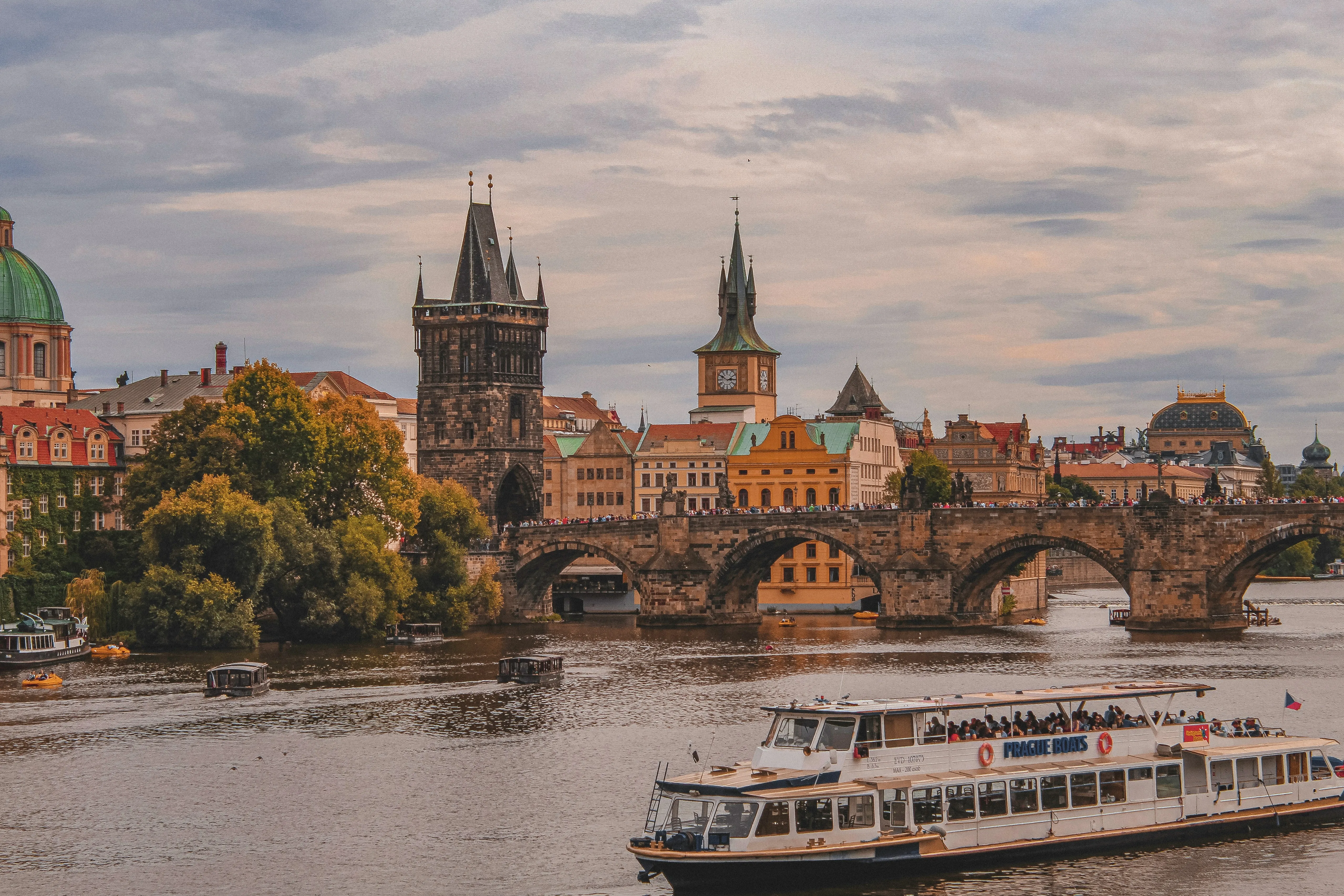
The Czech Republic is a destination that stands out for its balance between historical heritage and natural beauty. Its capital, Prague, is usually the starting point for most travelers, offering an immediate immersion in European history. In this city, walking through the Old Town allows one to appreciate the Gothic and Baroque architecture that has remained intact for centuries. The Charles Bridge, which connects the old town with the Malá Strana neighborhood, is one of the main axes of urban cultural life, while the Josefov neighborhood preserves the memory of the Jewish community through its synagogues and its historic cemetery.
Dominating the capital’s horizon is the Prague Castle complex, a site that houses the St. Vitus Cathedral and various palaces that offer a complete panoramic view of the city’s reddish roofs. The capital’s museums, such as the National Gallery, allow one to learn about the evolution of Central European art, while its theaters and opera houses maintain a musical tradition of great relevance. Activities in the capital are varied, from tours through ancient alleys to visits to local markets where one can observe the daily life of its inhabitants.
Beyond the capital, the region of Bohemia offers a great variety of landscapes and urban centers with a strong identity of their own. To the south, the town of Český Krumlov is recognized for its medieval center surrounded by a meander of the Vltava river, where its imposing castle stands out as a fundamental center of historical interest. To the west, spa towns like Karlovy Vary or Mariánské Lázně showcase elegant architecture linked to the tradition of thermal waters, surrounded by forested settings ideal for walking and enjoying the outdoors.
In the central area of Bohemia, the city of Kutná Hora is another point of interest due to its mining past and unique constructions such as the St. Barbara’s Church and the Sedlec Ossuary. For those who prefer contact with nature, the area known as Bohemian Paradise offers sandstone rock formations and hiking trails that cross dense forests and ruins of ancient fortifications, allowing for a quieter experience away from the busier urban centers.
The region of Moravia, located in the east of the country, presents a different character, marked by a deeply rooted winemaking tradition and a gentler relief. Brno, the second-largest city, combines the modernity of functionalist-style buildings, such as Villa Tugendhat, with the historical sobriety of the Špilberk Fortress. In the surroundings of this region, the Lednice-Valtice cultural landscape surprises with its extensive gardens and palaces that integrate architecture with the natural environment, forming one of the widest and most well-kept landscape complexes on the continent.
Other Moravian cities like Olomouc offer historic squares less saturated with visitors where monuments like the Holy Trinity Column can be admired. Additionally, outdoor enthusiasts find in the Šumava National Park, on the southwest border, or in the Krkonoše mountains to the north, suitable spaces to walk trails that reach the highest peaks in the country. These mountainous areas are ideal both for hiking in summer and for observing snowy landscapes during the winter.
The coexistence between rural areas, where life passes at a slow pace among small farms and craft workshops, and the dynamism of modern cities, creates a diverse and welcoming atmosphere. It is common to find music festivals, traditional fairs, and exhibitions that reflect the conservation of local customs and the production of materials such as the famous Bohemian crystal. The country allows for easy transition from a cosmopolitan urban environment to small villages where time seems to have stopped, facilitating a complete view of Czech culture.
Tip: You cannot miss visiting Prague Castle, the most emblematic place in the country.
✈️ Best time to travel
The Czech Republic has a continental climate that clearly defines the four seasons of the year, allowing the travel experience to vary significantly depending on the chosen month. Generally, transition periods, such as spring and the beginning of autumn, are highly valued for offering moderate temperatures and landscapes with changing shades, ideal for touring both historic cities and natural spaces.
During the summer months, the country experiences its peak activity, with long days and a vibrant outdoor cultural offer. Conversely, winter transforms the environment with the arrival of cold and, frequently, snow, creating a different atmosphere oriented toward enjoying local traditions and mountain sports. The choice will therefore depend on whether one prefers the dynamism of summer or the tranquility and winter charm.
| Season | Months | Typical Weather | What to Expect | Tourist Influx |
|---|---|---|---|---|
| Spring | Mar – May | Mild temperatures that gradually rise and moderate rains. | Flowering in parks and gardens, Easter festivities, and the awakening of nature. | Medium (⭐⭐) |
| Summer | Jun – Aug | Warm weather, long sunny days with possible occasional storms. | Music, film, and theater festivals, lively terraces, and active hiking routes. | High (⭐⭐⭐) |
| Autumn | Sep – Nov | Drop in temperatures and cooler environment with morning mists. | Landscapes with golden foliage, grape harvest season in wine regions, and serene atmosphere. | Medium - Low (⭐⭐) |
| Winter | Dec – Feb | Cold weather, with temperatures often below zero and presence of snow. | Traditional markets, snowy landscapes, and winter sports practice in mountain areas. | Low (⭐) |
🗣️ Basic vocabulary
Learning a few basic words in Czech will greatly facilitate communication during your stay in the Czech Republic. Although English is usually spoken in hotels and restaurants in the most touristy areas, knowing some local terms helps daily interactions be more fluid and friendly with the country’s inhabitants.
It is not necessary to master the grammar, but knowing how to greet, say thank you, or ask for something please is very useful for managing common situations, such as entering a shop, using public transport, or ordering in a café.
- Dobrý den: Good morning/day (this is the most common formal greeting during the day).
- Ahoj: Hello or goodbye (used informally).
- Děkuji: Thank you.
- Prosím: Please (also used to say “you’re welcome” or “tell me/how can I help”).
- Ano: Yes.
- Ne: No.
- Promiňte: Pardon or excuse me.
- Na shledanou: Goodbye (polite way to say goodbye).
- Kde je…?: Where is…?