


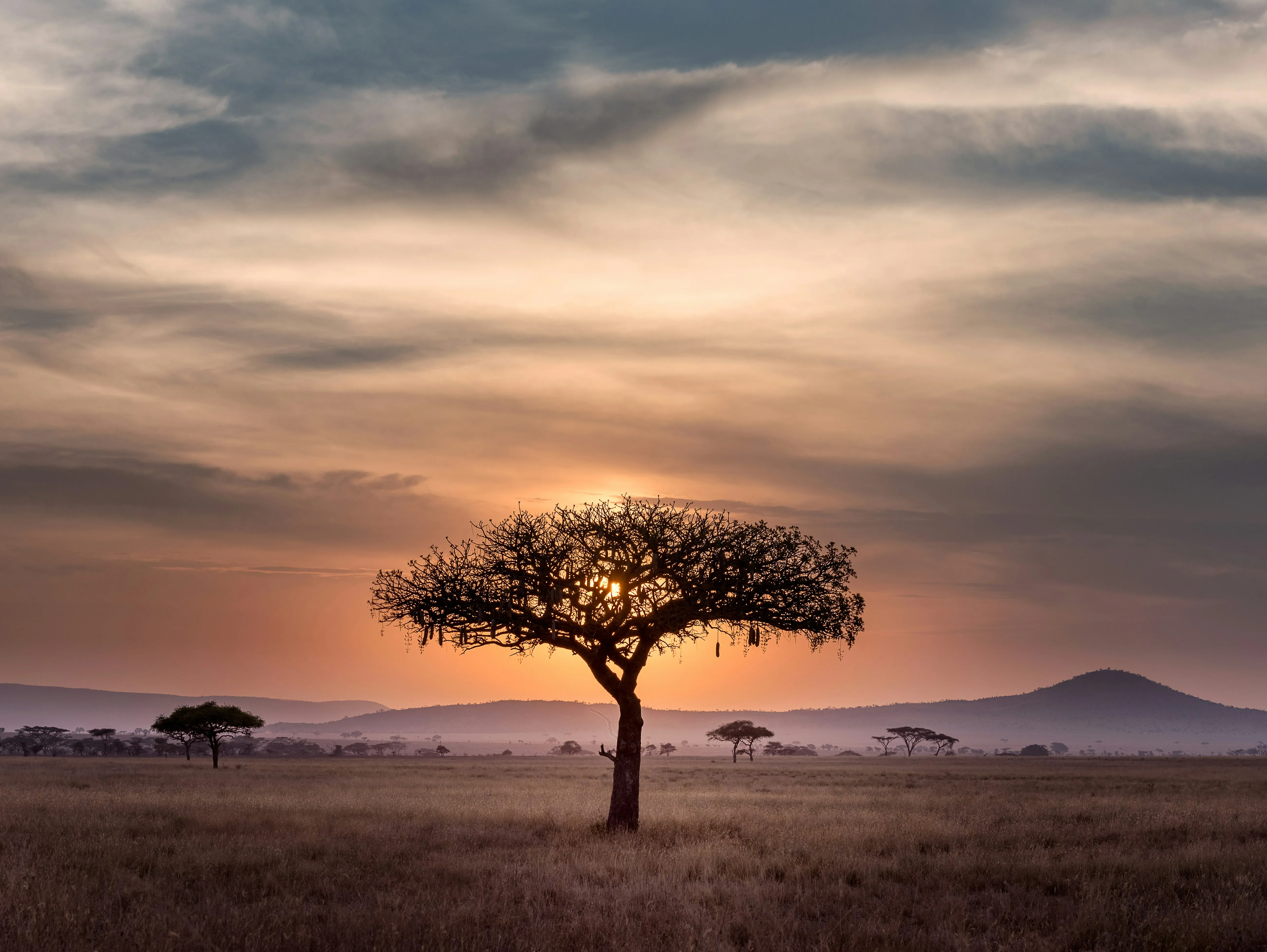
Tanzania
A fascinating African destination that combines savannahs teeming with wildlife, paradise beaches in Zanzibar, and the imposing summit of Kilimanjaro for adventurous travelers.
Quick Facts
- Capital
- Dodoma
- Language
- Swahili
- English, Arabic
- Currency
- Tanzanian Shilling (TZS), US Dollar (USD)
- Best time to visit
- From June to October and from January to February.
- Budget per day
- $50 - $250 per day
- Climate
- Tropical on the coast and the islands, while in the highlands and the interior the climate is more temperate and dry.
- Connectivity
- medium
- Very easy to obtain at airports and local shops (eSIM available).
- Electricity
- Type G / Type D (230V)
- Local transport
- acceptable
- Card usage
- cash is used more
- Tipping
- optional
🌎 Introduction
In East Africa, Tanzania presents itself as a mosaic of landscapes and rhythms where nature and daily life maintain a constant balance. From the vast plains of the interior, where the horizon seems endless, to the coasts washed by the Indian Ocean, the territory changes color according to the season, moving from the ochre of summer to the vibrant green brought by the rains. It is a space of subtle contrasts, where the calm of rural areas alternates with the leisurely bustle of local markets.
The essence of the country lies in its cultural diversity, marked by Swahili heritage and the hospitality of its people. In its towns and cities, the aroma of cloves and cinnamon mixes with leisurely greetings, reminding us that this is a historical meeting point between trade routes and ancient traditions. Without the need for artifice, light transforms the environment on the slopes of its volcanic massifs or in the turquoise blue of its coastline, offering a unique identity perceived in every conversation and every sunset.
🛡️ General safety
Tanzania is generally considered a safe destination for international tourists, especially when compared to other countries in the region. The country enjoys notable political stability, and tourism is one of its main sources of income, which motivates authorities to protect the integrity of visitors. The risk level is usually rated as medium-low, with most incidents concentrated in heavily populated urban areas, while safety is very high in national parks and safari circuits.
As with any international trip, common sense is the most effective prevention tool. The Tanzanian context requires the traveler to be aware of cultural differences and development levels, always maintaining a respectful and vigilant attitude in crowded places.
Common crime and risks
Most visits to Tanzania occur without incident, although it is necessary to know the most common risks to avoid them:
- Pickpocketing and petty theft: These are the most frequent crimes, especially in markets, bus stations, and crowded beaches. It is recommended not to display valuables such as jewelry, expensive cameras, or large amounts of cash.
- Snatching from vehicles: In cities like Dar es Salaam, cases of bag or backpack snatching by individuals on motorcycles or bicycles have been reported. It is advisable to carry belongings on the side away from the road.
- Tourist scams: Some individuals may approach offering guide services, safaris at excessively low prices, or unsolicited help with procedures. It is recommended to always book through official and registered operators.
- ATM security: It is preferable to use ATMs located inside banks or shopping centers and avoid those in lonely or poorly lit streets, especially at night.
Safety in cities and tourist areas
Safety varies significantly depending on the geographical location:
- Dar es Salaam: As the economic hub, it requires greater vigilance, especially in areas like the port and peripheral neighborhoods. Walking through the city after sunset is discouraged.
- Arusha and Moshi: These are the gateways to safaris and Kilimanjaro. They are generally safe cities during the day, although it is best to avoid groups of people who approach persistently to sell tours.
- Zanzibar (Stone Town and beaches): The archipelago is very safe, but it is important to respect local customs. On the beaches, the presence of so-called “beach boys” is common; although they are usually harmless, they can be persistent in their offers of products or excursions.
- Safari Circuits: National parks (Serengeti, Ngorongoro, etc.) are controlled environments and extremely safe regarding crime, with the greatest risk being the failure to follow safety regulations regarding wildlife.
Transport safety
Transport in Tanzania has peculiarities that the traveler should know to move with confidence:
- Driving: In Tanzania, driving is on the left. The condition of main roads is acceptable, but secondary roads may be in poor condition, especially during the rainy season.
- Taxis and private transport: It is recommended to use only official taxis (easily identifiable) or transport services arranged through hotels or recognized mobile applications. Avoid getting into unidentified private vehicles.
- Public transport (Dalla-dallas): Local minibuses are economical but are usually very crowded and do not always meet road safety standards. For long journeys, it is preferable to opt for higher-class bus companies.
- Ferries: For trips between Dar es Salaam and Zanzibar, use exclusively fast and recognized ferry companies. Avoid cargo or informal vessels that do not have adequate life-saving measures.
Natural and climatic risks
Tanzania is not a country with high seismic activity or severe cyclonic activity, but there are environmental factors to consider:
- Rainy season: It is divided into the “long rains” (March to May) and the “short rains” (November and December). During these periods, flash floods can occur, cutting off roads and making access to certain national parks difficult.
- Heat and solar radiation: The equatorial sun is very intense. It is essential to stay hydrated and use high-factor sun protection to avoid heatstroke or severe burns.
- Altitude: Travelers planning to climb Mount Kilimanjaro or Mount Meru must be aware of altitude sickness. Proper acclimation is vital, as is strictly following the instructions of professional guides.
Local legislation and norms
It is fundamental to respect Tanzanian laws, which can be very strict in some aspects:
- Plastic use: Tanzania has very rigorous regulations against plastic bags. It is forbidden to import, export, manufacture, or use single-use plastic bags. It is recommended to travel with cloth or reusable material bags.
- Drugs: Possession, consumption, or trafficking of narcotics carries very severe prison sentences and high fines.
- Photography: It is strictly forbidden to photograph military installations, government buildings, police stations, airports, or bridges. Always ask permission before photographing local people.
- Dress code: Especially in Zanzibar and Muslim-majority areas, one should dress modestly (shoulders and knees covered) outside of hotel complexes and beaches, as a sign of respect for local culture.
Safety for specific groups
- Women travelers: Tanzania is a safe destination for women traveling alone, although they may receive unwanted attention or persistent comments. It is recommended to dress conservatively and avoid walking alone in isolated areas or deserted beaches at sunset.
- LGTBIQ+ travelers: Same-sex relationships are prohibited by law in Tanzania and are socially rejected. Extreme discretion is recommended, and any public display of affection should be avoided to prevent legal problems or hostile situations.
- Traveling with children and the elderly: There are no special restrictions, but keep in mind that medical infrastructure outside of large cities is limited. It is essential to travel with comprehensive medical insurance that includes air evacuation.
Emergencies and assistance
In case of needing help during your stay, these are the key points:
- Emergency number: The general number to contact the police, ambulance, or fire department is 112 or 999.
- Tourist police: In areas like Zanzibar or Arusha, there is a notable presence of police oriented towards helping visitors. If you are a victim of theft, you must go to the nearest police station to file a report (“police report”), which is necessary for any insurance claim.
- Medical centers: The best hospitals are located in Dar es Salaam and Nairobi (Kenya, for evacuations). In rural areas, assistance is basic.
Tip: Before traveling, scan all your important documents (passport, visa, insurance) and save them in the cloud; additionally, always carry a physical copy with you and leave the original in your accommodation’s safe.
📝 Entry requirements
To undertake a trip to Tanzania, the passport is the fundamental document that every traveler must carry. It is generally recommended that this document has a minimum validity of six months from the moment of entry into the territory, in addition to having enough blank pages for the corresponding stamps. Most international visitors usually require a tourist visa for vacation stays, which typically allows a maximum stay of ninety days. This permit can usually be managed electronically in advance or, at various entry points, directly upon arrival in the country.
During the entry process at airports or border posts, it is common for authorities to request the presentation of a return ticket or an onward ticket to a third destination, as proof of the intention to leave the country within the permitted period. Likewise, it is advisable to have documents or proof certifying the financial solvency necessary to cover the stay. Immigration controls are usually quiet processes where biometric data is taken and standard travel documentation is verified.
Regarding customs regulations, Tanzania is known for its strict policies in favor of environmental conservation. Therefore, there is a notable restriction on the entry of single-use plastic bags, so it is recommended to avoid their use in luggage. Regarding medications, those for personal use should preferably be transported in their original containers and, in specific cases, accompanied by a medical description justifying their need. Other items such as personal electronic devices do not usually present issues, provided they are not perceived for commercial purposes.
From a health point of view, the yellow fever vaccine is usually a requirement for those arriving from areas where the disease is endemic or who have made prolonged transits in such regions. Although it is not requested for all travelers across the board, having the international vaccination certificate is a common preventive measure to expedite entry. Finally, prior consultation with health professionals is recommended to assess other health recommendations adapted to a tropical environment, thus ensuring a more stable and safe travel experience.
Below is a summary of the key points for trip preparation:
- Identity document: Valid passport with an expiration margin of more than half a year.
- Stay processing: Obtaining a tourist visa in accordance with current regulations.
- Proof of transport: Having a flight reservation or departure journey from the territory.
- Financial means: Ability to demonstrate sufficient funds for the visit period.
- Luggage regulation: Special attention to the prohibition of non-reusable plastics.
- Health prevention: Vaccination record control and preventive medical advice.
🏥 Basic health considerations
The healthcare system in Tanzania has improved in recent years, but you will still find a notable difference between the main cities and rural areas. In urban hubs like Dar es Salaam, Arusha, or Stone Town, you will have access to good quality private clinics with staff who speak English perfectly. However, in more remote areas or during a safari, resources are much more limited. You should keep in mind that medical care for foreigners usually has a high cost, and it is common for centers to demand payment in advance or a guarantee of solvency before treating you.
Having travel medical insurance is not legally mandatory to obtain a visa, but I assure you it is absolutely essential. Your policy should include broad coverage for hospitalization, surgery, and, above all, medical repatriation if necessary. If you plan to do activities like climbing Kilimanjaro or scuba diving, check that your insurance specifically covers the risks associated with these practices, including mountain rescue if needed.
Regarding vaccines, the yellow fever vaccine is mandatory if you are traveling from a country where the disease is endemic, so they will ask for the official certificate upon arrival at the airport. Beyond this, the most recommended thing is to have your basic vaccination schedule up to date. I advise you to protect yourself against Hepatitis A and B, Tetanus, and Typhoid Fever. Ideally, consult with a tropical medicine center a few months before your departure to receive personalized recommendations based on your itinerary.
For your personal first-aid kit, you can carry the medication you usually use without problems, but always in its original packaging. It is very important that you carry the original medical prescription with you, preferably translated into English, to justify the possession of certain drugs to authorities if requested. You will find that pharmacies in large cities are well-stocked, but they do not always have the same commercial brands you are used to.
The most common health risks are related to the environment. Malaria is a real risk in much of the country, so I suggest consulting a professional about the convenience of taking prophylaxis and always using strong repellents and mosquito nets. The equatorial sun is very powerful, so high sun protection and good hydration will be your best allies against heatstroke. If you go to high-altitude areas, pay attention to symptoms of altitude sickness and do not hesitate to descend if you feel unwell.
Regarding food and water, the golden rule is that tap water is not safe for consumption. You should only drink bottled water and ensure that the cap is properly sealed. Avoid ice cubes in drinks and make sure that any fruit you eat has been peeled by yourself. At street stalls, you will find delicious food, but I recommend opting for dishes that are served very hot and well-cooked to avoid stomach upsets.
In case you suffer a serious medical emergency, the telephone number you should call is 112. You should know that the ambulance service can be slow, so in many cases, it is most practical to organize a private transfer to the nearest private hospital recommended by your insurance.
As final practical tips, remember to wash your hands frequently or use disinfectant gel before every meal. Avoid swimming in lakes or rivers to prevent parasitic diseases and try not to walk barefoot on sand or soil areas. With these basic precautions, you can enjoy your adventure in Tanzania with much more peace of mind.
🚌 Transport within the country
Moving around Tanzania involves adapting to the great distances of the country. For long journeys, domestic flights are a common option connecting major cities with archipelagos and the vicinities of national parks. Buses cover most land routes between regions, while the ferry is the standard means of transport for crossing between the mainland coast and the islands. There is also a railway network that crosses part of the territory, although its journeys are slower and have limited frequencies.
The use of public transport varies by environment. In urban areas, signage is not always evident to the visitor, so it is frequent to ask for directions directly at stations. The purchase of tickets for long-distance transport is usually done in person at terminals. Language does not represent an insurmountable obstacle in the most visited spots, as many people involved in the tourism sector have notions of English that facilitate communication during the trip.
There is a marked difference between mobility in large cities and rural areas. In urban hubs like Dar es Salaam, traffic is dense and rapid transit systems coexist with small vehicles that perform shared routes. In contrast, in rural areas and access to parks, travel depends almost exclusively on all-terrain vehicles, as the condition of the roads can be irregular. Taxis are common throughout the country and represent a simple alternative for moving quickly through cities, with it being common to agree on the service conditions before starting the journey.
Regarding reliability, air services and boats usually maintain constant regularity in their journeys. On the contrary, road transfers may experience variations in travel duration due to external factors such as traffic or the state of the terrain. The feeling of comfort on land journeys depends on the type of service chosen, so it is advisable to inquire about the type of vehicle available before undertaking extensive trips.
Tip: When planning road trips between different regions, it is advisable to schedule departures during the early hours of the day to take advantage of natural light and have a time margin for possible unforeseen events on the route.
🤵 Culture and etiquette
Tanzanian society places fundamental importance on social harmony and leisurely manners in daily interactions. The concept of courtesy is the axis on which most interactions revolve, where a patient and kind attitude is especially valued. It is common for the pace of activities to be slower than what some international travelers are used to, so showing flexibility and calmness greatly facilitates integration and understanding with local residents.
A greeting is not a simple formality but an essential part of communication. Dedicating time to exchange words before making an inquiry or starting a transaction is considered a sign of politeness and respect. It is not unusual for these initial interactions to be prolonged by asking about general well-being, which helps to establish a climate of trust. In personal interactions, a moderate voice volume is usually maintained, and direct confrontation is avoided, always preferring calm dialogue to manage any differences.
Regarding physical contact and gesturing, the right hand plays a crucial symbolic role, being preferred for greeting, handing over objects, or eating. The use of the left hand for these actions is usually avoided in social contexts as it is considered less appropriate. On the other hand, effusive displays of affection in public spaces are rare, as a certain discretion in social behavior is preferred. When visiting places of worship or areas with deep-rooted traditions, it is recommended to opt for modest clothing that covers shoulders and knees as a sign of deference toward the community.
During meals, it is common for guests to be invited to wash their hands before starting, a gesture of hygiene and hospitality that is highly valued. If visiting a private home, it is common to show appreciation for the invitation, although the visitor is not expected to make grand displays. In the field of tourist services, tips are perceived as a voluntary recognition of good performance and effort, forming part of the usual dynamics of the sector and generally being handled discreetly.
Respect for hierarchies and the elderly is another pillar of the local culture. Addressing older people with special consideration is a practice that facilitates coexistence. Likewise, before taking photographs of people or in community settings, it is considered fundamental to ask for prior permission, respecting the privacy and will of the individuals. This attitude of consultation reinforces the bond of mutual respect between the visitor and the local population.
“Tip”: Always use your right hand to greet, give money, or receive any object, as it is a deeply valued gesture of courtesy in all social interaction.
🍛 Typical gastronomy
Tanzanian cuisine is a reflection of its cultural diversity, combining the traditions of the interior peoples with the Arabian and Indian influences present on the coast and the islands. The basis of the daily diet focuses on fresh, local products such as corn, rice, legumes, and a wide variety of tubers. In coastal regions, the use of coconut and spices such as cloves, cinnamon, and cardamom adds soft, sweet aromas to the dishes, while simple and nutritious flavors predominate in the interior.
The central element of the Tanzanian table is Ugali, a dense dough made with cornmeal and water that serves as the main accompaniment. It is not considered simply a dish, but the basic sustenance served alongside meat, fish, or vegetable stews. It is common to share food from common platters, fostering an atmosphere of conviviality and hospitality. Regarding habits, breakfast is usually light, while dinner is the main time for family gathering.
From a cultural point of view, it is important to remember that in Tanzania the right hand is traditionally used for eating, especially when it comes to foods that do not require cutlery. Before starting, it is frequent for guests to be offered soap and water to wash their hands at the table itself. In local restaurants, service is usually leisurely, as food is prepared to order, inviting the traveler to enjoy the environment without haste.
Regarding drinks, tea (chai) is the most popular option, frequently served with milk and sugar, and sometimes flavored with ginger or spices. The consumption of natural fruit juices, such as mango, papaya, or sugar cane, is very common in markets. Although the country has local production of beer and coffee, hot drinks remain the preferred accompaniment for daily meals, regardless of the outside temperature.
| Dish | Description | Main ingredients | Where to try it | Tip |
|---|---|---|---|---|
| Ugali | Consistent dough that serves as a base to accompany other stews. | Cornmeal and water. | Homes and local cuisine restaurants throughout the country. | It is eaten with the fingers of the right hand, forming a small ball. |
| Nyama Choma | Grilled roasted meat with a slow cooking process. | Goat, beef, or chicken meat. | Specialized BBQ restaurants and roadside stalls. | It is best enjoyed freshly made and accompanied by a tomato and onion salad. |
| Pilau | Spiced rice with a strong Swahili culture influence. | Rice, cloves, cardamom, cinnamon, and sometimes meat. | Very common in coastal regions and celebrations. | It is a very aromatic dish, ideal for those seeking spiced but mild flavors. |
| Chipsi Mayai | An original combination of an omelet with french fries. | Eggs and french fries. | Street food stalls and local markets. | It is the most popular fast food option and is usually served with local sauces. |
| Mshikaki | Marinated meat skewers cooked over charcoal embers. | Beef or goat meat marinated with ginger and garlic. | Night markets and street stall areas. | It is an excellent option for a light dinner while walking through the city. |
📷 Areas and places to visit
Tanzania is a destination of contrasts where nature and history are harmoniously intertwined. The northern area is usually the starting point for many travelers, housing the Serengeti National Park, a vast expanse of plains where the cycle of wildlife can be observed in its purest state. Very close by is the Ngorongoro Crater, an inactive volcanic caldera that functions as a closed ecosystem, facilitating the sighting of various species in a unique geographical setting. These regions allow for tours in vehicles equipped to observe animal behavior without interfering with their natural environment.
For those seeking more direct contact with the country’s terrain, Mount Kilimanjaro represents one of the most relevant geographical landmarks on the continent. Although its ascent requires preparation, the mountain’s slopes offer more accessible routes with views of equatorial glaciers. In the same region, the city of Arusha acts as a multicultural and logistical hub, where one can visit local craft markets and get a close look at the daily lives of communities living in the Great Rift Valley, maintaining ancestral traditions in a constantly changing world.
The Tanzanian coast and its archipelagos offer a completely different experience, marked by the commercial heritage of the Indian Ocean. The island of Zanzibar stands out for its historical capital, Stone Town, a labyrinth of narrow streets where the architecture reflects Arabian, Indian, and European influences. Walking through its neighborhoods allows you to discover carved wooden doors, ancient fortifications like the Old Fort, and museums that tell the story of the spice route past. The white sand beaches in the north, such as those in Nungwi, are ideal for water activities and trips in traditional boats known as dhows.
Toward the south of the country, the landscape becomes more rugged and less traveled, offering a different perspective of African geography. Ruaha National Park and the Selous Game Reserve (now Nyerere National Park) are extensive areas characterized by large rivers and dense vegetation, where tourism is more leisurely. In the far west, on the shores of Lake Tanganyika, lie the Mahale mountains and Gombe National Park, places recognized for being the habitat of chimpanzee communities and for the research work conducted there for decades on primates.
In the urban sphere, Dar es Salaam presents itself as the most dynamic metropolis and the economic center of the country. It is a city that combines modern skyscrapers with traditional markets like Kariakoo. Visiting the National Museum of Tanzania in this city is fundamental to understanding the evolution of humans, as it houses archaeological finds from the Olduvai Gorge. The contrast between the frenetic activity of the capital and the peace of rural areas or coastal fishing villages allows the visitor to obtain a balanced and complete view of Tanzanian identity.
“Tip”: You cannot miss visiting the Serengeti National Park, the most iconic place in the country.
✈️ Best time to travel
Choosing the right time to visit Tanzania depends largely on the activities you wish to perform, whether it’s a safari through the Serengeti, climbing Kilimanjaro, or a few days of rest on the beaches of Zanzibar. Located near the equator, the country does not have the four traditional seasons but is primarily governed by rain cycles and dry periods that transform the landscape and local wildlife behavior.
Generally, the dry climate months are the most frequented, as visibility in national parks is higher and animals tend to concentrate around permanent water sources. However, the rainy seasons offer a much greener and lush landscape, ideal for bird watching and for those who prefer to enjoy natural settings with a greater sense of tranquility and fewer travelers.
| Season | Months | Typical climate | What to expect | Tourist influx |
|---|---|---|---|---|
| Spring | Mar – May | Warm and very humid. Period of intense and prolonged rains. | Green and blooming landscapes. Parks are quiet, though some trails may be difficult to access. | Low (⭐) |
| Summer | Jun – Aug | Cool and dry. Pleasant temperatures during the day and cool nights. | Optimal conditions for viewing wildlife and for the start of the Great Migration. Clear skies and excellent visibility. | High (⭐⭐⭐) |
| Autumn | Sep – Nov | Dry at the start, with brief and occasional rains toward the end of the period. | Animals gather at waterholes. It is a favorable time for hiking and enjoying the coasts. | Medium (⭐⭐) |
| Winter | Dec – Feb | High temperatures and mostly dry climate after brief rains. | Calving season in the southern Serengeti. Coastal waters are clear, ideal for diving and snorkeling. | High (⭐⭐⭐) |
🗣️ Basic vocabulary
Although English is spoken in the most touristy areas of Tanzania, knowing some Swahili expressions will help you connect better with local people and move around more easily. Tanzanians value it positively when visitors try to communicate in their language, especially in daily situations such as greeting, saying thank you, or making basic purchases.
It is not necessary to master the grammar for these words to be useful. Integrating these terms into your day-to-day will make communication more fluid and allow you to show respect toward the local culture during your stay.
- Habari: Hello or how are you? (used generally for greeting).
- Asante: Thank you.
- Karibu: Welcome or you’re welcome (habitually used as a response to a thank you).
- Tafadhali: Please.
- Ndiyo: Yes.
- Hapana: No.
- Sawa: Okay or alright.
- Pole pole: Slowly (a very common expression reflecting the local pace of life).