


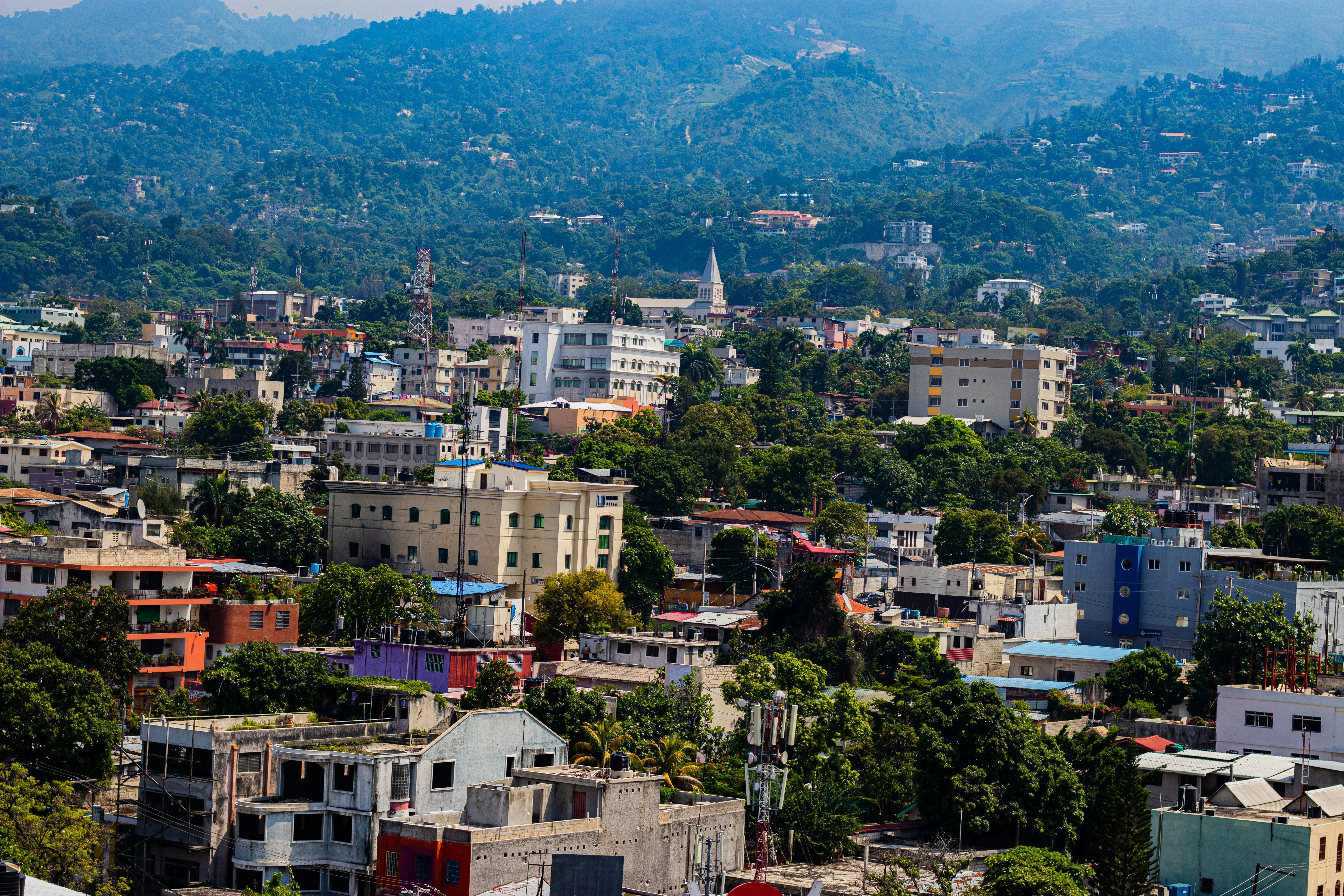
Haiti
Discover a land of resilience and vibrant culture, with pristine beaches, historic fortresses, and an authentic hospitality that captivates the most adventurous travelers.
Quick Facts
- Capital
- Port-au-Prince
- Language
- French
- Haitian Creole
- Currency
- Haitian Gourde and US Dollar
- Best time to visit
- From November to March, during the dry and cooler season.
- Budget per day
- $30 - $120 per day
- Climate
- Warm and humid tropical climate throughout the year, with a marked rainy season and hurricane risk in summer.
- Connectivity
- low
- Easy to obtain at local kiosks and official mobile phone stores.
- Electricity
- Type A/B (110V)
- Local transport
- limited
- Card usage
- more cash is used
- Tipping
- optional
🌎 Introduction
In the heart of the Caribbean archipelago, sharing the geography of the island of Hispaniola, a territory of contrasts unfolds where mountainous relief and tropical light shape the character of its inhabitants. Walking through its towns is to immerse oneself in a mosaic of colors and sounds, where the aroma of coffee from the hills mixes with that of fresh fruits and spices filling the open-air markets. Life moves at its own pace, marked by a deep history reflected both in the architecture of its streets and the vitality of its artistic expressions.
The country’s identity is nurtured by a cultural fusion that becomes tangible in its traditions, from the pulse of the drums in popular festivities to the simplicity of its gastronomy, based on products of the land. In this corner of the map, landscapes vary from fertile valleys and waterfalls hidden among the vegetation to a coastline of serene waters that change hue according to the time of day. It is an environment that shows itself honestly, allowing one to appreciate a reality full of nuances and a cultural heritage that remains alive in every daily gesture.
🛡️ General safety
Traveling to Haiti requires extremely detailed planning and an attitude of constant precaution. The country possesses immense cultural and historical wealth, but it is currently going through a complex security situation that the traveler must be aware of to make informed decisions.
General security level
- The security level in Haiti is considered critical compared to other Caribbean destinations.
- The sociopolitical situation is volatile, meaning conditions can change rapidly, especially in the capital.
- The context for the traveler is one of high alert. It is not a recommended destination for improvisational or backpacking tourism; most safe visits are carried out under the organization of international entities, NGOs, or specialized travel agencies with their own infrastructure.
Crime and common risks
- The most frequent crimes are theft and robbery with force, especially in crowded areas like markets or near banking entities.
- Kidnapping for ransom is a real and relevant risk in certain urban areas, affecting both locals and, occasionally, foreigners.
- Scams in informal transactions are common, so it is recommended to agree on prices beforehand or use official channels.
- It is recommended to avoid carrying high-value objects, jewelry, or large amounts of cash in sight to avoid attracting unnecessary attention.
Safety in cities and tourist areas
- In Port-au-Prince, the capital, safety varies drastically between neighborhoods. Areas like Pétion-Ville are usually safer, while other districts should be avoided entirely.
- Cap-Haïtien, in the north, usually presents a more relaxed and stable atmosphere than the capital, being a common entry point for those seeking to learn about the country’s history (such as the Citadelle Laferrière).
- Labadee is a private enclave managed by cruise lines that has strict private security and is considered a safe bubble for cruise tourists.
- It is advised to avoid any type of demonstration or political gathering, as they can become violent unexpectedly.
Transport safety
- Traditional public transport, known as tap-taps (colorful pickup trucks), is not recommended for tourists due to the lack of safety standards and the risk of robbery.
- The use of private transport organized by trusted hotels or recognized security companies is strongly recommended.
- In Haiti, driving is on the right. However, the state of the roads is irregular and signaling is scarce or non-existent.
- Night driving is highly dangerous due to the lack of lighting, poor road conditions, and the risk of highway robberies.
Natural and climatic risks
- Haiti is located in a zone of high seismic activity, so there is a risk of earthquakes.
- The hurricane and tropical storm season runs from June to November, which can cause flooding and communication disruptions.
- Extreme heat and humidity are constant; it is vital to maintain adequate hydration and protect yourself from the sun to avoid heatstroke.
- It is recommended to always follow the instructions of local authorities and have weather alert applications on your mobile device.
Legislation and local norms
- Laws related to drug possession and trafficking are extremely strict and carry prolonged prison sentences in difficult conditions.
- It is important to ask for permission before photographing local people or official/military facilities, as it may be considered offensive or suspicious.
- Failure to comply with local rules, even administrative ones, can lead to arrests and complex legal processes due to the fragility of the judicial system.
Safety for specific groups
- Solo female travelers: Traveling alone is not recommended. It is preferable to move in organized groups and avoid walking unaccompanied at night.
- LGTBIQ+ travelers: Homosexuality is not illegal, but there is low social acceptance and the country is conservative. Absolute discretion is recommended to avoid situations of hostility or discrimination.
- Children and the elderly: The country has significant deficiencies in health infrastructure. Traveling with these groups is only recommended if you have comprehensive medical insurance that includes air evacuation and you travel to areas with guaranteed services.
Emergencies and assistance
- The general number for the Haitian National Police is 114.
- For medical emergencies and ambulances, 116 is usually used, although the service is limited.
- Consular assistance is essential; always have the contact information of the corresponding embassy at hand.
- In case of an incident, the priority should be personal safety over the recovery of material goods. It is recommended to stay calm and not offer resistance in case of an assault.
Tip: Always maintain a low profile, use transport services previously arranged by your accommodation, and ensure you have high-end travel insurance that covers emergency evacuation before landing in the country.
📝 Entry requirements
To plan a trip to this Caribbean destination, the first fundamental step is to have a valid passport with a minimum validity, usually at least six months from the moment of entry. It is convenient for the document to be in good physical condition to avoid any inconvenience during identification processes at border posts or airports.
On most occasions, visitors traveling for purely tourist reasons do not require a prior visa before starting their journey, provided the planned stay is of short duration. Upon arrival in the territory, it is usually necessary to pay a fee to obtain a tourist card, which allows legal residence in the country for a period that generally extends to a maximum of 90 days.
It is common for migration control authorities to request that the traveler present an exit ticket or return ticket to their place of origin, functioning as a guarantee that the permitted stay time will not be exceeded. Similarly, at some entry points, proof of sufficient economic resources to cover expenses during the visit or proof of an accommodation reservation might be required.
Regarding customs controls, standard restrictions apply to the introduction of fresh products of animal or vegetable origin, in order to protect the local natural environment. Travelers who need to transport personal medication must carry them in their original containers and, preferably, accompanied by a technical description or prescription. The entry of large amounts of cash may be subject to mandatory declaration before customs officials.
From a health perspective, it is strongly recommended that tourists have their vaccination schedule up to date. Although not generally required, a yellow fever vaccination certificate may be requested if the traveler has recently passed through areas where this disease is considered endemic. Having travel medical insurance with broad coverage is an advisable practice to ensure peace of mind throughout the stay.
Below are some additional aspects to consider for entry:
- Possess a travel document with free pages for the corresponding stamps.
- Pay the entry fees at the designated points if required.
- Comply with the rules on the transport of valuables or professional electronic equipment.
- Inform yourself about preventive health recommendations according to the area you plan to visit.
- Always keep a copy of your personal documentation in a safe place during your journey through the country.
🏥 Basic health considerations
Healthcare system and medical assistance If you decide to visit this destination, you must keep in mind that health infrastructure is quite limited compared to international standards. You will find that public hospitals often lack resources and staff, so for any problem, it is most recommended that you turn to private medicine concentrated mainly in the capital. Costs in these private centers are usually high and most require payment in advance or a guarantee of solvency before attending to you. Regarding language, health personnel usually speak French and Haitian Creole, although in higher-level clinics you might find professionals who understand English.
Travel medical insurance Although it is not a legal requirement to cross the border, taking out health insurance is absolutely essential for your peace of mind. Given the precarious local health situation, your policy must be very comprehensive and must cover medical evacuation and repatriation to another country in case of a serious emergency. Ensure the insurance manages payments directly with hospitals, as medical expenses can quickly amount to thousands of euros.
Vaccines There are no mandatory vaccines to enter the country, unless you come from an area where yellow fever is endemic, in which case they will ask for the official certificate. However, to travel safely, it is highly advisable to have your official vaccination schedule up to date. Specialists also usually recommend vaccines against hepatitis A, hepatitis B, and typhoid fever to avoid setbacks during your stay. Ideally, make an appointment at a travel health center a few weeks before departing.
Medication and first-aid kit If you are undergoing a specific treatment, it is fundamental to bring all the necessary medication for the total duration of your trip, as it is difficult to find specific brands or components in local pharmacies. Carry the drugs in their original containers and accompanied by a copy of the medical prescription, preferably translated into French. Additionally, it will be very useful to prepare a first-aid kit with painkillers, gastric protectors, disinfectant, and material for dressing small wounds.
Common health risks Due to the tropical climate, the main risk you will find are diseases transmitted by mosquitoes, such as dengue, Zika, or malaria. For this reason, using a strong repellent and clothing that covers most of the body at dawn and dusk will be your best protection. On the other hand, the intense heat can cause dehydration or heatstroke, so always seek cool places and do not expose yourself to the sun for prolonged periods.
Water, food, and hygiene Water safety is a critical point, so you should only consume bottled water and ensure that the container is correctly sealed when opening it. Avoid ice in drinks and raw vegetables that may have been washed with tap water. Regarding local food, you can try delicious dishes, but always try to ensure they are well-cooked and served hot. It is fundamental to maintain strict hand hygiene, using disinfectant gel frequently, especially before eating.
Health emergencies In case of a serious medical emergency, the number you should dial is 116, although you should know that the public ambulance service is very limited and sometimes non-existent. In a critical situation, it is usually most efficient to contact your insurance assistance service directly so they can coordinate the transfer or go by your own means to one of the reference private centers in Port-au-Prince.
Final practical recommendations To enjoy your experience without surprises, always remember to drink treated water, use repellent constantly, and protect yourself from the sun. Do not forget to carry your insurance contact details with you and act with caution when choosing where to eat. With these basic cares, you can focus on discovering the country’s culture and landscapes safely.
🚌 Transport within the country
Moving through Haitian territory is mainly based on the use of road vehicles, as there is currently no operational railway network. Travelers usually opt for intercity buses that connect the main towns or for domestic flights when they wish to speed up travel between distant cities, such as Port-au-Prince and Cap-Haïtien. On maritime routes, there are ferry services that link the peninsula with some of the nearby islands, providing a necessary alternative for exploring certain coastal areas.
The use of public transport can be a challenge for visitors because signaling is limited and information systems are not always centralized. The purchase of tickets is usually done directly and in person, and the predominant language for these transactions is Haitian Creole or French. There is a notable difference between large cities, where traffic is dense and constant, and rural areas, where the state of the roads can make transit difficult and the frequency of passing vehicles is much lower.
Taxis are a common resource in urban centers and it is recommended to coordinate their use through accommodations or authorized information points. Regarding reliability and comfort, it is important to keep in mind that punctuality is flexible, as many collective transports do not have a fixed schedule and wait until they are full to start the journey. The travel experience is usually simple in terms of infrastructure, so it is advisable to travel with a patient and flexible attitude towards possible changes of plans.
“Tip”: Always prioritize travel during daylight hours to have better visibility conditions on the roads and greater availability of connections.
🤵 Culture and etiquette
The greeting is the basis of social interaction in Haiti and is considered an essential gesture of courtesy and recognition toward the other. When entering a shop, boarding public transport, or starting a conversation, it is fundamental to use formulas like “bonjour” (good morning) or “bonsoir” (good afternoon/evening). Treatment is usually friendly and formal, giving great importance to academic or professional titles and, especially, showing deep respect for elders, who occupy a central place in the family and community hierarchy.
In interpersonal relations, communication is usually expressive and close. Direct eye contact is interpreted as a sign of sincerity and honesty, while a firm handshake is the norm in initial introductions. Although the voice volume can be high in crowded environments like markets, in more formal contexts a measured tone is valued. It is important to remember that personal space may be smaller than in other cultures, but respect for individual privacy must always prevail, especially when trying to take photographs of people or their belongings, which always requires prior consent.
The notion of time in social contexts can be more flexible than in corporate environments, so it is not unusual for social appointments to start with some delay. However, as a visitor, maintaining punctuality is perceived as a sign of consideration toward the host. Regarding the table, Haitian hospitality is very generous. If an invitation to eat at a private home is received, it is a gesture of good manners to accept at least a small portion of what is offered. In catering establishments, leaving a tip of between 10% and 15% is a common and appreciated practice.
Daily life is permeated by a strong spirituality, where various religious beliefs and ancestral traditions coexist. It is recommended to maintain an attitude of maximum discretion and silence when passing near places of worship or during the celebration of ceremonies. Respect for local traditions and the understanding that many cultural aspects are linked to the nation’s history allow the traveler to move with naturalness and harmony in any environment, whether urban or rural.
“Tip”: Before taking a photograph of someone or their sales stall, always request their permission, as for many Haitian citizens, respect for their personal image is a matter of dignity and basic courtesy.
🍛 Typical gastronomy
Haitian cuisine is a reflection of its history and its geographical location, fusing African, French, and Caribbean influences to create its own culinary identity. The use of aromatic herbs and spices is fundamental, with epis being the base of almost all dishes. This mixture of garlic, onion, peppers, and herbs is traditionally prepared in a mortar and provides a characteristic depth of flavor that defines the Haitian table without necessarily resorting to excessive spiciness.
In daily life, rice and legumes constitute the pillar of the diet. It is common for lunch to be the most important meal of the day, a time when families gather to share hearty stews. Local ingredients like plantain, yam, cassava, and sweet potato usually accompany proteins, which range from pork and goat to fresh fish in coastal areas.
Regarding social customs, Haitians value hospitality and it is common for food to be served in generous quantities. In cities, street food stalls play a vital role, offering fried snacks and quick dishes at any time. In restaurants, service is usually slow, inviting the diner to enjoy the atmosphere in a relaxed way. For drinks, in addition to the renowned local coffee, it is very common to find a large variety of natural tropical fruit juices, such as mango, guava, or pineapple.
| Dish | Description | Main ingredients | Where to try it | Tip |
|---|---|---|---|---|
| Griot | Cubes of pork marinated in citrus and fried until crispy. | Pork, sour orange, lime, and spices. | Local restaurants and street stalls throughout the country. | Always accompany it with pikliz (spicy pickled vegetables) to balance the fat. |
| Diri ak Djon Djon | Dark-colored rice with an earthy flavor highly prized in celebrations. | Rice, local black mushrooms (djon djon), and peas. | Traditional food restaurants in Port-au-Prince and Cap-Haïtien. | Its flavor is intense, so it works very well as a side dish for mild meats. |
| Soup Joumou | Pumpkin soup that symbolizes the country’s freedom and independence. | Pumpkin, beef, potatoes, cabbage, and noodles. | Markets and local houses, traditionally on Sundays. | It is a very complete dish that is usually served as a single meal due to its heartiness. |
| Bouillon | A thick and nutritious stew that combines meats and tubers. | Meat (beef or goat), plantain, yam, spinach, and dumplings. | Popular eateries and rural areas. | It is ideal for recovering energy after a day of hiking in nature. |
| Akra | Crispy fritters usually consumed as a snack. | Grated malanga (a local tuber), scallion, and spices. | Street vendors and markets in any locality. | Eat them freshly made to enjoy their crispy outer and soft inner texture. |
📷 Zones and places to visit
Haiti is a destination that offers a profound combination of colonial history, pristine nature, and a vibrant cultural identity manifested in every corner of its geography. The country is divided into regions that present very marked contrasts between the urban life of its main centers and the tranquility of its rural and coastal areas. While exploring its lands, the traveler discovers a heritage that tells the story of the first independent republic of Latin America and the Caribbean, keeping alive traditions that blend African and European influences.
The capital, Port-au-Prince, functions as the nerve center of the country and is the ideal place to understand the complexity of its society. In this city, the Musée du Panthéon National Haïtien (MUPANAH) stands out, where fundamental relics of national history are preserved and a detailed vision of the founding fathers is offered. The environment of the National Palace and surrounding squares allow for observing local architecture and daily dynamism. On the outskirts of the capital, the hills of Pétion-Ville offer a different perspective, with contemporary art galleries and a cultural offering reflecting Haitian modernity.
To the north, the city of Cap-Haïtien presents itself as a mandatory stop for those seeking to immerse themselves in historical legacy. This locality preserves a more measured colonial air and serves as a gateway to the National History Park. Here are monumental architectural remains demonstrating early 19th-century engineering. The city streets invite walking among old buildings and markets where the trade of spices and local products is the protagonist. Near this area, the northern coast beaches offer clear sands and calm waters, ideal for a rest after cultural visits.
On the southern coast, the city of Jacmel is recognized as the cultural and artistic capital of the nation. It is famous for its Victorian-style architecture and its craft workshops, especially the papier-mâché works that decorate its streets. Walking through Jacmel’s historic center allows for enjoying open-air exhibitions and local art shops. Very close by, nature manifests in the set of waterfalls and turquoise water pools known as Bassin Bleu, an enclave surrounded by exuberant vegetation that allows for small hiking routes and enjoying a preserved natural environment.
For those seeking experiences linked to the sea and relaxation, the Côte des Arcadins has a series of beaches stretching along the western coast, providing a space conducive to water activities and enjoyment of the Caribbean coastline. At the southern tip, Île-à-Vache offers an experience of isolation and tranquility, with coastal landscapes that stay away from massive urban development. These natural environments contrast with the mountainous interior zones, where the climate is cooler and landscapes are dominated by subsistence agriculture and dense forests.
The diversity of Haiti is also appreciated in its traditional markets, such as the Iron Market in the capital, which are essential meeting points for social life. In these spaces, interaction with local producers and observation of artisanal trades provide an authentic view of the country’s economy. Additionally, the cultural calendar is marked by celebrations and festivals that transform public squares into stages for music and dance, allowing the visitor to connect with the spiritual and festive essence of its inhabitants through their most deep-rooted artistic manifestations.
“Tip”: You cannot miss visiting the Citadelle Laferrière, the most emblematic site in the country.
✈️ Best season to travel
Haiti has a tropical climate that maintains warm temperatures practically all year round. The most recommended time to visit the country coincides with the dry season, which extends from December to February. During these months, the environment is cooler and more pleasant, facilitating travel through the interior and stays on the coast without the frequent interruption of rainfall.
Throughout the year, the travel experience varies according to rain cycles and humidity. While the winter months are ideal for hiking and exploring historical monuments like the Citadelle Laferrière, the rest of the year offers a more exuberant and green landscape, although it requires more careful planning due to the tropical storm season that usually affects the Caribbean region.
| Season | Months | Typical climate | What to expect | Tourist influx |
|---|---|---|---|---|
| Spring | Mar – May | Warm with increasing rain starting in April. | Landscapes beginning to turn green and cultural celebrations like Rara. | Medium (⭐⭐) |
| Summer | Jun – Aug | Intense heat and high humidity; start of the hurricane season. | Beach activities and patronal festivities in various localities. | Medium - High (⭐⭐) |
| Autumn | Sep – Nov | Rainy and with the possibility of tropical storms. | Very exuberant natural environment and a quieter atmosphere in the cities. | Low (⭐) |
| Winter | Dec – Feb | Dry, sunny, and with more moderate temperatures. | Optimal conditions for beaches, mountain routes, and the celebration of Carnival. | High (⭐⭐⭐) |
🗣️ Basic vocabulary
Learning a few words in Haitian Creole (kreyòl ayisyen) can greatly facilitate interaction with the local population during a trip to Haiti. Although French is an official language and is used in formal contexts, Creole is the language that the vast majority of the population speaks in their daily lives.
Knowing basic greetings and some expressions of courtesy allows you to show respect for the local culture and helps you manage better in everyday situations, such as making purchases in a market or asking for directions. You don’t need to master the grammar; just using these simple terms is enough to make communication more fluid and closer.
- Bonjou: Good morning (used from dawn until noon).
- Bonswa: Good afternoon or good evening (used from noon onwards).
- Mèsi: Thank you.
- Tanpri: Please.
- Eskize m: Excuse me or sorry.
- Orevwa: Goodbye.
- Wi / Non: Yes / No.
- Konbe sa koute?: How much does this cost?