


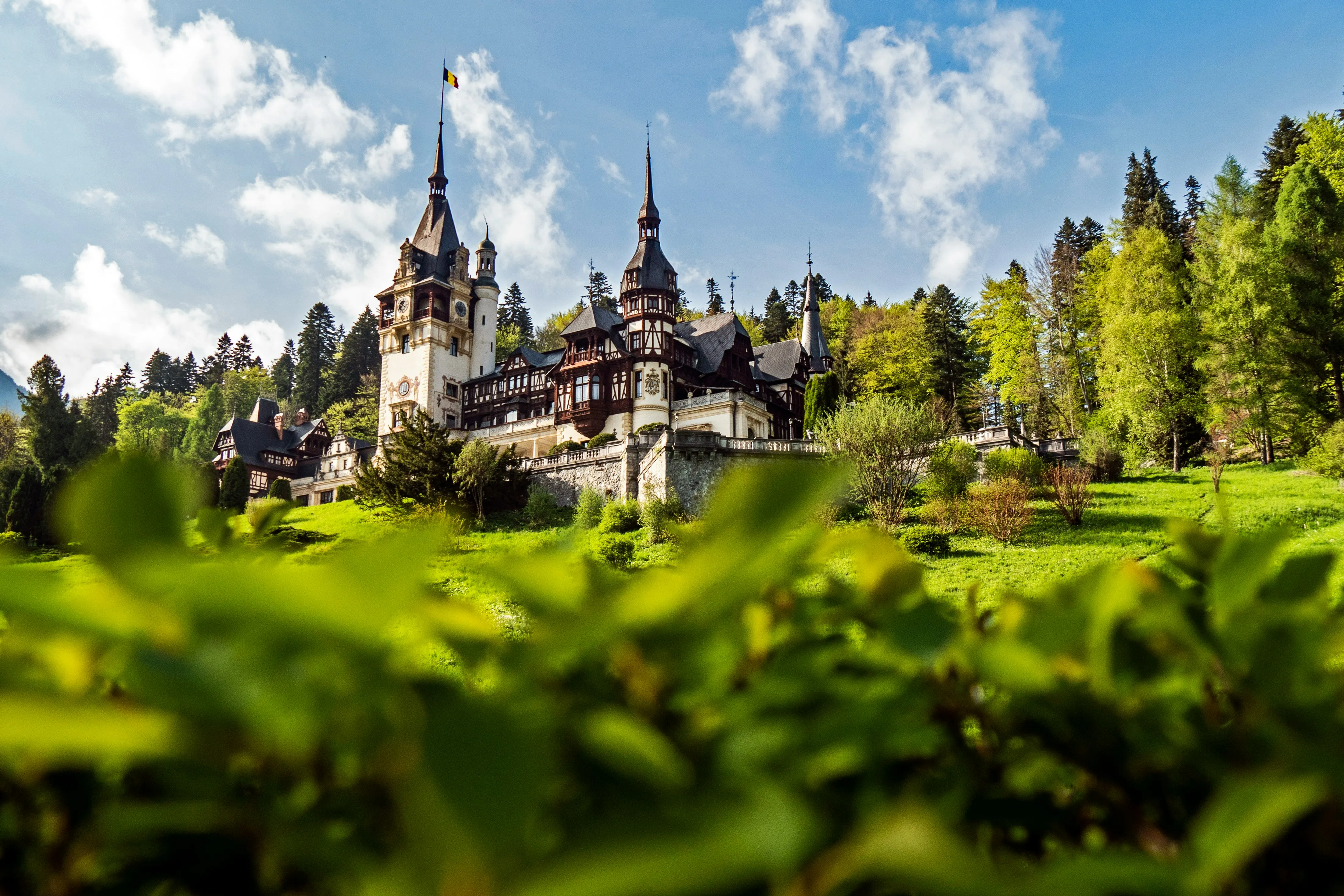
Romania
Discover the beauty of the Carpathians, its medieval castles surrounded by legends, and villages that preserve ancestral traditions in a unique and truly captivating natural setting.
Quick Facts
- Capital
- Bucharest
- Language
- Romanian
- Hungarian, German, and English
- Currency
- Romanian Leu (RON)
- Best time to visit
- From May to September for warm weather or from December to March for skiing.
- Budget per day
- $40 - $110 per day
- Climate
- Temperate continental climate with four distinct seasons, hot summers and cold winters with heavy snowfall in mountain areas.
- Connectivity
- good
- Very easy to obtain at airports, kiosks, and official telephone stores.
- Electricity
- Type C / F (230V)
- Local transport
- acceptable
- Card usage
- acceptable
- Tipping
- optional
🌎 Introduction
Romania presents itself as a corner of Europe where geography seems to have been designed with patience. Through the reliefs of the Carpathians and the leisurely course of the Danube, the landscape unfolds in a succession of deep valleys, wooden villages, and cities that preserve a quiet medieval air. It is a place where the daily rhythm invites one to observe the details, from the robust architecture of its fortified churches to the tranquility of its fields, offering an atmosphere that naturally combines the weight of history and the dynamism of current life.
The country’s identity is also perceived in the change of its seasons and the warmth of its table. Winters usually bring a silence covered in snow that transforms the physiognomy of the villages, while spring and autumn fill the markets with local products and vibrant colors. The gastronomy, based on simple ingredients and recipes shared for generations, reflects a discreet but constant hospitality. Walking through its streets or participating in any of its traditional festivities allows one to understand a culture that values its roots and keeps its essence alive in a close and honest way.
🛡️ General safety
Romania is considered, in general terms, a very safe country for international tourism. Despite any obsolete prejudices that may exist, violent crime rates are notably low, often falling below the average of many Western European capitals. The country offers a hospitable environment where travelers can move freely, provided that standard common sense used in any foreign destination is applied.
The general safety rating is high. Romania is perceived as a quiet destination, with a society that values order and respect toward the visitor. The current context shows a modern and growing country, where tourist areas are well-monitored and serious incidents involving tourists are extremely infrequent.
Crime and common risks
Although the risk of suffering a violent crime is minimal, there are certain minor crimes and situations that require the traveler’s attention:
- Theft and pickpocketing: This is the most common risk, especially in crowded areas such as train stations (especially Gara de Nord in Bucharest), outdoor markets, and crowded public transportation.
- Currency exchange scams: Although it has decreased, it is recommended to avoid changing money on the street. It is preferable to use official exchange houses (called “Exchange”) or banks, always checking the commissions.
- Overcharging for services: Occasionally, some very specific tourist establishments or informal businesses might try to charge higher prices to foreigners.
- Infrequent risks: The scam historically known as “fake police” (people who identify themselves as agents to check wallets and steal money) is almost non-existent today, but it is worth knowing of its existence to avoid any suspicious interaction.
Safety in cities and tourist areas
Romanian urban centers, such as Bucharest, Cluj-Napoca, Brașov, or Sibiu, are safe for walking even during the night. Most tourist neighborhoods have a visible police presence and a vibrant atmosphere.
- Historic centers: These are safe pedestrian areas, although you should watch your backpack or bag on the terraces of very busy restaurants.
- Urban public transport: The Bucharest metro is modern and safe. On buses and trams, it is advisable to wear your backpack in front during peak hours.
- Regional differences: There are no significant safety differences between the regions of the country (Transylvania, Wallachia, or Moldavia), all of them being equally accessible and safe.
Safety in transportation
Moving around Romania is simple, but there are particularities that the traveler should keep in mind for their safety and comfort:
- Taxis and private transport: It is recommended to avoid taxis waiting outside airports or stations if they do not have the price visible on the door. The safest and most transparent option is to use transport applications like Uber, Bolt, or Star Taxi, where the price is fixed in advance.
- Driving: In Romania, you drive on the right. The main roads are in good condition, but secondary ones can be narrow or have poor lighting. It is important to drive with caution in rural areas due to the possible presence of horse-drawn carriages or stray animals.
- Trains: The national railway network (CFR) is safe. If traveling on night trains, it is advisable to secure the compartment from the inside.
Natural and climatic risks
The country presents some geographical factors that can influence travel safety depending on the time of year:
- Seismic activity: Romania is located in an area with moderate seismic activity (especially the Vrancea region). Although strong earthquakes are infrequent, modern buildings comply with strict regulations.
- Extreme weather: In winter, snowfall can be very intense, causing road closures in mountain passes (such as the famous Transfăgărășan). In summer, heatwaves can occur with temperatures exceeding 35-40 degrees in the south of the country.
- Wildlife: If hiking in the Carpathians, remember that Romania has one of the largest populations of brown bears in Europe. It is essential to follow marked routes and never feed the animals.
Local legislation and norms
Compliance with local laws is fundamental to avoid administrative or legal problems during the stay:
- Documentation: It is mandatory to always carry a valid identity document (passport or ID card, depending on origin).
- Substance consumption: Romania has very strict laws against the consumption and possession of drugs. Even small amounts for personal use can lead to prison sentences.
- Photography: It is prohibited to photograph military installations, airports, and, occasionally, the interior of certain government or strategic buildings.
- Religious respect: When visiting monasteries and Orthodox churches, it is recommended to dress modestly (covering shoulders and knees) as a sign of respect toward local customs.
Safety for specific groups
- Women travelers: Romania is a safe destination for women traveling alone. Street harassment is not common, although it is recommended to maintain standard precautions when going out at night in poorly lit areas.
- LGTBIQ+ travelers: Romanian society is generally conservative in this aspect. Although there are no physical safety risks, public displays of affection may attract stares or comments in rural areas. In cities like Bucharest or Cluj, the atmosphere is much more open.
- Children and the elderly: The country is very welcoming to families. Parks are safe and Romanians are usually very considerate toward the elderly and children in transport and public places.
Emergencies and assistance
In case of any incident, the emergency system is centralized and efficient:
- Single emergency number: The phone number for police, ambulance, and fire department is 112.
- Medical care: In large cities, there are high-quality public hospitals and private clinics. It is always recommended to travel with private medical insurance to guarantee fast care without additional costs.
- Procedure for theft: If you suffer a theft, you should go to the nearest police station (“Poliția”) to file a report (“plângere”), which is necessary for any subsequent insurance claim or document processing.
> Tip: When using ATMs, try to use those located inside bank branches and always check that there are no strange devices in the card slot to avoid cloning.
📝 Entry requirements
To organize a trip to Romania, it is essential to ensure that personal documentation is in order. Most international visitors must present a passport with a minimum validity that is usually three to six months beyond the planned date of departure. Depending on current international agreements, some travelers may enter using their national identity document, although the passport is always the most accepted and recommended document at border controls.
Regarding authorizations, a large number of tourists do not require a prior visa for short-term stays. The maximum allowed period to stay in the country under this modality is usually ninety days within a one hundred and eighty-day window. If the traveler intends to prolong their stay or perform non-tourist activities, it is advisable to consult the specific conditions to obtain the corresponding permit before starting the journey.
Upon arrival at airports or land crossings, security personnel may request documents that support the nature of the trip. It is common to be asked to show a return ticket or departure ticket to a third destination, as well as accommodation confirmations. It may also be required to demonstrate possession of sufficient financial funds to cover daily expenses, which can be proven through bank statements, credit cards, or cash.
As for goods and personal items, common customs restrictions apply regarding the transport of alcohol, tobacco, and large sums of cash. Those who must travel with prescription medications must carry the original medical prescription or a report justifying their personal use. Regarding health, there are no mandatory vaccines for entry, although it is recommended to have an updated standard vaccination schedule and to have insurance that guarantees medical coverage during the visit.
The main aspects to consider before arrival are detailed below:
- Possess an identity document or passport with sufficient validity for the duration of the trip.
- Verify if the country of origin is exempt from the tourist visa requirement.
- Respect the maximum stay limit, which is generally 90 days.
- Have proof of transportation for the departure from the country.
- Have proof of financial resources for the entire stay.
- Inquire about limitations on the import of specific products and medications.
- Review recommendations for travel insurance and preventive health.
🏥 Basic health considerations
On your trip through Romania, you will find a health system that combines the public network with a constantly growing private infrastructure. In major cities like Bucharest, Cluj-Napoca, or Timisoara, the standards of private medicine are quite high and feature modern technology. Healthcare staff in these centers usually speak English or French, so it will be easy for you to communicate if you need to explain what is happening. Conversely, in rural areas, facilities are much more basic and staff might not speak foreign languages. The costs of private healthcare are moderate, but they can certainly destabilize your budget if you suffer a serious mishap.
Taking out travel medical insurance is a very smart and totally recommended decision, even if it is not a mandatory requirement to enter the country. It is essential that your policy includes broad coverage for hospitalization and medical transfers. You should also ensure it covers medical repatriation, since in the event of a serious accident in mountain areas, the cost of transport to your place of origin would be extremely high. Having insurance will allow you to go directly to private clinics, where waiting times are much shorter than in the public system.
Regarding vaccines, you will not need any mandatory vaccination to visit Romania. The most practical thing is to verify that you are up to date with your standard vaccination schedule. If your travel plan includes a lot of hiking through forests or deep rural areas during spring or summer, you might consider the tick-borne encephalitis vaccine, but this is something you should consult with your trusted doctor before leaving. For a conventional tourist route, you will have nothing to worry about in this regard.
If you take medication regularly, I advise you to take the necessary amount for the entire trip in its original packaging. It is very important that you travel with the medical prescription or a report signed by your doctor, preferably in English, to avoid any inconvenience at customs controls or if you need to replace a drug at local pharmacies. Pharmacies in cities are very well stocked, and you will find basic hygiene products and common medications there without difficulty.
Regarding environmental risks, you must keep in mind that the climate in Romania can be one of contrasts. In winter, the intense cold requires suitable technical clothing to avoid frostbite or hypothermia problems, while in summer the heat can be stifling, forcing you to monitor hydration. In the mountain areas of the Carpathians, the main health risks are tick bites and possible encounters with wildlife, so walking on marked trails will be your best protection. There are no serious endemic diseases you need to protect yourself from beyond the logical precautions of any trip.
Tap water is generally potable in cities, although due to the age of some pipes or the strong chlorine taste, you will notice that most travelers and locals prefer to drink bottled water. Food hygiene in restaurants is good, and you will be able to try the delicious local gastronomy with peace of mind. At street food stalls, simply apply common sense and choose those places that look busy and clean.
If you find yourself in a medical emergency, the number you should dial is 112. This is the single emergency number and the service is free. Ambulances are prepared to stabilize you and transfer you to the nearest on-call hospital. In cities, the response time is fast, although in remote mountain areas assistance may take longer due to the terrain’s orography.
To make your stay perfect, I recommend carrying a small first-aid kit with basic dressing materials, painkillers, and something for digestion. Don’t forget to always use sunscreen if you’re going to be outdoors and insect repellent if you visit lake or forest areas. Maintaining good hand hygiene, as you would anywhere else, will be enough for you to enjoy everything this country has to offer.
🚌 Transportation within the country
To move through Romanian territory, travelers have various alternatives that effectively connect points of interest. The railway network is one of the most widespread means, allowing the connection of main cities while viewing the natural surroundings. For those destinations where the railway does not reach, buses and minibuses offer wide coverage, reaching almost any corner. In specific urban settings like the capital, the metro is a fundamental tool for moving quickly, while domestic flights facilitate travel between distant regions in a short time.
The use of public transport is generally accessible for tourists. The most important stations usually have clear information boards and simple ticket sales systems, either at physical counters or through automated systems. Although in larger cities it is common to find staff who communicate in other languages, in rural areas, signage and service may be more basic, requiring more foresight from the visitor.
A notable difference is perceived between mobility in large cities and the countryside. In urban centers, the frequency of service is constant and the infrastructures are prepared for a high volume of passengers. In contrast, in more remote areas, transportation is more limited, making a rental car a popular option for exploring natural landscapes and traditional villages with total autonomy. Regarding taxis and similar services, they are abundant in urban areas and represent a practical option for direct trips, always ensuring that the service is properly regulated.
The general feeling regarding reliability and comfort is one of correct functionality. While travel can be somewhat slower than expected due to the country’s orography, long-distance vehicles and trains usually offer an adequate level of comfort. The road network allows access to the main tourist spots, although it should be noted that routes crossing mountain areas directly influence the duration of trips.
Tip: It is advisable to always check the estimated duration of each journey in advance instead of looking only at the distance, as the mountainous terrain usually conditions the speed of travel by road and rail.
👤 Culture and etiquette
Romanian society is characterized by kind and hospitable treatment toward visitors. In initial meetings, the standard greeting consists of a firm handshake while maintaining eye contact. It is common to use courtesy formulas when addressing strangers or older people, prioritizing a respectful tone until invited to a closer treatment. In the public sphere, the voice volume is usually moderate, with discretion and respect for the personal space of others in transportation and establishments being valued.
Invitations to private homes are a sign of the importance given to generosity in the local culture. When entering a home, it is a widespread custom to remove your shoes at the entrance to maintain the cleanliness of the interior. If attending as a guest, it is considered a gesture of courtesy to bring a small gift, such as flowers or sweets. In the case of flowers, tradition suggests giving them in odd numbers, reserving bouquets of even numbers for mourning contexts. At the table, it is common to wait for the host to make an initial toast before starting to eat or drink.
In the hospitality sector, service is usually professional and direct. Although the tip is not always automatically included in the bill, it is a generalized and well-valued practice to leave approximately ten percent of the total amount if the service has been satisfactory. Regarding punctuality, visitors are expected to comply with agreed schedules in professional contexts or official appointments, while in social gatherings there is somewhat greater flexibility, although arriving at the scheduled time is always interpreted as a gesture of consideration.
Spirituality and traditions hold a significant place in daily life, so churches and monasteries should be visited with special deference. Modest clothing is required, ensuring that shoulders and knees are covered before entering. In some more traditional religious centers, it is appreciated if women use a scarf to cover their hair. Inside these spaces, it is essential to maintain absolute silence and avoid the use of cameras if ceremonies are in progress, always showing respect toward the faithful and sacred objects.
Tip: When visiting places of worship, avoid turning your back to the altar when leaving and try not to cross your legs while sitting, as these gestures may be perceived as a lack of consideration toward the solemnity of the religious space.
🍛 Typical gastronomy
The gastronomy of Romania is defined by being comforting, varied, and deeply linked to the land and agricultural cycles. Throughout the centuries, it has integrated influences from its Balkan, Hungarian, German, and Ottoman neighbors, creating its own identity where intense flavors and soft textures predominate. Dishes are usually generous, originally designed to provide energy, and it is common to find mamaliga (a cooked cornmeal similar to polenta) as the main side dish that replaces or complements bread at almost every table.
Soups and broths, known generically as ciorbă, hold a central place in the daily Romanian diet. These dishes are characterized by having a slightly acidic touch, which is usually achieved through the use of fermented ingredients like bran or even lemon juice. It is very common for these soups to be served accompanied by a spoonful of sour cream (smântână) and fresh green chili peppers. Regarding meats, pork is the great protagonist of national cuisine, although lamb, chicken, and beef also have a notable presence, especially when prepared on the grill.
Regarding social customs, lunch is usually the main meal of the day and is generally taken between 13:00 and 15:00 hours. In restaurants, service is leisurely, as lingering at the table is valued and customers are not usually pressured to leave the establishment. Regarding drinks, Romania has a long wine tradition with local varieties of great quality. However, the most traditional thing is to start important meals with a small glass of țuică, a very potent plum brandy served as an aperitif to stimulate digestion.
| Dish | Description | Main Ingredients | Where to try it | Tip |
|---|---|---|---|---|
| Sarmale | Stuffed cabbage or vine leaf rolls, considered the national dish. | Minced meat, rice, onion, and spices, wrapped in fermented cabbage. | Traditional restaurants throughout the country, especially in Bucharest. | Order them accompanied by mamaliga and a bit of sour cream on top. |
| Mici | Small skinless grilled minced meat rolls. | Mixture of pork, beef, and lamb with garlic and baking soda. | Outdoor market stalls and summer terraces. | They are best enjoyed with a generous portion of mustard and fresh bread. |
| Ciorbă de burtă | One of the most popular soups, appreciated for its creamy texture. | Beef tripe, sour cream, garlic, egg, and vinegar. | Home cooking restaurants in any city in Romania. | Add an extra dash of vinegar with garlic if you like strong flavors. |
| Salată de vinete | A light and smoky appetizer very common in summer months. | Eggplants roasted over a flame, chopped and mixed with oil or mayonnaise. | Starters in restaurants in Transylvania and the south of the country. | Try it on a slice of crusty bread with fresh tomato slices. |
| Papanăși | Traditional dessert consisting of a kind of fried doughnuts. | Cow’s fresh cheese, flour, eggs, blueberry jam, and sour cream. | Dessert menus in mountain restaurants or tourist areas. | Keep in mind that the portion is usually very hearty and perfect for sharing. |
📷 Areas and places to visit
Romania is a country that stands out for its remarkable diversity, offering the traveler a balanced combination of historical heritage, pristine nature, and dynamic urban life. The gateway is usually its capital, Bucharest, a city that clearly shows the contrasts between its stately past, formerly known as Little Paris, and the monumental architecture of more recent eras. In its streets, neoclassical style buildings coexist with the imposing Palace of the Parliament, one of the largest administrative buildings in the world. Additionally, walking through the historic center of Lipscani allows one to discover small Orthodox churches and an animated cultural life, while the National Village Museum offers an open-air ethnographic view of the country’s rural architecture.
Toward the center of the nation lies the region of Transylvania, surrounded by the arc of the Carpathian Mountains. This area is famous for its well-preserved medieval cities, such as Brașov, where the Black Church and its central square stand out, or Sibiu, with its characteristic roofs with “eyes” and its rich offering of museums and art galleries. One cannot forget the citadel of Sighișoara, which remains one of the few walled enclosures still inhabited in Europe. In the surroundings of these cities, the landscape is dotted with fortified churches and royal residences of great architectural value, among which Bran Castle and Peleș Castle stand out, the latter located in the town of Sinaia and surrounded by dense forests.
The north of the country houses the regions of Maramureș and Bucovina, where time seems to pass at another pace. In Maramureș, tradition is manifested in the elaborate wooden churches with high bell towers and in the sculpted gates of rural homes. For its part, Bucovina is internationally recognized for its painted monasteries, whose exterior facades are decorated with vibrant frescoes that have resisted the passage of centuries. These areas are ideal for those seeking a connection with traditional agricultural life, local markets, and authentic folklore, away from the most crowded circuits.
For outdoor enthusiasts, Romania’s natural landscapes offer multiple possibilities. The Carpathian range has extensive networks of trails that cross national parks such as Retezat or Piatra Craiului, where it is possible to observe one of the largest wildlife populations on the continent. Likewise, road routes such as the Transfăgărășan provide panoramic high-mountain views. In the far east, the Danube Delta presents itself as a unique biodiversity sanctuary, where boat excursions can be made to observe migratory birds and learn about the lifestyle of fishing communities in an environment of canals and lagoons.
Finally, the coastal strip of the Black Sea offers a different atmosphere, focused on relaxation and summer leisure. The port city of Constanza combines its economic importance with Roman archaeological remains and a historic promenade. During the warmer months, nearby beaches become a meeting point for visitors looking to enjoy the sun and music festivals. This variety of environments ensures that each region contributes a different perspective, from the solemnity of ancient temples to the energy of modern cities.
Tip: You cannot miss visiting Peleș Castle, the most emblematic place in the country.
✈️ Best season to travel
Romania has a temperate continental climate that clearly marks the four seasons of the year, offering very diverse experiences depending on the time of the visit. The choice of the ideal date depends on the traveler’s interests, whether they prefer to tour the medieval cities of Transylvania with mild temperatures or enjoy alpine landscapes covered in snow during the coldest months.
In general, the periods between May and June, as well as September and October, are considered very balanced times to explore the country. During these months, the weather is pleasant for outdoor activities and visiting monasteries or castles without the summer crowds or extreme winter temperatures. Nevertheless, each season transforms the Romanian landscape in a unique way, from the awakening of nature in the Danube Delta to the festive atmosphere of the winter markets.
| Season | Months | Typical climate | What to expect | Tourist influx |
|---|---|---|---|---|
| Spring | Mar – May | Mild temperatures that gradually rise; moderate rains. | Blooming landscapes, bird watching in the Delta, and vibrant nature. | Medium ⭐⭐ |
| Summer | Jun – Aug | Warm and sunny weather, with hot days in the plains and on the coast. | Outdoor festivals, hiking routes in the Carpathians, and coastal tourism. | High ⭐⭐⭐ |
| Autumn | Sep – Nov | Cool and mostly dry, with a notable thermal drop toward November. | Forest landscapes in ochre tones, harvest celebrations, and a quiet atmosphere. | Medium ⭐⭐ |
| Winter | Dec – Feb | Intense cold with regular snow presence, especially in mountain areas. | Winter sports, year-end traditions, and illuminated cities. | Low / Medium ⭐ |
🗣️ Basic vocabulary
Although it is common to find people who speak English in the more touristy areas and large cities of Romania, knowing some basic words and expressions in Romanian will help you move around more easily. As a language of Latin origin, you will see that many words look familiar, which greatly facilitates understanding and quick learning for the trip.
Mastering these simple courtesy formulas is very useful for interacting in markets, restaurants, or transport. Romanians usually value positively that visitors make the effort to greet or say thank you in their language, which usually encourages a closer and more fluid treatment during your visits.
- Bună: Hello.
- Vă rog: Please.
- Mulțumesc: Thank you.
- Cu plăcere: You’re welcome.
- Da / Nu: Yes / No.
- Scuzați-mă: Excuse me or sorry (useful for passing through or getting a waiter’s attention).
- Cât costă?: How much does it cost?
- Nota, vă rog: The bill, please