


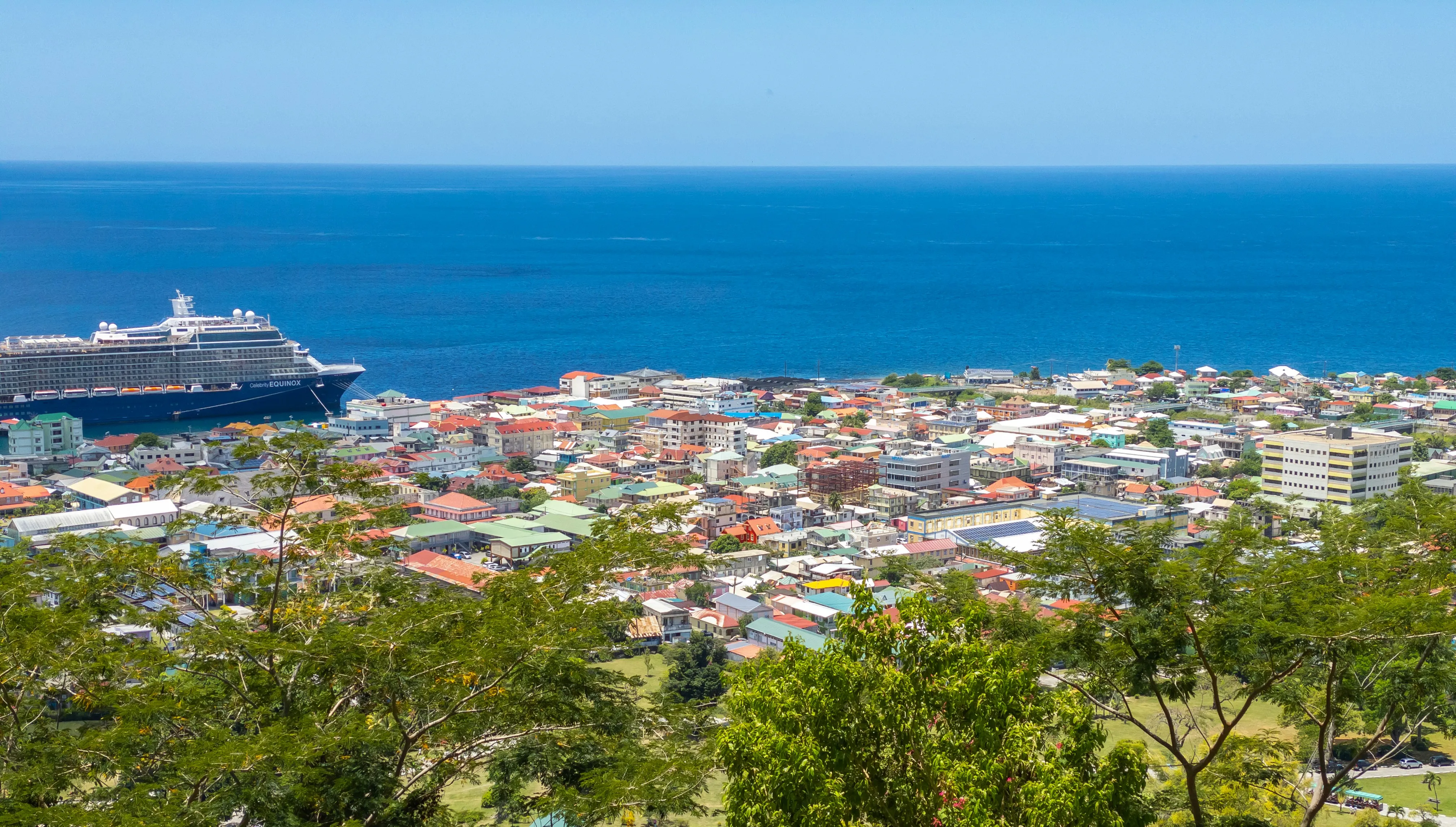
Dominica
Explore the untamed nature of this Caribbean island known for its lush tropical rainforests, natural hot springs, spectacular waterfalls, and unforgettable hiking trails.
Quick Facts
- Capital
- Roseau
- Language
- English
- Antillean Creole (Kwéyòl)
- Currency
- Eastern Caribbean Dollar (XCD)
- Best time to visit
- From February to April, during the driest and most pleasant season.
- Budget per day
- $70 - $160 per day
- Climate
- Humid tropical climate with warm temperatures year-round and frequent rainfall that maintains its lush vegetation.
- Connectivity
- medium
- It is easy to purchase local SIM cards in Roseau and other urban centers.
- Electricity
- Type G (230V)
- Local transport
- limited
- Card usage
- more cash is used
- Tipping
- optional
🌎 Introduction
In the heart of the Caribbean, where the green of the mountains seems to merge with the sea, there is a corner that preserves a quiet and authentic essence. Dominica unfolds through volcanic reliefs carpeted by dense jungles, where the murmur of rivers and the freshness of waterfalls set the pace of daily life. It is an environment where nature imposes itself with simplicity, away from large crowds and focused on the murmur of the earth and the exuberance of its vegetation.
The island’s identity is perceived in its small communities, where the legacy of the Kalinago people coexists with a vibrant Creole culture that manifests in music and a gastronomy rich in products from the land. Walking through its markets allows you to encounter the aroma of spices and cocoa, while local festivities reflect a mix of rhythms that tell the story of its people. Daily life passes in simple scenes, with neighbors sharing chats under the shade of fruit trees, projecting a slow and close way of living.
Throughout the year, the tropical climate bathes the landscapes in a warm light that highlights the nuances of the jungle, especially after the brief rains that renew the environment. The trails that cross the interior and the natural thermal springs are part of a setting that has managed to maintain its original character. In this corner of the archipelago, time seems to follow its own rhythm, allowing for the appreciation of small details and the natural hospitality of those who inhabit this island of contrasts.
🛡️ General safety
Dominica, known as the “Nature Island,” is considered one of the safest and calmest destinations in the Caribbean region. The general atmosphere is one of hospitality and calm, far from the hustle and bustle of the large tourist resorts on other neighboring islands.
- The general safety level is high. The country is characterized by a slow pace of life and a very close-knit community where visitors are usually well-received.
- Compared to other international destinations, crime rates are notably low, allowing travelers to enjoy its natural landscapes with a sense of freedom difficult to find elsewhere.
- The context for the traveler is that of an island focused on ecotourism, where the greatest challenges are usually related to the terrain’s topography rather than citizen safety.
Crime and common risks
Although serious crimes against tourists are extremely rare, it is advisable not to let your guard down completely and to apply basic common sense.
- The most common incidents are usually petty theft or neglect of personal items in crowded areas or solitary beaches.
- Isolated cases of theft have been reported in rental vehicles parked at the start of hiking trails or near popular waterfalls. It is recommended not to leave valuables in sight inside the car.
- Scams are not common, but it is always advisable to agree on prices for unregulated services before they are performed to avoid misunderstandings.
- There are infrequent risks, such as incidents on private boats or yachts anchored in isolated areas, so it is recommended to use designated anchoring areas.
Safety in cities and tourist areas
Dominica’s urban centers are small and manageable, which facilitates a safe stay.
- In Roseau (the capital) and Portsmouth, safety is good during the day. These are cities where you can walk peacefully through their main streets and markets.
- After dark, it is advisable to stay in well-lit areas and avoid solitary alleys or sparsely populated peripheral areas, a standard precaution in any city in the world.
- Public transport, mainly composed of private minibuses, is safe and an economical way to mix with the local population, although it can be somewhat chaotic during peak hours.
- There are no marked safety differences between regions; both the north and the south of the island maintain very similar crime levels.
Transport safety
Moving around the island requires attention, mainly due to Dominica’s geographical characteristics.
- In Dominica, you drive on the left, a heritage of its colonial past that travelers from right-hand drive countries must keep well in mind.
- The roads are extremely narrow, winding, and have steep slopes. It is common to find potholes, a lack of signage in rural areas, or loose animals on the road.
- If you opt for car rental, a four-wheel-drive (4x4) vehicle is recommended if you plan to explore mountain areas or secondary roads.
- Taxis are safe and reliable. It is essential to verify that the vehicle has an official license plate and, if it does not have a meter, to agree on the fare before starting the journey.
- The use of seat belts is mandatory, and laws against driving under the influence of alcohol are strict.
Natural and climate risks
Given its location and geology, Dominica presents certain natural risks that travelers should be aware of when planning their visit.
- The hurricane season runs from June to November. During these months, the risk of tropical storms and hurricanes increases significantly, which can affect flights and safety on the island.
- Due to its volcanic topography and heavy rains, there is a risk of landslides and flash floods, especially in hiking areas and mountain roads after intense storms.
- Heat and humidity can be extreme. It is vital to stay hydrated and protect yourself from solar radiation throughout the year.
- Dominica has latent volcanic activity (such as the Boiling Lake). These types of excursions should always be done with certified guides, and safety signs must be followed.
Legislation and local norms
Dominica maintains some regulations that may surprise travelers and whose non-compliance carries penalties.
- It is strictly forbidden to wear camouflage print clothing. This rule applies even to children and also affects accessories such as backpacks or hats; its use is reserved exclusively for security forces.
- Laws related to the possession and consumption of drugs are very severe, with penalties including high fines and prison sentences.
- Respect for the environment is legislated; damaging coral reefs or removing protected species from national parks can lead to significant sanctions.
- It is advisable to ask permission before photographing local residents, as privacy is highly valued in Dominican culture.
Safety for specific groups
- Female travelers: Dominica is a safe destination for women traveling alone. However, unwanted comments or attention may be experienced in urban areas. It is recommended to act with the same precaution as in any other international destination.
- LGTBIQ+ travelers: Dominica’s society is conservative, and same-sex relationships are technically illegal under old laws, although they are rarely applied to tourists. Discretion is recommended, and public displays of affection should be avoided to prevent uncomfortable situations or possible hostilities.
- Traveling with children and the elderly: The country is welcoming for families, although not all infrastructure is adapted. Many hiking trails are demanding and may not be suitable for very young children or people with reduced mobility.
Emergencies and assistance
In case of needing help, Dominica has functional basic emergency services.
- The main emergency number for Police, Ambulance, and Fire is 999.
- The main hospital is located in Roseau, with smaller clinics distributed across the island. For serious medical emergencies, air evacuation to nearby islands with more advanced infrastructure may be necessary, so having comprehensive travel insurance is essential.
- In case of loss of documents, you must go to the nearest police station to file a report and then contact the corresponding consular representation.
Tip: Always hire a certified official guide for complex hiking trails, such as the Boiling Lake; the terrain changes quickly and signage can be confusing in the rainforest.
📝 Entry requirements
To take a leisure trip to Dominica, the main document required is a valid passport with sufficient residual validity, and it is recommended that this be at least six months from the time of landing on the island. Generally, travelers moving purely for tourist reasons do not usually require a prior visa before starting their journey, as authorities typically grant a stay permit directly at border control points.
The maximum duration of stay allowed for international visitors usually varies depending on the traveler’s profile, although a period ranging from twenty-one days to three months is usually authorized. It is common that, upon arrival at the airport or port, immigration personnel request the presentation of a departure ticket from the country or for continuation to a third destination, as well as confirmation of an accommodation reservation or proof demonstrating the availability of sufficient financial funds to cover expenses during the stay in the territory.
Regarding controls at entry points, procedures are usually slow and focused on visitor safety. Customs restrictions are strict regarding the import of organic products, so the entry of fruits, plants, or fresh food is usually limited to protect the local ecosystem. As for personal medications, it is advisable to carry them in their original packaging accompanied by a description or medical prescription to facilitate identification during routine baggage inspections.
From a health point of view, there are usually no requirements for specific vaccinations for the general entry of tourists, except in specific cases where the traveler comes from areas with a risk of transmission of certain tropical diseases, such as yellow fever. In these situations, the corresponding international certificate could be requested. It is suggested that all visitors keep their usual vaccination schedule updated and consider taking out travel insurance that covers possible contingencies during their stay on the island.
- Main documentation: Passport with a recommended minimum validity of six months.
- Tourist visa: Generally obtained on arrival for short stays.
- Length of stay: A stay of up to 90 days is usually allowed depending on the case.
- Exit requirements: Necessity to show a return ticket or one to another country.
- Financial solvency: Possible request for proof of financial means for the trip.
- Customs controls: Limitations on fresh products, vegetables, and undeclared commercial items.
- Health and prevention: Recommendation to travel with medical insurance and verify vaccinations according to the flight’s origin.
🏥 Basic health considerations
When preparing for your trip to Dominica, it is important to know that you are headed to an incredible natural environment but with somewhat limited medical infrastructure. You will find the main hospital in the capital, Roseau, and some smaller health centers scattered across the island. You will see that care for tourists is usually channeled through private healthcare, which offers standards closer to those you may be used to, albeit at a considerable price. Healthcare staff will usually communicate with you in English, which is the country’s official language, making it easy to understand medical instructions if you speak this language.
Taking out travel medical insurance is not mandatory to enter the country, but it is something you should consider an absolute priority. The main reason is that, in the event of any serious health problem or accident requiring complex intervention, it is very likely that you will need a medical evacuation to neighboring islands with better facilities or even to your home country. Ensure your policy includes broad coverage for hospitalization and, above all, for medical repatriation, as the costs of such a transfer are extremely high.
Regarding vaccines, you will find no mandatory vaccination requirements to enter Dominica, unless you come from a country where yellow fever is endemic, in which case they will ask for the international certificate of vaccination. For all other travelers, it is most recommended to have the standard vaccination schedule up to date. We advise you to check that you have updated doses against hepatitis A, hepatitis B, and tetanus-diphtheria before starting your adventure.
If you take any personal medication regularly, it is best to bring it with you from home in its original packaging with its corresponding label. It is very useful to keep a copy of the medical prescription translated into English, especially if it involves drugs that may contain controlled substances. On the island, you will find pharmacies, but they may not have the specific brand you consume or the stock of certain products may be limited, so bringing sufficient supplies for your entire stay will save you complications.
The most common health risks you will encounter are related to the tropical environment. The heat and humidity can take a toll if you don’t hydrate well, so you should drink fluids constantly. Insects, especially mosquitoes, are primarily responsible for transmitting diseases such as dengue or zika, which have a seasonal presence in the Caribbean. You can protect yourself by using appropriate repellents, wearing clothes that cover most of your body at sunset, and sleeping in places with mosquito nets. There is no risk of malaria on the island, which provides added peace of mind for your walks in the jungle.
Regarding consumption, tap water in Dominica is generally considered potable in urban areas and Roseau, as it comes from mountain springs and receives treatment. However, if you have a sensitive stomach or are in more rural areas, you will find it preferable to opt for bottled water to avoid intestinal discomfort. Food hygiene is usually good, and you can try local food with confidence, always applying the common sense of choosing stalls where you see a good turnover of products and general cleanliness.
If you find yourself in a medical emergency, the telephone number to dial is 999. This service coordinates ambulance and police assistance. You should keep in mind that, due to the island’s rugged topography and the condition of some roads, response times may be slower than you would expect in a large city, so prevention is always your best ally during hiking or diving excursions.
As final practical recommendations, we suggest you pack a basic first-aid kit with disinfectant, bandages, painkillers, and stomach protectors. Do not forget to use high-factor sunscreen throughout the day, even if it is cloudy, as solar radiation at these latitudes is very intense. If you follow these tips and move with caution on the trails, you will be able to enjoy the island’s wild nature with total safety.
🚌 Transport within the country
The most common way to get around Dominica is through its network of minibuses. These vehicles cover the main routes connecting the capital with villages and points of interest across the coast and the interior. There is no railway network or domestic flights due to the island’s dimensions, so road transport is the central axis of mobility for any visitor wishing to explore the territory.
Using public transport is relatively simple for the traveler, as communication is fluid since English is the official language. Although there is no complex system of signage or advance ticket purchase, drivers are usually informative and help identify the correct stops. It is important to keep in mind that in rural areas, the frequency is much lower than in urban centers, and the service tends to decrease significantly at the end of the day.
Taxis represent a common alternative for specific journeys or when looking for greater comfort after arriving in the country. These vehicles are easy to locate at strategic points and accommodation areas. On the other hand, car rental is a frequent option for those seeking independence, although it requires adapting to a road infrastructure of mountainous topography, with roads that are usually narrow and winding.
In general terms, the transport experience on the island is functional but lacks the rigidity of metropolitan systems found elsewhere. The reliability of journeys often depends on the passenger flow, as many vehicles wait to fill their seats before departing from the main stops. The pace of travel is slow, so it is recommended to approach travel with a flexible attitude and without rush.
Tip: It is recommended to always confirm the final destination with the driver before boarding the vehicle to ensure that the route passes through the exact desired point.
🤵 Culture and etiquette
Dominica is distinguished by a coexistence based on courtesy and mutual recognition in public spaces. It is a deeply rooted and valued social norm to greet people you encounter, whether entering an establishment, walking on rural trails, or passing each other in small urban centers. Greetings are usually verbal, using traditional formulas according to the time of day, and treatment tends to be friendly but maintaining a certain initial formality until greater trust is established between the parties.
In daily behavior, discretion and respect for the environment are fundamental. Although the island’s atmosphere is relaxed, visitors are expected to reserve the use of swimwear exclusively for beaches, rivers, and pool areas. When moving through cities, villages, or entering shops and public buildings, it is appropriate to dress casually but fully. The volume of voice in conversations is usually moderate, and physical contact is generally reserved during first encounters, prioritizing respect for personal space.
The pace of life on the island can be slower than in large international urban centers, which translates into a flexible attitude towards punctuality in informal social contexts. However, in the realm of services, such as scheduled excursions, transport, or restaurant reservations, punctuality is appreciated and expected. Showing patience and a receptive attitude toward local timing allows for a more harmonious integration into the daily dynamics of Dominican society.
In the realm of gastronomy and social gatherings, customs are simple and hospitable. It is common to leave a tip of between 10% and 15% in restaurants if the service has not been previously included in the bill. If visiting areas with a specific cultural identity, such as the Kalinago Territory, it is essential to show special sensitivity toward their traditions, local authorities, and ways of life, always asking permission before taking photographs of people or private property.
The spiritual sphere and places of worship hold significant importance in the community’s life. When visiting churches or other religious centers, it is recommended to do so with modest clothing (shoulders and knees covered) and to maintain quiet and respectful behavior, especially if ceremonies or religious services are taking place. Respect for community hierarchies and local traditional values facilitates a fluid and enriching cultural exchange.
“Tip”: The initial greeting is the fundamental piece of etiquette in Dominica; omitting a “good morning” or “good afternoon” before asking a question or requesting a service can be perceived as a lack of basic courtesy and hinder communication.
🍛 Typical gastronomy
Dominican cuisine is a reflection of its rich history, where Creole, African, and European influences intertwine. It is deeply based on the products offered by the land and the sea, which has earned it the nickname “the nature island.” Local ingredients, popularly known as “provisions,” include tubers such as yam, dasheen (taro), and cassava, which accompany almost every meal and provide a nutritious and comforting base to the daily diet of its inhabitants.
Flavors are characterized by the generous use of fresh spices and aromatic herbs, such as thyme, ginger, and cloves, which are combined with local peppers to create intense stews. Being an island, fresh fish is a fundamental pillar; it is common to find the catch of the day such as tuna, snapper, or mahi-mahi, often prepared grilled or in stews enriched with coconut milk. The use of breadfruit also stands out, a versatile piece consumed roasted, fried, or boiled as a main side dish.
Regarding eating habits, lunch is usually the most important meal of the day. In rural and coastal areas, it is common to find small family-run establishments where the atmosphere is relaxed and hospitable. Drinks are usually natural, highlighting freshly squeezed tropical fruit juices and traditional “bush tea” or herbal tea, which is often consumed in the morning. Local rum also has a significant presence in social life, frequently served in the form of fruit punches with spices.
Etiquette in restaurants is simple and unpretentious. Although in urban centers hours are broader, in smaller villages it is advisable to adapt to the solar light cycles, as many local places close after lunch service. It is common for service to be slow, inviting the traveler to enjoy the meal without rush, in tune with the quiet rhythm that characterizes the island.
| Dish | Description | Main Ingredients | Where to try it | Tip |
|---|---|---|---|---|
| Callaloo | Thick and nutritious soup considered the national dish. | Dasheen (taro) leaves, okra, smoked meats, and coconut milk. | Local restaurants in Roseau and coastal stalls. | Try it hot to better appreciate the contrast of spices. |
| Saltfish and Bakes | Traditional breakfast consisting of salted fish and fried bread. | Salted cod, peppers, onion, and fried flour dough. | Local markets and street food stalls in the morning. | It is the ideal option to get energy before a hiking trail. |
| Crab Backs | Stuffed and baked crab shells. | Land crab meat, breadcrumbs, chives, and Creole seasoning. | Seafood restaurants on the west coast. | It is a very popular dish; it is best to ask for the daily availability. |
| Fish Water | Light but intensely seasoned fish broth. | Fish of the day, green banana, tubers, and hot pepper. | Small home-cooking places in fishing villages. | Usually served as a single dish because of its filling and nutritious nature. |
| Agouti | Traditional bushmeat stew from the island. | Agouti meat (local rodent), curry, garlic, and fresh herbs. | Traditional cuisine restaurants in the interior of the island. | Accompany it with rice and peas to balance its intense flavor. |
📷 Areas and places to visit
Roseau, the country’s capital, is the natural starting point to get to know the island’s urban life. Its streets maintain a physiognomy of French colonial architecture, with wooden buildings and detailed balconies that coexist with the bustle of administrative activity. In the central heart is the Old Market, a historic space that in the past had various functions and today serves as a market for crafts and local products. Nearby, the Botanical Garden offers a space of calm where you can observe native plant species and some representative birds of the region, besides being a regular meeting place for residents.
The natural heart of the island is concentrated in the Morne Trois Pitons National Park, a UNESCO protected area that stands out for its volcanic origin and lush tropical forest. In this area, points of great interest are located, such as the Emerald Pool, a natural cavity fed by a waterfall where it is possible to bathe in an environment surrounded by ferns and dense vegetation. Also notable are the Trafalgar Falls, two waterfalls of different flows known as “the father” and “the mother,” accessible through conditioned trails that allow for the appreciation of the magnitude of the mountainous landscape without excessive difficulty.
For those looking for an experience more oriented toward history and the maritime environment, the north of the island houses the town of Portsmouth. Nearby is the Cabrits National Park, located on a peninsula that separates two bays. This park protects both marine ecosystems and the historic Fort Shirley, an 18th-century military garrison carefully restored that allows for an understanding of the island’s strategic importance in past centuries. Near Portsmouth, you can also take a trip along the Indian River, a river of calm waters and mangroves that is navigated in rowboats to preserve the ecosystem and the tranquility of the environment.
The cultural side has its maximum exponent in the Kalinago Territory, located on the east coast. It is one of the few areas in the Caribbean where a community directly descended from pre-Columbian indigenous peoples resides. Visiting this region allows you to learn about their ancestral traditions, basketry making, and the construction of traditional canoes, offering a different perspective from the more urbanized areas. The landscape in this part of the island is more rugged and less oriented toward mass tourism, favoring a more authentic immersion in Dominican cultural heritage.
In the far south, the geography becomes spectacular in the Scott’s Head area and Soufrière bay. This small fishing village sits on an ancient submerged volcanic crater, creating exceptional conditions for diving and snorkeling. The waters here are deep and crystal clear, highlighting places like Champagne Reef, named for the constant bubbles that rise from volcanic vents beneath the seabed. The Scott’s Head cape offers, after a brief walk, a panoramic view where you can see the separation between the Caribbean Sea and the Atlantic Ocean.
The interior of the island is crisscrossed by the Waitukubuli National Trail, a network of trails that crosses the country from south to north. This route is ideal for observing the transition between different microclimates and visiting small rural villages that maintain a slow pace of life, based mainly on agriculture. The contrast between these mountain areas and the coastal centers defines the identity of a territory that has prioritized the conservation of its natural environment over the development of large infrastructures.
Tip: You cannot miss visiting the Boiling Lake, the most emblematic place in the country.
✈️ Best time to travel
Dominica is a destination where nature sets the pace of the visit. The climate is tropical throughout the year, with warm temperatures that fluctuate little between seasons, although the main difference lies in the frequency of rainfall and the risk of tropical storms. The months coinciding with the end of the year and spring are usually the most sought after by those who prefer to enjoy the trails and mountain routes with a less humid and more stable atmosphere.
During the drier months, the terrain allows for easier exploration of the national parks, while the rainy season highlights the lush greenery of the island and the flow of its numerous waterfalls. The choice of date will depend on whether priority is given to whale watching, hiking, or participating in the cultural festivities that define the identity of this Caribbean island.
| Season | Months | Typical Climate | What to Expect | Tourist Influx |
|---|---|---|---|---|
| Spring | Mar – May | Warm and relatively dry, with constant breezes. | Optimal conditions for hiking and diving. Flowering of tropical species. | ⭐⭐ (Medium) |
| Summer | Jun – Aug | High temperatures and increased humidity and rain. | Very green and lush landscapes. Start of the sea turtle nesting season. | ⭐⭐ (Medium) |
| Autumn | Sep – Nov | Frequent rain and risk of tropical storms. | Independence celebrations and Creole music festivals. Quiet atmosphere. | ⭐ (Low) |
| Winter | Dec – Feb | Mild temperatures and minimal precipitation. | Peak season for humpback whale watching and Carnival celebration. | ⭐⭐⭐ (High) |
🗣️ Basic vocabulary
Although English is the official language of Dominica, a large part of the local population regularly uses Antillean Creole (Kwéyòl). Knowing some basic expressions in this language not only facilitates communication in markets or rural areas but is also a gesture of courtesy that helps create a closer atmosphere with residents.
It is not necessary to delve deep into the grammar, but using simple greetings or words of thanks will allow you to navigate daily interactions more smoothly during your stay on the island.
- Bonjou: Good morning or general morning greeting.
- Bonswa: Good afternoon or good evening.
- Sa ka fèt?: How are you? or How is everything going?
- Mèsi: Thank you.
- Souplé: Please.
- Ouvwa: Goodbye or see you later.
- Doudou: A very common term of endearment, equivalent to “sweetheart” or “dear”.