


Kiribati
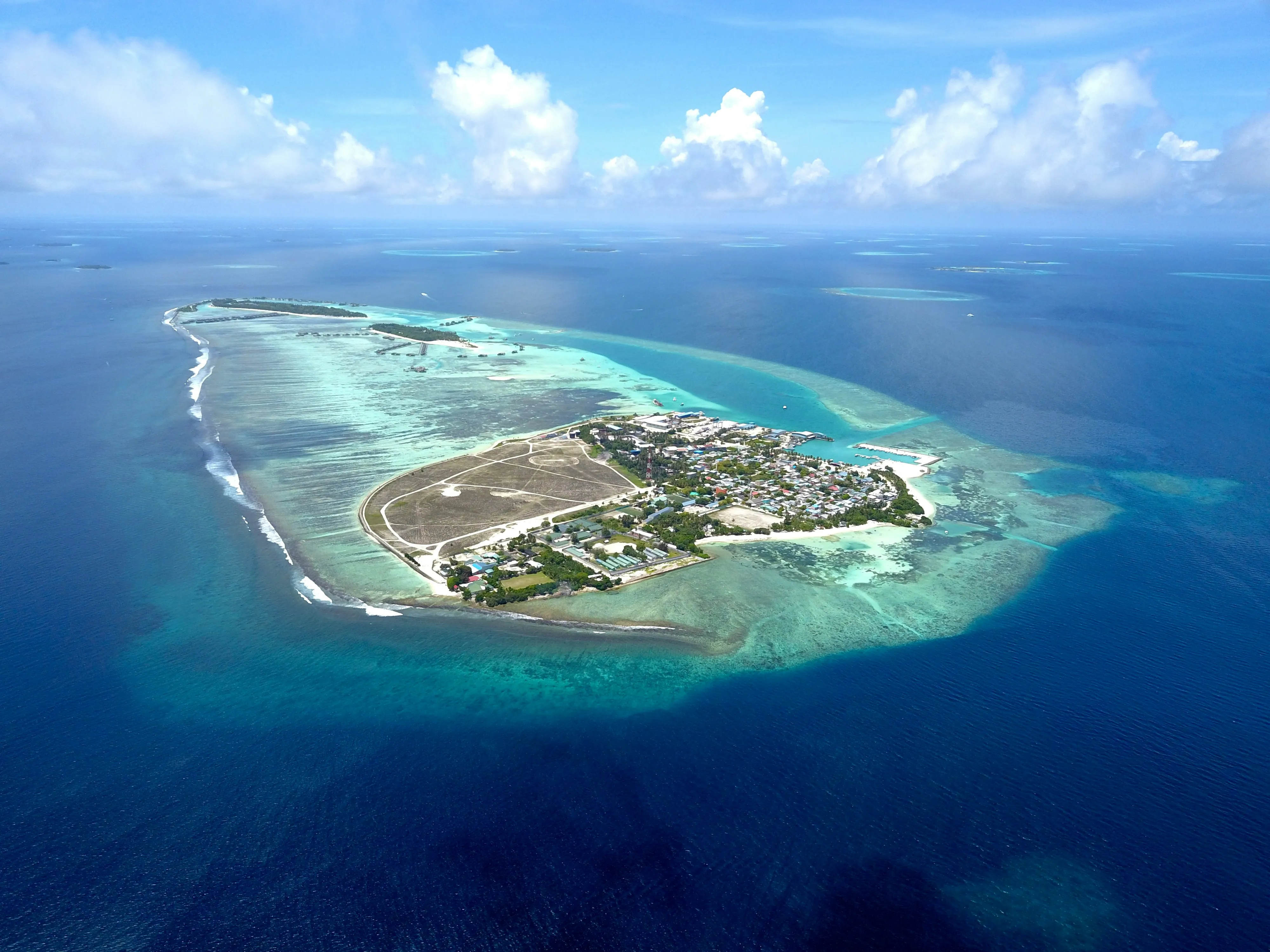
Kiribati is a remote archipelago in the Pacific that offers pristine beaches, a fascinating culture, unique coral atolls, and absolute tranquility for adventurous travelers.
Quick Facts
- Capital
- South Tarawa
- Language
- Kiribati (Gilbertese)
- English
- Currency
- Australian Dollar (AUD)
- Best time to visit
- From April to October to avoid the rainiest season.
- Budget per day
- $50 - $160 per day
- Climate
- Maritime tropical climate, hot and humid, with constant temperatures regulated by trade winds throughout the year.
- Connectivity
- low
- Local SIM cards can be purchased in Tarawa, although coverage is very limited on the outer islands.
- Electricity
- Type I (240V)
- Local transport
- limited
- Card usage
- mostly cash
- Tipping
- no
🌎 Introduction
In the middle of the vastness of the Pacific Ocean, where the horizon seems to have no end, lies a collection of atolls and small islands that coexist in close relationship with the water. It is a corner of the world where time is measured differently, following the rhythm of the tides and the light of a sun that appears here before almost anywhere else. Its landscapes, composed of turquoise-toned lagoons and strips of sand protected by coconut trees, offer an image of serenity that defines the essence of this archipelago.
Daily life unfolds with a slow simplicity, closely linked to traditions that have been passed down from generation to generation. In the center of each village stand the maneabas, large meeting houses roofed with palm leaves where stories are shared and festivities are celebrated to the rhythm of traditional songs and dances. From the taste of fresh fish prepared with coconut to the skill of the navigators who still observe the currents, the identity of these lands is a testament to adaptation and respect for the marine environment that embraces them.
🛡️ General Safety
Kiribati is, generally, a very safe and welcoming destination for international travelers. Being a remote island nation with a small population, the atmosphere is calm and the pace of life is slow. Hospitality is a fundamental pillar of the local culture, which facilitates a pleasant stay for those who decide to explore its atolls.
General safety level
- The safety level in Kiribati is considered low regarding crime risks, ranking as one of the most peaceful destinations in the Central Pacific.
- There are no internal conflicts or political tensions that usually affect tourists, allowing for a relaxed travel experience.
- The context for the traveler is that of a developing country with limited infrastructure; therefore, most inconveniences are usually related to logistics or the natural environment rather than personal safety.
Crime and common risks
- Violent crimes against tourists are extremely rare. Most visits pass without any type of safety incident.
- Petty theft or neglect (such as the theft of objects left on the beach or in unlocked vehicles) is the most common risk, although it still has a low incidence.
- It is recommended to avoid walking alone in poorly lit areas of South Tarawa at night, mainly due to the lack of public lighting and the risk of tripping or encounters with stray dogs.
- It is convenient to be attentive in crowded areas, such as markets or local festivities, simply as a standard precautionary measure.
Safety in cities and tourist areas
- South Tarawa is the area with the highest population density and where urban activity is concentrated. Here, a bit more attention should be paid to personal belongings compared to the outer islands.
- In the Outer Islands, safety is practically total. Communities are small and the sense of neighborhood is very strong, which reduces risks almost to zero.
- Local public transport (minibuses in Tarawa) is safe, although it is often very congested.
- It is always recommended to dress modestly and respectfully, especially in urban centers and villages, to integrate better and avoid unnecessary attention.
Transport safety
- In Kiribati, you drive on the left, a legacy of its historical past that is fundamental to remember when renting a vehicle or crossing the street.
- The condition of the roads can be irregular, with frequent potholes and a lack of signage, so it is recommended to drive at low speed.
- The use of minibuses is the most common way to get around Tarawa; they are safe but do not always meet international comfort standards.
- Taxis are limited but reliable. It is advisable to agree on the price of the journey before starting the trip, as they do not usually use meters.
- For travel between islands, small boats or domestic flights are used. In the case of boats, it is important to ensure they have life jackets and do not exceed their load capacity.
Natural and climatic risks
- The most relevant natural risk in Kiribati is extreme heat and solar radiation. It is essential to use high solar protection, hats, and maintain constant hydration to avoid heatstroke.
- Although Kiribati is outside the main cyclone belt, it can experience strong tropical storms and storm surges, especially between the months of November and April.
- Being very low-altitude atolls, flooding by high tides (king tides) can occasionally occur, affecting some coastal roads.
- There is no risk of earthquakes or significant volcanic activity in the archipelago.
Legislation and local norms
- Kiribati is a conservative and deeply Christian society, so respect for local customs is essential to avoid misunderstandings.
- The consumption of alcohol outside authorized establishments or in an excessive way in public is frowned upon and can lead to sanctions.
- Laws related to drug trafficking are very strict and carry severe prison sentences.
- It is important to ask for permission before taking photographs of people, local ceremonies, or private properties.
- Failure to comply with the rules of coexistence in the villages (maneaba) can result in a reprimand by local leaders, which is considered a serious lack of respect.
Safety for specific groups
- Female travelers: Kiribati is safe for women traveling alone. However, it is recommended to dress modestly (covering shoulders and knees) to respect local culture and avoid persistent stares.
- LGTBIQ+ collective: Public displays of affection between people of the same sex are not common and may be poorly received due to the conservative nature of society. Absolute discretion is recommended, as legally there are restrictions that could generate inconveniences.
- Children and the elderly: The country is welcoming to families, although the lack of advanced medical infrastructure and intense heat require careful planning and a complete travel first aid kit.
Emergencies and assistance
- In case of need, the main emergency numbers are:
- Police: 992
- Ambulance / Medical Emergencies: 994
- Firefighters: 993
- Emergency services are centralized in South Tarawa. In the outer islands, assistance is much more limited and depends on local clinics.
- It is highly recommended to have travel insurance that includes air medical evacuation, as serious cases usually require transfer to neighboring countries with more complex hospital facilities.
Tip: Always carry a small flashlight with you if you plan to move around at dusk, as public lighting is scarce and it will help you avoid falls or signal your position to drivers.
📝 Entry requirements
To undertake a trip to Kiribati, most international travelers must ensure they have a passport with a minimum validity of six months from the date of arrival at the archipelago. This document is the fundamental piece for entry registration at border posts, where identity and the validity of the travel document are verified. It is convenient for the passport to have enough blank pages for the corresponding stamps.
Regarding access permits, a large number of visitors can enter the country for tourism reasons without the need to arrange a visa beforehand. Generally, a temporary stay permit is granted at the time of arrival, which usually allows a stay varying between thirty and ninety days. It is important to keep in mind that this permit is intended exclusively for leisure and recreation activities.
Immigration authorities usually require the presentation of a confirmed return or onward ticket, whether returning to the place of origin or to a third destination, to ensure that the visitor will leave the country within the permitted period. Likewise, proof of financial solvency may be requested, demonstrating that one has the necessary funds to cover all accommodation and maintenance expenses during the planned stay on the islands.
Customs control in Kiribati is especially rigorous due to the fragility of its island ecosystem. There are strict restrictions on the introduction of fresh products, plants, seeds, and unprocessed foods, in order to prevent the entry of pests or diseases. Regarding medications, it is recommended to carry the corresponding medical prescriptions if they are specific treatments, keeping the drugs in their original packaging to facilitate inspection.
From a health point of view, specific vaccines are not usually required for entry, unless the traveler comes from an area with a risk of yellow fever transmission, in which case the international vaccination certificate could be requested. It is highly recommended to have travel insurance with international coverage, given that medical infrastructures in remote areas can be limited and health transfers are usually complex.
Below are the key aspects for trip preparation:
- Passport validity: It is recommended that the document be valid for at least six months from entry into the territory.
- Tourism authorization: Many travelers obtain an entry permit directly upon arrival for short stays.
- Stay period: The maximum duration allowed for tourists is usually up to ninety days, depending on international agreements.
- Proof of transport: It is common to request the airline ticket confirming the scheduled departure from the country.
- Financial resources: Border personnel could ask for evidence of sufficient funds for maintenance during the trip.
- Health and vaccines: Generally, there are no mandatory vaccines, except for the yellow fever certificate for travelers from endemic areas.
- Customs regulations: Severe control over the importation of biological material, food, and certain products of animal or plant origin.
- Personal items: Medications must be properly identified and accompanied by their documentation if necessary.
🏥 Basic health considerations
If you are planning to travel to this Pacific paradise, it is fundamental that you know that the medical infrastructure in Kiribati is quite limited compared to other destinations. You will find the most important health services concentrated in the hospitals of South Tarawa and Kiritimati Island, while on the more remote islands you will only see small clinics with very basic resources. Health personnel usually speak English, so you will be able to communicate with them without too many problems, but you should keep in mind that costs for tourists can be high if you need complex treatments or transfers.
Taking out a comprehensive medical travel insurance is something you should consider essential, even if it is not a legal requirement to enter the country. The most important thing is that your insurance includes medical evacuation and repatriation, as, in the face of any accident or illness of some severity, it is most likely that you will need to be transferred to better-equipped centers in Fiji, Australia, or New Zealand. Without a good policy, these transport costs can be astronomical.
Regarding vaccines, none will be mandatory unless you come from a country where yellow fever is endemic. What we do recommend is that you check that your official vaccination schedule is up to date. As a preventive measure, you could consult with your doctor about vaccines against Hepatitis A, Hepatitis B, and typhoid fever, as they will give you greater peace of mind during your stay.
If you need to take any specific medication, the best thing is to take the entire supply needed for your whole trip with you, since local pharmacies usually have low stock. Don’t forget to pack the original medical prescriptions in your suitcase and, if possible, a medical certificate justifying their use, so that you don’t have problems at border controls.
The tropical climate of Kiribati will require you to pay a lot of attention to the sun and intense heat, so hydrating constantly and using a good sunscreen will be part of your daily routine. You will find mosquitoes and, although the country is malaria-free, cases of Dengue or Zika have been recorded at certain times, so carrying an effective repellent will be one of your best defenses. You won’t find risks from altitude or major threats from dangerous animals on land, so in 그 respect, you can be at peace.
Regarding water and food, we recommend that you do not drink tap water, as it is not usually potable for visitors. The ideal is to always consume bottled water or boil it beforehand if you have no other option. Regarding local gastronomy, you can try many typical dishes, but be cautious with the consumption of certain reef fish that may contain ciguatera, a toxin that sometimes affects fish in the area and can cause discomfort.
In case you suffer a medical emergency, the telephone number you should call is usually 994 or 995 in the most populated areas like Tarawa. You should be aware that the ambulance service is limited and care may not be as fast as you would wish, so staying calm will be key.
As final practical tips, remember to pack a small first aid kit with disinfectant, bandages, and basic painkillers, since in such a humid environment any small cut on the skin requires immediate attention to avoid infections. If you maintain these basic precautions and take care of your hydration, you will be able to enjoy the incredible nature of these islands without major setbacks.
🚌 Transport within the country
Moving around Kiribati, especially in the South Tarawa atoll, is mainly based on the use of minibuses that travel along the island’s only main road. These vehicles are the most common and practical means for visitors, as they circulate with constant frequency during daylight hours. There are no strictly marked fixed stops, so it is common to visually indicate to the driver when you wish to get on or off. Communication is usually simple, as English is an official language and is commonly used in the field of transport.
To travel between the different atolls and islands, the traveler depends fundamentally on internal flights and sea transport. The distances in this nation are very extensive, so small planes are the fastest option to connect the capital with the outer islands. On the other hand, boats and ferries also perform inter-island routes, although these crossings are usually much longer and are highly conditioned by the state of the sea and the operational availability of the vessels.
Taxi service is available mainly in areas with higher population density and near airports, offering a more private alternative. In rural areas or on the more remote islands, motorized transport options are limited, with travel on foot, by bicycle, or through the use of small local boats to cross the channels between islets being very common, always depending on the tidal cycles.
The transport experience in the country is simple and functional, far from standards of rigid punctuality. The reliability of schedules, especially in air and sea transport, can be altered by weather factors or local logistical needs. Comfort is basic and oriented towards covering mobility needs in a fragmented geographical environment, so it is recommended to maintain a flexible attitude during transfers.
Tip: It is convenient to plan travel between islands with enough time margin, as the frequency of journeys can vary according to weather conditions and local logistics.
🤵 Culture and etiquette
Social life in Kiribati is based on a deep sense of community and hospitality, where the maneaba or communal meeting house acts as the core of coexistence and decision-making. When approaching these spaces or private homes, an atmosphere of calm and respect predominates, where interactions develop slowly. It is common for treatment between people to be kind and direct, with humility and discretion in public behavior being especially valued.
In interpersonal relationships, the traditional greeting Mauri is the most common way to initiate contact, conveying wishes for health and well-being. The volume of voice is usually low and measured, as speaking in an excessively high tone can be perceived as a sign of discourtesy. Regarding physical contact, this is usually limited in public environments, maintaining a respectful distance. Regarding punctuality, the concept of time is flexible and adapts to the rhythm of local life, prioritizing the development of social encounters over strict adherence to a clock.
When participating in daily life or being invited to a home, it is an essential rule to remove your shoes before entering any dwelling or community building. In the context of meals, acceptance of the offered hospitality is appreciated, although visitors are not expected to leave tips, as service is understood as a gesture of courtesy and not as a commercial transaction. If one must remain seated on the floor during a meeting, the most appropriate posture is a modest one, avoiding stretching out your legs or pointing the soles of your feet toward others.
Respect for local hierarchies and elders is fundamental to maintaining social harmony. It is recommended to dress simply and cover shoulders and knees when passing through villages or participating in social events, thus showing consideration for local customs. During ceremonies in the maneaba, it is important to follow the hosts’ instructions, avoid walking through the center of the space, and remain at the sides until a place is assigned, always maintaining an observant and calm attitude.
“Tip”: When entering a maneaba, it is fundamental to ask for permission or wait to be invited and, once inside, avoid walking upright if others are sitting, performing a slight bow when passing in front of other people as a sign of courtesy.
🍛 Typical gastronomy
The gastronomy of Kiribati faithfully reflects its geographical location in the heart of the Pacific Ocean. Being a set of coral atolls with limited terrestrial resources, the local diet is based fundamentally on what the sea and the coconut offer naturally. The products are fresh and simple, with flavors that highlight the purity of the raw material, without the need for great artifice or processing.
Fish and shellfish constitute the central pillar of almost all daily meals. It is common to consume daily catches such as tuna, snapper, or reef fish, prepared in various ways: from raw consumption to smoking or boiling. The coconut is the other great protagonist, being used in all its stages of maturation. From it, milk is extracted to soften stews, water to hydrate, and pulp to provide texture to dishes. Other essential ingredients are babai (a type of giant taro grown in freshwater pits), breadfruit, and pandanus, which provide the necessary carbohydrates.
Regarding eating habits, food in Kiribati is a social and communal act. In less urbanized areas, it is frequent to share dishes in the Maneaba (the communal meeting house), where diners sit on woven mats. Although cutlery is used in major centers, in traditional contexts it is common to eat with your hands. Schedules tend to be flexible, adapting to daylight hours and fishing days, with dinner being the main moment of family gathering.
Traditional drinks also have their origin in the palm tree. Karewe, the fresh sap of the coconut flower, is a sweet and nutritious drink consumed daily. If this sap is left to ferment, it becomes an alcoholic drink consumed during festivities. Respect for the host and hospitality are unwritten rules; it is common for food to be offered to visitors as a gesture of welcome, which should always be accepted with gratitude.
| Dish | Description | Main ingredients | Where to try it | Tip |
|---|---|---|---|---|
| Te Katimesha | Raw fish cut into cubes and marinated to enhance its freshness. | Tuna or white fish, lime, and sometimes coconut milk. | Eateries and markets in Tarawa. | It is recommended to consume it freshly prepared to appreciate the firm texture of the fish. |
| Te Babai | The country’s sacred food, a dense tuber steamed or boiled. | Giant taro (babai) and water. | Traditional celebrations and communal banquets. | Its flavor is mild and earthy; accompany it with fish to balance the dish. |
| Te Buatoro | A sweet and consistent dessert or side dish traditionally baked. | Grated babai, coconut, and sometimes pandanus puree. | Local take-away food stalls. | It is quite filling, so a small portion is enough to try it. |
| Te Mai | Breadfruit prepared in various ways as a staple of the diet. | Breadfruit (mai), which can be fried, roasted, or boiled. | Local restaurants and roadside stalls. | Try the fried version, as its texture is reminiscent of a potato but with a sweet touch. |
| Te Kamaimai | A thick, sweet syrup that serves as a base for many recipes. | Coconut sap reduced by slow boiling. | Small local product shops. | It is usually taken diluted in water or poured over flour cakes. |
📷 Areas and places to visit
Kiribati is a singular archipelago composed of more than thirty coral atolls and islands scattered over a vast expanse of the Pacific Ocean. Life in the country is articulated mainly around the capital, Tarawa, a triangle-shaped atoll where most of the population and administrative activity are concentrated. In South Tarawa, the contrast between urban life and the simplicity of local traditions is constant. This area is the starting point for understanding the reality of the country, with its government buildings and local markets where the exchange of fresh products and crafts marks the daily rhythm.
Within the Tarawa atoll, the islet of Betio stands out for its deep historical weight. It was the scene of one of the most intense battles of World War II in the Pacific. Currently, remains of this conflict can be observed integrated into the landscape, such as concrete bunkers, rusted cannons on the shore, and remains of military vehicles that time and the sea have been reclaiming. It is a place of great interest for those looking to understand the role of these islands in the global conflict, functioning as an open-air museum that invites reflection.
At a great distance from the capital, in the Line Islands group, lies Kiritimati, also known as Christmas Island. It is the largest coral atoll in the world in terms of land area and offers a landscape very different from that of Tarawa. Here, nature is the absolute protagonist, with extensive interior lagoons of turquoise waters and salt flats. It is an internationally recognized destination for birdwatching, as it serves as a refuge for millions of specimens of various species that nest on its protected coasts.
The culture of Kiribati has its nerve center in the maneaba, the traditional meeting house that presides over every town or village. These structures of wood and palm roofs are the social and political heart of the community. Local assemblies are held in them, and festivals are carried out where folk dances can be witnessed, characterized by rhythmic movements that imitate the flight of frigate birds. Visiting the Outer Islands, such as Abemama or Butaritari, allows one to experience this slower lifestyle, where fishing and coconut cultivation remain the main activities.
For those interested in marine biodiversity, the Phoenix Islands Protected Area represents one of the largest and best-preserved oceanic sanctuaries on the planet. Although access is limited for conservation reasons, its existence underlines the importance of coral reefs and underwater fauna in this region of the world. In the accessible areas of other atolls, surface activities in the lagoons and walks along white sand beaches allow one to appreciate the fragility and serenity of these ecosystems isolated from mass tourism.
Tip: You cannot miss visiting Tarawa, the most emblematic place in the country.
✈️ Best season to travel
Kiribati enjoys a warm and constant tropical climate throughout the year, due to its location right on the equator. Since it does not have distinct thermal seasons like in temperate zones, the travel experience is mainly defined by the rainfall patterns. Most of the year, the sun is the protagonist, allowing visitors to enjoy its atolls, although it is important to keep in mind that humidity is usually high at any time.
Trip planning usually focuses on avoiding the rainiest months to make the most of outdoor activities, such as diving, sport fishing, or birdwatching. Although the country can be visited at any time, transitional periods offer an interesting balance between clear skies and a calmer atmosphere, ideal for those looking to disconnect in a remote and authentic natural environment.
| Season | Months | Typical weather | What to expect | Tourist influx |
|---|---|---|---|---|
| Spring | Mar – May | Warm with moderate rains that gradually decrease. | Transition to the dry season; ideal for observing lush vegetation and seabirds. | ⭐⭐ Medium |
| Summer | Jun – Aug | Mostly dry, clear skies, and constant sea breezes. | Optimal conditions for diving and surfing. Cultural celebrations like Independence Day (July). | ⭐⭐⭐ High |
| Autumn | Sep – Nov | Stable weather, hot and with scarce rainfall. | Excellent visibility underwater for snorkeling and very productive fishing days. | ⭐⭐ Medium |
| Winter | Dec – Feb | Season of more intense rains and high relative humidity. | Very green landscapes and a more relaxed atmosphere; ideal for experiencing local life indoors. | ⭐ Low |
🗣️ Basic vocabulary
Although English is the official language and is used frequently in tourist and administrative settings, Gilbertese is the language that the inhabitants of Kiribati use in their daily lives. Learning a few basic expressions will not only facilitate communication in daily situations but is also a sign of courtesy that the locals usually appreciate with a smile.
These words will be useful for greeting, thanking for services, or interacting simply during your travels around the islands. It is not necessary to master the grammar, as with these basic terms you will be able to handle yourself with greater closeness in the archipelago.
- Mauri: Hello (it is the most common and versatile greeting).
- Ko rabwa: Thank you.
- Ti a bo: Goodbye / See you later.
- Eng: Yes.
- Iaki: No.
- Tai kapaka: Please.
- Kam na bane ni mauri: Hello everyone (useful for greeting a group).
- Te tautau: You’re welcome / It’s nothing.