


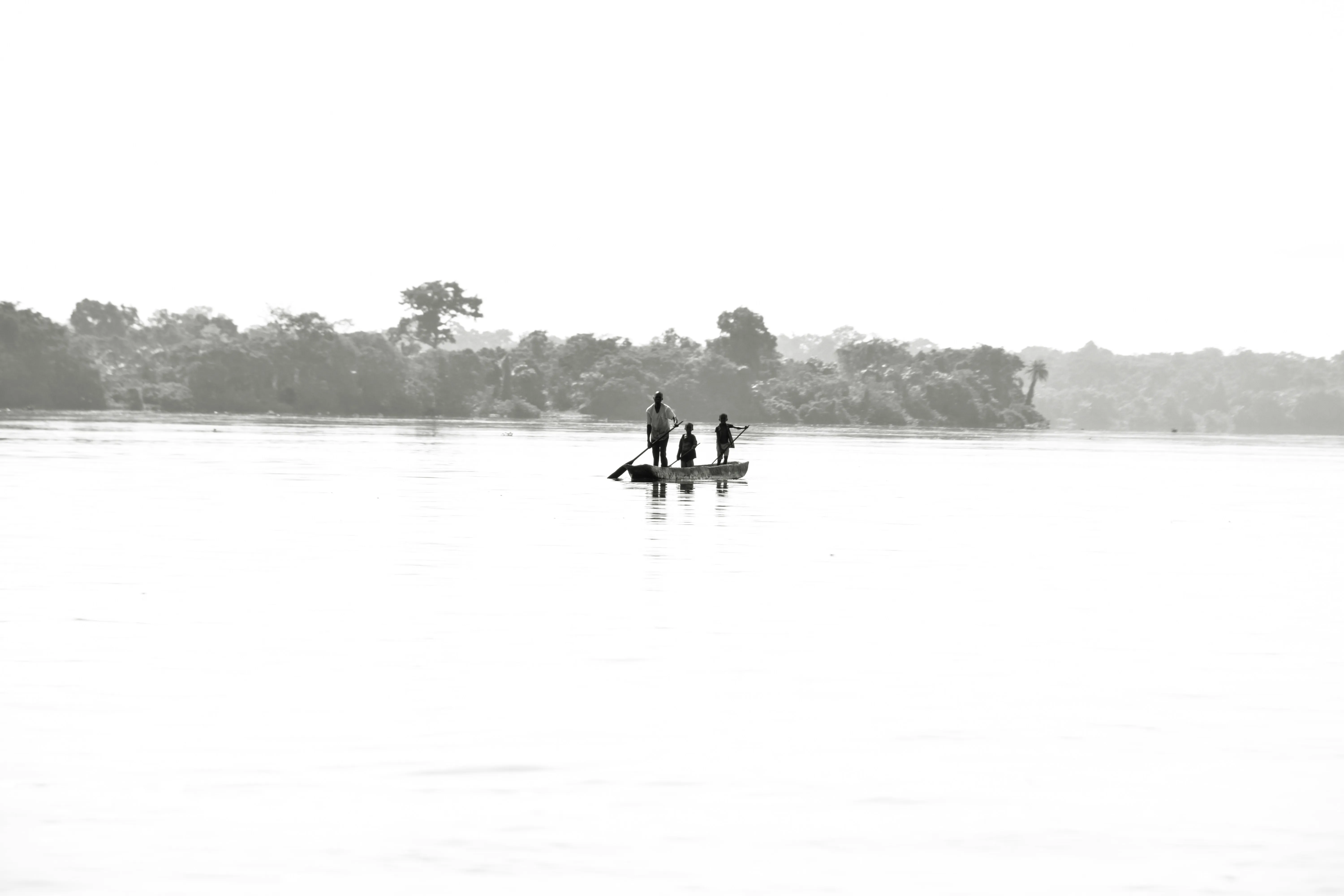
Central African Republic
A pristine destination of lush jungles and unique wildlife, ideal for adventurers seeking to connect with the purest and most remote African nature.
Quick Facts
- Capital
- Bangui
- Language
- Sango and French
- Bantu and Ubangian languages
- Currency
- Central African CFA franc (XAF)
- Best time to visit
- From November to March, coinciding with the dry season
- Budget per day
- $40 - $150 per day
- Climate
- Tropical climate with a wet season from May to October and constant warm temperatures throughout the year.
- Connectivity
- low
- Available in the capital through the purchase of local prepaid cards
- Electricity
- Type C / E (220V)
- Local transport
- limited
- Card usage
- cash is more common
- Tipping
- optional
🌎 Introduction
In the geographical heart of the African continent, the Central African Republic unfolds as a mosaic of contrasts where nature dictates the rhythm of life. Here, the landscape transitions naturally from the deep, humid jungles of the south to the savannah plains that stretch under a more intense sun to the north. It is a territory marked by the slow course of the Ubangi River, whose waters not only nourish the land but also serve as the backbone for the communities living along its banks, marking the pulse of trade and transport.
The country’s identity is perceived in everyday details: the aroma of woodsmoke in the kitchens, the taste of traditional dishes based on cassava and local vegetables, and the murmur of languages that coexist in its markets. During the dry season, the reddish dust of the roads envelops the environment in a warm tone, while the arrival of the rains transforms the surroundings into a vibrant garden. This seasonal alternation influences traditions and a culture rich in oral stories and polyphony that reflect an ancestral heritage deeply linked to the natural environment.
Through its villages and natural spaces, one observes a way of life that values simplicity and direct contact with the land. From the lushness of the forests where communities with millennial wisdom about the ecosystem reside, to the open horizons of the interior, the country offers an honest vision of a little-known inner Africa. It is a place of subtle nuances, where the hospitality of its people and the immensity of its landscapes compose a quiet and authentic essence that invites leisurely observation.
🛡️ General Safety
The Central African Republic is a destination that requires extremely meticulous planning and a high level of caution. Given its complex political and social situation, the general level of safety is considered low compared to other international tourist destinations. It is a country going through a period of transition and reconstruction, which directly influences the traveler’s experience.
For the tourist, the current context means that travel must be very well organized, preferably through specialized agencies or international entities. Although there are areas with unique natural attractions, such as the Dzanga-Sangha National Park, mobility throughout the rest of the territory may be limited by instability.
Crime and Common Risks
Crime in urban and rural areas presents different nuances that the traveler should be aware of:
- Pickpocketing and minor theft: These are common in crowded areas of the capital, such as markets or transport stations. It is recommended not to display valuables, cameras, or the latest generation of mobile phones.
- Scams: Deceptive situations may occur in informal transactions or with people offering guide services without accreditation. It is essential to agree on prices beforehand.
- Risk zones: Outside the capital, Bangui, and the protected areas of the southwest, the risk of encountering armed groups or unofficial checkpoints increases considerably. It is recommended to avoid road travel without an escort or prior knowledge of the route.
- Violent robberies: Although less frequent toward international tourists, they can occur, especially at night or in peripheral areas of cities.
Safety in Cities and Tourist Areas
Safety varies significantly depending on the geographical location:
- Bangui (the capital): It is the main entry point and has a greater presence of security forces and international organizations. Although one can move through the center and residential neighborhoods during the day, maximum caution should be exercised.
- Urban centers: In other smaller cities, security infrastructure is more limited. It is advised to stay in recommended hotels or accommodations once the sun sets.
- Urban public transport: The use of buses and motorcycles (moto-taxis) is usually not recommended for tourists due to the lack of road safety measures and the risk of theft.
- Practical recommendation: It is essential to always stay informed about possible curfews or movement restrictions that local authorities may suddenly decree.
Transport Safety
Moving around the country is one of the greatest logistical and safety challenges:
- Driving: In the Central African Republic, driving is on the right. The state of the roads is poor, with many unpaved routes becoming impassable during the rainy season.
- Rental vehicles: It is not recommended to rent a car to drive yourself. Ideally, hire a vehicle with an experienced local driver who knows the protocols at checkpoints.
- Roadblocks: It is common to find military or police checkpoints. One must remain calm, show the required documentation, and avoid any confrontational attitude.
- Air transport: For long distances within the country, flying is the safest and most recommended means, although the availability of domestic flights is limited.
Natural and Climatic Risks
The natural environment also presents factors to consider for the traveler’s integrity:
- Floods: During the rainy season (generally from May to October), heavy rainfall can cause flash floods and road closures.
- Extreme heat: Temperatures can be very high, especially in the north of the country. There is a risk of dehydration and heatstroke if precautions are not taken.
- Harmattan: Between December and February, this dry, sand-laden wind from the Sahara can reduce visibility and cause mild respiratory problems.
- Prevention: It is vital to have good travel insurance that covers medical evacuations, as local healthcare infrastructure is very limited.
Local Legislation and Regulations
Compliance with local regulations is strict, and ignorance of them does not exempt one from responsibility:
- Photography: It is strictly forbidden to photograph government buildings, military installations, airports, bridges, and uniformed personnel. Non-compliance can lead to equipment confiscation, fines, or detention.
- Documentation: It is mandatory to always carry the original passport and a valid visa. Authorities may request them at any time.
- Drugs: Possession, consumption, or trafficking of narcotic substances carries severe prison sentences in very precarious conditions.
- Export of goods: The purchase and export of minerals (diamonds, gold) or products of animal origin is heavily regulated and requires special permits. Attempting to take them out of the country without documentation is a serious crime.
Safety for Specific Groups
- Women travelers: It is recommended to avoid traveling alone. It is preferable to do so in organized groups and maintain modest clothing that respects local customs to avoid unwanted attention.
- LGTBIQ+ travelers: Homosexuality is a taboo subject and can be subject to legal sanctions or social rejection. Maximum discretion is recommended, and public displays of affection should be avoided.
- Children and the elderly: Due to the deficiencies of the healthcare system and the harsh climatic and transport conditions, this destination is not considered suitable for travel with small children or people with reduced mobility or fragile health.
Emergencies and Assistance
The response of emergency services is limited and often slow:
- Emergency numbers: The general police number is 117, for firefighters 118, and for medical emergencies 1212 (although the effectiveness of these services varies greatly by area).
- Consular assistance: Given that many countries do not have a physical embassy in Bangui, it is fundamental to identify which friendly diplomatic representation can provide assistance before starting the trip.
- Protocol in incidents: In case of being a victim of a crime, you must go to the nearest police station to file a report, although investigative capacity is low. Maintaining contact with your travel agency or local contact is paramount.
Tip: Always travel with a satellite phone if you plan to leave the capital and ensure you register with your respective foreign ministry’s traveler systems before landing.
📝 Entry Requirements
To undertake a trip to the Central African Republic, the first essential step is to have a valid passport, with a validity usually required to extend several months beyond the planned date of departure from the territory. In most cases, international travelers need to process a tourist visa in advance through the corresponding diplomatic representations, as issuing permits directly upon arrival at border points is not a standard practice for all visitor profiles.
The maximum duration of stay for tourism purposes is usually limited, with initial permits frequently covering periods of up to ninety days. It is common for immigration authorities to request the presentation of an exit ticket from the country upon entry, whether back to the place of origin or to a third destination. Likewise, it is advisable to have proof of sufficient financial funds to cover expenses during the stay in the country.
At border controls and airports, routine inspections of luggage and documentation are carried out. It is important to take into account standard customs restrictions, which usually limit the entry of commercial quantities of certain products, as well as specific medications that do not have their proper medical prescription. Similarly, the transport of certain fresh foods or products of animal origin may be subject to local sanitary regulations to prevent the introduction of pathogens.
From a public health perspective, presenting an international certificate of vaccination against yellow fever is a very frequent requirement for access to the country. In addition to this measure, travelers are usually suggested to consult other general health recommendations regarding the prevention of endemic diseases in the region, always maintaining a preventive approach and following the advice of health professionals before starting the journey.
🏥 Basic Health Considerations
When planning your trip to the Central African Republic, you will notice that the healthcare system is quite limited and concentrated almost exclusively in the capital, Bangui. You will find that public medical assistance often lacks basic resources, so for any health problem, you will most likely end up going to private clinics or services managed by international organizations. Prices in these private centers can be high by local standards, and healthcare personnel will communicate with you primarily in French, which is the official language in the professional field.
Taking out travel medical insurance is not just advice, but an absolute necessity before landing in the country. This insurance must have broad coverage and, above all, must compulsorily include medical evacuation and aerial repatriation in a medicalized plane. In case of suffering a serious illness or an accident, it is very likely that you will need to be transferred to another country with better infrastructure, a cost that would be prohibitive on your own.
Regarding vaccines, the yellow fever vaccine is mandatory for all travelers, and you will be asked for the international vaccination certificate upon entering the country. It is also highly recommended that you keep your standard vaccination schedule up to date and consider protecting yourself against hepatitis A and B, typhoid fever, and meningitis. As the risk of malaria is high throughout the territory all year round, you should consult a doctor about the preventive treatment that suits you best before departing.
If you need to bring your own medication, ideally you should transport it in its original packaging and always accompanied by a medical prescription translated into French. You can bring your basic first-aid kit with painkillers, antihistamines, and dressing materials, but avoid medications that are not clearly identified. It is essential that you carry everything you estimate you will need during your stay, as local pharmacies may have shortages of certain specific drugs.
Regarding health risks, the tropical climate favors the presence of many insects. You will find that using strong repellents and long-sleeved clothing is your best defense not only against malaria but also against other diseases transmitted by mosquitoes. The heat and humidity are intense, so you will have to monitor constant hydration to avoid heatstroke. There are no significant risks related to altitude, but you should be careful with other insect bites or contact with animals.
Regarding hygiene and food, the golden rule is that tap water is not potable. You should always consume bottled water and ensure that the seal is intact. Avoid ice in drinks and raw vegetables that you have not peeled yourself. Regarding street food, you can try local dishes, but always ensure that the food is freshly cooked and very hot, avoiding stalls where the general hygiene makes you doubtful.
In case of a medical emergency, the general number you could try to contact is 1212, although the response of public ambulances is very deficient or non-existent. The most practical thing is to have the contact number of the reference private clinic in Bangui provided by your insurance. In critical situations, coordination is usually done directly through your assistance company.
Finally, remember that prevention will be your best ally. Always carry a small bottle of hand sanitizer and use it frequently. If you follow these hygiene guidelines and ensure you have good medical coverage, you will be better able to manage any health issues that arise during your adventure in these African lands.
🚌 Transport within the Country
Moving around the Central African Republic represents a considerable logistical challenge for any traveler. Due to the large size of the territory and the limited state of ground infrastructure, domestic flights are usually the most practical option for covering long distances between the capital and national parks or remote areas. There is no railway network or mass urban transport systems like the metro, so travel depends almost exclusively on the road network and chartered flights or small air services.
In urban centers, especially in Bangui, the most common means are shared taxis and vans that operate as informal buses. Using public transport for a visitor is usually complex, as there is no clear signage, fixed stops, or established schedules, and journey management is done in person. Communication takes place mainly in French or Sango, so navigating without basic knowledge of these languages can make orientation and understanding the available routes difficult.
There is a very marked difference between the capital and rural areas. While some roads in the main city are paved, dirt tracks predominate in the rest of the country, which can become impassable during the rainy season. To travel outside urban areas, travelers usually resort to renting 4x4 vehicles with a driver, as the reliability of intercity collective transport is low and vehicles often travel overloaded, affecting travel comfort and safety.
Taxis and moto-taxis are the pillars of daily mobility in the cities. Taxis are usually yellow and can be hired for private services or shared with other passengers to reduce costs. There are no transport services managed through mobile applications, so everything is agreed directly with the driver. Punctuality is not a guaranteed characteristic in local transport, so it is necessary to maintain a flexible and forward-looking attitude toward possible delays or mechanical breakdowns.
Tip: It is essential to plan all journeys with sufficient time margin and prioritize travel during daylight hours to avoid the added difficulties of lack of road lighting.
🤵 Culture and Etiquette
In the Central African Republic, social interactions invariably begin with a leisurely greeting. It is fundamental to dedicate a few minutes to exchanging courtesies and asking about general well-being before starting any conversation, business, or procedure. Respect for hierarchies and older people is deeply valued, and they are usually treated with special deference. The handshake is the most widespread form of greeting, usually performed softly and sometimes prolonged as a sign of cordiality and trust.
The tone of voice is usually moderate in public spaces, where a quiet and discreet attitude is appreciated. Indirect communication is common to avoid direct confrontations or situations that may be uncomfortable, always prioritizing social harmony and tact in language. Regarding physical contact, it is common to observe people of the same sex showing gestures of closeness or walking hand in hand, which is strictly a manifestation of friendship and fraternity within local codes.
The concept of punctuality tends to be flexible, as greater importance is given to interpersonal relationships and the needs of the moment than to strict adherence to the clock. If an invitation to a home is received, it is a gesture of courtesy to accept the hospitality, which often centers on sharing food as an act of union. In traditional contexts, it is common to use the right hand for eating or exchanging objects, reserving the left for hygiene tasks. Although there is no rigid rule about tipping, gestures of gratitude are appreciated in catering services and local guides.
Daily life is imbued with a strong sense of community and traditions. When visiting places of worship, participating in ceremonies, or traveling through rural areas, it is advisable to observe sober and respectful behavior, always following the example of the hosts. Asking permission clearly before taking photographs of people is considered a basic rule of etiquette that demonstrates consideration for individual privacy and dignity. Respect for local customs and patience with the rhythms of daily life are the best tools for harmonious integration.
“Tip”: Before making any request, question, or transaction to a local resident, it is essential to perform a complete and leisurely greeting; omitting this social preamble can be perceived as a lack of courtesy that hinders subsequent communication.
🍛 Typical Gastronomy
The cuisine of the Central African Republic is based on the products offered by its land, with a very solid agricultural base where cassava, plantain, and peanuts are the undisputed stars. Being a landlocked country, animal protein comes mainly from rivers or hunting, although in urban areas, the consumption of chicken and goat is most common. Flavors are usually mild but deep, relying on the use of vegetable oils, especially palm oil, and thick sauces that accompany almost any preparation.
The central element of most meals is gozo, a dense paste made from cassava flour that serves as an accompaniment and bread substitute. Local eating habits usually include two main meals a day. It is very common for food to be a community act, where diners share various bowls. In homes and traditional establishments, it is frequent to eat with the right hand, using gozo or fufu to scoop up the sauce and pieces of meat or fish.
Regarding table manners, hospitality is a fundamental pillar of Central African culture. If invited to a home, it is considered a gesture of courtesy to try a little of everything offered. Restaurant hours are usually flexible, although lunch is the busiest time of day. For drinking, popular options include ginger or hibiscus (bissap) infusions, as well as beverages traditionally fermented from cereals or fruits like bananas.
| Dish | Description | Main Ingredients | Where to try it | Tip |
|---|---|---|---|---|
| Kanda ti Nyma | Traditional meatballs wrapped in banana leaves. | Minced meat, peanuts, and okra. | Local restaurants in Bangui. | Always accompany it with rice or gozo to balance the peanut flavor. |
| Gozo | Basic paste that accompanies almost all stews in the country. | Cassava flour and water. | In any home or food stall throughout the country. | It is consumed by pinching a small portion with the fingers to dip in sauces. |
| Muamba | A thick and nutritious stew with a creamy texture. | Chicken, palm oil, and vegetables. | Eating houses and urban markets. | It is a hearty dish, ideal for the midday meal. |
| Ngueboudou | A stew that combines flavors of the land and the water. | River fish, spinach, or cassava leaves. | Towns near the Ubangi River. | It is an excellent option for trying fresh products from the river basin. |
| Foutou | Consistent puree with an elastic and smooth texture. | Plantain and cassava or yam. | Traditional cuisine restaurants and rural areas. | Its flavor is slightly sweet, which contrasts very well with spicy sauces. |
📷 Areas and Places to Visit
The country’s capital, Bangui, is the essential starting point for any traveler. Located on the banks of the powerful Ubangi River, the city offers a mix of colonial architecture and African urban life. One of its most representative monuments is the Notre-Dame Cathedral in Bangui, a red-brick building that stands out for its sober and elegant design. For those seeking to immerse themselves in local history and culture, the Boganda National Museum is a mandatory stop. This center preserves collections ranging from traditional musical instruments to hunting tools and art objects that explain the evolution of the region’s diverse ethnic groups. Walking through its streets allows you to observe the contrast between administrative zones and local markets, where commercial activity is the heart of daily life.
A short distance from the capital are the Boali Falls, one of the most accessible and spectacular natural landscapes in the territory. These waterfalls, fed by the Mbali River, offer a peaceful environment surrounded by lush vegetation. It is common to hike the nearby trails to contemplate the force of the water from various viewpoints, especially during the rainy season when the flow reaches its maximum splendor. This area allows for a day outdoors and observing small rural villages nearby, providing an authentic vision of life outside urban centers.
In the far southwest, the Dzanga-Sangha Special Reserve stands as the country’s most valuable ecological treasure. This area of dense tropical jungle is part of a transboundary protected ecosystem of enormous global importance. The place is world-famous for being the habitat of the western lowland gorilla and the forest elephant. One of the points of greatest interest is the Dzanga Bai clearing, a mineral-rich sandy area where large groups of elephants concentrate, allowing for their observation in a unique natural environment. In addition to the fauna, the reserve offers the opportunity to learn about the culture of the Ba’Aka people, whose ancestral knowledge of the jungle and medicinal plants is fundamental for the conservation of this environment.
The Lobaye region, south of the capital, is another area of great cultural and scenic interest. Characterized by its extensive coffee and cocoa plantations, this territory shows a more productive and rural facet of the country. It is an ideal place for excursions that combine nature with learning about local traditions. Visitors can explore the forested areas and get a close look at the traditional cultivation methods that have shaped the region’s economy for decades. The contrasts between the dense jungle and the cultivated areas create a very attractive visual mosaic for lovers of photography and ethnography.
To the north, the landscape changes drastically as you enter the African savannah. The Manovo-Gounda St. Floris National Park, declared a UNESCO World Heritage site, represents this geographical transition. Although it is a more remote and difficult-to-access area, its importance lies in the diversity of species it houses, such as giraffes, lions, and various varieties of antelopes. This environment offers a different perspective of the country, away from the humidity of the southern jungles, showing the immensity of the plains and the resilience of wildlife in these open ecosystems. It is a region that stands out for its scientific value and its imposing pristine natural beauty.
“Tip”: You cannot miss visiting the Dzanga-Sangha Special Reserve, the most emblematic place in the country.
✈️ Best Time to Travel
Choosing the right time to visit the Central African Republic depends mainly on the traveler’s interests, as the country has a tropical climate marked by two distinct periods: the dry season and the rainy season. During the months with less precipitation, land travel is easier and the possibilities of observing wildlife in national parks, such as Dzanga-Sangha, increase considerably as animals concentrate at water points and forest clearings.
Conversely, the rainy season transforms the landscape into an environment of intense green and allows for enjoying nature in its most exuberant state. Although humidity is higher and logistics can be more complex due to road conditions, it is an interesting period for those seeking an experience focused on bird watching, flora, and greater tranquility in natural settings.
| Season | Months | Typical Climate | What to expect | Tourist flow |
|---|---|---|---|---|
| Spring | Mar – May | Humid heat and gradual start of rains. | Landscapes beginning to turn green and increasing insect and bird activity. | ⭐⭐ Medium |
| Summer | Jun – Aug | Frequent rainfall and moderate temperatures. | Very dense forests and powerful rivers; travel can be slow. | ⭐ Low |
| Autumn | Sep – Nov | Intense rains that subside toward the end of the period. | Nature at its maximum splendor and clear skies after storms. | ⭐⭐ Medium |
| Winter | Dec – Feb | Dry and sunny, with the presence of haze (Harmattan wind). | Optimal time to see gorillas and forest elephants; roads more accessible. | ⭐⭐⭐ High |
🗣️ Basic Vocabulary
Although French is one of the official languages of the Central African Republic, Sango is the national language and the most used by the population in their daily lives. Knowing some basic expressions in Sango will allow you to communicate more closely with local inhabitants, facilitating everyday interactions in markets, transport, or during habitual greetings.
Using these terms is a gesture of courtesy that is usually very well received and helps resolve simple situations more fluidly. It is not necessary to master the grammar; it is enough to remember these key words to manage better during your stay in the country.
- Bara mo: Hello (general greeting for one person).
- Singila: Thank you.
- Tongana nye?: How are you?
- Nzoni: Good / Well.
- En-en: Yes.
- I-i: No.
- Mbi ye…: I want… (useful for ordering something).
- Mo de kene?: What is your name?
- Nzoni tambula: Safe travels / Have a good journey.