


New Zealand
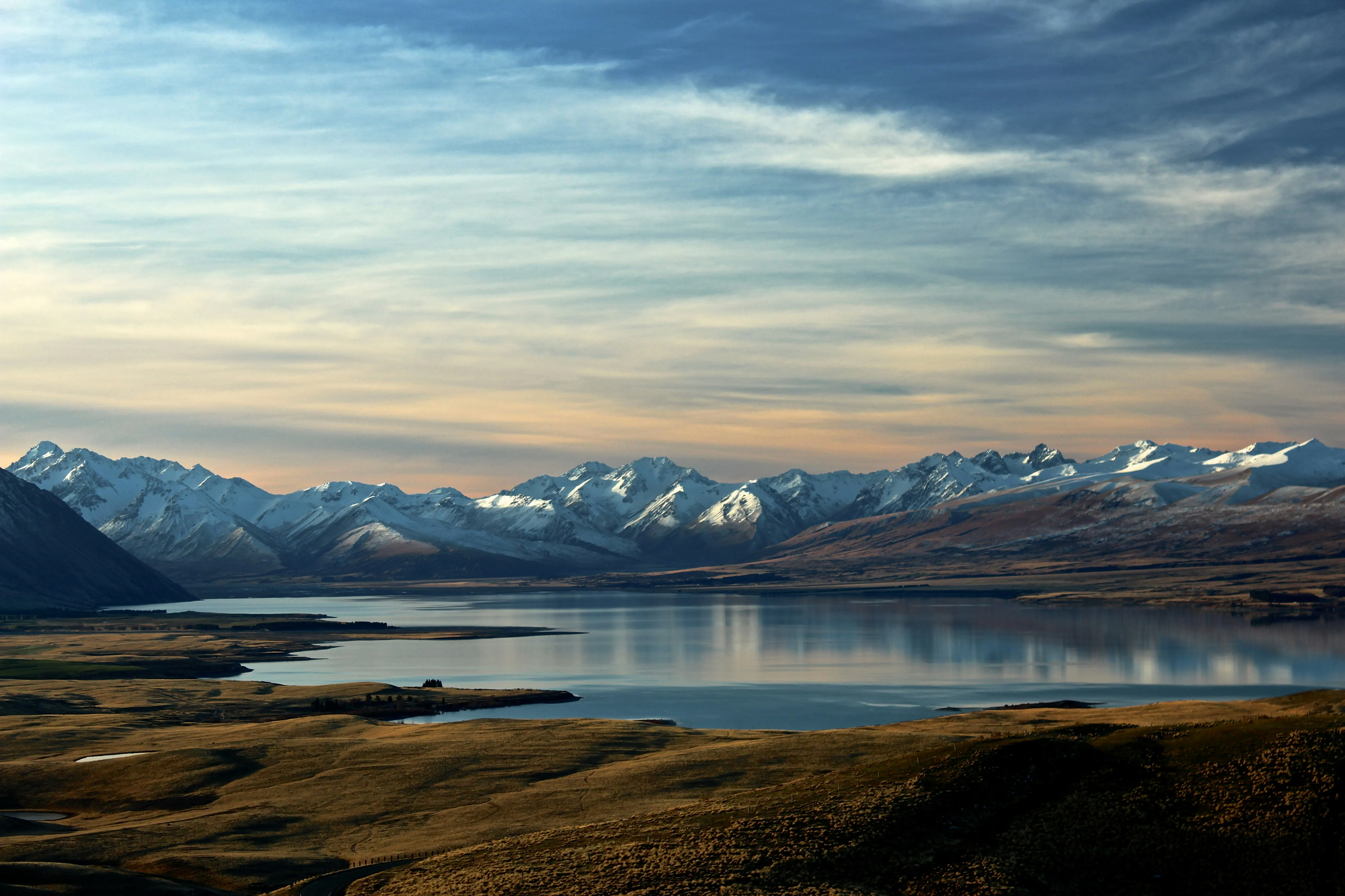
Alpine landscapes, crystal-clear lakes, and Māori culture come together in a pristine wilderness, offering unique and unforgettable adventures for outdoor lovers.
Quick Facts
- Capital
- Wellington
- Language
- English
- Māori, New Zealand Sign Language
- Currency
- New Zealand Dollar (NZD)
- Best time to visit
- From December to March for hiking or from June to August for snow sports.
- Budget per day
- $80 - $250 per day
- Climate
- Temperate with mild summers and cold winters in the south; the weather is very variable and rain is frequent.
- Connectivity
- good
- Very easy to acquire at airports or urban centers, with wide availability of eSIM.
- Electricity
- Type I (230V)
- Local transport
- acceptable
- Card usage
- very widespread
- Tipping
- optional
🌎 Introduction
On the other side of the world, where the Pacific Ocean meets the Tasman Sea, an archipelago emerges that stands out for the contrast between the calm of its coasts and the strength of its volcanic geography. New Zealand is a corner where the pace of life is marked by the changing tides and the soft light that bathes its ever-green hills. In this environment, Māori heritage and traditions of British origin coexist naturally, integrating into both the physiognomy of the cities and the respect for the natural spaces that define the identity of its inhabitants.
The landscape varies almost without warning, passing from white sand beaches and ancient fern forests to glaciers and snowy peaks that seem frozen in time. The seasons are experienced in reverse, providing Christmas under the sun and summers that stretch between vineyards and small outdoor gatherings. Daily life is perceived as simple and close, with a deeply rooted coffee culture and local markets where the products of the land, from manuka honey to the fruits of its coasts, are the true protagonists.
Traveling through its two main islands allows one to observe how urban modernity integrates with the solitude of its valleys and meadows. It is a place where hospitality is felt in the tranquility of its towns and in the practice of century-old customs that remain present in everyday life. Overall, the country presents itself as a balanced destination, where nature and culture offer the opportunity to observe the world from a different and leisurely perspective.
🛡️ General safety
New Zealand is widely recognized as one of the safest and most welcoming destinations in the world for travelers. The country maintains a very high level of safety, with social and political stability that allows for a peaceful tourist experience. In comparative terms, the risk to personal integrity is significantly low relative to the global average.
Although the environment is peaceful, it is important for visitors not to lower their guard completely. The general context is that of a civilized country where respect for rules is the basis of coexistence, which makes it easier for travelers to feel integrated and protected from their arrival.
Crime and common risks
Violent crime is extremely rare in New Zealand, and tourists are rarely the target of serious incidents. However, there are minor risks that are worth knowing:
- Thefts from vehicles: This is the most common crime affecting tourists. It occurs mainly in parking lots at hiking areas, beaches, or isolated viewpoints. Thieves usually take advantage of the vehicle being unattended to break a window and steal valuables.
- Petty theft: In very crowded areas of major cities or in hostels, thefts of wallets or electronic devices can occur if left unsupervised.
- Minor scams: These are rare, but isolated cases can occur in the rental of unregulated accommodation through the internet. It is recommended to always use official and verified platforms.
Safety in cities and tourist areas
Urban centers such as Auckland, Wellington, or Christchurch are generally very safe both day and night. The urban infrastructure is designed to be accessible and safe.
- Nightlife areas: As in any large city, isolated incidents related to alcohol consumption can occur in bar and club areas during weekends. It is advisable to avoid confrontational groups late at night.
- Public transport: It is very safe and efficient. Stations are usually well-lit and have surveillance systems.
- Practical recommendations: In cities, simply applying common sense is enough, such as not leaving bags hanging on the back of chairs on terraces and keeping belongings in sight in crowded places.
Transport safety
Transport is a key aspect of safety in this country, especially due to its geography and specific rules:
- Driving: In New Zealand, people drive on the left. This requires special attention for drivers used to driving on the right, especially at intersections and roundabouts.
- Road conditions: Many secondary roads are narrow, with sharp curves and, at times, gravel. It is essential to respect speed limits, which are strictly controlled by radars and patrols.
- Rental vehicles and campervans: These are the most popular way to tour the country. It is recommended to always insure the vehicle and not leave valuables visible inside when parking in rural or tourist areas.
- Taxis and ride-sharing: Taxi services and private transport apps are completely safe and regulated, making them an excellent option for night travel.
Natural and climatic risks
Given its geographic location, New Zealand presents certain natural risks that travelers should consider:
- Seismic activity: The country is located on geological fault lines, so earthquakes are a possibility. Most are imperceptible, but there are clear action protocols (“Drop, Cover and Hold”) in all public buildings.
- Changing weather: The weather can vary drastically in a matter of hours, a phenomenon known as “four seasons in one day.” This is especially dangerous on hiking or high mountain routes.
- UV radiation: Due to the purity of the air and the ozone layer, the sun is very strong even on cloudy days. The risk of sunburn is very high.
- Volcanic activity: Active volcanic zones exist on the North Island. Always follow the instructions of local authorities and respect restricted access areas.
Local legislation and regulations
New Zealand has strict laws aimed at protecting both its citizens and its unique ecosystem:
- Biosecurity: This is one of the strictest regulations in the world. It is prohibited to introduce fresh food, plants, or biological material without declaring it. Fines are high and immediate at airports. Make sure to clean your hiking boots well if they have been in contact with soil from other countries.
- Alcohol and tobacco: There are restrictions on where alcohol can be consumed in public (alcohol-free zones). The legal age to buy alcohol and tobacco is 18, and official identification is required.
- Environmental protection: Respect for nature is fundamental. Littering or camping in unauthorized places (freedom camping) can lead to severe fines.
Safety for specific groups
- Female travelers: New Zealand is an excellent destination for women traveling alone. Harassment levels are very low, and freedom of movement is total. It is recommended to follow usual personal safety precautions.
- LGTBIQ+ travelers: The country is a pioneer in civil rights, and social acceptance is very high. It is an extremely safe and welcoming destination for this group.
- Traveling with children and the elderly: The country’s infrastructure is ideal for families and the elderly, with high-quality health services and accessibility at most points of tourist interest.
Emergencies and assistance
The New Zealand emergency system is highly efficient and professional:
- Single emergency number: The number to contact the police, fire department, or ambulance is 111.
- Medical care: Hospitals feature cutting-edge technology. It is essential to travel with private medical insurance, as costs for non-residents can be high.
- ACC (Accident Compensation Corporation): New Zealand has a unique system that covers treatment costs for personal accidents for anyone in the country (including tourists), although this does not replace the need for travel insurance for illnesses or repatriations.
Tip: If you are going to go on hiking routes or nature activities, use the Plan My Walk app or always inform someone of your planned itinerary, as the weather changes quickly and mobile coverage may be non-existent in remote areas.
📝 Entry requirements
To undertake a trip to New Zealand, the first fundamental step is to have a valid passport. It is a common practice for border authorities to request that said document have a residual validity of at least three months beyond the planned date of departure from the territory. This document must be in good condition to avoid inconveniences during scanning and identification processes at entry points.
Regarding access authorizations, a large portion of international visitors traveling for leisure or tourism purposes do not require a traditional visa for short-term stays. Instead, it is common to have to manage an electronic travel authorization before starting the journey. This digital permit usually allows a stay in the country for a maximum period that, in general, reaches ninety days, although this period may vary depending on the traveler’s circumstances.
At the time of arrival, it is frequent for customs and immigration personnel to request proof of a return ticket or an onward ticket to a third destination confirming the intention to leave the country within the permitted period. Likewise, it is advisable to have documents proving the possession of sufficient economic funds to cover all expenses derived from the stay without the need to perform remunerated activities at the destination.
Biosecurity controls at airports are known for being exhaustive. It is necessary to declare any type of food, products of plant or animal origin, seeds, and outdoor activity equipment that may carry organic remains. In the area of medications, it is recommended to carry the corresponding medical prescriptions, especially if they are controlled substances, and keep the products in their original packaging to facilitate inspection.
From a health perspective, mandatory vaccination requirements are not usually applied for the general entry of tourists, unless coming from regions with active specific health alerts. However, it is considered a prudent practice to have the recommended vaccinations for international travel and to have travel insurance that offers broad coverage, thus guaranteeing a peaceful and protected experience.
🏔️ Essential tourist information
To organize a complete visit to this destination, it is useful to take into account various aspects that define the traveler’s experience. Below are some key points about the country:
- Diverse geography: The territory is mainly divided into two large landmasses, the North Island and the South Island, each with landscapes ranging from subtropical beaches and volcanic zones to fjords and glaciers.
- Climate and seasons: Being in the southern hemisphere, the seasons are reversed compared to the north. The summer months are usually the busiest, while winter attracts snow sports enthusiasts to the mountain areas.
- Transport and mobility: The use of rental vehicles or campervans is one of the most popular ways to tour the country, allowing access to remote natural corners. It is important to remember to drive on the left side of the road.
- Local culture: The heritage of the Māori culture is a fundamental pillar of the national identity, present in the language, traditions, art, and social protocol.
- Outdoor activities: The destination is a world reference for hiking, mountain biking, and various adventure sports, with a very well-maintained and signposted network of trails.
- Currency and payments: The currency in current use is the New Zealand dollar. The use of credit and debit cards is widespread in almost all establishments, although it is useful to carry some cash for very rural areas.
🌲 Main natural destinations
The country stands out for the preservation of its pristine environments and national parks. Some of the most emblematic points include:
- Fjords and glaciers: Areas where ice and water have sculpted monumental landscapes, ideal for navigation and nature photography.
- Geothermal activity: Areas with the presence of geysers, boiling mud, and natural pools of vibrant colors caused by volcanic activity underground.
- Mountain lakes: Expanses of turquoise water surrounded by snowy peaks that offer an environment of serenity and scenic beauty.
- Ancient forests: Protected spaces inhabited by giant tree species and unique fauna found nowhere else in the world.
🏥 Basic health considerations
On your trip to New Zealand, you will find a health system of excellent quality, ranked among the best in the world. The infrastructures are modern and the professionals are highly qualified. However, you must keep in mind that care for tourists is not free and costs can be quite high if you do not have adequate protection. The main language in which you will receive care is English, although interpreters are usually available in hospitals in large cities if necessary.
Although it is not a legal entry requirement for all traveler profiles, taking out travel medical insurance is essential. Any simple medical consultation or an emergency room visit can involve a significant outlay of money. Your policy should have broad coverage that includes hospitalization, surgical interventions, ambulance transfers, and medical repatriation if necessary. A particular aspect of the country is the ACC system, which covers part of the costs derived from personal accidents, but remember that this system will not cover you if you suffer a common illness or an infection during your stay.
Regarding vaccines, there are no mandatory vaccines to enter the country. It is most recommended that you have your usual vaccination schedule up to date, including the basic vaccines administered generally in most countries. You will not have to worry about high-risk tropical diseases, as the health environment is very controlled and there are no large-scale biological threats for the average tourist.
If you need to carry your own medication, you must be careful with customs regulations. It is essential that you carry your medications in their original packaging and always accompanied by a medical prescription in English signed by your doctor. It must include your name, the dose, and the condition you are treating. New Zealand has very strict laws regarding the entry of substances, so it is better to declare any medication upon arrival to avoid misunderstandings with border authorities. You will find well-equipped pharmacies in almost any town to buy basic or over-the-counter products.
Regarding risks according to geography, the most real danger you will experience is ultraviolet radiation. Due to the low density of the ozone layer in this area of the planet, the sun burns with great intensity, even when the sky is covered or it is cool. It is vital that you use high-factor sunscreen constantly. In some coastal regions or near lakes on the South Island, you might encounter sandflies, tiny insects whose bites are very annoying and itchy, although they do not transmit diseases. If you are going to go hiking, keep in mind that the weather is very changeable and the risk of hypothermia is real if you are not well-equipped for rain and wind.
Hygiene in the country is excellent and you will not have to take extraordinary precautions with food. Tap water is drinkable and delicious throughout the territory, so you can refill your bottles with total confidence. Food safety standards in restaurants and food stalls are very rigorous, so the chances of suffering digestive problems due to lack of hygiene are extremely low.
If you find yourself in a medical emergency, the phone number you have to dial is 111. This number is unique for police, fire, and ambulance emergencies. The emergency service works very efficiently and will send help quickly, even if you are in areas somewhat further from the main urban centers.
As final tips for your peace of mind, I recommend buying sunscreen directly there, as local brands are specifically designed for their type of radiation. Always carry a copy of your medical insurance on your phone or printed, and if you are going to do mountain routes on your own, do not forget to register your plans at visitor centers or notify someone you trust about your planned itinerary.
🚌 Transport within the country
Moving around New Zealand offers various options depending on the time available and the type of experience sought. The airplane is the fastest way to connect the main cities of both islands, while the ferry is the essential link to cross the strait that separates them, allowing for the transfer of passengers and vehicles. For land journeys, renting a car or campervan is a very widespread option, as it allows for reaching less accessible natural corners. There are also long-distance bus services that connect urban centers regularly and efficiently.
The transport system is, in general, simple to use for visitors. Signage is clear and ticket management is usually intuitive, typically done digitally or at the terminals themselves. In large cities, public transport is well-organized and combines buses with commuter trains or even urban ferries. However, in rural areas and national parks, collective transport options are much more limited, so the autonomy provided by a private vehicle is usually the preferred option for many travelers.
Taxis and private transport services through mobile apps are present in urban centers and airports, being a comfortable alternative for short trips. In general terms, transport in the country stands out for its reliability and good state of preservation. It is convenient to keep in mind that the geography of the terrain, marked by roads that are sometimes winding, influences the duration of land travel, meaning that journeys can take longer than initially planned.
“Tip”: When planning road routes, it is advisable to calculate ample travel times, as the terrain and weather can condition the speed of travel.
🤵 Culture and etiquette
New Zealand society is characterized by a cordial, direct, and relaxed manner, where equality and mutual respect prevail in everyday interactions. When greeting, it is customary to maintain brief eye contact and use a simple verbal greeting, always respecting a comfortable personal distance for the interlocutor. Kindness is manifested in simple but constant gestures, such as thanking the driver when getting off public transport or strictly respecting the order of arrival in any type of wait, which reflects a coexistence based on consideration for others.
Punctuality is a fundamental value in both professional and social contexts, so arriving at the agreed time is considered an essential sign of courtesy toward others’ time. In public spaces, a moderate voice volume is usually maintained so as not to interfere with the tranquility of the environment, avoiding behaviors that could be disruptive. Physical contact is usually limited between people who do not have a close relationship, although it is possible to participate in the hongi, the traditional Māori greeting consisting of gently pressing noses and foreheads together, always following the instructions and pace of the local hosts.
Regarding customs in hospitality establishments, meals are usually informal but follow basic etiquette rules. The practice of leaving tips is not mandatory nor is it systematically expected, as service is included in the country’s professional dynamics; however, it is accepted as a voluntary gesture of gratitude for exceptional service. In the case of being invited to a private home, it is an appreciated detail to ask if it is necessary to remove shoes upon entering and, optionally, offer to bring a small item to share.
Māori culture is a fundamental pillar of national identity and requires special sensitivity from the visitor. When visiting a marae (Māori meeting ground) or participating in ceremonies, it is of vital importance to observe specific protocols, such as removing shoes before entering main buildings or waiting for chants and speeches to be completed before speaking. Showing respect for the pronunciation of names in te reo Māori and for places considered tapu (sacred) allows for harmonious integration and demonstrates an attitude of learning toward the country’s cultural heritage.
Tip: When visiting places of historical or cultural importance, especially sites linked to Māori tradition, always observe the behavior of locals and look for specific signage regarding the use of cameras, as in certain sacred spaces or ceremonies, taking images may not be permitted out of respect for the solemnity of the act.
🍛 Typical gastronomy
New Zealand’s gastronomy stands out for its simplicity and the excellent quality of its raw materials. As an island nation with a strong agricultural and livestock tradition, its cuisine is defined by the use of local resources, where the most ancient Māori traditions coexist with a clear British heritage. The result is a culinary proposal based on local products, where grass-fed meats, fish, and fresh seafood are the main stars of the table.
The daily rhythm in the country is usually marked by early schedules. Breakfast is an important and substantial meal, while dinner is usually served between 6:00 PM and 8:00 PM. In restaurants, the atmosphere is generally relaxed and tipping is not mandatory nor expected by system, as service is considered included. A cultural peculiarity is the concept of “BYO” (Bring Your Own), a license that allows diners to bring their own bottle of wine to certain restaurants, paying only a small corkage fee.
Regarding drinks, coffee occupies a central place in social life, with the flat white being the country’s most emblematic preparation. New Zealand also enjoys great international prestige for its production of white wines, especially in the Marlborough region, as well as for a growing craft beer culture. Tap water is of excellent quality and it is a rule of courtesy that it is served for free and automatically at all restaurant tables.
| Dish | Description | Main ingredients | Where to try it | Tip |
|---|---|---|---|---|
| Māori Hangi | Traditional underground cooking method using hot stones. | Pork or lamb, pumpkin, potato, and sweet potato. | Rotorua region and Māori cultural centers. | It is a social experience; it is advisable to book in advance for cultural dinners. |
| Fish and Chips | Fresh fish battered and fried, served with potatoes. | Local fish (such as snapper or hoki) and potatoes. | Street stalls and local shops in coastal towns. | Enjoy it outdoors, wrapped in paper, preferably near the sea. |
| Roast Lamb | Meat slow-roasted over low heat, considered some of the best in the world. | Leg of lamb, rosemary, garlic, and seasonal vegetables. | Restaurants specializing in traditional cuisine. | Accompany it with mint sauce to follow local tradition. |
| Pavlova | Meringue dessert, crispy on the outside and creamy on the inside. | Meringue, whipped cream, and fresh fruit (kiwi or strawberries). | Bakeries and as a dessert at home celebrations. | It is a light dessert, ideal for finishing a heavy meal. |
| Green-lipped mussels | A variety of large mussel with a greenish edge, endemic to the country. | Mussels, garlic, white wine, or simply steamed. | Marlborough restaurants and port cities. | Try them simply steamed to appreciate their sweet flavor and fleshy texture. |
📷 Areas and places to visit
New Zealand presents itself as a destination of marked contrasts, mainly divided into two large islands that offer very different experiences from each other. The North Island is characterized by its volcanic activity, vibrant urban centers, and the strong presence of Māori culture. In it, the city of Auckland stands out as the main point of entry, surrounded by bays and ancient volcanic cones that serve as natural viewpoints. To the south, the capital, Wellington, concentrates a large part of the country’s cultural and artistic life, housing the Museum of New Zealand Te Papa Tongarewa, an essential stop to understand the natural and social history of these lands.
In the heart of the North Island, the Rotorua region allows for a close look at geothermal phenomena, with geysers and boiling mud coexisting with traditional Māori villages where ancestral customs are preserved. Nearby, the Tongariro National Park offers a landscape dominated by three active volcanoes, where hiking trails cross alpine deserts and intensely colored lakes. For those seeking a more coastal environment, the Bay of Islands at the northern tip invites exploration of an archipelago of calm waters and great historical relevance for being the place where the country’s founding treaties were signed.
Crossing to the South Island, the landscape transforms into a succession of rugged mountain ranges and glaciers that reach almost to sea level. The Southern Alps run through the island from north to south, with their highest point at Aoraki/Mount Cook, an area surrounded by glacial lakes of a very characteristic turquoise blue. The city of Christchurch, known for its gardens and its architecture that mixes the historical with the modern, serves as a gateway to these natural wonders. For its part, the west coast stands out for the Franz Josef and Fox glaciers, which flow through temperate forests in an environment of great climatic uniqueness.
Towards the southern tip lies the Fiordland region, one of the most remote and preserved areas of the country. Here, the landscape is dominated by deep valleys carved by ice, where the vegetation is lush and waterfalls plunge from great heights. In this same region, the town of Queenstown is located on the shores of Lake Wakatipu, functioning as a center for mountain and nature activities year-round. Contrast is provided by areas such as Abel Tasman, at the northern tip of the island, known for its golden sand beaches and coastal trails that run through crystal-clear water coves.
The architectural and urban diversity is also notable, from the Art Deco style of the city of Napier to the visible Scottish influence in Dunedin, which features castles and one of the oldest universities in the region. In rural areas, the green rolling hill landscapes in the Waikato region show the importance of livestock activity and have served as the setting for international film productions. Each area offers local festivals, fresh produce markets, and the possibility of hiking along well-signposted routes that allow for discovering local fauna in its natural habitat.
Tip: You cannot miss visiting Milford Sound, the most emblematic place in the country.
✈️ Best time to travel
New Zealand is a destination that can be enjoyed year-round, although the experience varies notably depending on the chosen month. Due to its location in the southern hemisphere, the seasons are the reverse of those in northern latitudes, which conditions both the climate and the availability of certain outdoor activities and the appearance of the landscape.
In general terms, the country has an oceanic climate without generalized extreme temperatures, but it is known for its meteorological variability. While the middle months of the year are ideal for those seeking snowy landscapes and winter sports, the period encompassing the end and beginning of the calendar year offers longer days and mild temperatures, conducive to exploring the coast and mountain routes.
| Season | Months | Typical weather | What to expect | Tourist crowds |
|---|---|---|---|---|
| Spring | Sep – Nov | Cool and variable, with gradual temperature increases and some rain. | Blooming of native flora, birth of local fauna, and waterfalls with high flow from snowmelt. | Medium (⭐⭐⭐) |
| Summer | Dec – Feb | Warm and mostly dry, with long, sunny days. | Water activities, hiking through national parks, and outdoor cultural festivals. | High (⭐⭐⭐⭐⭐) |
| Autumn | Mar – May | Temperate and stable, with clear skies and calmer winds. | Landscapes in golden and reddish tones, especially in the south, and harvest season in wine regions. | Medium - Low (⭐⭐) |
| Winter | Jun – Ago | Cold, with snow in high areas and moderate rain in the north. | Skiing and snowboarding practice, snowy peak landscapes, and enjoyment of natural thermal pools. | Medium (⭐⭐⭐) |
🗣️ Basic vocabulary
Learning some basic expressions will allow you to better connect with the culture of New Zealand and facilitate your day-to-day life during the trip. Although English is the most spoken language, Māori (te reo Māori) is an official language and is very present in signage, place names, and everyday interactions throughout the country.
Knowing these words is a form of respect for local identity and is very practical for interpreting directions or responding to the greetings you will frequently hear in establishments, airports, and public spaces.
- Kia ora: Hello or thank you. It is the most common and versatile greeting you will hear in almost any situation.
- Haere mai: Welcome. It is common to find this expression at the entrances of museums, public buildings, and shops.
- Ka kite: Goodbye or see you later. It is commonly used to close a conversation in a friendly way.
- Kai: Food. It will help you identify dining areas, markets, or local menus.
- Aotearoa: New Zealand. It is the Māori name for the country, which means “land of the long white cloud.”
- Whare: House or building. It is often used to designate constructions or types of accommodation.
- Tēnā koe: Hello (addressed to one person). It is a more formal way of greeting someone individually.
- Manaakitanga: Hospitality. It defines the local concept of welcoming and caring for visitors.