


Lesotho
Discover this Kingdom in the Sky, a mountainous destination surrounded by South Africa that offers alpine landscapes, ancestral culture, and unique adventures in its highlands.
Quick Facts
- Capital
- Maseru
- Language
- Sesotho
- English
- Currency
- Lesotho Loti (LSL) and South African Rand (ZAR)
- Best time to visit
- From October to March for hiking or from June to August to enjoy the snow and skiing.
- Budget per day
- $35 - $110 per day
- Climate
- Temperate with rainy and mild summers, and very cold and dry winters that usually cover the high peaks with snow.
- Connectivity
- medium
- Easy to obtain in main cities through local providers like Vodacom or Econet.
- Electricity
- Type M (230V)
- Local transport
- limited
- Card usage
- cash is used more
- Tipping
- optional
🌎 Introduction
Elevated above the plains of southern Africa, this mountain enclave is defined by a horizon where peaks frequently exceed three thousand meters. Its geography, entirely surrounded by South African territory, sets a slow pace of life, heavily conditioned by altitude and a climate of contrasts that provides snowy winters and summers of clear skies and fresh air.
On the trails that wind between the villages, it is common to cross paths with riders wrapped in their traditional Basotho blankets, wool garments with geometric patterns that are the emblem of their identity. This close relationship with the horse and the heritage of their ancestors is perceived in the daily life of the valleys, where the sound of the wind and the passage of livestock accompany the life of rural communities.
The evening light over the sandstone formations and the aroma of slow-cooked cuisine complete a picture that maintains its original essence. Between waterfalls that transform into ice during the months of July and meadows that turn green with the arrival of the rains, the country shows a serene and welcoming personality, forged in the calm of the Highlands.
🛡️ General safety
Lesotho, known as the “Kingdom in the Sky,” is a destination characterized by being generally quiet and welcoming for international tourism. In terms of safety, the country presents a moderate risk level, often ranking as a safer option compared to some urban areas of its neighbor, South Africa. Most visits pass without incident, provided that basic prudence guidelines are followed.
The context for the traveler is that of a country with extreme mountainous geography and a deeply rooted rural culture. Although hospitality is a hallmark of the Basotho people, it is important to remember that Lesotho is a nation with limited resources, which influences the infrastructure for security and emergency services, especially outside the capital.
Common crime and risks
Crime in Lesotho is not usually violent against tourists, but there are risks that should be known to prevent unpleasant situations:
- Pickpocketing and minor theft: Bag snatching and wallet theft are the most frequent incidents, especially in crowded areas like markets or bus stations.
- Nighttime muggings: Cases of robberies against pedestrians after sunset have been reported, even in areas that seem safe during the day.
- Minor scams: At border points or very touristy areas, people may appear offering guide services or help with paperwork that is not necessary, in order to obtain an excessive tip.
- Theft from vehicles: Leaving valuables in sight inside a parked car is a high risk, particularly in urban areas.
Safety in cities and tourist areas
Safety varies significantly between rural and urban environments:
- Maseru and urban centers: The capital, Maseru, and cities like Maputsoe require greater vigilance. It is recommended to avoid walking through the city center after dark. During the day, commercial areas are safe, although you must be attentive to your belongings.
- Rural areas and highlands: In the mountains, the atmosphere is much more relaxed. The biggest risk here is usually isolation. It is important to inform someone of your route if you are going hiking or pony trekking.
- Public transport: “Minibus taxis” are the most common means. Although they are economical, they are usually very full and the driving style can be aggressive. They are not considered unsafe in terms of crime, but they are in terms of road safety.
Transport safety
Moving around Lesotho is a spectacular experience due to its landscapes, but it requires caution at the wheel:
- Driving side: In Lesotho, you drive on the left.
- Road conditions: While the main roads connecting the largest cities are in good condition, mountain routes are often dirt tracks, very steep, and with sharp turns.
- Use of 4x4: To venture into the Highlands or cross passes like the Sani Pass, an off-road vehicle is strictly necessary.
- Night driving: Driving at night outside of cities is totally discouraged due to the lack of lighting, the presence of domestic animals on the road, and pedestrians walking along the edge of the road without reflective elements.
- Taxis and private transport: In Maseru, there are private taxis that can be requested from hotels, which is the safest option for specific trips.
Natural and climatic risks
Lesotho’s altitude defines its main natural risks, which should not be underestimated:
- Extreme weather in winter: From May to August, temperatures can drop drastically below zero and heavy snowfalls are frequent, which can leave certain mountain areas isolated for days.
- Thunderstorms: During the summer (November to March), thunderstorms are very intense and fast. Lesotho has one of the highest lightning strike rates in the world; it is recommended to seek immediate shelter if thunder is heard.
- Flash floods: Heavy rains can transform small streams into rushing rivers in a matter of minutes, affecting road safety.
- Altitude sickness: Because the entire country is above 1,000 meters, some travelers may feel mild symptoms of altitude sickness. It is vital to stay hydrated.
Local legislation and norms
It is essential to respect local laws and customs to avoid legal complications:
- Documentation: It is mandatory to always carry a copy of your passport and vehicle documents if you are driving.
- Photography: It is strictly forbidden to photograph government buildings, military installations, airports, or bridges. It is also courtesy to ask permission before photographing local people.
- Drugs: Drug consumption and trafficking carry very severe prison sentences. Although Lesotho has a legal cannabis industry for medicinal purposes, recreational use by tourists remains illegal and prosecuted.
- Respect for the monarchy: The King is a highly respected figure; any derogatory comments toward the crown or State institutions can be poorly received or even sanctioned.
Safety for specific groups
- Female travelers: In general, it is safe for women traveling alone, although they may receive unwanted attention in the form of catcalls or comments. It is recommended to dress discreetly and avoid walking unaccompanied at night.
- LGTBIQ+ travelers: Lesotho is a conservative society. Although homosexuality is not illegal, there is not great social acceptance and public displays of affection can generate discomfort or negative reactions. Discretion is recommended.
- Traveling with children and the elderly: The main challenge is the altitude and limited medical infrastructure. It is essential to travel with medical insurance that covers air evacuation to South Africa in case of a serious emergency.
Emergencies and assistance
Emergency services in Lesotho can be slow due to the terrain:
- Police: 123
- Ambulance: 121
- Firefighters: 124
- Medical assistance: In Maseru, there are private hospitals with acceptable basic standards, but for any surgical intervention or complex treatment, transfer to Bloemfontein or Johannesburg (South Africa) is standard.
- Incident recommendation: In case of being a victim of a robbery, stay calm and do not resist. Go to the nearest police station to process the necessary report for insurance.
Tip: Always carry a flashlight and a power bank with you, as power outages can occur and rural areas lack public lighting, which makes tripping or incidents more likely when walking at sunset.
📝 Entry requirements
To organize a trip to Lesotho, the first aspect to consider is the possession of a passport with sufficient validity, which generally must be at least six months from the date of arrival in the territory. It is essential that the document has blank pages available for entry and exit stamps, especially if you plan to transit through neighboring countries frequently during your stay in the region.
Regarding the management of the tourist visa, a large number of international visitors can access the country without the need to process a prior authorization for short-term stays. This permit is usually granted directly at border control points, allowing a stay that usually ranges between 14 and 90 days, depending on the authorities’ assessment at the time of entry. If an extension is required, it is possible to manage the process at the corresponding offices before the initial period expires.
When arriving at border posts, whether by air or through the various land crossings, immigration personnel may request the presentation of an exit or return ticket, as well as proof of possessing sufficient financial funds to cover living expenses during the trip. These checks are routine and seek to ensure that the visitor intends to leave the country within the permitted period.
Regarding customs regulations, travelers can bring in items for personal use, as well as moderate amounts of tobacco and alcohol, within the limits considered normal for individual consumption. In the case of transporting specific medications, it is highly recommended to accompany them with their respective medical prescription written clearly. Likewise, there are generic restrictions on the entry of fresh food products and plants to protect the local ecosystem, so it is advisable to avoid transporting unprocessed fruits or meats.
In the health field, specific vaccines are not usually required for entry into the country on a generalized basis. However, a yellow fever vaccination certificate may be requested from those coming from areas where the disease is endemic or who have made prolonged stopovers in risk zones. It is advised to keep the standard vaccination schedule up to date and consider purchasing travel insurance that offers broad coverage for any medical unforeseen event.
- Main documentation: Passport with a minimum validity of six months and space for stamping.
- Visa regime: Usual exemption for short-term tourism for various nationalities, verifiable before departure.
- Additional evidence: Possible requirement for a return ticket and demonstration of financial solvency.
- Health: Yellow fever certificate only if traveling from identified risk zones.
- Customs: Declaration necessary for prescription medications and limits on personal consumption products.
- Maximum stay: Variable periods that are usually around 30 or 90 calendar days.
🏥 Basic health considerations
If you plan to visit this mountainous destination, you will see that prior preparation is essential to enjoy the trip without surprises. You will find that the healthcare system in the country is quite limited, especially when you move away from the capital, Maseru. Public healthcare usually has few resources, so as a tourist, you will most likely need to go to private clinics. Keep in mind that the costs of these private services can be high, although the medical staff usually speaks English fluently, which will allow you to communicate easily if any issue arises.
Taking out travel medical insurance is not a legal requirement to cross the border, but it is something totally essential that you must manage before leaving home. Your insurance should have very broad coverage for hospitalization and, above all, for medical repatriation. In the event of a serious emergency, it is very common for patients to be transferred to hospitals in South Africa, as they have more advanced technology there, so make sure your policy covers this type of air transfer.
Regarding vaccines, there are no mandatory requirements to enter the territory, unless you are traveling from an area where yellow fever is endemic, in which case they will ask for the international vaccination certificate. It is most recommended that you have your official vaccination schedule up to date. Additionally, you could consult with a health professional about the recommendation to protect yourself against hepatitis A, hepatitis B, and typhoid fever, depending on how long you plan to stay and which areas you are going to explore.
If you take any specific medication, it is best to take it with you from the beginning in sufficient quantities for the entire trip. You will see that local pharmacies may have shortages of certain drugs. Do not forget to put the original prescriptions in your carry-on luggage and, if possible, a small medical report written in English to avoid delays or unnecessary questions at customs checkpoints.
One of the health risks you will notice most is related to altitude, as you are in the country with the highest lowest point in the world. You may experience fatigue, headache, or light dizziness during the first few days while your body adapts. In addition, the mountain climate can be extreme: the sun burns with great intensity due to the purity of the air and temperatures can drop rapidly at sunset, so you must protect yourself from both sunburn and hypothermia.
Regarding the consumption of water and food, it is most prudent to always drink bottled water or use filtering and purification systems if you are going on hiking routes. Food is usually served well-cooked in tourist establishments, which reduces the risk of intestinal infections, but it is always advisable to use extreme hygiene and wash your hands well before each meal. The general level of hygiene is acceptable, although in more rural and remote areas, standards can be very basic.
For medical emergencies, the official telephone number is 121. You should be aware that the ambulance service can take a long time to arrive if you are in isolated valleys or areas that are difficult to access by road. In an emergency situation, the most operational thing is usually to immediately contact your insurance assistance phone, as they will be in charge of coordinating the fastest means of transport available.
As final recommendations, it will be very useful to carry some pain relievers, gastric protectors, hand sanitizer, and a very high factor sunscreen in your basic first aid kit. Do not forget a lip balm either, as the dry air of the highlands often cracks the skin quickly. If you maintain good constant hydration and respect rest times to acclimate to the height, you will enjoy a magnificent experience in these lands.
🚌 Transport within the country
Moving around Lesotho means adapting to an orography marked by high altitudes and mountainous terrain. The most common means of transport for visitors is by road vehicle, as the country does not have a railway network or metro services. Most trips are made in shared minibuses, which connect the main towns, or by renting private cars, and it is highly recommended to opt for four-wheel-drive vehicles to travel outside the main axes.
The public transport system can be somewhat informal for a traveler accustomed to rigid schedules. Signage is not always abundant and the purchase of tickets is usually done directly on the vehicle or at locally known meeting points. Given that English is one of the official languages, communication with drivers and other passengers is usually fluid, which makes it easier to get directions on routes and stops.
There are notable differences between the capital, Maseru, and rural areas or high mountain regions. While in urban centers it is easy to find taxis and a higher frequency of transport, in remote areas options are considerably reduced. In these more secluded areas, travel times are longer and the pace of movement is slower, adapting to terrain conditions and the weather.
In terms of comfort and reliability, it is important to keep in mind that collective transport does not usually follow a fixed schedule, but often departs when the passenger quota is filled. Therefore, punctuality is variable and it is advisable to face travel with flexibility. For those looking for more autonomy, a private car offers freedom, although it requires caution due to the winding roads and possible changes in the state of the road surface.
Tip: It is preferable to organize long-distance transfers during the early hours of the morning, which is when there is greater availability of vehicles and the hours of natural light are better utilized for traveling through mountain areas.
🤵 Culture and etiquette
Lesotho society, known as the Basotho people, is characterized by a deep sense of courtesy and mutual respect in daily life. In daily interactions, the greeting is a fundamental pillar of social life; it is considered good manners to greet people you pass, even if they are strangers. When greeting, or when giving and receiving any object, it is a highly valued custom to use both hands or to rest the right hand on the left arm, which symbolizes honesty, respect, and goodwill. This gesture is especially significant when interacting with elderly people or authority figures.
Interpersonal treatment is usually slow and calm, with kindness always taking precedence. In public spaces, maintaining a moderate voice volume is appreciated, as speaking too loudly or being excessively effusive can be perceived as a sign of aggression or lack of composure. Regarding punctuality, although in professional environments and tourist services attempts are made to comply with established schedules, in social life a more flexible and relaxed attitude toward time predominates. Physical contact between strangers is usually limited, always maintaining a distance that denotes consideration for the personal space of the interlocutor.
When visiting a village or coming into contact with rural communities, it is essential to show an attitude of deference toward the traditional hierarchy. If you have the opportunity to meet a local chief or “Morena,” a respectful greeting and an attentive attitude are fundamental to starting any interaction. Regarding clothing, it is recommended to opt for discreet and modest garments, especially when visiting places of worship or rural areas less accustomed to tourism. Sobriety in dress is a simple and effective way to show consideration for local sensibilities and the traditions of the country.
In the realm of gastronomy and hospitality, the Basotho are usually generous hosts. If a traveler is invited to share food or drink, it is appreciated if they accept at least a small portion as a gesture of gratitude and recognition of the offer. Before starting to eat, hand washing is common, a simple ritual that is part of table etiquette. Regarding tipping, in restaurants in urban areas and tourist centers, it is common to leave approximately ten percent of the total bill if the service has been to your liking, although it is not a strict obligation.
“Tip”: When interacting with the local population, it is fundamental to always ask for explicit permission before taking photographs of people, homes, or daily activities, as respect for privacy and individual dignity is a deeply rooted value in the local culture.
🍛 Typical gastronomy
The gastronomy of Lesotho is a direct reflection of its mountainous environment and its climate, based on products from the land that provide the energy necessary for life in the highlands. The fundamental pillar of almost any meal is papa, a dense white maize porridge that is served in practically every home. Its preparation is simple but requires skill to achieve the right consistency, serving as a neutral base that balances the flavor of other more intense or salty accompaniments.
The most common accompaniments usually consist of a variety of leafy green vegetables known as moroho, which resemble spinach or cabbage and are sautéed with basic ingredients to enhance their freshness. Regarding proteins, meat consumption is closely linked to local livestock, notably lamb, sheep, and chicken. These ingredients are usually cooked in the form of slow-cooked stews, allowing the meat to be tender and integrate with the juices of the vegetables and legumes.
In the cultural aspect, food in Lesotho has a strong community and social component. Although in restaurants in urban areas the use of cutlery is the norm, in more traditional or rural contexts it is common to eat with the right hand, using small portions of papa to scoop up the rest of the food. Meal times are usually flexible, although breakfast and dinner are the main moments for gathering. As for drinks, tea is an omnipresent option at any time of the day, along with traditional fermented cereal preparations.
| Dish | Description | Main Ingredients | Where to try it | Tip |
|---|---|---|---|---|
| Papa | National basic food in the form of a dense and consistent puree. | White maize and water. | Throughout the country, from homes to local restaurants. | It is usually eaten warm and serves as a bread substitute to accompany stews. |
| Moroho | Sautéed leafy green vegetables, similar to kale or spinach. | Wild or cultivated green leaves, onion, and oil. | Street food stalls and traditional markets. | It is the ideal accompaniment for papa due to its light texture. |
| Makoenya | Portions of fried bread dough, similar to fritters or simple donuts. | Wheat flour, water, sugar, and yeast. | Traveling stalls in Maseru and other locations. | They are perfect as a morning snack while they are still hot. |
| Oxtail Stew | Slow-cooked stew highly valued in celebrations and traditional menus. | Oxtail, carrots, potatoes, and mild spices. | Restaurants of typical food in the main cities. | The meat should fall off the bone easily, a sign of good cooking. |
| Liphabi | Toasted and ground maize snack with a touch of salt or sugar. | Dried maize kernels. | Rural markets and roadside stops. | It is very practical to carry as extra energy during hiking routes. |
📷 Areas and places to visit
Lesotho, popularly known as the Kingdom in the Sky, offers a geography marked by high altitudes and a breathtaking natural environment that defines the identity of its inhabitants. The capital, Maseru, functions as the main service center and entry point for travelers. In this city, it is possible to observe the contrast between modern administrative structures and the slow pace of its markets, where wool crafts and traditional straw hats are the most distinctive elements. Although it is the most urbanized area, Maseru maintains a direct connection with rural traditions, serving as a base for exploring the surroundings.
To delve into the history and soul of the nation, a visit to Thaba Bosiu is essential. It is a sandstone plateau that served as a natural fortress during the 19th century and is considered the birthplace of the Basotho people. By touring this historic site, visitors can learn about the remains of ancient royal dwellings and the tombs of national chiefs, all surrounded by a landscape that evokes the cultural resistance and sovereignty of the country. It is a space of great symbolic value where history is narrated through the very orography of the land.
The heart of Lesotho is dominated by the Highlands and the imposing Maloti mountain range. In this vast region, the landscape transforms into a succession of high peaks and deep valleys that invite leisurely exploration. The Sani Pass represents one of the most spectacular mountain routes, connecting the peaks with the neighboring plains through a winding road that offers panoramic views of great beauty. In these high areas, the lifestyle has remained almost unchanged, with it being common to find shepherds with the traditional Basotho blanket traveling the trails on horseback.
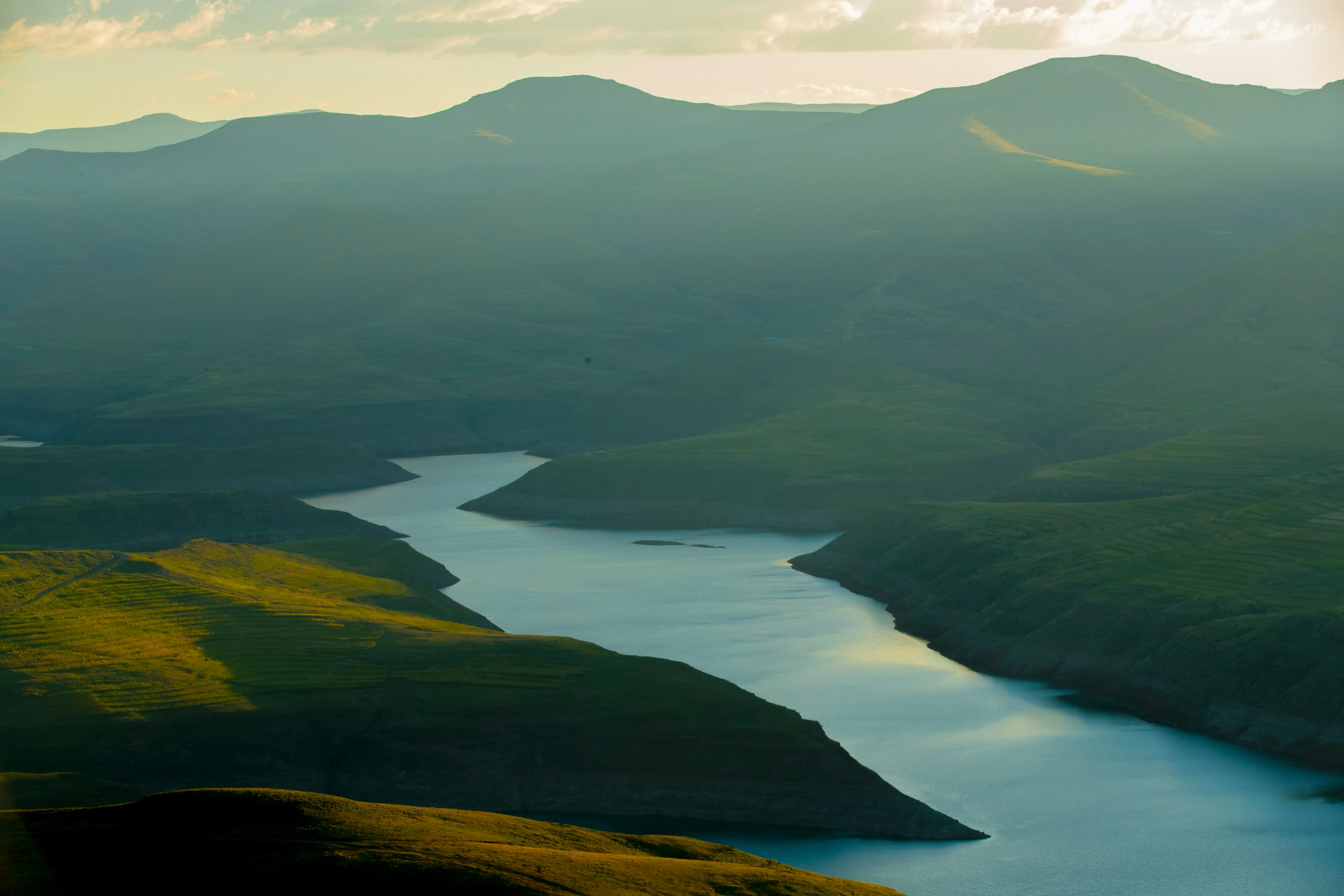
The wildest and most protected nature is found in the Sehlabathebe National Park, integrated into the cross-border World Heritage site. This park stands out for its unique rock formations, its high-altitude wetlands, and a unique biodiversity adapted to extreme climatic conditions. On the other hand, the country has impressive engineering works such as the Katse Dam. This huge reservoir in the center of the mountains is not only vital for water supply but has become a point of interest due to the visual contrast between the deep blue of the water and the ochre tones of the surrounding mountains.
In the Semonkong region, travelers can admire the Maletsunyane Falls, one of the highest uninterrupted waterfalls in the region. The environment is ideal for outdoor activities such as pony trekking, which is the traditional means of transport in the country and allows access to corners where vehicles cannot reach. These excursions offer an intimate view of life in rural villages, where hospitality and contact with nature are the norm. It is an area where the sound of the water and the vastness of the horizon set the pace of the day.
To the north, the Ts’ehlanyane National Park protects Lesotho’s scarce forest ecosystems, offering hiking routes between crystal-clear rivers and a very particular high mountain flora. Nearby are also the Ha Kome cave dwellings, small houses built under rocky overhangs that have been inhabited for generations. These mud and stone structures are a living testimony to human adaptation to the environment and allow for a better understanding of the ancestral ways of life that still persist in various areas of this mountainous territory.
Tip: You cannot miss visiting Thaba Bosiu, the most emblematic place in the country.
✈️ Best time to travel
Lesotho offers a travel experience marked by its high altitude, which defines a mountain climate with well-differentiated seasons. The choice of the ideal time to visit the country depends on the activities you wish to perform, whether exploring its trails under a moderate sun or enjoying the uniqueness of its snowy peaks during the coldest months.
During the course of the year, the landscape changes drastically, passing from golden valleys and clear skies to intensely green meadows fed by seasonal rains. This variability allows the country to be an attractive destination at any time, provided the traveler has the proper preparation for the thermal conditions of each period.
| Season | Months | Typical Climate | What to Expect | Tourist Influx |
|---|---|---|---|---|
| Spring | Mar – May | Mild temperatures and decrease in rain. | Clear skies, landscapes in ochre tones, and optimal conditions for long-distance hiking. | Medium ⭐⭐ |
| Summer | Jun – Aug | Intense cold with frequent frosts and snow in the highlands. | Alpine landscapes, possibility of practicing winter sports, and observation of frozen waterfalls. | Medium ⭐⭐ |
| Autumn | Sep – Nov | Fresh weather with rising temperatures and occasional winds. | Fruit trees flowering in the valleys, longer days, and nature beginning to recover its greenery. | Medium ⭐⭐ |
| Winter | Dic – Feb | Warm environment with frequent thunderstorms in the afternoons. | Vibrantly green landscapes, rushing rivers, and great activity in rural areas and pastures. | High ⭐⭐⭐ |
🗣️ Basic vocabulary
Learning a few words in Sesotho, the local language of Lesotho, is a simple and effective way to connect with the local population during your trip. Although English is quite widespread in urban areas and the tourism sector, the use of Sesotho in daily interactions shows respect for their culture and usually makes communication much easier in common situations.
You don’t need to master the grammar to get by; just knowing the most common greetings and expressions of courtesy is enough. These small signs of interest are usually received with pleasure and help create a closer atmosphere in markets, transport stops, or when visiting villages in rural areas.
- Dumela: Hello (to greet one person).
- Dumelang: Hello (to greet several people).
- Kea leboha: Thank you.
- U phela joang?: How are you?
- Ke kopa…: Please / I would like… (used to ask for something politely).
- E: Yes.
- Che: No.
- Tsela tšoeu: Have a good trip (used as a farewell and literally means “white road”).