


Austria
An alpine destination that combines imperial cities with spectacular mountain landscapes, offering a rich musical culture and historical architecture that captivates every visitor.
Quick Facts
- Capital
- Vienna
- Language
- German
- English, Hungarian, Slovenian
- Currency
- Euro (EUR)
- Best time to visit
- From May to September for nature; from December to March for skiing and Christmas markets.
- Budget per day
- $80 - $200 per day
- Climate
- Temperate continental climate with mild summers, cold winters, and precipitation distributed throughout the year depending on altitude.
- Connectivity
- good
- Very easy to obtain in phone stores, supermarkets, and airports, including eSIM options.
- Electricity
- Type C / F (230V)
- Local transport
- good
- Card usage
- widespread
- Tipping
- optional
🌎 Introduction
In the heart of the continent, where the alpine peaks begin to soften toward the Danube plain, lies a territory that invites a slower pace. It is a corner of Europe that transforms with the passing of the seasons: from the intense white that covers the valleys in winter to the vibrant green of the meadows when the thaw arrives. The landscape here is not just a backdrop, but the stage where daily life unfolds, marked by a balance between the natural environment and historical legacy.
This identity can be breathed both in the aroma of coffee and artisanal pastries in its cities and in the serenity of its villages on the shores of the lakes. In these lands, the elegance of an imperial past coexists with a discreet modernity, where music and local traditions are part of everyday life. It is a destination that offers a varied experience, capable of alternating the vibrant cultural life of its urban centers with the comforting silence of the mountains and the vineyards that line its rivers.
🛡️ General Safety
Austria is consistently considered one of the safest countries in the world for travelers. The general safety level is very high, allowing visitors to enjoy its cities and landscapes with notable peace of mind compared to other international destinations.
The context for the traveler is one of great social and political stability. However, as in any popular tourist destination, absolute safety does not exist, and it is advisable to maintain basic common sense to avoid small setbacks that could dampen the experience.
Crime and Common Risks
Although violent crime rates are extremely low, petty crimes are the main concern for tourists.
- Pickpocketing and bag snatching are the most frequent risks, especially in places with large crowds.
- Pickpockets often operate in major train stations, busy pedestrian areas, and around the most famous monuments.
- Occasional minor scams exist, such as people trying to sell fake tickets for concerts or cultural events on the street; it is recommended to always buy through official channels.
- Bicycle theft is relatively common in large cities, so if you rent one, it is essential to use high-security locks.
Safety in Cities and Tourist Areas
Safety in urban centers like Vienna, Salzburg, or Innsbruck is excellent, both day and night.
- Tourist neighborhoods are well-guarded and have a discreet but effective police presence.
- Public transport is very safe at any time, including night subway or bus lines.
- There are no “no-go zones” or dangerous neighborhoods that tourists should systematically avoid, although as in any large city, some peripheral areas near the main stations may be less frequented during the early morning.
- It is recommended to watch your belongings at outdoor cafés and restaurants, avoiding leaving bags or phones on the table or hanging on the back of the chair.
Transport Safety
The Austrian transport system is one of the most efficient and safe in Europe.
- Public transport (trains, trams, and subways) stands out for its punctuality and safety. It is rare to experience security incidents on board.
- Taxis and private transport services are highly regulated. They are safe, and drivers usually use the meter without the need for prior negotiation.
- In Austria, you drive on the right. Roads and highways are in excellent condition, but traffic rules are strictly enforced.
- To drive on highways, it is mandatory to purchase the “Vignette” (an electronic toll or windshield sticker). Not having one carries heavy fines.
- In winter, the use of winter tires or chains is mandatory in mountain areas due to the presence of snow and ice.
Natural and Climatic Risks
Natural risks in Austria are mainly linked to its alpine geography and seasonal variations.
- In winter, the most significant risk is avalanches in mountain areas. It is vital to respect signs and not ski off-piste in unauthorized areas.
- During the summer, sudden storms can occur in the Alps, causing sharp temperature drops or localized flooding.
- Extreme heat is not common, but brief heatwaves can occur in July and August, requiring constant hydration.
- If hiking, it is fundamental to consult the local weather forecast and carry appropriate equipment, as mountain weather changes very quickly.
Local Legislation and Norms
Austria is a country where compliance with rules is an important part of social coexistence.
- It is mandatory to always carry a valid identity document (passport or ID card, depending on nationality).
- There is a law that prohibits covering the face in public places (known as the burqa ban, but affecting any garment that hides features), except for medical, professional, or extreme weather reasons.
- Crossing the street when the pedestrian light is red can lead to immediate fines, even if no vehicles are coming.
- Public consumption of alcohol is allowed in most places, but disruptive behavior under its influence can result in sanctions.
Safety for Specific Groups
Austria is an inclusive and welcoming destination for all traveler profiles.
- Women travelers: It is an extremely safe country for women traveling alone. The precautions to take are the same as in any developed country.
- LGTBIQ+ travelers: Austria has advanced protection laws and social acceptance is very high, especially in large cities. It is a very safe destination for this group.
- Children and the elderly: The country is perfectly adapted, with safe infrastructure, top-tier health services, and a culture of respect toward people with reduced mobility or families.
Emergencies and Assistance
In case of needing help, emergency services in Austria are fast and highly professional.
- 112: European emergency number (works for police, fire, and ambulance).
- 133: Local police.
- 144: Medical emergencies / Ambulance.
- The police usually speak English and are very helpful to tourists. If you suffer a theft, you must go to the nearest station to file a report (“Anzeige”), which is necessary for any insurance claim.
- Medical services are of excellent quality. It is recommended to always travel with travel insurance that covers medical expenses and repatriation.
Tip: Always keep a digital copy of your passport in the cloud and avoid carrying all your cash in one place while visiting the busiest areas of Vienna or Salzburg.
📝 Entry Requirements
To organize a trip to Austria, it is essential to have a valid passport or identity document. It is highly recommended that this document has a residual validity of at least three or six months after the date you plan to leave the country, thus avoiding any inconvenience at border checkpoints.
In most cases for short-term tourist visits, a prior visa application is usually not necessary. The maximum permitted stay for those traveling for pleasure is typically limited to a period of ninety days, enough time to explore the destination’s landscapes and culture. It is important to keep in mind that this permit is generally granted for non-remunerated activities.
Upon arrival at airports or border posts, security personnel may randomly request proof of an onward ticket or a return ticket to the place of origin. Likewise, it is common to be asked to demonstrate that the traveler has sufficient financial means to support their stay, either through cash, credit cards, or bank statements.
Regarding customs regulations, there are standard rules on the transport of personal goods. Products such as tobacco or alcoholic beverages have established limits that must not be exceeded. If traveling with prescription medication, it is convenient to carry the corresponding medical prescription in a language understandable to local authorities to facilitate identification.
In terms of health and prevention, it is not common for mandatory vaccines to be required to enter the territory. However, it is advised to keep the general vaccination schedule up to date and to have travel insurance that offers broad coverage. Checks at entry points are usually smooth and aimed at ensuring a peaceful arrival for the international visitor.
- Identification document: Passport or identity document with sufficient validity.
- Stay period: Usually a maximum of ninety days is allowed for tourism purposes.
- Proof of departure: It is advisable to have a return or onward ticket.
- Financial solvency: Possible requirement to demonstrate funds to cover stay expenses.
- Personal items: Limitations on the entry of tobacco, alcohol, and certain food products.
- Medical treatments: Drugs must be accompanied by their respective prescription or medical report.
- Health requirements: Specific vaccines are not usually requested, although international medical coverage is recommended.
🏥 Basic Health Considerations
On your trip to Austria, you will discover that the country has one of the most advanced and efficient healthcare systems on the entire continent. You will find a network of hospitals and clinics with cutting-edge technology and highly qualified professionals. Access for tourists is simple in both public and private centers, although you should keep in mind that private medical prices are high. In most cases, you will be able to communicate without problems as much of the health staff speaks English fluently.
Although it is not a legal requirement to enter the country, taking out travel health insurance is fundamental. It is highly recommended that your policy includes broad coverage for hospitalization, ambulance transfers, and medical repatriation. Having this support will allow you to enjoy your stay with total peace of mind, knowing that you will not have to face unforeseen medical expenses that could be very costly.
Regarding vaccines, there are no mandatory vaccines to visit Austria. To travel safely, it will be enough to have your usual vaccination schedule up to date. If you plan to do many outdoor activities, such as hiking in forested areas or camping, you might consult your doctor about the vaccine against tick-borne encephalitis, as these insects are present in certain rural regions during the hottest months.
If you need to travel with your own medication, you can do so without major complications. The most appropriate thing is to carry your drugs in their original packaging and, if they are specific or specially controlled medications, it is very useful to have a medical prescription or a report signed by your doctor, preferably in English. You will find pharmacies, called Apotheke, everywhere, although you should know that many medications that are over-the-counter elsewhere may require a local prescription here.
The most common health risks you might encounter are related to the natural environment. If you go to the mountains, it is important to protect yourself from the intense cold in winter and solar radiation, which is much stronger at high altitudes. In summer, as mentioned, the main risk is ticks in areas of low vegetation. Otherwise, Austria is a country with a very low risk of infectious diseases and there are no serious health dangers you should worry about.
Regarding hygiene and food, standards are exceptionally high. You can drink tap water with total safety anywhere in the country, as it is usually water of excellent quality that comes directly from the Alps. Food in restaurants and street stalls complies with very strict hygiene standards, so you can try all the local specialties with full confidence.
If you find yourself in a medical emergency situation, the phone number you should dial is 144, which is the specific health emergency service. You can also use the general emergency number 112. Ambulance response is extremely fast and hospital emergency services function impeccably twenty-four hours a day.
As final practical recommendations, I suggest always carrying a small basic first-aid kit for chafing or minor discomfort if you are going to walk a lot. Don’t forget to use high-factor sunscreen if you are going to be in high mountain areas, even if the day seems cloudy, and stay well hydrated by taking advantage of the freshness of the local water.
🚌 Transport Within the Country
Moving around Austria is a comfortable experience thanks to an infrastructure that effectively connects the main points of interest. The train is the reference means of transport for traveling between cities, offering frequent journeys and notable punctuality. To reach valleys or mountain villages where the railway does not reach, the bus complements the network in a functional way. On the other hand, road transport is a common option for those seeking flexibility, with roads in good condition that allow for easy travel through the alpine landscape.
Simplicity for the visitor is high, as stations usually have clear signage and easy-to-interpret information panels. The ticket purchasing process is intuitive through automatic machines or service points, where the use of the English language is generally widespread. The feeling of comfort and cleanliness in the carriages and vehicles is a constant, allowing the traveler to move with peace of mind and confidence throughout the territory.
Within large cities, the subway, tram, and city bus allow you to do without a private vehicle, thanks to an interconnected network and constant frequencies. In contrast, in rural areas, schedules may be more spaced out and the pace of transport is different, so it is advisable to pay attention to local schedules. In some regions with lakes, it is also common to find ferry services or small boats that connect different towns by water.
Taxis and other ride-hailing services are present in urban centers, airports, and main stations. These services operate under standard regulation, providing a direct alternative for specific journeys or transfers with heavy luggage. Internal flights are not common because land distances are reasonable and travel times are competitive.
Tip: It is recommended to confirm if the transport ticket must be validated before entering the vehicle or the platform to ensure a journey without setbacks.
🤵 Culture and Etiquette
In Austria, social interactions usually follow a tone of formal courtesy, especially when dealing with people who do not know each other beforehand. The most common greeting consists of a firm handshake accompanied by direct eye contact, which is interpreted as a sign of openness and respect. It is common to use traditional formulas such as “Grüß Gott” or the classic “Guten Tag” when entering shops, small establishments, elevators, or when starting any transaction. The treatment is usually polite, and the use of academic or professional titles is positively valued if known, although in purely tourist environments the atmosphere tends to be somewhat more relaxed.
Behavior in public spaces is characterized by discretion and tranquility. Maintaining a moderate voice volume is appreciated, both on public transport and in cafés and museums, to preserve an atmosphere of calm and privacy. Punctuality is a fundamental aspect of daily life; arriving at the agreed time for a reservation or a social meeting is considered a sign of consideration for others’ time. In terms of communication, the attitude is usually direct and clear, prioritizing honesty and efficiency in the exchange of information, always within a framework of kindness.
In the realm of gastronomy and social gatherings, there are simple gestures that facilitate the traveler’s integration. When toasting, it is customary to maintain eye contact with companions while using the expression “Prost”. Regarding tips, although the service is usually included in the bill, the social norm suggests rounding up the amount or adding between 5% and 10% of the total if satisfied with the service received. In busy venues or traditional cafés with long tables, it is common and polite to ask permission before taking a free seat next to other people.
Respect for heritage, nature, and local traditions is very deep throughout the territory. When visiting places of worship, historical monuments, or attending cultural events, attire consistent with the environment and quiet behavior is expected. Local festivities and seasonal customs are an essential part of the country’s identity, so showing interest and respect for these manifestations helps generate a positive interaction with residents. Likewise, respect for personal space is valued, preferring to maintain a prudent physical distance during conversations and avoid unnecessary physical contact with strangers.
“Tip”: When paying in a restaurant or café, it is most common to indicate the total amount you wish to pay (already including the tip) directly to the waiter at the time of payment, rather than leaving change on the table after the employee has left.
🍛 Typical Gastronomy
The gastronomy of Austria is the result of a rich historical heritage that combines influences from Central Europe, especially from the ancient regions of the empire such as Hungary, Bohemia, and Italy. It is characterized by being a comforting cuisine, where meats, flours, and dairy products play a fundamental role. Dishes are usually hearty and designed to provide energy, highlighting the frequent use of butter, cream, and mild spices like cumin or paprika.
Regarding eating habits, lunch is usually the main meal of the day, although in large cities this custom has become more flexible. Dinner times are usually early, frequently starting around 6:00 PM or 7:00 PM. When going to a restaurant, it is common for the service to be professional and somewhat formal; courtesy is highly valued and it is common to greet with a “Mahlzeit” (enjoy your meal) when entering or sitting at the table during meal times.
The coffee culture deserves a separate mention, as Viennese cafés have been declared Intangible Cultural Heritage. They are not simply places to drink coffee, but social meeting spaces where one can spend time reading or talking quietly. In these venues, pastries are the absolute protagonist, with a variety of cakes and pastries that are an essential part of the country’s culinary identity.
Regarding drinks, Austria has a consolidated tradition of white wines, especially in the eastern regions, and a wide production of local beer. The consumption of fruit juices diluted with sparkling water is also very common and, in general, tap water is of exceptional quality in almost the entire territory, being very common for it to be served at tables naturally.
| Dish | Description | Main Ingredients | Where to try it | Tip |
|---|---|---|---|---|
| Wiener Schnitzel | Thin meat fillet, breaded and fried until golden brown. | Veal, flour, egg, and breadcrumbs. | Traditional restaurants in Vienna and throughout the country. | Accompany it with the typical potato salad for an authentic experience. |
| Tafelspitz | Veal slowly simmered in a vegetable broth. | Veal, carrots, leeks, and horseradish. | Restaurants specialized in imperial cuisine. | It is usually served with an apple and horseradish sauce that enhances its flavor. |
| Austrian Goulash | Thick meat stew derived from Hungarian influence. | Beef, onion, paprika, and spices. | Rural taverns and local homemade food spots. | It is ideal for cold days and is usually served with bread or flour dumplings. |
| Knödel | Dough dumplings that serve as a side dish or main course. | Stale bread, potato, or semolina, sometimes filled with meat. | In all regions, especially in Tyrol. | There are sweet versions filled with fruit that work as dessert. |
| Apfelstrudel | Thin rolled pastry filled with fruit. | Apples, raisins, cinnamon, sugar, and breadcrumbs. | Historical cafés and bakeries. | Order it warm and with a dollop of whipped cream or vanilla sauce. |
📷 Areas and Places to Visit
Austria presents itself as a destination where the elegance of its imperial past merges with an imposing alpine nature. The capital, Vienna, is the usual starting point and reflects the splendor of the Habsburg dynasty. Walking along the Ringstrasse allows one to admire institutional buildings of great architectural value, such as the State Opera or the Parliament. In this city, green spaces are integrated with historical monuments like Schönbrunn Palace, the former summer residence of the monarchy, and the Hofburg, the palace complex located in the urban heart.
The Viennese cultural offer is especially broad in the field of fine arts. The Museum of Art History houses collections of incalculable value, while the Belvedere Palace holds fundamental works of European painting. In addition to visits to galleries and concert halls, the experience in the capital is completed with a visit to its historical cafés, which are part of the local identity and are considered intangible heritage.
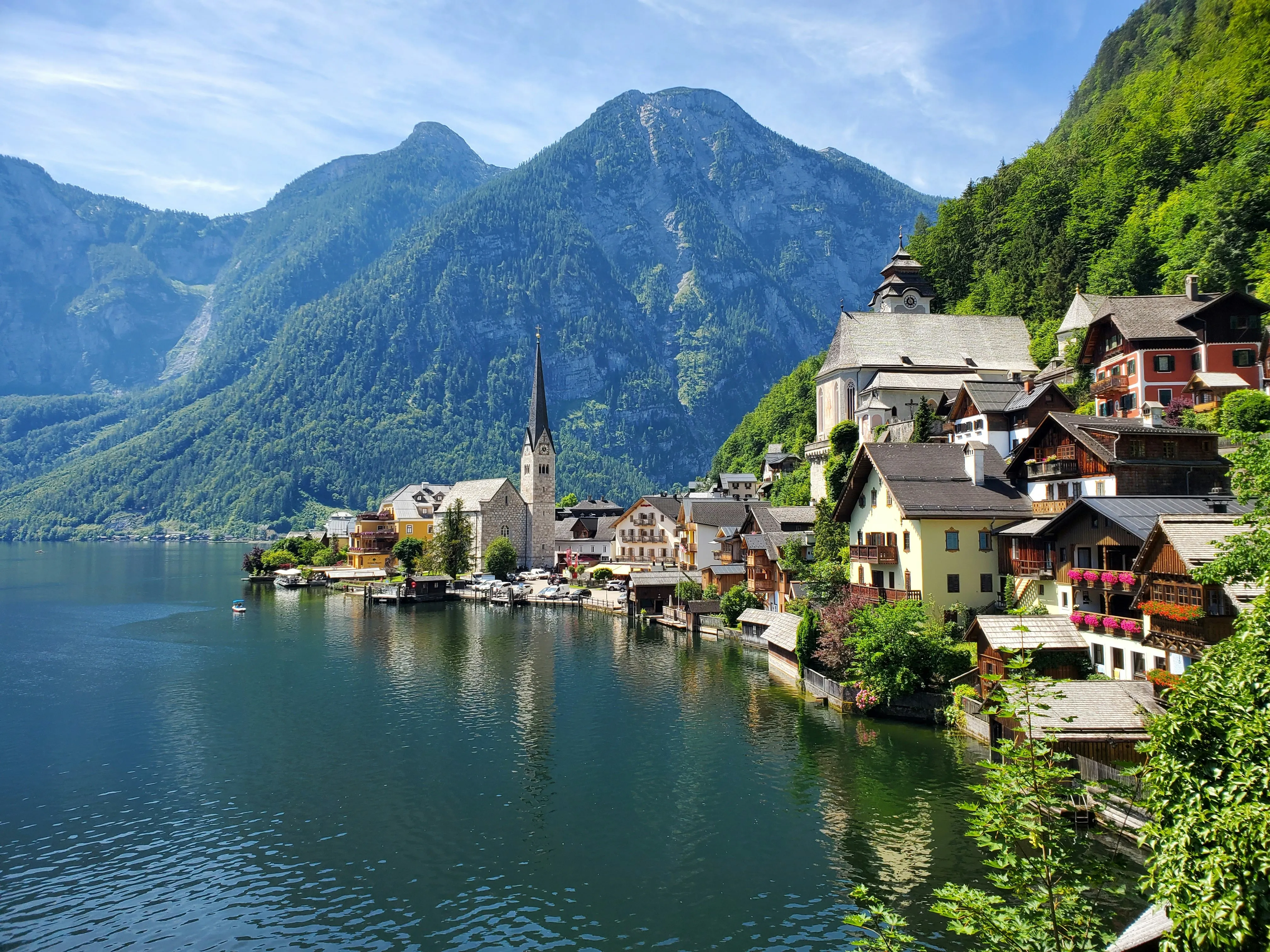
Moving west, the city of Salzburg stands out for its baroque physiognomy and its close link to classical music. Its historical center, presided over by the imposing Hohensalzburg Fortress, invites you to walk through narrow streets like the Getreidegasse, where Wolfgang Amadeus Mozart’s birthplace is located. This city serves as a gateway to the lake region, the Salzkammergut, an area that alternates picturesque small villages with mirrors of water surrounded by mountains, where the town of Hallstatt stands out for its location between the slope and the lake.
The Tyrol region offers a marked contrast to the urban environment of the east. Its capital, Innsbruck, is recognized for the Golden Roof and for being surrounded by peaks exceeding two thousand meters in height. It is a favorite destination for those seeking outdoor activities, whether through hiking in summer or snow sports in winter. Tyrolean valleys preserve a traditional wooden architecture that contrasts with the contemporary design proposals found in the country’s most modern urban centers.
In the south, the city of Graz offers an interesting mix of architectural styles ranging from the Renaissance to avant-garde design, visible in buildings like the Kunsthaus or contemporary art museum. For its part, the region of Styria is known for its landscapes of hills and vineyards, offering a more rural and paced facet. Near the German border, the area of Upper Austria and its capital, Linz, propose a look toward technology and digital art, complementing the historical tour of the rest of the territory.
For lovers of great natural landscapes, the Hohe Tauern National Park protects some of the highest glaciers and peaks of the alpine range, including the Grossglockner. On the other hand, the Wachau Valley, bathed by the Danube River, is famous for its geological formations, its medieval monasteries like the Melk Abbey, and its extensive crop fields that can be explored both by river and through cycling routes connecting different historical towns.
“Tip”: You cannot miss visiting Schönbrunn Palace, the most emblematic place in the country.
✈️ Best Season to Travel
Austria is a destination that offers very diverse experiences throughout the year, so the ideal time to visit depends mainly on the activities you wish to perform. The country has a continental climate with four well-defined seasons: the summer months are ideal for hiking and urban life, while winter attracts those seeking snowy landscapes and mountain sports.
For those who prefer to avoid climate extremes and large crowds, intermediate seasons like spring and autumn are highly recommended options. During these months, the landscape is transformed with blossoming or the changing color of the forests, allowing exploration of both cities and rural areas with a pleasant temperature and a calmer atmosphere.
| Season | Months | Typical Climate | What to Expect | Tourist Influx |
|---|---|---|---|---|
| Spring | Mar – May | Cool and variable, with rising temperatures and longer days. | Blossoming in the valleys, thaw in the mountains, and Easter cultural festivals. | Medium ⭐⭐ |
| Summer | Jun – Aug | Warm and sunny, with the possibility of brief afternoon storms. | Outdoor activities, swimming in alpine lakes, and music festivals in the cities. | High ⭐⭐⭐⭐ |
| Autumn | Sep – Nov | Crisp and cool air, with clear skies and mild winds. | Landscapes of golden colors, grape harvest season, and local gastronomic events. | Medium-Low ⭐⭐ |
| Winter | Dic – Feb | Intense cold with habitual presence of snow, especially in high areas. | Christmas markets, winter sports, skiing, and traditional gala concerts. | High ⭐⭐⭐⭐ |
🗣️ Basic Vocabulary
Although in most tourist areas of Austria you will be able to communicate in English, knowing some basic expressions in the local language greatly facilitates interaction with residents. Using these words in everyday situations, such as entering a shop or asking for directions, is usually well-received and helps the trip run more smoothly.
It is not necessary to delve deep into grammar to manage successfully; it is enough to memorize a few courtesy formulas and practical terms that will serve you in your day-to-day life during your stay in the country.
- Grüß Gott: The most common formal greeting in Austria, similar to saying “good day.”
- Bitte: Means “please,” although it is also commonly used to say “you’re welcome.”
- Danke: Standard expression for saying thank you.
- Entschuldigung: Used to apologize or to politely get someone’s attention before asking something.
- Ja / Nein: Mean “yes” and “no” respectively.
- Auf Wiedersehen: The habitual and polite way of saying “goodbye.”
- Die Rechnung, bitte: Practical phrase for asking for the bill in restaurants or cafés.