


Germany
Discover a country that merges medieval history with urban modernity, offering alpine landscapes, legendary castles, a unique beer culture, and vibrant cities full of art.
Quick Facts
- Capital
- Berlin
- Language
- German
- English, Sorbian, Danish
- Currency
- Euro (EUR)
- Best time to visit
- From May to September for the mild weather, and December to enjoy the Christmas markets.
- Budget per day
- $80 - $220 per day
- Climate
- Temperate climate with mild summers and cold winters. Rainfall is frequent throughout the year, especially in the north.
- Connectivity
- good
- Very easy to acquire at airports, official local operator stores, or through eSIM services.
- Electricity
- Type C/F (230V)
- Local transport
- good
- Card usage
- widespread
- Tipping
- optional
🌎 Introduction
Germany stretches across the heart of Europe, offering a geography of contrasts where northern plains eventually meet the peaks of the Alps in the south. The pace of life in its towns and cities usually follows the rhythm of the seasons, from the awakening of river valleys in spring to the cozy atmosphere that envelops the squares when the cold arrives. It is a territory where nature and architecture engage in a natural dialogue, allowing dense, legendary forests to coexist with urban centers that look toward the future without forgetting their history.
Beyond its physical borders, the country’s identity is perceived in its daily customs and in a culture that values both precision and leisurely enjoyment. Whether sharing a simple outdoor meal during the months of good weather or browsing the markets that light up the cities in winter, a deep root in local traditions is evident. This diversity is also reflected in its artisanal gastronomy and in a network of cities with very distinct personalities, offering a balanced and tranquil vision of what it means to inhabit the center of the continent.
🛡️ General Safety
Germany is considered one of the safest and most stable destinations in the world for travelers. The country enjoys a high level of safety, consistently ranking in top positions within international indices of peace and public order. The environment is predictable and institutions function with great efficiency, allowing tourists to move around with a notable sense of tranquility.
Despite this positive assessment, as in any developed country with a high influx of visitors, it is necessary to maintain common sense. Incidents affecting tourists are usually minor in nature and concentrated in very specific points. The general context for the traveler is one of freedom of movement and trust in public services.
Common Crime and Risks
Most visits to Germany pass without any incident. However, it is useful to know the most common risks which, although not alarming, exist in the busiest areas:
- Thefts and pickpockets: This is the most common risk. They usually operate in central train stations (Hauptbahnhof), airports, Christmas markets, and large events like Oktoberfest. It is essential to watch belongings in crowded places.
- Minor scams: In some tourist squares, people may appear practicing the “shell game” (trileros) or requesting signatures for fake petitions to distract the tourist and steal money.
- Thefts from vehicles: Although not frequent, it is recommended not to leave valuables in sight inside rental cars parked in isolated areas or unguarded public parking lots.
- Infrequent risks: Violent crimes against tourists are extremely unusual in Germany. Most reported incidents are thefts due to carelessness.
Safety in Cities and Tourist Areas
German cities are, generally, very safe to walk in at any time of day or night. Urban centers and tourist neighborhoods have a discreet but effective police presence.
- Station areas: The areas surrounding large train stations can attract homeless people or groups with addiction problems. Although rarely aggressive, these areas can be less visually pleasant at night, so it is recommended to stick to main roads.
- Public transport: It is extremely safe. The subway (U-Bahn), suburban train (S-Bahn), as well as trams and buses maintain high standards of safety and cleanliness.
- Practical recommendations: Always keep a hand on your bag on crowded public transport and avoid leaving your mobile phone on outdoor terrace tables in very busy areas.
Transportation Safety
The transportation system in Germany is a world reference for its punctuality and organization, which directly contributes to traveler safety.
- Public transport: Tickets must be validated before boarding or inside the vehicle depending on the city. Traveling without a ticket carries immediate fines, and checks are frequent.
- Taxis and VTC services: Taxis are official, safe, and always use a meter. They are cream-colored vehicles that are very easy to identify. Private transport services via mobile applications also operate with total normality and safety.
- Driving: In Germany, you drive on the right. Roads and highways (Autobahn) are in excellent condition. It is important to know that, although some highway sections have no speed limit, traffic rules are strictly enforced and fines for speeding or not respecting safety distances are high.
Natural and Climatic Risks
Germany does not usually suffer from extreme natural disasters, but there are seasonal phenomena that the traveler should consider:
- Floods: In spring or after periods of heavy rain, some rivers (such as the Rhine, Elbe, or Danube) may experience rises that affect navigation routes or river paths.
- Winter weather: During winter, snowfall and ice can hinder mobility and increase the risk of falls or traffic accidents. The use of winter tires is mandatory if driving in these conditions.
- Extreme heat: Brief but intense heatwaves can occur in summer. It is recommended to stay hydrated, as not all old establishments have air conditioning.
Local Legislation and Norms
Compliance with rules is a relevant cultural characteristic in Germany. Knowing certain rules will avoid misunderstandings or sanctions:
- Identification: It is mandatory to carry a valid identity document (ID card or passport) at all times, as the police may request it for routine identification.
- Crossing the street: Crossing against red pedestrian lights is very poorly regarded (and punishable by a fine). It is common for locals to wait for the green light even if no cars are coming, especially if children are present.
- Symbolism laws: The use of symbols of unconstitutional organizations (such as Nazi symbolism) or Holocaust denial is a criminal offense.
- Sunday and night rest: Noise laws are strict. Sunday is a day of total rest where almost all shops close, and excessive noise in accommodations should be avoided after 10:00 PM.
Safety for Specific Groups
- Female travelers: Germany is a very safe country for women traveling alone. The precautions to take are the same as in any large Western European city.
- LGTBIQ+ travelers: The country is very progressive and respectful of diversity. Berlin, Cologne, and Munich have very active communities and especially welcoming areas, being considered a highly safe destination for this collective.
- Travel with children and the elderly: The infrastructure is fully adapted. There are many parks, safe pedestrian zones, and a top-tier health network for any medical needs that might arise.
Emergencies and Assistance
In case of needing immediate help, Germany has coordinated and very fast emergency services:
- 112: Single number for Medical Emergencies and Firefighters. It is free and works from any phone.
- 110: Specific number to contact the Police.
- Medical services: Healthcare is of excellent quality. International travelers should have their European Health Insurance Card or private travel insurance to cover assistance costs.
- Police assistance: German police are usually friendly and many officers speak fluent English, which greatly facilitates communication in case of having to report a theft or loss of documents.
Tip: Always validate your transport ticket before boarding the train or subway; ticket inspectors often wear plain clothes and do not accept excuses if the ticket is not correctly stamped.
📝 Entry Requirements
To undertake a trip to Germany, it is essential to have a valid passport or an internationally recognized identity document that is valid for border crossing. Generally, it is recommended that this document has a validity covering the entire planned stay and, in many cases, it is suggested that it extends a few months beyond the return date to avoid inconveniences. In the case of short stays for leisure or family visits, a large portion of international travelers do not need to manage a prior visa, provided their stay remains within the time limits established for general tourism.
The maximum period of stay under tourist status is usually set at a specific timeframe, typically 90 days. Upon arrival at border control points, whether at international airports or land access points, security personnel could request the presentation of a return ticket or a continuation ticket to a third destination. Likewise, it is common that the traveler may be asked to prove the availability of sufficient financial resources to cover the costs derived from their stay and the subsequent transfer to their place of origin.
Regarding customs controls, there are regulations governing the introduction of certain products into the territory. It is advisable to pay attention to the transport of specific medications, for which it is suggested to carry the medical prescription or a report justifying their personal use. Similarly, the entry of fresh food, plants, or animal products may be subject to restrictions to protect local biological safety. Finally, in the health field, there is usually no obligation to present specific vaccination certificates to enter the country, although it is always considered good practice to keep the basic health schedule up to date.
- Personal identification: Use of a valid passport with sufficient validity to cover the total duration of the planned trip.
- Entry permit: Visa exemption for short-term stays for most foreign visitors according to international agreements.
- Maximum stay: The usual limit for recreational activities is typically 90 days per stay period.
- Additional documentation: Possibility of requiring proof of accommodation reservation or invitation letters if necessary.
- Financial funds: Ability to demonstrate financial solvency to cover living costs during the visit.
- Restricted items: There are limits on the import of tobacco, alcohol, and the prohibition of certain phytosanitary products or unprocessed foods.
- Health recommendations: Mandatory vaccines are not usually required, although it is advisable to have travel insurance with international medical coverage.
🏥 Basic Health Considerations
Germany has one of the most advanced and efficient health systems you will find anywhere in the world. During your stay, you will see that medical care is excellent in both public hospitals and private clinics. If you do not reside in the European Union, you should keep in mind that the costs of any consultation or treatment are usually quite high, so it is better to go prepared. In most tourist areas and urban centers, you will find healthcare personnel who speak fluent English, which will make things much easier if you do not master German.
Hiring travel medical insurance is not just a suggestion, but something practically fundamental for moving around with peace of mind. Although it may not always be a mandatory requirement for entering the country depending on your nationality, it is highly recommended to avoid unforeseen expenses that could ruin your budget. Make sure your policy covers at least hospitalization, emergency interventions, and repatriation in case it is necessary to return home for health reasons.
Regarding vaccines, you will not have to worry about any legal obligation to enter the country. It is enough to have your usual vaccination schedule up to date according to general health recommendations. If you are an adventurous person and plan to spend a lot of time hiking through the forests in the south of the country, you might consider informing yourself about the tick-borne encephalitis vaccine, but for a conventional tourist trip through cities, it is not necessary.
If you travel with your own medication, it is wise to be cautious with local regulations. Ideally, you should carry your medications in their original containers and always accompanied by a medical prescription or a certificate in English justifying their use. Pharmacies in Germany are easily identified by a very large red letter A and are called Apotheke. Keep in mind that they are very strict there and many medications that in other countries are bought freely require a mandatory medical prescription.
The most common health risks you will find are mainly related to the weather. During the winter months, the intense cold can be a problem if you do not wear appropriate clothing, while in summer, in rural areas, you should watch out for ticks if you walk through tall grass areas. There are no risks of serious or tropical diseases, so beyond a common cold or fatigue from walking, your health should not be in danger.
In the food and water section, you can be totally relaxed. Tap water is potable and has an excellent taste throughout the country, so you can refill your bottle at any tap without problems. Hygiene in restaurants and street food stalls is impeccable, complying with very rigorous food safety regulations, so you can try local delicacies in markets with total confidence.
If you find yourself in a health emergency situation, the number you should dial is 112. This phone number is free, works at any time, and you will be assisted in several languages. The ambulance service is fast and will take you to the nearest hospital where you will receive immediate care. For minor problems or quick consultations, you can also go to hospital emergency services, known as Notaufnahme.
To make your trip perfect, I’ll leave you some final practical recommendations. Do not forget to always carry a copy of your travel insurance and identification. If you are prone to dizziness or small discomforts, carry a basic first-aid kit with what you already know works for you to avoid trouble with local brands. Finally, stay well hydrated if you visit the country in the middle of summer, as heatwaves can be intense in some inland regions.
🚌 Transport Within the Country
Moving around Germany is simple thanks to an infrastructure that effectively connects the main points of interest. The train is the central axis for travel between regions, allowing for smooth crossing of the country. For long distances, domestic flight options also exist, while the bus is a common alternative for joining different cities by road. In destinations with a coast or large waterways, the ferry can be a regular resource for passenger transport.
The use of public transport is very accessible for visitors. Signage at stations and terminals is usually clear, and ticket purchasing systems are prepared to be used in different languages, which facilitates orientation. Most transport hubs are well-integrated with each other, allowing the transition between one medium and another to be a logical process for any traveler.
In large urban areas, travelers have subway and tram networks at their disposal, allowing them to visit tourist spots without the need for a private vehicle. Conversely, in rural or mountain areas, the frequency of public transport tends to be lower. In these cases, a rental car offers greater autonomy to explore landscapes and small towns that do not have such direct connections.
Taxis and other private transport services with a driver are easy to locate at airports, stations, and urban centers, operating in a regulated and professional manner. In general terms, the transport system stands out for its comfort and reliability, offering a sense of order that contributes to the tourist being able to organize their journeys with confidence.
Tip: It is recommended to always verify the final destination on the platform information panels before boarding, as at some stations different lines may share the same track.
🤵 Culture and Etiquette
In Germany, social interaction is often marked by a sense of formality and respect for privacy. When greeting, the most common is a firm handshake accompanied by direct eye contact, which is interpreted as a sign of honesty and attention. In initial or professional contexts, it is frequent to address people by their surname preceded by the corresponding courtesy title, leaving the use of first names for more trusted relationships or when explicitly invited to do so. Communication tends to be direct and clear, valuing honesty and precision in messages over excessively indirect courtesy formulas.
Respect for personal space and order in daily life is fundamental for the development of coexistence. Maintaining a moderate voice volume in public transport, restaurants, and other shared spaces is appreciated so as not to interfere with the peace of others. Punctuality is considered a basic form of consideration toward others’ time, both in business appointments and social gatherings; arriving at the agreed time facilitates organization and reflects a commitment to the agreement made.
As for gastronomy and social gatherings, it is common that tips are not mandatory, but it is customary to round up the amount of the bill or add a small percentage if the service was satisfactory. When toasting, custom suggests looking directly into the eyes of the other diners while clinking glasses. In busy places, such as traditional breweries, it is common to share long tables with strangers if there are free spaces, although each group generally maintains its own privacy and conversation independently.
There are times and places where silence and reflection take on special relevance. Sundays and public holidays are considered days of rest, so it is common to reduce noise levels in residential areas to favor common well-being. Likewise, when visiting places of worship or memorial monuments, an attitude of special respect and solemnity is expected, avoiding behaviors that may be disruptive in spaces dedicated to reflection or history.
Tip: When paying in a restaurant, it is customary to verbally indicate to the waiter the total amount you wish to pay (including the tip) at the moment the money or card is handed over, instead of leaving the change on the table after the staff has left.
🍛 Typical Gastronomy
The cuisine of Germany stands out for being comforting, varied, and deeply linked to its regional and seasonal roots. Although internationally associated mainly with sausages, its culinary proposal is much broader, based on the use of local products such as the potato, pork, poultry, and an immense variety of vegetables, especially those from the cabbage family. Bread is a fundamental pillar of its identity, with hundreds of varieties existing ranging from light white breads to dark, dense, and nutritious ones made with rye.
Eating habits usually include a full breakfast and, traditionally, a hot main meal at midday. However, nowadays it is common for dinner to be the meeting time, although the custom of Abendbrot persists—a light dinner composed of high-quality bread, cold cuts, cheeses, and pickles. Regarding flavors, smoky nuances, slow cooking, and a balance between salty and acidic predominate, the latter frequently provided by the use of vinegars and ferments.
In the social sphere, drinks play a key role. Beer is the accompaniment par excellence, with styles that vary notably by region, from the light lagers of the south to the more bitter pilsners of the north. There is also a solid wine culture, especially the whites from the Rhine and Moselle areas. When visiting restaurants, it is common to find professional and direct service; in traditional establishments and breweries, sharing long tables with other diners is a common practice that fosters a close atmosphere.
| Dish | Description | Main Ingredients | Where to try it | Tip |
|---|---|---|---|---|
| Currywurst | Sliced sausage served with a tomato sauce and curry powder. | Pork sausage, spiced ketchup, and curry. | Street stalls and fast food joints throughout the country, especially in Berlin. | It is the ideal snack to eat something quickly while sightseeing. |
| Schnitzel | Tenderized meat fillet, breaded and fried until crispy. | Pork or veal, flour, egg, and breadcrumbs. | Traditional cuisine restaurants and eateries. | It is usually served with a lemon slice; squeezing it over enhances the flavor of the breading. |
| Käsespätzle | Short, artisanal, irregular-shaped pasta covered with melted cheese and onion. | Flour, egg, cheese (Emmental or mountain type), and fried onion. | Especially common in the south, in the regions of Bavaria and Baden-Württemberg. | It is a very hearty dish, ideal for winter months or after a hike. |
| Sauerkraut | Fermented white cabbage that serves as a classic side dish for meat. | White cabbage and salt (sometimes with juniper berries or white wine). | Available as a side dish in almost any traditional restaurant. | Its acidic flavor helps balance the fat of pork dishes. |
| Brezel | Bread baked in a loop shape with a shiny brown crust and coarse salt. | Wheat flour, yeast, water, and salt. | Bakeries, street stalls, and beer gardens (Biergarten). | Try it freshly baked and, if possible, split in half with a bit of butter. |
📷 Zones and Places to Visit
Germany presents itself as a destination of contrasts where contemporary history blends with natural landscapes of great serenity and cities that set the pace for the European avant-garde. In the northeast, the city of Berlin acts as the country’s cultural epicenter. Walking through its streets allows one to observe the traces of the 20th century, from the remains of the Wall to the iconic Brandenburg Gate. The capital stands out for its Museum Island, a complex that houses archaeological and artistic collections of world significance, as well as neighborhoods with a very active artistic atmosphere where modern architecture coexists with restored historical buildings.
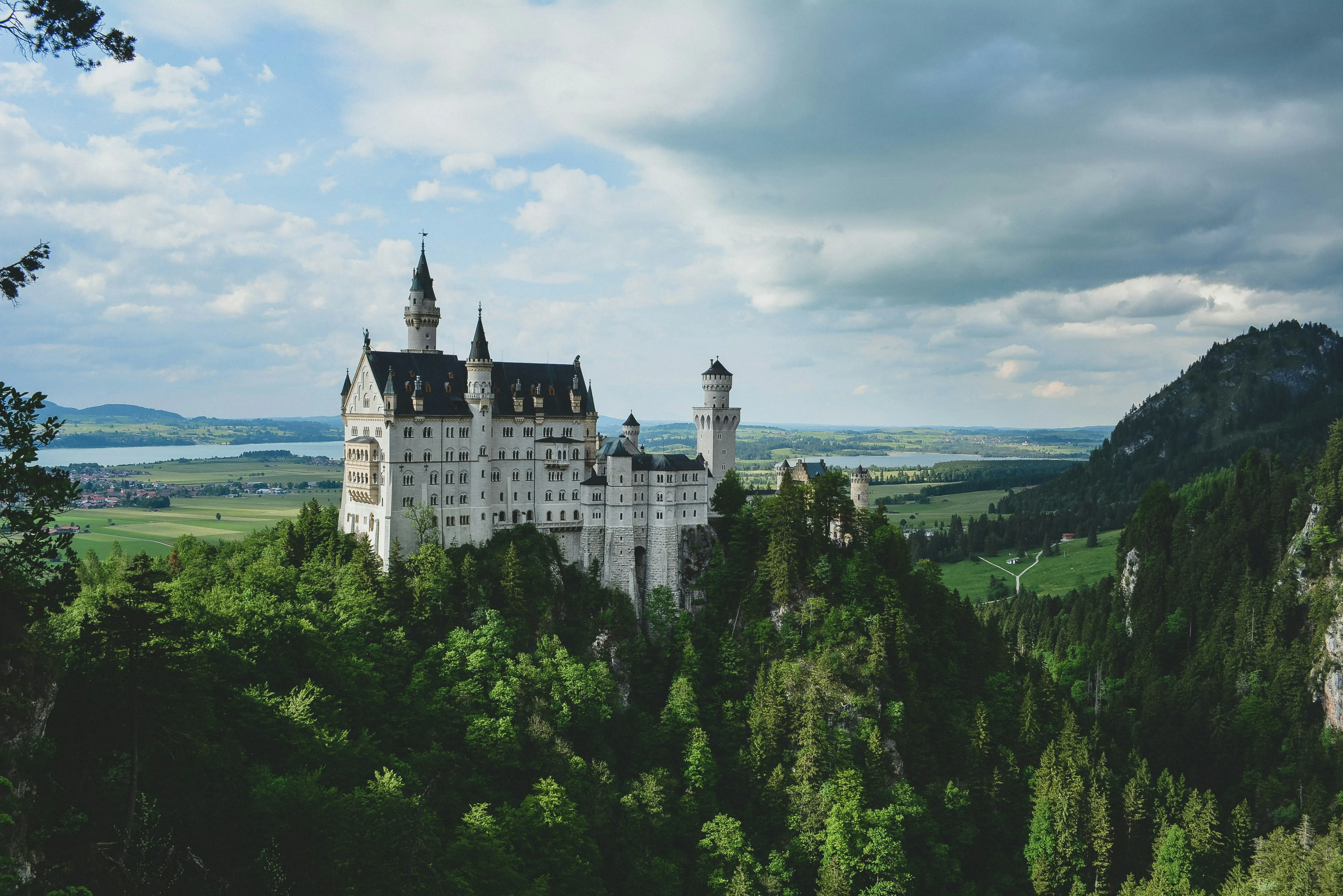
To the south, the region of Bavaria offers a more traditional experience closer to nature. Munich, its capital, is known for its wide squares and its pinacothecas, which contain some of the most important pictorial works in Europe. However, the greatest attraction of this area lies in its alpine landscapes and the royal castles that rise among the mountains. The environment of the Bavarian Alps invites hiking routes and visits to mountain villages that keep local customs and the typical wooden architecture of the region alive.
In the southwest lies the Black Forest, a very dense wooded area that seems taken out of a classic tale. This territory is ideal for outdoor lovers, offering trails that run past waterfalls, lakes like Titisee, and urban centers dedicated to traditional crafts. Nearby, the Rhine Valley flows between hills full of vineyards and is famous for the high concentration of medieval fortresses that can be seen from the river. River excursions through this valley allow for a different perspective of the small wine villages and historical ruins that dot the hillsides.
The northern part of the country shows a maritime and commercial facet. Hamburg, with its enormous port and network of canals, is an example of how the industrial architecture of the old red brick warehouses, the Speicherstadt, has been integrated into modern life. In this region, the landscape becomes flat and opens toward the North Sea and the Baltic Sea, where fine sand beaches and marshland ecosystems offer a natural retreat highly valued by those seeking tranquility and contact with the coast.
In the central and eastern parts, cities like Dresden or Leipzig stand out for their impressive recovery following historical events. The Saxony area offers an exceptional baroque architectural heritage, especially visible in the palaces and museums along the banks of the Elbe. Additionally, the Saxon Switzerland national park surprises with its vertical rock formations and stone bridges that offer panoramic views over the valley, thus combining the heritage richness of the cities with natural routes of great geological interest.
Cultural activities are a fundamental pillar throughout the territory, with a constant agenda of contemporary art exhibitions, traditional markets in historical centers, and music festivals ranging from classical to electronic. This diversity allows visitors to alternate between the dynamism of the large cities and the calm of rural areas, discovering a country that has managed to preserve its roots while looking toward the future.
Tip: You cannot miss the Brandenburg Gate, the most iconic place in the country.
✈️ Best Season to Travel
Germany is a destination that offers very different experiences throughout the year, adapting to various traveler profiles thanks to its continental climate of well-defined seasons. The choice of the ideal moment will depend largely on whether one seeks to enjoy nature in full green, participate in local cultural traditions, or practice winter activities in mountain areas.
In general terms, the period between late spring and early autumn is usually the most balanced for traveling the country. During these months, the days are longer and temperatures allow for walking or cycling routes and enjoying urban life outdoors. On the other hand, the month of December transforms many cities with its winter traditions, attracting those looking for a unique cultural atmosphere despite the drop in temperatures.
| Season | Months | Typical Climate | What to expect | Tourist Influx |
|---|---|---|---|---|
| Spring | Mar – May | Cool temperatures that gradually rise; moderate rains. | Blooming of parks and gardens, Easter festivities, and opening of terraces. | ⭐⭐ Medium |
| Summer | Jun – Aug | Warm and pleasant climate, with the possibility of occasional storms. | Outdoor music festivals, activities on lakes, and great cultural dynamism. | ⭐⭐⭐ High |
| Autumn | Sep – Nov | Declining temperatures and shorter days; cool atmosphere. | Ocher-colored landscapes, harvest festivals, wine routes, and less crowded museums. | ⭐⭐ Medium |
| Winter | Dec – Feb | Cold climate, with frequent frosts and snow, especially in the south. | Traditional markets in December, snow sports, and carnival events in February. | ⭐⭐ Medium / ⭐ Low |
🗣️ Basic Vocabulary
Learning a few words in German can make your day-to-day life much easier during the trip. Although in tourist areas and large cities it is common for restaurant and shop staff to speak English, using basic expressions to say hello or thank you helps break the ice and shows courtesy toward the local culture.
These phrases will be very useful in everyday situations, such as entering a shop, ordering in a restaurant, or moving on public transport. It is not necessary to master grammar to communicate effectively in the most common moments of your stay in Germany.
- Hallo: Hello.
- Guten Tag: Good morning or good afternoon (formal greeting).
- Bitte: Please. It is also used to say “you’re welcome”.
- Danke: Thank you.
- Ja / Nein: Yes / No.
- Entschuldigung: Excuse me or sorry (useful for asking for passage or getting a waiter’s attention).
- Tschüss: Goodbye (common and informal form).
- Die Rechnung, bitte: The bill, please.
- Sprechen Sie Spanisch / Englisch?: Do you speak Spanish / English?