


Poland
Discover the rich history of Poland, its vibrant medieval cities, captivating natural landscapes, and comforting gastronomy in the heart of Central Europe.
Quick Facts
- Capital
- Warsaw
- Language
- Polish
- English and German
- Currency
- Zloty (PLN)
- Best time to visit
- From May to September for mild weather, or December to see the Christmas markets.
- Budget per day
- $40 - $120 per day
- Climate
- Humid continental with cold winters and mild summers; rainfall is distributed evenly throughout the year.
- Connectivity
- good
- Very easy to obtain at airports, kiosks, and official stores with mandatory identity registration.
- Electricity
- Type C/E (230V)
- Local transport
- good
- Card usage
- very widespread
- Tipping
- optional
🌎 Introduction
In the heart of the continent, where wide plains meet the peaks of the Tatras and the Baltic Sea bathes its shores, a territory of contrasts marked by the passing of the seasons unfolds. Its cities naturally combine the pulse of modern life with historical centers of colorful facades and cobbled squares that seem to preserve the echo of other eras. It is an environment where yesterday and today are in constant dialogue, offering a balanced experience between the serenity of its natural spaces and the dynamism of its urban culture.
Daily life in these lands is closely linked to its traditions and a discreet but genuine hospitality. From the cozy atmosphere of its cafés to the aroma of the comforting dishes that define its gastronomy, there is an authentic simplicity in its customs. The white winters, which invite retreat, give way to bright summers and golden autumns in which forests and lakes reclaim their prominence, showing the variety of a landscape that transforms completely throughout the year.
🛡️ General safety
Poland is consistently considered one of the safest destinations in Europe and the world for travelers. The country offers a calm and stable environment where tourism takes place without major setbacks.
- High safety level: Compared to other European destinations, Poland maintains notably low crime rates. Travelers can feel relaxed in both large cities and rural areas.
- Context for the traveler: Despite its complex history, modern Poland is a hospitable and modern nation, with infrastructure that facilitates a safe stay. No extraordinary security measures are required beyond the common sense that would apply anywhere else in the world.
Common crime and risks
Although violent crimes against tourists are extremely rare, there are small risks of minor crime, mainly in high-traffic areas.
- Theft and pickpockets: These are the most frequent incidents. They usually occur in very crowded places such as the main squares of Krakow (Rynek Główny), the historical center of Warsaw, central train stations, or Christmas markets.
- Nightlife scams: Cases have been reported in some nightclubs or adult entertainment venues (especially those that do not display clear prices) where excessive charges are made to credit cards or bills are disproportionately inflated.
- Currency exchange: In tourist centers, some exchange houses (called Kantor) located on main streets may offer very unfavorable exchange rates. It is advisable to compare before making the transaction.
Safety in cities and tourist areas
Polish cities are safe to walk in at almost any time of the day or night. The atmosphere in tourist neighborhoods is family-oriented and relaxed.
- Urban centers: Most old towns are pedestrianized and have a strong police presence, both in uniform and plainclothes, which deters crime.
- Public transport: Trams, buses, and the Warsaw metro are very safe. However, it is recommended to keep backpacks or bags closed and in sight during peak hours when vehicles are more crowded.
- Lighting and environment: Main streets are well-lit. Even in less central neighborhoods, the sense of safety is often superior to that of many Western European capitals.
Transport safety
Transport in Poland is efficient and follows strict European regulations. Moving around the country is simple and does not present significant risks.
- Taxis and private transport: It is very safe to use apps like Uber, Bolt, or FreeNow. If you opt for a street taxi, make sure it has the official badge, a visible taximeter, and the price list on the window.
- Driving: In Poland, driving is on the right. Main roads and highways have improved drastically in recent years, although in rural areas roads can be narrow and have limited lighting.
- Traffic rules: Compliance with rules is strict. The allowed blood alcohol limit for driving is 0.2 g/l, which is practically zero tolerance. Speeding fines are frequent and must be paid on the spot for foreigners.
Natural and climatic risks
Poland is not a country prone to extreme natural disasters, but the weather can present challenges depending on the time of year.
- Harsh winters: Between December and March, temperatures can drop drastically below zero degrees. Snow and ice on sidewalks can cause falls. It is essential to wear footwear with good grip and thermal clothing.
- Mountain storms: In areas such as the Tatra Mountains (Zakopane), the weather can change suddenly. Summer thunderstorms are a real risk for hikers if the weather forecast is not consulted.
- Floods: Seasonally and infrequently, spring thaws or heavy summer rains can cause flooding in main rivers like the Vistula or the Oder, although they rarely affect major tourist areas.
Legislation and local rules
There are some local regulations that tourists should know to avoid administrative fines or uncomfortable situations.
- Alcohol consumption: It is strictly forbidden to drink alcohol in public spaces (streets, parks, or squares). Authorities are usually very diligent in penalizing this behavior with immediate fines.
- Crossing the street: It is mandatory to cross at zebra crossings and always when the light is green for pedestrians. Crossing on red or at unauthorized places (jaywalking) is often grounds for a fine if the police are present.
- Documentation: It is mandatory to always carry a valid identity document (ID card or passport).
Safety for specific groups
- Solo female travelers: Poland is a very safe destination for women traveling alone. Street harassment is minimal, and there are no cultural restrictions regarding clothing or behavior.
- LGTBIQ+ travelers: In large cities like Warsaw, Krakow, Wroclaw, or Gdansk, the atmosphere is open and cosmopolitan. In rural or more traditional areas, it is recommended to maintain a discreet attitude, as Polish society can be conservative in certain social aspects.
- Children and the elderly: The country is ideal for family trips. Parks are well-maintained and cities are accessible, although some streets in the historical center keep the original cobblestones, which can make transit difficult with strollers or wheelchairs.
Emergencies and assistance
Poland has modern and effective emergency services.
- Single emergency number: 112 is the standard number to contact police, ambulance, or firefighters. Operators usually speak English in addition to Polish.
- Police (Policja): Officers are usually professional and helpful. In police stations in large cities, it is possible to find staff who speak foreign languages to process reports.
- Healthcare assistance: The network of public hospitals and private clinics is of high quality. It is recommended to always travel with private travel insurance or the European Health Insurance Card (if applicable) to speed up procedures.
Tip: When crossing the street, always wait for the pedestrian light to be completely green, even if no cars are coming; the Polish police are very strict with this rule, and fines for “crossing incorrectly” are very common among absent-minded tourists.
📝 Entry requirements
Access to the territory of Poland requires the traveler to have a valid passport or identity document. Generally, it is recommended that the document’s validity extends at least three or six months beyond the planned departure date to avoid inconveniences at border controls. Depending on current international agreements, many international visitors can enter for tourism purposes without needing to process a prior visa, provided the stay is for a short duration. In these cases, the maximum stay period is usually set at a maximum of 90 days within a six-month interval.
At border control points or airports, local authorities may request supplementary documentation justifying the reason for the trip. It is common to be asked to show a return ticket or continuation ticket to a third country, as well as proof of sufficient financial funds to cover the expected expenses during the stay. These means can be proven through cash, credit cards, or recent bank statements. It is also advisable to have a commodation confirmation or a letter of invitation if applicable.
Customs regulations at entry points include restrictions on certain personal use products. There is a control on the amount of tobacco and alcohol that can be brought in without a prior declaration, varying according to the means of transport used to arrive in the country. Regarding medications, it is advised to carry the corresponding medical prescription if it concerns specific treatments or controlled substances to avoid seizures. The transport of fresh food of animal or vegetable origin is usually restricted for biosafety reasons.
In terms of health, mandatory vaccinations are not usually required to enter the country from most international points of origin, beyond general public health recommendations. However, it is essential to have travel medical insurance with broad coverage that includes repatriation and hospital assistance. This document may be required by customs agents and is the best guarantee against any health unforeseen event, given that medical costs for non-resident foreigners can be high without protection.
- Travel documentation: Valid passport or identity document with an expiration margin of more than three months.
- Visa regime: Exemption for short tourist stays for a large number of nationalities.
- Stay period: General limit of 90 days per semester for leisure or tourism purposes.
- Justification of resources: Possible requirement to show an exit ticket and financial solvency for the trip.
- Customs restrictions: Limits on the transport of alcohol, tobacco, fresh food, and prescription medications.
- Health requirements: Recommendation of international medical insurance and maintenance of the standard vaccination schedule.
🏥 Basic health considerations
On your trip to Poland, you will find a healthcare system that meets European standards, especially in large cities like Warsaw, Krakow, or Wroclaw. Medical care in the main centers is of high quality, and the infrastructure is usually modern. You will have access to both public and private healthcare, although as a tourist, you will notice that private healthcare is much faster and is often the preferred choice for travelers due to its speed. Prices for private consultations are moderate compared to other international destinations. Regarding the language, you won’t have major problems in urban areas, as much of the young medical staff speaks English fluently.
Taking out travel medical insurance is something you should consider a priority before leaving home. Although it is not a mandatory requirement to enter the country, it is highly recommended to avoid unforeseen expenses. Ensure your policy includes broad coverage for hospitalization, surgical interventions, and medical repatriation, as the costs of an emergency transfer to your place of origin can be very high. Having insurance will allow you to go directly to private clinics where care will be more personalized and faster.
Regarding vaccinations, there are none that are mandatory to enter Polish territory. To travel with total peace of mind, it will be enough to have your usual vaccination schedule up to date, including common vaccines such as tetanus or hepatitis. It is not necessary to carry out special medical procedures or go to international vaccination centers unless you plan to perform very specific risky activities in remote rural areas, in which case you could consult about the vaccine against tick-borne encephalitis.
If you are following a treatment, it is important to carry your usual medication from home in its original packaging and accompanied by a copy of the medical prescription or a report from your doctor. Poland is quite strict with the entry of certain drugs, especially those containing psychotropic or narcotic substances, so carrying a medical certificate in English will save you any misunderstanding at customs. In cities, you will find pharmacies called Apteka easily, and many of them are open twenty-four hours, but keep in mind that to buy antibiotics or specific medications you will need a prescription issued by a local doctor.
Health risks in Poland are quite low and are closely related to the climate and natural environment. If you travel in winter, you will see that temperatures can be extremely low, so you must protect yourself well to avoid hypothermia or frostbite. If your plan includes walking through forests or areas of dense vegetation during spring or summer, you will have to pay attention to ticks, which are common in these areas and can transmit some diseases. Using repellent and long clothing will be your best defense. Otherwise, there are no risks of tropical diseases or notable biological hazards.
You can drink tap water with total confidence in almost the entire country, as quality controls are very rigorous. However, if you prefer bottled water, you will find it in any store at very low prices. Regarding food, food hygiene levels are excellent in both luxury restaurants and street food stalls. You will be able to try traditional dishes like pierogi or local soups without worrying about food safety, as establishments undergo constant health inspections.
In case you find yourself in a medical emergency situation, the number you should dial is 112, which is the unified emergency telephone. The ambulance and emergency care service works efficiently and will attend to you with priority. If you suffer a minor mishap, you can always go to a hospital’s emergency room, locally known as SOR (Szpitalny Oddział Ratunkowy), although be prepared to wait a bit if it is not a critical situation.
As final practical recommendations, I suggest always carrying a physical or digital copy of your insurance with you. It is also a good idea to put a basic first-aid kit in your luggage with pain relievers, band-aids, and some disinfectant for small wounds you might get while walking. If you visit nature areas, remember to check your body at the end of the day to rule out the presence of ticks. Otherwise, enjoy your stay with the security of being in a country with solid and reliable health coverage.
🚌 Transport within the country
Moving around the territory of Poland is convenient and efficient thanks to an infrastructure that connects the main points of interest well. The train is the most widely used means of transport for traveling between cities, offering regular connections and a high level of comfort. For longer journeys, there are also domestic flight options that reduce travel times between the ends of the country.
In urban centers, tourists have a dense network of buses and trams. The capital also has a very practical metro system. The use of these services is intuitive for visitors, as signage is usually clear and the machines to buy tickets allow for the selection of several languages, facilitating the traveler’s autonomy without needing to know the local language.
The experience changes slightly when moving towards rural areas or national parks. In these areas, the frequency of public transport is usually lower, so a rental car becomes an interesting alternative to explore the landscape with greater flexibility. The main roads are well-maintained, ensuring safe and predictable driving throughout the territory.
As for fast urban transfers, taxis and transport services managed by digital applications operate normally in cities. They are safe and reliable options, especially useful for reaching stations or moving around during the night. In general, the transport system stands out for its punctuality and the modernity of its vehicles, which generates a sense of confidence in the user.
Tip: It is advisable to check if the ticket purchased for urban transport requires physical validation in the machines located inside the vehicle as soon as the journey begins.
🤵 Culture and etiquette
In Poland, interpersonal treatment is characterized by a formal courtesy that gives way to greater warmth as trust is established. When greeting, a firm handshake while maintaining direct eye contact is common. In social contexts, the use of courtesy titles before the surname is valued, although in tourist settings, treatment is usually more relaxed. Regarding personal space, there is a tendency toward reserve in public places, where a moderate voice volume is preferred and excessive physical contact with strangers is avoided.
Punctuality is a fundamental value in daily life, both in professional appointments and social encounters. Arriving at the agreed time is perceived as a show of consideration and respect toward others. In public transport and other shared spaces, a calm atmosphere prevails. It is a common and valued practice to give up seats to the elderly, pregnant women, or those with reduced mobility, which is part of the usual civility in Polish cities.
If you receive an invitation to visit a private home, it is customary to show courtesy by following some simple hospitality guidelines. When entering a house, it is most common to take off your shoes, so the host will likely offer house slippers or explicitly indicate if it is not necessary to do so. If you wish to bring a gift, flowers are a highly appreciated option, although it is usually preferred that the number of flowers is odd, and varieties traditionally associated with funeral rites, such as chrysanthemums, are avoided.
In the field of dining, etiquette rules are similar to those in other international environments. Upon completion of satisfactory service in a restaurant or café, it is common to leave a tip of around 10% of the total amount. A relevant detail during payment is that saying “thank you” (dziękuję) at the moment of handing over the money can be interpreted as meaning the waiter can keep the change; therefore, it is preferable to wait to receive the change before expressing final thanks.
Respect for traditions and religious spaces is very important in the local culture. When visiting churches or places of worship, it is recommended to dress discreetly, cover shoulders, and maintain a low tone of voice, avoiding interference in religious ceremonies. Likewise, a solemn and respectful attitude is valued when visiting historical monuments and memorials, recognizing the deep meaning these places have for the country’s identity and history.
“Tip”: When greeting or saying goodbye to someone, try never to do so across the threshold of a door, as local custom prefers that both people be on the same side of the entrance to avoid gestures considered unlucky.
🍛 Typical gastronomy
The gastronomy of Poland is defined by being comforting, varied, and deeply linked to its natural environment and history. It is based on the use of local products, resulting in satisfying dishes where cereals, root vegetables, and meats play a leading role. It is a cuisine that balances Slavic influences with touches of Central Europe, standing out for flavors that range between salty and slightly acidic, the latter coming from an ingrained tradition of fermented foods.
The basic ingredients that any traveler will find frequently are potatoes, cabbage, beetroot, and wild mushrooms, which are commonly gathered in the country’s dense forests. For seasoning, a generous use is made of fresh dill, caraway seeds, and sour cream (śmietana), which is added to both soups and stews to provide a creamy texture. Pork and poultry meats are the most common, often prepared in slow-cooking methods that highlight the product’s juiciness.
Regarding eating habits, the daily rhythm usually revolves around obiad, the main meal of the day, which is usually served between 1:00 PM and 5:00 PM. This menu usually starts with a hot soup, an indispensable element on the Polish table, followed by a more consistent main course. In the evening, a lighter dinner is chosen. A very authentic experience for the visitor is eating in the Bar mleczny or “milk bars,” simple-looking establishments that offer traditional homemade dishes in a functional and friendly atmosphere.
In the beverage section, tea with lemon accompanies almost any moment of the day. Kompot, a drink made from boiled fruit, is also very common. As for alcohol, beer and vodka are the most widespread options; the latter has great cultural relevance and is usually served very cold. In restaurants, etiquette is simple, and it is customary to round up the bill or leave a small percentage tip as a gesture of courtesy for the service received.
| Dish | Description | Main ingredients | Where to try it | Tip |
|---|---|---|---|---|
| Pierogi | Thin dough dumplings, boiled or fried, with various fillings. | Flour, potato, cottage-type cheese, meat, or cabbage. | Specialized restaurants (Pierogarnias) throughout the country. | Try the “ruskie” version (cheese and potato) with fried onions on top. |
| Bigos | Known as hunter’s stew, it is a dense and aromatic dish. | Fermented cabbage (sauerkraut), fresh cabbage, and various meats. | Traditional taverns and regional food restaurants. | It tastes better if accompanied by a slice of dense rye bread. |
| Żurek | Characteristic soup with a slightly acidic flavor served hot. | Fermented rye flour, boiled egg, and white sausage. | Polish cuisine restaurants, sometimes served inside a loaf of bread. | It is ideal for warming up during the winter months. |
| Kotlet schabowy | Breaded pork cutlet, very similar to Central European schnitzel. | Pork meat, egg, breadcrumbs, and potatoes as a side dish. | Milk bars and daily menus in cities like Warsaw. | Order it with a cabbage salad or pickles to balance the dish. |
| Placki ziemniaczane | Grated potato pancakes fried until they are crispy. | Potatoes, egg, onion, and flour. | Food stalls and mountain restaurants in the south of the country. | They can be eaten with sour cream or simply sprinkled with sugar. |
📷 Zones and places to visit
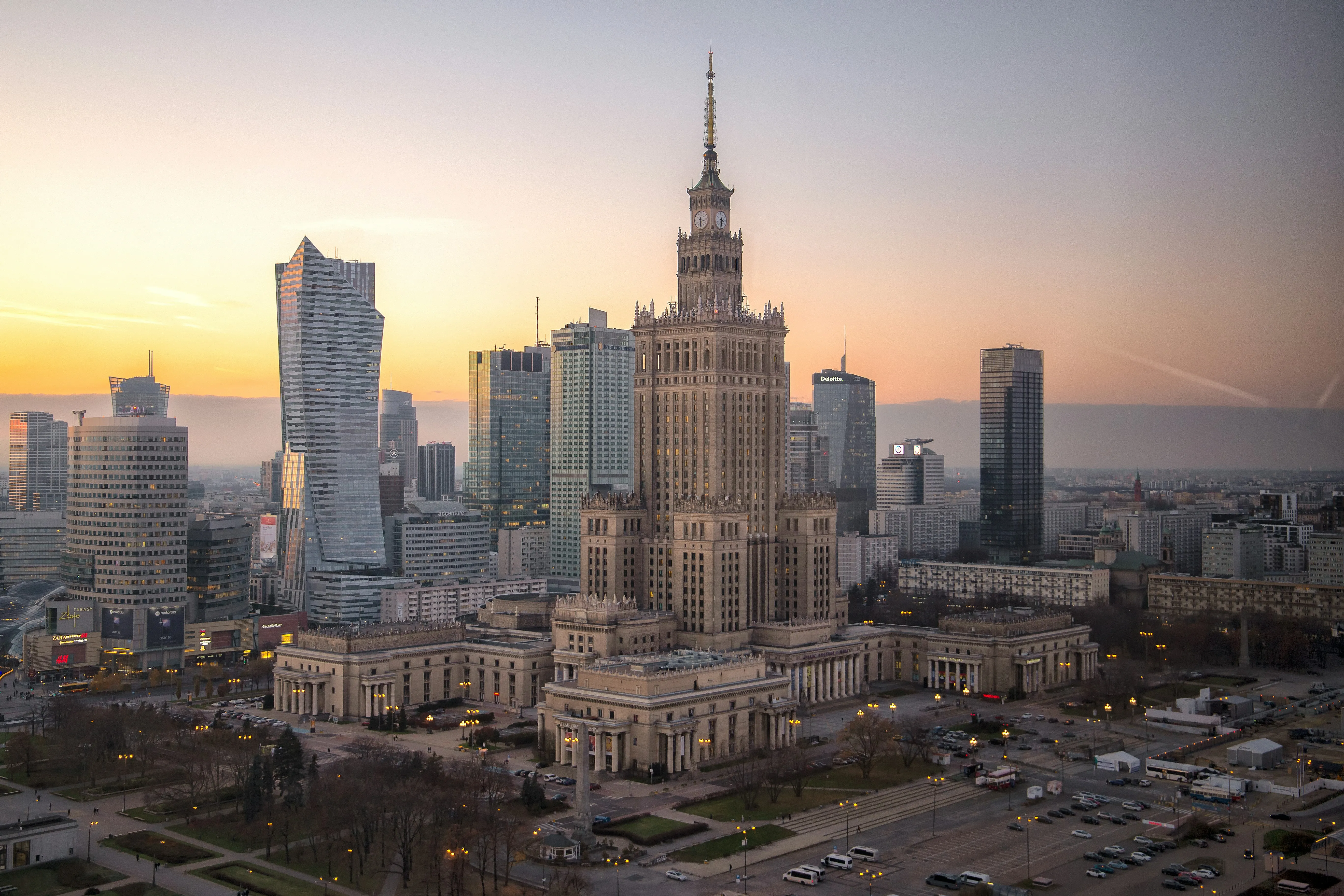
Poland is a destination that surprises with the harmony between its historical past and a vibrant modernity. A good starting point is its capital, Warsaw, a city that rose from its ashes after World War II. Strolling through the Old Town, rebuilt with such precision that it is part of the World Heritage site, allows one to understand local resilience. In contrast, the financial center offers a contemporary image with skyscrapers surrounding the imposing Palace of Culture and Science. History buffs find mandatory stops at the Warsaw Rising Museum or the POLIN Museum, which narrates centuries of Jewish presence in the country.
To the south is Krakow, considered by many to be the cultural heart of the country. Its Market Square is one of the largest in Europe and serves as a core for exploring the Wawel Royal Castle, located on a hill next to the Vistula River. The Kazimierz district, the former Jewish quarter, is today a lively area with artist workshops, historical synagogues, and a gastronomic offer that invites you to taste traditional dishes in a bohemian atmosphere. Very close to the city, the Wieliczka Salt Mines offer an underground tour through chambers and chapels sculpted entirely from salt, a unique engineering and art work in the world.
The north of the country looks toward the Baltic Sea, with the city of Gdańsk as the protagonist. This port city stands out for its Hanseatic-influenced architecture, with colorful facades reflected in the Motława River. Walking along the Royal Route or visiting St. Mary’s Basilica are essential activities to understand its commercial importance. In its surroundings, the Hel peninsula and the beaches of Sopot offer a more relaxed side, ideal for those seeking sea air and walks along wooden piers. Additionally, the Malbork Castle, the largest brick fortress in Europe, is located in this region, transporting the visitor to the time of the Teutonic Knights.
The western area is home to Wroclaw (Breslavia), known as the city of bridges and islands. Its historical center is a network of canals where the Gothic Town Hall stands out, along with the curious tradition of searching for small bronze gnome figures hidden throughout the city. On the other hand, Poznań stands out for its vibrant Main Square and its museums dedicated to local traditions. These cities show a perfect balance between dynamic university life and the preservation of their medieval and Renaissance roots.
For nature lovers, the south of Poland offers the Tatra Mountains, with Zakopane as the main base. It is an ideal area for hiking trails in summer or enjoying snowy landscapes in winter, always surrounded by very characteristic wooden architecture. At the opposite extreme, the Białowieża National Park, on the eastern border, is one of the last primeval forests in Europe and home to the European bison. Likewise, the Masurian Lake District is the preferred destination for those who enjoy sailing, canoeing, and the tranquility of rural settings.
The soberest history of Europe also has its place in the country. The Auschwitz-Birkenau Memorial and Museum, located near the city of Oświęcim, remains a space for reflection and historical memory, a mandatory visit to understand the events of the 20th century. Through its exhibitions and the preservation of the facilities, it offers a fundamental educational testimony that complements the vision of Poland’s complex and rich identity.
“Tip”: You cannot miss visiting the Old Town of Krakow, the most emblematic place in the country.
✈️ Best time to travel
The climate in Poland is of a moderate continental character, which translates into four well-differentiated seasons that completely transform the landscape and the visitor’s experience. The choice of the ideal time to travel depends largely on personal interests: while the middle months of the year offer long days and ideal temperatures for hiking and urban life, the colder months transform the country into a setting conducive to winter traditions and snow sports.
In general terms, the period between late spring and early autumn is usually considered the most balanced. During these months, the weather allows for comfortable exploration of both historical city centers and national parks, enjoying an active cultural offer and nature at its peak. However, each season brings a different nuance to the country’s architecture and open spaces.
| Season | Months | Typical weather | What to expect | Tourist influx |
|---|---|---|---|---|
| Spring | Mar – May | Transition from cold to mild. Temperatures between 5°C and 15°C with occasional rain. | Awakening of nature, urban parks in bloom, and Easter celebrations. | Medium ⭐⭐ |
| Summer | Jun – Aug | Warm and pleasant, with highs usually around 20°C - 25°C. Occasional thunderstorms. | Music festivals, outdoor cinema, hiking trails, and life on terraces. | High ⭐⭐⭐⭐ |
| Autumn | Sep – Nov | Cool and clear at the start (golden autumn), becoming grayer and windier at the end. | Ocher-colored forest landscapes, quiet atmosphere, and mushroom season in the forests. | Medium - Low ⭐⭐ |
| Winter | Dic – Feb | Intense cold with temperatures frequently below zero and the presence of snow. | Christmas markets, winter sports in the south, and snowy urban landscapes. | Low ⭐ |
🗣️ Basic vocabulary
Learning a few words in Polish before traveling to Poland is a gesture that is usually very well received by the local residents. Although English is very widespread in the main tourist areas and among the young population, knowing basic greetings and some courtesy formulas facilitates interaction in shops, restaurants, or transport stations.
It is not necessary to delve into grammar, but rather to have practical tools to resolve everyday situations. These brief expressions help make the trip smoother and allow for navigating with greater confidence during the stay.
- Dzień dobry: Good morning or good afternoon (formal greeting used during the day).
- Cześć: Hello or goodbye (informal greeting for relaxed situations).
- Dziękuję: Thank you.
- Proszę: Please (also used to say “you’re welcome” or “here you go”).
- Przepraszam: Sorry or excuse me (useful for asking someone to move or getting a waiter’s attention).
- Tak / Nie: Yes / No.
- Ile kosztuje?: How much does it cost?
- Nie mówię po polsku: I don’t speak Polish.