


Armenia
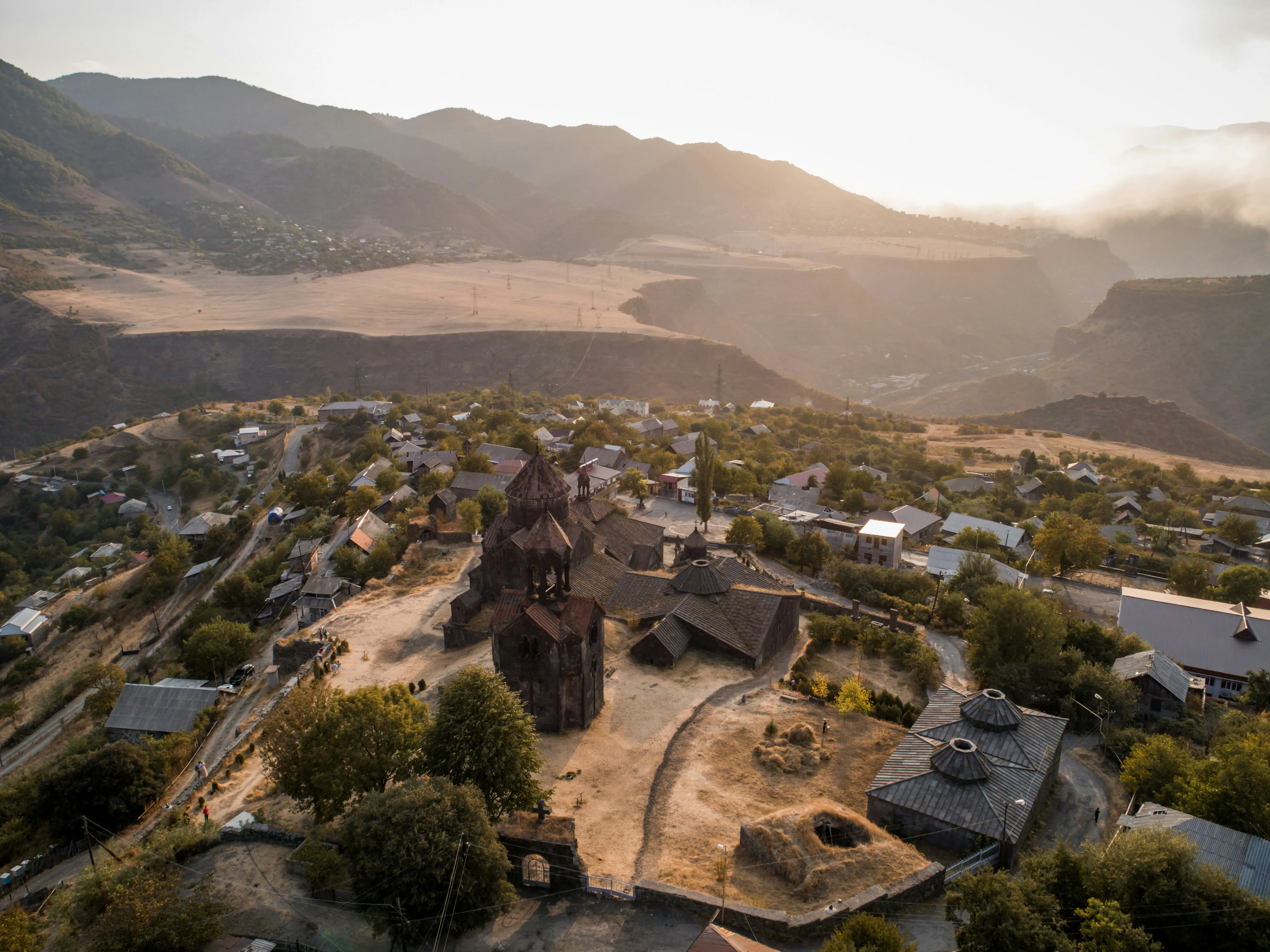
A millenary destination among mountains that offers ancient churches, spectacular landscapes, rich gastronomy, and unique hospitality in the heart of the South Caucasus.
Quick Facts
- Capital
- Yerevan
- Language
- Armenian
- Russian and English
- Currency
- Armenian Dram (AMD)
- Best time to visit
- From May to June and from September to October for its mild climate.
- Budget per day
- $30 - $100 per day
- Climate
- Highland continental climate with hot summers and cold winters, notable for its sunny days and dry air.
- Connectivity
- medium
- Very easy to acquire at Yerevan airport or in official urban stores.
- Electricity
- Type C/F (230V)
- Local transport
- acceptable
- Card usage
- acceptable
- Tipping
- optional
🌎 Introduction
In the heart of the Caucasus, where mountains rise over deep valleys, Armenia unfolds as a serene bridge between cultures and eras. It is a corner of the world that transforms remarkably with the passage of the seasons: from the snow covering its peaks and ancient stone monasteries in winter, to the golden burst of autumn that bathes its vineyards and apricot orchards. Its landscapes, dominated by volcanic geography and the constant presence of snowy peaks on the horizon, facilitate a peaceful observation of nature and time.
Daily life in its cities and towns transitions between modernity and a millenary heritage that is felt in the aroma of freshly baked bread and the melancholy sound of the duduk, its traditional flute. At the tables, hospitality is a way of understanding the world, sharing simple dishes based on the products of the land and recipes that have been passed down from generation to generation. It is a place where history is not only found in books but is breathed in every corner, offering an identity rich in nuances for those seeking to understand one of the most unique regions of Eurasia.
🛡️ General safety
Armenia is positioned as one of the safest and most welcoming destinations in the Caucasus region. For the international traveler, the country offers a peaceful environment where hospitality is a fundamental pillar of local culture.
General safety level
- Armenia enjoys a high level of safety, usually ranking favorably in international crime indices.
- Compared to other global tourist destinations, the risk of violent incidents is very low, allowing for a relaxed travel experience.
- The context for the traveler is one of great freedom of movement; it is common to see people walking late at night through the cities with total normality.
Crime and common risks
- Crime affecting tourists is minimal, mainly limited to petty theft or pickpocketing in crowded places.
- It is recommended to pay attention to personal belongings in open-air markets, such as the Vernissage, or on very busy public transport.
- There are some isolated cases of minor scams in service prices if they are not previously agreed upon, although it is not a widespread practice.
- It is advisable to avoid discussions on sensitive political issues related to neighboring countries to maintain a cordial atmosphere.
Safety in cities and tourist areas
- Urban centers, especially Yerevan, are extremely safe both day and night.
- Tourist areas are well-monitored and have a discreet but effective police presence that is usually helpful to the visitor.
- There are no “forbidden” neighborhoods or exclusion zones within the main cities, although as in any capital, it is always prudent to stay in well-lit areas at night.
- In rural areas, the greatest risk may be the lack of signage or the state of some trails, so it is recommended to inform others about planned hiking routes.
Safety in transport
- Public transport (buses and the popular marshrutkas) is safe, although it can sometimes be somewhat uncomfortable due to the age of the vehicles or overcrowding.
- In Armenia, driving is on the right. If you decide to rent a vehicle, you should know that the local driving style can be more aggressive than usual and the state of secondary roads is variable.
- For taxi use, it is highly recommended to use mobile applications (such as Yandex Go or GG), as they guarantee a fair price and allow GPS tracking of the journey.
- You should avoid accepting rides from unofficial drivers who approach tourists at airports or stations to prevent overcharging.
Natural and climatic risks
- Armenia is located in a zone of seismic activity, so earthquakes are a latent natural risk, although large-magnitude ones are rare.
- The climate is continental: winters can be extremely cold with heavy snowfalls that make travel through mountain passes difficult.
- Summers in Yerevan and low-lying areas can record extreme heat, frequently exceeding 40 °C, requiring constant hydration and sun protection.
- In spring, heavy rains can cause flash floods or small landslides in canyon and mountain areas.
Legislation and local norms
- Armenia has very strict laws against the possession and consumption of drugs; prison sentences are severe and no distinctions are made for foreigners.
- It is prohibited to photograph or record military installations, border areas, or strategic government buildings. Failure to comply can lead to interrogation or confiscation of equipment.
- It is mandatory to always carry an original identity document or a copy of the passport in case it is required by the authorities.
- Alcohol consumption is legal and accepted, but scandalous public drunkenness is frowned upon and can be grounds for a fine.
Safety for specific groups
- Female travelers: Armenia is a very safe country for women traveling alone. Respect for women is deep, although in rural areas one may receive curious but rarely hostile attention.
- LGTBIQ+ travelers: Armenian society is mostly conservative. Although homosexuality is legal, public displays of affection are not common or socially well-regarded, so discretion is recommended to avoid uncomfortable situations.
- Traveling with children and the elderly: It is an excellent destination for families. Children are very welcome in all establishments and the social structure protects the elderly, although the lack of ramps and elevators in some places can be an accessibility challenge.
Emergencies and assistance
- The single emergency number in Armenia is 911. They handle fire, rescue, and general emergency services.
- To contact the police directly, the number is 102, and for medical emergencies/ambulance it is 103.
- The police are usually respectful toward tourists; in case of an incident, stay calm and request the assistance of an interpreter if you do not speak English or Russian.
- It is essential to travel with private medical insurance, as quality healthcare is usually concentrated in the capital and requires direct payment or a guarantee from the insurer.
Tip: Always use mobile applications to order taxis; not only will you ensure you pay the correct fare, but you will also have a record of the vehicle and the driver, increasing your safety and comfort.
📝 Entry requirements
To travel to Armenia for tourism purposes, the fundamental document that every traveler must carry is a valid passport. It is recommended practice that this document has a minimum validity covering the entire planned stay, thus avoiding possible inconveniences at checkpoints. Most international visitors enjoy a visa exemption regime for short-term stays, which facilitates access to the country without the need for prior consular procedures.
The maximum duration of stay permitted under tourist status is usually quite generous, in many cases allowing one to remain in the territory for a period of up to one hundred and eighty days. Upon arrival at border posts or airports, migration authorities might randomly request the presentation of a return ticket or an exit ticket to a third destination, as well as proof of having sufficient economic funds to cover expenses during the visit.
Regarding customs controls, there are standard regulations on the entry of personal goods. It is important to note that the transport of specific medications must be accompanied by the corresponding medical prescription to justify personal use. Likewise, the entry of large amounts of cash must be declared upon arrival. Products of plant or animal origin may be subject to restrictions for phytosanitary safety reasons, a common measure to protect the local environment.
From a health perspective, mandatory vaccinations are not usually required for entry into the country, unless coming from an area with a risk of transmission of very specific diseases. However, it is considered prudent practice to have travel insurance that offers complete medical coverage. Following general health recommendations and having a basic first-aid kit is usually sufficient to enjoy a peaceful and uncomplicated stay at the destination.
- Travel documentation: It is essential to have a passport with adequate validity according to international travel standards.
- Visa status: A large number of international tourists do not require a prior visa for standard recreational stays.
- Stay limits: The authorized stay time is usually sufficient for extensive itineraries throughout the national geography.
- Customs procedures: It is recommended to declare objects of exceptional value and carry documentation for any prolonged medical treatment.
- Health recommendations: It is suggested to take out an international health assistance policy to cover any unforeseen events during the trip.
- Border security: Controls are usually quick and focus on verifying identity and the purpose of the trip.
🏥 Basic health considerations
When preparing your trip to Armenia, you will see that the country has a health system that combines traditional facilities with recently created modern clinics. In the capital, Yerevan, you will find private medical centers with international standards and advanced technology, while in rural areas resources are usually more modest and limited. As a tourist, it is standard to use private healthcare, where costs are reasonable compared to other countries, but can accumulate if the treatment is complex. Most young doctors and staff in private clinics speak English, although Russian remains the predominant second language among older professionals.
Although it is not a mandatory legal requirement to enter the country, taking out travel medical insurance is something you should consider a priority. It is fundamental that your policy includes hospitalization and, above all, medical repatriation, as the costs of a specialized transfer in case of a serious accident can be very high. When traveling, it is always better to have the peace of mind that you will be covered for any eventuality without having to pay large sums of money for an unforeseen event.
Regarding vaccines, you will not find any that are mandatory to cross the border. The most sensible thing is to have your standard vaccination schedule up to date. If you plan to hike in very remote areas or spend a lot of time in isolated rural environments, you can consult your doctor about the recommendation to be protected against typhoid fever or hepatitis, but for a standard tourist trip through cities and main monuments, your usual vaccines will suffice.
If you need to take your own medication, always remember to transport it in its original container and accompanied by the medical prescription, preferably translated into English or with the name of the active ingredient clearly visible. Be especially careful with drugs containing codeine or psychotropic substances, as import laws are strict and you could have difficulties at customs if they are not duly justified. A small first-aid kit with basic painkillers, disinfectant, and bandages will be sufficient for minor discomforts that may arise during your excursions.
The most common health risks are related to the geography and the changing climate of the country. Being a very mountainous territory, if you decide to go to high altitudes for mountain routes, you might notice the effects of fatigue or pressure. In summer, the heat in low-lying areas can be very intense, so you can avoid heatstroke if you stay hydrated and use sun protection. Conversely, in winter the cold is rigorous and it is advisable to wear appropriate technical clothing. There are no serious endemic diseases that you should be especially concerned about.
A very positive point you will discover is that you will find sources of potable water everywhere, known locally as pulpulaks. Tap water in cities is safe and has a reputation for being of high quality, although if you have a very sensitive stomach, you can always buy bottled water for a very low price. Food hygiene in restaurants is generally high and you can try the delicious local food with confidence, always following common sense by choosing establishments that comply with basic cleaning standards.
For any medical emergency requiring immediate attention, the number you should dial is 103. The ambulance service works quickly in urban areas, although you should take into account that in mountain areas access may be more complex. If you find yourself in an urgent situation, the most practical thing is to request help at your accommodation so they can coordinate assistance more fluidly.
As final practical recommendations, remember to always carry a copy of your insurance policy and the assistance contact with you. Stay well hydrated during cultural visits and wear comfortable footwear for walking through monasteries and trails. With these simple precautions, you can focus on enjoying the hospitality and history this destination has to offer.
🚌 Transport within the country
To move around Armenian territory, the traveler has several options that combine tradition with modernity. Buses and shared vans are the most common means for connecting different regions and towns. Although a railway network exists, its reach is more limited and focuses on specific routes linking the capital with some main cities. In the urban environment of the capital, the metro stands out for being a simple and functional system to avoid surface traffic.
The ease of use of public transport varies by location. In the most frequented areas, it is possible to find signs in several languages, but in rural areas the local alphabet predominates. The purchase of tickets is usually done in cash directly to the driver or at simple ticket offices in stations. Although deep knowledge of the language is not always required, it is useful to be clear about the main stops, as signage outside urban centers can be less frequent.
There is a notable difference between mobility in large cities and in rural areas. While in urban centers the frequency is constant, to reach more remote points or distant monuments, vehicles usually depart only when all available seats have been filled. This implies that punctuality is not always rigorous and that journeys can last longer than expected, requiring a flexible attitude and patience on the part of the visitor.
The use of taxis and private transport services is extremely common and constitutes a comfortable alternative for moving quickly. In cities, the use of mobile applications greatly facilitates the management of journeys, providing a sense of transparency and reliability. For long-distance journeys, many tourists opt for private drivers who allow for customization of the route through the various national roads.
In general terms, transport offers an authentic and functional experience. The comfort of long-haul vehicles can vary depending on their age, but they fulfill their function of connecting the country effectively. It is important to keep in mind that the mountainous terrain influences travel times, making short distances on the map translate into slower journeys through mountain passes.
“Tip”: It is advisable to always carry cash in small bills to facilitate payment in collective and rural transport where electronic means are not accepted.
1. 🤵 Culture and etiquette
Hospitality is one of the deepest hallmarks of Armenia, where visitors are usually received with an open and generous attitude. In daily interactions, the common greeting between men consists of a firm handshake, while between women or in mixed interactions, a verbal greeting or a slight gesture of courtesy is common. Physical contact is frequent between people with a close bond, although in public spaces a respectful distance is usually maintained. The volume of voice tends to be moderate and kindness is valued in basic interactions, such as when making inquiries or interacting in shops.
Respect for hierarchies and the elderly holds a central place in the Armenian social structure. In family or social environments, it is common to give up a seat or the way to older people and allow them to initiate or lead conversations. Punctuality is perceived flexibly in informal meetings, although in the professional sphere and in the provision of tourist services, compliance with established schedules is expected. In public transport and other shared spaces, discreet and orderly behavior is appreciated by all users.
When visiting the numerous monasteries and churches, which constitute a fundamental part of the country’s heritage and identity, it is essential to observe specific rules of decorum. It is recommended to dress modestly, covering shoulders and knees; in some more traditional temples, it is common for women to be invited to cover their heads with a scarf, which is usually available at the entrance. Inside these enclosures, silence must be maintained and interference with religious ceremonies or the prayer of the faithful should be avoided. Photography is usually allowed, but it is always preferable to act with discretion and observe if there are signs indicating otherwise.
Meals represent moments of great social importance and usually last a long time, especially when there are guests. If you receive an invitation to a private home, it is customary to bring a small gift, such as flowers or sweets, and show gratitude for the abundance of the table, which is the traditional way to honor the visitor. Regarding tipping, in urban area restaurants, a service charge is usually included in the bill, although it is common practice to leave a small additional amount if the service has been satisfactory. Toasts are a deeply rooted tradition that sets the pace of celebrations, so paying attention to the hosts helps to understand the meaning of each intervention.
“Tip”: Avoid showing signs of haste or impatience during social interactions or meals, as Armenian culture values dedicating quality time to people to foster a relationship of trust and mutual respect.
🍛 Typical gastronomy
The gastronomy of Armenia is one of the oldest in the Caucasus and reflects a deep connection with the land and millenary traditions. Its cuisine is fundamentally based on the use of fresh seasonal products, where the natural flavor of the ingredients takes precedence over the excessive use of spices. Vegetables, legumes, cereals, and meats prepared over fire are the pillars that sustain the daily diet, offering an honest and balanced culinary experience.
An essential element on any table is lavash bread, a flat, thin bread that accompanies almost all preparations. The act of eating in this destination is a social event that fosters hospitality; dishes are usually served in the center to be shared, creating a relaxed and unhurried atmosphere. In restaurants, it is not necessary to follow rigid etiquette, although respect for the post-meal conversation time, which is usually prolonged, is valued.
Among the most characteristic flavors are the use of fresh herbs such as cilantro, parsley, and dill, as well as the incorporation of nuts, pomegranates, and apricots in both sweet and savory dishes. Regarding drinks, Armenian coffee, prepared traditionally in a copper pot, is a fundamental part of the daily routine. It is also very common to drink tan, a refreshing beverage made with yogurt, water, and salt, ideal for accompanying meat dishes.
Meal times are flexible, although dinner is usually the main time of day for gathering. It is common to find a wide range of local mineral waters, highly valued for their purity. When visiting local establishments, the traveler will perceive that food is not just sustenance, but a way of preserving cultural identity through recipes that have been passed down from generation to generation with hardly any modifications.
| Dish | Description | Main ingredients | Where to try it | Tip |
|---|---|---|---|---|
| Khorovats | Traditional Armenian barbecue made over coals. | Meat (pork, lamb, or beef) and onion. | Specialized restaurants and roadside stalls. | Accompany it with vegetables grilled directly on the fire. |
| Dolma | Very popular stuffed vine leaves or vegetables. | Minced meat, rice, herbs, and vine leaves. | Traditional taverns in Yerevan and other cities. | Try it with the yogurt and garlic sauce called matsun. |
| Ghapama | Stuffed pumpkin usually served during festivities. | Pumpkin, rice, nuts, honey, and cinnamon. | Traditional Armenian food restaurants. | It is a visually striking dish, ideal for sharing. |
| Gata | Typical sweet bread with different regional variants. | Flour, butter, sugar, and sometimes walnuts. | Local bakeries and near monasteries like Geghard. | The version in rural areas is usually more artisanal. |
| Khash | Thick and nutritious broth consumed in the morning. | Beef trotters, garlic, and water. | Specialized taverns, mainly in winter. | It is traditionally eaten with dried lavash crumbled inside. |
📷 Areas and places to visit
The capital, Yerevan, is usually the starting point for most travelers. Popularly known as the pink city due to the color of the volcanic stone of its buildings, it combines a dynamic urban life with deep respect for its roots. In the center, the Republic Square and the Cascade complex are fundamental meeting points. The latter, a large staircase decorated with contemporary art sculptures, functions as an open-air museum and offers panoramic views of the city with the imposing Mount Ararat in the background. For those seeking to immerse themselves in culture, the Matenadaran houses one of the most important collections of ancient manuscripts in the world, while the Tsitsernakaberd complex allows for a better understanding of the country’s contemporary history.
Leaving the capital, the landscape transforms quickly into deep valleys and mountain plateaus where some of the oldest temples in the region are found. The Khor Virap Monastery is one of the most significant sites due to its geographical location and historical importance. Not far away, the Temple of Garni, in Greco-Roman style, and the Geghard Monastery, partially excavated into the rock of a gorge, show the transition between pagan and Christian Armenia. These rural areas allow for observing a slower way of life, where local hospitality manifests through traditional markets and the artisanal preparation of food.
To the east lies Lake Sevan, one of the largest high-altitude lakes on the planet. Its turquoise blue waters and the Sevanavank Monastery, located on a peninsula that was once an island, form one of the most recognizable images of the territory. Continuing north, the Dilijan region surprises with its dense forests and cooler climate, offering a notable contrast to the arid zones of the center. It is an ideal area for hiking and for visiting monasteries surrounded by vegetation, such as Haghartsin or Goshavank, which stand out for their detailed stone carvings.
In the far south, the relief becomes more abrupt and dramatic. Here lies the Tatev Monastery, an architectural jewel situated on the edge of a deep canyon. Access via a long cable car allows one to appreciate the magnitude of the Vorotan Gorge and the integration of the construction into the natural environment. Near this area, the prehistoric observatory of Karahunj adds an archaeological nuance to the trip with its millenary stone structures. Throughout this region, activities usually focus on the exploration of virgin natural landscapes and visits to small villages that preserve century-old traditions.
The contrast between the modernity of Yerevan’s neighborhoods and the serenity of the mountainous regions defines the experience of traveling through this country. While in the capital one can enjoy jazz festivals, art galleries, and a wide gastronomic offer, in rural areas life revolves around nature and ecclesiastical heritage. Local markets, such as the Vernissage in the capital, are ideal spaces to observe the work of artisans in wood, ceramics, and textiles, reflecting the identity of a people who have known how to maintain their legacy through the centuries.
Tip: You cannot miss visiting Khor Virap, the most emblematic place in the country.
✈️ Best time to travel
Armenia is a destination that offers very diverse experiences depending on the time of year it is visited. Due to its mountainous geography, the climate presents notable variations between the plains and the high-altitude areas, allowing the traveler to choose the moment that best suits their preferences, whether seeking the coolness of its lakes or enjoying the snow on its peaks.
In general, the transitional months are considered the most balanced for traveling the country, as temperatures are moderate and allow for outdoor activities to be carried out comfortably. However, each season transforms the Armenian landscape in a unique way, from the floral awakening of its valleys to the ochre tones of its extensive vineyards during the harvest.
| Season | Months | Typical weather | What to expect | Tourist influx |
|---|---|---|---|---|
| Spring | Mar – May | Mild temperatures that rise gradually and occasional rain. | Thawing in the mountains, valleys in bloom, and vibrant activity on urban terraces. | Medium (⭐⭐) |
| Summer | Jun – Aug | Warm and dry atmosphere, with high temperatures in low areas and coolness in the heights. | Long sunny days, ideal for visiting Lake Sevan and high-altitude hiking routes. | High (⭐⭐⭐) |
| Autumn | Sep – Nov | Mild climate, clear skies, and a notable decrease in humidity. | Golden landscapes, harvest season for fruits like pomegranate, and cultural festivals. | Medium - High (⭐⭐⭐) |
| Winter | Dec – Feb | Intense cold with frequent snow, especially in mountainous regions. | Winter sports in resorts like Tsaghkadzor, cozy atmosphere, and cultural visits without waiting. | Low (⭐) |
🗣️ Basic vocabulary
Although in the more touristy areas of Armenia it is common to find people who speak English or Russian, knowing some basic expressions in Armenian is of great help for daily life. Local residents appreciate the gesture of trying to communicate in their language, which facilitates interactions in markets, shops, and hospitality establishments.
Learning these key words will allow you to navigate more naturally in common situations, such as greeting when entering a place or thanking someone for directions. It is not necessary to delve deep into the grammar, simply having a small practical repertoire to improve the travel experience.
- Barev: Hello.
- Shnorhakalutyun: Thank you.
- Ayo: Yes.
- Voch: No.
- Khndrem: Please or you’re welcome.
- Ts’tesutyun: Goodbye.
- Neroghutyun: Sorry or excuse me.