


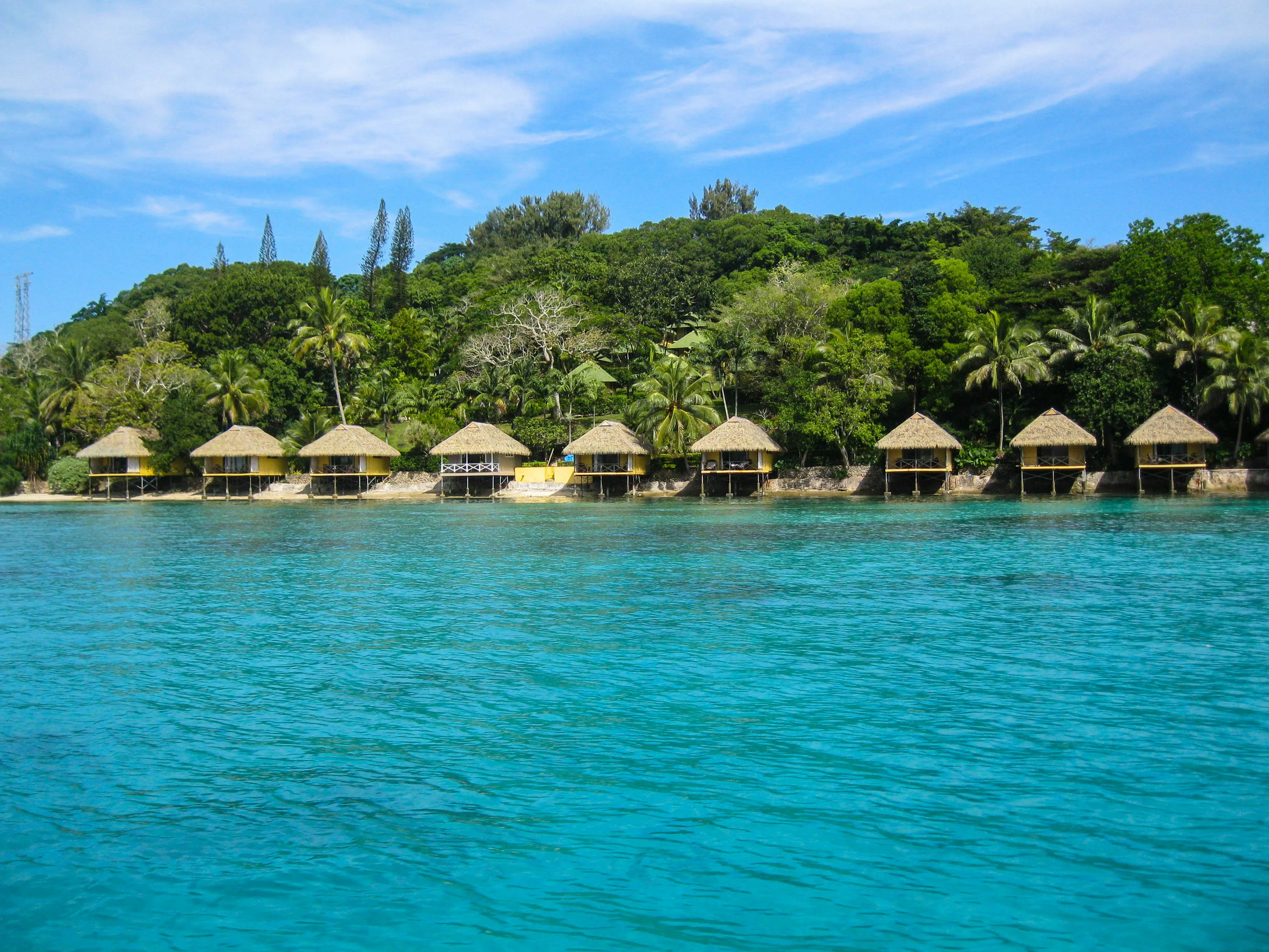
Vanuatu
Discover an untamed archipelago with active volcanoes, crystal-clear coral reefs, and ancestral traditions that endure in a wild and very welcoming natural environment.
Quick Facts
- Capital
- Port Vila
- Language
- Bislama
- English and French
- Currency
- Vatu (VUV)
- Best time to visit
- From May to October, coinciding with the dry and cool season.
- Budget per day
- $85 - $260 per day
- Climate
- Maritime tropical climate with warm temperatures year-round and a clear distinction between the dry and wet seasons.
- Connectivity
- medium
- Easy to obtain at the international airport and in main urban centers.
- Electricity
- Type I (230V)
- Local transport
- limited
- Card usage
- cash is used more
- Tipping
- no
🌎 Introduction
On the margins of the South Pacific, a group of eighty islands draws a silhouette of volcanic origin where the green of the jungle meets the blue of the ocean. This archipelago maintains a close connection with the land, allowing the rhythm of the days to be marked by the tides and the cycle of the seasons. Here, nature is not a simple stage, but the central axis around which a slow-paced daily life linked to its roots revolves.
The identity of these lands is manifested in the coexistence of dozens of languages and traditions passed down from generation to generation. From rituals celebrating the yam harvest to social gatherings around kava at sunset, each island contributes a different nuance. It is an environment where Bislama sounds in markets filled with tropical fruits and where the presence of still-active volcanoes shapes both the landscape and the character of its inhabitants.
🛡️ General safety
Vanuatu is generally considered a very safe destination for international travelers. The country is characterized by a welcoming atmosphere and a culture based on respect and hospitality, popularly known as the “Pacific way.”
- The crime level is low compared to other global tourist destinations.
- Most visits pass without incident, as the local society deeply values community harmony.
- The context for the traveler is one of tranquility, although, as in any destination, it is necessary to apply common sense and stay informed about the local environment.
Crime and common risks
Although serious crimes are extremely rare, there are minor situations that tourists should be aware of to avoid inconveniences during their stay.
- Thefts and petty crimes of personal objects can occur, especially in crowded areas of the capital or on poorly guarded beaches.
- Scams are not common, but it is always advisable to agree on the prices of unregulated services in advance.
- It is recommended to avoid walking in isolated or poorly lit areas at night, especially if traveling alone.
- Incidents tend to increase slightly during festive periods or mass events, so it is advisable to exercise extreme caution with belongings during those dates.
Safety in cities and tourist areas
Most tourist activity is concentrated in Port Vila (Efate Island) and Luganville (Espiritu Santo). The atmosphere in these urban centers is relaxed.
- Urban centers are safe during the day, and the movement of tourists is constant and fluid.
- In local markets, safety is high, although it is advisable to carry money discreetly.
- There is a notable difference between urban areas and the outer islands. In the most remote islands, safety is practically total, but basic and emergency services are much more limited.
- It is recommended to always respect private property; in Vanuatu, many lands, beaches, and paths belong to local communities (kastom), and entering without permission can lead to misunderstandings.
Safety in transport
Moving around Vanuatu is simple, although infrastructure can be very different from Western countries.
- In Vanuatu, people drive on the right, as in most of Europe and America.
- Public transport consists mainly of minibuses (identifiable by the letter “B” on the license plate). They are safe, economical, and widely used by locals.
- Taxis (license plate with the letter “T”) usually do not have a meter, so it is essential to agree on the fare before getting into the vehicle.
- Rental vehicles are a good option in Efate and Espiritu Santo, although caution should be exercised with the state of the roads, which may have potholes or be unpaved outside the main routes.
- Inter-island transport is carried out by light aircraft or ferries. It is vital to choose official operators and be attentive to weather conditions.
Natural and climatic risks
Given its geographical location on the Pacific Ring of Fire, Vanuatu is exposed to certain natural phenomena that the traveler should consider.
- The cyclone season runs from November to April. During these months, rains are intense, and strong tropical storms can occur, affecting flights and transport.
- The country has several active volcanoes (such as Mount Yasur in Tanna). Although they are major tourist attractions, their activity is constantly monitored, and access may be restricted if the alert level increases.
- Earthquakes are frequent, although most are of low intensity and do not usually affect tourist infrastructure severely.
- In the event of any tsunami alert following a strong earthquake, evacuation routes to marked high ground on the coasts must be followed immediately.
Legislation and local norms
Vanuatu is a traditional and conservative society, where local laws and customs (Kastom) carry significant weight.
- The consumption and possession of drugs are strictly prohibited and carry severe prison sentences.
- It is recommended to dress modestly outside of hotels and resorts. Wearing bikinis or very short swimsuits outside of swimming areas or pools can be considered offensive in local villages.
- Etiquette is fundamental: permission should always be asked before photographing local people or entering their land.
- The consumption of kava (a traditional drink) is legal and common, but it should be done in moderation and preferably in a guided social setting to understand its effects.
Safety for specific groups
- Female travelers: Vanuatu is safe for women traveling alone, although it is advised to avoid walking in deserted places at night and to dress discreetly to avoid unwanted attention in rural areas.
- LGTBIQ+ travelers: Although homosexuality is not illegal, society is conservative and public displays of affection are not customary, regardless of sexual orientation. Discretion is recommended to avoid uncomfortable situations.
- Children and seniors: The country is welcoming to families. The main risk for these groups is the extreme heat and humidity, so constant hydration and sun protection are essential.
Emergencies and assistance
Emergency services are operational but may be limited outside the capital, Port Vila.
- The general emergency number for Police is 112.
- For medical emergencies or ambulances, the number is usually 115.
- The main hospitals are located in Port Vila and Luganville. For serious medical problems on remote islands, medical air evacuation may be necessary.
- It is strongly recommended to travel with comprehensive medical insurance that includes repatriation and evacuation, as the costs of these services are very high.
Tip: Always respect “private property” signs and ask permission from local chiefs before exploring natural areas off the tourist circuit; courtesy is the best safety measure in Vanuatu.
📝 Entry requirements
To undertake a trip to this Pacific destination, it is essential to have a valid passport that generally extends several months beyond the intended date of departure. The document must be in good condition and have free pages for the corresponding stamps. Local authorities usually perform a routine inspection of the document upon arrival to verify these basic international identification criteria.
Regarding entry for leisure purposes, a large portion of international visitors is usually exempt from applying for a visa in advance for short-term stays. This tourist stay permit is habitually granted upon arrival at the point of entry and usually allows a maximum stay ranging between thirty and ninety days. It is advisable to confirm that the purpose of the trip is strictly tourist to benefit from this ease of access.
It is a common practice for immigration officials to request the presentation of an outbound ticket from the country, either back to the place of origin or to a third destination. Similarly, travelers may be required to prove they possess sufficient financial funds to cover the expenses derived from their stay. These proofs can be bank statements, cash, or credit cards, ensuring that the visitor has the necessary means during their visit.
Controls at airports and ports are thorough, especially regarding biosecurity. Due to the fragility of island ecosystems, there are strict restrictions on the introduction of food products, plants, seeds, or products of animal origin. Regarding personal items and medicines, it is recommended to carry the original medical prescriptions and keep the drugs in their factory packaging to facilitate any customs inspection that might take place.
From a health point of view, it is advisable to be up to date with the general vaccination schedule. Although specific vaccines are not usually universally required to enter the territory, in particular situations, a vaccination certificate could be requested if coming from areas where certain diseases are endemic. It is a common preventive measure to consult with an international health center before starting the journey to receive personalized and updated recommendations.
Below are the key points for access to the territory:
- Identity document: Valid passport with an adequate expiration margin.
- Visa management: Generally obtained on arrival for tourist stays.
- Length of stay: Usual periods of up to 90 days, subject to the regulations in force at the time of the trip.
- Proof of departure: Need to show a return or onward ticket.
- Financial solvency: Justification of economic resources for maintenance during the visit.
- Customs rules: Prohibition or restriction on the entry of organic products and fresh food.
- Preventive health: Recommendation to have travel insurance and a review of basic vaccines.
🏥 Basic health considerations
When planning your trip to Vanuatu, you will see that the healthcare system has a limited reach compared to international standards. You will find the main hospitals in Port Vila and Luganville, where care is acceptable for minor problems or stabilization. However, on the most remote islands, medical assistance is very basic or practically non-existent. Private healthcare is usually the fastest option for tourists, although it has a high cost that often requires immediate payment. Medical staff usually communicate fluently in English or French, in addition to local languages.
Taking out comprehensive medical travel insurance is essential for your peace of mind. Although it will not be required as a mandatory entry requirement, the reality is that any major health complication will require a medical air transfer to Australia or New Zealand. You must ensure that your policy includes high-value hospitalization and, above all, medical repatriation, as the costs of an evacuation can be prohibitive without professional backing.
Regarding vaccines, you will see that there is no legal obligation to be vaccinated to enter the country. Even so, it is advisable to check that your usual vaccination schedule is up to date. It is highly recommended to have protection against hepatitis A and typhoid fever, especially if you plan to move through less urbanized areas or try food in local markets.
If you need to carry your own medication, remember to transport it in its original packaging and always accompany it with the official medical prescription, preferably translated. You will find pharmacies in urban centers, but the variety of medicines is small and supplies can be intermittent. It will be very helpful to carry a personal first-aid kit with pain relievers, antihistamines, and material to treat small wounds, as the tropical climate and humidity make it easy for any scratch to become infected if not treated in time.
The most common health risks are related to the environment. You will see that mosquitoes can transmit diseases such as dengue or Zika, so the use of strong insect repellent and clothing that covers the skin at sunset will be your best protection barrier. On the other hand, the intense sun can be tricky, so watch for prolonged exposure and stay hydrated to avoid dehydration or heat stroke. Do not forget to be careful with coral cuts while swimming, as they take a long time to heal.
Regarding the consumption of water and food, the most prudent thing is to always drink bottled or treated water, avoiding tap water even for brushing your teeth in rural areas. You will find that local food is usually fresh and safe, but we advise you to be cautious with raw vegetables and fruits that you cannot peel yourself. General hygiene in tourist establishments is good, although it is always useful to carry a hand sanitizer to use before eating.
In case of a medical emergency, the number you should dial is 112 or 22100 to contact the hospital in Port Vila. Keep in mind that the ambulance service can be slow due to infrastructure, so sometimes it is more effective to go directly to the hospital by your own means if the situation allows.
To make your stay as comfortable as possible, we recommend using appropriate footwear in the sea to avoid injuries and applying high-factor sunscreen constantly. By following these simple tips, you can focus on enjoying the nature and culture of the archipelago without major concerns.
🚌 Transport within the country
Movement through this archipelago is mainly done by combining internal flights and journeys by road or sea. Due to the fragmented geography of the islands, the airplane is the most common and fastest way to move between the most distant points of the country. For short trips between nearby islands or within the same coastal region, small boats and ferries are usually used, which allow connecting areas that airstrips do not reach. There is no railway network or metro systems, so land mobility is concentrated exclusively in motor vehicles.
In the most important urban areas, public transport is simple but lacks a formal structure of stops. White vans, which function as shared buses, are the most common option for visitors. These are easily identified by a specific letter on their license plate and do not have rigid schedules; it is enough to wave your hand in the street for them to stop. Communication with the drivers is fluid, as the use of English and French is widespread, making it easy for the traveler to indicate their destination without major complications.
Taxis are also frequent in the main centers and offer a more private and direct service. They are distinguished by their external signage and are a comfortable alternative for moving around the main cities. However, there is a notable difference when moving toward rural areas or less populated islands. In these places, roads are usually dirt tracks and transport is often carried out in off-road vehicles or pickup trucks. In these remote areas, transport availability is much more limited and does not follow regular frequency patterns.
The punctuality and organization of transport in the country reflect a slow-paced lifestyle. Although internal flights try to maintain regularity, it is common for adjustments or delays to occur due to weather conditions or local operational needs. The general feeling for the tourist is that of a system based on flexibility, where reliability depends more on direct communication with residents than on apps or digital information panels.
Tip: To ensure your travel in the less-frequented islands, it is convenient to coordinate transfers directly with those responsible for your accommodation, as they usually manage local logistics more effectively.
🤵 Culture and etiquette
Coexistence in Vanuatu is based on a deep sense of community and mutual respect among its inhabitants. When moving through the country, it is customary and very appreciated to exchange cordial greetings with the people you meet on the way, whether a nod or a brief verbal greeting. This behavior reflects an attitude of openness and recognition toward others. The pace of life is usually slow, which implies that patience and adaptability are essential, as strict punctuality is not always the norm in services or social encounters.
In interpersonal dealings, it is positively valued to maintain a soft tone of voice and a calm attitude. Public expressions of anger or direct confrontations are alien to local etiquette and can cause discomfort in the environment. Physical contact between strangers is usually limited, maintaining a respectful personal distance, although a handshake is a common and accepted form of greeting in contexts of introduction or welcome. Discretion in behavior and language contributes to a harmonious integration into the daily life of the islands.
Respect for traditional property is a basic pillar of the local culture. Much of the territory, including beaches, trails, and natural areas, belongs to families or communities under customary tenure systems. For this reason, it is fundamental to ensure you have the necessary authorization before accessing certain places or taking photographs of people and private spaces. Likewise, clothing should preferably be modest when visiting villages or public spaces outside strictly tourist areas, reserving swimwear exclusively for the sea or pools.
Regarding habits related to gastronomy and hospitality, it is important to highlight that tipping is not part of local custom and, in many cases, is neither expected nor encouraged so as not to alter the reciprocity principles of society. If an invitation to a community is received, showing deference toward local leaders and the elderly is a fundamental sign of courtesy. Observing and following the example of the hosts in ceremonies or collective meals will help the traveler move naturally and with respect toward the hierarchies and traditions of Vanuatu.
“Tip”: It is essential to request explicit permission before photographing people or entering land that seems uninhabited, as most of the territory has traditional owners who value this gesture of courtesy.
🍛 Typical gastronomy
The gastronomy of Vanuatu is fundamentally based on fresh products offered by the land and sea, maintaining a close connection with traditional preparation techniques. The local diet revolves around root crops, such as taro, yam, and cassava, which are complemented by a wide variety of tropical fruits and fish caught in nearby reefs. The use of coconut milk is a constant in most of its recipes, providing a creamy texture and a mild flavor that defines the culinary identity of this South Pacific archipelago.
One of the pillars of its cuisine is the earth oven, a slow-cooking method where food is prepared wrapped in banana leaves on hot volcanic stones. This technique allows the ingredients to retain all their moisture and acquire a very subtle smoky aroma. On a daily basis, meals are usually simple and nutritious, with soft textures and natural flavors predominating, without an excessive use of hot spices, which makes it a gastronomy very accessible to the international palate.
Regarding social habits, food in Vanuatu is perceived as a shared and community act. In urban settings, local markets are the main meeting point, where travelers can try dishes prepared on the spot in an informal atmosphere. Meal times usually follow the solar light cycle, with early dinners. In restaurants, the service is close and relaxed, and there is no strict culture of tipping. Additionally, it is essential to mention the importance of kava, a traditional drink made from roots that plays a crucial role in the social rituals and ceremonies of the islands.
| Dish | Description | Main ingredients | Where to try it | Tip |
|---|---|---|---|---|
| Lap Lap | National dish consisting of a dense, baked paste. | Grated roots (taro or yam), coconut milk, and sometimes meat. | Local markets and traditional villages. | It is best served fresh from the earth oven. |
| Simboro | Steamed or boiled vegetable rolls. | Taro or Chinese cabbage leaves filled with grated cassava and coconut. | Food stalls in Port Vila and markets. | It is ideal as a light accompaniment for fish dishes. |
| Tuluk | A variant of lap lap shaped like an elongated dumpling. | Cassava dough filled with shredded pork meat. | Especially common on Efate Island. | Usually sold hot in markets, wrapped in leaves. |
| Poulet Fish | A deep-water fish highly valued for its texture. | Local fish (snapper type) with a flavor similar to chicken. | Restaurants in coastal areas and capitals. | It is recommended to try it grilled to appreciate its natural flavor. |
| Santo Beef | Beef steaks recognized for their high quality. | Locally raised beef from Espiritu Santo Island. | Specialized restaurants in Luganville and Port Vila. | It is a highly valued product due to its natural free-range feeding. |
📷 Areas and places to visit
The archipelago of Vanuatu, composed of more than eighty islands of volcanic origin, offers a diversity of landscapes and experiences that vary significantly from one region to another. The main gateway for most travelers is the island of Efate, where the capital, Port Vila, is located. This city stands out for its multicultural atmosphere and its location facing a protected bay. Strolling through its streets allows observing the contrast between the colonial heritage, the result of joint French-British administration, and modern Melanesian life. The Port Vila Market is an essential meeting point to get to know local production and daily gastronomy, while the Vanuatu Cultural Center and the National Museum offer a deep insight into the country’s traditions and archaeology.
On the outskirts of the capital, the landscape quickly transforms into dense vegetation dotted with natural points of interest. The Mele Cascades are a landmark in this area, consisting of a series of tiered waterfalls forming natural pools surrounded by jungle. Nearby, Mele Bay and its islets offer the possibility of short boat trips to enjoy the maritime environment. Efate Island is surrounded by a circular road that facilitates access to small coastal villages and quiet beaches, allowing observation of the transition between the urban environment and the slower-paced rural way of life.
To the north lies Espiritu Santo, the country’s largest island and a place of great historical and natural relevance. During World War II, this area was a strategic military base, and today, vestiges of that period can be visited, such as the SS President Coolidge, a sunken ocean liner that has become one of the most internationally recognized dive spots for its preservation and accessibility. On this same island, the geological phenomenon of blue holes, such as Nanda or Matevulu, attracts those seeking crystal-clear deep blue waters fed by underground springs. The northeast coast houses Champagne Beach, famous for the fineness of its white sand and the clarity of its waters.
The island of Tanna represents one of the most unique experiences in the archipelago due to its intense geological activity and its strong roots in ancestral traditions. It is home to communities that maintain the Kastom lifestyle, where visitors can closely learn about the social organization and beliefs of the indigenous peoples without the external influences of more urbanized areas. Tanna’s landscape is dominated by volcanic ash plains and tropical forests, offering a very marked visual contrast. In addition to its cultural richness, the island is known for housing sea caves and rock formations carved by ocean erosion.
In the center of the archipelago, the islands of Pentecost and Ambrym are hubs of unique traditions. Pentecost is world-famous for being the origin of the Nagol rite, a traditional ceremony held in specific months where men jump from wooden towers as part of a ritual linked to the harvest. For its part, Ambrym, known as the island of magic and volcanoes, features rugged terrain dominated by the craters of Mount Marum and Mount Benbow. These places are not only relevant for their geography but for being the heart of local artistic expressions, such as wood carvings and ritual dances reflecting the cosmogony of its inhabitants.
“Tip”: You cannot miss visiting Mount Yasur, the most emblematic place in the country.
✈️ Best time to travel
Vanuatu enjoys a tropical climate that allows visits almost all year round, although the experience varies depending on the presence of rain and the level of humidity. Generally, the most balanced period to explore the archipelago coincides with the cooler and drier months, which facilitates hiking, visits to active volcanoes, and diving in its crystal-clear waters.
During the months of lower rainfall, the natural environment remains vibrant and journeys between islands tend to be more comfortable. However, those who prefer to enjoy exuberant vegetation and warmer sea temperatures can find attractions in the transition months, always keeping in mind that humidity is more noticeable and the landscape transforms with the arrival of seasonal rainfall.
| Season | Months | Typical climate | What to expect | Tourist influx |
|---|---|---|---|---|
| Spring | Mar – May | Mild temperatures and gradual decrease in rain. | Green landscapes after the rains and the start of the Nagol festival (land diving) on Pentecost Island. | ⭐⭐ (Medium) |
| Summer | Jun – Aug | Sunny days, lower humidity, and cool nights. | Optimal conditions for diving, snorkeling, and hiking through the jungle or volcanic craters. | ⭐⭐⭐ (High) |
| Autumn | Sep – Nov | Warm climate with a progressive increase in humidity. | Calm and clear waters, ideal for marine fauna observation and water sports. | ⭐⭐ (Medium) |
| Winter | Dec – Feb | Hot environment, high humidity, and frequent tropical rains. | A quieter environment, ideal for getting to know the local culture and enjoying tropical flora in its full splendor. | ⭐ (Low) |
🗣️ Basic vocabulary
Although English and French are official languages in Vanuatu, the language that truly unites the inhabitants of the entire archipelago is Bislama. Knowing some basic expressions in this creole language will greatly facilitate communication in everyday situations, such as shopping in local markets, moving on public transport, or simply engaging in a brief conversation with the local population.
You don’t need to master the grammar for these words to be useful. The inhabitants of the islands appreciate the gesture of using their local tongue, which usually helps create a more relaxed and friendly atmosphere during your stay. Here are some of the most practical phrases for your trip:
- Halo: Hello.
- Tankyu: Thank you.
- Plis: Please.
- Gudmoning: Good morning.
- Hamas?: How much? or How much is it?
- Si: Yes.
- No gat: There isn’t any, I don’t have, or no.
- Tata: Goodbye.