


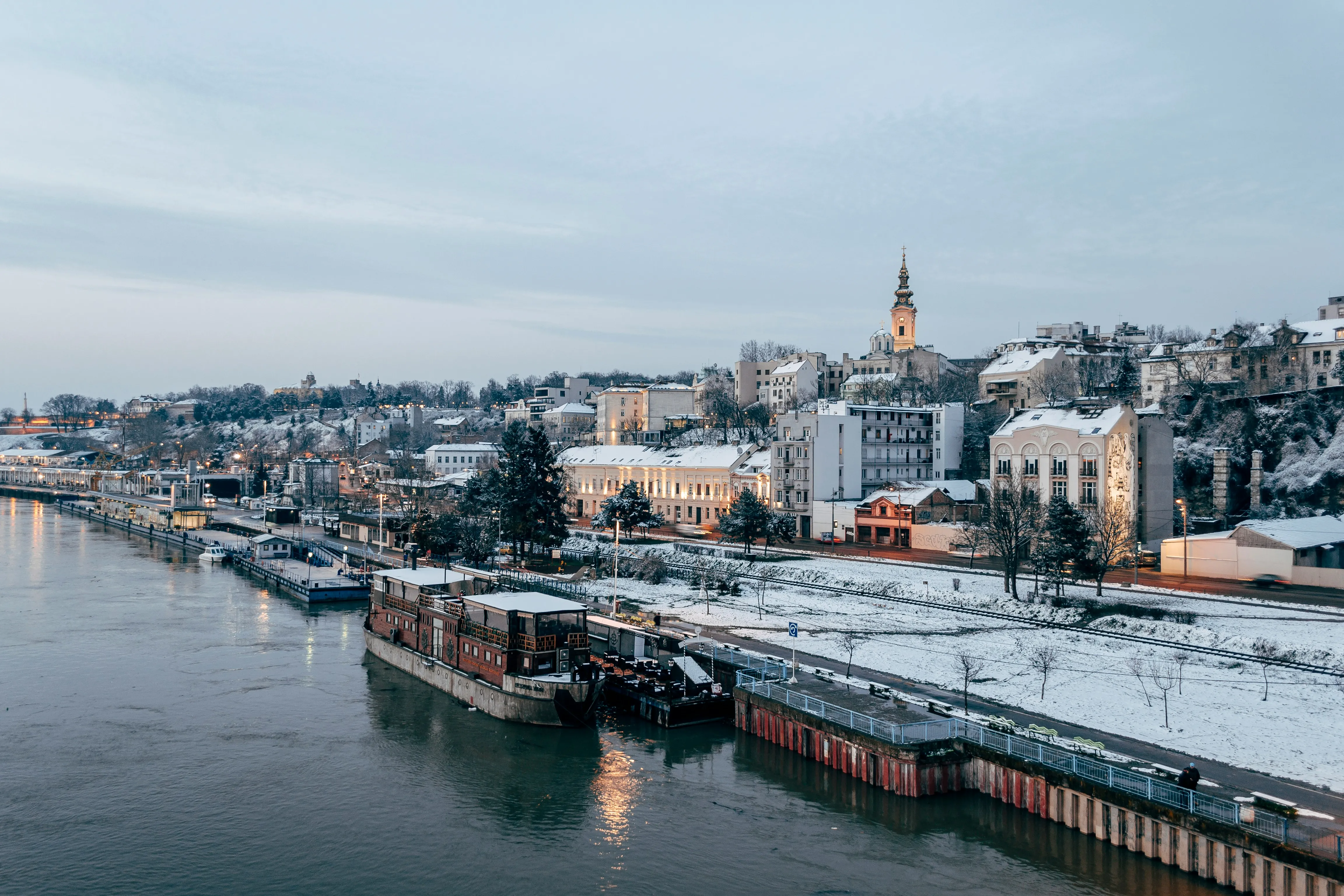
Serbia
Serbia is a fascinating destination that combines Balkan history, vibrant urban culture in Belgrade, and stunning natural landscapes among medieval fortresses and rivers.
Quick Facts
- Capital
- Belgrade
- Language
- Serbian
- English, Hungarian, Bosnian
- Currency
- Serbian Dinar (RSD)
- Best time to visit
- Spring (May-June) and autumn (September-October) for pleasant weather.
- Budget per day
- $40 - $100 per day
- Climate
- Continental climate with hot summers, cold winters with frequent snow, and mild transitional seasons ideal for tourism.
- Connectivity
- good
- Very easy to get at airports, kiosks, and local operator stores.
- Electricity
- Type C / F (230V)
- Local transport
- acceptable
- Card usage
- acceptable
- Tipping
- optional
🌎 Introduction
At the crossroads of Southeast Europe, where the courses of the Danube and Sava rivers dictate the rhythm of the capital, Serbia unfolds as a territory of soft contrasts and leisurely hospitality. From the infinite plains of Vojvodina in the north to the forested reliefs and peaks of the south, the landscape transforms with the seasons, offering winters of snow in the mountains and summers of shared life on the terraces. It is a place where influences from different eras coexist on the facades of its cities and in the customs of its people, creating a unique identity perceived in every corner.
Daily life is savored here without haste, marked by the aroma of morning coffee and the flavor of a gastronomy that speaks of the land and its roots. Stone monasteries hidden in deep valleys, local markets full of seasonal products, and popular celebrations where music takes center stage are part of a diverse and balanced cultural map. It is, in essence, an environment that invites calm observation, where the simplicity of a chance encounter or the changing colors of its forests as autumn arrives reveals the true personality of this Balkan corner.
🛡️ General safety
Serbia is generally considered a very safe country for international tourism. Hospitality is a fundamental pillar of its culture, and visitors are usually received with kindness and respect.
- The risk level is low, positioned similarly to or even more favorably than many large Western European capitals.
- Violent crimes against tourists are extremely unusual.
- Travelers can move around the vast majority of the territory with peace of mind, provided they follow the common-sense guidelines that would apply to any other international destination.
Crime and common risks
Although crime rates are low, as in any popular destination, there are certain minor risks worth knowing to avoid setbacks.
- Thefts and pickpocketing: These are the most frequent types of incidents, especially in the pedestrian areas of Belgrade (such as Knez Mihailova Street), around Kalemegdan Fortress, and at main train and bus stations.
- Minor scams: Situations of overcharging in nightlife establishments or through unofficial transportation services can occur.
- Begging groups: Occasionally, organized groups may try to distract tourists in crowded places; it is advisable to keep an eye on belongings in these situations.
Safety in cities and tourist areas
Serbian cities, especially Belgrade, Novi Sad, and Niš, present a safe urban environment both day and night.
- Urban centers and tourist neighborhoods are usually very crowded and well-lit, allowing for confident walking.
- Public transport is safe, although it is recommended to pay attention to backpacks and bags during peak hours when vehicles are more crowded.
- There are no “no-go zones” or high-risk slums that tourists must systematically avoid, although, as in any large city, less-lit peripheries require more caution at night.
Transport safety
The transport system in Serbia is functional, but it has particularities that travelers should keep in mind for their safety and comfort.
- Taxis and private transport: It is strongly recommended not to accept rides from drivers who approach travelers at the airport or stations. It is better to use official applications (such as Cargo or Pink Taxi) or ask the hotel to request a vehicle.
- Driving: In Serbia, people drive on the right. Main roads and highways connecting cities are in good condition, but secondary roads in rural or mountain areas can be narrow, poorly lit, or have potholes.
- Road rules: Tolerance for alcohol while driving is minimal, and speeding fines are strict. The use of low-beam headlights is mandatory even during the day.
Natural and climatic risks
Serbia is not prone to extreme natural disasters, but its geography and continental climate impose certain seasonal precautions.
- Flooding: This can occur during spring due to snowmelt and heavy rains, mainly affecting areas near the Danube and Sava river basins.
- Extreme heat: During July and August, temperatures in cities like Belgrade can exceed 40 °C. Constant hydration and avoiding sun exposure during central hours are recommended.
- Snow and ice: In winter, snowfall is common and can make road transport difficult, especially in the south and in mountain areas like Kopaonik or Zlatibor.
- Seismic activity: The country is in a zone of moderate seismic activity, although high-magnitude earthquakes are very rare.
Local legislation and norms
It is essential to respect local laws to avoid legal problems that can be severe.
- Registration of foreigners: It is mandatory to register with the local police within the first 24 hours after arrival. If you stay in a hotel or regulated establishment, they handle the process (they will give you a receipt called “Beli Karton” or white card). If you stay in private homes, make sure to complete this procedure with your host.
- Drugs: Serbia has a zero tolerance policy regarding the possession and consumption of narcotics, including cannabis. Penalties can include imprisonment.
- Photography: It is strictly forbidden to photograph military installations, government buildings, or strategic infrastructure (such as damaged bridges or defense buildings) marked with prohibition signs.
- Identification: It is advisable to always carry a copy of your passport, as the police may request identification randomly.
Safety for specific groups
- Female travelers: Serbia is a safe destination for women traveling alone. Street harassment is uncommon, and the nightlife allows for free movement while maintaining basic personal safety precautions.
- LGTBIQ+ travelers: Although the situation is improving and Belgrade hosts its own Pride, Serbian society remains largely conservative. Discretion in public displays of affection is recommended, especially outside of the capital’s gay-friendly venues and in rural areas, to avoid unpleasant incidents.
- Traveling with children and the elderly: The country is ideal for families. Serbians have great respect for the elderly, and children are welcome in almost all establishments and public spaces.
Emergencies and assistance
The emergency system in Serbia is efficient and staffed with trained personnel.
- Emergency numbers:
- 192: Police.
- 193: Fire Department.
- 194: Ambulance / Medical Emergencies.
- 112: General emergency number (equivalent to the European standard).
- Medical assistance: There are good quality hospitals in the main cities. It is recommended to always travel with travel insurance with extensive medical coverage, as private services for foreigners can be costly.
- In case of an incident: If you are a victim of theft or loss of documents, go to the nearest police station to file a report (“prijava”), which will be necessary for any subsequent procedures with your embassy or insurance.
”> Tip: Always request your police registration receipt or “Beli Karton” when checking into your accommodation; it is an essential document that may be requested when leaving the country at the border.”
📝 Entry requirements
To plan a trip to Serbia, the main document a traveler must carry is a valid passport. It is recommended that the validity of this document extends, preferably, at least three or six months beyond the planned end date of the stay to facilitate procedures at border controls and avoid last-minute inconveniences.
In most cases related to short-term tourism, a large number of international visitors do not require a prior visa. The maximum allowed time to stay in the territory as a tourist usually reaches 90 days within a 180-day period, allowing for flexible travel through the country’s main attractions.
During the entry process, whether by air or land, authorities may request additional information about the trip. Therefore, it is advisable to have documents proving possession of a return ticket or continuation to another destination, as well as sufficient financial funds to cover expenses during the stay in the country. These controls are standard and aim to ensure the visitor’s planned departure complies with regulations.
Regarding customs controls and health requirements, standard rules apply to ensure the safety and well-being of travelers:
- Medicines: Entry of drugs for personal use during the period of stay is allowed, and it is recommended that they be accompanied by their corresponding prescription or medical report.
- Restricted products: There are common limits for the entry of tobacco, alcohol, and certain high-value items, which must be declared if they exceed the quantities permitted for personal use.
- Personal items: Photographic or electronic equipment for regular use does not usually present problems, provided no commercial intent is perceived.
- Health requirements: Specific vaccines are not usually required to enter the country from most international destinations, although it is advisable to have travel insurance with broad medical coverage.
- Visitor registration: It is common for tourists to be registered with local authorities shortly after arrival, a procedure generally carried out automatically by regulated accommodation establishments.
🏥 Basic health considerations
Serbia is a country that offers safety to its visitors, but it is always a good idea to know how its medical environment works to move around with peace of mind. You will find a healthcare system that mixes the public network with a wide range of private clinics, especially in large cities. While public centers may have simpler facilities and longer wait times, private medicine in Serbia stands out for being modern and having state-of-the-art equipment. In these private centers, it is most common for the staff to speak English fluently, which will greatly facilitate communication if any unforeseen event arises. Prices, although more affordable than in other parts of Europe, can represent a significant expense if you are not prepared.
Taking out travel medical insurance is an essential recommendation that you should not overlook. Although it is not always a strict requirement to cross the border, having a policy guarantees access to the best care without your wallet suffering. Your insurance should include fundamental coverages such as hospitalization, diagnostic tests, and medical repatriation. This way, in the event of any occurrence, you only have to call your insurer so they can tell you which clinic to go to without having to pay large sums of money directly.
Regarding vaccines, there are no mandatory vaccines to enter Serbia. The most important thing is that you have your standard vaccination schedule up to date, with the corresponding booster doses for your age. It is not necessary to visit international medicine centers or take extraordinary preventive measures, as the country’s epidemiological profile is similar to that of most European countries. By having your basic vaccines up to date, you will be more than ready to start your journey.
If you need to travel with personal medication, it is most advisable to carry it in its original packaging and accompanied by a copy of your medical prescription. You will find pharmacies, called apoteka, on every corner of cities like Belgrade or Novi Sad, and they are usually very well-stocked. However, to avoid confusion with the commercial names of the drugs or problems at customs controls, having your doctor’s document will save you from any possible unnecessary explanations.
Health risks are closely related to the natural environment and the continental climate. During the summer, you will encounter days of intense heat, so it is vital to drink plenty of water and protect yourself from the sun to avoid dehydration. If you are going to explore national parks or rural areas, take special care with ticks, especially in spring and autumn, as they can transmit diseases. Using repellent and checking your clothes after a walk in the countryside are simple actions that will keep you safe. In winter, the main risk is extreme cold and snow, so you can protect yourself by using appropriate technical clothing if you plan to visit ski resorts or mountain areas.
Regarding the consumption of water and food, tap water is generally safe to drink in urban areas, although in some northern regions the taste can be somewhat strong due to minerals, so many people opt for bottled water. Hygiene in food establishments is good, and you can try local delicacies from street stalls with confidence. Just remember to use common sense and choose places that maintain good product rotation and visible cleanliness.
In the event of a serious medical emergency, the phone number you should dial is 194. This service coordinates ambulances and urgent care. Keep in mind that in cities the response is rapid, but if you are in more isolated mountain areas, arrival time may be longer. For minor health issues, local health centers, known as Dom Zdravlja, are where primary care is offered.
As final practical tips, I suggest you always carry a small first-aid kit with basic wound care materials and painkillers. Always keep your insurance assistance number at hand and a digital copy of your medical documentation. If you follow these guidelines and act with the same logic as on any other trip, your time in Serbia will be remembered only for its landscapes and hospitality, without health being a concern on your path.
🚌 Transport within the country
The bus is the most common means of transport for traveling across the territory, thanks to an extensive network that connects almost all towns. The train is another available alternative, especially useful for traveling between larger cities, although its coverage is less dense than that of the bus. Due to the country’s geographical characteristics, internal travel is mostly done by road, as there is no relevant domestic flight network for tourists.
In urban environments, travelers will find systems of buses, trams, and trolleybuses that facilitate movement between different districts. Signage usually combines the Cyrillic alphabet with the Latin one, which helps international visitors with orientation. In contrast, public transport in rural areas is less frequent, so car rental is a common option for those looking to explore natural landscapes or monasteries with greater schedule flexibility.
To purchase tickets, it is common to go to kiosks or ticket offices at the stations, and in some cases, they can be bought directly from the driver. Communication at information points is usually smooth, especially in the busier cities where the use of English is widespread among transport staff. Punctuality and comfort are generally acceptable, although there can be notable differences between modern long-distance vehicles and older regional services.
The use of taxis is frequent and accessible in urban areas, representing a comfortable way to make direct transfers. It is recommended to always opt for official vehicles and use marked taxi stands to ensure correct service. Additionally, the use of mobility applications is widespread in the main cities, allowing for simple and clear trip management. Overall, transport offers a functional experience that allows for connecting the main tourist attractions.
Tip: It is advisable to check the exact location of the terminals in advance, as in some cities the bus station and the train station are located in different parts of the urban center.
🤵 Culture and etiquette
In Serbia, interpersonal treatment is usually direct and warm. When greeting, a firm handshake accompanied by eye contact is most common, in both formal and informal contexts. Among people who already have a relationship of trust, the exchange of three kisses on the cheeks, alternating sides, is frequent, although for the international visitor, a handshake is always appropriate and correct. Hospitality is a fundamental pillar of social life, and local residents are usually open to helping or starting a conversation with travelers naturally.
Social life largely takes place around cafes and kafanas, traditional establishments where food, drink, and music are shared. In public spaces, it is common to find a lively atmosphere with a voice volume that can be high, reflecting passionate and expressive communication. Regarding punctuality, while meeting schedules is valued in professional settings, there is greater flexibility in social gatherings, allowing for a reasonable margin of courtesy before considering a delay as something relevant.
Being invited to a private home is considered a gesture of great courtesy and trust. It is common for the host to offer food or drink generously as a sign of welcome. During these visits, it is customary to bring a small gift, such as coffee, a bottle of quality drink, or flowers (usually in odd numbers, as even numbers are often reserved for other ceremonies). It is also a widespread practice to remove one’s shoes when entering the home, so it is advisable to observe if the host offers house slippers or if there are shoes in the hallway to act accordingly.
With regard to gastronomy, meals are perceived as moments of leisurely socialization without haste. In restaurants, tipping is not mandatory nor is it usually included in the bill, but it is a well-received custom to round up the amount or leave approximately ten percent of the total if the service was satisfactory. When making a toast, it is important to look into the eyes of the others while clinking glasses, thus reinforcing the bond of attention and respect in that shared moment.
Respect for religious traditions and places of worship is fundamental for coexistence. When visiting Orthodox churches or monasteries, one should maintain quiet behavior and dress discreetly, making sure to cover shoulders and knees. Likewise, it is important to treat elderly people with special deference, giving up your seat on public transport or allowing them to go first in lines, as generational hierarchy is highly recognized in daily life.
“Tip”: Maintaining an attitude of attentive listening and avoiding comparisons regarding the region’s recent history helps foster a climate of mutual respect and understanding with the local inhabitants during your stay.
🍛 Typical gastronomy
The gastronomy of Serbia is a reflection of its history and its geographical position, fusing Balkan, Mediterranean, and Central European influences. It is characterized by being a comforting cuisine, based on fresh seasonal products where meat, dairy, and vegetables, especially peppers, play a fundamental role. Flavors are usually intense but natural, with a moderate use of spices that highlights the quality of the raw ingredients.
Lunch is traditionally the most important meal of the day, enjoyed without haste and often starting with a soup or a hot broth. On Serbian tables, it is common to always find fresh bread, which is considered an essential element of local hospitality. It is common for portions in restaurants to be generous, often inviting the sharing of dishes in the center of the table in a relaxed and social atmosphere.
Among the most distinctive ingredients, kajmak, an artisanal dairy cream, and ajvar, a paste of roasted red peppers that accompanies almost any dish, stand out. As for drinks, domestic-style coffee (thick and aromatic) is a constant throughout the day, while rakija, a fruit brandy frequently made from plum or quince, is the national drink par excellence, present in most gatherings and celebrations.
In hospitality establishments, etiquette is simple and friendly. It is not unusual for dinners to be prolonged with live music in so-called kafanas, traditional establishments that function as the heart of social life. Although meat is the undisputed protagonist of the diet, the wide variety of artisanal cheeses and seasonal vegetable preparations offer diverse alternatives for the traveler.
| Dish | Description | Main ingredients | Where to try it | Tip |
|---|---|---|---|---|
| Ćevapi | Small cylinders of grilled minced meat. | Beef or pork meat, spices, and lepinja bread. | Ćevabdžinicas and traditional restaurants throughout the country. | Always accompany them with chopped raw onion and a portion of kajmak. |
| Sarma | Fermented cabbage leaves stuffed and slow-cooked. | Sauerkraut leaves, minced meat, rice, and smoked bacon. | Home-style restaurants, especially in winter. | It is a hearty dish; it is best enjoyed with a bit of cornbread (proja). |
| Pljeskavica | Local version of a burger, usually very large. | Mix of grilled minced meats and spices. | Fast food stalls and grill restaurants in any city. | Try the gurmanska version, which includes pieces of cheese and bacon inside. |
| Gibanica | Savory pastry cake with multiple layers. | Filo pastry, white feta-style cheese, eggs, and yogurt. | Bakeries (pekara) and traditional breakfasts. | It is ideal for a quick breakfast accompanied by a glass of liquid yogurt. |
| Riblja čorba | Spicy and very flavorful river fish soup. | Various types of river fish and red paprika. | Čardas or restaurants on the banks of the Danube or Sava rivers. | It is traditionally served in a metal cauldron directly at the table. |
📷 Areas and places to visit
The country’s capital, Belgrade, presents itself as the natural starting point for any traveler. Situated at the confluence of the Sava and Danube rivers, the city offers a mix of architectural styles that tell the story of its turbulent past. Strolling through Kalemegdan Fortress allows you to watch the sunset over the river, while the Skadarlija neighborhood preserves a bohemian air with its cobbled streets and traditional taverns. It is essential to visit the Temple of Saint Sava, one of the largest Orthodox buildings in the world, and lose yourself in the city’s museums, most notably the Nikola Tesla Museum, dedicated to the famous inventor, or the National Museum of Serbia to understand the historical evolution of the region.
To the north lies the province of Vojvodina, characterized by its plains and an atmosphere reminiscent of the old Austro-Hungarian Empire. The city of Novi Sad is the cultural epicenter of this area, known for its leisurely pace and the imposing Petrovaradin Fortress, which overlooks the Danube from the heights. Very close by is Fruška Gora National Park, a haven of peace that houses numerous medieval monasteries hidden among forests, ideal for those seeking to combine nature with historical and spiritual visits. In this region, the architecture of the cities is colorful and elegant, offering a notable contrast to the dynamism of the capital.
In the center and south of the country, the landscape becomes more mountainous and rugged, revealing the wildest side of Serbian geography. Tara National Park offers hiking routes through dense coniferous forests and breathtaking viewpoints over the Drina River canyon. Another natural phenomenon of great interest is Đavolja Varoš, or Devil’s Town, a unique geological formation composed of earth figures crowned by stone blocks. For lovers of river landscapes, the meanders of the Uvac River present an unparalleled visual spectacle, where it is possible to spot the majestic griffon vulture while sailing through its emerald-colored waters.
The city of Niš, one of the oldest in the Balkans, acts as a bridge between East and West in the south of the country. Here, you can visit striking monuments such as the Skull Tower or the Niš Fortress, vestiges of the Ottoman occupation and the struggle for independence. Near this area, the valleys house gems of medieval art, such as the Studenica Monastery, declared a World Heritage site for its exceptionally preserved frescoes. These rural areas allow visitors to experience local hospitality through their markets and traditional product fairs, where life passes simply and close to the land.
For those looking for a more picturesque experience, the Mokra Gora region is an essential destination. Located there is Drvengrad, a village built entirely of wood for a film shoot, which today functions as a cultural and tourist center. From this point, you can take a trip on the Sargan Eight, a historic narrow-gauge railway that travels through mountainous landscapes via tunnels and impossible bridges. The contrast between these historic infrastructures and the modernity of the ski resorts in Kopaonik shows the versatility of a country that has managed to preserve its heritage while adapting to the needs of contemporary tourism.
”> Tip: You cannot miss visiting Kalemegdan Fortress, the most emblematic place in the country.”
✈️ Best time to travel
Choosing the right time to visit Serbia depends mainly on personal preferences regarding weather and desired activities. The country has a continental climate with four well-differentiated seasons, allowing for very diverse landscapes throughout the year. While the central months offer long, sunny days, the transition periods stand out for more moderate temperatures, ideal for active tourism and urban walks.
In general terms, the period between May and September is usually the most balanced for visiting both cities and rural areas and national parks. However, Serbia also has considerable winter appeal for those looking for snowy environments and cultural traditions linked to the cold, offering a different but equally enriching experience depending on the region visited.
| Season | Months | Typical weather | What to expect | Tourist crowds |
|---|---|---|---|---|
| Spring | Mar – May | Mild and variable, with rising temperatures and moderate rain. | Nature in bloom, green urban parks, and pleasant days for walking. | ⭐⭐ Medium |
| Summer | Jun – Aug | Hot and dry, with temperatures frequently exceeding 30 °C. | Outdoor cultural festivals, riverside nightlife, and water activities. | ⭐⭐⭐ High |
| Autumn | Sep – Nov | Cool and pleasant at the start, becoming colder and wetter towards November. | Forested landscapes with golden tones, harvest season, and a quiet atmosphere in cities. | ⭐⭐ Medium |
| Winter | Dec – Feb | Intense cold, with frequent frosts and presence of snow, especially in the south. | Winter sports in the mountains, traditional gastronomy, and local celebrations. | ⭐ Low (High in ski resorts) |
🗣️ Basic vocabulary
Although it is common to find people who speak English in the more touristy areas of Serbia, knowing some basic words in Serbian is very useful for everyday life. Using simple expressions in shops, on transport, or when interacting with locals facilitates communication and is usually received with kindness by residents.
Learning these essential terms will allow you to navigate daily situations more easily, such as greeting when entering an establishment or asking for the bill after a meal, making your travel experience smoother and more personal.
- Zdravo: Hello.
- Dobar dan: Good morning / Good afternoon.
- Hvala: Thank you.
- Molim: Please (also used to say “you’re welcome”).
- Da / Ne: Yes / No.
- Izvinite: Excuse me / Sorry.
- Račun, molim: The check, please.
- Doviđenja: Goodbye.