


Chile
A territory of stunning contrasts that unites ancient glaciers, arid deserts, and fertile vineyards under the imposing Andes Mountains and the Pacific Ocean.
Quick Facts
- Capital
- Santiago de Chile
- Language
- Spanish
- Mapudungun, Rapa Nui
- Currency
- Chilean Peso (CLP)
- Best time to visit
- From October to March for the south; all year round for the north and center.
- Budget per day
- $50 - $150 per day
- Climate
- Very varied climate; desert in the north, Mediterranean in the center, and cold oceanic with glaciers in the far south.
- Connectivity
- good
- Very easy to acquire at airports, shopping centers, and phone stores.
- Electricity
- Type C / L (220V)
- Local transport
- good
- Card usage
- widespread
- Tipping
- yes
🌎 Introduction
At the south of the American continent, between the imposing Andes Mountains and the waters of the Pacific Ocean, a geography full of contrasts unfolds. It is a territory that seems to stretch to accommodate settings as distinct as the arid horizons of the north and the evergreen forests of the southern regions. The light changes radically depending on the time of year, offering everything from golden sunsets in the central valleys to the icy clarity of the ice fields, creating an environment where nature usually dictates the rhythm of daily life.
This geographical diversity is also reflected in its culture and its table. In the inland towns, peasant traditions are kept alive through music and gastronomy, with the aroma of freshly baked bread and the warmth of its wines. Meanwhile, in the cities, modernity coexists with the legacy of poets and artists who have captured the identity of these lands. It is, ultimately, a corner of the world that allows for a calm observation of the coexistence between the serenity of the landscape and the hospitality of its people.
🛡️ General Safety
Chile is positioned as one of the most stable and safe destinations in Latin America. Generally speaking, the country offers a welcoming and professional environment for international visitors, with modern infrastructure and efficient emergency services.
General safety level
- The safety level in Chile is considered medium-high. It is a country that allows for peaceful travel, provided that basic precautions common to any international destination are maintained.
- Compared to other countries in the region, Chile stands out for its institutional stability and the professionalism of its security forces.
- For the traveler, this translates into an environment where one can walk with relative freedom, although in recent years there has been a slight increase in the perception of insecurity in highly populated urban centers.
Crime and common risks
- The most frequent risk for tourists is theft by distraction and pickpocketing in crowded areas.
- The most common methods include the “lanzazo” (snatching personal items and running away) or the use of distractions to steal backpacks or wallets in restaurants and cafes.
- Caution should be exercised with currency exchange scams on the street; it is recommended to always use official exchange houses.
- Although infrequent, there can be cases of accessory theft from rental vehicles if valuables are left in sight in isolated or poorly lit areas.
Safety in cities and tourist areas
- In Santiago, neighborhoods such as Providencia, Las Condes, and Vitacura are very safe. In the historic center (Santiago Centro) and areas like Bellavista, it is advisable to be more attentive, especially after dark.
- Valparaíso requires additional precaution. Although it is a city of great cultural value, it is advisable to stay on the main tourist routes of the Alegre and Concepción hills and avoid lonely or poorly lit streets at night.
- Public transportation, especially the Santiago Metro, is safe and efficient, although you should watch your backpack or bag during rush hours due to crowds.
- It is recommended to avoid flaunting luxury items, such as professional cameras or expensive jewelry, in highly crowded areas.
Safety in transportation
- Public transportation in Chile is, in general terms, safe and reliable.
- For urban transfers, it is preferable to use transportation apps with GPS tracking or radio taxis requested by phone or from the hotel, rather than hailing taxis directly on the street.
- Regarding driving, traffic in Chile moves on the right. Main roads, such as Route 5 (Pan-American Highway), are in excellent condition, though most are toll roads.
- If you rent a vehicle, strictly respect speed limits and traffic signs, as police checks are frequent and rigorous.
Natural and climatic risks
- Chile is a country with high seismic activity. Buildings and infrastructure are constructed under very strict anti-seismic engineering standards, so they are usually safe places during a tremor.
- Forest fires are a relevant risk during the summer months (December to March), especially in the central and southern zones. It is fundamental to respect prohibitions on making fires in national parks.
- In mountain areas, the weather can change drastically in a few hours. It is recommended to always inform local authorities or park rangers of hiking routes.
- Chile has several active volcanoes. Authorities maintain constant surveillance, and clear evacuation protocols exist in risk zones.
Legislation and local norms
- Chilean law is very strict regarding alcohol consumption in public spaces, which is totally prohibited and can lead to immediate fines.
- The consumption and possession of illegal drugs are punishable by law with sanctions that may include detention.
- The Carabineros de Chile (the national police) enjoy high prestige for their integrity. Under no circumstances should you attempt to bribe an officer, as it is a serious crime that leads to immediate arrest.
- When entering the country, the SAG (Agricultural and Livestock Service) control is extremely rigorous. It is prohibited to introduce unprocessed products of plant or animal origin (fruits, seeds, honey, meats) to protect the local ecosystem. Failure to declare these products can result in high fines.
Safety for specific groups
- Female travelers: Chile is a safe country for women traveling alone. It is advisable to follow usual precautions such as not walking in peripheral or poorly lit areas at night.
- LGTBIQ+ travelers: The country has advanced significantly in rights and tolerance. In large cities, there is an environment of respect, although in more traditional rural areas, society can be somewhat more conservative.
- Travel with children and the elderly: Chile has high-quality medical services (especially in the private sector), and cities are usually accessible, which facilitates family travel.
Emergencies and assistance
- In case of any incident, the fundamental emergency numbers are:
- 133: Carabineros de Chile (Police).
- 132: Firefighters.
- 131: SAMU (Ambulance / Medical Emergencies).
- The police have a specialized section for tourists in some police stations in major cities.
- In case of loss or theft of documents, it is essential to go to the nearest police unit to file a report (police report), which is necessary to process safe-conducts at the corresponding consulate.
Tip: Always keep a digital copy of your passport and travel documents in the cloud and avoid carrying all your cash in one place while touring busy urban centers.
📝 Entry Requirements
To undertake a trip to Chile, the fundamental document that every international traveler must carry is a valid passport in optimal condition. It is a recommended practice that the document has a remaining validity of at least six months from the scheduled date of arrival. Upon entering the territory, authorities usually grant a stay period for tourism purposes that generally extends to a maximum of 90 days, although this period may be subject to the assessment of the officers at the control point.
During the immigration review process, it is common to ask the visitor for proof of an exit ticket from the country, either back to their place of residence or to a third destination, to ensure that the permitted stay time will be respected. Similarly, officials might require proof that the tourist has sufficient financial funds to finance their stay and planned movements. Upon completing the entry process, a receipt or tourism card is usually handed over, which must be kept carefully, as it must be presented mandatorily when leaving the nation.
Regarding access permits, most foreign visitors do not require a prior visa for short-term recreational stays. However, depending on the country of origin, certain administrative reciprocity fees may apply, or some type of simple electronic authorization may need to be managed before boarding. It is advisable to perform these checks well in advance to ensure smooth transit through airports or land border crossings.
Regarding customs controls and health aspects, the following general considerations should be taken into account:
- There is very rigorous surveillance over the entry of products of plant and animal origin. It is essential to declare any type of fresh food, seeds, wood, or organic derivatives, as the country protects its agricultural and natural heritage with special zeal against possible external pests.
- Travelers who need to transport medications for personal treatments must carry the corresponding medical prescription that justifies their use and quantity, avoiding transporting drugs in containers that are not the original ones.
- Luggage considered for personal use is tax-free, although there are established allowances and limits for specific items such as alcohol or tobacco that should not be exceeded.
- Mandatory vaccinations are not usually required to enter the territory from most international destinations, although it is always good practice to have travel insurance that includes comprehensive medical coverage for any health contingencies.
- Security controls at entry points usually include luggage scanner reviews and, occasionally, more detailed random inspections to ensure compliance with local regulations.
🏥 Basic Health Considerations
When traveling to Chile, you will find one of the most advanced health systems in the region, especially in urban areas. Medical care is divided into a public and a private network. As a tourist, you will most likely use the latter, as it offers international standards and much faster service. You should keep in mind that the cost of private health is quite high, so any consultation or procedure will have a high price. In major medical centers, it is common for doctors to speak some English, but for administrative procedures and with nursing staff, you will communicate primarily in Spanish.
It is not mandatory to have health insurance to cross the border, but it is something you should consider an absolute priority. Any surgical intervention or even an emergency visit for a minor ailment can drastically disrupt your travel budget. Make sure to hire insurance that includes broad coverage for hospitalization, ambulance transfers, and, above all, medical repatriation if necessary.
Regarding vaccines, you will not have to worry about forced entry requirements. There are no mandatory vaccines to enter Chilean territory. Having your vaccination schedule up to date will be enough to move around the country with peace of mind. If you plan to carry out high-risk activities in very isolated or rural areas, you could consult about the hepatitis A vaccine, but for a conventional trip, it is not something you will need.
If you travel with your own medication, it is fundamental to carry it in its original packaging. You will find that Chilean customs are meticulous about what enters the country. It will be very helpful to have a copy of your medical prescription or a certificate signed by your doctor explaining the treatment you are following. In cities, you will find pharmacies easily, but it is always better to take the basics from home to avoid confusion with local brand names or the need for a new prescription.
Health risks in Chile are more related to geography than infectious diseases. If you visit the Atacama Desert or mountain areas, you may feel the effects of altitude or puna, such as headaches or extreme fatigue. The sun is another important factor, as radiation is very high at these latitudes and you will notice that skin burns easily if you do not use protection. Otherwise, Chile is a country free of diseases such as malaria or yellow fever, so insects do not represent a significant health threat.
Regarding water and food, you will be interested to know that tap water is potable in practically the entire country. However, as it has a different mineral composition than what you are used to, you might notice mild stomach discomfort if you drink a lot at first. For this reason, many travelers prefer to buy bottled water for the first few days. Hygiene standards in restaurants and food stalls are high, so you can try local specialties with confidence.
For any critical medical emergency, the number you will have to dial is 131. This service will connect you with the ambulances of the public emergency system. If you are in an urban area and have private health insurance, you will often see that clinics have their own direct emergency services, which is usually the fastest option if your policy has an agreement with them.
As final practical recommendations, I suggest always carrying a good sunscreen with a high factor and applying it several times a day, even if the sky looks cloudy. If you plan to go up into the mountains, do it gradually so that your body adapts to the lower amount of oxygen. Staying hydrated and respecting rest times will allow you to enjoy all the contrasts you will find in this destination.
🚌 Transportation Within the Country
Given the territory’s unique geography, travel in Chile usually combines different modes. To cover the long distances between the north and the south, the plane is the most common resource among travelers looking to optimize their time. However, the bus network is extensive and constitutes the main axis of national transportation, connecting cities and towns with constant frequency and comfort levels suitable for long journeys.
In urban environments, the metro represents the most efficient and simplest option for the tourist, especially in the capital, where stations are well-signed and the system is intuitive. In other locations, local buses and taxis are the predominant means. The latter, along with other transportation services managed by mobile apps, operate normally in cities and offer a direct way to move without complications.
When moving to more remote areas or towards the south of the country, the dynamic changes. In these regions, ferries and shuttle boats are essential for navigating between fjords and islands, integrating naturally into the itinerary. For those who prefer greater autonomy in rural areas, a rental car allows access to natural spots where public transportation has a more limited presence.
The transportation infrastructure is generally perceived as reliable and punctual, facilitating a comfortable travel experience. The process of purchasing tickets is accessible, and signs are usually easy to understand for any international visitor. Although the railway system is smaller than in other countries, the train remains an alternative for certain specific routes in the central and southern zones.
Tip: When planning road routes or long-distance journeys, it is advisable to check available connections in advance, as the geography of the terrain can influence travel duration.
🤵 Culture and Etiquette
In Chile, social interactions are usually characterized by moderate kindness and an initially formal treatment that relaxes as trust increases. When greeting, a handshake is common in professional contexts or among strangers, while in closer settings, a single kiss on the right cheek is common, even among people who have just met in social environments. The use of usted (formal “you”) is frequent for addressing elderly people or those in positions of authority, while “tú” is usually reserved for friends, family, or people of the same age once a prior bond has been established.
The tone of voice in public spaces and on transportation is usually discreet, with quiet behavior that does not interfere with the privacy of others being valued. Regarding punctuality, there is a practical distinction depending on the context: in social events at private homes, it is common to arrive with a slight delay of fifteen to thirty minutes, while in business appointments, professional services, transportation, or tourist excursions, strict compliance with the schedule is expected. Interpersonal communication tends to be careful, often avoiding direct confrontation through kind and nuanced language.
In the gastronomic sphere, the sobremesa is a deeply rooted practice, where diners remain talking for a long time after finishing the meal. Regarding tipping, in most restaurants and cafes, a 10% of the total is included as a suggestion on the bill, which is the socially accepted norm for the service provided. If you receive an invitation to a private home, it is considered a gesture of courtesy to bring a small gift, such as flowers, chocolates, or wine, and it is advisable to wait for the hosts to give the signal to start eating or to sit at the table.
Respect for local traditions and national symbols is relevant, especially during the Fiestas Patrias (National Holidays) in September, when the sense of cultural identity is very strong. When visiting places of worship, historical monuments, or territories inhabited by indigenous peoples, it is fundamental to maintain an attitude of observation and respect, always asking before taking photographs of people or private ceremonies. Maintaining an open disposition and listening attentively to the diversity of realities that coexist in the country facilitates harmonious coexistence and a deeper travel experience.
“Tip”: When engaging in conversations about current affairs or recent history, it is advisable to maintain an attitude of listening and respect towards different local opinions, avoiding categorical judgments to favor a fluid and cordial dialogue.
🍛 Typical Gastronomy
The gastronomy of Chile is a faithful reflection of its diverse geography, stretched between the imposing Andes Mountains and the vastness of the Pacific Ocean. Its cuisine is based on the use of fresh and seasonal products, combining the heritage of indigenous peoples with European influences. The ingredients that define the local palate are mainly corn (called choclo), potatoes, legumes, and an exceptionally varied marine pantry that includes fish, crustaceans, and mollusks unique to its cold coasts.
Regarding eating habits, lunch represents the main and most substantial meal of the day. However, one of the most distinctive cultural features is the once, a snack taken in the late afternoon that in many homes replaces dinner. During this time, artisanal bread is the absolute protagonist, highlighting varieties such as marraqueta or hallulla, which are usually accompanied by palta (avocado), cheeses, or jams. Bread consumption in this country is one of the highest in the world, being an essential element on any table.
When visiting restaurants, it is common to find a close and hospitable atmosphere. A common detail is that, before bringing the main dishes, a basket of bread accompanied by pebre, a fresh sauce made with tomato, onion, cilantro, garlic, and a touch of chili (ají), is served for free. Regarding drinks, the winemaking tradition is fundamental, with internationally recognized wines that pair perfectly with local meats and stews. It is also common to enjoy natural soft drinks and traditional sweet preparations that serve as both dessert and snack.
| Dish | Description | Main Ingredients | Where to try it | Tip |
|---|---|---|---|---|
| Cazuela | A very comforting and traditional stew or hot broth. | Beef or chicken, potato, pumpkin, corn, and rice. | Creole cuisine restaurants throughout the country. | It is common to eat the broth first and then the solid ingredients. |
| Empanada de pino | Baked wheat dough filled with a meat stew. | Minced meat, onion, hard-boiled egg, olives, and raisins. | Bakeries and traditional fast food places. | It is especially consumed on weekends and national holidays. |
| Pastel de choclo | A baked preparation with a sweet top layer and a savory base. | Mashed sweet corn, meat, onion, chicken, and egg. | Rural areas of the central zone and typical restaurants. | It is usually served in a clay bowl (greda) to maintain heat. |
| Curanto | Ancestral cooking method using hot stones in a pit. | Shellfish, smoked meats, potatoes, and potato doughs (milcao). | Mainly in the Chiloé Archipelago and the south. | It is a social experience; ideal for enjoying at traditional fairs. |
| Mote con huesillo | A sweet and refreshing drink served very cold. | Dehydrated peaches (huesillos), husked wheat (mote), and syrup. | Street stalls and city parks. | It is consumed with a spoon to be able to eat the wheat and the fruit at the end. |
📷 Areas and Places to Visit
Chile stretches as a narrow and long strip of land between the Andes Mountains and the Pacific Ocean, allowing the traveler to pass through a diversity of very varied landscapes and climates within the same territory. In the heart of the country is Santiago, the capital, a metropolis that balances the modernity of its skyscrapers with the historical weight of its founding area. Walking through the historic center, visiting the Plaza de Armas, or exploring the Chilean Museum of Pre-Columbian Art are essential activities to understand the country’s identity. Additionally, neighborhoods like Lastarria or Bellavista offer an interesting cultural range, museums, and exhibition centers that reflect contemporary urban life.
Towards the central coast, the port city of Valparaíso stands out for its unique architecture built on hills. Its ancient funiculars and its facades decorated with urban art make it a very relevant point of historical and cultural interest. Nearby, Viña del Mar presents a contrast with its well-kept gardens and beach areas, providing a more relaxed and residential atmosphere. In this central zone, activities usually include walks through local markets and excursions through nearby valleys, known for their significant agricultural activity and rolling hill landscapes.
In the north, the landscape transforms into the Atacama Desert, one of the most arid environments on the planet. The town of San Pedro de Atacama is the main hub from which to visit spots like the Valley of the Moon, the El Tatio Geysers, and extensive salt flats inhabited by Andean fauna. This region is prized for its clear skies, ideal for astronomical observation, and for the presence of small towns with colonial adobe churches that keep the traditions of the original communities alive.
To the south, the environment becomes forested and humid. The Lakes Region features destinations like Pucón, located at the foot of the Villarrica Volcano, where you can go hiking, enjoy natural hot springs, and nautical activities on its lakes. Further towards the coast, the Big Island of Chiloé offers a mystical and unique atmosphere, characterized by its wooden churches, recognized as World Heritage sites, and its palafitos, which are houses built on stilts over the water.
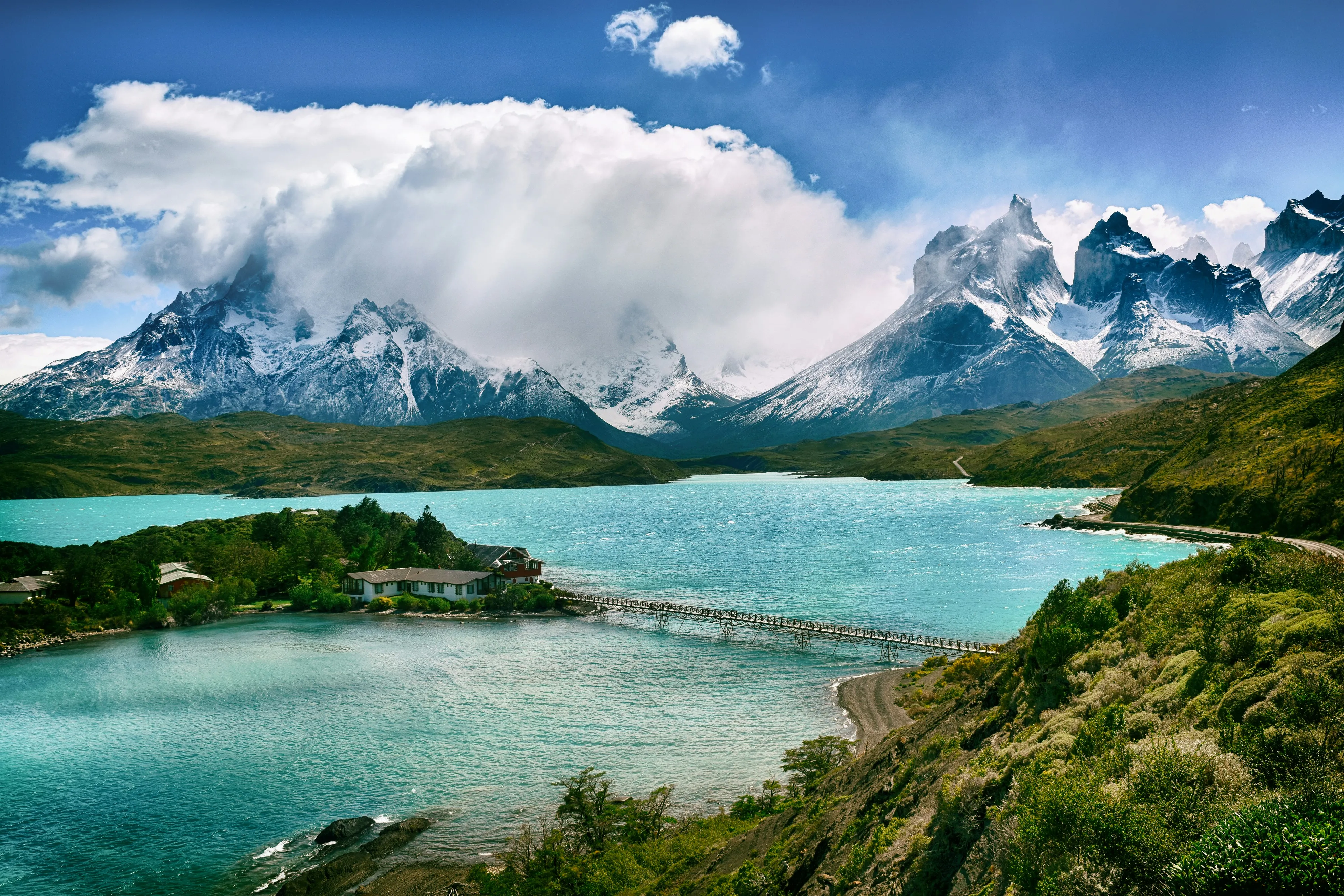
The southernmost part of the country is dominated by the Chilean Patagonia, a territory of rugged geography composed of fjords, glaciers, and jagged mountains. Torres del Paine National Park is one of the most representative areas of this region, with mountain routes that attract those looking for direct contact with the wildest nature. Finally, in the middle of the ocean, Easter Island (Rapa Nui) preserves a singular cultural heritage, with its iconic stone statues known as moai and an ancestral history that can be felt in every corner of the island.
“Tip”: You cannot leave without visiting Torres del Paine National Park, the most emblematic place in the country.
✈️ Best Time to Travel
Due to its great north-to-south extension, Chile presents a climatic diversity that allows it to be visited at any time of the year, depending on the specific destination chosen. In general terms, the intermediate seasons of spring and autumn are usually the most balanced for touring the country, as temperatures are moderate and the influx of visitors is lower than in the summer period, facilitating a calmer experience at the main points of interest.
For those looking to explore the southern zone and Patagonia, the months with the most stable weather coincide with summer, when days are longer and hiking routes are fully accessible. On the other hand, the north and the Atacama Desert can be visited throughout the year thanks to low rainfall, although it is worth considering the temperature fluctuation between day and night. In the central zone, the Mediterranean climate favors nature tourism and cultural activities constantly.
| Season | Months | Typical weather | What to expect | Tourist influx |
|---|---|---|---|---|
| Autumn | Mar – May | Mild temperatures and decrease in rain in the center; cool in the south. | Reddish-colored landscapes, harvest season in the wine valleys, and calm in the cities. | ⭐⭐ Medium |
| Winter | Jun – Aug | Persistent cold, rain in the center-south, and snow in the Andes Mountains. | Ski season, snow sports, and wildlife sightings in coastal areas. | ⭐ Low (High in ski centers) |
| Spring | Sep – Nov | Temperate and pleasant weather; days with more sunlight. | National parks in bloom, possibility of seeing the flowered desert, and reactivation of nature routes. | ⭐⭐ Medium |
| Summer | Dec – Feb | Warm and dry in the central zone; frequent winds and sun in the southern zone. | Local festivals, full access to mountain circuits, and ideal conditions for navigation in the south. | ⭐⭐⭐ High |
🗣️ Basic Vocabulary
Although the official language is Spanish, in Chile a wide variety of local idioms and expressions are used that may surprise the traveler. Knowing some of these terms will help you better understand directions, prices, or simply integrate into everyday conversations with greater ease during your stay.
Familiarizing yourself with these words is very practical for moving around cities, using public transport, or shopping at local markets, where the language is usually more informal and direct.
- Al tiro: Immediately or right now.
- ¿Cachái?: Do you understand? or do you follow me? (frequently used at the end of a sentence).
- Luca: Colloquial name for the one thousand Chilean pesos bill.
- Micro: Urban public transport bus.
- Bacán: Something that is great, wonderful, or excellent.
- Fome: Something boring, monotonous, or not funny.
- Pololo / Polola: Boyfriend or girlfriend.
- Carrete: Party or night out.
- Ya pues: Expression used to say “agreed” or to confirm an action.