


Estonia
Estonia captivates with its medieval old town in Tallinn, extensive boreal forests, and a vibrant digital culture framed by the serene beauty of the Baltic Sea.
Quick Facts
- Capital
- Tallinn
- Language
- Estonian
- Russian, English
- Currency
- Euro (EUR)
- Best time to visit
- From May to September, with mild weather and long days.
- Budget per day
- $50 - $150 per day
- Climate
- Temperate continental climate with cool summers and cold winters. The influence of the Baltic Sea softens temperatures on the coast.
- Connectivity
- good
- Very easy to obtain at airports, kiosks, and shops; wide availability of eSIM.
- Electricity
- Type C/F (230V)
- Local transport
- good
- Card usage
- widespread
- Tipping
- optional
🌎 Introduction
Bathed by the waters of the Baltic Sea, this corner of Northern Europe offers a landscape where nature and history coexist in a discreet balance. The passing of the seasons defines the rhythm of life here, transforming dense forests and jagged coastlines according to the winter wind or the soft light of long summer days. It is a place where the silence of its numerous islands blends with the warmth of small towns with a medieval feel, showing an identity forged between ancient traditions and a simple modernity that is felt in its streets and public spaces.
Walking its trails through wetlands or participating in the daily pause of a sauna allows one to understand a culture that deeply values its link with its environment. Local gastronomy, closely tied to local products and the cycles of the land, reflects an honesty that extends to other areas, such as its great musical tradition or the care for functional design. Without the need for artifice, the combination of clear horizons and urban life on a human scale composes a scene where time seems to pass with a different calm.
🛡️ General safety
Estonia is currently positioned as one of the safest and most peaceful countries in Europe for international travelers. Its integration into the European Union and the Schengen area, added to a culture of respect and public order, allows the tourist experience to be, generally, very relaxed and free of serious incidents.
General safety level
- The general safety rating in Estonia is very high. It is considered a low-risk destination compared to other larger European countries.
- The context for the traveler is one of great political and social stability. It is common to see local residents walking with total peace of mind at any time of the day through its main cities.
- Although no destination is exempt from risks, the problems a tourist usually encounters are minimal and related almost exclusively to minor oversights.
Crime and common risks
- The most common crime is petty theft (pickpocketing), especially during the high cruise season in the busiest areas of Tallinn’s historic center.
- There are isolated cases of scams in nightlife venues, where drink bills can be excessively inflated. It is advisable to always check the price list before ordering.
- Violent robberies are extremely rare. However, it is advised not to leave valuables in sight inside rented vehicles or unattended in public places.
Safety in cities and tourist areas
- The urban centers of Tallinn, Tartu, and Pärnu are very safe, even at night. Public transport and stations are usually well-monitored and have adequate lighting.
- There are no “forbidden” neighborhoods or high-danger zones, although as in any capital, it is advisable to maintain attention in the vicinity of ports and mass transport terminals.
- To move around calmly, it is enough to apply common sense: do not display large amounts of cash and watch personal belongings on terraces or in museums.
Safety in transport
- Public transport (buses, trams, and trains) stands out for its punctuality and safety. It is a monitored and very comfortable environment for the tourist.
- In Estonia, driving is on the right. Main roads are in good condition, but in winter, driving can be demanding due to ice and snow.
- Taxis are safe, although it is strongly recommended to use mobile applications (such as Bolt, of Estonian origin) to guarantee fair prices and trip tracking.
- The use of dipped headlights is mandatory 24 hours a day when driving any vehicle.
Natural and climatic risks
- Estonia does not suffer from extreme natural risks such as earthquakes, hurricanes, or severe flooding.
- The main risk is seasonal and climatic. During winter, temperatures can drop drastically (below zero) and ice on sidewalks can cause falls and slips.
- In summer, if visiting forested areas or national parks, it is important to protect yourself against ticks, as some can transmit encephalitis or Lyme disease.
Local legislation and norms
- A very specific and strict rule is the use of reflectors for pedestrians (called “helkur”). By law, all pedestrians must wear a small reflector hanging from their clothes or backpack when walking in dark or low-visibility conditions, both in the city and on the road. Non-compliance can lead to fines.
- There is a zero-tolerance policy for drinking and driving (0.0 g/l). Sanctions are severe and include immediate detention.
- Alcohol consumption in public spaces is regulated and, in many urban areas, is prohibited except on authorized terraces of bars and restaurants.
Safety for specific groups
- Female travelers: Estonia is an extremely safe country for women traveling alone. Street harassment is practically non-existent and respect for individual freedom is the norm.
- LGTBIQ+ travelers: The country is generally tolerant and respectful, especially in Tallinn and university environments like Tartu. However, discretion is recommended in more traditional rural areas to avoid awkward looks or situations, although aggression is very uncommon.
- Traveling with children and the elderly: Cities are accessible, the environment is family-friendly, and there are numerous facilities for rest and rapid medical attention if necessary.
Emergencies and assistance
- The universal emergency number in Estonia is 112. This number centralizes police, ambulance, and fire services.
- The Estonian police are usually efficient, multilingual (especially young officers speak English), and professional. In case of an incident, their willingness to help the tourist is very high.
- It is always recommended to travel with health insurance that covers any eventuality, although medical services in Estonia are of high quality and European standards.
Tip: Purchase a safety reflector (helkur) upon arriving in Estonia and hang it from your coat or backpack; not only will you comply with the law and avoid fines, but local drivers will see you much better on cloudy days or during the night.
📝 Entry requirements
To plan a trip to Estonia, the first step is to ensure you have a valid passport or an equivalent identity document that has adequate validity. It is recommended that the travel document has a residual validity of at least three to six months from the planned date of departure from Estonian territory to avoid inconveniences at border controls. The state of the document must be optimal, without damage that makes identifying the holder difficult.
Regarding access to the country, a large number of international travelers can enter for tourism purposes without needing to manage a prior visa. This facility usually applies to short stays not exceeding ninety days within a period of one hundred and eighty days. For those who require an entry permit, it is advisable to carry out the procedures well in advance to ensure that all documentation is ready before the departure date.
It is common for border control authorities to request visitors to present a return ticket or departure ticket to another destination to confirm the intention to leave the country within the permitted period. Similarly, proof may be required that the traveler has sufficient financial funds to cover their living and accommodation expenses during the time they remain at the destination.
Controls at airports and other access points are usually agile and professional. In addition to the documentary review, there are regulations related to customs restrictions that are worth knowing. The transport of personal items is allowed, but there are specific limits for the entry of consumer products such as tobacco or alcohol. In case of carrying large amounts of cash, it is necessary to make the pertinent declaration to the corresponding authorities.
In the field of health, mandatory vaccines are not usually required to enter Estonia, although it is always a prudent practice to keep the standard vaccination schedule up to date. If the traveler needs to transport specific medications, it is recommended to carry them in their original packaging and accompanied by a medical prescription or report justifying their personal use. Having travel insurance that offers extensive health coverage is always a useful suggestion to ensure peace of mind during the stay.
- Necessary documentation: A valid passport or identity document with extended validity after the stay is required.
- Visa exemption: Tourists from many regions can stay for a maximum of 90 days without a visa.
- Justification of stay: You may be asked for a departure ticket and proof of financial means.
- Customs rules: There are restrictions on the volume of alcohol, tobacco, and the amount of cash allowed without declaration.
- Health requirements: There are no mandatory vaccines, but it is advised to travel with medical insurance and prescriptions for personal medications.
- Entry controls: Routine security and document inspections are carried out at the main access points to the country.
🏥 Basic health considerations
When you prepare your trip to Estonia, you will realize that you are heading to one of the most digitalized and modern countries in Europe, and that is directly reflected in its healthcare system. You will find a high-quality health network, with modern hospitals and well-equipped clinics, especially in Tallinn and the main cities. Access for tourists can be through the public or private system, although as a traveler, it is most common to use private centers for speed. Prices are reasonable compared to other Northern European countries, but any emergency care or specialized treatment can involve a significant outlay if you are not prepared. You will not have major problems communicating, as the vast majority of medical staff speak English fluently, in addition to Estonian and Russian.
Taking out travel medical insurance is not strictly mandatory to enter the country if you do not need a visa, but it is highly recommended. Ideally, your policy should have broad coverage that includes not only basic medical assistance and hospitalization, but also medical repatriation in case of need. Having insurance will allow you to move with total peace of mind, knowing that in the event of any unforeseen event, you will have the costs covered and much more agile management.
Regarding vaccines, you will not find any mandatory vaccination requirements to cross the border. As a general rule for any destination, it is best to have your routine vaccination schedule up to date. If you plan to do many outdoor activities, hiking, or camping in rural and forested areas during spring or summer, you might consider the vaccine against tick-borne encephalitis, something you can consult with your doctor before leaving.
If you need to take your own medication, remember that it is important to transport it in its original packaging. To avoid any inconvenience at customs, it will be very useful to carry the medical prescription or a report from your doctor explaining the treatment, especially if it involves narcotic or psychotropic medications, which are subject to stricter controls. In the cities, you will find well-stocked pharmacies where you can buy basic products, although for specific medications you will always need a local prescription.
Regarding health risks, the main factor you should take into account is the climate. If you travel in winter, the cold can be extreme, so it is essential that you wear appropriate technical clothing to avoid hypothermia or frostbite problems. In summer, the main risk in nature areas is tick bites, which can transmit diseases such as Lyme disease. We recommend using repellents and checking your skin after walking through the forest. Otherwise, Estonia is a very safe country where there are no tropical diseases or significant hygiene risks.
You can be completely at ease with water and food. Tap water is potable and safe in practically the entire territory, so you can refill your bottle without fear. The levels of food hygiene are very high, both in street food stalls and in luxury restaurants, so you can try the local gastronomy with total confidence.
In the event that you suffer a medical emergency, the number you should dial is 112. This phone number is free and operates 24 hours a day. The ambulance system is very efficient and they will assist you quickly. If you are in a situation that is not life or death but requires immediate medical attention, you can go to the emergency departments of the main hospitals (known there as EMO).
As final recommendations for your stay to be perfect, we suggest carrying a small first-aid kit with basics for treating minor scrapes or common painkillers. Always stay well hydrated and use sunscreen even on cloudy summer days. Following these guidelines and acting with common sense, your experience in this fascinating Baltic country will be excellent and without health surprises.
🚌 Transport within the country
Moving around Estonia is a simple and efficient process due to the manageable size of the country and the good organization of its infrastructure. The bus and train are the fundamental pillars for intercity travel. While the railway offers comfortable journeys between the main cities, the bus network is more extensive and allows reaching smaller towns and rural areas with constant regularity.
In urban centers, public transport is designed to be intuitive. Visitors usually find clear signage and facilities for purchasing tickets, processes that are widely digitalized. Although there is no metro in the country, urban bus and tram networks well cover the needs of tourists. On the other hand, taxis and mobile app transport services are a very common and reliable option for moving quickly within cities.
Connectivity changes when heading towards rural areas or natural parks, where the frequency of service is lower than in the capital. In these cases, renting a car is a frequent alternative for those looking for total flexibility. Additionally, to visit the Baltic islands, the use of the ferry is essential; these services operate regularly and allow the transfer of passengers and vehicles in an organized manner.
In general terms, the transport system stands out for its punctuality and reliability. Vehicles are usually well-maintained and offer a level of comfort suitable for international standards. The sense of safety and order in travel facilitates the traveler’s ability to organize their routes with confidence throughout the territory.
Tip: It is convenient to check the availability of transport to natural areas in advance, as the frequency of service may be more reduced outside the main routes.
🤵 Culture and etiquette
Estonian society is characterized by respectful and calm behavior, where individual privacy holds a central place in social coexistence. When greeting, the most common is a firm handshake maintaining eye contact, avoiding excessively effusive gestures of affection with people with whom one is not familiar. In daily interactions, frankness and brevity are valued, so conversations are usually direct and without unnecessary detours. Silence is not perceived as something uncomfortable, but as a sign of reflection and active listening during the communicative exchange.
In public spaces and transport, an atmosphere of tranquility and order predominates. It is advisable to maintain a moderate voice volume so as not to interfere with others’ space, a custom that also extends to libraries, museums, restaurants, and cafes. Punctuality is a fundamental value in the local culture; arriving at the agreed time is considered a sign of consideration towards others, both in professional fields and in social encounters. Likewise, respect for personal space is very strict, so it is advisable to avoid unnecessary physical contact with people outside the inner circle.
When visiting an Estonian home, the most widespread courtesy rule is to take off your shoes upon entering, leaving outdoor footwear in the hallway; hosts very frequently offer indoor slippers to their guests for their comfort. In the context of meals, it is customary to wait until all diners are served before starting to eat. Regarding tipping, although not strictly mandatory, it is a common practice to leave around ten percent of the total amount in catering establishments if the service has been satisfactory.
There is deep respect for national identity, the language, and local traditions, especially those linked to music, choral singing, and nature. When visiting places of worship, historical monuments, or cemeteries, discreet and silent behavior is expected, in line with the cultural significance of these spaces. In dealing with older people, a somewhat more formal tone is usually used, although the social structure tends to be quite horizontal. Observing the behavior of local residents is always the best guide to adapting naturally to each situation.
Tip: It is essential to always remove your shoes when entering a private home, as keeping the floor clean is a sign of respect towards the host’s home and one of the most deeply rooted customs in daily life.
🍛 Typical gastronomy
The cuisine of Estonia is defined by its simplicity and an unbreakable link with nature and seasonal cycles. Traditionally, it has been a gastronomy of subsistence based on the resources offered by forests, the sea, and the land. The fundamental pillar of any table is black rye bread, a food with strong symbolic and cultural value that usually accompanies almost all meals. Estonian flavors are generally mild, with a strong focus on smoked, marinated, and fermented products, techniques historically essential for preserving food during the long winter months.
Among the most used ingredients are potatoes, pork, smoked fish —especially herring and sprat— and a wide variety of dairy products, among which sour cream stands out. The forest provides a distinctive touch through wild mushrooms and berries, such as lingonberries or cloudberries, which are used in both savory dishes and pastries. The influence of neighboring cultures is evident, fusing Baltic, Scandinavian, and Germanic traditions into an honest and unique culinary style.
Regarding eating habits, Estonians usually have a light lunch between 12:00 and 14:00, while dinner is usually served from 18:00. In restaurants, the atmosphere is relaxed and the etiquette is informal but respectful. Leaving a tip is not mandatory, although it is a common practice to round up the bill if the service was satisfactory. For drinking, it is very common to find high-quality craft beers, local apple cider, and kali, a fermented bread-based drink with a very particular toasted flavor.
| Dish | Description | Main Ingredients | Where to try it | Tip |
|---|---|---|---|---|
| Verivorst | Traditional dark-colored blood sausage, very popular in the cold months. | Pig’s blood, pearl barley, and spices. | Traditional cuisine taverns in any city. | It is enjoyed much more if accompanied by lingonberry jam. |
| Kiluvõileib | A very representative open-faced sandwich, served on dark bread. | Marinated sprat, rye bread, hard-boiled egg, and onion. | Cafeterias, local markets, and fast food stalls. | It is the ideal accompaniment for a light meal or a mid-morning snack. |
| Mulgipuder | A rustic and hearty mash that constitutes a very nutritious single dish. | Potatoes, barley, and pieces of pancetta or smoked bacon. | Rural restaurants and homemade food places in the south of the country. | It is usually served with fried onion on top to add texture and flavor. |
| Sült | Cooked meat presented in its own natural jelly, served cold. | Pork (often trotters or head) and vegetables. | Typical food restaurants and family celebrations. | Ask for some strong mustard to contrast with the softness of the jelly. |
| Kohuke | A very popular sweet snack, similar to a curd cheese bar. | Pressed curd cheese covered by a thin layer of chocolate. | Bakeries, dairy stalls, and grocery stores. | Try the variants that include berry or vanilla fillings for more variety. |
📷 Areas and places to visit
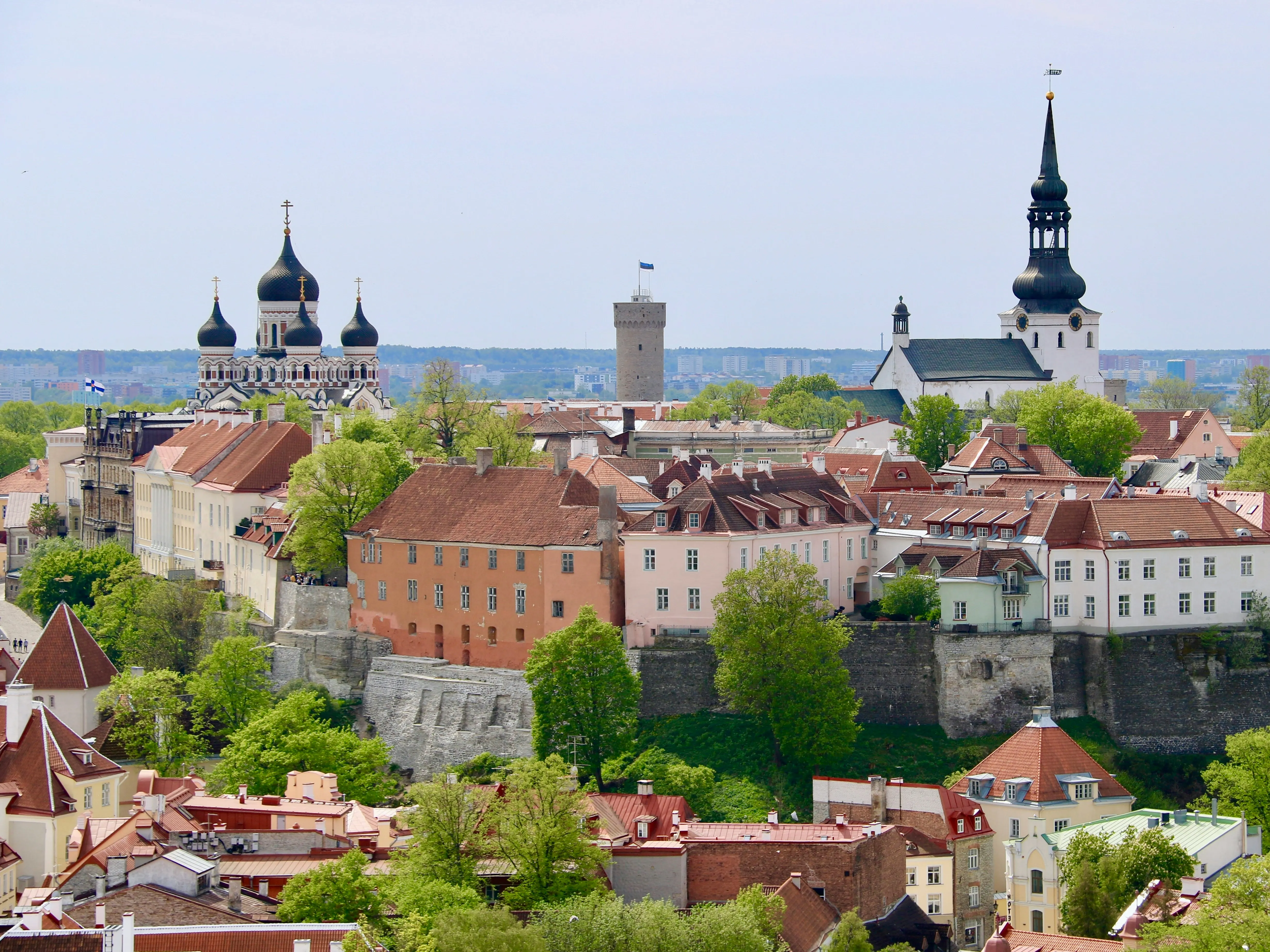
Estonia is a destination that surprises with the balance between its medieval heritage and cutting-edge modernity. The main gateway is its capital, Tallinn, where the traveler can get lost in the cobblestone streets of Vanalinn, its old town. This sector, protected by walls and watchtowers, preserves the essence of the old commercial cities of the Hanseatic League. In the upper part, known as Toompea, the Alexander Nevsky Cathedral and the Parliament are located, offering viewpoints with views of the red roofs and the Baltic Sea. The lower town is articulated around the Town Hall Square, a vibrant space that hosts markets and festivals depending on the time of year.
Beyond the historic core, the capital shows its most creative side in neighborhoods like Telliskivi Creative City. This old industrial complex has been transformed into an epicenter of design, urban art, and gastronomy, where it is possible to visit galleries and studios of local artists. For those looking for more direct contact with maritime history, the Seaplane Harbour houses one of the most interesting museum exhibitions in the country in old concrete hangars. Additionally, the surroundings of Kadriorg Palace, with its Baroque architecture and extensive gardens, offer a space of tranquility and culture a short distance from the center.
In the southern area is Tartu, the university city par excellence and intellectual reference of the region. Its atmosphere is different from that of the capital, marked by a slower pace and a constant cultural life. The city center stands out for the Town Hall Square and its student fountain, while the Toomemägi hill invites walks among the ruins of its ancient cathedral and historic bridges. It is an ideal place to get to know the most academic side of Estonia, with museums dedicated to national history and spaces dedicated to science and innovation.
Nature is a fundamental piece of the country’s identity, and Lahemaa National Park is the most prominent example of its biodiversity. Located on the north coast, this park allows for exploring dense forests, traditional fishing villages, and the famous Viru bogs, where wooden boardwalks have been set up to walk over the wetlands. The area is also known for housing old manor houses, such as Palmse or Sagadi, which show the rural life of the old nobility. The coastal landscapes of the region, dotted with large granite boulders and quiet coves, reflect the population’s close relationship with the sea.
The Estonian islands provide a dimension of peace and tradition highly valued by those looking to disconnect. Saaremaa, the largest, retains an authentic character with its wooden windmills and the imposing Kuressaare Castle, a perfectly preserved medieval fortress. On this island, one can also visit the Kaali crater, originated by a meteorite impact, a site of great geological relevance. For its part, the island of Hiiumaa stands out for its historic lighthouses and its pristine environment, ideal for excursions on foot or by bicycle along routes that cross pine landscapes and lonely beaches.
For those who prefer a coastal and spa atmosphere, Pärnu presents itself as the country’s main summer destination. Its white sand beaches, tree-lined parks, and spa-style wooden architecture attract visitors interested in wellness and rest. At the opposite end, on the border with Russia, the city of Narva offers a unique architectural and social contrast. Its main point of interest is the Hermann Castle, which rises opposite the neighboring fortress on the other side of the river, symbolizing the meeting point between different cultures and historical influences throughout the centuries.
“Tip”: You cannot miss visiting Tallinn’s Old Town (Vanalinn), the most emblematic place in the country.
✈️ Best time to travel
Estonia offers very different experiences depending on the time of year it is visited. Its location in Northern Europe marks a clear contrast between seasons, allowing for trip planning based on whether one seeks to enjoy nature at its peak, participate in cultural festivals, or experience the atmosphere of snowy landscapes. While the summer period is ideal for those who prefer mild temperatures and long days, the cold months transform the environment into a peaceful and unique setting.
The choice of date depends largely on the activities one wishes to perform. The country’s infrastructure is prepared for climatic variations, ensuring that both medieval cities and national parks are accessible for most of the year. Understanding the rhythm of each season helps adjust expectations regarding hours of sunlight, the type of clothing needed, and the influx of other travelers at main points of interest.
| Season | Months | Typical climate | What to expect | Tourist influx |
|---|---|---|---|---|
| Spring | Mar – May | Cool temperatures that gradually rise and forest thaw. | Sighting of migratory birds, blooming vegetation, and days that gain light quickly. | ⭐⭐ Medium-Low |
| Summer | Jun – Aug | Mild and pleasant weather, with moderate temperatures and occasional rainfall. | ”White nights” phenomenon, outdoor music festivals, and routes through lakes and coasts. | ⭐⭐⭐ High |
| Autumn | Sep – Nov | Dropping temperatures, increasing humidity, and presence of cool winds. | Landscapes of ocher colors, mushroom gathering in the forests, and a more serene urban atmosphere. | ⭐⭐ Medium |
| Winter | Dec – Feb | Cold environment with frequent snowfall and few hours of natural light per day. | Snowy landscapes, traditional markets in historic cities, and snow-related activities. | ⭐⭐ Medium-Low |
🗣️ Basic vocabulary
Although most people in tourist areas of Estonia speak English, knowing some basic words in the local language is an excellent way to facilitate communication in everyday situations. Learning to say hello or thank you will allow you to navigate markets, cafeterias, and public transport more smoothly, besides being a gesture of courtesy that local residents usually appreciate.
It is not necessary to delve deep into grammar for your trip to be more fluid. It is enough to memorize a few key expressions that will help you solve basic needs and show respect for the country’s culture during your stay.
- Tere: Hello.
- Tänan or Aitäh: Thank you.
- Palun: Please (also used to say “you’re welcome”).
- Jah: Yes.
- Ei: No.
- Vabandust: Sorry or excuse me.
- Nägemist: Goodbye.
- Arve, palun: The bill, please.