


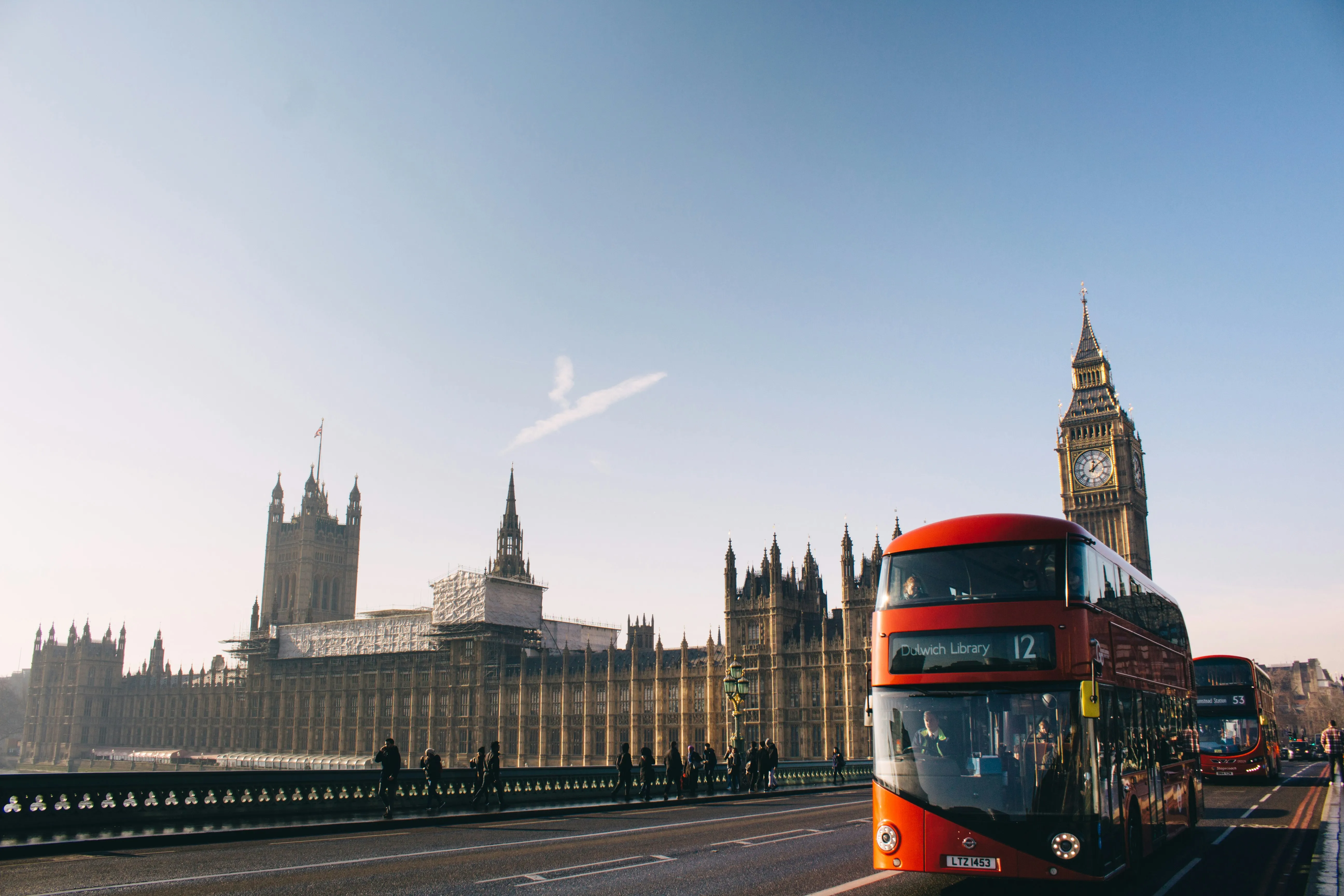
United Kingdom
Discover rich British history among iconic monuments, infinite green landscapes, cosmopolitan cities, and centuries-old traditions that captivate travelers from all over the world.
Quick Facts
- Capital
- London
- Language
- English
- Welsh, Scottish Gaelic, and Irish
- Currency
- Pound sterling (GBP)
- Best time to visit
- From May to September for mild weather or December for its festive atmosphere.
- Budget per day
- $80 - $250 per day
- Climate
- Temperate oceanic with frequent rainfall year-round, cool summers, and moderately cold winters with cloudy skies.
- Connectivity
- good
- Very easy to acquire at airports, specialized stores, and through eSIM options.
- Electricity
- Type G (230V)
- Local transport
- good
- Card usage
- widespread
- Tipping
- optional
🌎 Introduction
Beyond the iconic image of red phone boxes and afternoon tea, these island lands offer a journey through centuries of history that naturally intertwine with the rhythm of modern life. From the trails bordering wind-swept cliffs to the cobblestone squares of the quietest villages, the landscape changes constantly, offering a palette of greens that takes on a special intensity under the soft light of its changing skies. It is a corner of the world where the industrial past coexists with ancient fortresses and where each season transforms the atmosphere of its valleys, coasts, and cities.
The identity of the place is perceived in small daily details: the bustle of a local weekend market, the calm of a pub with a fireplace at dusk, or the elegance of gardens waking up with the arrival of spring. Traditions are kept alive as part of everyday life, reflected in a gastronomy that seeks comfort and in festivities that mark the passing of time. This blend of heritage and current dynamism creates a unique environment, where sobriety and creativity meet in every corner, from the solitary moors of the north to the most cosmopolitan neighborhoods of the south.
🛡️ General Safety
The United Kingdom is generally considered one of the safest destinations in the world for travelers. The country has a solid infrastructure, efficient emergency services, and a stable social environment that allows for peaceful tourism.
General safety level
The overall safety rating in the United Kingdom is high. Compared to other international destinations, the crime rate affecting tourists is low. Travelers can move with confidence throughout the vast majority of the territory, in both urban and rural settings.
While there are no critical risks, it is important to maintain the common sense that would apply in any developed country. The environment is predictable and welcoming, making it an ideal destination for all types of travelers, including those traveling alone or for the first time abroad.
Crime and common risks
Despite being a safe country, there are certain minor risks that tend to be concentrated in large cities and areas with high tourist traffic:
- Pickpocketing: This is the most common crime. It occurs mainly in crowded places such as train stations, iconic monuments, and shopping areas. It is recommended to always watch your belongings, especially your mobile phone and wallet.
- Snatch thefts: In some areas of large cities like London, cases of criminals on motorcycles or bicycles grabbing mobile devices from pedestrians’ hands have been reported.
- Street scams: Although infrequent, there may be fraudulent games of chance on the street or people trying to sell unofficial tourist services. It is recommended to be wary of offers that seem too good to be true.
- ATM safety: It is advisable to use ATMs located inside bank branches or shopping centers to avoid potential card cloning.
Safety in cities and tourist areas
Urban centers in the United Kingdom are generally heavily monitored by security camera systems (CCTV) and police presence.
- Nightlife areas: In areas with bars and clubs, the presence of large groups of people under the influence of alcohol is common, especially on weekends. While violence is rare, it is best to avoid unnecessary confrontations in these zones.
- Public transport: The London Underground (The Tube) and bus networks across the country are safe and well-lit environments. It is advisable to be mindful of personal items during peak hours due to crowding.
- Suburban areas: As in any metropolis, some areas far from tourist centers may have slightly higher local crime levels, but they rarely affect tourists who stick to the usual routes.
Transport safety
Transportation in the United Kingdom stands out for its efficiency and organization, with very clear regulations that facilitate mobility:
- Driving: It is essential to remember that in the United Kingdom you drive on the left. This affects both drivers of rental vehicles and pedestrians when crossing the street.
- Pedestrian crossings: In large cities, you will often find markings on the ground that say “Look Right” or “Look Left” to help visitors adapt to the direction of traffic.
- Taxis and VTC: The famous Black Cabs are extremely safe and regulated. Private transport apps (such as Uber) also operate under strict safety regulations. It is recommended to avoid unofficial taxis (unlicensed “minicabs” offering services on the street).
- Rail transport: It is safe and punctual, although it is advisable to stay tuned to announcements about possible strikes or maintenance closures that could alter the itinerary.
Natural and climatic risks
The United Kingdom is not typically affected by major natural disasters, such as earthquakes or hurricanes. However, the weather is the most relevant factor to keep in mind:
- Flooding: During periods of intense rain (especially in winter and autumn), some rural areas near rivers may experience occasional flooding that cuts off roads or train tracks.
- Winter phenomena: Ice and snow can cause temporary closures of infrastructure and make sidewalks slippery.
- Waves: In coastal areas, it is advisable to respect safety signs on cliffs and piers during periods of strong winds or storms.
Legislation and local norms
Law enforcement is strict, and authorities are rigorous in its application. It is important to keep in mind:
- Weapons and dangerous objects: It is strictly forbidden to carry any type of weapon, including switchblades, self-defense sprays (such as pepper gas), or sharp objects. Penalties for possession can include prison sentences.
- Alcohol consumption: Drinking alcohol on the street is regulated by local ordinances. In some cities, there are specific zones where consuming alcohol in open public spaces is prohibited.
- Drugs: Legislation on narcotics is severe; possession of illegal substances, even in small quantities for personal consumption, can lead to arrests and high fines.
Safety for specific groups
The United Kingdom is an inclusive and respectful country, with very advanced protection laws:
- Female travelers: It is a very safe destination for women traveling alone. Standards of respect and public safety are high.
- LGTBIQ+ travelers: The country is a pioneer in LGTBIQ+ rights. Public displays of affection are normally accepted, and there are numerous neighborhoods and venues dedicated to this community with a very safe atmosphere.
- Children and the elderly: Infrastructure is adapted, and assistance services are excellent. Parks and museums usually have very rigorous safety protocols for the protection of minors.
Emergencies and assistance
The United Kingdom’s emergency system is one of the most advanced in the world and is easy to use:
- Main emergency number: 999 is the free number to contact the police, ambulance services, or fire department in critical situations.
- Non-urgent cases: If you need to contact the police for a matter that is not an immediate emergency (such as reporting a stolen wallet), the number is 101. For non-urgent medical inquiries, 111 is used.
- Consular assistance: It is always recommended to have the address and phone number of your home country’s embassy or consulate in London or Edinburgh written down.
- Police: Officers (often called “Bobbies”) are usually very friendly and willing to help tourists with directions or basic safety information.
Tip: When crossing the street, especially in cities with heavy traffic, always look for zebra crossings and look right first, as the direction of traffic is opposite to that of most countries.
📝 Entry Requirements
To plan a trip to the United Kingdom, the fundamental document you must carry is a valid passport. It is recommended that this document has a validity that covers the entirety of the intended stay in the territory. Although other forms of identification were accepted for certain travelers in the past, the passport is currently the common standard for most international visitors arriving through various ports and airports.
Regarding access permits, a large number of international travelers do not require a prior visa for stays of a purely tourist nature. However, this depends on the visitor’s nationality, so it is common for some citizens to have to manage an electronic authorization or a formal visa before starting their journey. The permitted period to stay in the country as a tourist is usually a maximum of six months, a time that allows for touring the different nations that make up the territory.
When crossing the border, control officers may request additional information to verify the purpose of the visit. It is common to be asked to show an onward ticket or a return reservation, in addition to evidence showing that the traveler has sufficient financial funds to cover their stay and accommodation without needing to resort to public funds or work. Entry controls are usually standardized processes aimed at confirming that the visitor fits the profile of a temporary tourist.
Regarding customs restrictions, there are rules that limit the entry of certain products. It is important to be cautious with the introduction of fresh food, plants, or meat products, as they are usually subject to strict phytosanitary controls. As for medications, it is advised to carry necessary medication in its original packaging and, preferably, accompanied by a copy of the medical prescription or a letter from a healthcare professional justifying its personal use to avoid delays in inspections.
In the field of health, mandatory vaccination requirements are not usually applied for the entry of tourists from most regions of the world. Despite this, it is suggested that travelers have travel insurance with broad medical coverage, given that costs derived from unforeseen healthcare can be high for those who do not reside permanently in the country. Keeping the vaccination schedule up to date is always an advisable practice for any international destination.
- Identity document: Passport with the necessary validity for the duration of the trip.
- Stay permits: Many visitors are exempt from visas for tourist purposes, although others may require prior authorization.
- Length of stay: The maximum allowed stay usually reaches six months.
- Border checks: Possibility of requiring return tickets and proof of financial solvency.
- Baggage and customs: Limitations on products of animal or plant origin and quantities of tobacco or alcohol.
- Health and medications: Recommendation of private medical insurance and the need for a prescription for specific drugs.
- Vaccination: No special immunizations are required for regular tourist access.
🏥 Basic Health Considerations
The United Kingdom has one of the most advanced healthcare systems in the world, so if you travel there you will find top-tier medical infrastructure in both large cities and rural areas. Although care is excellent, it is fundamental that you understand how access works for those who do not reside permanently in the country.
The public system is known as the NHS. As a tourist, you will have free access to emergency care, but most secondary medical services or hospitalization resulting from an emergency entail high costs if you do not have specific agreements or private insurance. Private medicine prices are high, so even a simple consultation could considerably affect your travel budget. Regarding communication, healthcare staff will always assist you in English, although in large hospitals in cosmopolitan cities, it is possible to request interpretation services if strictly necessary due to the complexity of the case.
Taking out travel insurance is highly recommended. It is not a mandatory legal requirement to cross the border as a tourist, but it will give you the necessary peace of mind in the face of any health unforeseen events. It is vital that your policy includes full coverage for hospitalization and medical repatriation, as international medical transfers from British territory are usually extremely expensive.
Regarding prevention, there are no mandatory vaccinations to enter the United Kingdom. To move with total safety through any region, you will only need to have your regular vaccination schedule up to date. There are no tropical diseases or specific biological risks that require special preventive treatment before your arrival.
If you need to take specific medication for a treatment you already follow, it is best to travel with the original container and a copy of the medical prescription, preferably translated into English if they are controlled drugs. Some medications that are over-the-counter in other places might be more regulated here. For minor ailments, such as headaches or mild colds, you will find pharmacies and parapharmacy sections in almost all supermarkets, where you can buy analgesics or antiseptics without any difficulty.
The main health risk is related to the variable and sometimes extreme weather. You will have to protect yourself well from the cold and humidity, especially if you visit Scotland, Wales, or mountain areas, to avoid colds or hypothermia. In countryside or thick forest areas during summer months, it is prudent to watch for the presence of ticks that can transmit Lyme disease, although it is not something you should worry about excessively if you use repellent and appropriate clothing.
You can drink tap water with total confidence anywhere in the country, as the water is potable and of excellent quality. Hygiene standards in restaurants, cafes, and street food stalls are very strict, so you can try the local gastronomy without fear of common food poisoning. General cleanliness in public and tourist establishments is usually very high.
In case of a critical situation or serious accident, the number you should dial is 999, which is free and centralizes ambulance services. If you have a health problem that is not an emergency but requires quick medical advice or you do not know where to go, you can call 111, where qualified staff will guide you to the nearest health center that can assist you.
Always carry the contact information and policy number of your medical insurance with you and do not wait for a small discomfort to get worse to seek advice at a local pharmacy. Remember that the weather changes very quickly, so dressing in layers will be your best ally for maintaining health throughout your stay in the country.
🚌 Transport Within the Country
The United Kingdom has an extensive transport network that allows for comfortable travel between major cities. The train is the most widely used medium for covering medium and long distances due to its frequency and the fact that stations are usually located in the center of urban hubs. Long-distance buses are a frequent alternative for those looking for road travel, connecting points that sometimes do not have a rail line. For very long distances, such as journeys to the north or between islands, domestic flights and ferries play a fundamental role in speeding up transfers.
For the visitor, using public transport is quite intuitive. Signage is clear and present at all key points, facilitating orientation even in the largest stations. Ticket purchasing is usually done electronically or at automatic machines available in the stations themselves. In large cities, the underground and tram systems are essential for avoiding traffic, offering a high frequency and fluid connection between different neighborhoods and points of interest.
The outlook changes slightly when moving toward rural areas or more remote natural settings. In these regions, public transport is less frequent and connections are more spaced out, so car rental becomes the most flexible option for exploring the environment at one’s own pace. On the other hand, taxis and ride-hailing services are widespread throughout the territory, being easy to find at specific ranks or by requesting them via mobile apps. The general feeling is that of an organized and reliable system, where punctuality is usually maintained in most services.
“Tip”: It is recommended to plan journeys in advance and check the status of the service in real-time through digital media to travel with greater peace of mind.
🤵 Culture and Etiquette
In the United Kingdom, politeness and respect for personal space are fundamental pillars of daily coexistence. It is common to make frequent use of formulas for thanking and apologizing in almost any interaction, even in fleeting or brief situations. One of the most deep-rooted social norms is respect for queues; waiting one’s turn in an orderly manner at bus stops, shops, or tourist attractions is considered an essential behavior to maintain harmony in public spaces.
Regarding interpersonal communication, maintaining a moderate voice volume is positively valued, especially on public transport and in enclosed environments. Physical contact is usually limited in initial greetings, where a handshake is the most common and accepted form of courtesy. Punctuality is another relevant trait in daily life, so arriving at the agreed time for appointments, guided tours, or service reservations is interpreted as a sign of consideration for others’ time.
In hospitality establishments, the custom regarding tipping usually ranges between 10% and 12.5% of the total, provided the service has been satisfactory. It is common for many restaurants to directly include an optional service charge on the bill. In social contexts such as pubs, it is common to place your order and pay directly at the bar. On the other hand, if invited to a private home, it is a common gesture of courtesy to bring a small gift for the hosts.
Respect for traditions and places of historical or religious importance is fundamental. When visiting cathedrals, monuments, or participating in official acts, calm behavior and a low tone of voice are expected. Treatment toward authority figures and service sector workers is usually friendly and formal, avoiding excessive familiarities if no prior relationship exists, always maintaining a balanced and professional tone.
Tip: When using escaleras mecánicas (escalators), especially on the London Underground, it is fundamental to always stand on the right to allow people who are in a hurry to pass freely on the left side.
🍛 Typical Gastronomy
The gastronomy of the United Kingdom has evolved significantly in recent decades, combining its traditional roots of comfort food with a growing openness to international influences. Although historically based on simple and nutritious ingredients, today it stands out for the value placed on its local products, such as grass-fed meats, fresh fish from its coasts, and a wide variety of artisanal cheeses. Flavors are usually natural and balanced, avoiding excessive spices to highlight the quality of the raw material.
British eating habits are heavily marked by the rhythm of life. While a full breakfast is often reserved for rest days, lunch is usually a functional and light meal. Dinner is the main moment of the day, generally held between 6:00 PM and 8:00 PM. One of the most beloved traditions is afternoon tea, a social custom that allows for a break with sweet and savory bites before the last meal of the day.
The center of social and gastronomic life is, undoubtedly, the pub. In these establishments, the atmosphere is close and relaxed; it is important to keep in mind that, in many of them, food and drinks are ordered and paid for directly at the bar. The Sunday Roast is the unmissable appointment of the week, where families and friends gather to share meat dishes with vegetable side dishes. Regarding etiquette, the treatment is usually cordial and simple, with punctuality being valued in more formal restaurant reservations.
Regarding drinks, tea remains the preferred option, usually served with a splash of milk. In traditional venues, ale-type beers and natural ciders are the stars, offering a wide range of nuances that vary by region. The current gastronomic offer reflects a country that respects its culinary legacy while integrating new trends naturally and accessibly for the traveler.
| Dish | Description | Main Ingredients | Where to try it | Tip |
|---|---|---|---|---|
| Fish and Chips | Battered and fried white fish accompanied by chips. | Cod or haddock, potatoes, mushy peas, and malt vinegar. | Coastal stalls or traditional shops in any city. | Try it with a touch of salt and vinegar for the most authentic experience. |
| Sunday Roast | Traditional roast typically served on Sunday at noon. | Meat (beef, lamb, or chicken), roasted potatoes, vegetables, and Yorkshire pudding. | Local pubs across the country. | Don’t forget to accompany it with hot gravy over the meat and pudding. |
| Full English Breakfast | A complete and energetic dish ideal for starting the day. | Eggs, sausages, bacon, mushrooms, roasted tomatoes, and baked beans. | Cafes, hotels, and rural accommodations (B&B). | It is a very substantial dish, perfect for days with lots of tourist activity. |
| Shepherd’s Pie | Minced meat pie covered with a layer of mashed potato gratin. | Minced lamb, onion, carrot, and mashed potato. | Classic-style pubs and rural settings. | If made with beef instead of lamb, you will find it as Cottage Pie. |
| Afternoon Tea | Gastronomic experience composed of varied bites. | Tea, small sandwiches, scones with cream and jam, and cakes. | Tea rooms and charming hotels. | Enjoy the savory sandwiches first before moving on to the sweets and scones. |
📷 Areas and Places to Visit
The United Kingdom offers a diversity of landscapes and experiences that combine centuries of history with vibrant modernity. London, the capital, is a fundamental stop where iconic monuments like the Palace of Westminster and the Tower of London coexist with internationally relevant museums, among which the British Museum and the Tate Modern stand out. Walking through its neighborhoods allows for discovering notable contrasts, from the alternative atmosphere of Camden Town to the elegance of Notting Hill, without forgetting the wide perspectives offered by the South Bank on the banks of the River Thames.
To the west of England, the city of Bath captivates with its Roman baths and its careful Georgian architecture, while the Cotswolds region shows the most traditional side of the British rural environment with its green hills and honey-colored stone villages. Very close to this area, the megalithic complex of Stonehenge invites reflection on the prehistoric past of the islands in a setting of great archaeological value. For those seeking centers of knowledge and tradition, Oxford and Cambridge offer tours of historical university colleges and centuries-old libraries that preserve a unique academic atmosphere.
In northern England, the Lake District is a favorite destination for nature lovers, with hiking trails among mountains and mirrors of water that have inspired writers for generations. Cities with a marked industrial past and a vibrant culture like Liverpool or Manchester allow for exploring the history of contemporary music and modern urban development. Meanwhile, the walled city of York transports the visitor to medieval times through its narrow streets and its imposing Gothic cathedral, known as York Minster.
Scotland presents a very defined character of its own, led by the city of Edinburgh. Its historic center or Old Town, presided over by Edinburgh Castle, contrasts with the orderly elegance of the neoclassical area. Venturing into the Highlands, the landscape becomes rugged and spectacular, with deep valleys, isolated castles, and legendary lochs like Loch Ness. The Isle of Skye is another point of great interest for its unique geological formations and its cliffs that drop directly into the Atlantic Ocean.
In Wales, the focus is on natural beauty and medieval heritage. Eryri National Park (Snowdonia) offers challenging peaks and quiet valleys, while the coast is protected by imposing fortresses such as Conwy Castle or Caernarfon. Finally, in Northern Ireland, the city of Belfast stands out for its maritime history and its shipyard area. On the northern coast, the Giant’s Causeway surprises with its thousands of hexagonal basalt columns, forming a geological landscape that is one of the most recognizable images of Northern Irish geography.
“Tip”: You cannot miss visiting London, the most emblematic place in the country.
✈️ Best Season to Travel
The United Kingdom offers different experiences depending on the time of year it is visited. The choice of the ideal moment depends largely on the activities to be carried out; while the spring and summer months are ideal for exploring national parks and coastal areas thanks to milder temperatures and longer days, autumn and winter provide a quieter and more welcoming atmosphere, ideal for cultural visits and museums.
The British climate is known for its variability, so it is common to find changes in weather on the same day. However, in general, the country enjoys a temperate maritime climate without extreme temperatures. Landscapes change drastically from season to season, going from the green and flowery fields of the central months of the year to the ochre tones and occasionally snowy peaks during the final stretch of the calendar.
| Season | Months | Typical Weather | What to Expect | Tourist Influx |
|---|---|---|---|---|
| Spring | Mar – May | Cool and variable, with intermittent rain and increasing sunlight. | Flowering gardens, very green landscapes, and flower festivals. | Medium ⭐⭐ |
| Summer | Jun – Aug | Mild and pleasant, with the longest and sunniest days of the year. | Outdoor festivals, cultural events, and great atmosphere on terraces. | High ⭐⭐⭐ |
| Autumn | Sep – Nov | Gradual drop in temperatures, wind, and increase in humidity. | Forests with golden colors, traditional festivities, and countryside walks. | Medium / Low ⭐⭐ |
| Winter | Dec – Feb | Cold and short days. Possibility of snow, especially in the north. | Christmas markets, festive lighting, and indoor cultural activities. | Low ⭐ (High at Christmas) |
🗣️ Basic Vocabulary
Although English is a global language, knowing some politeness formulas and common expressions in the United Kingdom helps make interactions with residents more fluid. Whether asking for a coffee in London or inquiring about a direction in Edinburgh, these small gestures are highly valued and facilitate day-to-day life during the trip.
It is not necessary to master grammar or have perfect pronunciation. Using basic terms correctly in shops, restaurants, or on public transport will allow you to navigate with greater confidence and resolve everyday situations simply.
- Please: Please. It is essential to include it at the end of almost any request to maintain local politeness.
- Thank you / Thanks: Thank you / Thanks. Used very frequently in any social interaction.
- Excuse me: Excuse me. Used to get someone’s attention politely or to ask for passage through people.
- Sorry: Sorry. In the United Kingdom, it is used habitually, even to apologize for minor oversights or accidental bumps.
- Cheers: Thanks or cheers. It is an informal and very common way to say thank you or to make a toast.
- Where is…?: Where is…?. The basic phrase to ask for a street, a monument, or the bathroom.
- The bill, please: The bill, please. Used to request the total to be paid in hospitality establishments.
- Hello / Hi: Hello / Hi. The standard and friendly way to greet before starting any conversation.