


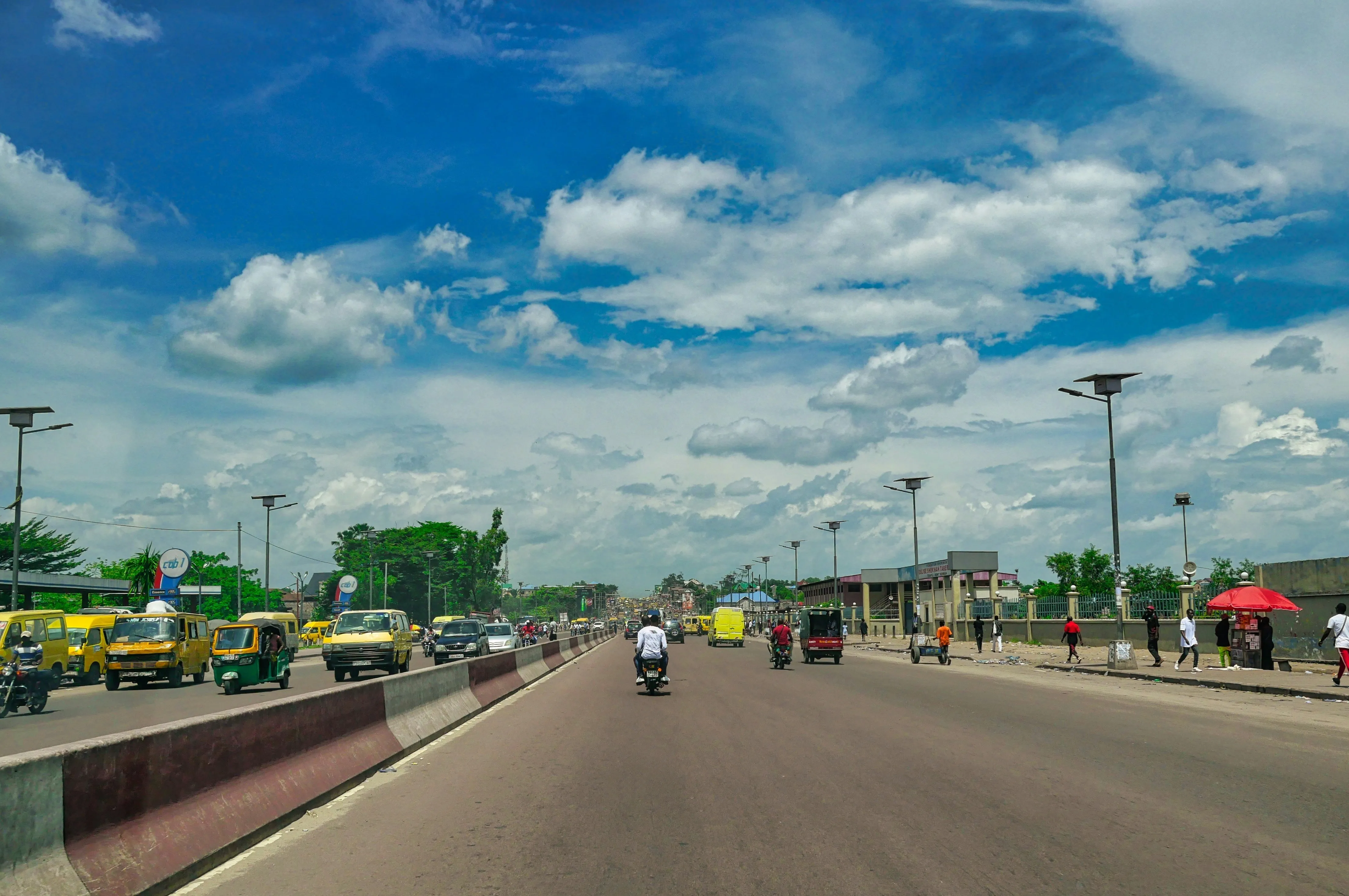
Democratic Republic of the Congo
Discover the immense biodiversity of the African rainforest, active volcanoes, and a vibrant culture in the untamed heart of a country full of adventures.
Quick Facts
- Capital
- Kinshasa
- Language
- French
- Lingala, Kikongo, Swahili, and Tshiluba
- Currency
- Congolese franc (CDF) and US dollar (USD)
- Best time to visit
- From June to August during the main dry season
- Budget per day
- $40 - $150 per day
- Climate
- Hot and humid tropical climate with abundant rainfall in the central basin and high temperatures throughout practically the entire year.
- Connectivity
- low
- Easy to obtain at airports and major cities
- Electricity
- Type C / E (220V)
- Local transport
- limited
- Card usage
- cash is used more
- Tipping
- optional
🌎 Introduction
Crossed by the course of the river that gives it its name, this region in the heart of the African continent unfolds as a mosaic of dense jungles, mountains often shrouded in mist, and open savannas. Life here often follows the rhythm of the water and the equatorial climate, where intense rains and warm sun take turns maintaining a vibrant landscape. It is a setting where nature dictates the timing, from the volcanic peaks of the east to the plains that stretch toward the horizon.
In the cities and villages, the rhythm is set not only by the river current but also by the rumba music playing in the neighborhoods and the presence of colorful fabrics that dress everyday life. The country’s identity is perceived in the lively markets, where the aroma of traditional dishes like moambe chicken mixes with the leisurely chatter of its inhabitants. It is a land of subtle contrasts, where traditions coexist with a constant urban energy, offering a balanced vision between the calm of its natural landscapes and its cultural vitality.
🛡️ General Safety
The Democratic Republic of the Congo (DRC) is a destination of incomparable natural wealth, but it requires meticulous planning and a conscious approach regarding safety. Due to its complex history and geopolitical situation, the safety level is considered variable and generally delicate, ranging from moderate to high risk depending strictly on the region being visited.
For the international traveler, the current context demands staying constantly informed. While certain urban areas and specific national parks have organized safety protocols, other areas, especially in the east of the country, are less recommended for conventional tourism. The key to a successful trip in the DRC is prevention and the accompaniment of certified local guides.
Crime and Common Risks
As in many large metropolises around the world, common crime is present, mainly in densely populated urban centers.
- Pickpocketing and bag snatching are the most frequent crimes, especially in markets, transport areas, and places with large crowds.
- Minor scams targeting tourists can occur, often related to unsolicited services or informal intermediaries.
- Robbery with intimidation is less frequent but can happen, especially if traveling through isolated areas or at night.
- It is recommended to avoid the ostentatious use of valuables, high-end cameras, or mobile devices in open public spaces.
Safety in Cities and Tourist Zones
Safety varies significantly between urban centers and areas of natural interest.
- In Kinshasa, the Gombe neighborhood is considered the safest area and where most diplomatic and commercial activity is concentrated. However, other areas of the capital can be more complex for foreign visitors.
- In the east of the country, cities like Goma serve as a base for visiting national parks. Here, safety depends largely on the stability of the moment, so it is vital to verify the situation of the parks before traveling.
- National Parks, such as Virunga or Kahuzi-Biega, have their own security forces (rangers) who protect visitors. You should always access these areas through official operators.
- It is strongly discouraged to walk through cities after nightfall, with the use of private transport managed by hotels or agencies being preferable.
Safety in Transport
Moving around the DRC is a logistical challenge that requires always prioritizing safety over savings.
- Public transport (buses and collective vans) does not usually meet international safety and maintenance standards, so it is not recommended for tourists.
- The use of taxis must be done with caution. It is fundamental to use only taxis recommended by the hotel or hire services from trusted private drivers.
- In the DRC, people drive on the right. However, self-driving is inadvisable due to the state of the roads, poor signaling, and frequent police checkpoints.
- For long-distance intercity travel, flying is the safest option, although you should always choose airlines that do not appear on international air safety ban lists.
Natural and Climatic Risks
The country’s geography entails certain risks that the traveler should know according to the season and the area.
- Extreme heat and humidity are constant in the Congo Basin. It is vital to maintain adequate hydration and protect yourself from the sun to avoid heatstroke.
- During the rainy season, which varies according to the country’s latitude, flash floods and road closures can occur, making land transport very difficult.
- In the eastern zone, near Goma, there is volcanic activity (such as the Nyiragongo volcano). It is fundamental to follow the instructions of local authorities and seismic reports before visiting the region.
Legislation and Local Norms
Respect for local laws is fundamental to avoid legal incidents that can be severe.
- It is strictly forbidden to photograph or film government buildings, military installations, bridges, airports, or uniformed personnel. Failure to comply can lead to detention and confiscation of equipment.
- It is mandatory to always carry valid identification (generally a passport with a valid visa). It is recommended to carry a certified copy and leave the original in the hotel safe.
- The use and possession of drugs are punishable by very rigorous prison sentences.
- Authorities may conduct security checks at any time; a cooperative and respectful attitude should always be maintained.
Safety for Specific Groups
- Female travelers: Traveling alone is not recommended. It is preferable to move in organized groups and dress discreetly to avoid unwanted attention.
- LGTBIQ+ travelers: Homosexuality is not illegal under the penal code, but it is not socially accepted and there may be situations of harassment or discrimination. It is recommended to maintain maximum discretion and avoid public displays of affection.
- Children and the elderly: Due to deficiencies in health infrastructure and the harshness of the climate, these trips must be planned with comprehensive medical insurance that includes air evacuation.
Emergencies and Assistance
The emergency system in the DRC can be limited outside of major cities.
- There is no single, efficient emergency number as in other countries. In case of need, the first contact should always be the corresponding embassy or consulate and the travel insurance.
- Quality medical centers are mainly private and located in Kinshasa or Lubumbashi. For any serious incident, medical evacuation is usually the recommended option.
- In the event of any altercation with the police, remain calm, be patient, and ask to communicate with your consular representation if the situation becomes complicated.
Tip: Always hire an official local guide and avoid road travel between cities at night; visibility and road safety decrease drastically.
📝 Entry Requirements
Access to the Democratic Republic of the Congo entails compliance with a series of administrative procedures that ensure regulated entry for international visitors. The fundamental document for any traveler is the passport, which must have a minimum validity that usually extends to six months after the planned date of arrival. Likewise, it is recommended that the passport has a sufficient margin of free pages for the stamping of seals and permits by the competent authorities at border control points.
Most people traveling for leisure or tourism purposes require obtaining a visa in advance. This entry permit is usually subject to a maximum duration of stay, which under normal conditions can range between thirty and ninety days, depending on the nature of the authorization granted. It is advisable to manage this document with the necessary time to avoid delays in the travel plan, as direct processing at the border is not usually the general rule for international tourism.
Upon arrival at major airports or land border crossings, it is common to be asked to present an exit ticket confirming the intention to leave the territory within the stipulated period. Similarly, proof of financial solvency may be required, demonstrating that sufficient funds are available to cover accommodation, food, and transport expenses during the stay in the country. These checks are part of routine protocols to ensure an organized stay for the visitor.
Regarding customs inspections, travelers should note that there are restrictions on the import of certain goods. The entry of personal items and electronic equipment in reasonable quantities for personal use is permitted, but strict control is usually exercised over fresh food products and certain items of animal origin. In the case of medication, it is highly recommended to carry a medical prescription or official prescription justifying its personal use, thus facilitating transit through security checks without inconvenience.
In the health field, compliance with certain requirements is a key aspect for entry. The presentation of the international certificate of vaccination against yellow fever is a common procedure requested upon arrival at health control posts. It is also suggested to consider other preventive measures and general health recommendations, which can be consulted beforehand with specialists in travel medicine to ensure that the trip takes place under the best possible conditions.
- Identity documentation: Passport valid for at least six months and blank pages available.
- Entry authorization: Mandatory tourist visa that must usually be managed in advance.
- Duration of stay: Periods of stay that usually vary between 30 and 90 days according to the permit granted.
- Travel vouchers: Return or transit ticket and accreditation of sufficient financial funds.
- Health requirements: Yellow fever vaccination certificate and prior health advice.
- Customs controls: Supervision of prescription medications, fresh food, and items of personal value.
🏥 Basic Health Considerations
Traveling to the Democratic Republic of the Congo is an intense and fascinating experience, but it requires that you pay special attention to your health before and during the journey. You will find a country with a medical infrastructure that varies greatly depending on the area, so prevention will be your best tool to enjoy the trip without setbacks.
Health System and Medical Assistance The health system in the country has significant limitations, especially in rural areas. In large cities like Kinshasa or Lubumbashi, you will find private clinics that offer an acceptable standard of care for minor problems or stabilization. You must keep in mind that access to healthcare for tourists is carried out almost exclusively through these private centers, as public hospitals often lack sufficient resources. Prices in private clinics are high for foreigners, and healthcare staff usually communicate mainly in French, which is the official language, although in some centers in the capital you might find someone who speaks English.
Travel Medical Insurance Having comprehensive medical insurance is absolutely essential and highly recommended for any traveler. It should not only cover medical expenses and hospitalization, which can be very high, but it is vital that it includes medical repatriation by air ambulance and transfer to centers in other countries in case of a serious emergency. Without a guarantee of payment or insurance that responds immediately, you may not receive care in the best private centers.
Vaccines To enter the country, you will find that the yellow fever vaccine is mandatory for all travelers, and you must show your international certificate of vaccination upon arrival at the airport. In addition to being up to date with your official vaccination schedule, it is highly advisable to consult an international medicine center about vaccines for hepatitis A and B, typhoid fever, cholera, and rabies. Malaria is endemic throughout the territory, so you must start preventive treatment before your arrival following a professional’s instructions.
Medication and First Aid Kit It is advisable to carry a well-equipped first aid kit that includes pain relievers, disinfectants, wound care material and, above all, your regular medication if you have a chronic treatment. It is essential to transport medications in their original packaging and accompanied by their corresponding medical prescription translated at least into French. There are no unusual legal restrictions for common medications, but carrying a copy of the prescription will avoid problems at customs and make things easier if you need to replace something.
Common Health Risks The climate is mostly tropical, which implies a high risk of insect bites. You will find that the main risk is malaria and other diseases transmitted by mosquitoes such as dengue. Heat and humidity can also take a toll if you do not hydrate well. Other minor risks include parasites in stagnant water, so you should avoid bathing in rivers or freshwater lakes that are not controlled or expressly recommended by local guides.
Water, Food, and Hygiene The golden rule in this destination is that tap water is not potable. You should only consume bottled water and ensure that the seal is intact when opening it. Similarly, avoid ice in drinks and raw vegetables that may have been washed with local water. As for food, you can try delicious local dishes, but always make sure they are well-cooked and served hot. General hygiene in street food establishments can be poor, so choose the places where you decide to eat carefully.
Health Emergencies There is no centralized emergency system like the one you might find in other countries. In case of urgent need in the cities, the most effective method is usually to directly contact the reference private clinic indicated by your insurance or go by your own means. The ambulance service is very limited and unreliable in terms of response times. Having the 24-hour assistance phone number of your insurance company at hand is the safest option for managing any incident.
Final Practical Recommendations Always carry an insect repellent with a high concentration of DEET and wear long-sleeved clothing at sunrise and sunset, which is when mosquitoes are most active. Don’t forget to wash your hands frequently or use disinfectant gel before every meal. If you feel feverish or have a general malaise during the trip or upon returning, see a doctor immediately, mentioning that you have been in an area with malaria presence.
🚌 Transport Within the Country
Moving through the Democratic Republic of the Congo means facing a territory of large dimensions where the transport infrastructure is still limited. Due to the lack of solid land connections between provinces, internal flights become the main resource for travelers who need to move between distant cities. Flights are usually the most practical route, although the regularity of routes can vary depending on the local situation.
River transport is another basic pillar for mobility, especially through the Congo River and the large lakes in the east. Ferries and vessels of various sizes connect communities that are often inaccessible by other means, offering a traditional, albeit slow, way of travel. For its part, the railway has a very reduced presence and is limited to specific stretches that are not always functional for the international visitor.
Within urban centers, taxis and small shared buses are the most common means. For a tourist, managing public transport can be complex due to the lack of clear signage and the fact that tickets are generally purchased directly upon boarding. In rural areas, roads are usually unpaved, making all-terrain vehicles and motorcycles the only means capable of traveling through certain terrains.
The sense of comfort and punctuality often strays from the standards of other more developed destinations. Journeys can be physically demanding and schedules are usually indicative. The predominant language for coordinating any movement is French, so having basic notions is fundamental for understanding at stops or negotiating a taxi fare.
Tip: For greater peace of mind, it is recommended to organize important transfers in advance and consider using private vehicles with a driver to move within cities.
1. 🤵 Culture and Etiquette
In the Democratic Republic of the Congo, social interactions are based on cordiality and recognition of the other. The greeting is an essential ritual that should never be omitted, as it marks the beginning of any exchange, however brief. The most widespread gesture is the handshake, performed with moderate firmness. When addressing someone, especially in formal settings or with strangers, it is fundamental to use courtesy titles such as “Monsieur” or “Madame”, or the person’s professional title, which demonstrates deep respect for hierarchy and social position.
Respect for elders is one of the pillars of everyday coexistence. In any situation, from a conversation to accessing a place, priority is usually given to the elderly as a show of deference toward their experience. Regarding communication styles, a moderate and calm tone of voice is valued in public spaces. Although physical contact between friends of the same sex can be frequent and close, a prudent distance is usually maintained when dealing with strangers or people of the opposite sex to maintain social etiquette.
In meetings centered around food, it is common to be offered water and soap to wash your hands before starting, a gesture of hospitality that the visitor should accept. If sharing a common dish in a traditional setting, the right hand is preferably used. If you receive an invitation to a private home, it is a polite detail to accept what is offered, even if it is a small amount, so as not to slight the host. Regarding tips, although they are not a strict obligation, they are considered a well-received gesture of gratitude in restaurants and tourism-oriented services.
Community life is strongly influenced by tradition and religion, so it is important to maintain an observant and discreet attitude during ceremonies or when visiting places of worship. In these spaces, as well as in government buildings or before authority figures, tidy and modest dress is expected. Furthermore, before capturing images of people or scenes of daily life, the essential rule of etiquette is to ask permission politely, which allows establishing a bond of respect and avoids misunderstandings regarding the privacy of residents.
“Tip”: When starting any interaction, whether in a shop or with a guide, always spend a few moments on initial greetings and asking about the well-being of your interlocutor before moving on to the main reason for your inquiry, as interpersonal courtesy takes precedence over immediate efficiency.
🍛 Typical Gastronomy
The gastronomy of the Democratic Republic of the Congo is a reflection of its vast biodiversity and its multiple regional influences. It is fundamentally based on products of the land, where tubers, legumes, and leafy greens constitute the core of the daily diet. It is a simple but nutritious cuisine, relying on the use of fresh ingredients and traditional techniques that vary according to proximity to the large rivers or forested areas.
The central element in almost all meals is fufu, a dense and elastic dough usually made with cassava flour or corn that serves as an indispensable accompaniment for various stews. Flavors are usually deep, highlighting the use of red palm oil, which provides a characteristic color and aroma, as well as peanuts and a wide variety of freshwater fish from the Congo River and the large lakes.
In the social sphere, food is a shared act that strengthens community bonds. In many homes and traditional settings, it is common for diners to use their right hand to serve themselves, molding small portions of fufu to scoop up the sauce from the main dishes. Hand washing before starting is an indispensable hospitality ritual, both in homes and local establishments.
Regarding drinks, it is common to accompany dishes with infusions or local fruit juices. The consumption of artisanally fermented beverages is common in celebrations, while in cities, meal times are usually flexible, although dinner is usually the main moment for family gathering. Restaurants in urban areas offer a mix of traditional recipes and simple charcoal grilling techniques.
| Dish | Description | Main Ingredients | Where to Try It | Tip |
|---|---|---|---|---|
| Moambe | Considered the national dish, it is a thick and savory stew. | Chicken, palm nut sauce, spinach, and garlic. | Local food restaurants in Kinshasa. | It is usually accompanied by rice or fufu to make the most of the sauce. |
| Pondu | A vegetable stew served as a side or main dish. | Crushed cassava leaves, onion, and palm oil. | Markets and homes throughout the country. | It is ideal for vegetarians, although it can sometimes contain dried fish. |
| Fish Liboké | Fish steamed inside banana leaves. | River fish, tomato, onion, and local spices. | Riparian areas of the Congo River and traditional restaurants. | When opening the leaf, all the juices and aromas of the fish are preserved. |
| Chikwangue | A type of dense, rubbery-textured bread that keeps for a long time. | Fermented cassava paste wrapped in leaves. | Street stalls and local markets. | It has a slightly acidic flavor that contrasts well with highly seasoned stews. |
| Grilled Capitaine | Large river fish prepared simply. | Capitaine fish (Nile perch), lemon, and salt. | Restaurants on the riverbanks and lake areas. | It is an excellent option if you are looking for a fresh and less elaborate flavor. |
📷 Zones and Places to Visit
The Democratic Republic of the Congo is a country of immense proportions and a geographical diversity that ranges from dense tropical jungles to imposing mountain ranges. The capital, Kinshasa, functions as the cultural and economic epicenter, offering a vibrant urban experience on the banks of the Congo River. In this metropolis, visitors can tour the National Museum of the Democratic Republic of the Congo, which houses a vast collection of traditional art and historical objects that help in understanding the country’s ethnic complexity. Walking through its local markets or enjoying live music, especially Congolese rumba, allows for a connection with the daily rhythm of one of Africa’s largest cities.
To the east, the geography transforms radically upon reaching the Great Lakes region. The city of Goma, located on the shores of Lake Kivu, is the gateway to one of the continent’s most unique natural environments. Virunga National Park is the oldest protected area in Africa and stands out for its chain of active volcanoes and its dense forests. In this area, it is possible to go hiking to closely observe the local biodiversity, including emblematic species that only inhabit these high mountain ecosystems. The contrasts between the calm waters of the lake and the volcanic relief define the landscape of this part of the country.
In the heart of the Congo Basin lies Salonga National Park, the largest tropical rainforest reserve in Africa, accessible mainly by river. This environment represents the essence of the continent’s green lung, where the river and its tributaries are the main communication routes. Expeditions along the river allow for observing life in riparian villages and the fauna that inhabits the water’s edges. It is a place where nature remains in an exceptional state of conservation, offering a deep view of the floodplain ecosystems.
The southern part of the country, with Lubumbashi as a reference, presents a distinct character marked by its mining heritage and an altitude that softens the climate. This city is known for its European-influenced architecture and its wide public spaces. From here, visits can be organized to the Katanga plateaus, which offer savanna landscapes and waterfalls less explored by conventional tourism. Activities in this region are usually linked to knowledge of the historical industry and visiting cultural centers that preserve the traditions of the Luba and Lunda peoples.
Near the mouth of the Congo River, in the far west, lie cities with a strong historical component such as Boma and Matadi. Boma was the former capital and still preserves buildings that tell of the colonial past and the first commercial contacts with the outside world. For its part, Matadi is the country’s main port and stands out for its rugged environment and the infrastructure that navigates the relief to connect the interior with the Atlantic Ocean. Not far away is the Mangrove National Park, a protected area on the coast where the river meets the sea, creating a unique ecosystem of channels and aquatic vegetation.
For those looking to delve into wildlife, the north of the country houses Garamba National Park. This space is characterized by its wide savannas and gallery forests, being one of the few places where tours can be taken to observe large mammals in a transition environment between the jungle and the steppe. Bird watching activities and tracking large herbivores are common in this region, which shows a different face of the Congolese landscape, more open and clear than the central jungles.
Tip: You cannot miss visiting Virunga National Park, the most emblematic place in the country.
✈️ Best Season to Travel
The Democratic Republic of the Congo is a country of great size and mostly tropical climate, which implies warm temperatures and constant humidity for almost the entire year. Due to its location on the equator, the choice of the ideal time for a visit depends mainly on the rainfall patterns, as precipitation directly influences the accessibility of routes and the ease of observing wildlife in national parks.
Generally, the dry periods are the most recommended for nature and mountain tourism. During these weeks, the ground is firmer, which facilitates primate tracking in the jungle and volcano climbing. Conversely, the rainy seasons offer landscapes of intense green and a vibrant atmosphere, although they require greater logistical planning due to the state of the infrastructure.
| Season | Months | Typical Climate | What to Expect | Tourist Crowds |
|---|---|---|---|---|
| Spring | Mar – May | Frequent rains and high humidity levels. | Lush landscapes and dense vegetation; rivers reach their maximum flow. | Low ⭐ |
| Summer | Jun – Aug | Main dry season, with clear days and cool nights. | Optimal conditions for gorilla trekking and jungle hikes. | Medium-High ⭐⭐⭐ |
| Autumn | Sep – Nov | Return of intense rains and hot environment. | Cloudy skies and greater difficulties in road travel. | Low ⭐ |
| Winter | Dec – Feb | Short dry season, with warm temperatures and fewer clouds. | Good visibility in national parks and pleasant river navigation. | Medium ⭐⭐ |
🗣️ Basic Vocabulary
Although French is the official language of the Democratic Republic of the Congo and is used in most formal contexts, knowing some words in Lingala (the most widespread language in Kinshasa and the west) or in Swahili (common in the east) is very useful. Using local terms in daily life helps establish a more cordial relationship with the inhabitants and facilitates everyday situations in markets, transport, or shops.
It is not about studying complex grammar, but about mastering simple courtesy formulas that demonstrate respect for the local culture. These small gestures are usually very well received and can make your travel experience much more fluid and personal.
Below are some useful expressions in Lingala, one of the national languages most used by travelers:
- Mbote: Hello / General greeting.
- Melesi or Botondi: Thank you.
- Nalingi…: I want… (useful for ordering food or services).
- Talo boni?: How much does it cost?
- Ee: Yes.
- Te: No.
- Nazali koyoka eloko te: I don’t understand.
- Tokomonana: See you / Goodbye.