


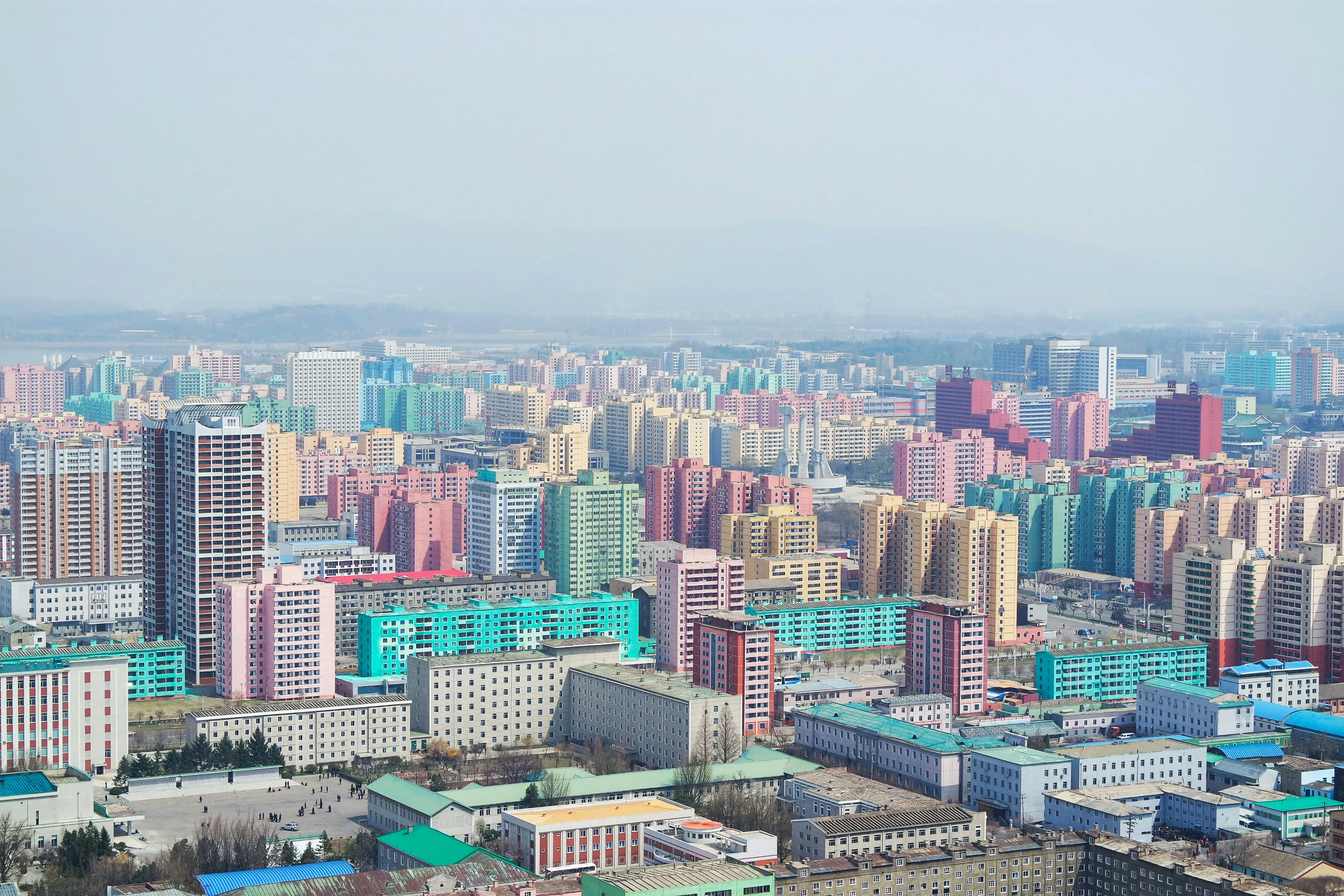
North Korea
Discover a unique destination marked by its monumental architecture, ancestral traditions, and mountainous landscapes, offering a unique cultural experience under a historical and sober perspective.
Quick Facts
- Capital
- Pyongyang
- Language
- Korean
- None
- Currency
- North Korean Won (KPW) and foreign currencies
- Best time to visit
- Spring and autumn to avoid extreme temperatures and enjoy clear skies.
- Budget per day
- $180 - $450 per day
- Climate
- Continental climate with hot, humid summers and very cold winters, with frequent snowfall in the north.
- Connectivity
- low
- Very restricted access for tourists and extremely limited internet connection.
- Electricity
- Type C / A (220V)
- Local transport
- limited
- Card usage
- cash is used more
- Tipping
- no
🌎 Introduction
Beyond conventional borders, there is a corner in East Asia where time seems to move at a different pace. It is a territory of geographical contrasts, defined by imposing mountain ranges that turn ocher in autumn and valleys where rice cultivation marks the rhythm of the seasons. Its cities, with wide avenues and a monumental architecture that seeks symmetry, coexist with a rural environment where the most deep-rooted traditions continue to define the daily life of its inhabitants.
The identity of this place is perceived in the daily details: the aroma of kimchi fermenting in the kitchens, the colorful traditional costumes during local festivities, or the echo of collective dances that fill the squares on specific dates. From the peaks of Mount Paektu to the coasts washed by calm waters, nature offers a refuge of serenity that complements the sobriety of its urban centers. It is a destination that invites calm observation, appreciating a culture that has preserved its essence in a singular way over the passing decades.
🛡️ General safety
Traveling to North Korea is a unique experience that departs from conventional tourism standards. From the perspective of personal physical safety, it is considered one of the safest destinations in the world, as common crime rates are practically non-existent for foreign visitors. However, this safety is closely linked to very rigorous institutional control and strict compliance with local rules.
- General safety level: The level of personal safety against theft or aggression is very high. The country maintains absolute control over the movement of tourists, who must always be accompanied by official guides.
- Guideline comparison: The risk of suffering a common crime is extremely low compared to the international average, although the legal risk for non-compliance with rules is higher than in other destinations.
- Context for the traveler: It is fundamental to understand that freedom of movement is limited. The traveler cannot explore the country on their own, which guarantees constant protection but requires total adaptation to the programmed itinerary.
Crime and common risks
Common crime, such as muggings, theft, or scams, is practically unknown to the tourist in this destination. Penalties for crimes against foreigners are severe, which acts as a strong deterrent for the local population.
- Habitual crime types: Common crimes are not regularly reported. The risk of losing personal objects through carelessness is also very low, as they are usually returned quickly.
- Precautionary zones: There are no “dangerous zones” or marginalized neighborhoods accessible to the tourist where extreme caution must be taken.
- Infrequent risks: The main risk does not come from other citizens, but from possible legal misunderstandings. Carrying unauthorized political, religious, or journalistic material can be considered a serious offense.
Safety in cities and tourist areas
Cities, especially Pyongyang, are extremely orderly and quiet environments. The urban atmosphere is perceived as safe at any time of day, as long as the perimeters permitted by the guides are respected.
- Urban centers and transport: The Pyongyang metro and other tourist areas are under constant surveillance. The traveler is never alone in vulnerable situations.
- Differences between zones: There are no notable safety differences between the capital and other permitted regions (such as Kaesong or the Myohyang mountains), as the accompaniment protocol is identical throughout the territory.
- Practical recommendations: To move with total peace of mind, it is enough to follow the instructions of the local guides and not move away from the group or the hotel without prior authorization.
Safety in transport
Transport for tourists is perfectly organized and is generally carried out in private vehicles from the state tourism agency or in public transport under supervision.
- Public transport: The use of the metro is safe and is one of the regular tourist activities. Other means such as local buses are usually restricted for foreigners.
- Rental vehicles and taxis: There is no option to rent vehicles to drive independently. Taxis are used under the supervision of guides.
- Driving and rules: In North Korea, they drive on the right. However, since driving is not permitted for tourists, this data is purely informative. Traffic is scarce and main roads are in good condition, although secondary ones can be more irregular.
Natural and climatic risks
The country experiences a continental climate with marked seasonal variations that can influence travel.
- Relevant risks: The main natural events are floods and occasional typhoons during the summer months.
- Seasonal character: Between July and August, the rainy season (monsoon) is concentrated, which can cause cuts in rural roads. Winters are extremely cold, with temperatures dropping below -10°C, requiring appropriate thermal equipment.
- Prevention: It is recommended to travel in spring or autumn to avoid the most extreme weather. Local guides will always adjust the itinerary if weather conditions pose a risk.
Legislation and local rules
This is the most important section for the traveler’s safety. The legal system is very different from that of Western countries and compliance with the rules is inexcusable.
- Strict laws: It is mandatory to show maximum respect towards current and past leaders of the country. This includes not folding newspapers with their images, not imitating their poses in photographs, and maintaining a solemn attitude before their statues or monuments.
- Behaviors to avoid: Religious proselytizing, the entry of officially unapproved literature about the country, and taking photographs of military installations, unfinished constructions, or scenes of poverty are prohibited.
- Consequences: Non-compliance with these rules can lead to detentions, prolonged interrogations, severe fines, or immediate expulsion from the country.
Safety for specific groups
- Female travelers: It is a very safe destination for women. Street harassment does not exist and the treatment of visitors is extremely respectful and formal.
- LGTBIQ+ travelers: Homosexuality is not illegal, but socially it is a taboo subject and there is no legal recognition or visibility scenes. Absolute discretion is recommended, avoiding public displays of affection regardless of orientation, as society is very conservative.
- Traveling with children and the elderly: It is a safe environment for families and the elderly, although itineraries can be physically demanding due to long walks and compliance with strict schedules. Medical services for tourists are limited.
Emergencies and assistance
In case of any incident, the first point of contact should always be the assigned guide, who will be responsible for managing communication with the authorities or health services.
- Emergency numbers: There are no universal emergency numbers for direct and easy access for foreigners without mediation. The hospital for foreigners in Pyongyang is the Friendship Hospital.
- Emergency services: Police and medical services operate efficiently under the state structure, but communication in foreign languages outside the guide team is limited.
- Recommendations in incidents: If a health problem or an accident occurs, remain calm and immediately inform your official companions. It is essential to have travel insurance with medical evacuation coverage, as in serious cases patients are usually transferred to neighboring countries.
Tip: Always follow the instructions of your guides and ask permission before taking any photograph that is not strictly touristy; prudence is your best safety tool in this country.
📝 Entry requirements
To undertake a trip to this destination, the first fundamental requirement is usually to have a valid passport, whose validity must generally extend for a minimum period of six months from the planned date of arrival. In the vast majority of cases, access for tourism purposes is conditional on obtaining a prior visa, which is usually processed in coordination with the entities that organize the trips, as tourism is usually carried out under modalities of closed and planned itineraries.
The maximum duration of the permitted stay is usually directly linked to the validity of the contracted tourist program. It is common for documentation proving the return ticket from the country to be requested at checkpoints, as well as confirmation of accommodation and guide services throughout the stay. Regarding economic solvency, as these are trips that are usually paid for in full in advance, it is not a common practice to require proof of additional funds at the time of entry.
Controls at airports and land borders are usually detailed, especially regarding customs regulations. It is important to bear in mind that luggage and personal items may be thoroughly checked by the authorities. The most relevant aspects regarding customs and health include the following points:
- The entry of electronic devices such as mobile phones, laptops, or cameras is permitted, although these items may be searched upon entry and exit.
- There is strict regulation on the entry of printed material, books, or digital content that may be considered of a political or religious nature.
- Medications for personal use should preferably be transported in their original packaging and it is recommended that they have a professional description or prescription justifying their need.
- There are usually no mandatory vaccination requirements of a general nature, although it is recommended to be up to date with the international health calendar and have travel insurance that offers adequate coverage for the region.
- The entry of fresh food or products of animal origin is usually restricted to avoid phytosanitary risks.
Regarding personal items, it is advised to maintain a cooperative attitude during routine inspections. The entry process is usually calm and organized as long as the instructions of the local representatives are followed and all documentation is in order before starting the journey.
🏥 Basic health considerations
When planning your trip to North Korea, it is fundamental to understand that the health experience will be very different from what you know in other destinations. You will find that the health system for foreign visitors is highly centralized, mainly in the capital, Pyongyang. The reference point is the Friendship Hospital, which has staff prepared to treat diplomats and tourists. Although the level of the facilities is acceptable for basic cases, resources may be limited compared to Western standards, so for any serious problem, evacuation is common. The staff usually speaks some English, but it is most normal for your guide to act as a translator at all times. The costs of any medical attention are usually high for foreigners and must be paid in cash foreign currency, as international credit cards are not accepted.
Travel medical insurance is not just a recommendation, but an indispensable requirement and mandatory to obtain a visa. It is vital that your policy has very broad coverage that specifically includes medical repatriation and transfer by medicalized plane to other nearby countries such as China. Without this coverage, a serious health problem could mean an unaffordable economic cost. Make sure to always carry a copy of the policy and the insurer’s contact numbers with you, although your local guides will help you manage any paperwork if necessary.
Regarding vaccines, there are none that are mandatory by law to enter the country if you travel from the usual circuits. However, so that you can enjoy your stay with total peace of mind, it is recommended that you have your basic vaccination calendar up to date, which includes diphtheria, tetanus, and polio. It is also advisable to consider vaccination against Hepatitis A and B, as well as typhoid fever if you plan to take a tour that includes more rural areas. It is best to consult with an international vaccination center a few weeks in advance to review your personal history.
If you need to take habitual medication, you must take special care with local rules. You can enter with your medicines as long as they are in their original packaging and are accompanied by a medical prescription translated into English or, better yet, a certificate signed by your doctor explaining the treatment. Avoid carrying excessive amounts that could appear to be for sale or distribution. Additionally, it will be very useful to prepare a basic first-aid kit with analgesics, gastric protectors, wound disinfectant, and band-aids, as finding these specific products in local pharmacies for tourists can be complicated and the brands will be totally unknown to you.
The most common health risks are mainly related to the climate. If you travel in winter, temperatures can be extremely low, so you should protect yourself well to avoid frostbite or respiratory problems. In summer, the heat is humid and can cause dehydration if you do not take care. There are no major risks of tropical diseases, although in rural areas and during the warm months, the presence of mosquitoes can be annoying, so using a good repellent is a simple and effective measure to avoid bites and the few diseases they can transmit.
Regarding hygiene and food, the golden rule is that tap water is not potable. You will find bottled water easily in hotels and tour stops, and it is the only one you should consume, even for brushing your teeth if you have a sensitive stomach. As for food, restaurants for tourists maintain high hygiene standards, so you can try the local delicacies without fear. That said, avoid street stalls that are not authorized by your guides and make sure that meat and fish are always well cooked. A practical tip is to always carry a bottle of hand sanitizer gel with you, as soap is not always available in public bathrooms during excursions.
In a health emergency situation, you will not be able to call an ambulance directly as you would at home. The standard procedure is to immediately inform your accompanying guides, who are the ones who will be responsible for calling medical services, organizing transport to the hospital, and notifying the relevant authorities. The ambulance service is limited and is mainly used for transfers to the main hospitals in the capital. The speed of attention will depend largely on your location, as outside of Pyongyang resources are much scarcer.
For your trip to be a success, remember these final tips: always stay hydrated with bottled water, respect rest times so that tour exhaustion does not lower your defenses, and communicate any discomfort to your guides as soon as the first symptoms appear. Carrying a small summary of your medical history in English, including allergies or blood types, can make things much easier for local staff in case you need quick assistance. Do not forget that prevention and good insurance are your best allies in this very peculiar destination.
🚌 Transport within the country
Moving around the country is a very structured experience, as most trips for visitors are made in private vehicles, such as modern buses or vans managed by official entities. The train constitutes the backbone of long-distance transport, allowing the capital to be connected with other regions and with the border at a leisurely pace. For specific journeys to more remote areas, there are options for internal flights that considerably reduce travel times.
Access to local public transport, such as the metro or urban buses, is usually restricted to planned routes. The capital’s metro network is known for its punctuality and efficiency, although for an international traveler autonomous navigation is complex due to the language barrier and the scarcity of signage in other alphabets. In this sense, the logistics of the trip are always organized beforehand to facilitate transfers without the visitor having to worry about purchasing tickets or interpreting schedules.
A clear contrast is perceived between the infrastructure of large cities and rural areas. While urban centers have wide and paved avenues, journeys through the countryside can be slower due to the state of secondary roads. In the provinces, the most common means of transport among residents is the bicycle, which offers a very different image from the traffic of the capital. Taxis are available in main cities, although their use is usually specific and coordinated through the guides who accompany the tourist.
In general, transport intended for visitors stands out for its reliability and compliance with established schedules. Vehicles are usually suitable for the planned journeys, ensuring that the traveler can focus on observing the surroundings. The road travel experience is peaceful and allows for calm observation of the landscape, always maintaining a leisurely and orderly pace throughout the journey across the territory.
Tip: It is recommended to bring some reading or entertainment for long road journeys between provinces, as distances can be considerable and the pace of travel is leisurely.
🤵 Culture and etiquette
North Korean society places fundamental value on courtesy and respect for hierarchy, basing much of its social interaction on deference toward elders and authority figures. When greeting, the most common practice is to perform a slight inclination of the head or torso, a gesture that demonstrates recognition and consideration toward the interlocutor. Although a handshake is accepted in international contexts, it is usually preferable to wait for the host to take the initiative, always maintaining a measured attitude and a moderate tone of voice in public spaces so as not to disturb the harmony of the environment.
In daily life, punctuality is considered an essential sign of respect toward others, so arriving at the exact agreed time is a highly valued trait in any meeting or programmed visit. Behavior in the streets and shared spaces is usually orderly and discreet, avoiding excessive noise or effusive physical gestures of affection in public, as a certain personal reserve is preferred. Likewise, personal grooming and neatness are aspects that local inhabitants value, projecting an attitude of civic-mindedness and collective responsibility.
Table manners reflect the importance of the community, and it is common to share various dishes placed in the center for all diners. It is a basic rule of courtesy to wait for the oldest person or the host to start eating before doing so oneself. Regarding tipping, it is not a widespread or expected practice in local establishments; instead, kind treatment and verbal recognition are appreciated. If the occasion arises to give a detail or small gift, it is customary to offer and receive it with both hands as a sign of gratitude and goodwill.
There are places and symbols that require an attitude of special solemnity, such as national monuments, sites of historical importance, and portraits or statues of the country’s leaders. In these spaces, it is customary to maintain a respectful silence and, on occasion, visitors are invited to perform a formal bow as a gesture of consideration toward local history and traditions. Similarly, it is fundamental to treat with care any material containing images of relevant figures of their culture, avoiding folding them or discarding them carelessly, given the high symbolic value they represent for the population.
“Tip”: Maintaining an open and receptive attitude toward the explanations of local guides, as well as observing and following their gestures of courtesy in public places, will help the interaction always be fluid and harmonious.
🍛 Typical gastronomy
The gastronomy of North Korea stands out for its simplicity, respect for natural flavors, and the use of seasonal products. The diet is based mainly on rice, noodles, legumes, and a wide variety of vegetables. Due to the region’s climate, there is a strong tradition of fermented foods and preserves, which allows for nutritious ingredients to be available during the winter months. Dishes are usually comforting and balanced, avoiding excess fats.
The flavor of local cuisine is defined by the use of soybean paste, sesame oil, ginger, and garlic. Kimchi, a preparation of fermented cabbage with spices, is the indispensable accompaniment at every meal and is considered an essential element of culinary identity. Unlike other nearby regions, local versions of this dish are usually somewhat milder and less spicy, prioritizing a crunchy texture and a refreshing touch.
Meals are conceived as a time for sharing, where the table is filled with small containers called banchan, containing different vegetable side dishes, tofu, or dried fish. Regarding etiquette, it is fundamental to use metal chopsticks and the long spoon correctly. It is customary to wait for the oldest person at the table to start eating to begin lunch or dinner, thus showing respect for family or social hierarchy.
Regarding beverages, barley tea and rice water are the most common options to accompany daily dishes. There is also a notable culture of traditional distilled liquors and locally brewed beers, which are usually consumed in festive contexts. Restaurant hours are usually strict, with early lunch services and dinners that rarely extend beyond eight or nine at night.
| Dish | Description | Main Ingredients | Where to try it | Tip |
|---|---|---|---|---|
| Naengmyeon | Long noodles with an elastic texture served in a very cold broth. | Buckwheat, beef broth, egg, and pear slices. | Specialized restaurants in the capital. | Cut the noodles with scissors and add a bit of mustard to the broth. |
| Bibimbap | A bowl of rice topped with selected vegetables and a touch of meat. | Rice, bean sprouts, spinach, egg, and chili paste. | Regional cuisine establishments. | Mix all the ingredients vigorously before starting to eat. |
| Mandu | Thin dough dumplings cooked by steam or on the griddle. | Minced meat, spring onion, ginger, and fermented cabbage. | Eating houses and local markets. | Dip them lightly in the soy sauce and vinegar that accompanies them. |
| Sinseollo | Traditional royal cuisine stew that is kept warm on the table. | Beef, vegetables, mushrooms, and bone broth. | Traditional Korean cuisine restaurants. | It is an ideal dish for sharing due to its wide variety of ingredients. |
| Injo gogi bap | Popular snack that uses soy derivatives to create a texture similar to meat. | Soy skin, rice, and house spicy sauce. | Food stalls and urban market areas. | It is an excellent option for a light and quick lunch during the day. |
📷 Zones and places to visit
The journey through this country usually inevitably begins in its capital, Pyongyang, a city that stands out for its urban planning and wide avenues. Here, the traveler can observe monumental architecture that seeks to convey an image of order and progress. Among the most significant points is Kim Il Sung Square, the epicenter of the most relevant public events, and the Juche Tower, from whose top a complete panoramic view of the city and the Taedong River is obtained. It is also common to visit the Arch of Triumph, a structure of considerable dimensions, and the Pyongyang Metro, whose stations are decorated with mosaics and detailed lamps, being one of the deepest railway networks in the world.
To the south, the city of Kaesong offers a very different atmosphere, preserving part of the historical heritage of the Koryo dynasty. It is one of the few areas where traditional structures and streets that maintain an ancient air can be seen. In this region, the Koryo Museum stands out, located in a former Confucian academy, along with several sites declared World Heritage. Very close by is the Demilitarized Zone (DMZ) in Panmunjom, a place of great historical relevance where the demarcation line dividing the peninsula can be observed, allowing for a better understanding of the region’s geopolitical situation.
Nature also occupies a central place in the country’s geography. Mount Myohyang, known as the “mountain of mysterious fragrance,” is a destination that combines landscapes of forests and waterfalls with points of cultural interest. On its slopes lies the International Friendship Exhibition, a complex that houses thousands of gifts received by the country’s leaders, and the Pohyon Temple, an ancient Buddhist center that showcases the traditional religious architecture of the area. Hiking routes through these landscapes allow for a leisurely appreciation of local biodiversity.
In the far north, near the border with China, is Mount Paektu, an inactive volcano that houses Heaven Lake in its crater. This place is considered the spiritual heart of the country and holds fundamental symbolic importance in local culture. Although access depends on weather conditions, the alpine landscapes and the lake’s serenity make it a point of great interest for those seeking to know the most remote natural environment. On the other hand, the east coast offers different landscapes, with cities like Wonsan, known for its port areas and beaches, where it is possible to observe a more relaxed facet of daily life.
Another area of great beauty is Mount Kumgang or the Diamond Mountains. This natural park is famous for its jagged rock formations, crystal-clear lakes, and trails that run through deep valleys. Historically, it has been a place of inspiration for artists and poets due to the uniqueness of its geological forms. A visit to this region allows for the enjoyment of outdoor activities and a disconnection from the urban environment, appreciating the contrasts between the capital’s modernity and the tranquility of rural and mountainous areas.
Finally, the contrasts between urban zones and agricultural regions are an essential part of the travel experience. When traveling between cities, the visitor can observe extensive fields of cultivation and life in rural communities, which provides a more balanced view of the country’s reality. In addition to monuments and landscapes, attending cultural events or local festivals, when they coincide with the stay, allows for learning about traditions and social organization in a direct way through music, dance, and collective celebrations.
Tip: You cannot miss visiting Pyongyang, the most emblematic place in the country.
✈️ Best season to travel
Choosing the right time to visit North Korea depends largely on climate preferences and interest in witnessing specific cultural events. Generally, transitional seasons, such as spring and autumn, are considered the most balanced periods due to their moderate temperatures and the beauty of their natural landscapes. During these months, the weather is usually dry and clear, which facilitates travel and visits to monuments and national parks.
Summer and winter offer more marked experiences. While the summer months bring humidity and rains typical of the monsoon, they also coincide with important national celebrations that dynamize the stay. In contrast, winter is rigorous and cold, transforming the environment with frequent snowfall, which offers a different perspective of the country for those who enjoy icy climates and a much smaller influx of visitors.
| Season | Months | Typical weather | What to expect | Tourist influx |
|---|---|---|---|---|
| Spring | Mar – May | Cool at the beginning and mild at the end; scarce rain. | Flowering of fruit trees, landscapes turning green, and national festivities in April. | Medium ⭐⭐ |
| Summer | Jun – Aug | Hot and very humid; intense rainy season. | Lush vegetation and cultural celebrations in a humid environment. | High ⭐⭐⭐ |
| Autumn | Sep – Nov | Mild, dry, and with clear skies most of the time. | Reddish colors in the mountains, harvest festivals, and ideal conditions for hiking. | High ⭐⭐⭐ |
| Winter | Dec – Feb | Very cold and dry; frequent snowfall, especially in high areas. | Snowy landscapes, possibility of winter activities, and a very quiet atmosphere. | Low ⭐ |
🗣️ Basic vocabulary
Knowing some basic expressions in Korean will allow you to show courtesy and respect during your visit. Although you will always be accompanied by guides who speak your language, the use of simple words to greet or say thank you is a gesture that facilitates interaction and helps create a closer and more cordial atmosphere in daily encounters.
It is not necessary to delve deep into the structure of the language to manage with ease in common situations. It is enough to memorize a few practical terms that will serve to communicate basically in hotels, restaurants, or during programmed visits.
- Annyeong hashimnikka: Hello (formal and respectful greeting).
- Kamsahamnida: Thank you.
- Mannaseo bangapseumnida: Nice to meet you.
- Ye: Yes.
- Anio: No.
- Mianhamnida: I’m sorry or excuse me.
- Annyeonghi gyesipsiyo: Goodbye (used when you are leaving and the other person is staying).