


Zimbabwe
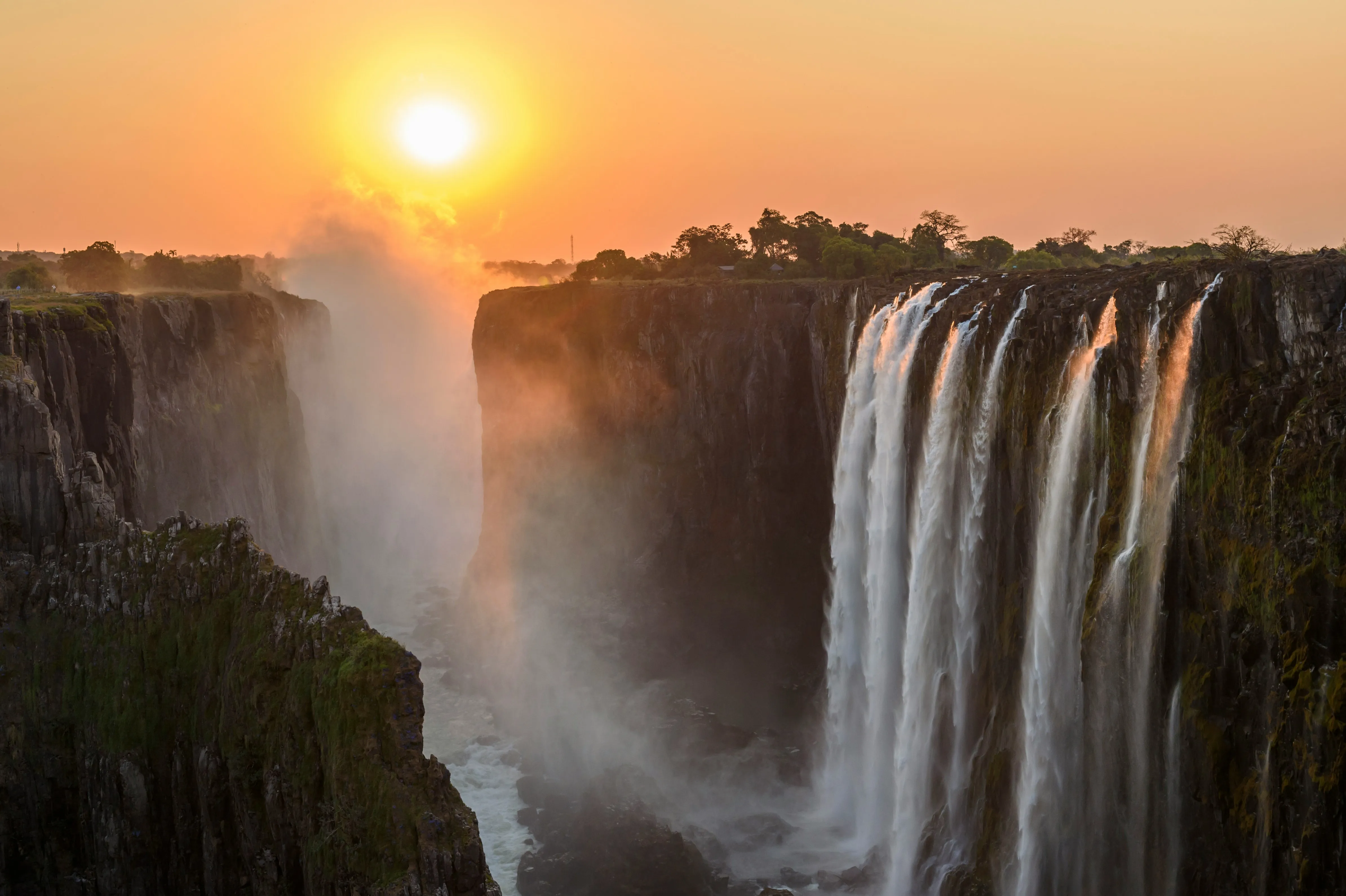
Discover the majesty of Victoria Falls and rich wildlife in legendary national parks, immersing yourself in an ancestral culture full of African hospitality.
Quick Facts
- Capital
- Harare
- Language
- English
- Shona and Ndebele
- Currency
- US Dollar (USD) and ZiG
- Best time to visit
- From May to October, during the dry and cool season.
- Budget per day
- $60 - $250 per day
- Climate
- Subtropical climate with a dry and cool season between May and August, followed by a warm rainy season.
- Connectivity
- medium
- Easy to purchase at airports and authorized kiosks of local operators.
- Electricity
- Type G / D (230V)
- Local transport
- limited
- Card usage
- cash is used more frequently
- Tipping
- optional
🌎 Introduction
Bathed by the courses of the Zambezi and the Limpopo, this corner of southern Africa unfolds in a succession of plateaus where the horizon seems endless. It is a land marked by the rhythm of its seasons, where the golden tones of the savannah during the dry months give way to an intense green with the arrival of the rains. Between the persistent mists of the great waterfalls and the curious granite formations that dot the landscape, an air of serenity is felt, inviting one to contemplate the surroundings with pause and attention.
The country’s identity is felt in the daily lives of its people, in the heritage of its ancient stone builders, and in an artistic tradition that transforms rock into figures full of life. In markets and homes, the aroma of freshly cooked sadza accompanies conversations, while the metallic sound of the mbira provides the soundtrack to social gatherings. It is a place where respect for roots and hospitality coexist naturally, offering a balanced vision of a culture that has managed to preserve its essence throughout the centuries.
🛡️ General Safety
Zimbabwe presents itself to the traveler as a destination with a moderate level of safety, where the hospitality of its inhabitants is usually the predominant note. Although the country has faced economic challenges in recent decades, the tourism industry remains a national priority, ensuring that the main areas of interest have adequate protection measures for international visitors.
In general terms, the country is perceived as safer than other neighboring destinations in southern Africa regarding the physical integrity of the tourist. Most trips take place without serious incidents, provided that basic rules of prudence are followed and the local socioeconomic context is understood.
Crime and common risks
Crime affecting tourists is usually non-violent and opportunistic. It is essential to know the most common risks to avoid them:
- Thefts and minor robberies: Bag snatching, mobile phone theft, and pickpocketing are the most frequent crimes, especially in crowded areas such as markets or transport stations.
- Currency exchange scams: Due to the complexity of the local monetary system, people may appear offering very attractive exchange rates on the street. It is vital to avoid the black market and perform all transactions at official establishments or banks.
- Thefts from vehicles: Leaving valuables in sight inside a parked car can attract thieves.
- Infrequent risks: Armed robberies are unusual on tourist routes, but they can occur in outlying neighborhoods of large cities at night.
Safety in cities and tourist areas
safety experience varies significantly depending on the location:
- Victoria Falls: It is, by far, the safest area in the country. Being a purely tourist enclave, it has a constant police presence (Tourism Police) and one can walk with relative peace of mind during the day.
- Harare and Bulawayo: In the capitals, greater caution should be exercised. It is recommended to avoid walking in city centers once the sun sets. During the day, it is advisable to move through known commercial areas and residential neighborhoods.
- National Parks: Here, safety depends less on human factors and more on respect for wildlife. It is mandatory to always follow the instructions of the guides and not leave vehicles or designated areas.
Safety in transport
Moving around Zimbabwe requires planning and knowledge of local rules:
- Driving: In Zimbabwe, they drive on the left. The condition of the main roads is acceptable, but secondary roads may have significant potholes or unpaved sections.
- Public transport: “Combis” (local minibuses) often speed and do not comply with international safety standards, so their use is not recommended for tourists.
- Taxis and private transfers: It is recommended to use taxis recommended by hotels or previously contracted private transport services. It is not advisable to hail unknown taxis on the street, especially at night.
- Night driving: One should avoid driving at night outside of cities due to the lack of lighting, the presence of wild animals or livestock on the road, and the possible existence of vehicles without lights.
Natural and climatic risks
Zimbabwe does not usually suffer from extreme natural catastrophes, but the climate imposes certain precautions:
- Extreme heat: During the months of October and November, temperatures can exceed 40°C in low-lying areas such as the Zambezi Valley, which entails a risk of dehydration and heatstroke.
- Floods: The rainy season (from November to March) can cause sudden river rises and make some roads impassable, especially in rural areas.
- Electrical storms: The country records one of the highest levels of electrical activity in the world; it is important to seek safe shelter during intense storms.
Legislation and local norms
Certain laws in Zimbabwe can be very strict, and ignorance of them does not exempt one from responsibility:
- Photography prohibited: It is strictly forbidden to photograph government buildings, military institutions, police stations, airports, or uniformed personnel (police and military). Doing so can lead to the detention of the traveler and confiscation of equipment.
- Camouflage clothing: The use of clothing with camouflage patterns or military style is prohibited for civilians. This includes pants, t-shirts, and even caps.
- Respect for authorities: Any derogatory comment about the government or its representatives can be considered a serious crime.
- Drugs: The consumption and trafficking of narcotics carry very severe prison sentences.
Safety for specific groups
- Solo female travelers: Zimbabwe is generally safe for women traveling alone, although they may receive unwanted attention or persistent comments. It is recommended to dress modestly in rural areas and avoid walking unaccompanied at night.
- LGTBIQ+ travelers: Local laws prohibit same-sex relationships. Although the law is mainly applied to local citizens, public displays of affection can generate hostile situations or legal problems. Absolute discretion is recommended.
- Children and the elderly: The country is welcoming to families. The main risk for these groups is the limited access to high-complexity medical services outside of Harare, so traveling with robust medical insurance that includes aerial evacuation is recommended.
Emergencies and assistance
The emergency system in Zimbabwe can be slow compared to European standards:
- Main numbers: The general emergency number is 999, although in many cases it is more effective to directly contact local police numbers or private medical services.
- Medical assistance: Public hospitals often lack supplies. In case of a health incident, one should go to private clinics, which usually require upfront payment or a medical insurance guarantee.
- Procedure for incidents: In case of theft or incident, it is necessary to go to the nearest police station to file a report (“police report”), an indispensable document for any subsequent travel insurance claim.
Tip: Always carry a physical copy of your passport and visa with you, keeping the originals safe in your accommodation’s safe.
📝 Entry requirements
To enter Zimbabwe for tourism purposes, the traveler must have a passport whose validity extends, generally, for at least six months after the planned departure date from the country. It is essential that the document has enough blank pages, usually two or more, to allow for entry and exit stamps by immigration authorities at border posts. Regarding entry authorization, many international visitors have the possibility of managing their tourist visa directly at land checkpoints or at international airports upon landing, although it is also feasible to process it in advance if one prefers to have the document before starting the journey.
The maximum stay permitted for those traveling for pleasure is usually limited to a period of thirty days, although under certain circumstances and before the competent authorities, this period could be extendable. During the entry process, it is common for immigration personnel to request the presentation of a return ticket or continuation to another destination, which serves as a guarantee that the visitor does not intend to remain in the territory indefinitely. Likewise, proof that the tourist possesses sufficient financial resources to cover all expenses derived from their stay may be required, either by showing cash, credit cards, or bank documents.
At customs controls, travelers must comply with local regulations on the import of goods and values. There is a specific regulation on the amount of foreign currency that can be brought in without the need for a formal declaration, so it is advisable to inquire about general limits at the time of arrival to avoid inconveniences. Regarding personal items, the entry of everyday items is allowed, but there are clear restrictions on fresh products, seeds, plants, and certain items of animal origin. For those who need to carry personal medication, it is advised to bring the corresponding medical prescription and keep the drugs in their original containers to facilitate any routine inspection.
In the health field, entry into the country may be conditional on the presentation of a vaccination certificate against yellow fever, especially if the traveler comes from areas or has transited through places where this disease is considered endemic. Beyond formal requirements, it is convenient to consider common recommendations on the prevention of local conditions, such as the use of repellents or following preventive treatments, depending on the specific regions planned to be visited. It is always suggested to have a prior consultation at a travel medicine center to obtain personalized advice adapted to the characteristics of the itinerary.
- Identity document: Passport with minimum validity of six months and pages available for stamps.
- Visa management: Usually available upon arrival at airports and main borders for tourist stays.
- Stay period: Standard term of up to thirty days for recreational activities.
- Departure guarantees: Need to show a transport ticket confirming departure from the country.
- Financial solvency: Possible requirement to demonstrate sufficient funds for maintenance during the trip.
- Customs regulations: Control over the import of food, plants, and the obligation to declare large sums of cash.
- Health and vaccines: Yellow fever certificate requirement depending on origin and general health prevention recommendations.
🏥 Basic health considerations
When you prepare for your trip to Zimbabwe, you will notice that the country offers significant contrasts in terms of its infrastructure. In major cities like Harare or Bulawayo, you will find private clinics with acceptable standards and well-trained professionals who will communicate with you in English without problems. However, in rural or remote areas, resources are much more limited. You should know that private healthcare has a high cost for visitors and usually requires upfront payment, so having liquidity or a card with funds is essential.
Taking out travel medical insurance is not a mandatory requirement to enter the country, but in practice, it is something fundamental that you should not overlook. It is very important that your policy includes broad coverage for hospitalization and, above all, for medical repatriation in a medicalized aircraft to other nearby countries with high-complexity centers. Without this coverage, any emergency transfer could represent an unaffordable expense for you.
Regarding vaccines, none will be mandatory unless you come from a country where yellow fever is endemic, in which case you must show your international vaccination certificate. As a general recommendation, you should keep your basic vaccination schedule up to date. It is also usually advisable to consult a health professional about vaccines against hepatitis A and B, typhoid fever, and tetanus, depending on how long you plan to stay and what kind of activities you are going to perform.
If you need to carry personal medication, I recommend that you always transport it in its original packaging and accompanied by the medical prescription translated into English. Zimbabwe has very strict laws regarding certain drugs, especially psychotropics or strong painkillers, so having a medical certificate justifying their use will prevent you from having problems at customs. Don’t forget to include in your basic first-aid kit supplies for minor wounds, anti-diarrheals, and hand sanitizer.
One of the greatest health risks you will find is malaria, especially if you visit low-lying areas like Victoria Falls or the Zambezi Valley, particularly during the rainy season. It is essential that you use potent repellents and sleep under mosquito nets. On the other hand, due to the altitude of much of the country, the sun can be very intense even if you don’t feel stifling heat, so sun protection and constant hydration should be your best allies to avoid heatstroke.
Regarding water consumption, the safest thing is to always drink bottled water and make sure the seal is intact. Avoid ice in drinks and be cautious with fruits that you cannot peel yourself or raw vegetables. As for hygiene, you will find that hotels and tourist establishments maintain good standards, but it is always a good idea to be cautious with street food if your digestive system is somewhat sensitive.
In case of a serious medical emergency, the general telephone number is 994, although the response of public ambulances can be slow. The most effective thing for a tourist is to contact private emergency services like MARS or ACE, which operate efficiently and have well-equipped ambulances. I suggest having these numbers written down or saved in your phone before starting your route through the country.
Finally, remember that prevention is the key to a peaceful trip. Always use closed footwear if you are going to walk through areas of vegetation to avoid bites and do not bathe in lakes or stagnant rivers due to the risk of contracting bilharzia. If you follow these basic guidelines and act with common sense, you can enjoy Zimbabwe’s stunning landscapes with complete peace of mind.
🚌 Transport within the country
Moving around Zimbabwe requires planning, as the distances between the main points of interest can be considerable. Travelers often opt for domestic flights to connect main cities and remote natural areas, which saves time on longer journeys. By land, long-distance buses are a frequent option for moving between urban centers, although the railway network is limited and used mainly on very specific routes with a slower travel pace.
Urban public transport, largely composed of vans that run shared routes, can be complex for the visitor due to the lack of fixed schedules and marked stops. However, communication is usually easy because English is a widely used language, which greatly facilitates asking for directions or confirming destinations. In large cities, road signage is adequate, while in more remote areas, signs are less frequent and the environment becomes more natural.
There is a notable difference between urban environments and rural areas. In cities, it is common to find taxis and private transport services that can be requested easily. In contrast, to explore national parks and more secluded areas, it is most common to resort to car rentals or transfers coordinated by the accommodations themselves. The infrastructure on main roads is reasonable, although on secondary roads it is normal to find more irregular terrain that requires more attentive driving.
The comfort and punctuality vary depending on the chosen medium. While air travel usually meets its schedules regularly, road transport can be more unpredictable due to traffic conditions or the state of the road surface. In general terms, the transport system allows for travel across the country with an adequate level of safety and order for tourism, provided there is a flexible time margin for land travel.
Tip: It is advisable to organize transfers from airports to your place of stay in advance to ensure a comfortable and direct journey upon arrival at each destination.
🤵 Culture and etiquette
Social interaction in Zimbabwe is based on courtesy and mutual recognition, with greetings being an essential pillar of daily coexistence. When meeting someone, it is common to spend a few moments exchanging questions about personal and family well-being before discussing any practical or commercial matters. Greetings are usually accompanied by a soft handshake and, in many regions, it is a gesture of deep respect to perform a slight bow of the head or to hold one’s right forearm with the left hand when greeting, which symbolizes honesty and goodwill towards the interlocutor.
Interpersonal treatment is heavily influenced by respect for hierarchy and older people, who are usually addressed in a measured way using formal titles or terms of respect. In public spaces, a calm atmosphere prevails where keeping a moderate volume of voice is valued, as speaking too loudly can be perceived as a sign of confrontation or lack of manners. Regarding punctuality, although a strict schedule is followed within tourist services, in social contexts the concept of time tends to be more flexible and relaxed, prioritizing the quality of the human relationship over the urgency of the clock.
In the gastronomic sphere and in home visits, sharing a meal is a very significant act of hospitality. It is common to be offered a bowl of water and soap to wash your hands before and after eating, a practice that the visitor should perform following the order of priority set by the host, generally starting with the elders. When receiving or giving any object, whether it is a gift, money, or a plate of food, it is considered appropriate to use both hands or the right hand, as the exclusive use of the left is associated with a lack of consideration for the other person.
When visiting rural environments, places of worship, or historical monuments, discreet clothing is recommended as a sign of deference toward local traditions. It is fundamental to always ask permission before photographing people or their properties, integrating this request as part of a friendly and prior interaction. Maintaining a patient attitude and observing the behavior of local residents allows the traveler to integrate naturally and better understand the community structure and the values of hospitality that define life in the country.
Tip: Using both hands when receiving or giving an object, no matter how small, is one of the simplest and most appreciated gestures of courtesy to show respect and gratitude in any interaction.
🍛 Typical gastronomy
The fundamental basis of nutrition in Zimbabwe revolves around maize, a cereal that constitutes the pillar of the daily diet of its inhabitants. The central element of almost any meal is sadza, a thick and dense dough made from white maize flour and water. This food, neutral in flavor, is used as a base to accompany a wide variety of meat or vegetable stews, fulfilling a function similar to that of bread or rice in other cultures.
The flavors of local cuisine are usually natural and lightly spiced, highlighting the frequent use of peanut butter to enrich both leafy green vegetables and meat stews. Among the most common proteins are beef, chicken, and goat, although in areas near rivers and large reservoirs, freshwater fish is a highly appreciated ingredient. Zimbabwean cuisine also integrates seasonal wild products, such as local fruits and certain types of legumes that provide varied textures to traditional dishes.
In the cultural aspect, eating is a social act that carries certain rituals of courtesy. Before starting to eat, it is common for a bowl with warm water and soap to be offered to wash hands at the same table, since sadza is traditionally consumed with the right hand, forming small balls to scoop up the accompaniment. In urban settings, meal times usually follow a standard pattern of three times a day, with lunch and dinner being the moments of greatest social importance.
As for drinks, black tea is extremely popular and is often consumed with milk and sugar. Also noteworthy is maheu, a traditional drink made from fermented maize that has a thick texture and a slightly acidic taste, highly valued for its energy value. In social gatherings, it is common to find locally brewed beers, both industrial and artisanal, produced from millet or sorghum.
| Dish | Description | Main Ingredients | Where to try it | Tip |
|---|---|---|---|---|
| Sadza | The basic component of the diet, a cooked maize paste. | Maize flour and water. | In any restaurant or local house in the country. | Use your right hand to form a ball and dip it in the stew. |
| Dovi | A traditional and creamy stew with a characteristic flavor. | Meat (chicken or beef), vegetables, and peanut butter. | Traditional cuisine restaurants in cities like Harare. | It is the perfect accompaniment for a hot plate of sadza. |
| Muriwo Unedovi | A dish of sautéed green vegetables with a nutritious touch. | Kale or spinach leaves and peanut butter. | Food stalls and local restaurants throughout the country. | Ideal for travelers looking for a tasty vegetarian option. |
| Madora | Mopane worms that are an important source of protein. | Dried or fried mopane worms with onion and tomato. | Local markets and rural areas. | Try them fried to enjoy their crunchy texture. |
| Bream | Freshwater fish very common in river areas. | Fish (tilapia type), usually grilled or fried. | Locations near Lake Kariba or Victoria Falls. | Order it prepared on the grill to better appreciate its freshness. |
📷 Areas and places to visit
Zimbabwe presents itself as a destination of contrasts where wild nature and a thousand-year-old historical heritage coexist harmoniously. The diversity of its geography allows for a transition from vast plains teeming with wildlife to cool mountainous areas, offering a complete vision of the richness of southern Africa. The journey through the country usually centers on its large national parks and the vestiges of ancient civilizations that give the current state its name.
The best-known gateway is the region where Victoria Falls are located, on the border with Zambia. This enclave not only allows for the observation of the Zambezi River’s waterfall but also functions as a center for outdoor activities. Visitors can walk the trails of the rainforest maintained by the constant mist, cross the historic bridge linking both countries, or participate in river excursions to observe local wildlife at sunset.
In the urban heart of the country is Harare, the capital, known for its wide avenues lined with jacarandas. It is a city that balances the modernity of its buildings with green spaces like the Harare Gardens. For those seeking cultural immersion, the National Gallery of Zimbabwe offers a profound perspective on contemporary and traditional African art. A short distance from the city, curious geological formations and small reserves can be found where one can have a first contact with the natural environment without straying far from urban comfort.
To the southwest is Bulawayo, the second most important city, which stands out for its colonial layout and a slower pace of life. It is the ideal starting point for exploring Matobo National Park, a place of great spiritual and geological relevance. This area is famous for its balancing rock formations and for housing one of the largest concentrations of rock art from the San community in its numerous caves and natural shelters.
One of the points of greatest historical interest is the Great Zimbabwe Ruins, located near the city of Masvingo. This complex of stone structures built without mortar between the 11th and 15th centuries represents the legacy of an ancient commercial empire. Walking through its walled enclosures and climbing to the Acropolis allows for an understanding of the political and economic importance this region had in ancient times, being a unique testimony to medieval African architecture.
For wildlife lovers, Hwange National Park is an essential stop. It is the largest reserve in the country and is characterized by its huge population of elephants and large predators. Unlike other destinations, the experience here focuses on quiet observation from hides near water holes or on guided tours that allow for learning about different ecosystems, from teak forests to open savannahs.
The north of the country offers a landscape dominated by water at Lake Kariba, one of the largest artificial reservoirs in the world. In this area, the use of houseboats is common, allowing for navigation among submerged tree trunks, creating a very characteristic image during sunset. On the shores of this lake is Matusadona National Park, where mountains combine with the coastal plain, offering an ideal habitat for buffaloes and rhinoceroses.
Finally, eastern Zimbabwe shows a lesser-known side: the Eastern Highlands. Regions like Nyanga, Bvumba, and Chimanimani offer a landscape of green hills, waterfalls, and tea plantations. It is an ideal area for hiking and for those looking for a quiet retreat in an environment that is more reminiscent of alpine landscapes than the typical image of the African savannah, providing a necessary variety to understand the country’s geographical complexity.
“Tip”: You cannot miss visiting Victoria Falls, the most iconic place in the country.
✈️ Best season to travel
Zimbabwe is a destination that can be visited year-round, although the experience varies significantly depending on the rain cycle. The choice of the ideal moment is usually conditioned by the traveler’s primary interest: observing wildlife in its most active state or contemplating the magnitude of Victoria Falls at its highest flow. The climate is generally temperate, with a well-defined dry season and a wet one that completely transforms the landscape.
During the months of water scarcity, vegetation becomes thinner, which facilitates visibility in national parks. Conversely, the arrival of rainfall brings greenery back to the plains and encourages the breeding season for many species, besides being the preferred period for birdwatching enthusiasts. Regardless of the chosen date, it is convenient to take into account the thermal oscillations between day and night, especially in high-altitude areas and natural reserves.
| Season | Months | Typical Climate | What to Expect | Tourist Influx |
|---|---|---|---|---|
| Spring | Mar – May | Mild temperatures and decreasing rainfall. | Very green landscapes and Victoria Falls at their maximum flow and strength. | Medium ⭐⭐ |
| Summer | Jun – Aug | Clear and sunny days; cold nights and early mornings. | Optimal time for safaris, as animals concentrate at water points. | High ⭐⭐⭐ |
| Autumn | Sep – Nov | High temperatures and very dry environment. | Frequent wildlife sightings on riverbanks. Arid landscape. | Medium - High ⭐⭐ |
| Winter | Dec – Feb | Hot climate, high humidity, and frequent rains. | Green season, ideal for observing migratory birds and lush landscapes. | Low ⭐ |
🗣️ Basic vocabulary
Although English is the official language of Zimbabwe and is used in administration and tourism, most of the local population usually communicates in Shona or Sindebele. Learning some basic words in these languages not only facilitates communication in everyday situations, such as shopping or asking for directions, but is also a way to show courtesy and respect for the local culture.
Below are some useful terms and phrases in Shona, which is the most spoken language in much of the country, including the capital and areas near the national parks:
- Mhoroi: Hello (respectful form for addressing one person or a group).
- Mazvita: Thank you.
- Ndapota: Please.
- Makadii?: How are you?
- Hongu: Yes.
- Kwete: No.
- Pamusoroi: Excuse me or sorry (used to ask to pass through or get someone’s attention).
- Ndeipi: Hi or what’s up? (a very common informal greeting in relaxed contexts).
- Handinzwisisi: I don’t understand.