


Portugal
Portugal seduces with its coast, history, gastronomy, and sun, ideal for seeing villages and beaches with light on a trip full of peace and art.
Quick Facts
- Capital
- Lisbon
- Language
- Portuguese
- None
- Currency
- Euro (EUR)
- Best time to visit
- Spring and autumn are the best times to enjoy pleasant temperatures and avoid crowds.
- Budget per day
- $60 - $150 per day
- Climate
- Mediterranean and oceanic climate with mild winters and hot summers, especially in the southern part of the country.
- Connectivity
- good
- Very easy to obtain both in physical format and eSIM at airports and local stores.
- Electricity
- Type C/F (230V)
- Local transport
- good
- Card usage
- widespread
- Tipping
- optional
🌎 Introduction
At the edge of the Atlantic, Portugal unfolds with a particular light that bathes everything from its rugged cliffs to its golden plains. It is a corner where time seems to carry a slow pace, marked by the sound of the sea and the breeze that travels through the cobbled alleys of its cities. In its neighborhoods, one perceives a natural blend of nostalgia and modernity, where the tiles on the facades preserve history while daily life flows with a welcoming simplicity.
The Portuguese identity is felt in the small details: the aroma of coffee and freshly baked bread in the squares, the taste of cod prepared in traditional ways, or the stillness of the vineyards that step down the northern valleys. During the warm months, the villages fill with color with popular festivals, while winter invites one to take refuge in taverns where fado sounds or to contemplate how the sun sets behind the sea horizon in an atmosphere of calm.
From the lush vegetation of the interior regions to the tranquility of the southern beaches, the landscape changes its tone gently. It is a territory where fishing traditions, local craftsmanship, and discrete hospitality coexist, allowing those who travel through it to soon feel at home, surrounded by a serene and balanced atmosphere that invites one to stop and observe.
🛡️ General safety
Portugal is considered one of the safest and most peaceful destinations in the world for tourism. The country enjoys notable social and political stability, which translates into a relaxed atmosphere for those who visit. In comparative terms, the level of safety is very high, usually ranking in the top positions of international peace and coexistence indices.
For the traveler, this means being able to explore both large cities and rural areas with a great sense of freedom. However, as in any destination with a high flow of visitors, it is necessary to apply common sense and follow certain basic prevention guidelines to avoid minor setbacks.
Common crime and risks
Violent crime is extremely rare in Portugal, especially that directed at tourists. The main risk centers on opportunistic crimes:
- Thefts and pickpockets: They are the most frequent problem in areas with large crowds. Pickpockets usually operate on iconic public transport, such as tram 28 in Lisbon, or in the busiest areas of the Alfama and Baixa neighborhoods in the capital, and in the Ribeira in Porto.
- Thefts from inside vehicles: This risk increases in parking areas of isolated beaches or at tourist viewpoints. It is essential not to leave valuables, suitcases, or backpacks in sight inside the car.
- Minor scams: Occasionally, in central areas, people may approach offering illegal substances or imitation products. The recommendation is to decline the offer politely and continue on your way.
Safety in cities and tourist areas
Portuguese urban centers are generally very safe both by day and by night.
- Lighting and patrolling: Tourist areas are usually well-lit and have a discrete but effective police presence.
- Specific neighborhoods: Although there are no “no-go zones,” in cities like Lisbon or Porto, some less-traveled or poorly lit streets on the outskirts may be less welcoming during the early hours. It is recommended to stay on the main roads.
- Public transport: The metro, buses, and trains are safe. In large stations, simply be mindful of personal belongings on escalators or while boarding the carriages.
Transport safety
Transport in Portugal is efficient and meets high safety standards.
- Driving: In Portugal, you drive on the right. The motorway network is excellent, although attention should be paid to electronic toll motorways (SCUT), where payment is automated. Driving in old cities can be challenging due to narrow and steep streets.
- Taxis and VTC: Private transport services are safe and regulated. In the case of taxis, the use of a taximeter is mandatory. Ridesharing apps work very well in the main cities.
- Public transport: It is very safe, although it is advisable to watch bags and backpacks on lines that are usually very full of tourists.
Natural and climatic risks
Portugal does not usually present extreme natural risks, but some seasonal factors should be taken into account:
- Forest fires: During the summer months (July to September), high temperatures and dryness increase the risk of fires in rural and forested areas of the interior. Making fires should be avoided and the instructions of local authorities must always be followed.
- Sea conditions: The Portuguese Atlantic coast is known for its strong currents and waves. It is vital to respect the signaling flags on the beaches (red flag: swimming prohibited; yellow flag: caution).
- Seismic activity: Although it is an area with seismic activity, perceptible movements are infrequent and the country has construction regulations prepared for them.
Legislation and local norms
Behavior in Portugal is governed by standard European coexistence norms, but there are some points to highlight:
- Documentation: It is mandatory to always carry a valid identity document (passport or national identity document, depending on origin).
- Drugs: Although personal consumption is decriminalized, drug trafficking is a serious crime. Public consumption can lead to the confiscation of the substance and administrative sanctions.
- Respect for heritage: Vandalism or damage to historical monuments is severely punished.
Safety for specific groups
- Solo female travelers: Portugal is a very safe destination for women traveling alone. Street harassment is uncommon and respect for women is the predominant social norm.
- LGTBIQ+ travelers: The country is known for its open and progressive mentality. LGTBIQ+ rights are protected by law and public displays of affection are generally accepted, especially in urban centers and coastal areas.
- Children and the elderly: Portugal is a very family-oriented culture. Children are usually welcome almost everywhere and there are adequate infrastructures, although cobbled streets and hills can be a challenge for strollers and people with reduced mobility.
Emergencies and assistance
In case of any eventuality, the emergency system in Portugal is fast and professional.
- Single emergency number: The national number for police, ambulance, or firefighters is 112.
- Police: There are two main bodies: the PSP (Polícia de Segurança Pública), which operates in urban areas, and the GNR (Guarda Nacional Republicana), which is responsible for rural areas and roads. There is also the Polícia Judiciária for serious crimes and the Polícia Marítima on the coasts.
- Medical assistance: Public hospitals and health centers (Centros de Saúde) offer quality care. It is recommended to travel with medical insurance or, in the case of European citizens, with the European Health Insurance Card.
Tip: Always keep your belongings in sight on cafe terraces and avoid leaving your mobile phone on the table, as carelessness is the main cause of petty theft in the most touristy areas.
📝 Entry requirements
To undertake a trip to Portugal, it is fundamental to have a valid passport or identity document in good condition. It is generally recommended that the document has a validity that extends at least three or six months beyond the planned date of departure from the territory, thus avoiding inconveniences during control procedures at access points.
Regarding access permits, most visitors traveling for leisure or tourism reasons do not usually require a prior visa for short-term stays. The maximum period allowed to stay in the country under this condition is usually ninety days, which offers a wide margin to explore the various attractions the destination offers without the need for complex consular procedures.
Upon arrival, border control authorities may request additional information to justify the reason for the trip. It is common to be asked to show a return ticket or a continuation ticket to another destination, as well as documents proving that you have sufficient financial funds to cover maintenance and accommodation costs during the planned stay.
Regarding customs regulations, there are standard regulations on what can be brought into the country. Limits apply to the amount of alcohol and tobacco allowed for personal use. Regarding medications, it is advisable to transport them in their original packaging and have a descriptive medical prescription, especially if they are controlled substances or specific long-term treatments.
From a public health point of view, there are usually no mandatory vaccinations for international travelers heading to this destination. However, it is considered a proper preventive practice to be up to date with the general vaccination schedule and to have medical insurance with international coverage that guarantees assistance in the event of any eventuality during the trip.
Below is a summary of the key aspects to take into account for organizing the trip:
- Identity documentation: It is necessary to carry a valid passport or official document throughout the stay.
- Document validity: It is suggested that the travel document expires several months after the scheduled departure.
- Maximum stay: The usual limit for tourist activities is ninety days.
- Proof of solvency: Possible request for proof of financial means to afford the trip.
- Transport: Authorities may require the presentation of a return ticket.
- Restricted items: There are controls on fresh food products and commercial quantities of certain goods.
- Health and well-being: It is recommended to have medical protection or travel insurance before departure.
- Border controls: Entry procedures are routine processes for verifying data and reasons for the visit.
🏥 Basic health considerations
Portugal has a high-quality health system that ranks among the best in Europe. As a visitor, you will find a network of health centers and hospitals, both public and private, well distributed throughout the territory. Although public healthcare is accessible and has reasonable costs, for tourists it usually works through the payment of user fees (tasas moderadoras), while private medicine has higher prices but offers shorter waiting times. You will not have great difficulties with communication, as a large part of the healthcare staff speaks English fluently.
It is highly recommended that you have travel medical insurance before starting your journey. Although it is not a legal requirement to enter the country, having a policy will avoid significant unforeseen expenses. Your insurance should include, at a minimum, coverage for hospitalization, emergency medical assistance, and repatriation to the country of origin in case of serious illness or accident.
Regarding vaccines, there is no legal obligation to be vaccinated to enter Portugal. It is usually sufficient to be up to date with your official vaccination schedule, including standard vaccines against tetanus, diphtheria, and MMR. No special preventive treatments are required to visit any region of the country, including the islands of Madeira and the Azores.
If you are traveling with personal medication, I suggest you carry it in its original packaging and accompanied by a medical prescription or a report from your doctor, preferably in English. This will facilitate passage through customs controls and allow you to buy the same drug at local pharmacies if necessary. Portuguese pharmacies are very well equipped, and you will find professionals who can advise you on common medications for minor ailments.
Health risks in Portugal are generally low. The main factor to take into account is the climate, especially during the summer, when temperatures can be very high in the south and the interior of the country, increasing the risk of dehydration or heatstroke. In coastal areas, you should be cautious with the strength of the Atlantic Ocean currents when swimming. There are no dangerous endemic diseases to worry about.
Tap water is potable and safe for consumption throughout the mainland and the islands. Food hygiene standards in restaurants and markets are high, complying with European Union regulations. You can try local food with total peace of mind, as health controls are strict and frequent.
If you find yourself in a health emergency, the number to dial is 112. This service is free and centralizes calls for ambulances, police, and firefighters. The staff who answer are usually trained to respond in several languages and will tell you how to proceed or send a medical unit to your location if the situation requires it.
As practical recommendations, I advise you to always carry a small travel first-aid kit with essentials, such as disinfectant, dressings, and some analgesic. Always stay well hydrated if you are going to go on hikes and use high-factor sunscreen, even on cloudy days. Having the contact for your medical insurance at hand will allow you to act quickly in the event of any unforeseen event that may arise during your stay.
🚌 Transport within the country
Moving around Portugal is simple thanks to a communication network that efficiently connects the points of greatest interest. The train is one of the most used means to travel between the main cities, offering a comfortable journey with varied landscapes. To reach smaller towns or inland areas where the railway does not reach, the long-distance bus is the most common alternative, with extensive coverage and vehicles that usually meet current comfort standards.
In large cities, the metro and trams are the protagonists, allowing you to move with agility without worrying about traffic density. Signaling at stations is usually clear, and ticket purchase systems are intuitive, usually having options in several languages to facilitate the experience for the international visitor. In addition, service staff usually have knowledge of other languages, which simplifies any management or inquiry during the journey.
The transport experience changes according to the geographic location. While in urban centers it is perfectly possible to do without your own vehicle, in rural areas or in certain less populated coastal areas, the car becomes the most flexible option. Having a car allows you to explore natural corners or historic villages with greater freedom. On the other hand, in the island regions and in the estuaries of large rivers, the ferry is a common and practical means of transport for daily travel.
Taxis and transport services managed through mobile applications are widespread and function regularly. They are a reliable option for short journeys, night transfers, or when traveling with bulky luggage. In general terms, the country’s transport system stands out for its punctuality and a sense of comfort that allows the traveler to organize their journeys with confidence.
Tip: It is advisable to always validate the ticket before entering the vehicle or the platform, especially on commuter trains and metros, to ensure a smooth journey.
🤵 Culture and etiquette
Portuguese society tends to value traditional forms of courtesy and respectful treatment in daily interactions. When entering a shop or meeting someone, it is common to greet with a “Bom dia” or “Boa tarde”, depending on the time of day. In formal contexts or when addressing older people, there is a tendency to use more distant and polite language. Initial physical contact is usually limited to a handshake, while between people with a closer bond, two kisses or hugs are common.
In public spaces, maintaining a moderate voice volume is appreciated, especially on collective transport, in museums, or during meals in restaurants. Regarding punctuality, it is a valued quality both in the professional sphere and in scheduled appointments. Although there may be some slight flexibility in informal social gatherings, trying to arrive at the scheduled time is always considered a gesture of courtesy and consideration towards the hosts or companions.
Gastronomy is a fundamental pillar of coexistence. When sitting at the table, it is common for restaurant staff to serve small appetizers such as bread, butter, or cheeses before taking an order; it is useful to know that these products usually have an additional cost if consumed. During the meal, a slow pace and quiet conversation are valued. Regarding tips, they are not mandatory or systematically expected, but it is common to leave a small percentage around five or ten percent if the service has been satisfactory, or to round up the bill in cafes.
When visiting religious sites, it is recommended to dress modestly, trying to cover shoulders and knees, and to maintain strict silence so as not to interfere with the contemplation of the faithful. Similarly, in the face of deep cultural manifestations such as fado, absolute silence during the performance is fundamental as a sign of respect for the artists and the tradition. It is always advisable to show an open and receptive attitude towards local peculiarities, avoiding comparisons that may simplify the country’s own identity.
“Tip”: In dining establishments, if you do not wish to pay for the cost of the appetizers or “couvert” placed on the table at the beginning of the service, the most appropriate thing is to politely decline them before you start consuming them.
🍛 Typical gastronomy
The cuisine of Portugal is characterized by its simplicity and the high quality of its raw materials, with a strong influence from the Atlantic Ocean and Mediterranean tradition. The use of olive oil is the base of almost all preparations, providing a mild and natural flavor to stews, roasts, and salads. Although fish is the great protagonist in coastal areas, the interior of the country offers a rich variety of meats and legumes that make up hearty and comforting dishes.
One of the pillars of the Portuguese diet is cod (bacalhau), of which it is said that hundreds of different recipes exist to prepare it. However, local gastronomy goes much further, also highlighting the frequent consumption of soups, which are usually served as a first course at lunch or dinner. Artisan bread is always present on the table, serving as an indispensable accompaniment to soak up the sauces and broths of the main dishes.
Regarding social customs, meal times are usually regular: lunch is typically served between 12:30 and 14:30, while dinner takes place between 19:30 and 21:30. It is common that when sitting in a restaurant, the waiter serves a small appetizer or couvert, consisting of bread, butter, olives, or cheese. It is important to know that these products are charged separately and are only paid for if they are consumed.
Coffee culture is fundamental in the daily life of the inhabitants. Having a short, concentrated coffee after meals is an almost mandatory ritual. To accompany it, traditional pastry, often based on egg yolk and sugar, offers a wide variety of local sweets. In the beverages section, wine from the Douro or Alentejo regions and vinho verde are the most common options to accompany any meal.
| Dish | Description | Main ingredients | Where to try it | Tip |
|---|---|---|---|---|
| Bacalhau à Brás | Scrambled shredded cod with thin potatoes and egg. | Cod, egg, matchstick potatoes, onion, and black olives. | In traditional taverns in Lisbon and throughout the center of the country. | It is one of the most accessible and mild ways to taste cod. |
| Caldo Verde | Thick and comforting soup, very popular in festivities. | Thinly sliced galician kale, potato, onion, and slices of chorizo. | Regional cuisine restaurants in northern Portugal. | Ideal for starting dinner, especially in the cooler months. |
| Francesinha | Robust and elaborate sandwich covered with melted cheese and spicy sauce. | Sliced bread, beef steak, various cold cuts, and tomato and beer sauce. | In cafes and restaurants in the city of Porto. | It is recommended to order it with a fried egg on top for the full experience. |
| Arroz de marisco | Soupy rice cooked in a clay pot with abundant seafood. | Rice, prawns, clams, mussels, and fresh cilantro. | Specialized restaurants on the Algarve coast. | Cilantro is an intense flavor in this dish; it is worth keeping in mind. |
| Pastéis de nata | Small puff pastry tarts filled with baked custard. | Puff pastry, milk, egg yolks, sugar, and cinnamon. | Pastry shops and cafes in Belém and throughout the country. | It is customary to sprinkle a bit of cinnamon or icing sugar on top before eating them. |
📷 Zones and places to visit
Portugal is a country of contrasts that combines its Atlantic facade with a thousand-year history. In the capital, Lisbon, life unfolds between hills and neighborhoods with their own personalities that invite one to walk without haste. Baixa and Chiado represent the commercial and elegant heart, rebuilt after the 18th-century earthquake, while the Alfama neighborhood preserves the most traditional essence with its narrow streets, its link to fado, and its viewpoints overlooking the Tagus River. In the Belém area, it is essential to visit the Manueline architecture reflected in the Jerónimos Monastery and the Belém Tower, symbols of the country’s maritime past.
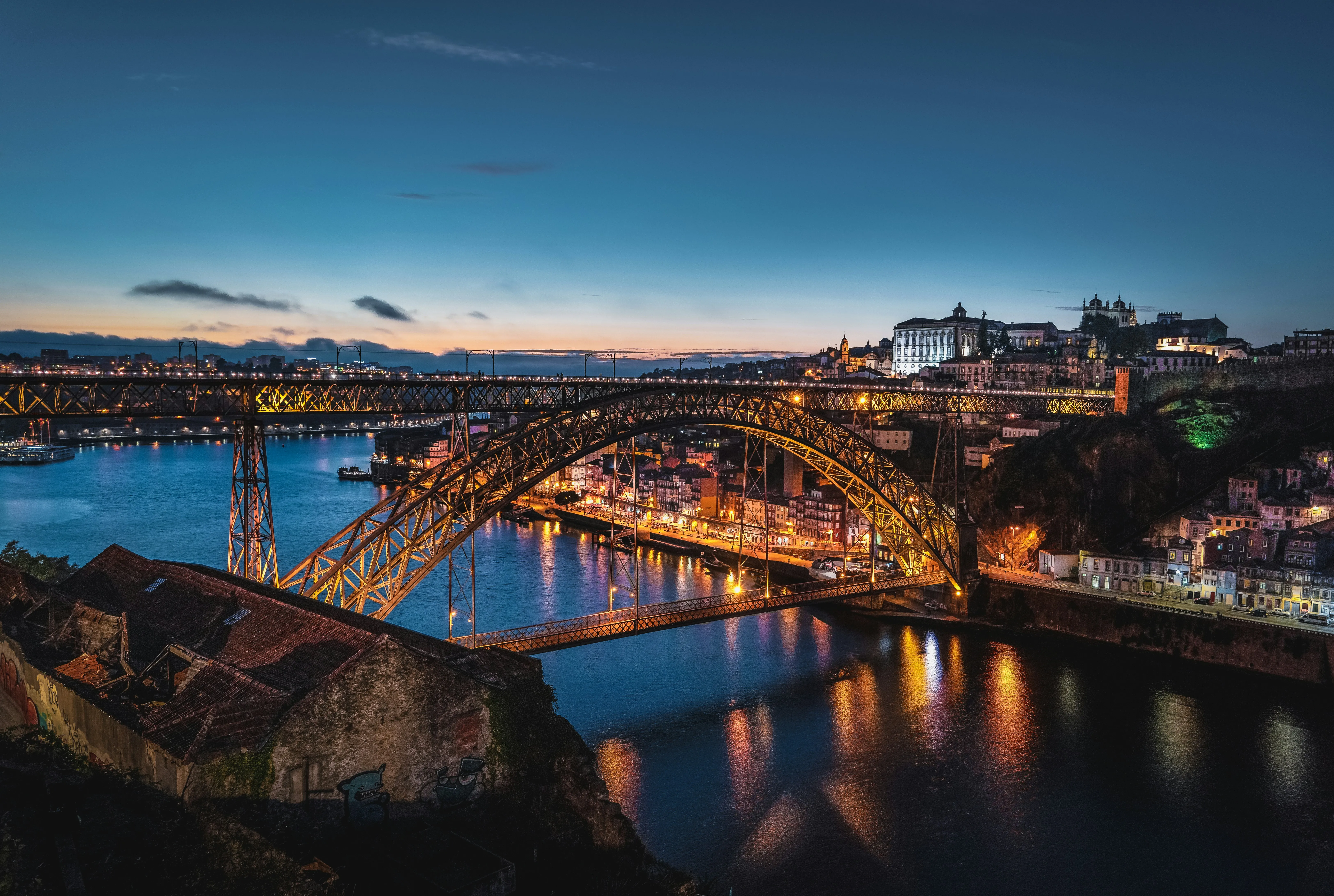
To the north, the city of Porto offers a characteristic view on the banks of the Douro River. Its historic center, the Ribeira, stands out for its colorful facades and the network of bridges that connect the city with the famous wine cellars on the opposite bank. It is an ideal area to discover churches decorated with typical blue and white tiles and visit contemporary cultural centers like the Casa da Música. Very close by, cities like Braga or Guimarães allow one to delve deeper into the historical and religious roots of the country through their castles and sanctuaries located in elevated settings.
A short distance from the capital is Sintra, a place where architecture merges with nature in a forested and misty environment. Its palaces and estates, such as the Pena Palace or the Quinta da Regaleira, reflect the romantic style and offer a unique atmosphere that seems frozen in time. It is a key point for understanding the relationship between the natural landscape and the Portuguese historical nobility, complemented by the proximity of the cliffs of Cabo de Roca, the westernmost point of continental Europe.
In the central region and the interior, the pace of life becomes slower. Coimbra stands out for housing one of the oldest universities in Europe, whose library is one of the country’s heritage jewels. On the other hand, the Alentejo region is characterized by its extensive plains of cork oaks and walled cities like Évora, which preserves vestiges of a Roman temple and a very well-preserved medieval historic center. This area is ideal for those seeking direct contact with rural traditions and white-house architecture.
The southern coast, known as the Algarve, is recognized for its geological formations and its beaches sheltered by ochre-toned cliffs. Towns like Lagos, Sagres, or Tavira maintain the charm of fishing villages and serve as a base for exploring natural coastal routes. It is a destination mainly focused on enjoying the coastline, practicing water sports, and hiking the trails that border the ocean, offering a different perspective of the territory’s geographic diversity.
Finally, the archipelagos of Madeira and the Azores provide the wildest and most volcanic side of Portugal in the middle of the Atlantic. In Madeira, the levadas or traditional irrigation channels have become hiking routes that traverse laurel forests, while in the Azores, interest centers on volcanic lagoons and whale watching. Regarding the museum cultural offer, institutions like the Calouste Gulbenkian Museum in Lisbon or the Serralves Museum of Contemporary Art in Porto allow for complementing historical tours with international artistic visions.
Tip: You cannot miss visiting the Jerónimos Monastery, the most emblematic place in the country.
✈️ Best time to visit
Portugal is a destination that can be enjoyed all year round thanks to its predominantly Mediterranean climate and its geographic diversity. The choice of the ideal time for the visit depends largely on the type of experience sought, whether it is exploring historic cities with mild temperatures or enjoying the Atlantic coastline during the warmer months.
Spring and the beginning of autumn are usually considered balanced periods, as the weather allows for outdoor activities comfortably and the landscape shows its most characteristic facets. For their part, summer and winter offer marked contrasts, from the lively atmosphere of coastal areas to the tranquility and slow pace of the inland and northern regions.
| Season | Months | Typical climate | What to expect | Tourist crowds |
|---|---|---|---|---|
| Spring | Mar – May | Mild and pleasant, with increasingly longer days and occasional rain. | Green landscapes, blossoms, traditional festivities, and ideal conditions for hiking. | Medium (⭐⭐) |
| Summer | Jun – Aug | Hot and dry, with high temperatures especially in the south and interior. | Beach season, popular festivals in cities, and a lively atmosphere in coastal areas. | High (⭐⭐⭐) |
| Autumn | Sep – Nov | Moderate temperatures that progressively drop; increased probability of rain toward November. | Harvest time in wine regions, ochre tones in forests, and a slower atmosphere. | Medium - Low (⭐⭐) |
| Winter | Dec – Feb | Cool and humid in the north; milder and sunnier in the Algarve. Occasional snow in mountain areas. | Cultural tourism without waits, New Year celebrations, big wave surfing, and tranquility in the interior. | Low (⭐) |
🗣️ Basic vocabulary
Although in the most touristy areas of Portugal it is common for staff to manage well in Spanish or English, knowing some basic words in Portuguese greatly facilitates daily communication. It is a simple gesture that helps interactions in restaurants, shops, or means of transport to be more friendly and fluid.
It is not necessary to master the language to get by easily during the trip. It is enough to learn some formulas of courtesy and common questions that will allow you to move with greater confidence and respect toward the local culture in the most common situations.
- Bom dia / Boa tarde / Boa noite: Good morning / Good afternoon / Good night.
- Olá: Hello.
- Obrigado / Obrigada: Thank you (use “obrigado” if the speaker is male and “obrigada” if female).
- Por favor: Please.
- Com licença: Excuse me (to ask for passage or get attention).
- Desculpe: Sorry or I’m sorry.
- Quanto custa?: How much does it cost?
- A conta, por favor: The check, please.
- Onde fica…?: Where is…? or Where is it located…?