


Luxembourg
Small European duchy combining impressive medieval fortifications, green valleys, and a modern capital, offering a unique, sophisticated, and very safe cultural experience.
Quick Facts
- Capital
- Luxembourg City
- Language
- Luxembourgish
- French and German
- Currency
- Euro (EUR)
- Best time to visit
- From May to September to enjoy mild weather and local festivals.
- Budget per day
- $120 - $350 per day
- Climate
- Temperate continental climate with mild summers and cold winters. Rainfall is moderate but frequent throughout all seasons of the year.
- Connectivity
- good
- Very easy to acquire at the airport, official telecommunications stores, and via eSIM.
- Electricity
- Type C / F (230V)
- Local transport
- good
- Card usage
- widespread
- Tipping
- optional
🌎 Introduction
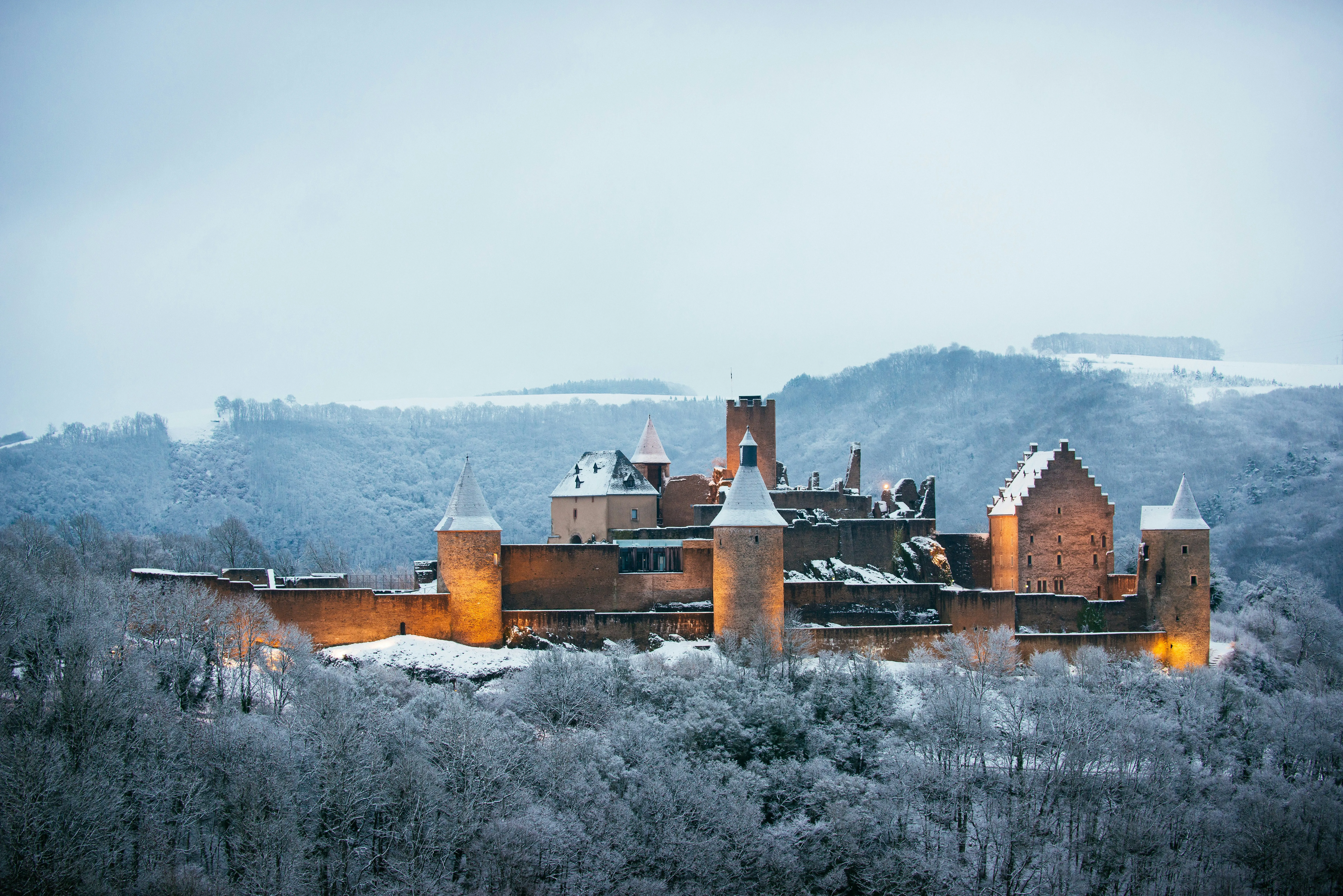
In the heart of the continent, where the influences of its neighbors intertwine naturally, a landscape of soft contrasts and a slow-paced atmosphere emerges. Its deep valleys, guarded by ancient stone fortresses, coexist with an exuberant nature that transforms the environment with each season. Walking through its streets allows one to perceive a multicultural and open identity, where the coexistence of several languages in daily life reflects a history of crossroads and a serenity that invites observation without haste.
Daily life unfolds between the lushness of the northern forests and the tranquil rhythm of the vineyards bordering the rivers in the east. During autumn, the hills are tinged with ocher tones coinciding with the grape harvest, while winter wraps the squares in a dim light and aromas of spices and comforting cuisine. It is a corner where medieval legends and castles integrated into the forest find a perfect balance with the most discreet modernity, offering a rich experience of nuances for those seeking calm and authenticity.
🛡️ General safety
Luxembourg is considered one of the safest countries in the world for travelers. Its political, economic, and social stability translates into an extremely peaceful environment where tourism can be enjoyed with a minimum level of concern.
- Safety level: The crime rate is very low compared to other European and global destinations.
- General assessment: It is situated at a high safety level, being an ideal destination for all types of travelers, including families and solo travelers.
- Context for the traveler: Although it is a very safe country, it is not exempt from minor incidents, so common sense remains the best prevention tool.
Common crime and risks
The majority of crimes affecting tourists are minor in nature and do not usually involve physical violence.
- Theft and pickpocketing: These can occur in crowded places such as the central train station (Gare), Christmas markets, or during mass events.
- Minor scams: Although infrequent, it is wise to be wary of people offering unsolicited help at ATMs or street gambling games.
- Caution zones: The Station (Gare) neighborhood in Luxembourg City can have a somewhat more degraded atmosphere at night, although it remains patrolled and relatively safe.
- Infrequent risks: Thefts from rental vehicles can happen if valuables are left in sight in hiking areas or poorly lit parking lots.
Safety in cities and tourist areas
Luxembourgish cities, especially the capital and towns like Echternach or Vianden, offer a very protected environment.
- Urban centers: It is safe to walk through the historic districts both day and night. Public lighting is excellent.
- Public transport: It is considered highly safe. There are no areas of the country considered “off-limits” to tourists for safety reasons.
- Practical recommendations: Keep your belongings in sight on café terraces and avoid carrying large amounts of cash, although card payment is widespread throughout the country.
Safety in transport
Luxembourg stands out for being the first country in the world with free public transport throughout its territory, which is a great advantage for tourists.
- Public transport: Trains, trams, and buses are modern, punctual, and very safe. Safety incidents are not commonly reported on them.
- Taxis and VTC: These are regulated and safe services, although they tend to have high rates. It is advisable to use official applications or marked stops.
- Driving: Driving is on the right. Roads are in perfect condition and signage is clear.
- Relevant rules: Be strictly respectful of speed limits and the alcohol limit (which is very low), as police checks are frequent and fines are high.
Natural and climatic risks
Luxembourg is not prone to large-scale natural disasters, so the risk in this regard is minimal.
- Flooding: During periods of intense rain or snowmelt, some rivers (such as the Alzette or the Sûre) may experience rises, occasionally affecting low-lying areas or riverside trails.
- Seasonal phenomena: During winter, snowfall and ice can make driving difficult and increase the risk of falls in rural or cobbled areas.
- Prevention: If you plan to go hiking in the Little Switzerland (Mullerthal) region, always check the weather forecast, as storms can make paths slippery.
Local legislation and norms
Compliance with rules is a fundamental part of the culture in Luxembourg.
- Identification: It is mandatory to carry a valid identity document at all times.
- Substance consumption: Although there is specific regulation for cannabis, its consumption in public spaces remains restricted and drug trafficking is severely punished.
- Respect for the environment: Fines for littering or damaging natural and architectural heritage are strict.
- Social behavior: Silence and respect for others’ rest are highly valued, especially in residential areas after 10:00 PM.
Safety for specific groups
- Solo female travelers: Luxembourg is an excellent destination for women traveling alone. There are no specific dress codes and respect is the general norm.
- LGTBIQ+ travelers: It is a very progressive and tolerant country, with laws protecting diversity. Public displays of affection are accepted with total normality.
- Children and the elderly: Urban infrastructure is well adapted for strollers and people with reduced mobility, with a generally very friendly and safe environment for these ages.
Emergencies and assistance
The Luxembourgish emergency system is efficient and multilingual (they generally attend in French, German, English, and often Portuguese or Spanish).
- Main emergency number: 112 (for medical emergencies, fire, and police).
- Grand-Ducal Police number: 113 (for police matters that are not life-or-death).
- Health services: Hospitals are of high quality. It is recommended to travel with the European Health Insurance Card or private travel insurance.
- Procedure in case of incident: Go to the nearest police station or call 113. Officers are usually very professional and helpful to tourists.
Tip: Although Luxembourg is extremely safe, take advantage of the free public transport to get around; it is the safest and most efficient way to avoid distractions while driving on unfamiliar roads or looking for parking in busy areas.
📝 Entry requirements
To undertake a trip to Luxembourg, the fundamental document every traveler must present is a valid passport. It is generally recommended that the document’s validity extends at least three or six months beyond the planned end date of the trip. Depending on the visitor’s nationality and current international agreements, a visa may not be required for tourist stays, provided the stay in the territory does not exceed the standard period of ninety days.
Upon arrival at access points, mainly through the international airport, border control authorities may randomly request certain documents supporting the nature of the trip. It is common to be asked to show a departure ticket from the country or for continuation to another destination, as well as proof of having sufficient financial means to cover accommodation and maintenance costs during the stay. These checks are usually quick and aimed at verifying compliance with temporary stay rules.
Regarding customs rules, travelers should keep in mind that there are limits established for the introduction of certain products without the need for a declaration, such as tobacco or alcoholic beverages. If it is necessary to travel with specific medications, it is advisable to carry the corresponding translated medical prescription or a report justifying their personal use. On the other hand, the entry of certain foods of animal origin or plants may be subject to restrictions to protect the local environment.
In the health field, mandatory vaccines are not usually required to enter the Grand Duchy, although it is always a prudent practice to have the standard vaccination schedule updated. The purchase of travel insurance with broad medical coverage that can respond to any health unforeseen event is strongly recommended. This type of foresight allows you to enjoy the country’s attractions with greater peace of mind and security in the face of unexpected situations.
- Main documentation: Passport with sufficient validity according to temporary stay regulations.
- Tourist visa: Generally not required for short stays of up to ninety days in many international cases.
- Additional proof: Possible request for return transport tickets and confirmation of financial resources.
- Customs controls: Limitations on consumer products such as alcohol and tobacco, and regulation of personal pharmaceuticals.
- Health and prevention: Recommendation to have international medical insurance and basic vaccines up to date.
- Currency used: The legal tender is the euro, facilitating transactions for most visitors.
- Public transport: Characterized by high efficiency and is a notable element for tourist mobility.
🏥 Basic health considerations
If you are planning your trip to Luxembourg, you will be pleased to know that you are visiting one of the countries with the highest health standards in the world. You will find an excellent healthcare system, with modern infrastructure and cutting-edge technology in all its regions. Medical assistance is available in both the public and private sectors, although you should keep in mind that prices are high if you do not have adequate coverage. Regarding language, you will have no trouble communicating, as most healthcare staff are fluent in French, German, and English, in addition to the local language.
Although it is not a legal requirement to enter the country, taking out travel medical insurance is something I recommend without hesitation. It is essential that your policy includes hospitalization, medical transfer, and, of course, repatriation if necessary. Having this protection will allow you to enjoy your stay with total peace of mind, knowing that any medical unforeseen event will not be a hard blow to your personal budget.
In the vaccines section, you will see that the situation is very simple. There is no mandatory vaccine to enter Luxembourgish territory. The only thing you should check before leaving is that your standard vaccination schedule is up to date. If you plan to do a lot of hiking in forested or rural areas during spring or summer, you might consider consulting a professional about the tick-borne encephalitis vaccine, although it is not strictly necessary for a general tourism trip.
If you need to carry your own medication, the ideal way is to transport it in its original packaging accompanied by its corresponding medical prescription or a certificate in English if it concerns chronic treatments. This will save you time and potential explanations at customs controls. In local pharmacies, you will find practically any drug you need, but remember that many medications that are over-the-counter elsewhere may require a mandatory doctor’s prescription here.
Regarding health risks, Luxembourg’s climate does not usually present great dangers for the traveler. In winter you should protect yourself well from the cold and humidity to avoid colds or flu processes, while in summer the risk is minimal. The main factor to consider if you like nature are ticks, present in forests and meadows during warm months. It is not a cause for alarm; it is simply advisable to check your skin and that of your companions after a walk through the countryside or areas of high vegetation.
The tap water throughout the country is of exceptional quality and completely drinkable, so you can drink from it without fear and save on buying plastic bottles. Food hygiene levels in restaurants, cafes, and street stalls are very strict, so poisoning is extremely rare. You can try the rich local gastronomy in any establishment with total confidence and safety for your stomach.
In case you suffer a serious medical emergency during your stay, the number you must remember is 112. This phone number is free and centralizes all emergency services, including ambulances. The response from rescue services is usually very fast and efficient, ensuring immediate care at any point in the territory where you may be.
As final tips for your trip, I suggest you always carry a copy of your insurance policy and the insurer’s contact details with you. Do not forget to include a small basic first-aid kit in your luggage with dressings for possible blisters from walking and some common analgesic. With these minimum precautions, you will see that Luxembourg is an extremely safe, clean, and comfortable destination for any type of traveler.
🚌 Transportation within the country
Moving through the territory is simple thanks to a public transport network that connects the capital with the rest of the regions. The main means used by visitors are the train, the bus, and the tram, the latter being very useful for moving through the different districts of Luxembourg City. Signage is clear and usually appears in several languages, which greatly facilitates orientation for those arriving from abroad.
A fundamental characteristic of the system is the ease of access. Travelers can directly board the carriages or vehicles without the need to perform prior procedures for the purchase of tickets on the national network, which speeds up travel and eliminates technical complications. This simplicity is maintained uniformly throughout the country, allowing for fluid mobility between different points of interest.
The frequency and density of transport vary by location. In urban areas, connectivity is constant and allows for quick movement. Conversely, in rural areas, although bus and train services remain reliable and reach most villages, passing intervals tend to be more spaced out. Even so, the network is designed so that even the most remote points are accessible comfortably.
For private journeys, the use of taxis is common in urban centers and main stations. Likewise, the car remains an option for those wishing to explore natural landscapes with total autonomy, as the roads are in good condition. In general, the system stands out for its punctuality and for the modernity of its infrastructure, conveying a sense of great reliability to the traveler.
Tip: It is advisable to check local mobility applications to know the exact platforms and passing times in real-time.
🤵 Culture and etiquette
Luxembourgish society is characterized by its multilingual character and a marked discretion in public spaces. When interacting with residents, it is common to start with a cordial greeting such as “Moien” (in Luxembourgish) or “Bonjour,” always maintaining a physical distance that preserves others’ personal space. In initial introductions, a firm handshake is the most common form of greeting, reserving closer gestures for tight friendship circles or the family sphere.
In daily interactions, maintaining a moderate voice volume is positively valued, especially on public transport, in shops, and restaurants, so as not to interfere with the tranquility of the environment. Privacy is a fundamental value in coexistence, so conversations are usually measured and eye contact is direct but always respectful. Likewise, punctuality is considered an essential sign of courtesy and respect for others’ time, both in formal appointments and social encounters.
When visiting a restaurant, it is customary to wait until all diners are served before starting to eat. Regarding tipping, although service is usually included in the bill, it is common to round up the amount or leave a small additional percentage if the service was satisfactory, without there being a strict obligation. In religious spaces, historical monuments, or during the celebration of local traditions, sober behavior and a low tone of voice are expected as a sign of consideration toward the heritage and attendees.
Given the country’s international character, there is a great openness toward diversity, with different cultures and languages coexisting naturally. Visitors who show interest in local customs and make an effort to use basic words in the official languages usually receive a very kind response. Adapting to the slow pace of public life and following the implicit norms of coexistence facilitate a fluid and harmonious experience in any environment of the Grand Duchy.
“Tip”: Punctuality is a fundamental pillar of social etiquette in Luxembourg; arriving at the exact time or even a few minutes early is interpreted as a sign of courtesy and respect toward the people you are meeting.
🍛 Typical gastronomy
The gastronomy of Luxembourg is defined as a balanced mix between Germanic heartiness and French finesse. It is a cuisine based on local products, where dishes are usually generous and comforting, reflecting the Grand Duchy’s agricultural past and its geographical location in the heart of Europe.
The main ingredients of its traditional recipes include the potato, which is present in almost any side dish, pork, river fish, and legumes. Flavors are direct and natural, frequently supported by the use of cream, butter, and aromatic herbs. There is a great tradition in the production of cold meats and smoked products, as well as pastries based on seasonal fruits.
Regarding eating habits, lunch is an important meal usually taken between 12:00 and 2:00 PM. Dinner is generally served starting at 7:00 PM and is often a moment of social gathering. In restaurants, the atmosphere is cozy and quiet; service is usually included in the price, although it is common to show satisfaction by leaving a small margin of courtesy when paying the bill.
The drinking culture is deeply linked to the land. The Luxembourgish Moselle valley produces high-quality white wines that usually accompany main meals. Likewise, beer has a long tradition in the region, being very common to enjoy it during both informal meals and aperitifs. In rural areas, it is common to find local fruit distillates served as digestifs after a heavy meal.
| Dish | Description | Main Ingredients | Where to try it | Tip |
|---|---|---|---|---|
| Judd mat Gaardebounen | The national dish par excellence, consisting of smoked pork neck with broad beans. | Pork, broad beans, onion, cream, and white wine. | Traditional food restaurants in the capital and inland villages. | It is a very large portion, perfect for sharing or for days with a big appetite. |
| Gromperekichelcher | Grated and fried potato pancakes, very popular at social events. | Potatoes, onion, parsley, egg, and flour. | Outdoor markets, fairs, and street stalls throughout the country. | Try them freshly made and accompanied by applesauce for the contrast of flavors. |
| Bouneschlupp | A thick and comforting soup very common in Luxembourgish homes. | Green beans, potatoes, bacon, and occasionally sausages. | Local taverns and daily menus of home-style cooking. | Order it as a single dish if you are looking for a light but nutritious dinner. |
| Friture de la Moselle | Small river fish that are deep-fried whole until crispy. | Fresh river fish, flour, and lemon. | Restaurants with terraces in the Moselle wine region. | They are traditionally eaten with your hands and accompanied by a local white wine. |
| Quetschentaart | Classic fruit tart that marks the end of summer in the country. | Plums of the “quetsch” variety and shortcrust or puff pastry. | Pastry shops and cafes in any Luxembourgish town. | Enjoy it in the mid-afternoon with a coffee in one of the main squares. |
📷 Areas and places to visit
The Grand Duchy of Luxembourg is a destination that surprises by the harmony with which its medieval past and its role as a center of European modernity coexist. Luxembourg City, the country’s capital, constitutes the fundamental starting point for any visitor. This city sits on a rugged terrain that divides the urban area into different levels, creating a visually unique landscape. In the upper part, known as Ville Haute, are historical squares, government buildings, and a varied commercial offer. Conversely, the Grund district, located on the banks of the Alzette River in the lower part, offers a more serene atmosphere with its stone houses and cobbled streets that seem frozen in time.
The capital’s historical heritage is palpable in its defensive structures. The Bock Casemates, an extensive network of tunnels carved directly into the rock, allow one to understand the strategic importance this fortified city had throughout the centuries. Nearby, the Grand Ducal Palace stands out for its Renaissance architecture and is the center of institutional life. For those seeking a more contemporary cultural perspective, the Kirchberg district houses avant-garde architecture buildings, European Union institutions, and the MUDAM, the modern art museum that contrasts with the classical aesthetic of the rest of the city.
To the east extends the Mullerthal region, often referred to as Luxembourg’s Little Switzerland because of its landscapes of thick forests and sandstone rock formations. It is a favorite area for nature enthusiasts, with routes that cross wooden bridges and small waterfalls such as the Schiessentümpel waterfall. The town of Echternach, the oldest city in the country, functions as the cultural center of this area, preserving an imposing abbey and a historic center that hosts traditional festivals and local markets.
In the north, the Luxembourgish Ardennes present a more rugged terrain with deep valleys and high plateaus. This region is famous for housing some of the most representative castles in Central Europe. Vianden Castle is undoubtedly one of the most emblematic constructions, restored to show the splendor of ancient noble residences. In this same region, the town of Clervaux combines its architectural heritage with relevant cultural proposals, such as the permanent photography exhibition located in its castle, which attracts visitors interested in history and visual arts.
The southern zone of the country offers a marked contrast under the name of the Red Lands. This territory, historically linked to the mining industry due to the iron richness of its soil, has managed to reinvent itself as an area of innovation and culture. The city of Esch-sur-Alzette is an example of this transformation, where old industrial facilities have been integrated into the current urban landscape. For its part, the Moselle Valley, on the eastern border, is known for its gentle hills covered in vineyards and its riverside villages, offering an ideal setting for river walks and for learning about the winemaking tradition of the area in towns like Schengen, a point of great historical relevance for European integration.
Tip: You cannot miss visiting the Old Town and the fortifications of Luxembourg City, the most emblematic place in the country.
✈️ Best time to travel
Luxembourg is a destination that can be enjoyed at any time of the year, although the experience varies considerably depending on the chosen season. Having a temperate oceanic climate, the country offers changing landscapes ranging from the intense green of its forests in the warm months to the cozy and traditional atmosphere of the colder months. The choice of the ideal time will depend on whether you are looking to perform outdoor activities or if you prefer to enjoy the cultural and urban offer.
In general, the period between the end of spring and the beginning of autumn tends to be the most balanced for tourism. During these months, temperatures are milder and days have more hours of natural light, which facilitates walking tours through both the capital and the rural regions of the Red Lands or the Moselle valley. Nevertheless, winter also possesses a particular appeal thanks to its local traditions and the transformation of the urban landscape.
| Season | Months | Typical Climate | What to Expect | Tourist Influx |
|---|---|---|---|---|
| Spring | Mar – May | Cool and variable, with temperatures gradually rising and moderate rain. | Blooming of valleys and parks, reactivation of hiking routes and urban terraces. | Medium (⭐⭐) |
| Summer | Jun – Aug | Warm and pleasant, with long days and occasional rain episodes. | Cultural festivals, National Day celebrations, and optimal conditions for cycling. | High (⭐⭐⭐) |
| Autumn | Sep – Nov | Drop in temperatures and higher humidity; cool atmosphere and gentle winds. | Ocher-colored landscapes in the forests, grape harvest season in the eastern vineyards. | Medium (⭐⭐) |
| Winter | Dec – Feb | Cold, with frequent frosts and occasional snowfall covering castles and valleys. | Traditional markets in December, quiet museums, and clear winter landscapes. | Low / Medium in December (⭐) |
🗣️ Basic vocabulary
Although you will be able to communicate without problems in French, German, or even English in Luxembourg, knowing some expressions in Luxembourgish (lëtzebuergesch) is a detail that local inhabitants usually appreciate. Using the national language in everyday situations will help you integrate better and show respect for the country’s culture during your stay.
It is not necessary to master the grammar to move with ease in shops, museums, or on public transport. It is enough to learn a few key words that will help you greet, say thank you, or ask for something politely at any time of day.
- Moien: Hello. It is the most common greeting and is used at any time of day.
- Merci: Thank you. It is used the same way as in French and is essential in daily interaction.
- Wanneglift: Please. Essential for ordering a drink or requesting information.
- Äddi: Goodbye. It is the usual way to say goodbye when leaving an establishment.
- Entschulledegt: Excuse me or sorry. Very useful for asking to pass in crowded places or calling a waiter’s attention.
- Jo / Nee: Yes / No. Basic concepts for responding quickly to simple questions.
- Wéi geet et?: How are you? A very common courtesy phrase to start a conversation warmly.