


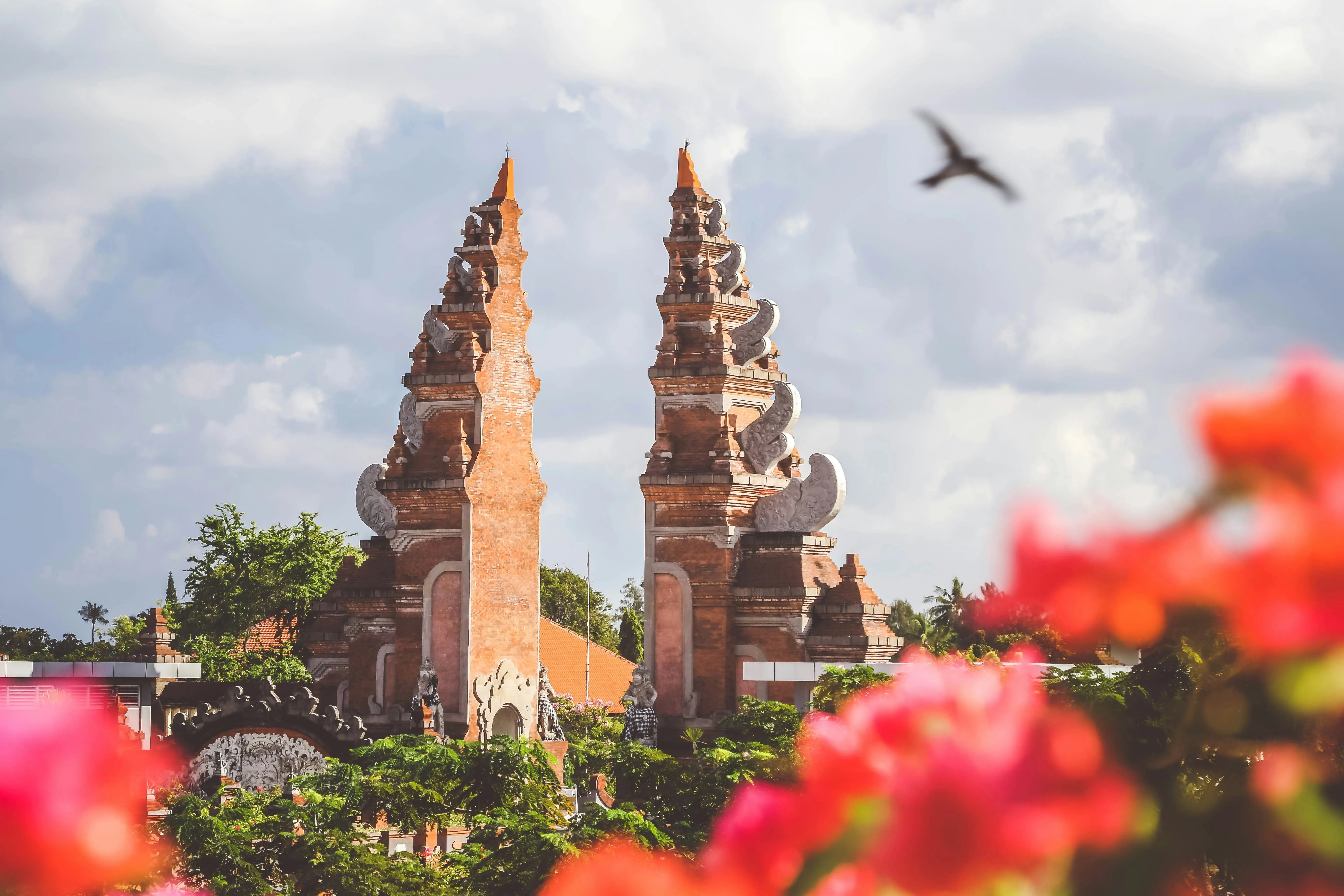
Indonesia
Explore a fascinating archipelago with virgin jungles, majestic volcanoes, and ancient temples that blend with paradise beaches and a vibrant culture full of hospitality.
Quick Facts
- Capital
- Jakarta
- Language
- Indonesian (Bahasa Indonesia)
- English and local languages such as Javanese or Balinese
- Currency
- Indonesian Rupiah (IDR)
- Best time to visit
- From April to October, coinciding with the dry season
- Budget per day
- $25 - $120 per day
- Climate
- Warm and humid tropical year-round, marked by a dry season and a monsoon season.
- Connectivity
- medium
- Very easy to acquire at airports and local stores by presenting a passport.
- Electricity
- Type C / F (230V)
- Local transport
- acceptable
- Card usage
- cash is used more
- Tipping
- optional
🌎 Introduction
Imagining Indonesia is thinking of a mosaic of thousands of islands stretching along the equator, where life takes place between volcanoes that lose themselves in the clouds and jungles that end at the seashore. It is not just a point on the map, but an archipelago of contrasts where the scent of spices mixes with the salty breeze, and where the pulse of the days is marked by both the tides and the daily ceremonies that dress the villages and temples in color.
In this corner of Southeast Asia, diversity manifests naturally in every gesture. It is common to encounter the calm of rice fields or the slow bustle of its local markets, where the flavor of freshly made nasi goreng coexists with ancestral traditions. The passing of the seasons, defined by the alternation between bright days and tropical rain that turns everything green, shapes a constantly changing landscape that reflects the plural identity of its people and their way of understanding time.
🛡️ General Safety
Indonesia is, in general terms, a safe and welcoming country for international tourism. Most visits pass without incident, as the local culture positively values hospitality. In an indicative comparison, the risk level is considered low-medium, placing it in a similar position to other popular Southeast Asian destinations. Although specific challenges exist, an informed and cautious traveler can enjoy the archipelago with complete peace of mind.
Crime and common risks
Violent crime against tourists is extremely unusual. However, it is advisable to be aware of the following risks:
- Pickpocketing and petty theft: These are the most frequent incidents, especially in busy areas like Kuta or Seminyak in Bali. Bag snatching from motorcycles is a real risk; it is recommended not to carry your mobile phone or bag visibly while walking near the road.
- Currency exchange scams: Some unofficial money exchange establishments may try to deceive tourists with the money count. It is essential to always go to authorized exchange centers and count the money before leaving.
- Card cloning: Cases of reading devices on ATMs have been reported. It is recommended to use ATMs located inside bank branches with surveillance.
- Adulterated drinks: Although not common, caution should be taken with the consumption of locally manufactured alcohol (such as arak) in unregulated establishments, as it may contain methanol.
Safety in cities and tourist areas
Safety varies by location, with rural areas and smaller islands being extremely safe.
- Urban centers: Cities like Jakarta require normal vigilance, similar to any major metropolis. Dense traffic is the main safety factor for pedestrians.
- Tourist areas of Bali: Due to the high concentration of visitors, this is where personal belongings should be watched most closely, especially at night in nightlife areas.
- Practical recommendations: It is advisable to leave valuables and original passports in the hotel safe and travel only with a copy and the money necessary for the day.
Safety in transportation
Transportation in Indonesia is diverse and requires knowing certain particularities:
- Driving: In Indonesia, people drive on the left. Traffic can be chaotic, and road rules are not always strictly followed.
- Motorcycle rental: This is very common but also the main source of accidents for tourists. The use of a helmet is mandatory, and a valid international driving permit for motorcycles is required.
- Taxis and private transport: It is recommended to use the Blue Bird company for its reliability and use of a meter. Transport apps like Grab or Gojek are very safe, economical, and recommended options to avoid price negotiations.
- Maritime transport: When traveling between islands, it is important to verify that boats or ferries are not overloaded and have visible life jackets.
Natural and climatic risks
Indonesia is located on the Pacific “Ring of Fire,” which implies constant geological activity.
- Seismic and volcanic activity: Earthquakes and volcanic eruptions are latent risks. It is important to stay informed through official sources and local early warning apps.
- Tropical climate: The rainy season (generally from October to April) can cause floods and landslides in rural areas. Extreme heat and high humidity require constant hydration and adequate sun protection.
- Sea currents: On many beaches, especially on the south coast of Bali and Lombok, currents can be very strong and dangerous for swimming.
Local legislation and norms
Indonesia has laws that can be much stricter than those in Western countries:
- Drugs: There is zero tolerance. Possession, consumption, or trafficking of any type of drug (including marijuana) carries extremely long prison sentences and even the death penalty.
- Behavior and dress: Indonesia is a predominantly Muslim country (with the exception of Bali). It is recommended to dress modestly when visiting temples or non-tourist areas, covering shoulders and knees.
- Religious respect: During celebrations such as Nyepi (Day of Silence in Bali), tourists must remain in their accommodations, and no lights or noise are allowed.
Safety for specific groups
- Female travelers: Indonesia is a safe destination for women traveling alone. Nevertheless, it is advisable to avoid walking in poorly lit or isolated areas at night and to dress with some modesty in rural areas to avoid unwanted attention.
- LGTBIQ+ travelers: Although homosexuality is not illegal in most of the country (except in the province of Aceh, where Sharia law applies), society is conservative. Discretion is recommended, and public displays of affection should be avoided to prevent uncomfortable situations.
- Travel with children and the elderly: The country is very family-oriented, and children are welcome everywhere. The main challenge is accessibility (pavements in poor condition) and the heat, so frequent breaks should be planned.
Emergencies and assistance
- Emergency numbers: The general emergency number is 112. Specifically for police, it is 110, and for ambulances, it is 118/119.
- Medical services: In large cities and tourist areas like Bali, there are private hospitals with international standards. In remote areas, assistance can be very limited.
- Procedure in case of an incident: If you are a victim of theft, you must go to the nearest police station to file a report (“surat keterangan tanda lapor kehilangan”), which is necessary for any insurance claim.
Tip: Always download transport apps like Grab or Gojek upon arrival; they not only guarantee a fair price but also record the journey and the driver’s identity, significantly increasing your safety during trips.
📝 Entry Requirements
To undertake a trip to this archipelago, it is fundamental to have a passport with a minimum validity of six months from the moment of landing in the territory. It is recommended that the document be in optimal physical condition, as immigration control personnel tend to be meticulous about the state of the pages and covers, and may deny access if significant damage is detected.
Regarding access for holiday stays, most international visitors usually require a tourism permit or visa. This document generally allows a stay of up to 30 days in the country. In various circumstances, this period can be extended for additional time by managing the corresponding procedure with local immigration authorities once at the destination and always within the established legal deadlines.
It is common for an onward ticket to be requested at entry points, either back to the place of origin or to a third destination, to confirm that the stay will not exceed the time allowed by the granted permit. Likewise, although not systematically requested in all cases, travelers could find themselves in the situation of having to demonstrate that they have sufficient financial funds to cover their entire stay and the expenses derived from the trip.
Customs controls are standard processes where a declaration of goods must be completed, which currently is usually done electronically. There are specific customs restrictions on the import of products such as tobacco or alcohol, which have defined quantity limits per person. It is of special importance to pay attention to medications, especially if they contain controlled substances, in which case they must be accompanied by a clear medical prescription. The entry of certain fresh foods or products of animal origin may also be regulated to protect local biodiversity.
From a health point of view, vaccines are not usually required in a generalized manner for all travelers, with the exception of those coming from areas where yellow fever is considered endemic. Nevertheless, it is considered prudent to have the usual immunizations for international destinations and to have travel insurance with broad medical coverage to resolve any incident that might arise during the stay.
- Identity document: Passport with validity exceeding six months.
- Tourist permit: Authorization to stay for a period of 30 days, with the possibility of extension.
- Proof of departure: Proof of flight or transport to leave the country.
- Financial resources: Availability of economic means for the duration of the trip.
- Customs control: Declaration of goods and strict limits on alcohol, tobacco, and certain drugs.
- Health: Specific vaccination certificate according to origin and recommended medical insurance.
🏥 Basic Health Considerations
In Indonesia, you will see that the quality of medical care varies considerably depending on the area where you are. In major urban centers like Jakarta or in highly touristy areas like Bali, you will find private clinics and hospitals with international standards and advanced technology. However, in more remote islands or rural areas, resources are much more limited. It is most common for tourists to use private healthcare, as it offers faster and more efficient care than the public system. Keep in mind that prices for foreigners can be high, and it is common for them to request an advance payment or a guarantee from your insurance before treating you. In private centers in tourist areas, medical staff usually speak English fluently.
Taking out travel medical insurance is not a legal requirement to enter the country, but it will be absolutely essential for you. Good insurance will give you the necessary peace of mind for any unforeseen event. It is fundamental that your policy includes broad coverage for hospitalization, high medical expenses, and, above all, medical repatriation. If you plan to visit less connected islands or engage in risky activities, make sure it also covers medical evacuation in case of emergency.
Regarding vaccines, there is no legal obligation to be vaccinated to enter Indonesia unless you come from a country where yellow fever is endemic, in which case you must present your international certificate. It is highly recommended that you have your official vaccination schedule up to date. Additionally, to travel more safely, you might consider protecting yourself against Hepatitis A, Hepatitis B, and typhoid fever, especially if you plan to move through less urbanized areas or try a lot of local food.
If you travel with your own medication, you will see that it is essential to carry it in its original container and accompanied by a medical prescription preferably translated into English. Indonesia has very strict laws against drug trafficking, and some substances present in common medications for sleep or severe pain could be regulated. It is always a good idea to carry a basic first-aid kit with dressing materials, some analgesics, anti-diarrheals, and oral rehydration salts.
The most frequent health risks you might experience are related to the tropical climate. Intense heat and humidity can cause dehydration or heatstroke if you do not take precautions. Insects are another relevant factor, as diseases such as dengue or Zika, transmitted by mosquitoes that are active during the day, are present in the country. In some very specific and remote regions, there is a risk of malaria, although on the main tourist routes, this risk is practically non-existent. You will not have to worry about altitude problems unless you decide to climb the country’s large volcanoes.
Regarding food and hygiene, you must be very clear that tap water is not potable. You will find bottled water easily, and it is what you should use even for brushing your teeth if you have a sensitive stomach. Street food is one of the best experiences of the trip, and although the level of hygiene may be different from what you are used to, it is usually safe if the food is cooked at high temperatures in front of you. What is known as traveler’s stomach upset is common, so avoid ice of doubtful origin and raw vegetables in places that do not inspire confidence.
In case you need urgent assistance, the medical emergency number in Indonesia is 118 for ambulances, although the general emergency number is 112. You should know that the ambulance service can be heavily affected by dense traffic in cities, so in situations that are not imminently life-threatening, you will sometimes arrive at the hospital faster if you use a taxi or a private transport vehicle.
As final tips for your stay, it will be very helpful to use mosquito repellent constantly and wear light clothing that covers most of the body at sunset. Always stay well-hydrated by drinking plenty of bottled water and do not forget to apply sunscreen frequently, as the Southeast Asian sun is very strong even on cloudy days. At any symptom of fever or persistent malaise, it is best to contact your insurance so they can refer you to the most appropriate medical center.
🚌 Transport Within the Country
Moving through such an extensive archipelago as Indonesia requires combining different means depending on the distance and destination. To travel between the main islands, the airplane is the fastest and most common option, while ferries and boats connect ports regularly for those who prefer the sea. Once on land, the train is a highly valued medium on islands like Java, offering routes that pass through natural landscapes. For its part, the bus reaches almost every corner of the country, although travel times are usually long due to the terrain and the state of the roads.
The ease of navigation is acceptable in the busiest spots, where signage is usually present in English as well. Ticket purchases can be made in person at stations and ports or through digital systems, which facilitates trip organization for the visitor. In large cities, it is common to find more structured transport networks, including in some cases metro or light rail systems, while in rural areas, transport is more informal and depends on smaller vehicles or private transport.
The use of taxis and transport services requested through mobile apps is one of the simplest and most common ways to move around urban centers. These services offer a direct alternative for moving with agility. In terms of reliability, rail services tend to stand out for their punctuality, while road transport is more subject to variations in local traffic and weather conditions.
Comfort on journeys has improved steadily, especially in services oriented to cover medium and long distances, which usually have air conditioning. However, it is convenient to keep in mind that the perception of time during travel can be different from other countries, as driving speeds are usually moderate. Interaction with transport workers is usually close and friendly, facilitating the traveler’s experience.
“Tip”: It is recommended to plan transfers with sufficient time margin, as heavy traffic in cities and weather conditions can influence the duration of journeys.
🤵 Culture and Etiquette
In Indonesia, courtesy and kindness are fundamental pillars of daily coexistence. Personal treatment is usually slow-paced, and it is common for encounters to begin with a gentle greeting, often a slight handshake followed by placing the hand over the heart as a sign of sincerity. In public spaces, it is valued to maintain a moderate tone of voice and avoid direct confrontations or excessive displays of anger, as social harmony is a priority. Patience is considered an essential virtue in any interaction, facilitating an atmosphere of mutual understanding between visitors and the local population.
The use of the right hand is a cross-cutting rule of etiquette throughout the archipelago. It is traditionally used to give or receive objects, as well as for eating, while the left hand is associated with personal hygiene tasks. Likewise, the head is considered the most sacred part of the body, so it is advisable to avoid touching that of other people, including children, as it is the place where the spirit resides. Regarding physical contact, effusive public displays of affection are not frequent, with discreet and respectful conduct towards the social environment being preferred.
The perception of time in Indonesia is characterized by a notable flexibility, a concept known locally as “rubber time” (jam karet). Although in formal settings punctuality is sought, in daily life it is common for events to flow with a certain calm, so showing understanding for delays helps to better integrate into the local rhythm. Regarding clothing, it is recommended to opt for garments that cover the shoulders and knees, especially when visiting places of worship or rural settings, as a show of consideration for the traditions and sensitivity of the community.
During meals, it is common to wait for the host or the oldest person to invite everyone to begin. When visiting a private home or certain establishments, it is customary to remove your shoes before entering, leaving them at the entrance. Regarding tipping, it is not mandatory nor part of a cultural requirement, although it is received with gratitude as a gesture of recognition for good service. Respect for hierarchies manifests naturally in the use of honorific terms, reflecting a social structure where experience and age occupy a place of relevance.
“Tip”: Always use the right hand to interact, pay, offer a gift, or point, as it is considered the most appropriate and respectful gesture in all social contexts of the country.
🍛 Typical Gastronomy
Indonesian gastronomy is a faithful reflection of its enormous geographical and cultural diversity. Rice constitutes the fundamental basis of the daily diet, present in almost every meal, whether boiled, fried, or as a side dish. The flavors of its dishes are characterized by a balance between sweet, salty, and spicy, using a wide variety of spices and aromatic herbs such as lemongrass, galangal, lime, and ginger. The use of coconut milk to provide creaminess and peanuts to make thick and nutritious sauces is very common.
In everyday life, Indonesians usually go to warungs, which are small family establishments or street stalls where freshly prepared home-cooked food is served. Sambal, a very spicy chili paste, is an indispensable element that is usually served separately so that each diner can adjust the level of intensity to their liking. In addition to chicken and beef, tempeh (fermented soy) and tofu are very common protein sources throughout the archipelago.
Regarding table customs, it is frequent for eating to be an informal act. In many traditional areas, it is common to eat with the right hand, as the left is reserved for personal hygiene for cultural and religious reasons. Regarding drinks, tea and coffee are the most consumed products, often served with quite a bit of sugar. Due to the high availability of exotic fruits, natural juices are also a very common option at any time of day.
Meal times are usually flexible, although generally, a pattern of early breakfast, a lunch around midday, and a dinner at nightfall is followed. In more formal restaurants, service is usually friendly and slow-paced, inviting you to enjoy the meal without haste. It is important to note that, as a country with a large Muslim population, pork is not served in many regions, although on islands like Bali its consumption is common and forms part of its most emblematic dishes.
| Dish | Description | Main Ingredients | Where to try it | Tip |
|---|---|---|---|---|
| Nasi Goreng | Fried rice seasoned with sweet soy and spices. | Rice, egg, chicken or shrimp, shallots, and soy sauce. | Available throughout the country, from street stalls to hotels. | Try it with a fried egg on top to mix the yolk with the rice. |
| Sate Ayam | Grilled meat skewers served with sauce. | Marinated chicken, peanuts, soy sauce, and spices. | Very common in night markets and street carts. | Make sure the peanut sauce is freshly prepared. |
| Rendang | Slow-cooked stew with intense flavor. | Beef, coconut milk, lemongrass, and spice mix. | Typical of Padang cuisine restaurants (Sumatra). | It is best enjoyed accompanied by boiled white rice to balance the flavor. |
| Gado-Gado | Warm vegetable salad with creamy sauce. | Assorted vegetables, tofu, tempeh, hard-boiled egg, and peanut sauce. | Local markets and traditional restaurants. | Mix it all well before eating so the sauce covers all the ingredients. |
| Bakso | Noodle soup with firm-textured meatballs. | Beef or chicken meatballs, clear broth, noodles, and vegetables. | Street carts called kaki lima. | Add the table condiments (soy or spicy) little by little to adjust the flavor. |
📷 Areas and Places to Visit
Indonesia presents itself as an archipelago of ungraspable contrasts, where geographical and cultural diversity defines each of its regions. As a country composed of thousands of islands, the traveler finds a constant transition between vibrant metropolises, rural villages that preserve ancestral traditions, and natural sites that vary from dense tropical jungles to volcanic peaks. This variety allows the experience to change radically depending on the chosen area, offering everything from a historical and spiritual focus to a purely natural or relaxing one.
The island of Java acts as the administrative and historical heart of the country. In it is Jakarta, a modern capital where large skyscrapers coexist with the old quarter of Kota Tua, which still preserves vestiges of colonial architecture. However, the cultural center of the island is located in Yogyakarta. This city is famous for its proximity to the monumental complexes of Borobudur, the largest Buddhist temple in the world, and Prambanan, an impressive set of temples dedicated to Hindu deities. Both places allow an understanding of the historical depth of the region and the importance of spirituality in daily Javanese life.
Towards the east of Java, the landscape transforms into a stage dominated by geology. Bromo Tengger Semeru National Park offers routes to contemplate active craters in an almost lunar environment, while the Ijen volcano is known for its turquoise acid lake and the traditional activity of sulfur miners. These natural environments contrast with urban life and offer some of the most frequented hiking routes for those looking to know the volcanic side of the archipelago.
The island of Bali is, undoubtedly, one of the most internationally recognized destinations. Its attraction lies not only in its coast but in the combination of inland landscapes and its particular Hindu culture. In Ubud, the traveler can walk through the Tegallalang rice fields and visit numerous art workshops and traditional painting museums. The Balinese coast presents very different profiles: from the cliffs of Uluwatu, where an emblematic temple is located over the sea, to the areas of Canggu or Seminyak, which stand out for their cosmopolitan atmosphere and their beaches. Spirituality manifests in temples located in singular places, such as Pura Ulun Danu Bratan, located on the shores of a mountain lake.
Very close to Bali are the Gili Islands and the island of Lombok. These destinations are characterized by a slower pace of life and a strong connection with the marine environment. In the Gilis, motorized transport is not allowed, which encourages cycling routes and water activities such as diving or snorkeling to observe sea turtles. For its part, Lombok houses Mount Rinjani, a volcano that attracts trekking enthusiasts from all over the world and offers a wilder and less crowded experience than that of its neighbor Bali.
Komodo National Park, composed of several islands such as Rinca and Padar, is the only place where the Komodo dragon can be observed in its natural habitat. In addition to its zoological interest, this area stands out for the unique Pink Beach, a beach with pink sand, and for possessing some of the most biodiverse marine floors on the planet, ideal for spotting manta rays and coral reefs. The town of Labuan Bajo serves as the entry port to explore this protected environment through boat excursions that tour the archipelago.
For those looking for an immersion in the wildest nature and wildlife, the islands of Sumatra and Borneo (Kalimantan) are essential stops. In Gunung Leuser National Park, in Sumatra, it is possible to go on jungle treks to observe orangutans in the wild and other primates. Additionally, this island houses Lake Toba, the largest volcanic lake in the world, whose inner island, Samosir, allows one to learn about the architecture and customs of the Batak ethnic group. These places offer a more rustic and profound vision of rural and forested Indonesia.
Finally, the island of Sulawesi presents a unique cultural proposal, especially in the Tana Toraja region. This place is famous for its distinctive architecture, with houses having boat-shaped roofs, and for its complex funerary rites that form an essential part of local identity. It is an area of mountains and valleys that shows the ethnic diversity of the country, moving away from the more traditional beach and sun circuits to focus on anthropology and the inland landscape.
Tip: You cannot miss visiting Borobudur, the most emblematic place in the country.
✈️ Best Season to Travel
Indonesia has a tropical climate that is mainly divided into two periods: the dry season and the rainy season. Due to its geographical location near the equator, temperatures remain constant and warm throughout practically the entire year, which allows planning visits in different months according to the type of experience sought and the specific islands one wishes to tour.
The choice of travel date usually depends on the balance between weather conditions and the influx of visitors. While the months with lower precipitation facilitate maritime transfers and mountain activities, the humider months offer landscapes of an intense green and a calmer atmosphere for those who prefer to avoid crowds at the most well-known points of interest.
| Season | Months | Typical Climate | What to expect | Tourist Influx |
|---|---|---|---|---|
| Spring | Mar – May | Warm, with a gradual decrease in rain as the period progresses. | Very exuberant landscapes after the monsoon, flowering, and good visibility for diving. | ⭐⭐ Medium |
| Summer | Jun – Aug | Mostly dry, sunny, and with lower humidity levels. | Favorable time for surfing, hiking up volcanoes, and various cultural festivals. | ⭐⭐⭐ High |
| Autumn | Sep – Nov | Stable temperatures with a progressive increase in cloudiness. | Ideal transition period for wildlife spotting and walks through plantations. | ⭐⭐ Medium |
| Winter | Dec – Feb | Humid, with frequent rains that are usually intense but brief. | New Year celebrations, quiet atmosphere in temples, and vegetation at its peak splendor. | ⭐ Low |
🗣️ Basic Vocabulary
Although in the more touristy areas of Indonesia it is possible to communicate in English, learning some basic words in Indonesian (Bahasa Indonesia) greatly facilitates interaction with the local population. Knowing simple terms to greet or say thank you demonstrates courtesy and is usually very well received by the inhabitants, helping communication to be more fluid.
These concepts will be very useful to you in daily situations, such as when shopping in markets, using public transport, or asking for directions. It is not necessary to delve into complex grammatical rules; it is enough to memorize a few key phrases to move with greater ease during the trip.
- Halo: Hello.
- Terima kasih: Thank you.
- Sama-sama: You’re welcome.
- Tolong: Please (mainly used for asking for help or making a request).
- Berapa?: How much does it cost?
- Permisi: Excuse me / Pardon me (useful for asking to pass through or getting someone’s attention politely).
- Ya / Tidak: Yes / No.
- Selamat pagi: Good morning.