


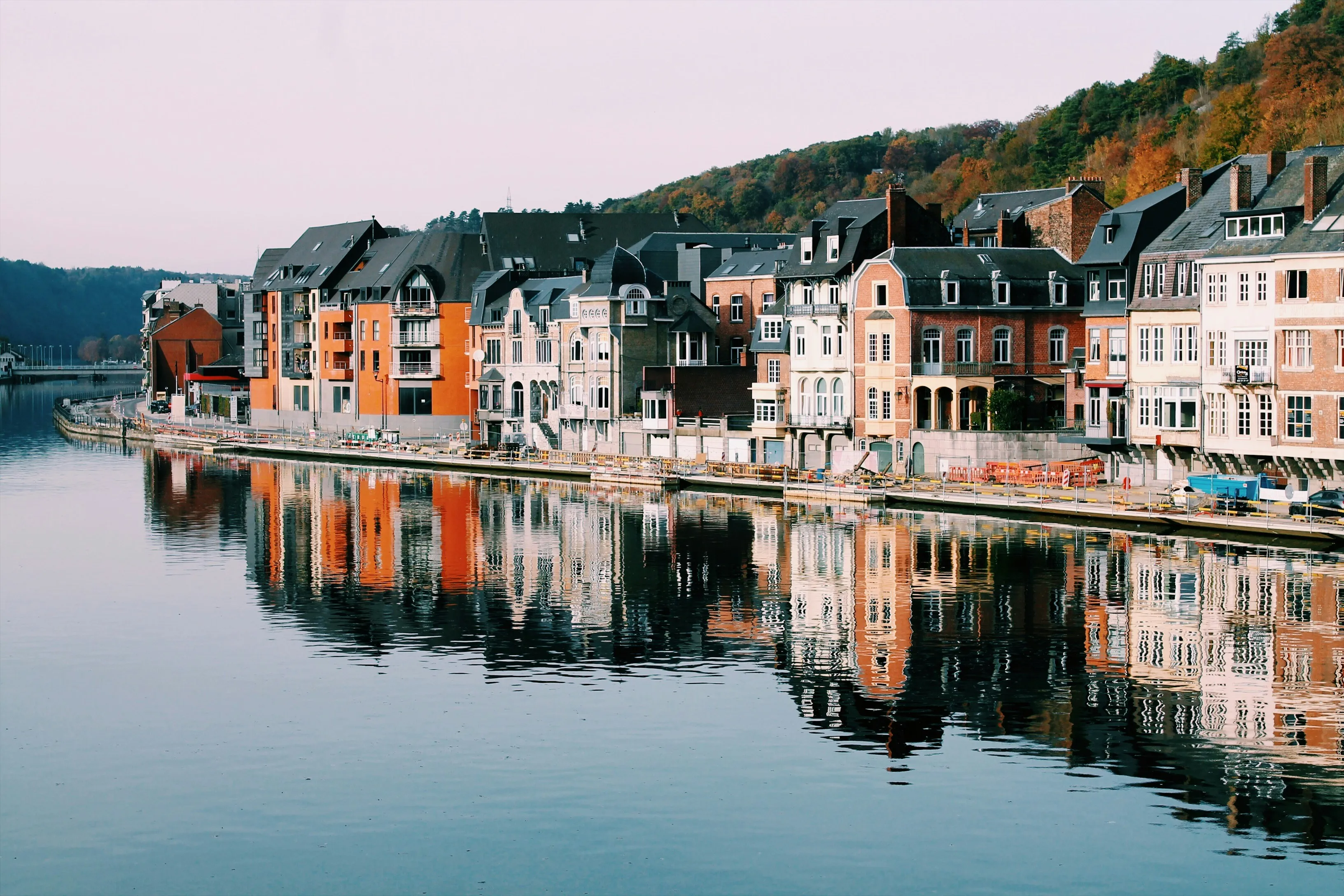
Belgium
Enjoy charming medieval cities, idyllic canals, and exquisite gastronomy in the heart of Europe, combining living history with modern art and culture.
Quick Facts
- Capital
- Brussels
- Language
- Dutch
- French, German
- Currency
- Euro (EUR)
- Best time to visit
- From May to September for the weather or December for the markets.
- Budget per day
- $70 - $180 per day
- Climate
- Temperate maritime climate with cool summers and mild winters, characterized by frequent rainfall throughout the year.
- Connectivity
- good
- Very easy to obtain both in physical stores and in eSIM format.
- Electricity
- Type C / E (230V)
- Local transport
- good
- Card usage
- widespread
- Tipping
- optional
🌎 Introduction
Belgium unfolds in the heart of Europe as a mosaic of contrasts perceived through the changing seasons and the physiognomy of its streets. In this corner of the continent, the landscape varies gently from the northern plains to the forested hills of the south, creating a setting where history is read on brick facades and in the canals that cross urban centers. Daily life flows with its own pause, marked by the sound of carillons in the main squares and the constant rhythm of bicycles on the cobblestones.
The country’s identity is built through a rich cultural coexistence and traditions that remain alive in its popular festivities and its recognized respect for heritage. The aroma of artisanal chocolate and the cozy atmosphere of its historic taverns are part of a simple daily life, where gastronomy and contemporary design find their place alongside the artistic legacy of past centuries. It is a territory that invites you to travel calmly, appreciating how the light of an often-changing sky transforms the atmosphere of its cities and fields, revealing a balanced personality full of nuances.
🛡️ General safety
Belgium is generally considered a very safe country for tourism. Its security level is at a high standard, similar to that of its Western European neighbors. The country offers a stable and quiet environment where travelers can move with confidence through both its historic cities and rural areas.
Although the perception of safety is high, it is important to remember that, as in any popular destination, there are certain basic precautions that should be taken. The atmosphere is welcoming and the infrastructure is designed to facilitate a stay without shocks, allowing the visitor to focus on enjoying its cultural and gastronomic richness.
Crime and common risks
Crime affecting tourists is usually non-violent. The most reported incidents are related to opportunistic theft in crowded areas.
- Pickpocketing and petty theft: This is the most common risk, especially at main train stations and monumental areas. Criminals often act in small groups looking for distractions.
- Minor scams: Occasionally, people may offer unsolicited help with luggage or buying transport tickets to later ask for money or take advantage of an oversight to steal belongings.
- Theft from vehicles: If traveling by car, it is essential not to leave valuables in sight, even if the vehicle is parked in a guarded parking lot.
- Transit zones: The stations of Brussels-South (Midi), Brussels-Central, and Brussels-North require special vigilance of belongings, especially during crowded times.
Safety in cities and tourist areas
The urban centers of cities like Bruges, Ghent, and Antwerp are extremely safe and can be explored on foot at any time of the day normally. In Brussels, the capital, the situation is similar, although being a large cosmopolitan city, it is advisable to apply common sense.
- Use of public transport: The metro, trams, and buses are safe. It is recommended to wear backpacks on the front during very busy trips.
- Tourist neighborhoods: Areas like the Grand Place in Brussels or the historic center of Antwerp have a discreet but constant police presence that guarantees the peace of mind of visitors.
- Nighttime recommendations: Although walking at night is safe, it is recommended to avoid poorly lit areas or solitary parks on the outskirts of large cities after dark.
Safety in transport
The Belgian transport system is one of the most efficient in Europe, highlighting its extensive railway network that connects the entire country safely.
- Driving: In Belgium, you drive on the right. Roads are in excellent condition, although it is important to pay attention to “priority to the right” signs at urban intersections, a very common rule.
- Taxis and private transport: Official taxis are safe and have meters. Internationally recognized ridesharing applications also operate under strict regulations.
- Cycling: In cities like Antwerp or Ghent, the bicycle is the king of transport. As a tourist, it is vital to respect bike lanes to avoid accidents with local cyclists, who often travel at high speeds.
Natural and climatic risks
Belgium is not in a high-risk zone for extreme natural disasters. The main factor to consider is the region’s changing weather.
- Floods: Occasionally, after periods of very heavy rain, some areas near rivers or canals may experience localized flooding, although they rarely affect main tourist centers.
- Seasonal weather: Winters can be cold and damp, with ice on sidewalks that can cause falls. In summer, occasional heatwaves can occur, although they are not the norm.
- Prevention: It is recommended to check local weather forecasts and dress in layers (“onion style”) to adapt to sudden changes in temperature and rain.
Local legislation and norms
Compliance with local rules guarantees a stay without legal problems. Belgian authorities are generally friendly but strict in law enforcement.
- Identification: It is mandatory to always carry a valid identity document (passport or national identity document, depending on origin). The police may request it at any time.
- Alcohol and tobacco consumption: Alcohol consumption in public spaces may be restricted in certain squares or specific streets of large cities. Smoking is prohibited in all enclosed public spaces, including bars and restaurants.
- Drugs: Despite proximity to other countries, the possession and consumption of illegal drugs are prohibited and can lead to severe penalties.
- Respect for the environment: Damaging urban furniture or historic monuments carries considerable financial fines.
Safety for specific groups
- Solo female travelers: Belgium is a very safe destination for women traveling alone. The same precautions apply as in any European country and there are no specific restrictions or dress codes.
- LGTBIQ+ travelers: The country is a pioneer in civil rights and is extremely tolerant. Public displays of affection are accepted normally and there are neighborhoods with a very active and safe leisure offer for this group.
- Families and seniors: Cities are well adapted, with wheelchair and stroller access in most public places, facilitating a safe and comfortable trip for all ages.
Emergencies and assistance
In case of an incident, Belgium has highly professionalized and fast emergency services.
- Main emergency number: 112 is the single number for all types of emergencies (ambulance, fire, and police) and is free.
- Police: There is a specific number for the police, 101, although for immediate emergencies 112 is equally valid.
- Medical assistance: The healthcare system is excellent. It is recommended to travel with adequate medical insurance or the European Health Insurance Card if entitled to it.
- Reporting: In case of theft of belongings, you should go to the nearest police station to make a report (“déclaration de vol”), a document necessary for any subsequent insurance claim or to process lost travel documents.
Tip: Always keep your belongings in sight at Brussels train stations and never accept help from strangers to handle ATMs or ticket machines.
📝 Entry requirements
Access to the territory of Belgium for tourist purposes generally requires the presentation of a valid passport with a validity usually of at least three to six months beyond the intended date of departure. Depending on the traveler’s origin, there is a possibility that a prior visa is not required for short-term stays, allowing a maximum stay that usually does not exceed 90 days within a six-month period.
It is common for authorities at border control points, such as airports or international train terminals, to request supplementary documentation justifying the reason for the trip. Among these documents, it is usual to present a return ticket or continuation ticket to another destination, as well as proof of accommodation and accreditation of possessing sufficient economic funds to cover expenses during the planned stay.
Regarding customs regulations, controls are applied to the entry of certain personal use items. It is advisable to consult the limitations on the quantity of tobacco and alcohol, as well as to avoid bringing in fresh food products that may be restricted. For those traveling with medication, it is convenient to carry the original medical prescription or a report justifying its personal use to avoid delays at controls.
From a health point of view, specific vaccines are not usually required to enter the country, although it is advisable to have the vaccination schedule up to date. Having travel insurance with broad coverage is a suggested practice, as it allows for facing any medical eventuality with greater peace of mind during the journey through Belgian cities and regions.
Below are the fundamental points to review before starting the trip:
- Travel document: Valid passport with the minimum validity usually required by authorities.
- Length of stay: General limit of three months for activities related to tourism.
- Justification of resources: Ability to demonstrate financial solvency for the period of stay.
- Departure logistics: Possession of a transport ticket confirming departure from the territory.
- Luggage regulations: Compliance with rules on controlled substances, prescription drugs, and valuables.
- Healthcare: Recommendation to have a medical insurance policy with international validity.
🏥 Basic health considerations
Belgium has one of the most advanced healthcare systems in Europe, so you will feel very safe during your stay. You will find a network of top-level public and private hospitals and health centers. As a tourist, you will be able to access medical care without problems, although you should keep in mind that the cost of services can be high if you do not have the proper documentation. The medical staff is very well prepared and, in addition to the official languages such as French or Dutch, the vast majority are fluent in English, which will make it much easier for you to explain any discomfort you have.
Taking out travel medical insurance is not a mandatory requirement to enter the country, but it is highly recommended to avoid unforeseen expenses. You should look for a policy that includes broad coverage such as hospitalization, surgical interventions, and medical repatriation. If you are a citizen of the European Union, you can use your European Health Insurance Card, but remember that the Belgian system often works through co-payments or reimbursements, so private insurance will save you procedures and additional costs.
Regarding vaccines, there are none mandatory for traveling to this destination. The most important thing is that you have your regular vaccination schedule up to date, as you will not be exposed to exotic diseases or unusual biological risks. Belgium is a very safe country from an epidemiological point of view, so you will not have to go through international vaccination clinics before your departure.
If you travel with personal medication, it is advisable to carry it in its original packaging and always accompanied by a medical prescription or a certificate signed by your doctor, preferably translated into English. This is especially important if you need specific or chronic drugs. In local pharmacies, which you will recognize by a bright green cross, you can buy basic products, but you will realize that for almost any specialized medication they will ask for a prescription issued by a registered doctor.
Health risks due to environmental factors are minimal. Being a country with an oceanic climate, the main factor to consider is the humidity and cold during the winter months, so it is convenient to be well prepared to avoid colds. If your plan includes hiking in wooded areas such as the Ardennes in spring or summer, you should pay attention to ticks, which may be present in tall vegetation. Otherwise, you will not find risks from altitude or other relevant climatic hazards.
You can drink tap water with total peace of mind in any Belgian city, as it is potable and of excellent quality. Regarding food, hygiene levels in the hospitality industry are very strict. You can try their famous mussels, fries, or waffles at street stalls and restaurants with the security that rigorous health protocols are met. It is not necessary to take special precautions with raw food or fruits.
If you find yourself in a medical emergency situation, the phone number you should dial is 112. It is the free and universal emergency number that works throughout the country. The ambulance service is efficient and will transfer you to the nearest hospital that has the necessary equipment to treat you.
As final tips, we suggest always carrying a physical or digital copy of your insurance and the assistance contact. If you are going to walk a lot through historic centers, which usually have cobblestone streets, wear comfortable footwear to avoid minor injuries or sprains. It is also a good idea to carry a small first-aid kit with basic items like blister pads or common painkillers so that nothing interrupts your visits.
🚌 Transport within the country
Moving around Belgium is simple thanks to a very efficient public transport network that connects much of the territory. The train is the main medium used by travelers to move between cities, as distances are short and main stations are usually located in the center of urban hubs. For travel within cities like Brussels, Ghent, or Antwerp, the use of the tram and bus is common, while the capital also has a metro network that facilitates rapid movement through its different districts.
Visitors usually find it easy to orient themselves, given that signage at stations and stops is clear and ticket purchase systems are intuitive. Although the country is multilingual, indications at points of high tourist influx are usually easy for the international traveler to understand. The punctuality and comfort of the carriages and transport vehicles are aspects that contribute to an organized and reliable travel experience.
In large cities, transport is frequent and allows for doing without a private vehicle. However, in more rural or natural areas, such as the Ardennes region, the frequency of public transport is usually lower, so a rental car becomes an option to consider for exploring these areas with greater freedom. On the other hand, taxis and other chauffeured transport services are commonly present in urban areas, train stations, and airports, offering a direct alternative for specific journeys.
The transport network is designed so that the traveler can navigate much of the country fluidly. In addition, the integration of different media allows for easily combining train or bus trips with bicycle routes, a very common practice because the terrain is predominantly flat and infrastructures are well adapted for this purpose.
“Tip”: It is recommended to pay attention to the names of cities on information panels, as they may appear written in French or Dutch depending on the region where the station is located.
🤵 Culture and etiquette
Belgian society is characterized by a coexistence based on respect for privacy and courtesy in daily dealings. When starting an interaction, it is common to use a formal greeting accompanied by a brief and firm handshake, maintaining eye contact. In more familiar contexts, people usually greet each other with a single kiss on the cheek, although for the international visitor, maintaining a prudent personal distance and waiting for the interlocutor to take the initiative is always an appropriate option. The use of basic courtesy formulas in the local language of the region is positively valued, whether Dutch in Flanders, French in Wallonia, or German in the eastern zone, which demonstrates a genuine interest in the country’s plurilingual reality.
In public spaces and means of transport, a moderate tone of voice is usually maintained to preserve the tranquility of the environment. Discretion is a valued trait, so excessively noisy or flashy behaviors are not common in urban life. On the other hand, punctuality is considered a fundamental sign of consideration for others’ time. Arriving at the agreed time, both in professional appointments and social encounters or reservations in establishments, is the expected norm and allows activities to develop with the fluidity and organization that characterize routine in Belgian cities.
Gastronomic culture holds a central place and meals are usually moments to enjoy without haste. In restaurants, prices include service, but it is a frequent practice to leave a small rounding up or an additional tip if the service has been satisfactory, although there is no strict obligation in this regard. When invited to a private home, it is considered a courtesy to bring a small gift, such as flowers or quality chocolates. During dinner, it is customary to wait for the hosts to start the meal and it is valued to maintain a relaxed behavior at the table, following the pace of the other diners.
When visiting places of worship, historic monuments, or memorial spaces, it is essential to maintain a solemn attitude and follow local instructions regarding the use of cameras or required attire. Due to the country’s complex administrative and cultural structure, it is advisable to treat issues related to internal politics or linguistic divisions with prudence and sensitivity in conversations with strangers. Observing the behavior of residents and adapting to the calm of the environment will facilitate a natural integration, allowing you to appreciate the hospitality and cultural diversity of the region from a perspective of mutual respect.
“Tip”: It is essential to identify the linguistic region you are in to use the appropriate greeting in the local language, avoiding the assumption that only one language is used by the entire population of the country.
🍛 Typical gastronomy
The gastronomy of Belgium stands out for being a balanced mix between the heartiness of northern European cuisines and the technical refinement of French cuisine. Although internationally associated with specific products, the Belgian culinary tradition is rich in slow-cooked stews, products from the North Sea, and a variety of winter vegetables, such as Brussels sprouts or endives. The use of butter and cream is common to provide texture and depth to its traditional dishes.
Fries occupy a central place in daily culture. More than just a side dish, they are considered a national specialty made following a double-frying process to achieve a crispy exterior and a tender interior. It is common to find them in both fine dining restaurants and the popular fritkots or street stalls, where they are served accompanied by a wide variety of sauces.
Regarding social customs, meal times are usually regular: lunch takes place between 12:00 and 14:00, while dinner is usually earlier than in other countries, usually starting from 18:30 or 19:00. In catering establishments, service is usually professional and unhurried, encouraging the meal to be a moment of relaxation.
Beer is not only the most common drink but a protected cultural element. Each variety is usually served in its own type of glass designed to highlight its nuances. In addition, pastries and chocolate are part of daily life, with meticulous attention to detail and raw material quality, especially in the case of pralines and the different types of baked doughs consumed as snacks or breakfast.
| Dish | Description | Main ingredients | Where to try it | Tip |
|---|---|---|---|---|
| Moules-frites | Steamed mussels served with a portion of fries. | Mussels, celery, onion, butter, and white wine. | Coastal restaurants and bistros throughout the country. | It is customary to use a mussel shell as a pincer to eat the rest. |
| Carbonnade flamande | Beef stew that stands out for its sweet and sour taste. | Beef, dark Belgian beer, onion, thyme, and mustard. | Traditional taverns and estaminets in Flanders. | Usually served with fries or mashed potatoes to soak up the sauce. |
| Waterzooi | Creamy and comforting stew, typical of the Ghent area. | Chicken or fish, cream, egg yolk, carrot, and leek. | Regional cuisine restaurants in the Flanders region. | Ideal for cold weather days due to its silky texture. |
| Chicons au gratin | Endives wrapped in ham and covered with sauce and cheese. | Endives, cooked ham, béchamel sauce, and grated cheese. | Inns and home-cooking restaurants. | The taste is slightly bitter, which contrasts very well with the cheese gratin. |
| Gaufre de Liège | Dense and sweet waffle with sugar crystals inside. | Yeast dough, pearl sugar, and vanilla. | Street stalls and bakeries in any city. | It is recommended to eat it freshly made and without adding too many extra ingredients. |
📷 Areas and places to visit
Belgium is a country that stands out for its remarkable density of historic heritage and its geographical diversity, concentrated in a territory that is easy to travel. The capital, Brussels, acts as the cultural and administrative epicenter, where modern institutional structures coexist with buildings of great architectural value. The most representative meeting point in the city is the Grand Place, surrounded by the houses of the old guilds and the Gothic town hall. Walking through the center allows you to discover world-renowned museums, such as the Royal Museums of Fine Arts or the Magritte Museum, as well as tour the streets dedicated to the ninth art or comics, which decorate numerous urban facades.
In the Flanders region, to the north, are some of the best-preserved medieval cities in Europe. Bruges is world-famous for its network of canals and its historic center, which invites you to observe Flemish architecture from its stone bridges. For its part, Ghent offers a vibrant atmosphere featuring the Castle of the Counts of Flanders and Saint Bavo’s Cathedral, which houses priceless works of art. Both cities are ideal for exploring on foot or by bicycle, enjoying their squares, their watchtowers or beffrois, and their quiet beguinages.
Continuing in the north, the city of Antwerp positions itself as a center of vanguard, fashion, and commerce. Its Central Station is considered one of the most beautiful in the world and serves as a gateway to a city that mixes the legacy of the painter Rubens with districts dedicated to contemporary design. Near the sea border, the Belgian coast features extensive fine sand beaches and promenades connecting various coastal towns, offering an open and relaxed landscape facing the North Sea.
Towards the south, the Wallonia region proposes a natural contrast with its rolling hills and lush forests. The Ardennes are the preferred destination for those looking for outdoor activities, such as hiking routes or kayak trips down its rivers. In this area, cities like Namur, with its imposing citadel, or Dinant, wedged between the Meuse River and a high rocky cliff, show a more picturesque and quiet side of the country. The numerous castles and abbeys scattered throughout the Walloon countryside add a historical and mystical component to the journey through this region.
Other cities like Liège contribute a different vision, with a mix of industrial heritage and architectural modernity, exemplified by its railway station designed by Santiago Calatrava. In all these areas, local life revolves around their main squares, where it is common to find traditional markets and folkloric celebrations. A visit to the different history museums and commemorative sites allows for a better understanding of the relevant role this territory has had in recent European history, thus completing a balanced vision between leisure, culture, and nature.
Tip: You cannot miss visiting the Grand Place in Brussels, the most emblematic place in the country.
✈️ Best season to travel
Belgium is a versatile destination that offers very different experiences depending on the time of year. Due to its temperate maritime climate, temperatures do not usually reach extremes, allowing you to explore its historic cities and natural landscapes comfortably throughout much of the calendar. The choice of the ideal time will depend on whether you prefer to enjoy long days and outdoor festivals or the cozy and cultural atmosphere that arises in the cooler months.
Spring and early autumn are transition periods highly valued by those looking for a balance between mild weather and moderate crowds at the main points of interest. On the other hand, winter transforms the main squares with its local traditions, while summer invites you to tour the canals and parks under a more persistent light, making the most of the sun hours for outdoor activities.
| Season | Months | Typical weather | What to expect | Tourist influx |
|---|---|---|---|---|
| Spring | Mar – May | Cool temperatures rising (8°C to 15°C). Variable rain. | Flowering in gardens and forests, longer days, and opening of terraces. | Medium ⭐⭐ |
| Summer | Jun – Aug | Mild and pleasant weather (18°C to 23°C). Sunny periods with occasional rain. | Music festivals, lively atmosphere in the canals, and lots of cultural activity. | High ⭐⭐⭐ |
| Autumn | Sep – Nov | Dropping temperatures and increased humidity. Moderate winds. | Ocher landscapes in the Ardennes, seasonal gastronomy, and less crowded museums. | Medium ⭐⭐ |
| Winter | Dec – Feb | Cold and cloudy skies (1°C to 6°C). Possibility of snow or frost. | Christmas markets in December, cozy atmosphere, and greater tranquility in cities. | Medium - Low ⭐ |
🗣️ Basic vocabulary
Belgium is a country with three official languages: Dutch (Flemish), French, and, to a lesser extent, German. Although in tourist areas and in Brussels it is common for English to be spoken, knowing some basic words in the language of the region you are visiting —Flanders to the north or Wallonia to the south— is very useful to facilitate communication in daily situations and show courtesy.
Below are some essential terms and phrases in French and Dutch that will help you get by in shops, restaurants, and transport during your stay:
- Bonjour / Goedendag: Hello or good morning.
- Merci / Dank u: Thank you.
- S’il vous plaît / Alstublieft: Please.
- Excusez-moi / Excuseer me: Sorry or excuse me.
- Oui / Ja: Yes.
- Non / Nee: No.
- L’addition / De rekening: The bill (in a restaurant).
- Au revoir / Tot ziens: Goodbye.