


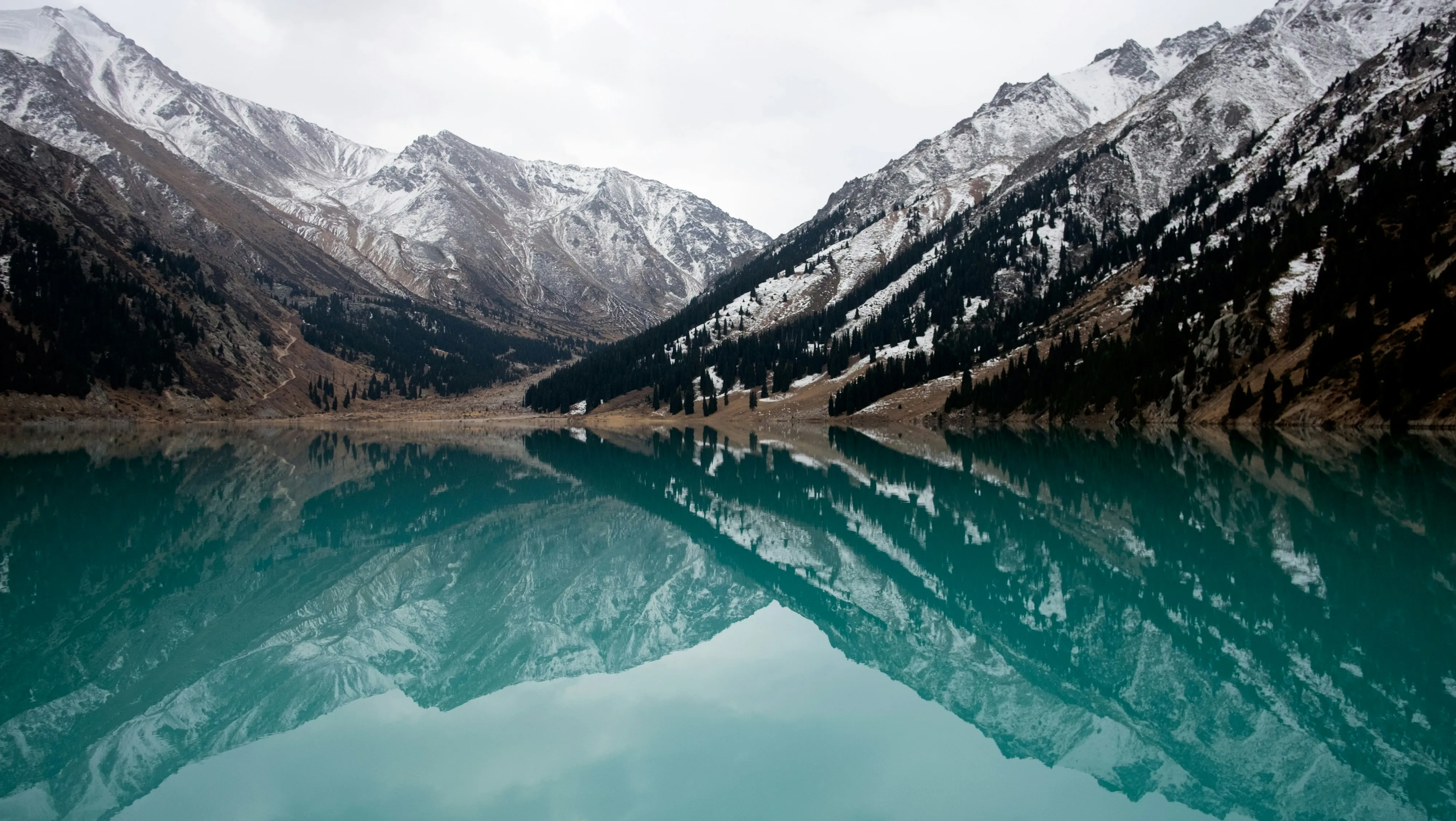
Kazakhstan
Discover the immensity of the Central Asian steppes, modern futuristic cities, and pristine natural landscapes that combine nomadic tradition with surprising and welcoming urban development.
Quick Facts
- Capital
- Astana
- Language
- Kazakh
- Russian
- Currency
- Kazakhstani Tenge (KZT)
- Best time to visit
- From May to June and from September to October to avoid the extreme temperatures of winter and summer.
- Budget per day
- $35 - $110 per day
- Climate
- Extreme continental climate with hot summers and very cold winters, presenting great seasonal thermal contrasts throughout the territory.
- Connectivity
- medium
- It is very easy to purchase SIM cards or eSIMs at airports and phone centers in the cities.
- Electricity
- Type C/F (230V)
- Local transport
- acceptable
- Card usage
- acceptable
- Tipping
- optional
🌎 Introduction
Kazakhstan stretches across the heart of Eurasia, an immense territory where the steppe seems endless and snowy peaks watch the horizon from a distance. It is a place where the legacy of ancient trade routes blends with contemporary urban life, creating a space of marked contrasts. Here, the rhythm of the seasons profoundly transforms the landscape: from winters of silent snow to vibrant summers where families gather around a generous table to share hot tea or traditional meat dishes and freshly baked bread.
The country’s identity is closely linked to its nomadic roots and a hospitality that is perceived both in the bustling markets and in the tranquility of the highlands. The cities, with their bold architecture and tree-lined parks, coexist with centuries-old traditions, such as the sound of the dombra or respect for wild nature. It is a corner of the world that invites one to observe time differently, offering a calm atmosphere and a cultural diversity that reflects its historic position as a bridge between different peoples and customs.
🛡️ General Safety
Kazakhstan is generally considered a safe destination for international tourists. The country has made significant efforts to promote tourism and maintain a stable environment. Compared to other global destinations, the risk level is in the low to medium range, being comparable to that of many nations in Eastern Europe or Central Asia.
The traveler will find a mostly hospitable and modern society, especially in the large urban centers. Although it is not a country with high rates of violent crime against foreigners, as in any destination of great size, it is necessary to apply common sense and follow certain prevention guidelines to avoid minor incidents.
Crime and Common Risks
Most visits to Kazakhstan pass without incident, although there are minor risks that are worth knowing to be prepared:
- Thefts and pickpocketing: These are the most frequent crimes, especially in crowded places such as outdoor markets (bazaars), train stations, and public transport. It is recommended to always watch belongings and not show items of great value ostentatiously.
- Minor scams: Attempts at overcharging in unofficial taxis or in some commercial establishments can occur if the tourist is not attentive to standard prices.
- Safety at night: Although the cities are safe, it is advised to avoid walking alone in peripheral or poorly lit areas during the early hours of the morning.
- Corruption: Although it has decreased considerably in recent years, the traveler might encounter attempts to solicit bribes by minor officials. In these cases, it is recommended to remain calm, be respectful, and request official identification or the reason for the fine in writing.
Safety in Cities and Tourist Areas
The main cities, such as Astana (the capital) and Almaty, have a strong police presence and video surveillance systems in urban centers.
- Urban centers: Central areas are very safe and pleasant for walking. They are well-lit and usually have activity until late.
- Peripheral neighborhoods: Additional caution is recommended in industrial areas or residential neighborhoods far from the center in cities like Shymkent or Karaganda, where infrastructure may be more deficient.
- Public transport: The Almaty metro is modern and extremely safe. On urban buses, the main risk is pickpocketing during rush hours.
- Practical recommendation: It is advisable to always carry a copy of your passport and visa (if necessary) while walking through the city, leaving the originals in safe keeping at the accommodation.
Safety in Transport
Transport in Kazakhstan is varied and generally efficient, but presents particularities that the traveler must manage:
- Driving: In Kazakhstan, people drive on the right. The condition of the main roads is acceptable, but in rural areas, significant potholes or unpaved stretches may be found.
- Taxis: It is recommended to avoid “pirate” or informal taxis that stop on the street. It is much safer and cheaper to use transport apps (such as Yandex Go) that allow you to know the price and route in advance.
- Trains: This is a very popular and safe means of transport for long distances. On overnight journeys, it is recommended to secure the compartment door from the inside.
- Car rental: If you decide to drive, keep in mind that the local driving style can be aggressive and that traffic laws are strict, especially regarding alcohol consumption (zero tolerance).
Natural and Climatic Risks
Given the enormous size of the country, natural risks vary by region and time of year:
- Extreme climate: Kazakhstan has a very marked continental climate. In winter (especially in the north and in Astana), temperatures can drop below -30°C, posing a risk of hypothermia without proper equipment. In summer, the heat can exceed 40°C in southern desert areas.
- Seismic activity: The city of Almaty and its surroundings are in a seismic risk zone. Although major earthquakes are uncommon, there are construction and safety protocols worth knowing.
- Avalanches and floods: In the mountainous areas near Almaty, there is a risk of avalanches during winter and spring, as well as flash floods or mudflows after heavy rains. It is recommended to always follow the instructions of local authorities before hiking.
Legislation and Local Norms
It is essential to respect Kazakh laws to avoid misunderstandings or serious legal problems:
- Documentation: It is mandatory to carry identification. The police have the right to request it at any time.
- Photography: It is strictly forbidden to photograph military facilities, government buildings, airports, and border posts. Doing so can lead to fines or confiscation of equipment.
- Drugs: Legislation is extremely severe regarding the possession and consumption of narcotic substances, with long-term prison sentences even for minimal amounts.
- Registration: Depending on your nationality and the duration of your stay, you may need to register your arrival with migration authorities. Generally, this is handled by hotels, but it is worth verifying upon entering the country.
Safety for Specific Groups
- Female travelers: Kazakhstan is a safe destination for women traveling alone. However, it is recommended to dress modestly in rural or less touristy areas to avoid unwanted attention, and always use official taxi apps for night transfers.
- LGTBIQ+ travelers: Although homosexuality is legal, Kazakh society is conservative. Public displays of affection between people of the same sex are not common and can generate uncomfortable or hostile reactions. It is recommended to maintain discretion outside of private environments or very specific venues in large cities.
- Children and elderly: The country is very welcoming to families. However, it must be taken into account that distances are enormous and infrastructure for people with reduced mobility may be limited outside the modern buildings of Astana and Almaty.
Emergencies and Assistance
In case of needing urgent help, these are the key points:
- Emergency numbers:
- 112: General emergencies (equivalent to 911 or European 112).
- 101: Fire department.
- 102: Police.
- 103: Ambulance and medical emergencies.
- Medical care: In large cities, there are private clinics with international standards where it is likely to find staff who speak English. In rural areas, assistance can be much more basic.
- Travel insurance: It is essential to have travel insurance that covers medical expenses and, very importantly, medical repatriation, given that evacuation costs from remote areas can be very high.
Tip: Always download an offline map app and an official transport app (like Yandex) before arriving in the country; this will allow you to move with autonomy and safety without depending on intermediaries.
📝 Country Entry Requirements
To organize a trip to Kazakhstan, it is essential to have a valid passport that remains valid for at least six months from the moment of entry. Authorities usually check that the document does not have significant damage and that it has free pages for the corresponding stamps. This is the primary identity document and must accompany the traveler at all times during their stay in the national territory.
Regarding leisure stays, many visitors benefit from a regime that allows entry for tourism without a visa for a specific period of time, which generally tends to be up to thirty days. If the intention is to remain in the country for a longer period or if the traveler’s nationality is not included in the general exemptions, it is recommended to manage the corresponding permit in advance. In certain cases, it may be necessary to register with local authorities if the stay extends longer than initially planned.
During passage through border control points or airports, personnel may request the presentation of an exit ticket from the country or a reservation confirming the continuation of the trip to another destination. Likewise, it may be required to demonstrate possession of sufficient funds to cover the expenses planned during the visit. Entry procedures are usually quick, although it is advisable to maintain a cooperative attitude with the agents in charge of migration supervision.
Passing through customs involves complying with certain limitations on the transport of personal items and goods. It is recommended to pay special attention to regulations on the entry of medicines, especially those containing substances subject to special control, for which it is usually necessary to present a medical prescription. Regarding food or animal-origin products, restrictions are usually aimed at avoiding health risks, typically allowing only quantities for personal consumption.
From a health point of view, there are usually no required vaccines generally for international travelers, unless coming from regions with specific epidemiological risks. Nevertheless, it is considered good practice to have travel insurance with international coverage and to be up to date with the usual immunizations recommended by health authorities for any trip abroad.
- Primary document: Passport with minimum validity of six months.
- Stay permit: Generally exempt from visa for short-term tourism for stays up to thirty days.
- Proof of exit: It is recommended to have a return ticket or onward travel ticket.
- Proof of means: Possibility of requiring proof of financial solvency.
- Customs control: Declaration of cash currency if it exceeds permitted limits and control of specific medications.
- Health recommendations: Absence of mandatory vaccines, although it is advisable to have medical insurance.
🏥 Basic Health Considerations
When preparing your trip to Kazakhstan, it is important that you know how its health network works so that you can move with total peace of mind. In large cities like Almaty or Astana, you will find private clinics of a fairly acceptable level, with modern facilities and adequate technology. However, you must keep in mind that in rural or more remote areas, assistance can be much more limited and basic. Medical staff usually speak Kazakh or Russian, and although in private centers in the capitals you might find someone who speaks English, it is not common, so carrying a translation app on your mobile will be very helpful.
Regarding access to healthcare, as a tourist you will mostly have to resort to private healthcare. Costs for foreigners can be high if you do not have backing, so any simple consultation or emergency treatment would involve a direct out-of-pocket expense. For this reason, although it is not a legal requirement to cross the border, contracting travel medical insurance is fundamental. Make sure your policy includes broad coverage for hospitalization, medical transfers and, above all, medical repatriation, since transfers from distant areas can be extremely expensive.
As for vaccines, you will not need any mandatory vaccines to enter the country. The most sensible thing is to be up to date with your official vaccination schedule, including tetanus, diphtheria, and hepatitis A and B. If you plan to go hiking or camping in wooded areas during the spring or summer, you might consider the vaccine against tick-borne encephalitis, but this is something you should consult beforehand at an international vaccination center according to your itinerary.
If you need to travel with personal medication, I recommend you be cautious. Kazakhstan has very strict laws regarding the entry of certain substances, especially those containing codeine or psychotropic components that are common in other countries. You should always carry your medications in their original containers and accompanied by a medical prescription preferably translated into English or Russian, specifying the dose and the need for treatment. You will find that pharmacies in the cities are well-stocked, but the commercial names of the drugs will be different from those you know.
Regarding environmental risks, the country’s climate is very extreme. In winter you could face intense cold that requires proper technical clothing to avoid frostbite, while in summer the heat can be stifling, especially in desert areas. If you are going to visit the southern mountains, such as the Tian Shan range, keep in mind the risk of altitude sickness if you ascend too quickly. Otherwise, there are no tropical diseases you should worry about, as sanitation levels have improved a lot in recent years.
Regarding the consumption of water and food, I suggest you always drink bottled water or filtered water, as tap water in many regions does not have sufficient quality for direct consumption and could cause stomach problems. As for food, you can try local dishes in markets and street stalls safely, provided you see that the place maintains a basic hygiene level and that food is cooked to order. Kazakh food is usually very nutritious and is based heavily on meat and dairy, so if you have a sensitive stomach, you should introduce it gradually.
For any medical emergency situation, the phone number you should dial is 103. Ambulances operate regularly in urban centers, although response time can vary according to traffic. If you are in a major city, the fastest way is usually to ask the staff at your accommodation to contact a private clinic with emergency services, as the care will be much more agile for an international visitor.
As final tips for your stay, try to always carry a small basic first-aid kit with pain relievers, disinfectant, and something for digestive problems. Don’t forget to protect yourself from the sun if you travel in summer and, in the face of any persistent symptom, do not hesitate to see a medical professional as soon as possible. Following these guidelines and using common sense, you will enjoy the immensity of the Kazakh landscapes without major setbacks.
🚌 Transport Within the Country
Moving around a country of Kazakhstan’s dimensions requires good planning, as distances between main urban centers are considerable. The train is the most traditional and used means of transport for long journeys, offering a network that efficiently connects the most important cities. For those who need to optimize their time, the plane is a common alternative, with numerous internal flights covering the most extensive routes quickly.
In large cities, public transport is well-organized and easy for visitors to use. Almaty has a modern and functional metro network, while in other cities buses are the predominant option. Although signage and information may be primarily in local languages, ticketing systems have been modernized, facilitating access for international travelers.
There is a notable difference between transport in cities and in rural areas. While in urban centers the frequency is high and vehicles are modern, in more remote areas movement usually depends on minibuses or shared vans. In these areas, schedules may be less rigid and the condition of roads varies, which can make journeys slower.
The use of taxis and transport services managed through mobile applications is very widespread and is a very practical option for tourists. These services offer an easy way to move without worrying about the language barrier, allowing door-to-door travel safely. It is a common resource for both urban trips and reaching points of interest on the outskirts of cities.
The general feeling of transport in the country is one of reliability and punctuality, especially in rail and air services. Vehicles intended for passenger transport usually offer an adequate level of comfort for long trips, allowing the tourist to enjoy the landscape and the journey peacefully while traversing the territory.
“Tip”: It is recommended to book train tickets for long-distance journeys several days in advance, as availability usually runs out quickly on main routes.
🤵 Culture and Etiquette
Kazakh society is distinguished by a deep tradition of hospitality, where treatment of visitors is usually extremely attentive and cordial. In terms of greetings, it is common for men to greet each other with a handshake, often using both hands to show greater consideration and warmth. In interactions between people of different genders or in very formal contexts, a verbal greeting or a slight nod of the head is usual, allowing the local person to take the initiative if they prefer closer physical contact. Maintaining a moderate tone of voice in public spaces and avoiding excessively effusive behavior is considered a display of civility and prudence.
Respect for hierarchy and elders is a fundamental pillar of daily life. It is common to give up a seat, allow older people to pass through a door first, or wait for elders to start eating before doing so oneself. When interacting with residents, a patient and calm attitude usually greatly facilitates communication. Regarding physical contact, it is usually discreet in public spaces, with more evident displays of affection reserved for private circles of family or close friends.
In the context of meals and visits to private homes, there are deeply rooted habits that the traveler should observe to behave naturally. It is mandatory to remove shoes when entering a home, a rule of courtesy that extends to almost all private spaces. If invited to share a table, it is common for tea to be served constantly; in some regions, filling the cup only halfway is a sign that the host wishes to continue attending to the guest. Bread has a very important symbolic character; it is recommended not to waste it, avoid placing it face down on the table, and always treat it with special consideration, as it represents prosperity and sustenance.
When visiting places of worship, such as mosques or Orthodox churches, it is fundamental to act with total discretion. Visitors are expected to dress modestly, covering shoulders and knees. In the case of women, it is usually necessary to cover hair with a scarf when entering these venues. In the service sector, such as restaurants and cafes in urban areas, a tip is usually included in the bill as a service charge of between 10% and 15%, although rounding up the amount or leaving a small extra is a well-received gesture if the service was satisfactory.
“Tip”: When receiving or delivering any object, whether it is money, a business card, or a gift, it is a highly appreciated gesture of courtesy to use the right hand or both hands simultaneously to show respect and gratitude towards the other person.
🍛 Typical Gastronomy
The gastronomy of Kazakhstan is a direct reflection of its nomadic heritage and life on the steppes of Central Asia. Historically, the diet has been based on products that could be easily transported and preserved, giving a leading role to meat and fermented dairy products. Although modern cuisine has incorporated influences from neighboring countries, traditional slow-cooking methods and the integral use of ingredients remain the essence of its kitchens.
In Kazakh homes and restaurants, food is a profound social act linked to hospitality. The concept of Dastarkhan, which refers to the table spread for guests, symbolizes local generosity. It is common for meals to begin with a variety of breads and appetizers, followed by hearty dishes where lamb and horse meat are the most valued options for their flavor and texture. Flour doughs, whether boiled, fried, or baked, accompany almost every main preparation.
As for drinks, tea is the backbone of any gathering. It is consumed throughout the day, generally black and sometimes mixed with milk or cream. Also very characteristic are fermented dairy products such as kumis (mare’s milk) or shubat (camel’s milk), appreciated not only for their particular and slightly acidic flavor but also for their digestive properties. These drinks are often offered as a welcoming gesture to those visiting the country.
When eating out, hours in major cities are broad and similar to international standards. In more traditional establishments, diners may be invited to sit on carpets or cushions at low tables, although conventional tables are used in most urban venues. It is not necessary to follow rigid etiquette, but showing respect for bread, which is considered sacred and should never be placed face down, is a detail highly appreciated by local inhabitants.
| Dish | Description | Main Ingredients | Where to try it | Tip |
|---|---|---|---|---|
| Beshbarmak | Considered the national dish, its name means “five fingers” because it is traditionally eaten with the hands. | Lamb or horse meat, thin pasta sheets, and broth with onion. | Traditional cuisine restaurants in Almaty or Astana. | Pour a little broth (shurpa) over the pasta so it doesn’t stick. |
| Kazy | Traditional handmade sausage, highly appreciated in celebrations. | Horse rib meat seasoned with pepper and garlic. | Local markets (bazaars) and festive banquets. | It is served sliced cold as an appetizer or side dish. |
| Baursak | Small pieces of fried dough, fluffy and lightly golden, present on every Kazakh table. | Flour, milk, yeast, and sugar (optional). | Food stalls, homes, and bakeries throughout the country. | It is the perfect accompaniment for hot tea or to spread with jam. |
| Manti | Large thin-dough dumplings steamed, of oriental influence. | Minced meat (lamb or beef), onion, and spices. | Central Asian restaurants and stalls at train stations. | Try the pumpkin-filled version for a milder option. |
| Kuurdak | A traditional quick-prep stew that uses fresh cuts of meat. | Fried lamb meat with onions, fat, and usually potatoes. | Rural areas and restaurants specializing in grilled meats. | Order it freshly made to enjoy the crunchy texture of the meat. |
📷 Zones and Places to Visit
Kazakhstan presents itself to the traveler as a territory of profound contrasts, where the immensity of the steppe meets rugged mountain ranges and cities that seem designed for the future. The journey usually begins in Astana, the capital, an urban center that stands out for its avant-garde architecture and buildings with unique shapes that define its skyline. Walking through its wide avenues allows observing emblematic constructions like the Bayterek Tower, which offers a panoramic view of the surroundings, or the Khan Shatyr entertainment center, a structure that evokes traditional nomad tents but on a monumental scale. The city also houses relevant cultural centers, such as the National Museum of the Republic of Kazakhstan, where one can delve into the country’s history from antiquity to the modern era.
In the far south, Almaty offers a completely different atmosphere. It is the most populous city and the former administrative center, known for its lush parks and immediate proximity to the Trans-Ili Alatau mountains. In its historic center is the Ascension Cathedral, an imposing wooden structure from the Tsarist era that stands out for its color and for having been built without using metal nails. Almaty is also a gateway to local culture through the Green Bazaar, a traditional market where visitors can interact with local producers and discover regional gastronomy. A few kilometers from the center, the Medeu station and the Shymbulak area allow enjoying high mountain landscapes and outdoor activities throughout the year.
The heritage of the Silk Road is especially palpable in the city of Turkistan. This historical enclave is fundamental to understanding the country’s spiritual facet, as it houses the Mausoleum of Khoja Ahmed Yasawi, a masterpiece of medieval architecture with turquoise domes and detailed mosaics that is considered one of the most relevant monuments in Central Asia. Near this area are the ruins of Otrar, an ancient commercial city that allows imagining the strategic importance these settlements had on the routes connecting East and West centuries ago.
For those seeking contact with nature, the southeast of the country offers spots of singular beauty. Charyn Canyon is one of the most recognized destinations, with its sedimentary rock formations that have been shaped by erosion over millions of years, creating figures that resemble castles and towers. Very close by, the Kolsai Lakes National Park presents a landscape of crystal-clear waters surrounded by coniferous forests, ideal for hiking. Another place of great visual interest is Lake Kaindy, famous for the spruce trunks emerging from its waters after an earthquake flooded the area, creating a very particular visual effect.
The landscape diversity also extends to the west, near the Caspian Sea, where the city of Aktau serves as a base to explore deserts and less-traveled geological formations. In the center of the country, Lake Balkhash stands out for its geographical peculiarity, being divided into two parts: one of fresh water and another of salt water. This variety of environments, ranging from infinite steppes to snowy peaks, allows the visitor to alternate between contemporary urban life and the calm of rural spaces, where the population’s traditional link with the land and natural cycles is still perceived.
“Tip”: You cannot miss visiting the Mausoleum of Khoja Ahmed Yasawi, the most emblematic place in the country.
✈️ Best Season to Travel
Kazakhstan has a very marked continental climate, which generates significant temperature contrasts throughout the year. Generally, the most balanced times to visit the country are spring and autumn, when the weather is moderate and allows enjoying both natural landscapes and urban architecture without facing the thermal extremes of summer or winter.
The choice of the ideal moment will depend on the region and the purpose of the trip. While the summer months are favorable for exploring high mountain areas and alpine lakes, the colder months transform the landscape into a snow-covered setting, ideal for those seeking experiences related to winter sports and cultural life in indoor spaces.
| Season | Months | Typical Climate | What to Expect | Tourist Influx |
|---|---|---|---|---|
| Spring | Mar – May | Mild temperatures that gradually rise and moderate rains. | The awakening of the steppe, blooming of wild tulips, and equinox celebrations (Nauryz). | Medium ⭐⭐⭐ |
| Summer | Jun – Aug | Hot and dry, especially in the plains; cool weather in the mountains. | Hiking routes in the Tien Shan, camping by mountain lakes, and outdoor festivals. | High ⭐⭐⭐⭐ |
| Autumn | Sep – Nov | Progressive drop in temperatures and mostly clear skies. | Landscapes with golden tones in birch forests, local harvest, and optimal conditions for urban walks. | Medium ⭐⭐⭐ |
| Winter | Dic – Feb | Intense cold, presence of snow, and strong winds in northern areas. | Snowy landscapes, winter sports in mountain stations, and frozen lakes. | Low ⭐⭐ |
🗣️ Basic Vocabulary
Although the use of Russian is common in the cities of Kazakhstan, knowing some expressions in Kazakh, the state language, will be very helpful for moving around with ease. Learning a few basic greetings and polite phrases facilitates communication in daily situations, such as shopping in local markets or interacting with inhabitants in less touristy areas.
Showing interest in the local language is usually well-received and helps interactions be more fluid and natural. Here is a selection of practical words and phrases for your trip:
- Sälemetsiz be: Hello (polite form).
- Raqmet: Thank you.
- Iä: Yes.
- Joq: No.
- Keshiriñiz: Excuse me / Sorry.
- Bul qansha turady?: How much does this cost?
- As bolsyn: Enjoy your meal / Bon appétit.
- Saubolyñyz: Goodbye