


Vietnam
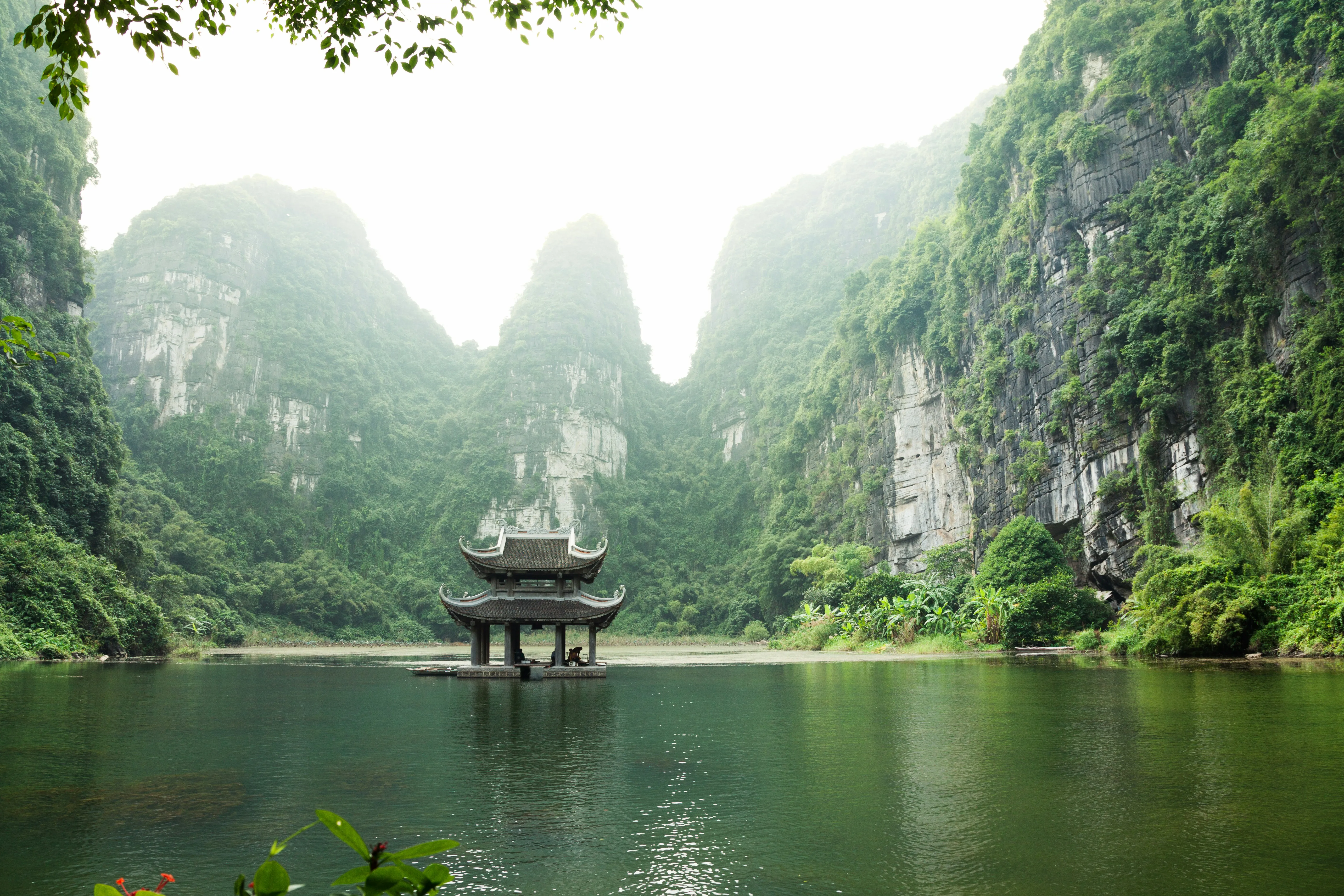
Vietnam captivates with its dreamlike landscapes, from Ha Long Bay to endless rice fields, offering a vibrant culture and exceptional gastronomy.
Quick Facts
- Capital
- Hanoi
- Language
- Vietnamese
- English, French, and Chinese
- Currency
- Vietnamese Dong (VND)
- Best time to visit
- From November to April for the north and from December to May for the south.
- Budget per day
- $25 - $80 per day
- Climate
- Tropical monsoon climate, with hot and humid summers, and cooler and drier winters in the north of the country.
- Connectivity
- good
- Very easy to get at airports and local shops, both physical and eSIM.
- Electricity
- Type A, C, and F (220V)
- Local transport
- acceptable
- Card usage
- more cash is used
- Tipping
- optional
🌎 Introduction
Vietnam stretches along the Southeast Asian coast as a strip of contrasts that change with the passing of the seasons. From the mists that often envelop the mountains in the north to the warm atmosphere of the rice fields in the south, the country offers a diverse geography where water is always the protagonist. Life flows at the rhythm of the monsoons and the tides in the deltas, marking a slow beat in rural areas that coexists with the constant energy of its urban centers.
The identity of this corner of the world is perceived in everyday details: the aroma of freshly brewed coffee on the sidewalks, the movement of conical hats in the fields, and the colors of the markets that wake up with the first light of day. Deeply rooted traditions, such as Lunar New Year celebrations, naturally coexist with a fast-evolving reality, giving rise to a setting where respect for history and openness toward the new find their own balance.
🛡️ General safety
Vietnam is generally considered a very safe destination for international travelers. The country stands out for its social and political stability, which allows tourism to develop in a peaceful environment.
- General safety level: The crime rate is low, especially regarding violent crimes against tourists.
- Context for the traveler: Although it is a safe country, as in any destination with a large influx of visitors, there are minor risks related to carelessness or lack of knowledge of local dynamics. Most visits pass without any incident.
- Comparison: Compared to other Southeast Asian destinations, Vietnam maintains a high safety rating, positioning itself as a suitable place for both experienced travelers and those visiting the region for the first time.
Crime and common risks
Most incidents affecting tourists are non-violent and are usually related to property.
- Bag snatching: This is the most common risk in large cities like Ho Chi Minh or Hanoi. It usually occurs using motorcycles, where drivers snatch bags, cameras, or mobile phones from pedestrians walking near the roadway.
- Petty theft: Pickpocketing in crowded markets, train stations, or night buses.
- Tourist scams: Scams related to currency exchange, “shoe shiners” who charge excessive prices for unsolicited services, or street vendors who demand money after a photograph are common.
- Infrequent risks: Serious crimes or assaults are extremely rare, although it is always recommended to avoid poorly lit or solitary areas during the night as a mere precaution.
Safety in cities and tourist areas
Vietnamese cities are vibrant and safe, although traffic chaos is the factor that most influences the visitor’s perception of safety.
- Urban centers: The tourist areas of Hanoi (Old Quarter) and Ho Chi Minh (District 1) have adequate surveillance, but they are also where pickpockets are most concentrated.
- Regional differences: Rural areas and smaller cities like Hoi An or Hue tend to be even safer and quieter than the large metropolises.
- Tips for moving around: When walking through the city, it is preferable to carry your backpack in front in crowded areas and avoid using your mobile phone near the edge of the sidewalk.
Transport safety
Transport is one of the points where travelers should pay more attention, not so much because of crime, but because of road safety.
- Driving rules: In Vietnam, people drive on the right. Traffic is extremely dense and, often, traffic rules are not strictly respected.
- Taxis and VTC: It is recommended to use official companies like Mai Linh or Vinasun, which use a taximeter. The use of mobile applications like Grab is highly recommended, as the price is fixed in advance.
- Rental vehicles: Renting motorcycles is not recommended unless you have previous experience, as traffic accidents are the main cause of problems for tourists in the country.
- Public transport: Long-distance trains and buses are safe, although on night buses (sleeper buses) it is advisable to watch personal belongings during stops.
Natural and climate risks
Vietnam is a country with an elongated geography, which implies different risks depending on the area and the time of year.
- Typhoons and tropical storms: These mainly affect the central and northern coast between the months of May and November. They can cause cancellations in cruises (such as in Ha Long Bay) and flights.
- Floods: These are common during the monsoon season, especially in the center of the country and in the Mekong Delta.
- Extreme heat: In the summer months, temperatures and humidity can be very high, posing a risk of dehydration or heatstroke for vulnerable people.
- Prevention: It is recommended to consult local weather forecasts and follow the instructions of the authorities in case of storm alerts.
Local legislation and norms
The legal system in Vietnam is very strict and ignorance of the law does not exempt one from compliance.
- Drugs: Vietnam has extremely severe laws against the trafficking and consumption of narcotics, which include the death penalty or life imprisonment.
- Behavior and dress: It is fundamental to dress decorously (shoulders and knees covered) when visiting temples or government buildings. Disrespecting national symbols or historical figures can lead to sanctions.
- Photography: It is forbidden to photograph military installations, government buildings, or demonstrations.
- Documentation: It is mandatory to carry a copy of your passport and a valid visa. Hotels usually require the original passport for registration with local authorities.
Safety for specific groups
- Women travelers: Vietnam is a very safe destination for women traveling alone. Respect toward women is the norm, although it is recommended to apply standard common-sense precautions during the night.
- LGTBIQ+ travelers: Homosexuality is not criminalized and there is growing tolerance in the cities. Nevertheless, Vietnam is a conservative society regarding public displays of affection, regardless of sexual orientation.
- Children and the elderly: It is a very welcoming country for families. The main challenge is the state of the sidewalks (hardly suitable for strollers) and the intense heat.
Emergencies and assistance
In case of an incident, communication can be a challenge due to the language barrier, although in tourist areas, staff usually speak some English.
- Emergency numbers:
- Police: 113
- Firefighters: 114
- Ambulances: 115
- Medical services: In large cities, there are international clinics with English-speaking staff and high quality standards. In rural areas, resources are more limited.
- Procedure: If you are a victim of theft, you must go to the nearest police station to process a police report, which is essential for any subsequent claim to travel insurance.
Tip: Always use the Grab app for your urban displacements; it is the safest way to avoid price scams and guarantees that the driver is identified by the platform.
📝 Entry requirements
To travel to Vietnam, the fundamental document that must be presented is the passport. It is recommended that this document has a minimum validity of six months from the date of arrival in the territory and that it has enough blank pages for entry and exit stamps. The physical state of the passport must be good, as immigration authorities might raise objections if the document shows significant damage or deteriorated pages.
Regarding stay permits, most international visitors require a travel authorization or visa to cross the borders. This procedure is usually managed electronically before starting the trip, although there are cases of visa exemption for certain short-term stays. The usual period of stay as a tourist tends to range between fifteen and ninety days, depending on the entry modality obtained and the regulations in force at the time of travel.
During the entry process at airports or land border posts, officials may request the presentation of an onward travel ticket, either back to the place of origin or to a third destination, as proof that you do not intend to exceed the permitted time. Although it is not a practice applied to all travelers, it is also possible that you may be required to prove possession of sufficient economic funds to cover the expected expenses during the tourist stay.
Regarding customs restrictions, the country maintains standard regulations on the transport of goods. It is necessary to declare any amount of foreign currency that exceeds the limits established by local authorities. Regarding personal objects, special caution should be taken with the introduction of professional-use electronic devices or drones, which sometimes require special permits. Personal-use medications are allowed, although it is advisable to carry the corresponding translated medical prescription to avoid misunderstandings during routine inspections.
From a health point of view, there is usually no requirement for mandatory vaccines for the entry of tourists, except in specific cases where the traveler comes from geographical areas with a risk of yellow fever transmission. However, it is highly recommended to have travel insurance with broad coverage and to be up to date with general health recommendations for Southeast Asian destinations. Health checks at entry points are usually quick and consist mainly of observation or, occasionally, temperature taking.
Below is a summary of the key points to consider when preparing for access to the country:
- Passport validity: It is advised that it be longer than six months.
- Stay authorization: Must be processed in advance through the corresponding official channels.
- Proof of departure: It is preferable to have a confirmed flight or transport reservation to another destination.
- Declaration of goods: Relevant for large sums of cash or professional recording equipment.
- Medications: It is recommended to carry them in their original packaging and with medical documentation justifying their use.
- Health coverage: Possessing private medical insurance facilitates any procedure in case of need for assistance.
🏥 Basic health considerations
On your trip to Vietnam, you will find a healthcare system that has improved greatly in recent years, although it presents notable differences depending on the area you are in. In large cities like Hanoi, Ho Chi Minh City, or Da Nang, you will have access to private hospitals of international standard with English-speaking staff and modern equipment. Conversely, in rural or remote areas, medical assistance is much more basic and limited. The cost of private healthcare for a tourist can be high, so any consultation or significant treatment will involve a considerable outlay if you do not have support.
Taking out travel medical insurance is absolutely essential to visit the country with peace of mind. Although it will not always be mandatory to cross the border, it is your only guarantee not to face astronomical bills. Your policy should include broad coverage for hospitalization, surgical interventions, and medical repatriation, in addition to covering possible accidents if you plan to rent a motorcycle, which is very common but also the main health risk for travelers in this destination.
Regarding vaccines, you will not find any that are mandatory to enter the country, unless you arrive from an area affected by yellow fever. The most important thing is that you have your routine vaccination schedule updated. However, it is highly recommended that you consult with an international medical center to assess protection against Hepatitis A and typhoid fever, as these are diseases that can be transmitted through water or food in variable hygiene conditions.
For your personal first-aid kit, you can carry your usual medication without problems, but it is fundamental that you keep it in its original packaging. If they are very specific medications or psychotropics, you should carry a prescription or medical certificate translated into English with you to avoid any inconvenience at customs. In city pharmacies, you will find basic products, but having your own analgesics, gastric protectors, and disinfectants will save you time during your route.
The most frequent health risks are related to the tropical climate. Intense heat and humidity can cause dehydration or fatigue if you do not rest enough. In certain regions and times of the year, mosquitoes can transmit diseases such as dengue, so the use of a good repellent is a task you should repeat several times a day. There are no serious altitude risks on the usual tourist routes, but you must pay close attention to road safety, as traffic is chaotic and road mishaps are frequent.
Regarding food hygiene, the golden rule is that you do not drink tap water and avoid even ice at very basic street stalls. You will find delicious food on almost every corner; to enjoy it without fear, look for stalls where you see many local customers and where the food is cooked to order and at high heat. Fruits that you peel yourself and hot dishes are always the safest option to avoid stomach problems that could ruin a couple of days of sightseeing.
In case of a serious medical emergency, the number you should dial is 115. You should be aware that dense city traffic can significantly slow down the arrival of a public ambulance. If you are in a large city, the most practical thing is usually to contact an international hospital directly, as many of them manage their own private ambulances and offer a much faster and more efficient response for foreigners.
As final tips for your stay to be perfect, remember to hydrate continuously with bottled water and use high-factor sunscreen even if the sky is overcast. Always carry the assistance telephone number of your insurance and the address of the nearest international hospital to your location. With these basic precautions, you can focus solely on enjoying the landscapes and culture you will find in every corner of the country.
🚌 Transport within the country
Moving around Vietnam offers a wide variety of options that adapt to different needs of time and comfort. The airplane is the fastest method to cover the long distances between the north, the center, and the south, connecting the main airports efficiently. For those who prefer to observe the landscape, the train runs along much of the coast, allowing for a more leisurely experience. Long-distance buses, especially models equipped with beds, are also a frequent alternative for night trips between provinces.
In urban areas, movement is intense and dynamic. Although some cities have begun to develop metro systems, road transport remains the main protagonist. Taxis and transport services requested through mobile applications are very common and easy to use, providing a simple way to move through urban centers. In rural or coastal areas, the use of ferries and small boats is common to access islands or navigate through delta areas.
Signage at stations and airports is usually available in English, which facilitates orientation for international visitors. Ticket purchases are usually made at ticket offices or through digital means, although in less touristy areas, communication may require a bit more patience. In general, transport is functional, although road travel times can be longer than expected due to dense traffic at city entrances and the state of some secondary roads.
The feeling of comfort varies according to the chosen medium. While domestic flights and higher-category trains offer a high standard of comfort, bus journeys depend on the type of vehicle and the route. Punctuality is usually respected in air and rail services, while road transport is more subject to daily traffic conditions, especially in large cities where vehicle density is very high.
Tip: Book your train or plane journeys in advance if you plan to travel during local festivities or high occupancy seasons to secure your seat.
🤵 Culture and etiquette
In Vietnam, social interaction is based on mutual respect and the preservation of collective harmony. When greeting, it is customary to perform a slight bow of the head, especially when dealing with older people or those in positions of authority, as a sign of deference. Physical contact in public is usually limited and discreet; therefore, it is advisable to avoid excessive gestures of affection or touching another person’s head, as this part of the body is considered sacred. Similarly, feet are perceived as the least noble part, so they should not point at people, religious images, or altars.
The use of a moderate tone of voice and a calm attitude are essential to move naturally. In situations of misunderstanding or disagreement, it is positively valued to maintain composure and avoid direct confrontations or public displays of anger. Punctuality is appreciated in formal contexts and organized appointments, although in everyday life and more informal settings, there is a greater flexibility that requires some patience from the visitor. When interacting, the use of both hands to give or receive objects, such as cards or money, is interpreted as a gesture of courtesy and mindfulness toward the interlocutor.
Table manners reflect a strong sense of community, as it is customary to share various dishes placed in the center. It is a detail of good manners to wait for the oldest person to start eating and to use chopsticks with skill, avoiding leaving them stuck vertically in the rice bowl, as this gesture is associated with funeral rituals. As for tipping, it is not a requirement nor part of the local tradition, although in urban areas and the service sector, it is accepted as a gesture of gratitude for exceptional attention.
Respect for traditions and family hierarchy is a fundamental pillar of society. When visiting temples, pagodas, or places of worship, it is essential to dress modestly, covering shoulders and knees, and to take off your shoes before entering if requested. These spaces require quiet and solemn behavior. Likewise, it is common to find small altars dedicated to ancestors in homes and businesses; maintaining a respectful attitude toward these elements is crucial to integrate properly into the country’s cultural environment.
Tip: To show a higher degree of courtesy in any everyday interaction, always give and receive objects or money using both hands simultaneously.
🍛 Typical gastronomy
Vietnamese cuisine stands out for its freshness and balance, based on the constant use of aromatic herbs, crunchy vegetables, and a measured contrast between textures. The essential ingredient that unifies much of its recipes is fish sauce (nuoc mam), which provides a deep and salty flavor to the dishes. Unlike other cuisines in the region, in Vietnam, harmony is sought between the five fundamental flavors: sweet, sour, bitter, spicy, and salty, preventing one from standing out excessively over the others. Rice is the fundamental pillar of the diet, present both as grain and in the form of noodles, rice paper, or steamed cakes.
Social life in the country largely revolves around food, especially at street stalls. It is common to see diners sitting on low stools at street level, enjoying quick and nutritious preparations. Eating routines start very early; breakfast is usually hearty, with hot noodle soups or local-influence sandwiches being common. Lunch and dinner usually consist of several dishes placed in the center of the table to share, always accompanied by an individual bowl of white rice.
Regarding etiquette, the use of chopsticks is the general rule, supported by a flat-bottomed spoon for broths and soups. When eating in a group, it is a sign of courtesy to offer the best pieces of food to the oldest people. It is important to remember that chopsticks should never be left stuck vertically in the rice bowl, as this gesture bears similarity to funeral rites. In simpler restaurants, it is common to find paper napkins or disposable chopsticks, and the atmosphere is usually bustling and friendly, without great formalities.
Regarding drinks, green tea is the most common option and is often served as a courtesy at tables. However, Vietnam has a deeply rooted coffee culture, standing out for its slow preparation through an individual metal filter. It is also very common to consume local beer, sometimes served with large ice cubes to combat the tropical climate. Meal times are early, so it is recommended not to delay dinner beyond eight in the evening, when many local establishments begin to close their kitchens.
| Dish | Description | Main ingredients | Where to try it | Tip |
|---|---|---|---|---|
| Pho | Rice noodle soup in an aromatic and transparent broth. | Beef or chicken, rice noodles, ginger, cinnamon, and fresh herbs. | Throughout the country, especially at breakfast stalls in Hanoi. | Add the herbs, the squeeze of lime, and the chili to taste just before eating it. |
| Banh Mi | A sandwich that combines baguette tradition with local ingredients. | Wheat bread, pâté, pickled carrot and radish, cilantro, and pork. | Street stalls and small bakeries in any city, very popular in Hoi An. | It is the ideal option for a quick and light lunch while exploring the city. |
| Bun Cha | Grilled pork served with noodles and vegetables. | Pork meatballs, pork belly, rice noodles (bun), and a sweet and sour sauce. | Specialized restaurants in the Hanoi region and the north. | Dip the noodles and herbs into the sauce bowl with meat before each bite. |
| Goi Cuon | Fresh rolls wrapped in rice paper, not fried. | Shrimp, pork, rice noodles, lettuce, mint, and rice paper. | Traditional cuisine restaurants and market stalls in the south of the country. | Always accompany them with the peanut sauce or hoisin sauce they usually include. |
| Cao Lau | A thick noodle dish exclusive to a specific region due to its preparation. | Rice noodles, roasted pork, bean sprouts, and crunchy croutons. | Exclusively in the city of Hoi An, in central Vietnam. | Enjoy it at the stalls located by the river for an authentic experience. |
📷 Areas and places to visit
Vietnam presents itself as a destination of contrasts where historical wealth and exuberant nature are intertwined from north to south. Starting the tour in the north, the capital, Hanoi, stands out as a city that preserves its traditional essence in the bustling Old Quarter. Here it is possible to walk through streets organized according to ancient guilds and visit cultural points such as the Temple of Literature, the country’s first university, or the Ho Chi Minh Mausoleum. Very close by, the Sapa region offers a landscape dominated by mountains and rice terraces sculpted into the slopes, where local communities maintain their ancestral customs, making it an ideal place for hiking.
Toward the northern coast lies one of the most representative spots in Southeast Asia, Ha Long Bay. This natural environment is characterized by thousands of karst formations and limestone islands emerging from emerald-colored waters. The tour of the area allows for exploring natural caves, visiting floating fishing villages, and observing the biodiversity of islands like Cat Ba. Moving inland, the province of Ninh Binh offers a similar landscape but on dry land, with rock formations surrounded by rivers and fields that can be explored in small traditional boats.
In the central area of Vietnam, imperial history takes center stage in the city of Hue. The former capital houses the Imperial City, a vast walled enclosure with palaces and temples reflecting the country’s dynastic past. Nearby, the coastal city of Hoi An stands out for its exceptionally preserved historic center, where Chinese, Japanese, and European architecture blend harmoniously. Strolling through its streets lit by silk lanterns or visiting its Japanese Bridge are fundamental activities to understand the region’s ancient commercial role.
The center of the country also offers modernity and relaxation in Da Nang, known for its extensive beaches and marble mountains. Nearby, the Bana Hills complex attracts many visitors interested in seeing contemporary design integrated into the mountain. For those looking for an archaeological focus, the ruins of My Son, an ancient religious center of the Champa kingdom, show brick structures that have resisted the passage of centuries amidst jungle vegetation.
Descending toward the south, the pace of life accelerates in Ho Chi Minh, formerly Saigon. This metropolis combines modern skyscrapers with French colonial buildings, such as Notre Dame Cathedral or the Central Post Office. The city’s historical interest is notable, with spaces like the War Remnants Museum or the nearby Cu Chi tunnels, which allow for an understanding of key episodes in contemporary history. It is an area of great commercial activity, where traditional markets coexist with avant-garde shopping centers.
Finally, the Mekong Delta represents Vietnam’s agricultural pantry and a way of life closely linked to water. This region is characterized by its labyrinthine canals, tropical fruit orchards, and the famous floating markets, where the trade of local products is done directly from the boats. In the far south, for those looking for a quieter coastal environment, Phu Quoc island offers white sand beaches and national parks, providing a relaxed close to the diversity of landscapes that define the country.
Tip: You cannot miss visiting Ha Long Bay, the most emblematic place in the country.
✈️ Best time to travel
Choosing the right time to visit Vietnam depends largely on the regions you wish to explore, as its elongated geography generates significantly different climates from north to south. In general terms, the transition periods between seasons usually offer a pleasant balance to travel the entire country, allowing you to enjoy both the mountainous landscapes of the north and the coastal areas and the Mekong Delta in the south.
During the year, the traveler can find everything from vibrant green landscapes and rice fields in their full splendor to traditional festivals that mark the cultural calendar. Although rains are frequent at certain times due to the monsoon regime, these are usually intermittent and do not prevent the development of tourist activities, also providing a necessary freshness in the areas of greatest tropical heat.
| Season | Months | Typical climate | What to expect | Tourist influx |
|---|---|---|---|---|
| Spring | Mar – May | Mild temperatures and moderate humidity. Clear skies in much of the country. | Fruit trees in bloom, green landscapes, and optimal visibility in coastal areas and bays. | ⭐⭐⭐ (Medium) |
| Summer | Jun – Aug | Intense heat and high humidity. Frequent rainfall, especially in the north and south. | Rice fields at their peak growth and ideal conditions for central beaches. | ⭐⭐⭐⭐⭐ (High) |
| Autumn | Sep – Nov | Dropping temperatures and drier weather in the north. Variable humidity in the center. | Harvest season with golden rice fields in the mountains and pleasant temperatures for walking through cities. | ⭐⭐⭐⭐⭐ (High) |
| Winter | Dic – Feb | Cool and dry climate in the north; warm and sunny in the south. Possible mist in mountain areas. | Celebration of the Lunar New Year (Tet), cultural festivals, and clear skies in the southern islands. | ⭐⭐⭐⭐ (Medium-High) |
🗣️ Basic vocabulary
Although it is common in tourist areas of Vietnam for hotel and restaurant staff to get by in English, knowing some words in the local language is very useful. Vietnamese people usually appreciate the effort of travelers to communicate in their tongue, which facilitates a closer and smoother interaction in everyday situations such as shopping at a market or asking for directions.
It is not necessary to delve into the complexities of the language or its six different tones to manage with ease. It is enough to memorize a few practical terms that will help you greet, show courtesy, or resolve basic transactions quickly and easily during your stay in the country.
- Xin chào: Hello.
- Cảm ơn: Thank you.
- Xin lỗi: Sorry or excuse me.
- Bao nhiêu tiền?: How much does it cost?
- Tính tiền: The bill, please.
- Ngon: Tasty or delicious (very useful at street food stalls).
- Tạm biệt: Goodbye