


Nepal
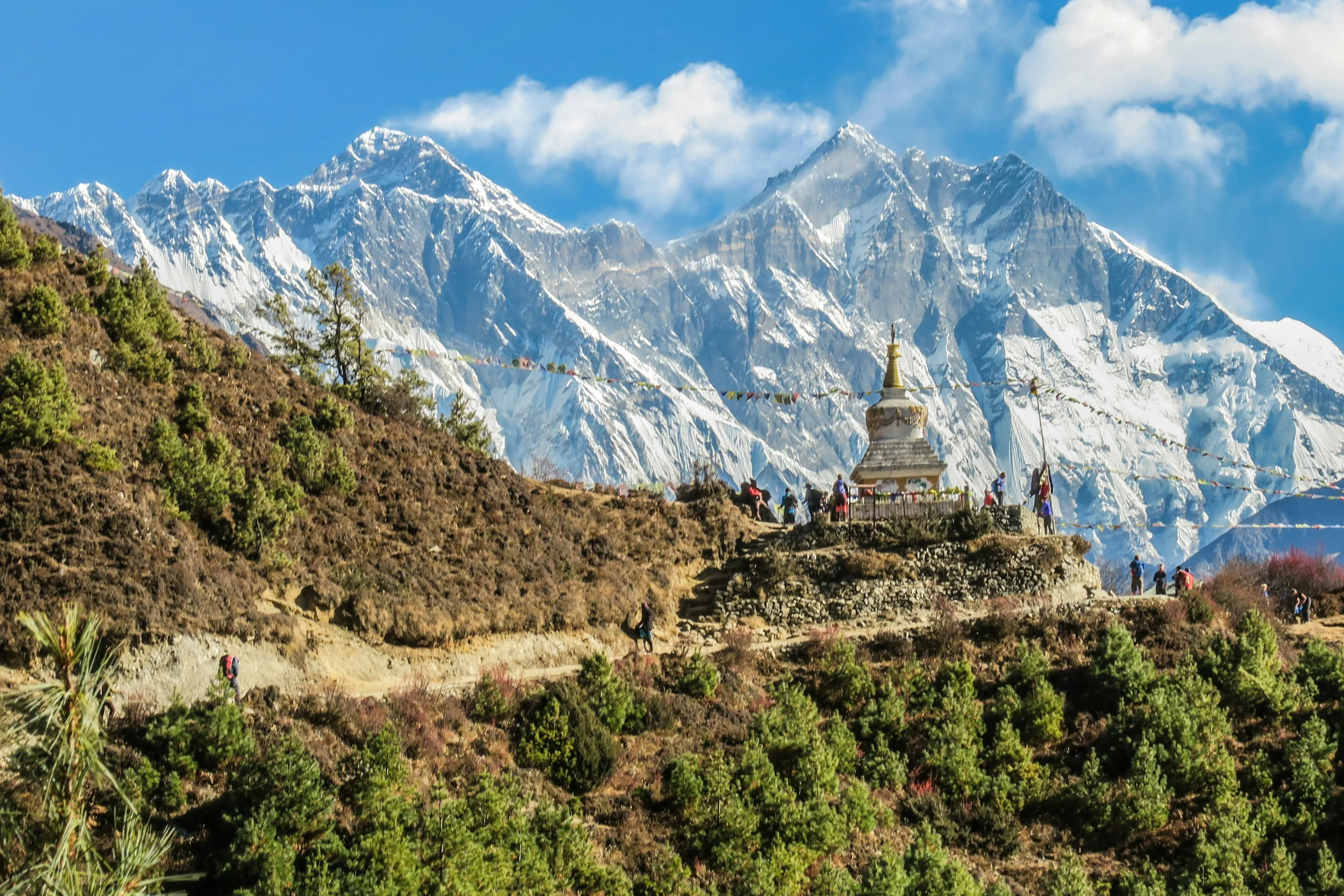
Nepal captivates with the Himalayan peaks and ancient temples of Kathmandu, offering a unique spiritual experience in a natural environment of serene beauty.
Quick Facts
- Capital
- Kathmandu
- Language
- Nepali
- Maithili, Bhojpuri, English
- Currency
- Nepalese Rupee (NPR)
- Best time to visit
- From March to May and from October to November.
- Budget per day
- $15 - $60 per day
- Climate
- Varied climate depending on altitude, from subtropical in the southern plains to extreme alpine at the highest peaks.
- Connectivity
- medium
- Easy to obtain at airports and local shops by presenting a passport.
- Electricity
- Type C, D, M (230V)
- Local transport
- limited
- Card usage
- cash is used more
- Tipping
- optional
🌎 Introduction
Sheltered by the highest mountain ranges in Asia, a territory stretches where the landscape changes drastically in just a few kilometers. It is not just about the peaks that touch the sky, but also the deep valleys and fertile plains that beat at a slow pace. In the streets of its cities and towns, the scent of incense mixes with that of spices, while the gentle fluttering of colorful prayer flags recalls a spirituality that permeates every corner of daily life.
The identity of this corner of the world is built through a natural coexistence between diverse traditions and languages. It is common to see how the calm of the monasteries coexists with the bustle of local markets, where dal bhat is prepared with patience in every home. Depending on the time of year, blooming rhododendrons tint the hillsides with color during the spring, or the clean light of autumn allows the profile of the mountains to be seen clearly after the passage of the monsoon rains.
Beyond the usual images, everyday life offers scenes of hospitable simplicity: from the inhabitants who walk ancient trails to the festivities that fill the squares with music and ancestral rites. It is a place of contrasts, where time seems to advance in a different way and every corner invites one to observe the environment with a more attentive and leisurely gaze.
🛡️ General safety
Nepal is a destination that, in general terms, is considered very safe for tourists. Hospitality is a fundamental pillar of Nepali culture, and visitors are usually treated with great respect and kindness.
- The level of personal safety is high compared to other international destinations, and violent incidents involving foreigners are extremely rare.
- The country offers a peaceful environment for the traveler, although, as in any destination, it is necessary to apply common sense and be attentive to local dynamics, especially in crowded areas.
- The current context is one of stability, which allows traveling the main tourist and hiking routes with a notable sense of peace.
Crime and common risks
Although Nepal is safe, there are certain minor opportunistic risks that the traveler should be aware of to avoid them.
- Pickpocketing and minor thefts of wallets or electronic devices can occur in crowded areas of Kathmandu, such as the Thamel neighborhood, or in Pokhara.
- Tourist scams are the most frequent problem. Some individuals may offer themselves as unofficial guides or try to charge excessive prices for basic services.
- It is recommended to be wary of people who approach offering “disinterested help” to take you to specific shops or festivals that turn out to be non-existent.
- A rare but important risk to mention is the manipulation of invoices in some mountain rescues (helicopter scams); therefore, one should always hire robust travel insurance and trekking agencies with a good reputation.
Safety in cities and tourist areas
Nepali cities are usually safe both day and night, although the infrastructure can present challenges.
- In urban centers like Kathmandu, Patan, and Bhaktapur, the main risk is not crime, but the condition of the sidewalks and dense traffic. It is important to walk carefully to avoid trips or incidents with motorcycles.
- In tourist neighborhoods, night lighting can be scarce in some side streets. It is recommended to carry a small flashlight or use your phone’s if walking at night.
- Urban public transport (minibuses) is often very congested, which can facilitate pickpocketing. In these situations, it is advisable to wear your backpack in front.
Transportation safety
Transportation is one of the points where the traveler must pay more attention due to the country’s orography and the state of the infrastructure.
- People drive on the left in Nepal. Traffic can seem chaotic to a foreigner, so renting cars without a driver is not recommended.
- The use of taxis is safe and common. It is recommended to agree on the price before starting or request the use of the meter, although the latter is not always accepted.
- There are transport applications (such as Pathao or InDrive) that are very popular, safe, and offer fixed prices for motorcycles and cars.
- Road trips in long-distance buses can be exhausting due to the state of mountain roads. Whenever possible, it is recommended to opt for the so-called “Tourist Buses”, which are usually better maintained and make safer stops.
- Domestic flights to mountain areas are subject to sudden changes due to the weather. It is essential to travel with flexible dates.
Natural and climatic risks
Given its location in the Himalayas, natural factors play a crucial role in traveler safety.
- Seismic movements: Nepal is located in a zone of tectonic activity. It is important to know basic action protocols in case of an earthquake (drop, cover, and hold on).
- Monsoon (June to September): During this time, heavy rains can cause flooding and, above all, landslides on mountain roads and hiking routes.
- Altitude sickness: This is the most important health risk for those who go trekking. It is vital to perform a gradual acclimatization and never ignore symptoms (headache, nausea, dizziness).
- It is always recommended to check weather forecasts before starting any mountain route or long road trip.
Legislation and local norms
Respecting local customs and laws is essential to avoid legal problems or cultural misunderstandings.
- Drug laws are extremely strict in Nepal. Possession, consumption, or trafficking of any type of narcotic carries severe prison sentences.
- Respect for sacred places is fundamental. Always walk clockwise around stupas and temples. It is mandatory to remove your shoes before entering.
- Clothing should be decent, especially in rural and religious settings. It is recommended to cover shoulders and knees.
- The use of drones is strictly regulated and requires multiple government permits. Flying a drone without a license can lead to equipment confiscation and high fines.
Safety for specific groups
- Female travelers: Nepal is a safe destination for women traveling alone. However, it is recommended to avoid walking in isolated mountain areas without a guide and to dress modestly to avoid unwanted attention.
- LGTBIQ+ travelers: Nepali society is traditional but tolerant. There are no laws penalizing sexual orientation, although public displays of affection (both in heterosexual and homosexual couples) are not common and may make locals uncomfortable. Discretion is recommended.
- Children and the elderly: The country is welcoming to families, although the lack of accessibility in the streets and the dusty air of Kathmandu can be challenges for people with reduced mobility or respiratory problems.
Emergencies and assistance
Having the right contacts is fundamental for a quick response to any unforeseen event.
- Tourist Police: There is a specific body to help visitors. Their emergency number is 1144.
- General emergencies: The national police number is 100. For fire it is 101 and for ambulances it is 102.
- Emergency services in large cities are functional, although in remote mountain areas assistance can be delayed and often depends on private helicopter evacuations.
- It is essential to register at your consulate or embassy upon arrival and always carry a copy of your passport and travel insurance.
Tip: Never go trekking alone; always hire a certified local guide or use platforms to join other travelers, as most serious incidents in Nepal occur due to disorientation or accidents in isolated areas without company.
📝 Entry requirements
To plan a trip to Nepal, it is fundamental to take into account that access to the territory usually requires a valid passport. The validity of this document is usually a determining factor, recommending that it has a validity margin of at least six months from the planned date of arrival. International travelers generally need to arrange a tourist visa, which is usually available through prior procedures or, in many cases, upon arrival at the main land and airport entry points.
The maximum stay allowed under the tourism category is usually divided into predefined periods of time, which can vary between fifteen, thirty, or ninety days. It is common for immigration authorities to request the presentation of an exit ticket from the country or proof of financial funds to guarantee that the visitor can afford their stay. Airport controls are usually slow, and it is common for a photographic and fingerprint record to be taken as part of standard security and migration control protocols.
In the area of customs, travelers can enter with their personal use items without major inconveniences, although there is control over the amount of precious metals, high-value electronic equipment, or devices such as drones, which could require special permits. Regarding the introduction of medications, it is advisable to carry the corresponding prescriptions to avoid delays. The transportation of foreign currency exceeding certain limits usually requires a formal declaration to customs authorities at the time of arrival.
From a health perspective, it is not frequent for specific vaccines to be required generally, unless the traveler comes from geographic areas with specific endemic risks. However, it is considered a prudent practice to have health insurance that covers possible contingencies in areas that are difficult to access. It is recommended that the traveler ensures they are up to date with basic health recommendations for international destinations, thus facilitating a more peaceful and safe travel experience in the country’s various natural environments.
Below are the key points for access to the territory:
- Presentation of a passport with sufficient validity for the duration of the trip.
- Processing of the corresponding visa, either beforehand or at the point of arrival.
- Justification of the duration of the stay and the planned itinerary if required.
- Compliance with regulations on the importation of personal items and currency.
- Verification of health recommendations and possession of adequate travel insurance.
- Availability of passport-sized photographs to facilitate local administrative procedures.
🏥 Basic health considerations
When planning your trip to Nepal, it is fundamental that you take into account the reality of the local health system so that nothing tarnishes your experience. In major cities like Kathmandu or Pokhara, you will find good quality private clinics that are used to dealing with international travelers. However, in rural areas or during hiking routes, assistance is much more limited and basic. Prices in private centers for foreigners are usually high, so having financial resources or prior coverage is essential. In most of these private centers, the medical staff communicates perfectly in English, making it much easier to explain any symptoms you may have.
Hiring travel medical insurance is not just a recommendation, it is an absolute necessity before landing in the country. Due to the terrain’s orography, if you plan to trek in mountain areas, your insurance must obligatorily include helicopter evacuation and repatriation. The costs of a high-altitude rescue are extremely high and standard policies do not always cover it, so you should verify that your insurance includes mountain activities up to the altitude you plan to reach.
Regarding vaccines, currently there are none that are mandatory to enter the country, unless you come from an area with a risk of yellow fever transmission. However, it is highly advisable to have your routine vaccination schedule up to date, including tetanus, diphtheria, and hepatitis A. Depending on the duration of your stay and the areas you visit, some specialists also suggest the typhoid fever vaccine. Ideally, you should visit a tropical medicine center well in advance to receive personalized advice.
If you need to carry personal medication, make sure to transport it in its original container and accompanied by the medical prescription translated into English. Although you will find pharmacies in large cities, they may not have the exact brand or specific component you use. For medications containing psychotropic or narcotic substances, controls can be stricter, so a medical certificate detailing your treatment is essential to avoid misunderstandings at customs.
Regarding common health risks, the most relevant factor in Nepal is altitude sickness or soroche. If you are going to climb to altitudes above 2,500 meters, you should make a gradual ascent and always listen to your body to avoid serious complications. In the low and jungle areas of the south, such as the Terai, the risks change and you should protect yourself from insect bites, as there are seasonal diseases transmitted by mosquitoes such as dengue. The weather also plays an important role: extreme cold on the peaks and humid heat in the plains require adequate preparation of your equipment and constant hydration.
Food hygiene is another point where you should pay attention. Tap water is not potable, so you should always consume bottled water, treated with purifying tablets, or filtered. Avoid ice in drinks and make sure that fruits and vegetables are well washed or peeled by yourself. Regarding street food, although very tempting, try to choose stalls where you see that the food is cooked on the spot and at high temperatures to avoid typical traveler’s stomach upsets.
In case of a health emergency, the phone number for ambulances in urban areas is usually 102, although the service can be slow due to dense city traffic. In remote areas, managing an emergency usually falls to the travel insurance, which will coordinate the fastest possible transport to an equipped hospital. It is very useful to always have your insurance assistance number and the address of the nearest international hospital to your location written down.
As final practical recommendations, I suggest preparing a basic first-aid kit with analgesics, gastric protectors, hand sanitizer, and material to treat small scrapes if you are going to walk a lot. Maintaining constant good hand hygiene and avoiding direct contact with stray animals will save you many inconveniences. Remember that prevention is your best ally to enjoy the impressive landscapes and hospitable culture you will find in this corner of the Himalayas.
🚌 Transport within the country
Moving around Nepal requires adapting to a mountainous geography that conditions all travel. The bus is the most common means of transport to connect the different regions of the country. Travelers can find different types of road services, from local vehicles that make multiple stops to options oriented towards longer journeys between main cities. Due to the lack of a train or metro network, the road is the main route for most land travel.
To bridge great distances or access hard-to-reach regions, domestic planes are a widely used option. These flights allow for a considerable reduction in travel times, especially for reaching starting points for mountain routes. In large cities, traffic is usually dense, and short trips are mostly made by taxis or small motorized vehicles that are easily found in the busiest areas.
The use of public transport can be somewhat complex at first because information is not always digitized. Although it is common to find signs and assistance in English in tourist hubs, the purchase of tickets is usually done in person at local stations or offices. In rural areas, options are more limited and vehicles are usually simpler, adapted to roads that are sometimes not paved.
Regarding reliability, it is important to keep in mind that journeys are usually slow. The terrain’s orography and weather conditions frequently affect the punctuality and duration of trips. Therefore, transport in this destination is perceived more as an experience of observing the landscape than as a high-speed system, requiring a patient attitude from the visitor.
“Tip”: When planning your road trips, it is recommended to always have a wide time margin, as external factors such as weather or road conditions usually prolong journeys more than expected.
🤵 Culture and etiquette
In Nepal, the most common way to greet and show respect is through the Namaste gesture, which consists of joining the palms of the hands at chest height and bowing the head slightly. In interpersonal relations, kindness and a moderate tone of voice are valued, avoiding loud behavior in public spaces. Physical contact in public, especially displays of affection between couples, is not common, and a discreet attitude is preferred to integrate naturally into the social environment.
The use of the right hand is fundamental in daily life, as it is used preferentially for eating, handing over objects, or making payments, reserving the left for personal hygiene tasks. Likewise, there is a special sensitivity towards body parts: the head is considered the most sacred area and should not be touched, while the feet are perceived as the least noble part. Therefore, it is common to remove shoes before entering a private home or place of worship, and it is recommended to avoid pointing at people or sacred objects with your feet.
In the realm of gastronomy, it is common for food or drink to be offered to visitors as a gesture of hospitality. It is important to observe the practice of jutho, which involves not touching common water containers with your lips or sharing food that has already been tasted, thus maintaining the purity of the food. Regarding punctuality, the local rhythm tends to be more flexible than in other international contexts, so a patient and understanding attitude greatly facilitates interactions and the management of any unforeseen events.
Visiting temples and monuments requires special attention to local traditions. It is customary to circle stupas and shrines always following the clockwise direction (to the right). Clothing should be respectful, generally covering shoulders and knees, especially in rural or religious settings. Before photographing people, ceremonies, or the interior of certain buildings, it is considered a sign of courtesy to ask for permission, always respecting the privacy of moments of prayer.
Regarding gratitude for services received, tips in the tourism sector are a widespread and well-received practice, although not mandatory. They are valued as a recognition of the effort of guides, porters, and hospitality staff. Maintaining an open attitude and observing the behavior of local residents is the best tool for understanding the social hierarchies and protocols of courtesy that govern coexistence in this environment.
“Tip”: Always use your right hand to give or receive any object, whether it is money, food, or a gift, as a sign of deference and courtesy towards your interlocutor.
🍛 Typical gastronomy
Nepal’s gastronomy is a true reflection of its geographical and cultural diversity, located at the crossroads of the culinary traditions of India and Tibet. It is characterized by being a simple, nutritious cuisine based on local products, where spices, legumes, and grains are the undisputed stars. Despite the influence of its neighbors, Nepal has managed to maintain its own identity, offering flavors that are usually comforting and balanced, without reaching the extreme levels of spiciness of other nearby regions.
The fundamental pillar of the Nepali diet is Dal Bhat, a dish that most of the population consumes twice a day. Eating habits usually include a main meal in the mid-morning and an early dinner at dusk, leaving small snacks or light bites for the afternoon. In urban areas, schedules are more flexible, but in rural and mountain areas, life revolves around these two key moments of feeding that provide the energy needed for daily tasks.
Regarding table etiquette, it is fundamental to know that traditionally Nepalis eat with their right hand. Although in most restaurants oriented towards visitors cutlery is offered, you will observe that locals prefer direct contact with the food. It is important to remember that the left hand is considered impure for eating. Additionally, there is the cultural concept of “jutho”, which refers to food contamination: once something has touched someone’s lips or their personal plate, it is considered impure for others, so food should not be shared from the same plate or common containers touched with already used cutlery.
Drinks also play an important role in social life. Tea or chiya, usually prepared with milk, sugar, and spices, is offered as a gesture of hospitality in almost any situation. In higher altitude regions, yak butter tea is common, which helps combat cold and dehydration. To accompany meals, water is the main option, although there are also traditional fermented drinks made from rice or millet that are part of the local culture, especially in celebrations and festivities.
| Dish | Description | Main ingredients | Where to try it | Tip |
|---|---|---|---|---|
| Dal Bhat | The national dish par excellence, served on a tray with several bowls. | Cooked rice, lentil soup, seasonal vegetables, and pickles. | In any home, teahouse on trekking routes, or local restaurant. | In many local places, you can ask for a second portion of rice or lentils at no extra cost. |
| Momo | Steamed or fried dumplings, very popular as a snack. | Flour dough filled with minced meat (usually buffalo or chicken) or vegetables. | Street stalls and cafes in Kathmandu and Pokhara. | Always accompany them with the slightly spicy tomato and sesame sauce they usually serve. |
| Thukpa | A consistent noodle soup of Tibetan origin, ideal for cold climates. | Wheat noodles, meat or vegetable broth, ginger, and spices. | Especially in mountain regions and Tibetan neighborhoods. | It is an excellent and light option to warm up after a day of hiking. |
| Sel Roti | Sweet ring-shaped rice bread, fried until crispy on the outside. | Rice flour, sugar, and clarified butter (ghee). | Breakfast stalls and during religious festivals throughout the country. | It is perfect for breakfast along with a cup of freshly made masala tea. |
| Chatamari | Known colloquially as the “Nepali pizza,” it is a thin, circular rice base. | Rice flour, egg, minced buffalo meat, and onion. | Restaurants specialized in Newari cuisine in the Kathmandu Valley. | Try it as a shared starter to taste the traditional flavors of the valley. |
📷 Zones and places to visit
Nepal offers a geographical and cultural diversity that allows travelers to transition from the bustling streets of its historic cities to the absolute peace of the world’s highest mountain ranges. The heart of the country beats in the Kathmandu Valley, an area that groups three main cities: the capital itself, Kathmandu, along with Patan and Bhaktapur. In these urban centers, a unique heritage wealth is concentrated, where Durbar squares act as nerve centers of social and religious life, surrounded by ancient palaces and wooden temples with intricate carvings that reflect centuries of Nepali artistic history.
In the capital, the Thamel neighborhood stands out as the international meeting point, full of small craft shops, spice markets, and a varied gastronomic offer. Very close by, it is possible to visit the Swayambhunath stupa, located on a hill from which the entire city can be observed, and the Boudhanath complex, one of the largest circular stupas in the world and a fundamental center for Tibetan Buddhism. These places are not just monuments, but living spaces where one can observe the daily devotion of the inhabitants and the coexistence of various spiritual traditions.
A short distance from the capital, the city of Bhaktapur transports the visitor to a medieval era. Its cobbled streets are free of heavy traffic, allowing one to calmly appreciate the traditional architecture and the skill of local potters in the Pottery Square. For its part, Patan, known as the city of arts, is the ideal place to learn about the work of master metalworkers and visit the Patan Museum, which houses one of the best collections of sacred art in Asia in a detailed rehabilitated architectural setting.
For those looking for more direct contact with nature, Pokhara is a mandatory stop. This city, located next to the peaceful Phewa Lake, offers a much more relaxed atmosphere than the capital. It is the starting point for trekking routes in the Annapurna Massif and an ideal place to enjoy outdoor activities. From nearby hills, such as Sarangkot, clear views of the snowy peaks of Machhapuchhre are obtained, a sacred mountain that dominates the horizon with its characteristic fishtail shape.
The landscape contrast becomes evident when heading south, to the Terai region, where the mountains give way to tropical plains. Here you will find the Chitwan National Park, a natural reserve where you can take tours to observe species such as the one-horned rhinoceros, deer, and a great variety of birds. Near this area is also Lumbini, internationally recognized as the birthplace of Buddha. This historic site has a sacred garden, the Mayadevi Temple, and various monasteries built by Buddhist communities from all over the world, making it a point of great cultural relevance.
Finally, the Everest region or Solu-Khumbu attracts those who want to learn about Sherpa culture and high mountain landscapes. Through routes that cross suspension bridges and remote villages like Namche Bazaar, visitors can experience life in the most isolated areas of the country. Mountain monasteries, such as Tengboche, offer a different perspective of Nepali spirituality, surrounded by some of the most prominent peaks on the planet in a protected natural environment.
Tip: You cannot miss visiting the Kathmandu Valley, the most emblematic place in the country.
✈️ Best season to travel
Nepal offers very different experiences depending on the time of year it is visited. The choice of the ideal moment depends largely on the activities planned, whether it is high mountain trekking, wildlife observation in the southern plains, or cultural visits in the Kathmandu valley. Generally, the transition periods between extreme seasons are the most valued due to atmospheric stability and the visibility of the Himalayan peaks.
During the year, the climate varies from the humid heat of the monsoon summer to the dry cold of winter in higher altitude areas. While spring and autumn stand out for their clear skies and pleasant temperatures, the remaining seasons allow for a different side of the country, with greener landscapes after the rains or a more serene and clear atmosphere in the valleys during the coldest months.
| Season | Months | Typical climate | What to expect | Tourist influx |
|---|---|---|---|---|
| Spring | Mar – May | Mild and moderate temperatures. Gradual increase in heat in the valleys. | Flowering of rhododendrons and wild vegetation. Good visibility in the mornings. | High (⭐⭐⭐) |
| Summer | Jun – Aug | Monsoon season. Frequent rains, high humidity, and cloudiness on the peaks. | Very green and lush landscapes. Waterfalls at full flow and agricultural festivals. | Low (⭐) |
| Autumn | Sep – Nov | Fresh, dry air and very clear skies after the passage of the rains. | Optimal conditions for trekking and major cultural festivals like Dashain. | Very high (⭐⭐⭐⭐) |
| Winter | Dec – Feb | Intense cold in high mountains. Sunny days with freezing nights in the valleys. | Clear skies and excellent visibility of the mountains. Low altitude routes accessible. | Medium-Low (⭐⭐) |
🗣️ Basic vocabulary
Learning some words and expressions in Nepali is very useful for getting around more easily during the trip. Although in trekking routes and more touristy areas it is common for the local population to understand English, addressing them in their own language facilitates communication and is usually received with kindness.
Using simple terms to greet or thank helps establish closer contact in everyday situations, whether arriving at an accommodation, shopping in a market, or interacting with guides and drivers. It is not about mastering the grammar, but about having practical tools for daily life.
- Namaste: It is the most common greeting and is used for both hello and goodbye.
- Dhanyabad: It translates as thank you and is fundamental for showing appreciation.
- Hajur: It is used similarly to “yes” or to indicate that one is paying attention; it also serves to ask someone to repeat what they have said.
- Kati ho?: This phrase means “how much is it?” and is very useful for asking about prices.
- Mitho chha: It is used to say that the food is delicious or tasty.
- Maph garnuhos: It is equivalent to saying “I’m sorry” or “excuse me.”
- Khana khane?: It is the way to ask “do you want to eat?” or “shall we go eat?”.
- Pani: It means water, a basic word for any traveler.