


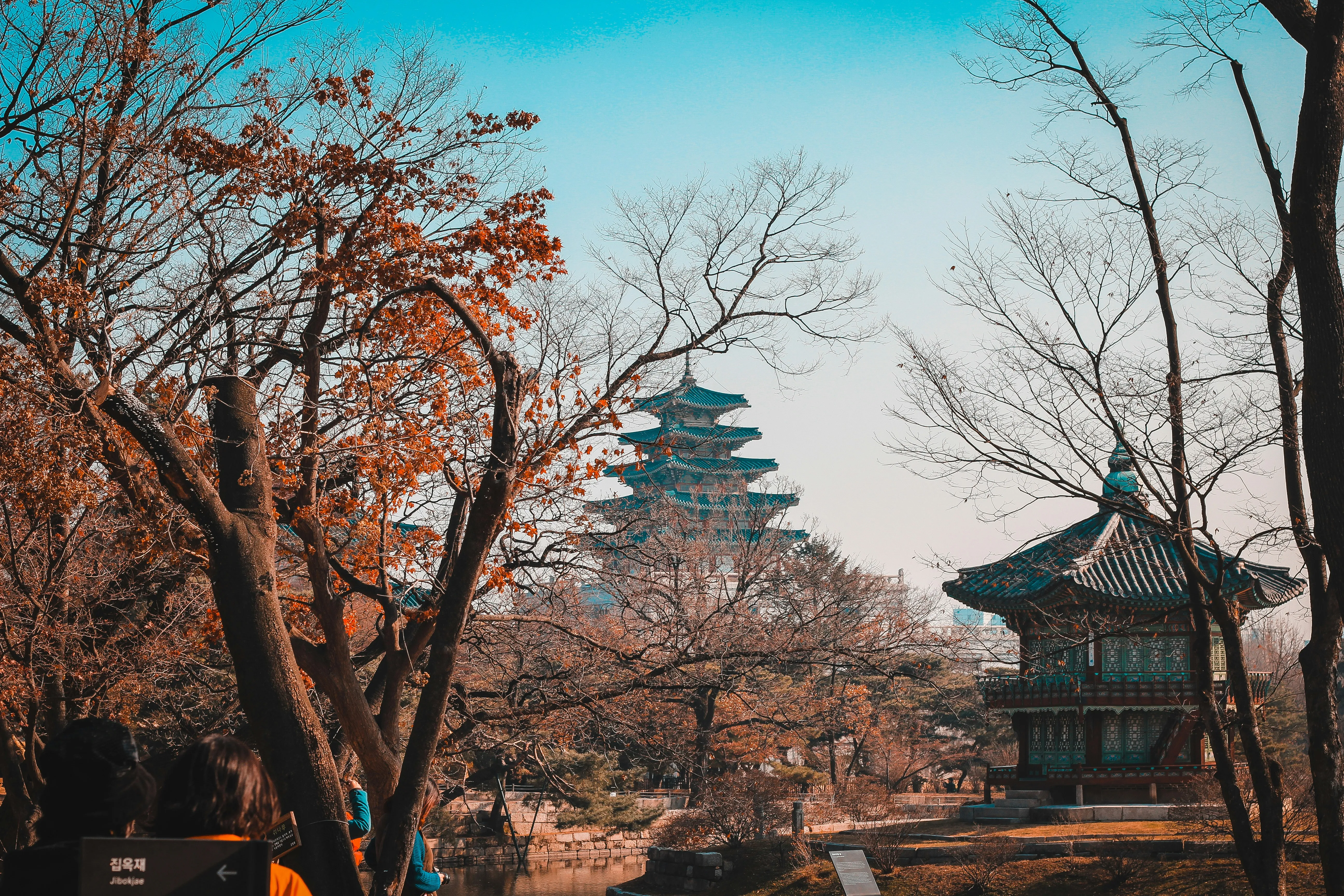
South Korea
Explore a peninsula where Seoul's technological modernity merges with ancient temples, mountainous landscapes, and a vibrant traditional and contemporary gastronomic culture.
Quick Facts
- Capital
- Seoul
- Language
- Korean
- English (widely taught)
- Currency
- South Korean Won (KRW)
- Best time to visit
- Spring (April to June) and autumn (September to November) to avoid extreme temperatures.
- Budget per day
- $50 - $150 per day
- Climate
- Temperate climate with four distinct seasons; hot and humid summers, and cold and dry winters.
- Connectivity
- good
- Very easy to obtain at airports and convenience stores throughout the country.
- Electricity
- Type C/F (220V)
- Local transport
- good
- Card usage
- widespread
- Tipping
- no
🌎 Introduction
At the eastern edge of the continent, between mountainous profiles and the proximity of the sea, lies a territory where the rhythm of life naturally adapts to the passing of the seasons. It is common to observe how the landscape transforms cyclically, moving from the soft blooming of cherry blossoms in spring to the intense ochre tones that cover the forests during autumn. This coexistence of eras defines much of its character, where the calm of ancient Buddhist temples and centuries-old rites coexist with the daily dynamism of its large urban centers.
The country’s identity is perceived both in the stillness of its traditional villages and in the energy of its night markets, where gastronomy and the aroma of fermented dishes occupy a central place in social life. Respect for customs remains valid in a society that advances rapidly, allowing avant-garde architecture to share space with historical palaces and traditional clothing that are still seen on the streets. It is an environment of balanced contrasts, where every corner, from the coasts of the volcanic islands to the mountain trails, reflects a culture that values both its historical legacy and its constantly moving present.
🛡️ General safety
South Korea is widely recognized as one of the safest destinations in the world for travelers. The country combines a modern infrastructure with a culture based on respect and civility, allowing for a tourist experience with a level of peace far superior to the global average.
- The safety level in the country is very high, consistently ranking among the lowest crime rates on the planet.
- Visitors usually perceive a sense of calm and order, even in large metropolises like Seoul or Busan.
- Although geopolitical tension with the neighboring country to the north often appears in international news, daily life proceeds with total normality and the real risks for a tourist in this regard are minimal.
Crime and common risks
Despite the excellent safety indices, no place is free from minor risks. Violent crime against tourists is extremely rare, but it is advisable to keep the following in mind:
- Minor thefts: Although it is common to see people leaving their belongings unattended in cafes, it is recommended to always maintain vigilance over valuables in crowded areas like the Myeong-dong markets or during mass events.
- Nightlife scams: Isolated cases of overcharging in bars in nightlife areas aimed at foreigners, such as Itaewon or Hongdae, have been reported. It is always advisable to check prices before consuming.
- Phishing and digital scams: Scam attempts via text messages (pretending to be courier services or public institutions) are frequent, although they affect residents more than short-stay tourists.
Safety in cities and tourist areas
South Korean cities are designed to be functional and safe at any time of day.
- Surveillance: There is a very extensive network of security cameras (CCTV) in almost every public corner, which acts as a strong deterrent against crime.
- Nightlife: It is common to walk through the streets in the early hours of the morning with total safety. Tourist areas are well-lit and usually have a police presence.
- Public transport: The subway and buses are extremely safe, clean, and efficient environments. It is very uncommon to experience safety incidents within transport facilities.
Transport safety
South Korea’s transport system is world-class, but drivers must pay attention to local regulations.
- Driving: In South Korea, driving is on the right. Traffic in large cities can be dense and somewhat aggressive compared to rural standards, but rules are generally well-respected.
- Taxis: They are safe and affordable. It is recommended to use official taxis (“Standard” taxis or the black “Deluxe” ones, which are more expensive but offer drivers with better language proficiency). It is useful to have the destination address written in Korean or use local apps like KakaoTaxi.
- Intercity transport: High-speed trains (KTX) and premium buses are very safe and punctual options for traveling across the country.
Natural and climatic risks
South Korea experiences four very marked seasons, each with its own peculiarities:
- Typhoons: Between July and September, the country can be affected by typhoons that bring heavy rain and winds. Although infrastructures are prepared, they can cause transport delays.
- Monsoon (Jangma): In mid-summer, there is usually a period of continuous heavy rain that can cause flash floods in low-lying areas.
- Air quality: During spring (especially in March and April), the phenomenon of yellow dust or fine particles from the Gobi Desert is common. The use of FFP2 masks is recommended if pollution levels are high.
- Extreme cold: Winters (December to February) can be very severe, with temperatures well below zero degrees, requiring appropriate thermal clothing.
Local legislation and norms
Respect for the law is fundamental in Korean society, and authorities are strict in its enforcement.
- Drugs: South Korea has a zero tolerance policy toward illegal substances. Possession, consumption, or trafficking of drugs carries very severe prison sentences and high fines, even for foreigners.
- Privacy and photography: It is illegal to take photographs of people without their consent if it causes them discomfort. Many phones sold in Korea have the camera shutter sound locked by law to prevent candid photos.
- Tobacco: Smoking on the street is prohibited in many areas of large cities, except in designated booths or areas. Fines for smoking in unauthorized places are frequent.
- Respect for elders: Social hierarchy is important. It is always advisable to show courtesy toward elderly people on public transport and in shared spaces.
Safety for specific groups
- Women travelers: South Korea is one of the safest destinations for women traveling alone. However, one should be alert to the phenomenon of molka (hidden cameras in public restrooms or fitting rooms), although the government conducts constant inspections to eradicate it.
- LGTBIQ+ travelers: Although there is no risk of physical violence and the country is safe, Korean society remains conservative. Public displays of affection (regardless of orientation) are not common, and discretion is usually the norm.
- Children and the elderly: The country is extremely hospitable to families and the elderly. Sidewalks are usually accessible, and respect for older people ensures priority treatment in many services.
Emergencies and assistance
Emergency services are highly efficient and have specific protocols for foreigners.
- Main numbers:
- 112: Police (they have a translation service).
- 119: Ambulances and firefighters.
- 1330: Korea Travel Hotline (available 24/7 in several languages, including English, for inquiries and assistance in minor emergencies).
- Tourist police: In the main areas of Seoul and Busan, you will see “Tourist Police” patrols, easily identifiable by their uniforms. They are there specifically to help visitors with language problems, scams, or lost documents.
- Healthcare: The health system is excellent but private for tourists. It is essential to travel with medical insurance with broad coverage to avoid high costs in case of illness or accident.
Tip: Download the Emergency Ready app (from the Korean government) on your phone; it provides real-time safety alerts and the location of nearby shelters and medical centers in English.
📝 Entry requirements
To plan a trip to South Korea, the primary document every traveler must possess is a passport with reasonable validity, usually recommended to be at least six months from the time of entry. It is fundamental that the document is in perfect physical condition and has enough space for the relevant stamps during border controls.
In most cases of visits for leisure or tourism, many international citizens do not require a conventional visa for short stays. However, there is a frequent need to process an electronic travel authorization beforehand, which is managed digitally before the flight. This system allows for faster arrival procedures and is a common requirement for those exempt from a traditional visa.
The maximum permitted stay as a tourist usually varies depending on international agreements, generally being between 30 and 90 days. During the immigration control process at airports or ports, authorities may request the presentation of an exit ticket from the country or proof of continuation of the trip to another destination, in addition to information about the planned place of accommodation.
Entry controls are rigorous and usually include the collection of biometric data, such as fingerprints and digital photographs. In the field of customs, there are strict regulations regarding the introduction of certain products. Special attention is recommended for medications, as some common drugs may be regulated; in such cases, it is advisable to carry the corresponding medical prescription. Likewise, the entry of fresh food, plants, or products of animal origin is usually restricted for biosafety reasons.
From a health perspective, no mandatory vaccines are required for most travelers, unless coming from regions with specific risks of transmissible diseases. It is advised to keep the standard vaccination schedule up to date and to have health insurance that provides coverage during the stay in the country.
Below is a summary of the key points to consider for access to the territory:
- Identity document: Passport with validity exceeding six months.
- Access permit: Electronic authorization or visa as applicable.
- Additional documentation: Return ticket or exit ticket to a third country.
- Biometric security: Registration of fingerprints and photo at the point of arrival.
- Customs restrictions: Limitations on fresh food and certain medications.
- Health: Recommendation of medical insurance and routine vaccines up to date.
🏥 Basic health considerations
South Korea has one of the most advanced and efficient healthcare systems in the world. You will find modern hospitals with cutting-edge technology, especially in large cities like Seoul or Busan. As a tourist, you will primarily access private healthcare, which offers fast and very high-quality care. Medical costs can be quite high for those who do not reside there, and although in large hospitals in urban areas staff usually speak English, in rural areas communication could be a bit more complex if you do not master the local language.
Although it is not a legal requirement to enter the country, taking out travel medical insurance is something you should consider essential. It is fundamental that your policy includes broad coverage for hospitalization, medical transfers, and repatriation. Given the quality of the system, any intervention or treatment without insurance could result in a very significant financial outlay that would seriously affect your travel budget.
Regarding vaccines, there are no mandatory vaccination requirements for international travelers. It is most recommended that you keep your routine vaccination schedule up to date. Depending on the type of trip you plan, such as long stays in rural or agricultural areas, you could consult your doctor about recommended vaccines for Japanese encephalitis or hepatitis, but for an average tourist visiting cities and main points of interest, standard vaccines are sufficient.
If you need to carry personal medication, you will see that Korean authorities are very strict. It is vital that you carry your drugs in their original containers and accompanied by a medical prescription translated into English specifying the dose and the reason for the treatment. Take special care with medications containing narcotic or psychotropic substances, as some components that are legal in other countries may be prohibited or require special prior permission from the embassy.
Regarding environmental risks, the Korean climate is very marked. In summer, you will find intense humid heat, so you must hydrate well, while in winter the cold is dry and extreme. A phenomenon to keep in mind is the fine dust or yellow particles in suspension that can appear in spring, potentially affecting people with respiratory problems. In rural areas during warm months, you will find it is a good idea to use repellent to avoid insect bites, although the risk of serious diseases via this route is low.
Hygiene in the country is impeccable. Tap water is potable and safe throughout the territory, although you will notice that many locals prefer to boil it or drink bottled water, which you will find easily in any store. Street food is delicious and follows very high cleaning standards, so you can try local specialties in the markets with total peace of mind.
In case you find yourself in an urgent situation, the phone number you should dial for medical emergencies is 119. Ambulances are fast and very well-equipped. If you need assistance but it is not a vital emergency, you will find that many pharmacies open late and pharmacists can advise you on minor ailments.
As final recommendations, I advise you to always carry your insurance contact and a copy of your medical documentation if you suffer from a chronic condition. You will see that traveling through South Korea is extremely safe from a health point of view, as long as you are cautious with your medical coverage and respect local regulations on medications.
🚌 Transport within the country
Moving around South Korea is a simple experience thanks to its modern and well-connected transport network. The train is the preferred means for traveling between major cities, offering high-speed options that significantly reduce travel times. For journeys to smaller towns or destinations where the railway does not reach, intercity buses cover practically the entire national territory with constant frequency.
Signage at stations, airports, and stops is usually available in both the local language and English, which facilitates orientation for visitors. Ticket purchasing can be done intuitively at automatic machines or customer service counters. Additionally, the country has domestic flights connecting the mainland with the islands, as well as ferry services to access less populated coastal and insular areas.
In large metropolitan areas, the subway stands out for its efficiency and wide coverage, allowing travelers to reach almost any point of tourist interest quickly. Conversely, in rural areas, transport depends more on local buses and the pace is slower. In these more remote environments, using a rental car can be an option to consider for those seeking greater flexibility, although public transport remains a viable alternative.
Taxis are a very common and easy-to-locate resource in urban areas, operating regularly and constantly. Generally speaking, the transport system in this destination is characterized by its rigorous punctuality and the sense of comfort and cleanliness in its facilities, allowing travelers to organize their routes with a high degree of reliability.
Tip: It is very useful to download local map applications on your mobile device, as they provide detailed routes, transfers, and real-time waiting times for all available means of transport.
🤵 Culture and etiquette
Korean society deeply values courtesy and respect for hierarchy, which is manifested constantly in daily interactions. The most frequent greeting consists of a slight bow of the head or torso, the depth of which usually varies according to the age or status of the person being greeted. In interpersonal dealings, it is a fundamental courtesy to use two hands when giving or receiving any object, whether business cards, money, or gifts, as this gesture symbolizes attention and deference toward the interlocutor. Public physical contact between people who do not have a close relationship is usually limited, so it is recommended to maintain a respectful personal distance.
In public spaces, behavior tends to be discreet and orderly. Keeping a moderate voice volume is especially appreciated, both in personal conversations and when talking on the phone, especially on public transport. Punctuality is considered an essential quality and a reflection of respect for others’ time, so arriving at the agreed time is the norm in any type of social or professional meeting. Likewise, order in queues and fluidity when walking through crowded places are aspects carefully maintained to facilitate coexistence in densely populated urban environments.
Gastronomic customs also occupy a central place in social life. During meals, it is customary to wait for the eldest person or the one with the highest hierarchy to start eating before the rest of the diners do. Unlike other nearby regions, in this country, the rice bowl is not usually lifted from the table while eating. The act of sharing dishes is a common practice that reinforces social bonds. Regarding service gratuities, tipping is not a local custom and is not expected in restaurants or other establishments, as service is considered included in the care received.
The transition from outdoor to indoor space requires special attention, as it is essential to remove footwear when entering private homes, as well as in many temples and some traditional-style restaurants that have raised floors. In these cases, specific indoor slippers are usually provided. When visiting religious sites or participating in traditional festivities, it is important to show a solemn attitude, dress modestly, and follow instructions regarding photography so as not to interfere with rites or the privacy of those who come to pray.
Tip: When participating in a social meal or toast, it is a gesture of courtesy to turn your head slightly to the side and cover your mouth subtly when drinking if you are in front of an older or higher-ranking person, as a show of respect and consideration.
🍛 Typical gastronomy
The gastronomy of South Korea is based on the balance between flavor, health, and aesthetics. Rice is the central pillar of almost all meals, usually accompanied by a wide variety of vegetables, meats, and fish. An indispensable element is fermentation, a technique that gives its dishes complex nuances and probiotic benefits. The best-known exponent of this technique is kimchi, a preparation of fermented vegetables, usually cabbage, which is served at practically all daily banquets.
One of the most striking features for the visitor is the concept of banchan. These are a series of small side dishes placed in the center of the table to share. When ordering a main dish, it is common to receive these bowls which range from bean sprouts to rolled omelets or pickled vegetables. This way of eating fosters a collective and social experience, where the variety of textures and the contrast between spicy, sweet, and salty define the country’s culinary identity.
Regarding table manners, Koreans usually use metal chopsticks and a long spoon for soups and rice. It is common to wait for older people to start eating as a sign of respect. In most establishments, water is offered for free and there is no tipping culture. Additionally, street food plays a fundamental role in daily life, with stalls offering quick and tasty bites in the markets and commercial areas of large cities.
Drinking culture is also relevant, with barley tea or corn tea present on many tables free of charge. At night, the consumption of traditional liquors like soju or fermented rice wine, known as makgeolli, usually accompanies informal dinners. Meetings around the table are usually leisurely, allowing food and drink to become the main axis of social interaction.
| Dish | Description | Main Ingredients | Where to try it | Tip |
|---|---|---|---|---|
| Bibimbap | A bowl of rice topped with vegetables, meat, and egg. | Rice, assorted vegetables, beef, and chili paste (gochujang). | Traditional restaurants in Seoul or Jeonju. | Mix everything vigorously before eating so the flavors integrate. |
| Bulgogi | Thinly sliced and marinated beef, grilled. | Beef, soy sauce, sugar, sesame oil, and garlic. | Grills specialized in Korean BBQ. | Wrap the meat in a lettuce leaf with a little sauce for a perfect bite. |
| Kimchi Jjigae | A hot and comforting stew with an intense and spicy flavor. | Mature kimchi, tofu, pork, and green onion. | Small family eateries or baekban. | Accompany it with white rice to balance the intensity of the broth. |
| Tteokbokki | Popular snack with a chewy texture and thick spicy sauce. | Rice cakes, fish cake, and red chili sauce. | Traditional markets and street food stalls. | If the spice is too intense, accompany it with a little hot fish broth. |
| Samgyeopsal | Pork belly strips that the diner cooks themselves at the table. | Fresh pork belly, garlic, onion, and leaves for wrapping. | Grill restaurants in any urban area. | It is an ideal dish to share in a group during a long dinner. |
📷 Areas and places to visit
South Korea is a destination that surprises with the natural coexistence between an ancient past and avant-garde modernity. In Seoul, the capital, this duality is evident in every corner. Walking through the Gyeongbokgung complex, the most important of the five great palaces of the Joseon dynasty, allows a close look at traditional architecture and changing of the guard ceremonies. A short distance away, the Bukchon Hanok neighborhood preserves hundreds of traditional houses where visitors can immerse themselves in the atmosphere of ancient Korea, while districts like Gangnam or Hongdae show the city’s most technological, commercial, and creative side, with its skyscrapers and vibrant nightlife.
Toward the southeast of the country lies Gyeongju, frequently known as the museum without walls. It was the capital of the ancient Silla kingdom and today houses fundamental historical treasures. Among them, the Bulguksa Temple, a masterpiece of Buddhist art, and the Seokguram Grotto, which protects an imposing statue of Buddha looking toward the sea, stand out. The Daereungwon burial mound park, with its characteristic green hills covering royal tombs, offers a unique landscape that invites reflection on Korean history in a serene setting.
The coastal city of Busan offers a different experience, marked by its relationship with the Sea of Japan. It is famous for the Jagalchi Market, the largest fish market in the country, where you can learn about local gastronomy firsthand. The Haeundae area combines urban beaches with modern architecture, while the Gamcheon Culture Village, a neighborhood of colorful houses situated on the slopes of a hill, has become a point of interest for its artistic transformation and narrow alleys full of murals and sculptures.
For those seeking contact with nature, Jeju Island, of volcanic origin, is an essential destination. Located south of the peninsula, it has a landscape dominated by Mount Hallasan, the highest peak in South Korea, and spectacular lava tubes that are a World Heritage Site. Its coasts feature unique rock formations and crystal-clear water beaches, ideal for traversing through the trails known as Jeju Olle Trail, which allow exploring the island at a leisurely pace, discovering the culture of the famous haenyeo female divers.
In the northeast, Seoraksan National Park stands out as one of the most beautiful mountainous environments in the country, especially valued for its hiking routes among granite peaks and dense forests. It is a place where spirituality is also present thanks to temples like Sinheungsa. On the other hand, cities like Andong preserve deep-rooted traditions, being home to the historical village of Hahoe, where mask dance festivals are held and one can experience authentic rural life, away from the bustle of large metropolises.
The cultural offer is completed with a wide network of world-class museums, such as the National Museum of Korea in Seoul, which guards thousands of years of history. Furthermore, Korean geography allows for very marked seasonal contrasts, from the green tea fields in Boseong to the cherry blossom festivals in spring or the reddish foliage of autumn. Each region offers activities ranging from participating in a stay in a Buddhist temple to visiting traditional markets full of local crafts and flavors, ensuring a broad and diverse view of the country’s identity.
Tip: You cannot miss visiting Gyeongbokgung Palace, the most emblematic place in the country.
✈️ Best time to travel
South Korea is a destination that offers very different experiences depending on the time of year, as the four seasons are clearly defined. The choice of the time to visit the country depends largely on personal preferences, whether one seeks to enjoy nature in bloom, participate in cultural festivals, or practice snow activities in mountainous areas.
In general, transition periods such as spring and autumn are considered the most balanced for traveling through the territory. During these months, temperatures are usually moderate and the landscape transforms remarkably, facilitating urban walks and visits to national parks without the humid conditions or intense cold that characterize summer and winter.
| Season | Months | Typical weather | What to expect | Tourist influx |
|---|---|---|---|---|
| Spring | Mar – May | Temperate and pleasant; sunny days with cool breezes in the evening. | Cherry blossom bloom, flower festivals, and very colorful urban parks. | ⭐⭐⭐⭐ (High) |
| Summer | Jun – Aug | Hot and very humid; presence of frequent rains during the monsoon season. | Coastal festivals, outdoor activities, and landscapes of intense green. | ⭐⭐⭐⭐⭐ (Very high) |
| Autumn | Sep – Nov | Cool, dry, and clear skies; very comfortable temperatures for walking. | Change of color in the foliage (reddish and golden tones) and dance and light festivals. | ⭐⭐⭐⭐ (High) |
| Winter | Dic – Feb | Intense cold and dry atmosphere; recurring snowfalls in the north and high areas. | Winter sports, festive lighting, and seasonal local gastronomy. | ⭐⭐ (Low / Medium) |
🗣️ Basic vocabulary
Although it is possible to communicate in English in the most touristy areas of South Korea, knowing some basic expressions in Korean greatly facilitates daily life. Koreans value it positively when visitors make an effort to use their language, which helps interactions in restaurants, shops, or transport be more fluid and friendly.
Learning these courtesy formulas and key words will allow you to navigate with greater confidence and respect during your stay:
- Annyeonghaseyo: Hello (polite form).
- Gamsahamnida: Thank you.
- Jeogiyo: Excuse me (used to get a waiter’s attention or ask to pass through).
- Jwesonghamnida: I’m sorry or pardon.
- Ne / Aniyo: Yes / No.
- Olmayeyo?: How much does it cost?
- Hwajangsil: Bathroom or restrooms.
- Mul: Water