


Benin
Benin offers an authentic immersion into the cradle of Voodoo, with beautiful palm-fringed beaches, vibrant markets, and a rich African colonial history.
Quick Facts
- Capital
- Porto Novo
- Language
- French
- Fon, Yoruba, Bariba
- Currency
- West African CFA franc (XOF)
- Best time to visit
- From November to February during the main dry season.
- Budget per day
- $25 - $70 per day
- Climate
- Equatorial climate in the south and tropical in the north, with high temperatures and alternating rainy seasons depending on the region.
- Connectivity
- medium
- Easy to acquire at airports and local urban kiosks.
- Electricity
- Type C/E (220V)
- Local transport
- limited
- Card usage
- cash is used more
- Tipping
- optional
🌎 Introduction
Benin unfolds from the shores of the Gulf of Guinea toward the interior of the continent, offering a journey where the Atlantic breeze gradually transforms into the dry air of the savannah. It is a land of contrasts marked by the light and color of its reddish earth, where the passing of months is measured by the arrival of rains or the presence of the harmattan, that desert wind that envelops the landscape in a particular atmosphere. In this corner of West Africa, the geography invites a slow transit between coastal lagoons and rolling hills, reflecting a natural diversity that is felt at every stage of the way.
The essence of the country lies in its vibrant cultural life and a history that can still be breathed in its cities and villages. Local traditions and ancestral beliefs naturally intertwine with the bustle of markets and the aroma of a simple gastronomy based on corn, yams, and fishing products. From the unique architecture of villages built on water to the echoes of ancient kingdoms that still resonate in its festivals, Benin preserves its own authentic identity, sustained by the hospitality of a society that values its roots while living with the present.
🛡️ General Safety
Benin is traditionally known as one of the most stable and welcoming countries in West Africa. The general safety level is considered moderate, placing it in an intermediate position compared to other countries in the region. Although it is a destination that allows for an authentic and peaceful travel experience, it requires the visitor to maintain a vigilant and conscious attitude of their surroundings.
Most visits occur without incident, especially in the southern and central areas. However, the regional context makes it necessary to stay informed about the situation in the northern border areas, where vigilance must be much higher. For an international traveler, Benin offers a relatively safe environment provided that basic common-sense recommendations are followed.
Common Crime and Risks
Crime in Benin is usually opportunistic and non-violent, although it is advisable to know the risks to avoid them:
- Pickpocketing and bag snatching: These are the most frequent crimes, especially in crowded places like markets, bus stations, and nightlife areas.
- Scams: Attempts to deceive tourists may occur, either through the internet before the trip or by improvised “guides” offering unnecessary services at exorbitant prices.
- Thefts on beaches: Cases of theft from swimmers have been reported on the beaches of Cotonou and surrounding areas, so belongings should never be left unattended.
- Night safety: The risk of incidents increases significantly after sunset, especially in poorly lit or peripheral areas of large cities.
Safety in Cities and Tourist Areas
Safety dynamics vary depending on the urban location:
- Cotonou: It is the largest and most active city. In areas like the Dantokpa market, the crowds make it easy for pickpockets to work. It is recommended to carry money and documents in inner pockets or hidden money belts.
- Porto-Novo and Ouidah: These tend to be quieter and safer cities for tourists, although usual precautions should be maintained at monuments and museums.
- Residential areas: Neighborhoods like Ganhi or Haie Vive in Cotonou are generally safe and have a private security presence in many establishments.
- Practical recommendation: It is preferable to move in groups and avoid flaunting valuables, such as expensive jewelry or professional photographic equipment, unnecessarily.
Transportation Safety
Transportation is one of the points where travelers should pay the most attention to their physical safety:
- Driving: In Benin, you drive on the right. The condition of the main roads is acceptable, but secondary roads may be in poor condition or lack signage.
- Zemidjans (Moto-taxis): They are the most common means of transport. Although practical, the risk of accidents is high and most drivers do not have a helmet for the passenger. If used, it is recommended to do so only for short trips and during the day.
- Taxis and rental vehicles: This is the safest option. It is recommended to rent vehicles with professional drivers through recognized agencies or use official taxis by agreeing on the price in advance.
- Road travel: Driving on the road at night is strongly discouraged due to lack of lighting, the presence of animals on the road, and the risk of breakdowns in isolated areas.
Natural and Climatic Risks
The climate in Benin is tropical, which entails certain seasonal risks that the traveler should consider:
- Flooding: During the rainy season (April to July and September to October in the south), flash floods can occur, affecting transportation and basic infrastructure.
- Extreme heat: Temperatures can be very high throughout the year. Constant hydration and the use of sun protection are essential to avoid heatstroke.
- The Harmattan: Between December and February, this dry wind from the Sahara can reduce visibility due to suspended dust and cause mild respiratory problems or dry skin.
- Marine currents: The beaches of the Gulf of Guinea are known for their strong rip currents. Even for experienced swimmers, bathing can be extremely dangerous outside of supervised areas.
Local Legislation and Norms
Respect for local laws and traditions is essential to avoid problems with the authorities:
- Documentation: It is mandatory to always carry a copy of your passport and a valid visa. Authorities may request identification at any time.
- Photography: It is strictly forbidden to photograph official buildings, military installations, airports, or bridges. It is always advisable to ask for permission before photographing local people.
- Drugs: Legislation on the consumption and trafficking of narcotics is extremely severe, with long prison sentences and heavy fines.
- Traditions and religion: Benin is the cradle of Voodoo. It is vital to show respect for sacred places and ceremonies. You should not enter temples or participate in rites without an invitation or prior permission.
Safety for Specific Groups
- Female travelers: Benin is a relatively safe country for women traveling alone. However, it is recommended to dress discreetly to respect local culture and avoid walking unaccompanied at night in isolated areas.
- LGTBIQ+ travelers: Although homosexuality is not explicitly penalized in the penal code in the same way as in some neighboring countries, there is a strong social taboo. It is recommended to maintain an attitude of maximum discretion and avoid public displays of affection to avoid uncomfortable or hostile situations.
- Children and the elderly: There are no specific risks beyond the need to ensure good hydration, protection against mosquitoes (risk of malaria), and having medical insurance with broad international coverage.
Emergencies and Assistance
In case of needing urgent help, the main numbers are:
- Police: 117.
- Firefighters: 118.
- Medical assistance: In large cities, there are good quality private clinics, but in rural areas, services are very limited.
In case of an incident, the first thing is to stay calm and go to the nearest police station to file the report necessary for insurance. It is strongly recommended to travel with robust travel insurance that includes medical repatriation.
Tip: Always carry a card with the address of your accommodation written down and the contact of a trusted local guide; if you get disoriented, it will greatly facilitate your safe return.
📝 Entry Requirements
To start a trip to this West African destination, the first fundamental step is to have a valid passport. Generally, local authorities require the document to have a minimum validity of six months from the moment of entry into the national territory. It is advisable for the passport to have enough free pages for the control stamps that will be applied at entry points.
Most international travelers must arrange a tourist visa before their arrival. This permit usually authorizes stays that typically vary between 30 and 90 days, depending on the requested entry modality. Currently, this process is predominantly carried out through digital systems, which facilitates obtaining the authorization prior to boarding.
At border or airport controls, it is a common practice for immigration personnel to request the presentation of an exit ticket from the country or for a continuation of the journey. Likewise, it is possible that proof of sufficient financial means to cover the entire stay may be requested, whether through bank statements, cash, or international credit cards that ensure the tourist’s solvency during their visit.
Regarding customs regulations, usual restrictions apply to the transportation of specific medications, which must be accompanied by their corresponding medical prescription. There are also limitations on the entry of certain fresh foods and products of plant or animal origin to protect the local ecosystem. Personal items and moderate amounts of gift items are usually exempt from taxes, provided they are not for commercial purposes.
In the health section, it is usually considered necessary to present the international certificate of vaccination, especially regarding yellow fever, which is a frequent requirement in this region. It is highly recommended that the traveler consult with a tropical medicine center before departing to receive guidance on other recommended vaccines and preventive measures against common diseases in tropical climates, in addition to having medical insurance with broad coverage.
- Identity document: Passport valid for at least six months.
- Stay authorization: Previously processed tourist visa.
- Duration of stay: Generally one to three months depending on the permit obtained.
- Travel proof: Return ticket and proof of financial funds.
- Health and prevention: Yellow fever vaccination certificate and basic first aid kit.
- Customs controls: Restrictions on non-prescription drugs and perishable food products.
- Transportation security: Routine luggage inspection at airports and land borders.
🏥 Basic Health Considerations
When preparing for your trip to Benin, it is essential to keep in mind that the health infrastructure is limited, especially if you move away from the main urban centers like Cotonou. In larger cities, you will find some private clinics that offer acceptable care for minor health problems, but in any serious situation, it is common to consider a transfer to another country with better facilities. Medical personnel communicate primarily in French, so it is advisable to have basic notions or use a translator if you do not speak the language. Bear in mind that most centers require payment in advance, even in emergency situations, and costs for a foreigner can be high compared to the local standard of living.
Taking out travel medical insurance is not an optional procedure if you want to travel with peace of mind. Although it is not mandatory to cross the border, it is essential to have a policy that offers broad coverage. The most important thing is that it includes medical evacuation and repatriation to your place of residence, as the costs of a medical plane are unaffordable for most people. Your insurance should also cover hospitalization and treatment in the best private clinics in the country to ensure you receive the best care available.
Regarding vaccines, you should know that the yellow fever vaccine is mandatory for all travelers. You will be asked for the international certificate of vaccination when entering the country, so make sure to always carry it with your passport. Additionally, it is highly recommended to have your regular vaccination schedule up to date, including tetanus, diphtheria, and polio. Depending on the areas you visit, vaccines against hepatitis A and B, typhoid fever, and meningitis are also advised. Since the risk of malaria is present throughout the territory, it is best to consult with a doctor before leaving so they can prescribe the appropriate preventive treatment.
If you need to carry personal medication, we recommend traveling with a sufficient amount for your entire stay, kept in its original packaging. It is vital to carry the medical prescription or a report from your doctor explaining the treatment, as this will avoid problems at customs. Avoid buying medicines at street stalls or local markets, as there is a real risk of finding counterfeits that are not effective or can be dangerous. A small first aid kit with disinfectant, bandages, pain relievers, and oral rehydration salts will be very useful.
The most common health risks in Benin are related to the tropical climate. You will encounter intense heat and high humidity, which can cause dehydration or heatstroke if you do not take care. The risk of mosquito bites is high, especially at dawn and dusk, so using strong repellents and clothing that covers limbs is your best defense. You should also avoid swimming in stagnant water or slow-moving rivers to prevent parasitic diseases like schistosomiasis. Otherwise, there are no major risks from altitude or extreme cold in this destination.
Hygiene with water and food will be your greatest ally to avoid digestive problems. Never drink tap water; always consume bottled water and make sure the seal is intact when opening it. We also advise avoiding ice cubes in drinks and raw salads if you are not in a place of total trust. As for street food, it is part of the charm of the trip and you can try delicious dishes, but try to choose stalls where you see that the food is cooked at the moment and at high temperatures. Washing your hands frequently or using disinfectant gel before eating will make a difference in your well-being.
For any health emergency, the general telephone number you should dial is 112, although you can also contact the emergency ambulance service directly via 118. You should be aware that response times can be slow and ambulances do not always have the equipment you might expect in other countries. In case of need, it is sometimes faster to go by your own means to the nearest private clinic if you are in a city.
As final recommendations for your trip to be a success, we suggest protecting your skin with high-factor sunscreen and hydrating constantly even if you are not thirsty. Always carry a copy of your medical documentation and your insurance contact details. If you follow these basic prevention guidelines and act with common sense, you will enjoy all the cultural richness and landscapes that this corner of Africa has to offer.
🚌 Transport Within the Country
Moving around Benin requires some adaptability on the part of the traveler, as the transportation system is predominantly informal. The most common means of transport to connect main towns are scheduled buses and shared vehicles that travel the national roads. There is no metro network or regular domestic flights that are practical for conventional tourism, so road travel represents the primary option for getting around the territory.
Within urban centers, moto-taxis are the most agile and frequent resource, allowing one to bypass the dense traffic of the most populated cities. For trips between different localities, shared taxis operate constantly, although their operation does not usually follow fixed departure times. In rural areas, transportation options are more limited and the frequency of service is significantly lower, forcing one to organize movements with a greater time margin.
The ease of use for the foreign visitor may be conditioned by the scarcity of clear signage and by the fact that information on routes and destinations is usually obtained verbally. The main language for communicating with drivers and managing trips is French, and seats are usually obtained in person at the stations. Regarding comfort and reliability, standards vary according to the type of vehicle, so it is recommended to maintain a flexible attitude toward possible unforeseen events or waits.
Tip: It is preferable to go to the transport stations early in the day, as that is when there is greater availability of vehicles for long-distance journeys.
🤵 Culture and Etiquette
In Benin, the greeting constitutes the basis of any social interaction and is a process that should not be rushed. It is considered a fundamental rule of courtesy to dedicate time to ask about the well-being of the other person and their family before entering into commercial or personal matters. This first contact is usually accompanied by a firm handshake, although in more formal or traditional contexts, a deep respect for hierarchy is observed, especially toward older people, who are given special consideration in treatment and decision-making.
Daily life in public spaces takes place with a generally moderate tone of voice and behavior that values discretion. Regarding the notion of time, punctuality tends to be more flexible in social encounters than in strictly professional settings, so maintaining a patient and adaptable attitude helps to better integrate into the local rhythm. In interpersonal treatment, physical closeness is common between people of the same sex, while between men and women, a more formal distance is usually maintained in public.
Spirituality plays a central role in the country’s identity, with various beliefs coexisting harmoniously. When visiting sacred places, temples, or participating in traditional festivities, it is essential to show an attitude of observation and respect, avoiding interrupting rituals. It is fundamental to request explicit permission before taking photographs of people, homes, or ceremonies, as privacy and the meaning of certain acts are highly valued by the community.
In the realm of gastronomy and domestic invitations, hospitality is a cultural pillar. If a meal is shared in a traditional setting, it is common to be offered water for hand washing before starting. Regarding tipping, although it is not a contractual obligation, it is received as a gesture of gratitude for service in restaurants and hotels. Dress, for its part, tends to be decorous in public spaces, with a preference for garments that cover the shoulders and knees as a sign of deference toward local sensitivity.
Tip: When giving or receiving any object, gift, money, or food, it is very important to use the right hand, as the use of the left hand in these specific social interactions can be perceived as an unfortunate gesture according to local courtesy codes.
🍛 Typical Gastronomy
The gastronomy of Benin is characterized by being varied and based mainly on products offered by its land and coast. In the south of the country, the use of corn predominates, while in the northern regions, the spotlight falls on yams and other cereals like millet. It is a cuisine that stands out for its dense textures and the use of sauces rich in flavor, which serve as an accompaniment to a solid base present in almost all daily meals.
The central element of most dishes is the pâte (paste or dough), made with flour from cereals or boiled and pounded tubers until an elastic consistency is obtained. This base is accompanied by vegetable sauces, smoked or fresh meats or fish, especially in areas near the Atlantic Ocean and Lake Nokoué. The use of palm oil and various local spices provides a distinctive color and aroma, although spiciness is often served separately so that each diner can adjust the intensity.
Regarding customs, eating is a social act of great relevance. It is very common to find small street stalls and the so-called maquis, which are simple local establishments where the atmosphere is relaxed and friendly. Following local tradition, in less formal settings, it is common to eat with the right hand, although the use of cutlery is fully extended in cities and restaurants. Before starting to eat, it is common to be offered a bowl of water to wash your hands, a fundamental gesture of courtesy and hospitality in Beninese culture.
To accompany the dishes, inhabitants usually opt for natural juices made from tropical fruits, such as baobab, pineapple, or hibiscus infusion, known locally as bissap. Homemade millet beer is also very popular and, on special occasions, sodabi, a liquor distilled from palm wine that forms part of the country’s cultural identity. Meal times usually follow a regular rhythm, although in urban areas, traditional fast food is available throughout much of the day.
| Dish | Description | Main Ingredients | Where to try it | Tip |
|---|---|---|---|---|
| Amiwo | Reddish-colored corn dough traditionally served with meat. | Corn flour, tomato, onion, and poultry or lamb meat. | Traditional restaurants in Cotonou or Porto Novo. | It is usually quite filling, so it is ideal as a main meal. |
| Igname Pilée | Boiled yam pounded in a mortar until achieving a smooth and elastic texture. | Yam and water. | Very common in the central and northern regions of the country. | It is best enjoyed if accompanied by peanut sauce or green leaf sauce. |
| Wagasi | Artisan cheese with a firm texture that does not melt when cooked. | Cow’s milk and sap from a local plant for the curd. | Markets and roadside stalls in the Parakou area. | Try it fried, as it acquires a very pleasant crunchy outer texture. |
| Akassa | Fermented corn dough served cold or at room temperature. | Fermented corn and water. | In local markets throughout the country. | It is usually presented wrapped in local plant leaves, which preserves its moisture. |
| Moyo | Fresh and light sauce served especially with fish. | Natural tomato, onion, pepper, and lemon juice. | Restaurants and stalls in coastal areas like Grand-Popo. | It is the perfect accompaniment for grilled fish due to its citrus touch. |
📷 Areas and Places to Visit
Benin presents itself as a destination of contrasts where ancestral history and spiritual traditions coexist with varied nature and vibrant urban life. Traveling through the country, one perceives a clear transition between the coastal plains of the south and the mountain formations of the north, offering the traveler a complete view of West African identity. The diversity of its regions allows for exploring everything from ancient kingdoms to protected ecosystems, always under an atmosphere of hospitality.
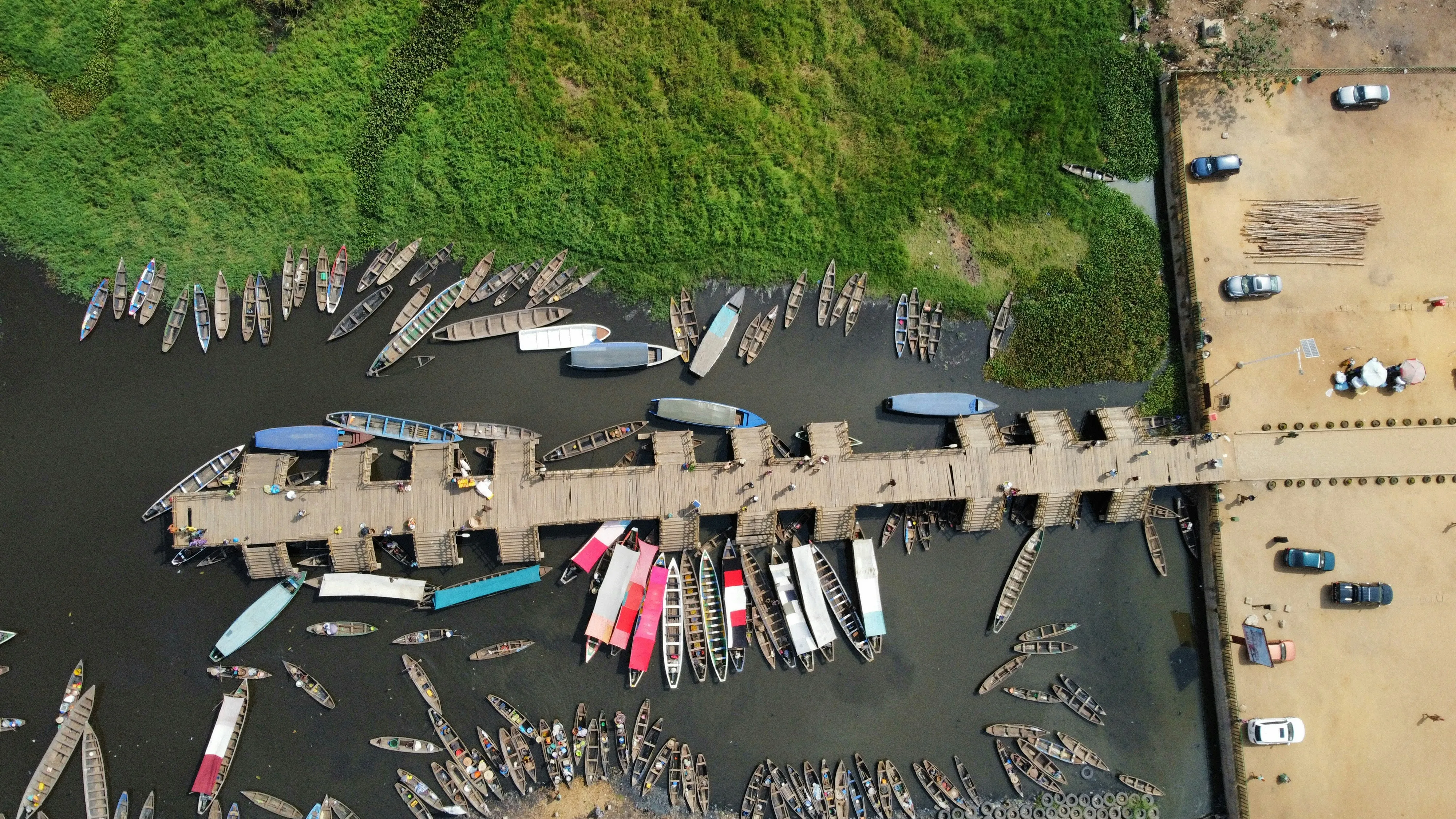
The usual gateway is Cotonou, the largest city and the economic engine of the country. Although it is not the official capital, its energy is undeniable. Walking through its streets allows you to discover the Dantokpa Market, one of the largest open-air commercial centers in the region, where you can find everything from everyday products to objects related to local beliefs. Nearby, the contrast comes with a visit to Ganvié, an amazing village built entirely on stilts in Lake Nokoué. Known for its aquatic way of life, navigating by pirogue through its canals is the best way to observe the daily life of its inhabitants, its floating markets, and its wooden dwellings.
To the east lies Porto-Novo, the official capital, which stands out for its architecture of Afro-Brazilian influence. Strolling through its old neighborhoods allows you to admire historic buildings like the Great Mosque, which resembles colonial churches in Bahia, and visit the Honmè Museum, located in a former royal palace. It is a quieter area than Cotonou, ideal for understanding the administrative past and the fusion of cultures that has shaped the nation.
The historical and spiritual weight of the country has its epicenter in Ouidah. This town is fundamental for understanding both Voodoo, an official religion with a deep philosophy, and the mark of the transatlantic trade. A journey along the Slave Route leads to the Door of No Return, a commemorative monument facing the Atlantic Ocean. Other points of cultural interest in the area include the Temple of Pythons and the Sacred Forest of Kpassè, where nature and mythology intertwine among centuries-old trees and symbolic sculptures.
Inland, the city of Abomey offers an immersion into the military and political history of the ancient Kingdom of Dahomey. The Royal Palaces of Abomey, a World Heritage site, house museums displaying thrones, tapestries, and weapons of former monarchs. It is a key place to learn about local resistance and the social organization of an empire that dominated the region for centuries. The earthen architecture of these palace complexes is one of the country’s most important cultural manifestations.
The landscape changes drastically when heading north toward the Atakora mountain range. This region is home to the Batammariba people, famous for their Tata Somba, fortified adobe houses that look like small two-story castles. The Boukoumbé area is ideal for hiking and learning about these unique constructions integrated into the rural landscape. Nearby, the town of Natitingou serves as a base for exploring the Kota Waterfalls or starting expeditions toward the protected areas of the north.
For those seeking contact with wildlife, Pendjari National Park is one of the most prominent reserves in this part of the continent. During the right season, it is possible to take excursions to observe elephants, lions, leopards, and various species of antelope in their natural habitat. The savannah landscape and the mountain escarpments provide a conducive setting for nature photography and bird watching in a well-preserved environment.
Finally, the coastal area of Grand-Popo invites a slower pace. Located between the sea and the Mono River, this town is known for its quiet beaches and river excursions. Traveling along the river allows for visiting mangroves, small fishing villages, and witnessing traditional ceremonies regularly held on the banks. It is a meeting point where river nature and local culture merge harmoniously.
Tip: You cannot miss visiting Ganvié, the most emblematic place in the country.
✈️ Best Season to Travel
Planning a trip to Benin is conditioned by its tropical climate, which is mainly divided into dry and rainy seasons. For most travelers, the period between the months of November and February is the most recommended, as the absence of rainfall facilitates travel on the roads and allows for exploring both the southern coastline and the northern nature reserves in more comfortable conditions.
During these months, the environment is drier thanks to the winds from the Sahara, which favors wildlife observation in national parks, where animals usually concentrate near water points. Nevertheless, Benin offers attractions throughout the year; while the rainy season transforms the landscape into a setting of intense greens, the dry season is ideal for those looking to immerse themselves in cultural festivities and local traditions without weather interruptions.
| Season | Months | Typical Weather | What to Expect | Tourist Influx |
|---|---|---|---|---|
| Spring | Mar – May | High temperatures and progressive increase in humidity. Start of isolated rains in the south. | Landscapes beginning to turn green and intense agricultural activity in rural areas. | Medium (⭐⭐) |
| Summer | Jun – Aug | Frequent rainfall, especially in the south. High humidity and cloudy skies. | Lush vegetation and photographic landscapes, although access to natural parks may be difficult. | Low (⭐) |
| Autumn | Sep – Nov | Transition from rains to dry weather. More moderate temperatures and clear skies. | Improvement of land routes and optimal conditions to see the start of bird migrations. | Medium (⭐⭐) |
| Winter | Dec – Feb | Dry and warm climate. Presence of the harmattan wind, which can bring haze or fine dust. | Ideal time for safaris in the north and for attending cultural festivals and local traditions. | High (⭐⭐⭐) |
🗣️ Basic Vocabulary
Although French is the official language of Benin and is used in administration and commerce, the vast majority of the population habitually communicates in their national languages. In the south and center of the country, Fon is the most widespread language. Knowing some basic terms in this language will allow you to connect better with local inhabitants, showing interest and respect for their culture during your interactions in markets or rural areas.
It is not necessary to delve into complex grammatical rules, as the goal is simply to facilitate daily interaction. Using a greeting or a thank you in the local language usually generates a friendly response and helps communication to be much more fluid and close during your trip.
- Awanú: Hello or good morning.
- À dágbe à?: How are you? or are you well?
- Kú dágbe: Thank you.
- Ɛɛ: Yes.
- Ewo: No.
- Nabi?: How much does it cost?
- Kú dábò: Welcome.