


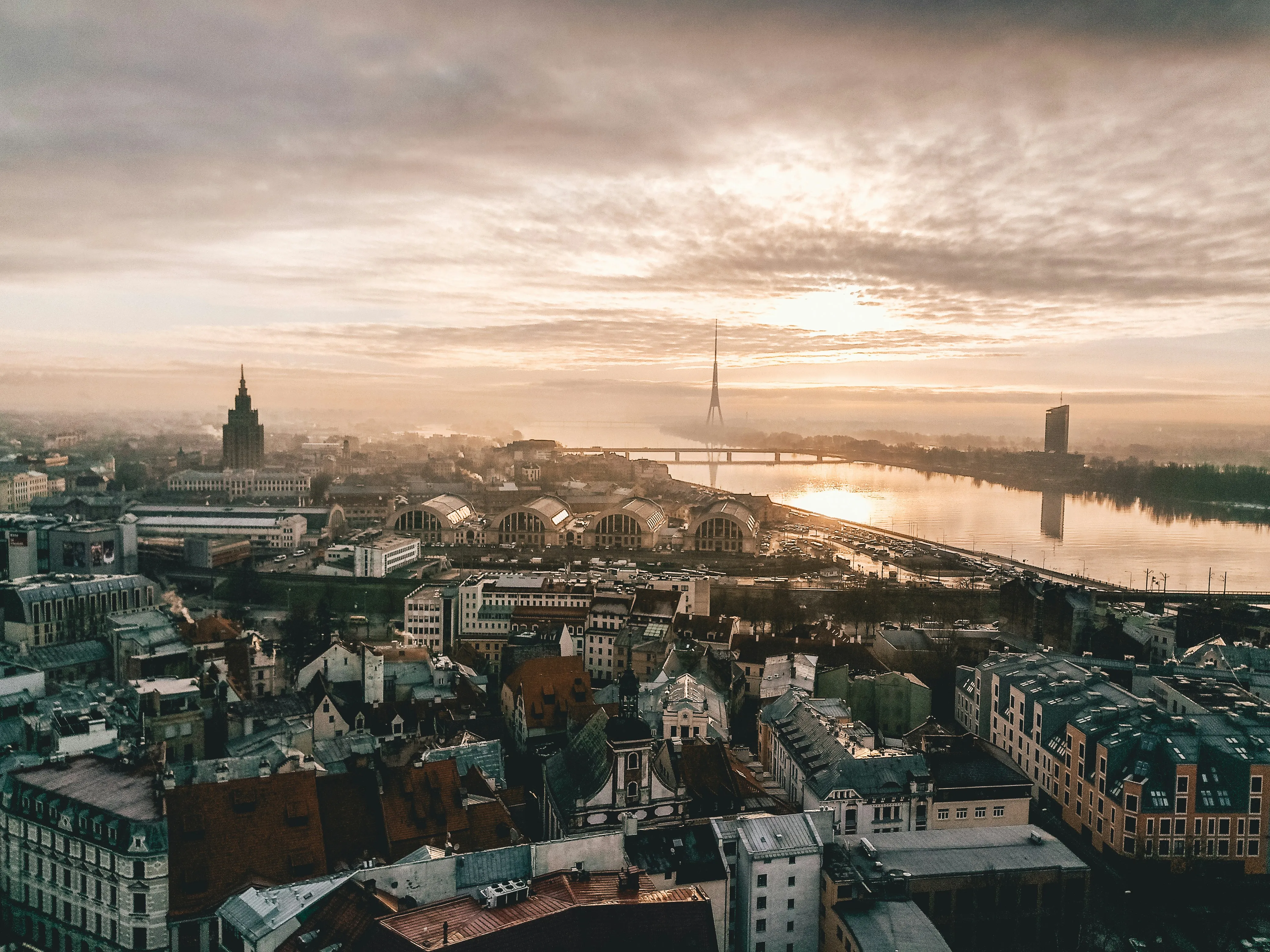
Latvia
Discover a Baltic country full of charm with its Art Nouveau architecture in Riga, extensive virgin forests, and quiet beaches surrounded by serene nature.
Quick Facts
- Capital
- Riga
- Language
- Latvian
- Russian, English
- Currency
- Euro (EUR)
- Best time to visit
- From May to September to enjoy pleasant temperatures and long days.
- Budget per day
- $50 - $150 per day
- Climate
- Seasonal temperate climate with mild summers and cold, snowy winters, influenced by its proximity to the Baltic Sea.
- Connectivity
- good
- Very easy to obtain in official stores, airports, and local supermarkets.
- Electricity
- Type C/F (230V)
- Local transport
- good
- Card usage
- widespread
- Tipping
- optional
🌎 Introduction
On the shores of the Baltic Sea, Latvia unfolds as a corner where time seems to move at a different pace. Its landscapes are marked by the constant presence of water and forests that occupy nearly half of the territory, transforming drastically with the passing of the seasons. From the light sand beaches that refresh the summer to the fields covered in thick white in winter, the natural environment defines much of daily life and the identity of those who inhabit these lands.
In its cities, especially in Riga, historic wooden facades coexist with the elegance of the Art Nouveau style, reflecting a heritage that has successfully integrated various cultural influences over the centuries. However, the essence of the country is perceived more clearly in its simplest traditions, such as the aroma of rye bread in the markets or the popular celebrations that mark the summer solstice. It is a place where the calm of rural areas and the cultural pulse are intertwined in a balanced way, offering an atmosphere of serenity and authenticity.
🛡️ General safety
Latvia is generally considered a very safe destination for international tourists. The Baltic country maintains relatively low crime rates and offers a peaceful environment for those who visit. In an indicative comparison, the security level is high, placing it in line with most of its neighbors in the European Union and Northern Europe.
The context for the traveler is one of calm; it is a modern country where one can walk through its cities and rural areas without a sense of insecurity. Nevertheless, as in any tourist destination, it is necessary to apply common sense and follow certain basic prevention guidelines, especially in areas with the highest influx of visitors.
Crime and common risks
Although violent crime is extremely rare against tourists, there are minor crimes that usually occur in specific areas:
- Pickpocketing and bag snatching are the most common risks, primarily in crowded places such as the Riga Central Market, train and bus stations, and the main streets of the capital’s old town (Vecrīga).
- Cases of scams in bars and nightclubs in central Riga have been reported. The practice consists of charging exorbitant prices for drinks or adding unexpected charges to the bill. It is advisable to always check the menu with prices before ordering.
- Thefts from vehicles can occur if valuables are left in plain sight. It is advisable to use guarded parking lots if traveling with a rental car.
- Occasionally, incidents related to excessive alcohol consumption may occur in nightlife areas, so it is recommended to avoid confrontations in these areas during the early morning hours.
Safety in cities and tourist areas
Safety in Latvia’s urban centers is notable. Authorities maintain a discreet but effective presence, and lighting on main streets is usually adequate.
- Public transport (trams, buses, and trolleybuses) is safe and efficient. However, it is the preferred place for pickpockets during peak hours, so it is advisable to wear your backpack in front.
- The tourist neighborhoods of Riga, Sigulda, or Jūrmala are very safe even at night. There are no “no-go zones” for tourists, although as in any large city, peripheral or industrial areas may feel less welcoming after midnight.
- On the beaches of Jūrmala, it is important to watch your belongings while taking a swim, as oversights are exploited by opportunists.
Transport safety
The transport system in Latvia is reliable and does not present significant risks to the traveler’s integrity.
- In Latvia, people drive on the right, as in most of continental Europe.
- The use of taxis is safe if recognized mobile applications (such as Bolt) or official company vehicles with a meter are used. It is recommended to avoid taxis without clear identification or those that offer services on the street without prior booking.
- The main road network is in good condition, although secondary roads can be narrow or unpaved in rural areas. During winter, driving can be dangerous due to ice and snow, with the use of winter tires being mandatory.
- Respect for traffic rules is strict; there are numerous radars and speed controls.
Natural and climatic risks
Latvia is not a country prone to extreme natural disasters like earthquakes or hurricanes, but its climate presents particularities that tourists should know:
- Extreme cold in winter (from November to March) can be a risk if one does not have the appropriate clothing. Temperatures can drop significantly below 0°C.
- The formation of ice patches on sidewalks is frequent, increasing the risk of falls and slips.
- In spring, the thaw can cause isolated flooding in areas near rivers, although it rarely affects the main urban centers.
- A relevant biological risk in summer and forested areas are ticks, which can transmit diseases such as encephalitis or Lyme disease. It is recommended to use repellent and long clothing if hiking.
Local legislation and norms
There are certain coexistence rules and local laws that should be respected to avoid fines or legal inconveniences:
- Alcohol consumption in public is prohibited and can lead to immediate financial penalties. It is only allowed on the authorized terraces of bars and restaurants.
- It is mandatory to always carry an official identity document (passport or national identity card, depending on the current border agreement).
- Possession and consumption of any type of drugs (including those considered “soft” in other countries) are severely punished in Latvia.
- Smoking is prohibited in most closed public spaces, public transport stops, and near the entrances of official buildings.
Safety for specific groups
- Female travelers: Latvia is a safe destination for women traveling alone. There are no specific dress codes and social respect is the norm. It is advised to follow the usual personal safety precautions at night.
- LGTBIQ+ travelers: In Riga, there is a community and venues oriented toward the collective, and physical safety is usually guaranteed. However, outside the capital and in more rural areas, society can be conservative, so excessive public displays of affection might attract uncomfortable looks or comments.
- Traveling with children or the elderly: The country is very welcoming for families and the elderly. Parks are well-maintained, cities are walkable, and medical services are of good quality.
Emergencies and assistance
In case of requiring immediate help, the Latvian emergency system is efficient and centralized:
- 112: This is the single emergency number to contact the police, fire services, and ambulances. It is free and they usually answer in Latvian, Russian, and English.
- The Tourism Police in Riga has officers who speak several languages and specifically patrol areas of greatest interest to help visitors.
- In case of an incident (such as the theft of documents), it is essential to go to the nearest police station to file an official report, an indispensable document for subsequent consular procedures.
> Tip: Download a transport app like Bolt both for moving by car and for ordering food; it is the most transparent and safest way to avoid misunderstandings with local prices and ensure quality service.
📝 Entry requirements
To plan a trip to Latvia, it is essential to have a valid identity document or passport. In the case of a passport, it is usually recommended that it has a minimum validity of several months from the planned date of departure from the country, thus ensuring that no inconveniences arise during the stay. Travelers usually find simple entry processes, especially if they come from regions with free movement agreements, although it is always convenient to carry documentation in perfect condition to avoid delays at checkpoints.
Regarding access permits, most international tourists do not usually require a prior visa for short-term stays. It is standard to be allowed to remain in Latvian territory for a maximum period of ninety days within a window of one hundred and eighty days, provided the reason for the trip is strictly tourist, recreational, or personal visits. Exceeding this period usually requires additional administrative procedures and a change in the category of the stay permit before the competent authorities.
Upon arrival at checkpoints, whether at airports or land borders, the personnel in charge may request additional information to validate the purpose of the trip. It is prudent to have a return ticket or departure ticket to a third destination, as well as proof of accommodation for the first nights of the itinerary. Likewise, a demonstration of sufficient financial solvency to cover the planned expenses during the stay in the country may be required, whether through cash, credit cards, or bank statements.
Regarding customs regulations, there are common restrictions on the introduction of certain products in luggage. It is recommended to moderate or avoid the transport of fresh food, plants, or unprocessed products of animal origin. In the case of traveling with specific medications, it is ideal that these travel in their original packaging and accompanied by a prescription or translated medical report, especially if they contain regulated substances. Valuables for personal use are usually exempt from procedures, provided their quantity does not suggest a commercial purpose.
From a health point of view, mandatory vaccinations are not usually required to enter Latvia under normal conditions. Nevertheless, it is advisable to have the usual vaccination schedule up to date and consider taking out travel insurance that offers international medical coverage. This type of foresight allows for enjoying the tourist experience with greater peace of mind, facilitating access to medical assistance in the event of any eventuality or urgency that could arise during the journey through the various Latvian regions.
Below are some key points to consider for the preparation of luggage and documentation:
- Travel documentation: Passport or national identity document according to current international agreements, preferably with a wide expiration margin.
- Tourist stay: Allowed time period generally limited to a maximum of three months for unpaid activities.
- Additional supporting documents: Hotel reservation, travel itinerary, and financial means supporting the stay.
- Health controls: It is recommended to have insurance with broad coverage and verify if there are seasonal health recommendations.
- Customs rules: Limitations on the transport of tobacco, alcohol, and certain medications under medical prescription.
- Border security: Routine baggage inspections and verification of the authenticity of travel documents.
🏥 Basic health considerations
When you prepare your trip to Latvia, you will find that the healthcare system is modern and efficient, especially in larger urban areas like Riga. You will find that public medical care meets European standards, although as a visitor you are likely to use the services of private clinics, where care is usually faster and the staff usually speaks English or Russian in addition to Latvian. Private consultation prices are moderate compared to other Western European countries, but they can still represent an unforeseen expense if you are not well covered.
It is highly recommended that you have travel medical insurance with broad coverage. Although for many travelers access to emergencies is guaranteed by international agreements, having a private policy will allow you to access the best centers without waiting. Make sure your insurance includes hospitalization and medical repatriation, as an emergency transfer to your place of residence could have an astronomical cost if you have to bear it yourself.
Regarding vaccinations, none will be mandatory for you to enter the country. Generally, it will be enough to have your usual vaccination schedule up to date. However, if you plan to engage in outdoor activities, hike through its dense forests, or visit rural areas, it would be wise to consult a professional about the vaccine against tick-borne encephalitis. This disease is endemic in the Baltic region during the spring and summer months, so it is a very smart precaution if you are going to be in direct contact with nature.
If you need to carry your own medication, you will see that there are no major restrictions as long as they are drugs for personal use. I advise you to always carry medications in their original packaging and accompanied by a clear medical prescription or a report from your doctor translated into English. This is especially important if you use substances that could be considered controlled, such as certain strong painkillers or anxiolytics. In the main cities, you will find 24-hour pharmacies where you can buy basic supplies without problems.
Regarding common risks, the climate is the factor you should monitor most. If you travel in winter, temperatures can be extremely low, so you will need to be well-equipped to avoid problems related to the intense cold. In summer, the biggest drawback is usually insects in the lake and forest areas. Apart from the aforementioned ticks, mosquitoes can be annoying, so you can use a good repellent to be more comfortable. There are no risks of water-borne or food-borne diseases that should concern you in any special way.
You can drink tap water with total peace of mind in the cities, as the quality is good and controls are strict. It is possible that in some old buildings you may notice a slight metallic taste due to old pipes, in which case you will always have the option of buying bottled water in any store. Regarding food hygiene, you will see that Latvia maintains very high standards, so you can try street food and local markets with total safety and confidence.
If you find yourself in a medical emergency situation, the number you should dial is 112, which is the universal emergency number, or 113 for direct medical assistance and ambulances. The emergency services are well-prepared and will assist you quickly.
For your stay to be perfect, remember to check your body after a day of hiking in the forest to make sure you do not have ticks attached. Always carry your insurance contact with you and move with the peace of mind that you are in a country with a solid and reliable healthcare infrastructure.
🚌 Transport within the country
To travel around Latvia, travelers usually opt for the bus and the train as their main means of transport. The bus network is extensive and connects most towns, while the train is a functional option for traveling from the capital to coastal areas or nearby populations. Being a small country, internal flights are not operated, so surface travel is the norm for getting to know the different regions.
The use of public transport is accessible for visitors. In the main stations, it is common to find clear signage, which facilitates orientation. Ticket purchases are easily made at ticket offices or electronic points of sale, allowing for autonomous management of the trip. Although the local language is predominant, the system is designed to be intuitive for the international tourist.
In large cities, there is a varied network that includes trams, trolleybuses, and buses covering the points of greatest interest. Conversely, when traveling to rural areas or natural environments, the frequency of vehicle passage decreases. In these cases, renting a vehicle is a recurring option for those who wish to explore less-connected spots with greater freedom.
Taxis and transport services requested through mobile applications are common in urban centers, offering a comfortable and direct service. Generally speaking, transport in the country is characterized by its punctuality and reliability, which conveys a sense of order and allows for planning sightseeing days with security.
“Tip”: It is advisable to verify return frequencies when visiting small towns or natural parks, as return services can end early in the day.
🤵 Culture and etiquette
Latvian society is usually characterized by discreet courtesy and a deep respect for individual privacy. In initial interactions, it is common for people to appear reserved, which should not be interpreted as a lack of interest, but rather as a display of prudence and respect for others’ personal space. The standard greeting consists of a firm handshake accompanied by direct eye contact. In daily dealings, sincerity and clear communication are valued, avoiding excessively effusive expressions in public places.
In shared spaces, such as transport or museums, a moderate tone of voice predominates. It is appreciated when visitors keep a low volume so as not to disturb the tranquility of the environment. Punctuality is considered an essential norm both in the professional field and in social commitments; arriving at the agreed time is interpreted as a sign of respect for others’ time. Conversely, delays without prior notice are usually perceived with some discomfort.
When invited to a private home, it is a widespread custom to take off your shoes upon entering, leaving outdoor footwear in the hallway. It is a gesture of courtesy to bring a small gift for the hosts, such as flowers or sweets. In the case of flowers, local tradition suggests giving an odd number of them, as bouquets with even quantities are usually reserved for mourning situations. During meals, a calm attitude at the table is expected, and it is customary to thank for the meal at the end.
Regarding catering services, although service may be included, it is common to leave a tip of around 10% if satisfied with the attention received. In places of worship, such as Lutheran, Catholic, or Orthodox churches, it is recommended to dress discreetly and maintain rigorous silence. Likewise, at places of great historical or national relevance, such as the Freedom Monument in Riga, a respectful attitude must be shown, avoiding excessively informal behavior in their vicinity.
“Tip”: When giving flowers as a gift to a host, make sure the bouquet is composed of an odd number of items, as even quantities are traditionally associated with funerals.
🍛 Typical gastronomy
The cuisine of Latvia is a faithful reflection of its natural environment, marked by the proximity of the Baltic Sea, its dense forests, and a climate of very contrasting seasons. It is a functional and nutritious gastronomy, where products from the land take absolute center stage. Dark rye bread is, without a doubt, the most sacred element of the Latvian table, present in almost any meal and valued not only as food but as a cultural symbol of identity and hospitality.
Latvian flavors are usually mild, with a constant presence of sour and smoky notes. The use of dill is very common, flavoring a wide variety of dishes, as is sour cream, which is used to thicken soups, accompany meats, or dress salads. Fundamental ingredients include potatoes, legumes, pork, and fish, both fresh and smoked or canned, especially herring and sprats.
Regarding eating habits, lunch is usually the main meal of the day and generally takes place between 12:00 and 15:00. It is common to start with a hot soup or cold soup, depending on the time of year. Dinners are usually somewhat lighter, although in restaurants the schedule is flexible and a relaxed but respectful etiquette is maintained. Wild harvesting is also a deeply rooted tradition; during the summer and autumn months, it is common for families to collect mushrooms and berries in the forests, which they then integrate into their daily recipes or preserve for winter.
Regarding drinks, craft beer enjoys a long tradition and is served in almost all establishments. The consumption of local herbal infusions and a well-known dark herbal liqueur, with an intense and medicinal flavor, is also very characteristic; it is usually taken alone, with coffee, or mixed in cocktails. The atmosphere in dining establishments is usually cozy, always seeking that sense of home and simplicity that defines the character of Baltic cuisine.
| Dish | Description | Main Ingredients | Where to try it | Tip |
|---|---|---|---|---|
| Pelēkie zirņi ar speķi | Gray pea stew, considered the most traditional national dish. | Gray peas, smoked bacon bits, and fried onion. | Traditional taverns and markets in Riga. | It is usually accompanied by a glass of kefir or fermented milk. |
| Aukstā zupa | Vibrant pink cold soup, very popular during the summer months. | Beetroot, cucumber, hard-boiled eggs, kefir, and lots of dill. | Local cuisine restaurants and buffet-style cafeterias. | It is ideal for hot days due to its freshness and lightness. |
| Pīrāgi | Crescent-shaped baked rolls, served at celebrations. | Bread dough, smoked bacon, and chopped onion. | Local bakeries and traditional market stalls. | They are best enjoyed when they are fresh out of the oven and still warm. |
| Rupjmaizes kārtojums | Traditional layered dessert combining sweet and sour textures. | Grated rye bread, cranberry jam, and whipped cream. | Typical Latvian food restaurants in any region. | It is a substantial dessert, perfect for sharing after a meal. |
| Šašliks | Marinated and charcoal-grilled meat skewers, of oriental influence but deeply rooted. | Pork or chicken, onion, vinegar, and spices. | Outdoor picnic areas and recreation zones on the coast or in the forest. | It is the star food of picnics and outdoor events in summer. |
📷 Areas and places to visit
Latvia is a destination that surprises with its balance between historical heritage and a nature that seems untouched. The gateway is usually Riga, its capital, where the Old Town (Vecrīga) concentrates cobbled alleys, medieval churches, and lively squares that have witnessed centuries of Baltic trade. However, what really defines the urban character of the city is its Art Nouveau architecture, with detailed facades numbering in the hundreds in the central district. Walking through these streets allows one to appreciate the evolution of a city that has successfully integrated its medieval past with a modern cultural life, visible in its numerous art museums and in the bustling Central Market, located in former zeppelin hangars.
A short distance from the capital, the coast offers a completely different landscape in Jūrmala. This coastal area is known for its extensive white sand beaches and its pine forests that reach almost to the shore of the Baltic Sea. The most characteristic feature of this place is its wooden architecture, with historic villas reflecting the splendor of old European spas. It is an ideal space for long walks by the sea, enjoying the tranquility of the natural environment, or exploring the pedestrian areas where small art galleries and local craft workshops mingle.
Inland, the Gauja National Park represents the green heart of the country. Around the town of Sigulda, the landscape transforms into deep valleys, sandstone caves, and dense forests. This region is a key point for those interested in history, as it houses imposing fortresses such as Turaida Castle and the ruins of the Livonian Order castle. Visitors usually walk the hiking trails that border the Gauja River, visiting natural viewpoints and small historical exhibitions that narrate local legends in an environment of great ecological value.
To the south, in the Zemgale region, the landscape becomes flatter, but it guards one of the most important architectural treasures of the Baltic region: the Rundāle Palace. This Baroque and Rococo style complex, with its manicured rose gardens and highly decorated halls, offers a glimpse into the opulence of the nobility in past centuries. Nearby, the city of Bauska stands out for its fortress located at the confluence of two rivers, showing the defensive character this area had during different eras of occupation and conflict.
The Kurzeme region, to the west, maintains a very marked identity linked to the sea and rural life. Here you will find Kuldīga, a town that maintains its medieval layout and is famous for housing the Venta Rumba, a natural formation that stands out for being the widest waterfall in Europe. Further towards the coast is Liepāja, a city where the contrast is maximum: from fine sand beaches to the Karosta neighborhood, a former military zone with austere architecture and a unique history that allows for a better understanding of the 20th century in Northern Europe.
Finally, the east of the country, in the Latgale region, offers a different cultural experience. Known as the land of lakes, it is an area of great artisanal tradition, especially linked to pottery and ceramics. Here, spirituality is manifested in places like the Aglona Basilica, a pilgrimage center of great importance. The rural landscapes of this region, dotted with wooden churches and small lakes, are ideal for those looking to get to know the most deep-rooted traditions and the characteristic hospitality of the country’s less urbanized areas.
“Tip”: You cannot miss visiting the Historic Center of Riga, the most emblematic place in the country.
✈️ Best time to travel
Choosing the right time to visit Latvia depends largely on the experiences sought, as the four seasons are very marked and completely transform the landscape. The country has a temperate continental climate where summers are mild and winters can be harsh, offering everything from days with almost perpetual light to urban scenes covered in snow.
Most visitors opt for the months with the most pleasant temperatures to enjoy nature and historical heritage. However, each period of the year has its own attractions, from the awakening of national parks in spring to the calm of golden forests in autumn or the cultural traditions linked to the cold and local gastronomy during winter.
| Season | Months | Typical climate | What to expect | Tourist influx |
|---|---|---|---|---|
| Spring | Mar – May | Cool and variable, with the thaw at the start and rising temperatures toward May. | Awakening of flora, migratory bird watching, and urban parks in bloom. | ⭐⭐ Low-medium |
| Summer | Jun – Aug | Warm and pleasant, with highs around 20-25°C and very long days. | Cultural festivals (like the summer solstice), activities on Baltic beaches, and hiking. | ⭐⭐⭐⭐ High |
| Autumn | Sep – Nov | Gradual drop in temperatures and increase in cloudy or rainy days. | Landscapes of ochre colors in the Gauja valley, mushroom picking, and a quiet atmosphere in the cities. | ⭐⭐ Medium |
| Winter | Dec – Feb | Intense cold, frequently below zero, with snow and short days. | Christmas markets, winter sports, frozen lakes, and traditional saunas. | ⭐⭐ Medium (High at Christmas) |
🗣️ Basic vocabulary
Although in tourist areas and among young people it is common to be able to communicate in English, knowing some basic words in Latvian greatly facilitates daily life during the trip. Latvians positively value visitors making the effort to use their local language, which helps create a friendlier atmosphere in shops, restaurants, or accommodations.
Mastering these simple expressions will allow you to navigate everyday situations with greater ease, such as greeting when entering an establishment, thanking for a service, or asking for the bill politely.
- Sveiki: Hello (standard and versatile greeting).
- Lūdzu: Please (also used for “you’re welcome”).
- Paldies: Thank you.
- Jā: Yes.
- Nē: No.
- Atvainojiet: Sorry or excuse me (useful for getting a waiter’s attention or asking to pass).
- Uz redzēšanos: Goodbye.
- Rēķinu, lūdzu: The bill, please.