


Algeria
Discover the immensity of the Sahara, ancient Roman ruins facing the sea, and the vibrant life of Algiers on an authentic journey through North Africa.
Quick Facts
- Capital
- Algiers
- Language
- Arabic
- Berber, French
- Currency
- Algerian Dinar
- Best time to visit
- Spring (March to May) and autumn (September to November)
- Budget per day
- $35 - $90 per day
- Climate
- Mediterranean on the coast with hot summers and mild winters; extreme desert climate with large temperature fluctuations in the interior of the country.
- Connectivity
- medium
- Very easy to obtain at airports and kiosks with a passport
- Electricity
- Type C / F (230V)
- Local transport
- acceptable
- Card usage
- cash is used more
- Tipping
- optional
🌎 Introduction
Algeria unfolds from the shores washed by the Mediterranean to the infinite stretches of sand that make up the Sahara. In this territory, the intense blue of the coast contrasts naturally with the ochre of the dunes and the green of the northern valleys. Walking through its cities allows one to perceive a mixture of influences where European-style facades intertwine with ancient medinas of labyrinthine streets, while the aroma of coffee and spices floats in the air of mild afternoons.
Daily life moves between the bustle of local markets and the serenity of inland oases. The gastronomy, with couscous and fresh dates as protagonists, speaks of a culture deeply linked to the land and hospitality. Whether under the soft winter sun in the southern regions or during the spring freshness that covers the Atlas Mountains, the country shows a diverse identity that has been forged over centuries, maintaining a steady balance between its rich historical heritage and its current reality.
🛡️ General safety
Algeria is a country that has made great efforts to improve its internal security in recent decades, consolidating itself as a destination that can be visited with proper planning. The safety level for tourists is considered medium, highlighted by a very visible police and military presence, which generates a sense of constant surveillance in the main cities and land routes.
The context for the traveler is one of deep hospitality, where the State especially protects the foreign visitor. However, due to its size and geography, safety can vary significantly between the northern urban areas and the remote areas of the desert, so it is essential to follow the instructions of local authorities at all times.
Crime and common risks
Violent crime against tourists is rare in Algeria. Incidents are usually limited to petty crimes resulting from carelessness. The most common risks include:
- Pickpocketing and bag snatching: Can occur in crowded markets (souks) or in areas with large crowds in major cities.
- Minor scams: Although less common than in other mass tourist destinations, it is recommended to always agree on prices for services or products before accepting them.
- Border zones: It is crucial to avoid areas near the borders with Libya, Mali, Niger, and Mauritania due to regional instability. These areas are strictly monitored and often restricted to foreigners.
Safety in cities and tourist areas
Urban centers such as Algiers, Oran, or Constantine are generally safe during the day. Surveillance is constant in medium-high category hotels and around historical monuments.
- Historic centers (Casbah): In places like the Casbah of Algiers, it is advisable to visit accompanied by an authorized local guide, both due to the complexity of its streets and for preventive safety.
- Nightlife: It is preferable to move in groups and use trusted transportation if you decide to go out at night, avoiding poorly lit or peripheral streets.
- Urban public transport: The Algiers metro and tram are modern and safe, with surveillance at stations. Buses can be more chaotic, and it is where you should watch your personal belongings more closely.
Safety in transportation
Transportation in Algeria offers various options but requires adaptability from the traveler.
- Taxis: They are a safe and economical means. It is recommended to use transport applications (such as Yassir or Heetch) that allow you to record the journey and know the price in advance.
- Driving: In Algeria, people drive on the right. The condition of the main roads is good, but local driving can be somewhat aggressive. It is inadvisable to drive at night on intercity roads due to the lack of lighting and potential security checkpoints.
- Roadblocks: It is very normal to find Gendarmerie or Police checkpoints. They are routine, and the officers are usually friendly to tourists; it is recommended to always have your passport at hand.
Natural and climatic risks
The country presents risks derived mainly from its geography and extreme climate:
- Extreme heat: In Saharan areas, temperatures can exceed 45°C in summer. This poses a risk of dehydration and heatstroke. It is vital to travel to the south only between October and April.
- Seismic activity: Northern Algeria is located in a fault zone, so there are risks of occasional earthquakes, generally of low intensity.
- Flash floods: In autumn, torrential rains can cause rapid flooding in dry areas (wadis), so camping in dry riverbeds should be avoided.
Legislation and local norms
Algeria is a country with conservative social values and legislation that the traveler must strictly respect to avoid inconveniences:
- Photography: It is strictly forbidden to photograph official, military, or police buildings, or strategic infrastructure (bridges, ports, airports). Failure to comply can result in detention or confiscation of equipment.
- Drones: The use of drones is prohibited or strictly regulated. Do not attempt to enter the country with one without special prior permits, as it will be confiscated at customs.
- Clothing: It is recommended to dress modestly. In cities, Western clothing is common, but in rural or religious areas, it is respectful to cover shoulders and legs.
- Prohibited substances: The consumption and possession of drugs are severely punished with long prison sentences.
Safety for specific groups
- Female travelers: It is a safe destination, although unwanted attention in the form of stares or comments may be received. Dressing discreetly and avoiding walking alone at night in sparsely populated areas helps minimize disturbances.
- LGTBIQ+ travelers: Homosexuality is illegal in Algeria, and there are laws that penalize public acts against “decency.” Absolute discretion is recommended; public displays of affection (regardless of orientation) are not common in the local culture.
- Children and elderly: The country is very respectful of the elderly and children. The main risk for them is the heat and the lack of accessibility infrastructure (irregular sidewalks or lack of ramps).
Emergencies and assistance
Algeria has operational emergency services, although the language barrier (Arabic or French) may be present.
- Police: The general number is 17 (from landlines) or 1548 (from mobiles).
- Civil Protection (Ambulances and Firefighters): The number is 14.
- Medical assistance: In large cities, there are good quality private clinics. It is essential to travel with comprehensive medical insurance that includes repatriation, as costs for foreigners can be high.
”> Tip: Whenever you travel to the south or take long road trips, inform your accommodation or the local police about your route; the proactive surveillance of Algerian authorities is your best ally for a peaceful trip.”
📝 Entry requirements
To undertake a trip to this North African destination, the fundamental document is usually the passport, which should have a minimum validity of several months from the planned date of entry into the territory. It is recommended that the document be in good condition and have enough blank pages for the control stamps that authorities usually apply upon arrival and departure from the country.
In most cases, international travelers usually require a tourist visa managed in advance through the corresponding consular representations. This permit usually determines the maximum duration of the stay, which usually sits in periods that do not exceed ninety days, allowing the discovery of the main cultural and natural attractions with a reasonable margin of time.
At the time of arrival, it is common to be asked for information about travel plans, which may include presenting an exit ticket from the country or a confirmation of an accommodation reservation. Likewise, having sufficient economic means to cover expenses during the stay is a factor that control agents usually take into account to facilitate access for visitors smoothly.
Regarding customs procedures, it is important to consider that there are controls on the import of certain items. The use of advanced technological equipment, such as drones or professional cameras, often requires specific permits or prior declarations to the authorities. As for currencies, it is usual to have to declare the amount of cash brought in if it exceeds certain established thresholds, keeping the exchange receipts throughout the stay.
In the health field, there are usually no exceptional vaccination requirements for the average traveler, although it is advisable to keep the general vaccination schedule up to date. Depending on the type of route and the areas to be visited, some professionals recommend additional precautions related to food hygiene or the consumption of bottled water, always from a perspective of prevention and personal care.
Below are the key points for access to the territory:
- Identity documentation: Passport with remaining validity, generally greater than six months.
- Access permits: Tourist visa processed previously at the corresponding consulate.
- Length of stay: Usual stays of up to 90 days according to the authorization granted.
- Proof of solvency: Justification of economic funds and transport ticket for return or transit.
- Luggage and customs: Restrictions on the entry of drones, radio equipment, and declaration of foreign currency.
- Restricted products: Control over the entry of medicines without a medical prescription or fresh food.
- Health and prevention: Recommendation to have travel insurance and updated basic vaccines.
🏥 Basic health considerations
When preparing for your trip to Algeria, it is essential to take into account some aspects of its health system so that your stay is as peaceful as possible. In large cities like Algiers, Oran, or Constantine, you will find a reasonable network of health centers, although you should know that there is a marked difference between public and private healthcare. While public hospitals are often quite saturated, private clinics offer a standard of care closer to what you might expect in other international destinations, with more modern facilities and reduced waiting times.
The cost of medical care in these private clinics is not excessively high compared to other countries, but for a tourist, prices can add up quickly. Regarding language, it will be very useful to know that the vast majority of healthcare personnel speak French fluently in addition to Arabic, so communication is usually fluid if you can manage in that language.
Taking out travel medical insurance is not just a recommendation; in practice, it is an indispensable requirement to obtain an entry visa for the country. Your policy should be as complete as possible, ensuring it includes hospitalization and, very especially, medical repatriation by air ambulance in case of grave necessity. Having this coverage will allow you to access the best private medicine without having to pay large amounts out of pocket.
In the section on vaccines, there are currently none that are mandatory to enter Algeria from most countries, unless you are coming from an area with a risk of yellow fever. However, it is advisable to have your official vaccination schedule up to date. As a general recommendation for any traveler, it is usually advisable to be protected against Hepatitis A and B and tetanus-diphtheria. If you plan to take a long-duration trip or visit very remote rural areas, you might consider the typhoid fever vaccine.
If you are following a specific treatment, it is vital to bring all the necessary personal medication to cover the days of your stay, preferably in its original packaging. Algeria is quite strict with the entry of certain medicines, especially those containing psychotropic or narcotic substances. Therefore, you should always travel with the original medical prescription and, if possible, a small report from your doctor translated into French justifying why you need that drug. You will find pharmacies easily in the cities, but they may not have exactly the brand you usually consume.
Regarding health risks, Algeria’s climate plays a fundamental role. In the north, the climate is Mediterranean, but if you decide to go south to see the Sahara Desert, you will face extreme heat and intense environmental dryness. Here the main risk is dehydration and heatstroke. It is also important to protect yourself from insect bites in rural areas and to be careful with sun exposure, which is very strong throughout the year. There are no serious tropical diseases you should worry about excessively, but prevention is always your best ally.
Regarding water and food, the golden rule is to always consume bottled water and ensure that the seal is intact when opening it. It is not recommended to drink tap water or use ice cubes of unknown origin. As for food, you can try delicious dishes at street stalls and restaurants, but try to ensure the food is well cooked and avoid raw vegetables or fruits that you have not peeled yourself to avoid typical traveler stomach upsets. The hygiene level in restaurants in tourist areas is usually acceptable, but it is always good to be cautious.
In the event that you suffer a health emergency during your stay, the telephone number you should dial to contact Civil Protection (ambulances and medical emergencies) is 14. To contact the police, the number is 17. You should know that, although ambulance services exist, in congested cities it can sometimes be faster to travel by your own means to the nearest private clinic if the situation allows.
Finally, as practical advice, I would say don’t forget to pack a basic first-aid kit with pain relievers, gastric protectors, hand sanitizer, and insect repellent. Always stay well hydrated, use high-factor sunscreen and, in the face of any persistent discomfort, do not hesitate to go to a private doctor as soon as possible so that your trip remains an unforgettable experience.
🚌 Transport within the country
Moving through Algerian territory requires considering the vast distances of the country. To cover long-distance routes, especially towards the desert south, the plane is the most efficient and used option by travelers. In the northern strip, the rail network effectively links the most important coastal cities, offering a comfortable alternative to observe the coastal landscape. In addition, long-distance buses connect the provinces regularly and constantly.
Within the large urban centers, visitors have modern systems such as the metro and tram, which are simple to use and have clear signage, usually presented in Arabic and French. Ticket purchase is managed directly at the stations in person, following an intuitive process. On the other hand, in rural areas, transport is more informal and depends largely on collective taxis, which usually depart once all the seats in the vehicle have been filled.
Individual taxi service is very frequent in urban centers and is a practical way to get from one point to another quickly. It is also common to use services managed through mobile applications, which brings greater predictability to the journey and the route. Although the main road infrastructure is in adequate condition, punctuality in land transport media can vary depending on urban traffic and the specific conditions of each regional route.
In general terms, the transport system is an accessible option for the visitor, although it demands a certain capacity for adaptation in less populated environments. Comfort in travel has improved significantly, and transport personnel are usually collaborative with international travelers. The combination of different means allows for the exploration of both the modernity of the cities and the heritage of the inland areas with logical planning.
Tip: It is advisable to always have the destination address written down or show a map on your mobile device, as this greatly facilitates communication with drivers if a common language is not shared.
🤵 Culture and etiquette
Hospitality is a central value in Algerian society, where interactions usually begin with slow and detailed greetings. When meeting someone, it is common to spend time exchanging questions about personal well-being before starting any formal conversation. The most common greeting is a firm handshake between people of the same sex. In encounters between men and women, the most respectful thing is to wait for the local person to take the initiative to offer their hand; if not, a slight nodding gesture with the hand over the chest is a polite and widely accepted alternative.
In public spaces, discreet and moderate behavior is valued. The volume of the voice is usually calm, and an attitude of patience toward daily setbacks is appreciated. Regarding punctuality, the concept of time tends to be more flexible than in other cultures, so schedules may not be strict in social contexts, which should not be interpreted as a lack of interest or inconsideration. In conversations, it is preferable to maintain a cordial personal distance and avoid topics that may be excessively private if a relationship of trust has not been established.
Gastronomy and the act of sharing a table are pillars of social life. If you receive an invitation to a private home, it is customary to remove your shoes before entering. In traditional contexts where common dishes of food are shared, the right hand is preferably used for both eating and offering or receiving objects. Regarding tips, although they are not mandatory, they are a well-received gesture of gratitude in catering establishments and tourist services, always adapting to the satisfaction with the treatment received.
Respect for traditions and beliefs is fundamental for harmonious coexistence. When visiting places of worship or residential areas, it is recommended to dress modestly, generally covering shoulders and knees. During religious festivities such as Ramadan, it is important to show consideration for those practicing the fast, avoiding eating, drinking, or smoking ostentatiously in public spaces during daylight hours. Likewise, it is an essential rule of courtesy to request permission before taking photographs of people or in private settings.
“Tip”: It is highly recommended to always accept the first offer of tea or coffee in a social or commercial meeting, as this gesture is considered an acceptance of local hospitality and greatly facilitates the creation of an atmosphere of mutual trust.
🍛 Typical gastronomy
The gastronomy of Algeria is a reflection of its rich history and the mixture of Berber, Arabic, Mediterranean, and Ottoman influences. It is characterized by being a cuisine of intense and balanced flavors, where the use of spices does not seek extreme spiciness, but rather aromatic depth. Ingredients such as cumin, coriander, cinnamon, and ras el hanout are fundamental to giving personality to the stews that are cooked over low heat throughout the territory.
Wheat is the fundamental pillar of the Algerian diet, appearing both in the form of semolina for couscous and in an enormous variety of artisanal breads. Most main meals are accompanied by bread, which serves not only as food but also as a utensil for scooping up sauces and meats. Eating habits usually include a substantial lunch, which is the main meal of the day, and a somewhat lighter dinner, although always based on fresh products such as legumes, seasonal vegetables, lamb, and chicken.
In the social sphere, food is a symbol of hospitality and generosity. It is common for dishes to be served on large platters to be shared among diners, reinforcing the sense of community. Regarding drinks, mint tea and coffee are an essential part of daily life; the former is usually served after meals or during visits, while coffee, often flavored with orange blossom water, is enjoyed at any time of the day in the country’s numerous cafes.
When eating in restaurants or local houses, it is useful to know that the pace is usually slow. There is no rigid etiquette, but showing interest in local ingredients is positively valued. In urban centers, meal times are similar to European ones, although in rural areas or during festive periods like Ramadan, routines adapt to religious celebrations. Additionally, the coast offers an excellent selection of fish and seafood, generally prepared simply to highlight the quality of the Mediterranean product.
| Dish | Description | Main ingredients | Where to try it | Tip |
|---|---|---|---|---|
| Couscous | Considered the national dish, it is served on large shared platters. | Wheat semolina, vegetables, chickpeas, and lamb or chicken meat. | Traditional restaurants in Algiers or Constantine. | Try the regional variants, which change according to seasonal vegetables. |
| Chorba Frik | Aromatic and comforting soup, very popular during festivities. | Green wheat (frik), tomato, meat, coriander, and spices. | Local markets and home-cooking restaurants. | Add a few drops of fresh lemon just before eating it. |
| Tajine Zitoun | A mild and aromatic stew that combines salty and acidic flavors. | Green olives, chicken, carrots, and pickled lemon. | Algerian cuisine restaurants in any city. | Accompany it with artisanal bread to enjoy the sauce. |
| Chakchouka | Versatile dish of sautéed vegetables, similar to a Mediterranean pisto. | Peppers, tomatoes, onions, and poached eggs. | Cafes and breakfast or light lunch stalls. | It is ideal for a quick lunch accompanied by freshly made bread. |
| Mahjouba | A type of thin, folded crepe, very common as street food. | Semolina dough filled with a sautéed mixture of tomato, onion, and spices. | Street food stalls in commercial areas. | Eat it freshly made and very hot to appreciate the texture of the dough. |
📷 Areas and places to visit
Algeria is a destination of marked contrasts where Mediterranean history blends with the immensity of the desert. The capital, Algiers, serves as an ideal starting point to understand the complexity of the country. At its core is the Casbah, a fortified citadel declared a World Heritage Site, whose narrow, winding streets house traditional homes, historic mosques, and Ottoman palaces. Near this area, visitors can explore the Bardo National Museum, which offers a detailed view of prehistory and local ethnography, or the National Public Museum of Fine Arts, located in front of the lush Jardin d’Essai, a botanical space of great international relevance.
To the east is the city of Constantine, known as the city of hanging bridges. Built over a rocky gorge, this city stands out for its unique geography and structures such as the Sidi M’Cid Bridge. Strolling through its old town allows you to discover the Emir Abdelkader Mosque, one of the largest in the country. Following the coastline, you reach Annaba, where the remains of the ancient Roman city of Hippo Regius and the Basilica of St. Augustine show the deep influence of classical civilizations in North Africa.
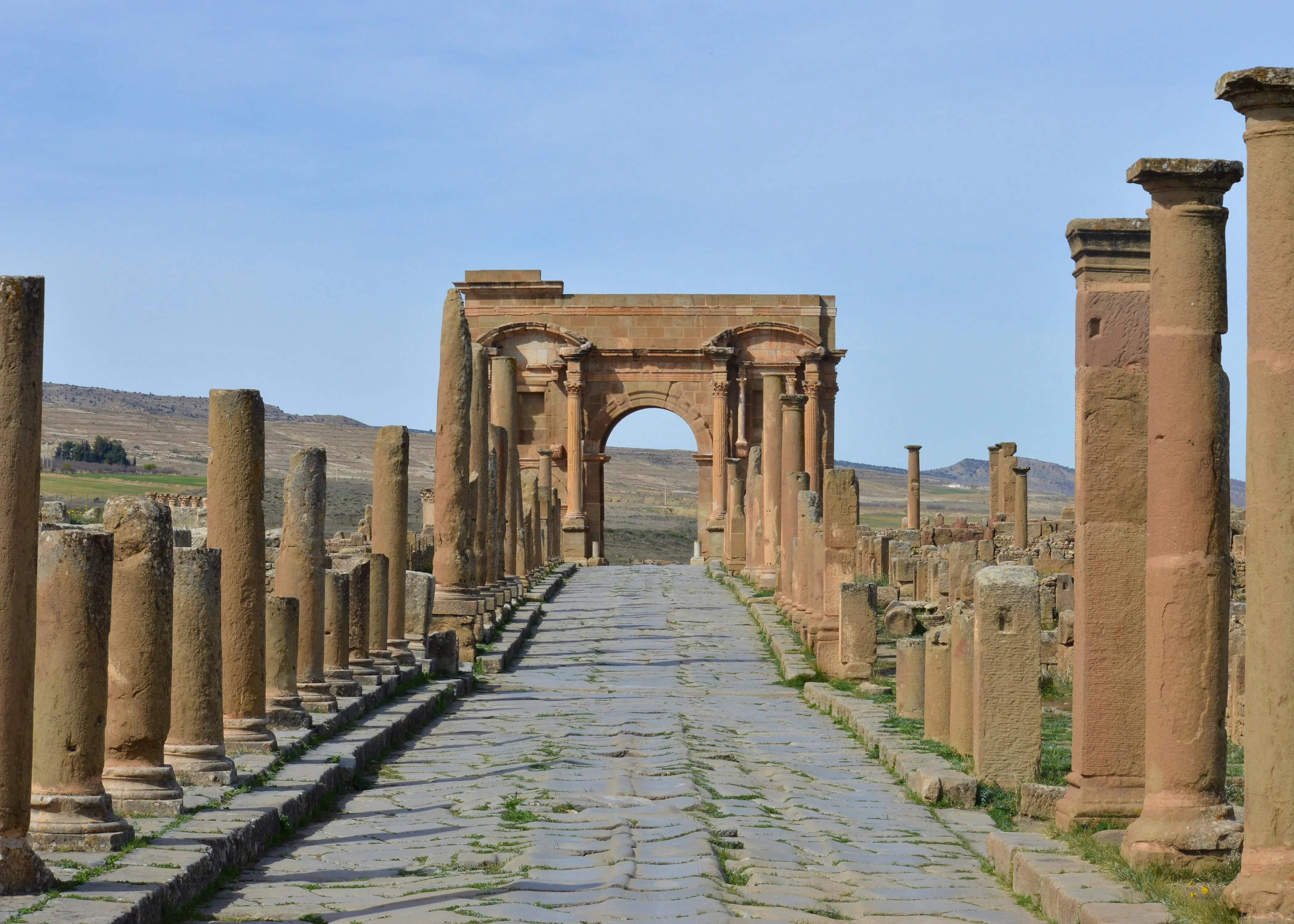
The Roman legacy is, in fact, one of the pillars of cultural interest in Algeria. The sites of Timgad and Djemila are exceptional examples of perfectly preserved Roman urbanism, with their theaters, forums, and temples still standing in rural and mountainous settings. On the central coast, Tipaza offers a unique combination of Phoenician, Roman, and Byzantine ruins located by the sea, allowing for trails that cross ancient amphitheaters and basilicas with views of the Mediterranean.
In the west, the city of Oran reflects a particular identity due to its shared heritage and its architecture with European influences. The Santa Cruz Fort, located atop a hill, provides a complete perspective of the bay and the port. Oran is a vibrant center for music and contemporary culture, with an urban life that invites walking along its promenades and visiting its theaters and main squares.
Heading south, the landscape changes radically upon entering the Sahara. The M’zab Valley, with the city of Ghardaïa at the lead, features a group of five walled cities with a distinctive and functional adobe architecture that has inspired architects from around the world. This oasis is an example of social organization and water use in arid conditions, where traditional markets remain the heart of daily activity.
For those looking for nature and expedition routes, the extreme south houses the Tassili n’Ajjer National Park and the Hoggar Mountains. Near the city of Tamanrasset, these volcanic landscapes and sandstone plateaus contain one of the most important collections of rock art in the world, with thousands of engravings and paintings narrating life in the region millennia ago. The geological formations of Assekrem are a point of interest for observing the light changes over the desert relief at sunrise and sunset.
Finally, the Kabylie region offers a mountainous environment covered with forests and olive groves, where the Djurdjura National Park stands out for its hiking trails and traditional villages located on the summits. This diversity of areas allows for enjoyment of both cultural festivals in the cities and the tranquility of the oases or the rugged coast, showing a country that balances its millennial traditions with a steady modernity.
Tip: You cannot miss visiting the Casbah of Algiers, the most emblematic place in the country.
✈️ Best time to travel
Algeria is a country of great extent and geographic diversity, which allows for favorable conditions at different times of the year depending on the area you wish to visit. Generally, transitional seasons, such as spring and autumn, are considered the most balanced for touring both the Mediterranean coast in the north and the vast stretches of the Sahara desert in the south, as temperatures are moderate and allow for outdoor activities in comfort.
During the mild months, the north of the country shows green landscapes and coastal cities with a pleasant climate, while the south offers sunny days and cool nights, ideal for expeditions through the dunes and mountain massifs. In contrast, the middle months of the year present intense heat in arid areas, and winter can bring rain to the north and very low temperatures at night in desert and mountain areas.
| Season | Months | Typical climate | What to expect | Tourist influx |
|---|---|---|---|---|
| Spring | Mar – May | Mild temperatures (15°C - 25°C) and longer days. | Flowering in the north, green landscapes, and local cultural festivals. | Medium ⭐⭐ |
| Summer | Jun – Aug | Intense heat, especially in the south (35°C - 45°C). Humidity on the coast. | Beach activities on the shoreline and urban night festivities. | Medium-Low ⭐ |
| Autumn | Sep – Nov | Gradual drop in temperatures (20°C - 30°C) and clear skies. | Start of Sahara routes, date harvest, and ideal light for photography. | Medium ⭐⭐ |
| Winter | Dec – Feb | Cool in the north with possible rain; intense cold in the desert at night. | Snow in the Atlas Mountains and visits to archaeological sites without the heat. | Low ⭐ |
🗣️ Basic vocabulary
Learning some basic expressions in Algerian Arabic (known as Darija) is a great help for moving through the country with greater fluidity. Although French is widespread in urban areas, addressing local inhabitants in their language facilitates interaction in markets, transport, and daily situations, showing respect for their culture.
It is not necessary to delve deep into grammar to manage practically. Knowing the most common greetings and polite formulas usually generates a friendly response from hosts and helps solve basic needs, such as asking a price or asking for directions in a simple way.
- As-salam alaykum: Traditional and formal greeting meaning “peace be upon you.”
- Saha: Very versatile expression used to say thank you or as a farewell.
- Labass: Used to ask “how are you?” or to indicate that everything is fine.
- Min fadlak: Please.
- Iyeh / La: Yes / No.
- Bsh-hal?: How much does it cost? (essential for shopping in markets or souks).
- Smahli: Sorry or excuse me.