


Nicaragua
Land of lakes and volcanoes offering colonial cities, pristine beaches, and lush jungles for travelers seeking authentic nature and culture in Central America.
Quick Facts
- Capital
- Managua
- Language
- Spanish
- Nicaraguan Creole English, Miskito
- Currency
- Nicaraguan Córdoba (NIO) and US Dollar (USD)
- Best time to visit
- From November to April, coinciding with the dry season
- Budget per day
- $30 - $90 per day
- Climate
- Tropical climate with constant warm temperatures; it has a dry and a rainy season, being cooler in mountainous areas.
- Connectivity
- medium
- Very easy to acquire at airports and authorized establishments
- Electricity
- Type A/B (120V)
- Local transport
- limited
- Card usage
- cash is used more
- Tipping
- optional
🌎 Introduction
In the heart of the isthmus, the landscape is defined by a geography where volcanoes and vast stretches of fresh water set the daily rhythm. It is a territory where the land seems to be in constant dialogue with its lakes, offering horizons that range from the stillness of the islets to the silhouette of the peaks that watch over the Pacific coast. The alternation between the dry and rainy seasons transforms the environment cyclically, shifting from the golden tones of summer to a deep green that envelops the coffee-growing areas and the plains.
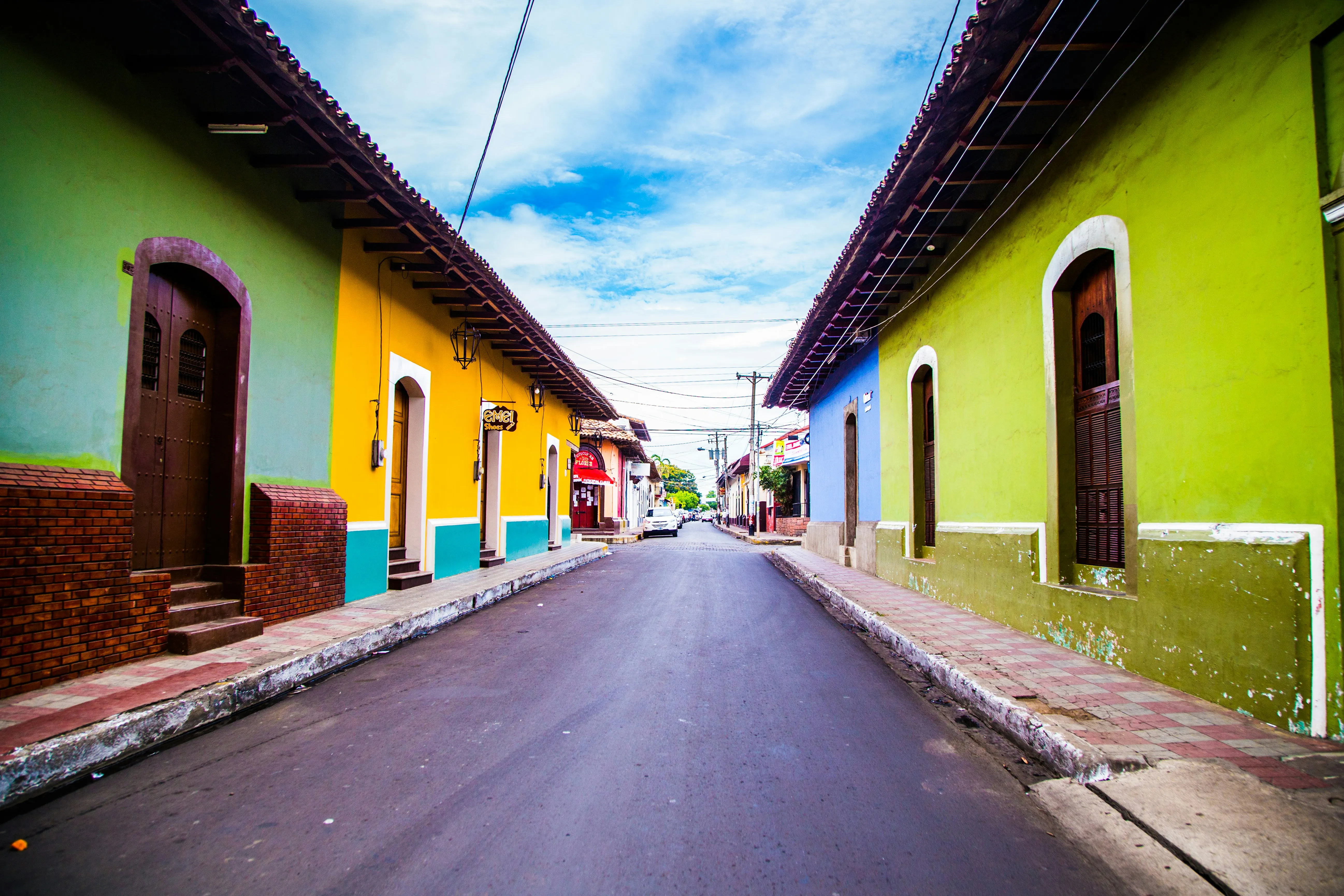
Life in its urban centers takes place between shaded squares and colorful facades that preserve a slow pace and a historical heritage visible in every alley. The Nicaraguan identity manifests in the aroma of coffee in the mornings, in the simplicity of a plate of gallo pinto, and in the natural presence of literature and music in public life. It is a place of deep-rooted traditions and detailed craftsmanship, where the hospitable character of its inhabitants and the diversity of its ecosystems form a reality full of contrasts, far from contemporary haste.
🛡️ General safety
Nicaragua is a country that, in general terms, offers a safe and welcoming experience for international tourists. Traditionally, it has been considered one of the countries with the lowest rates of violent crime in the region, maintaining a medium-high safety level compared to other Central American destinations. The environment for the traveler is usually calm, as long as basic precautions are followed.
The context for the traveler is that of a country with a hospitable culture, where tourism is a valued activity. However, as in any developing destination, it is essential to stay informed about the local situation and maintain an observant attitude, especially in densely populated urban areas.
Crime and common risks
Most visits to Nicaragua pass without incident, but it is necessary to know the most common risks to avoid them:
- Pickpocketing and bag snatching are the most frequent crimes, especially in crowded places like markets, bus stations, and areas with high tourist traffic.
- Minor scams can occur in unofficial currency exchanges or in tourist services contracted informally on the street.
- Theft by neglect on beaches is common if valuables are left unattended while the traveler swims.
- There are rare risks of muggings in isolated areas or low-traffic trails without a guide; therefore, it is recommended to take nature excursions accompanied by authorized personnel.
Safety in cities and tourist areas
Safety varies considerably between different regions and urban centers:
- Managua: As the capital, it is the city where the most caution should be exercised. It is recommended to avoid walking through the historic center or peripheral neighborhoods after dark. It is preferable to move by door-to-door private transport during the night.
- Granada and León: These colonial cities are the main tourist centers and are usually very safe. They have a constant police presence and the atmosphere is relaxed, although it is advisable to watch your belongings in the main squares.
- Beach areas (San Juan del Sur, Tola): They are safe, but due to the nightlife, it is important not to neglect personal safety if consuming alcohol and to avoid walking alone on deserted beaches at night.
- Practical recommendation: Always carry a copy of your passport and leave the original in the hotel safe. Do not unnecessarily display jewelry, expensive cameras, or large amounts of cash.
Safety in transportation
Moving around the country is easy, but requires choosing the transportation method wisely:
- Public transport: Interurban buses (locally known as “chicken buses”) are inexpensive and authentic, but they are often very full. Always keep your backpack or bag in sight or in front of you, never in the rear or overhead luggage rack if you cannot watch it.
- Taxis: This is one of the most common ways to get around. It is recommended to use cooperative taxis (they have colored stripes and a unit number) or private transport services requested through apps or from the hotel. It is not advisable to share a taxi with strangers (a common practice called “colectivo”) if you do not know the city.
- Driving: In Nicaragua, you drive on the right. If you decide to rent a vehicle, keep in mind that the main roads are in good condition, but secondary ones may require a 4x4 vehicle. Avoid driving at night due to lack of lighting and the possible presence of animals or pedestrians on the road.
- Traffic rules: Strictly respect speed limits, as police radar checks are very frequent on the main highways.
Natural and climatic risks
Nicaragua has a volcanic and tropical geography that involves certain natural risks that tourists should be aware of:
- Volcanic and seismic activity: The country is located on the Pacific Ring of Fire. Earthquakes and volcanic eruptions are real possibilities, although tourist volcanoes are constantly monitored.
- Hurricanes and floods: The rainy season runs from May to November. During these months, especially on the Caribbean coast, there is a risk of hurricanes or tropical storms. Heavy rains can cause flash floods or road closures.
- Extreme heat: In areas like León or Chinandega, temperatures can be very high. It is vital to stay hydrated and use sun protection to avoid heatstroke.
- Prevention: In case of a natural emergency, always follow the instructions of local authorities (SINAPRED) and your accommodation staff.
Local legislation and norms
It is essential to respect the Nicaraguan legal framework to avoid serious complications:
- Political activities: Nicaraguan law is very strict regarding the participation of foreigners in political activities. It is recommended to avoid any type of demonstration, gathering, or public comment of a political nature, as it can lead to immediate expulsion or detention.
- Drones: Bringing drones into the country is restricted and subject to prior permits. It is common for them to be held at airport customs if you do not have the corresponding authorization.
- Drugs: Possession, consumption, and trafficking of narcotics are punishable by severe prison sentences. There is no tolerance for the consumption of illicit substances.
- Photography: Avoid photographing government buildings, military facilities, or police personnel, as it may be interpreted as a suspicious activity.
Safety for specific groups
- Solo female travelers: Nicaragua is a friendly destination for women traveling alone. Nevertheless, some unwanted comments (catcalling) may be experienced. It is recommended to dress similarly to the local population and avoid walking alone in isolated areas at night.
- LGTBIQ+ travelers: There are no laws criminalizing homosexuality, but Nicaraguan society is mostly conservative. Discretion is recommended in public displays of affection, especially outside the tourist environments of Granada or San Juan del Sur.
- Children and the elderly: The country is very welcoming to families. The main challenge is the infrastructure (irregular sidewalks or heat), so it is recommended to plan transfers and rest times well.
Emergencies and assistance
In case you need help, these are the main channels:
- National Police: 118
- Fire Department: 115
- Red Cross (Medical emergencies): 128
- Assistance: Tourist police are present in major destinations and are usually friendly and helpful. If you are a victim of a crime, you must go to the nearest police station to file a report (“denuncia formal”), an essential document for any subsequent process with your insurance or consulate.
- Health: It is highly recommended to travel with private medical insurance that covers ambulance transfers and care at high-quality private clinics in Managua.
Tip: Always use taxis recommended by your hotel or restaurant, and before getting in, always agree on the price of the trip, as taxis in Nicaragua do not use meters.
📝 Entry requirements
To plan a trip to this destination, it is essential to have a valid passport. Generally, it is recommended that the document has a minimum validity of six months from the moment of entry into the territory to avoid inconveniences at border posts. Depending on the traveler’s origin, access is usually permitted by obtaining a tourist card upon arrival at the airport or land post, which allows a maximum stay of usually around ninety days for purely recreational activities.
Upon passing through immigration controls, the staff in charge may request the presentation of an exit ticket from the country, whether by plane or another means of international transport. Likewise, sometimes it is required to demonstrate in a general way that one has sufficient economic funds to cover expenses during the planned stay. It is common for brief interviews to be conducted regarding the reason for the trip and the place of accommodation as part of the routine entry procedure.
Regarding customs regulations, there are clear limitations on the introduction of certain products. It is convenient to carry personal medications in their original packaging and, preferably, accompanied by a copy of your medical prescription. Restrictions also usually apply to the entry of fresh food, plants, or animal products that are not processed to protect local biodiversity. Luggage may be inspected to verify that items for commercial purposes or specialized technological equipment requiring prior permits are not being transported.
In the health field, vaccines are not usually required in a general way for all visitors, although it is advisable to be up to date with the basic vaccination schedule. However, in certain cases related to the tourist’s previous route or if risk areas have been visited recently, a vaccination certificate against yellow fever could be requested. It is suggested to consult with travel medicine specialists before starting the journey to know the current recommendations according to the visitor’s profile.
Below is a summary of the key points to keep in mind for access to the territory:
- Identification document: A passport with a recommended validity of half a year is essential.
- Stay permit: The usual tourist authorization allows staying in the country for a period of up to three months.
- Entry fees: There is a possibility that a small economic amount must be paid as a tourist tax upon entry.
- Accreditations: A return flight confirmation or continuation to another destination may be requested.
- Luggage and customs: Controls are applied to perishable products and high-end or professional-use electronic equipment.
- Health: It is recommended to check the need for the yellow fever vaccine depending on the previously traveled route.
🏥 Basic health considerations
When you prepare for your trip to Nicaragua, you will see that the health system presents significant contrasts that you should know about. In major cities, especially in Managua, you will find high-quality private clinics with modern technology and well-trained professionals. Conversely, the public health network is often more crowded and has limited resources, so as a tourist, you will most likely end up going to private centers if an unforeseen event arises. Health personnel speak Spanish, although in top-level private hospitals, it is common to find doctors who handle English well. Regarding prices, although they are lower than in other countries, emergency care or hospitalization can involve a considerable expense if you do not have coverage.
Taking out travel medical insurance is not a legal requirement to enter the country, but it is something absolutely essential for your peace of mind. You should look for a policy that includes hospitalization, medical transfers, and repatriation to your place of origin. Since you will be moving through areas that are sometimes far from the capital, having coverage that manages ambulance transport or even emergency flights will make a difference if needed.
Regarding vaccines, the most important thing is that you are up to date with your official general vaccination schedule. Depending on where you are coming from, you may be required to show a vaccination certificate against yellow fever, especially if you come from countries where the disease is endemic. As a general recommendation for any traveler, it is usually advisable to be protected against hepatitis A and typhoid fever, especially if you plan to move through rural areas or try a lot of local food.
If you take any specific medication, it is best to bring it with you from home in its original packaging. You won’t find major legal restrictions for bringing personal medications, but it’s always a good idea to carry a translated medical prescription or a report signed by your doctor to avoid unnecessary questions at customs. In cities, you will find well-stocked pharmacies, although some commercial brands may vary from the ones you know.
The most common health risks are related to the tropical climate. You will find that the heat and humidity are intense, so heat exhaustion and dehydration are frequent if you don’t take care of yourself. Additionally, being a country with many jungle areas and lakes, mosquitoes are very present. Diseases like dengue or zika have a seasonal presence, so using a good repellent and clothing that covers you at dawn and dusk will be your best defense. You shouldn’t worry too much about altitude, as inhabited areas usually do not reach heights that cause altitude sickness.
Regarding water and hygiene, the golden rule is to always drink bottled or treated water and avoid ice cubes in places you don’t trust. Although in some urban areas the water is potable, your stomach might not be used to its mineral or bacterial composition. As for food, you can enjoy street stalls, but always check that the food is freshly cooked and very hot. General hygiene in tourist establishments is good, but maintaining the habit of washing your hands frequently will save you from stomach discomfort.
In case you find yourself in an emergency, the number to dial to contact the Red Cross is 128. You can also use 118 to contact the national police, who can coordinate help in remote areas. You should know that the ambulance service can be slow outside the big cities, so in critical situations, it is sometimes faster to seek private transport to the nearest hospital.
As final recommendations, remember to always carry a small basic first-aid kit with analgesics, gastric protectors, and disinfectant for small wounds. Don’t forget to apply high-factor sunscreen several times a day, even if the sky looks cloudy, as radiation is very strong due to the proximity to the equator. If you keep these basic precautions and use common sense, you will enjoy your stay in this country with total safety.
🚌 Transportation within the country
Moving around Nicaragua primarily involves the use of road transport, as the country currently does not have a railway network. Buses are the most widespread and used medium by both locals and visitors to connect the main cities and regions. For journeys involving crossing bodies of water, such as access to Ometepe Island or the Solentiname archipelago, the use of ferries and boats is essential, while internal flights are an option for reaching more distant points like the Caribbean coast.
Using public transport is relatively simple, although it requires some adaptability from the traveler. Signage at terminals is not always exhaustive, so direct communication with drivers or station staff is the standard way to confirm routes and destinations. Tickets are usually purchased directly on the vehicle or at the ticket offices of the main stations, and the predominant language for all transactions is Spanish, which facilitates interaction.
There is a clear distinction between traveling in large cities and rural areas. In urban centers and main routes, services are more frequent and vehicles are usually in better condition for the journey. On the other hand, in rural areas, transport tends to be more basic and schedules can be more spaced out, adapting to the local pace of life and the conditions of secondary roads.
For short journeys within towns, taxis are a very common and accessible alternative. It is important to know that in many localities these services can be shared with other passengers headed in a similar direction. In recent years, in the capital and other important cities, the use of mobile applications to request private transport has also begun to normalize, offering more automated management of the service.
Regarding comfort and punctuality, the experience can vary significantly depending on the type of service chosen. While some transports maintain fixed schedules, others wait to fill their capacity before departing. The general feeling is that of a functional system that allows traveling across the entire territory, as long as the traveler maintains a flexible attitude toward waiting times and the simplicity of some infrastructures.
“Tip”: It is recommended to travel during daylight hours to enjoy the landscape and facilitate orientation when arriving at new destinations.
🤵 Culture and etiquette
Nicaraguan society is distinguished by a close and hospitable manner, where interactions are usually marked by kindness and courtesy. It is fundamental to start any conversation, whether in a shop, a hotel, or when asking for directions on the street, with a cordial greeting such as “buenos días” (good morning) or “buenas tardes” (good afternoon). In direct interaction, the use of “usted” is the most appropriate and respectful way to address strangers, elderly people, or those in positions of authority, allowing for a climate of mutual deference from the first moment.
In interpersonal relationships, the handshake is the standard greeting in formal contexts or between people who have just met. Between close friends or acquaintances, a kiss on the cheek or a brief hug is frequent. Communication is usually expressive, and it is not unusual for the voice volume to be somewhat high in relaxed or festive social environments. Regarding time management, while efficiency is sought in the service sector, there is a more flexible view of punctuality in the social sphere, so it is advisable to show patience regarding possible delays in informal encounters.
In the context of meals, sitting at the table is a social act of great relevance. When visiting a private home, it is highly valued if the guest shows interest in local customs and gratefully accepts offers of food or drink. In catering establishments, it is customary to leave a ten percent tip, which in many cases is already reflected on the bill as a suggested service charge. Maintaining restrained behavior in enclosed public spaces and showing an open attitude toward local culinary suggestions facilitates a more enriching experience.
Respect for religious beliefs and local festivities is a fundamental pillar of coexistence. When entering temples, churches, or places of worship, visitors are expected to dress discreetly and maintain quiet behavior, especially if liturgical acts are taking place. Likewise, popular traditions and patronal festivals are moments of great community importance; participating in them with an attitude of respectful observation and without interfering in the rituals allows for an overall harmonious enjoyment of the country’s cultural richness.
Tip: It is highly recommended to ask for permission before taking photographs of people, especially children or during religious ceremonies, as a basic sign of respect for the privacy and dignity of citizens.
🍛 Typical gastronomy
Nicaraguan cuisine is the result of a cultural fusion between indigenous roots, Spanish heritage, and Caribbean influences. Corn is the fundamental pillar of their diet, present in countless forms ranging from basic tortillas to traditional drinks. Alongside this ingredient, rice and beans constitute the basis of daily food, providing the main sustenance in most homes and establishments in the country.
Flavors in Nicaragua are characterized by being direct and natural, without excessive use of spicy seasonings. The use of sour orange and cilantro is very common to add freshness to stews and meats. The most common proteins are pork, beef, and chicken, often grilled. Plantain, both green and ripe, is served at almost every meal, whether boiled, fried in slices (tajadas), or mashed, offering a contrast of textures and sweet-savory flavors very characteristic of the region.
Regarding eating habits, breakfast is considered a hearty meal that usually includes mixed rice and beans. Lunch is traditionally the main meal of the day. Travelers will find a wide offer in fritangas, which are homemade food stalls where varied dishes are served quickly and simply. To drink, the custom is to accompany food with natural tropical fruit juices or with coffee produced in the northern mountainous areas.
The atmosphere in restaurants is usually informal and relaxed. Strict dress codes are not required and service tends to be friendly. In coastal areas, especially in the Caribbean, the gastronomy varies notably by incorporating coconut milk and seafood as main ingredients, differing from the diet of the rest of the country. It is common in more traditional settings for food to be served on banana leaves, a practice that preserves heat and adds a subtle aroma to the food.
| Dish | Description | Main Ingredients | Where to try it | Tip |
|---|---|---|---|---|
| Gallo Pinto | Essential dish consumed at any meal of the day. | White rice and fried red beans. | Everywhere in the country, from hotel breakfasts to markets. | Try it accompanied by fried cheese and a freshly made tortilla. |
| Nacatamal | Filled corn dough cooked wrapped in banana leaves. | Corn, pork or chicken, rice, potato, and vegetables. | Markets and private homes, traditionally on weekends. | It is a very complete meal, ideal for starting the day. |
| Vigorón | Quick-preparation dish traditionally served on banana leaves. | Boiled cassava, pork rinds, and cabbage salad with tomato. | Municipal parks, especially popular in Granada. | Mix the salad with the other ingredients to balance the fat. |
| Indio Viejo | Thick and consistent stew with a slight acidic touch. | Corn dough, shredded beef, sour orange, and mint. | Traditional food restaurants and patronal festivals. | Add a few extra drops of sour orange if you prefer a more intense flavor. |
| Rondón | Traditional soup of Afro-Caribbean influence. | Fish or seafood, coconut milk, cassava, and other tubers. | Caribbean Coast, Bluefields, and Corn Islands. | It is the ideal dish to taste the authentic flavor of the Nicaraguan Caribbean. |
📷 Areas and places to visit
Nicaragua offers a geography rich in contrasts, where colonial heritage coexists with an imposing volcanic nature and an extensive coastline. In the west of the country, Granada stands as one of the most representative centers. This city, located on the shores of Lake Nicaragua, stands out for its carefully preserved civil and religious architecture, with colorful facades and interior courtyards that invite a leisurely stroll. From its historic center, it is common to take excursions to the Islets of Granada, a volcanic archipelago where you can observe local fauna and the daily life of the communities that inhabit these small islets.
On the other hand, the city of León offers a markedly different atmosphere, defined by its university tradition and historical relevance. Its Cathedral, declared a UNESCO World Heritage Site, is a fundamental architectural reference point from whose terrace you can see the volcanic chain. In the surroundings of this city, travelers often explore the Maribios Range, a set of volcanoes where activities such as hiking and volcano boarding (sliding down volcanic sand) are practiced, a unique experience on the slopes of the Cerro Negro volcano.
The capital, Managua, serves as the administrative and cultural center of the nation. Although its urban layout is complex due to its seismic history, its coastal area next to Lake Xolotlán has been rehabilitated, allowing visits to emblematic buildings such as the Palace of Culture and the old cathedral. It is a strategic place to understand the country’s social evolution through its museums and exhibition centers that house everything from archaeological remains to contemporary art.
In the heart of Lake Nicaragua lies Ometepe Island, formed by two imposing volcanoes, Concepción and Maderas. This environment is one of the most unique natural spaces in the region, where visitors can find ancient petroglyphs, biosphere reserves, and freshwater beaches. The island allows direct contact with rural life and offers numerous trails for walking through tropical forests and waterfalls, maintaining a slow pace away from urban centers.
The Pacific coast is internationally recognized for its beaches, especially in the area of San Juan del Sur, a former fishing village that has transformed into a center of tourist activity related to surfing and relaxation. Meanwhile, the north of the country, in departments such as Matagalpa and Estelí, features a mountainous landscape and a cooler climate. This region is key to discovering the coffee and tobacco routes, as well as natural spots like the Somoto Canyon, where rock formations and calm waters invite leisurely exploration.
Finally, the Caribbean Coast shows its own cultural and linguistic identity, with a marked Afro-Caribbean influence. The Corn Islands are the reference destination in this area, where the pace of life slows down among turquoise beaches and coral reefs. This contrast between the volcanic Pacific, the mountainous center, and the coral Caribbean summarizes the diversity of a territory that balances its historical heritage with an ever-present nature.
“Tip”: You cannot miss visiting the city of Granada, the most emblematic place in the country.
✈️ Best time to travel
Nicaragua has a tropical climate that is mainly divided into two periods: the dry season and the rainy season. The choice of the ideal time to visit the country depends on the activities you wish to perform. During the months with less rainfall, paths to natural reserves and volcanoes are more accessible, while the rainy season transforms the landscape into an intense green environment, ideal for those seeking to observe nature in its full splendor.
In the low-lying and coastal areas, temperatures are usually warm and constant throughout the year, while in the northern regions and mountainous areas, the atmosphere is notably cooler. Regardless of the time chosen, the country’s thermal stability allows for regular tours of colonial cities, lakes, and beaches, adapting luggage to the characteristic humidity of the region.
| Season | Months | Typical Climate | What to expect | Tourist influx |
|---|---|---|---|---|
| Spring | Mar – May | Warm and dry. High temperatures and low ambient humidity. | Dry forest landscapes and cultural festivities of Holy Week. | High ⭐⭐⭐ |
| Summer | Jun – Aug | Start of rains, alternated with sunny periods and increasing humidity. | Landscapes beginning to turn green and good conditions for surfing. | Medium ⭐⭐ |
| Autumn | Sep – Nov | Period of highest rainfall. High humidity and exuberant vegetation. | Observation of sea turtles and hiking routes between waterfalls. | Low ⭐ |
| Winter | Dec – Feb | Cool climate, constant breezes, and clear skies. | Natural environment still green and optimal conditions for urban tourism. | Very high ⭐⭐⭐⭐ |
🗣️ Basic vocabulary
Although Spanish is spoken in Nicaragua, the country has a series of idioms and expressions of its own that you will hear constantly in daily life. Knowing these terms will help you move with greater ease, whether when greeting someone, buying in a local shop, or asking for directions on the street.
It’s not about learning a new grammar, but about familiarizing yourself with words that facilitate interaction and show interest in the local culture. Using them naturally will make your travel experience smoother and more personal.
- ¡Buenas!: A shortened way of saying “good morning” or “good afternoon,” very common when entering an establishment or passing someone.
- Dale: One of the most used words; equivalent to “agreed,” “okay,” or “go ahead.”
- Pulpería: Refers to a small neighborhood shop where you can buy everything from water to basic products.
- Chunche: A placeholder word used to refer to any object or “thing” whose name is forgotten.
- ¿Qué onda?: Informal greeting equivalent to “what’s up?” or “how’s it going?”.
- Ruta: This is the name given to the public transport bus, especially in cities.
- Pinolero/a: Colloquial and affectionate adjective to refer to a Nicaraguan person.
- Chele/a: Term used to refer to fair-skinned people or foreigners.